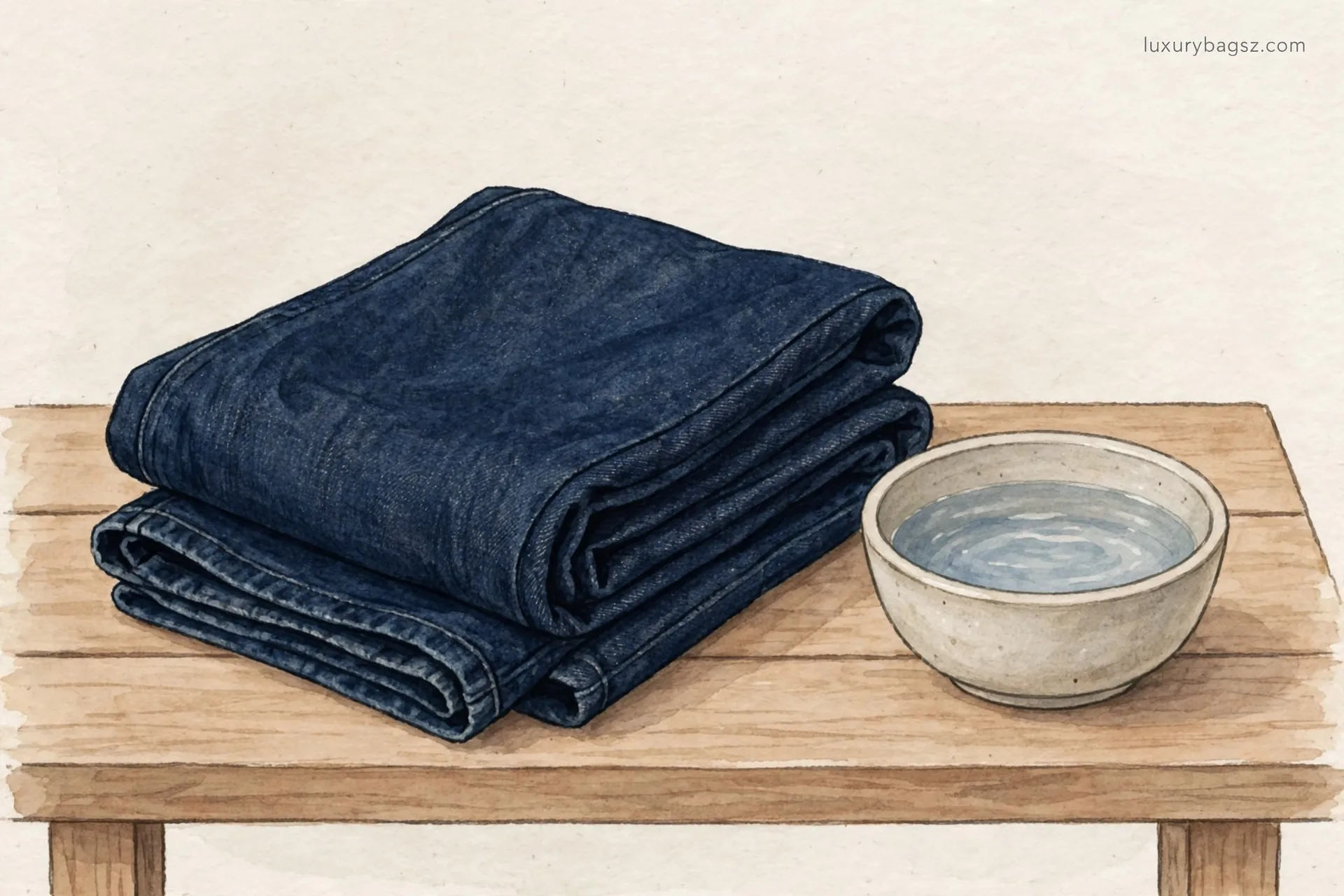
Break in jeans fast by wearing them daily, moving in them deliberately, and soaking them once, cold, if you want a head start. That combination softens raw denim in weeks instead of months, without sacrificing the fit and fade patterns that make raw denim worth the effort.
The wrong way is faster still, and it costs you the jeans: hot washes, tumble drying on high, fabric softener, bleach and abrasive shortcuts all soften denim by damaging it. They fade colour unevenly, shrink fit unpredictably, and coat fibres so they never develop proper fades.
Raw denim normally takes three to twelve months to fully break in, depending on weight and wear. The plan below compresses the early, stiffest phase into two to four weeks of daily wear, while keeping the fades, fit and fabric intact for years.
Key Takeaways
Raw denim is unwashed, stiff denim that moulds to your body and develops unique fades with wear.
Wear new jeans daily for at least a few hours, and move in them: walking, stairs, squats, lunges and cycling all flex fibres.
A cold or lukewarm soak removes starch and softens denim, but it shrinks unsanforized denim by up to 10 percent, so size with that in mind.
Sanforized denim is pre-shrunk and shrinks only about 3 percent, so it is safer to soak.
Never use hot water, high dryer heat, fabric softener or bleach on raw denim. All four damage colour, fit or fade potential.
Wait as long as you can before the first full wash, ideally months, and spot-clean stains meanwhile.
First wash rules: inside out, cold water, mild detergent, air dry only, never tumble dry.
Fades come from wear, not washing. Whiskers, honeycombs and train tracks form where fabric bends repeatedly.
Raw Denim Versus Washed Jeans
Raw denim, also called dry denim, is fabric straight off the loom, unwashed and untreated. It keeps its natural starches and full indigo dye, so it feels stiff, dark and almost cardboard-like when new. That stiffness is the point, not a flaw.
Washed jeans have already been softened industrially, through stone washing, enzyme treatment or ozone finishing. They arrive soft and pre-faded, and they change little with wear. They are comfortable at once, but they will never develop the personal fade map that raw denim earns.
The trade-off is time. Raw denim needs weeks of wear before it feels comfortable, and months before it feels like a second skin. In return, it moulds to your body, stretches where you need room, and fades exactly where you bend, sit and move, creating a pair nobody else owns.
Weight matters too. Lightweight denim under 12 ounces breaks in faster and suits beginners, while heavyweight denim over 16 ounces stays stiff longer but lasts longer and fades with higher contrast. If fast break-in matters most, lighter denim is the easier starting point.
The Right Way: A Two-to-Four-Week Plan
Week one is about daily wear and patience. Wear the jeans for at least six to eight hours a day, moving normally, and avoid sitting for very long stretches in the first two weeks, because long sitting sets creases early and can blur the whisker patterns forming at the pockets.
Weeks two and three add deliberate movement. Walk more, take stairs, cycle, squat and lunge through the day. Each bend flexes fibres and stretches the weave, and movement softens denim far faster than standing or sitting. A few deep lunges, repeated through the day, open up the seat and legs noticeably.
By week four, most raw denim feels clearly softer, though not yet fully broken in. The waist and thighs stretch a little, the knees bend freely, and the fabric loses its cardboard feel. Full break-in, with deep fades and a fully moulded fit, still takes months, but the painful stiff phase should be over.
Rotate with another pair if you must, but know that rotation slows break-in. Daily wear is what earns fades and softness fastest, because every hour of movement counts. If you wear raw denim only twice a week, expect the stiff phase to last two to three times longer.
To Soak or Not to Soak
Soaking is the biggest early decision, and it depends on your priorities. A soak in lukewarm water for a few hours, jeans turned inside out, dissolves much of the starch and wax sizing that makes raw denim stiff. The jeans come out noticeably softer and easier to wear from day one.
The cost of soaking is fade potential and shrinkage. Soaking removes some indigo and softens contrast, so fades develop less dramatically than on never-soaked denim. Unsanforized denim also shrinks up to 10 percent in a soak, while sanforized denim shrinks only about 3 percent, so check which type you own before soaking.
If you soak, do it cold or lukewarm, never hot, and agitate gently only. Soak inside out, for two to four hours, then hang to air-dry, or wear the jeans damp for an hour to mould them to your shape. Damp wearing, called a wear-dry, shapes fit well, but do it indoors and expect damp discomfort for a while.
If maximum fades matter more than early comfort, skip the soak and break the jeans in dry. Dry break-in is stiffer for longer, but it produces the sharpest whiskers and highest-contrast fades, which is why many enthusiasts accept the discomfort. There is no wrong choice here, only a trade-off to make knowingly.
Movement That Softens Denim Fastest
Cycling is the classic accelerator, because pedalling flexes the legs constantly and opens up the seat. It suits straight and relaxed fits best, while very skinny fits can stress seat seams under cycling strain. Short rides count, and you do not need to cycle for hours to benefit.
Squats and lunges are the indoor equivalent. Three to five deep lunges, repeated a few times a day, stretch the seat and thighs and soften the knees. Squatting to pick things up, rather than bending at the waist, adds dozens of flex cycles to an ordinary day.
Stairs beat flat walking for break-in, because each step bends the knee and hip deeply. Take stairs whenever you can during the first month, and walk briskly rather than shuffling. Brisk walking flexes fabric more per step and builds fades at the thighs and knees faster.
Misting lightly with water during wear is a gentler accelerator some enthusiasts use. A light spray on stiff areas, followed by movement, softens fibres without a full soak. Mist sparingly, never soak the jeans on your body, and let them dry fully between mistings to avoid damp odour.
The Wrong Way: Shortcuts That Ruin Raw Denim
Hot water washing is the most common ruinous shortcut. Hot water shrinks denim unpredictably, strips indigo fast, and fades colour unevenly, leaving a pair that fits differently and looks washed-out rather than worn-in. Cold water exists for raw denim for a reason.
Tumble drying on high heat is worse. It shrinks, stiffens and stresses seams, and it can set creases in the wrong places permanently. Even low-heat tumble drying risks shrinkage and fade loss, so air drying is the only safe choice for raw denim, every time.
Fabric softener feels like an obvious fix for stiffness, but it coats cotton fibres with a waxy layer that blocks natural softening and dulls fade development. Softener-softened denim feels slippery rather than broken-in, and the coating is hard to wash out fully. Skip it entirely.
Other wrong ways include bleach, which destroys indigo and weakens cotton, sandpaper or abrasive distressing, which thins fabric and creates fake-looking wear, and boiling jeans, which shrinks and damages them severely. If a shortcut promises overnight softness, it is almost certainly damaging the fabric to get there.
The First Wash: When and How
Wait as long as you reasonably can before the first full wash. Enthusiasts often wait six months or 150 wears, though three months of regular wear is a fine target for most people. Waiting lets fades set deeply, so washing later cleans without erasing the patterns wear has built.
Spot-clean stains meanwhile, instead of washing the whole pair. Dab a stain with a damp cloth and a little mild soap, working from the outside in, and let the area air-dry. For smell, air the jeans outdoors for a few hours, or use a fabric deodorizer spray, rather than washing early.
When wash day comes, turn the jeans inside out, wash alone in cold water with a mild detergent, on a gentle cycle. Button and zip them closed, so hardware does not snag fabric. Skip softener, skip bleach, and skip hot water, even for dirty jeans, because the rules do not change with dirt level.
Dry by hanging indoors or in shade, never in a dryer and never in strong direct sun, which fades indigo unevenly. Expect slight shrinkage after the first wash, especially for unsanforized denim, and expect the jeans to stretch back with a few days of wear. That shrink-and-stretch cycle is normal.
Fades, Fit and Shrinkage, Explained
Fades form where denim bends and rubs repeatedly. Whiskers radiate from the front pockets, honeycombs form behind the knees, and train tracks run along the outer thighs. These patterns are your wear map, and they deepen with months of movement, not with washing.
Fit changes during break-in, so buy with that in mind. Raw denim stretches in the waist and thighs with wear, often by half an inch to an inch, while length shrinks after washing. Many buyers size down slightly in the waist for unsanforized denim, accounting for soak shrinkage and later stretch.
Stretch denim, with a small elastane content, breaks in faster and stretches more, but it fades less dramatically and can lose shape over years. Pure cotton raw denim takes longer, holds shape better, and fades best. Choose stretch for comfort speed, pure cotton for fade quality and longevity.
Check fit after the first month, not after day one. Day-one tightness across the waist and thighs usually eases, while day-one looseness rarely improves, because denim stretches rather than shrinks with wear, apart from wash shrinkage. A pair that feels snug but not painful on day one is usually the right buy.
Keeping Broken-In Jeans Good for Years
Once jeans are soft, care stays simple: wash rarely, cold, inside out, and air-dry. Washing every three to six months, or only when genuinely dirty, preserves colour and fades far better than weekly washing. Spot cleaning handles most marks between washes.
Rotate pairs when you can. Two pairs worn alternately last far longer than one pair worn daily, because each pair gets rest days to air and recover shape. Rotation also slows fade wear at stress points, such as the crotch and pocket edges, where daily wear thins fabric first.
Repair early. A small hole at a pocket corner or a thinning crotch seam is a cheap tailor repair, while a large blowout costs more and looks worse. Denim repair services and sashiko-style patching keep broken-in jeans going for years, and a repair on a well-faded pair looks like character, not damage.
Finally, enjoy the process. Raw denim break-in rewards patience with a pair that fits only you and tells your story in its fades. The stiff weeks pass, the soft years last, and the wrong-way shortcuts, tempting as they are, only trade those years for a few days of comfort.
Frequently Asked Questions
How long does it take to break in raw denim jeans?
The stiff phase usually passes in two to four weeks of daily wear, while full break-in with deep fades takes three to twelve months, depending on denim weight and how often you wear them.
Should you wash jeans before wearing them?
It depends. A cold soak softens denim and removes starch, but it reduces fade contrast and shrinks unsanforized denim up to 10 percent. For maximum fades, break them in dry instead.
How can I soften jeans quickly without damaging them?
Wear them daily, move deliberately with stairs, squats, lunges and cycling, and consider one cold soak. Avoid hot water, dryer heat, softener and bleach, which soften by damaging fabric.
Does soaking jeans shrink them?
Yes. Unsanforized denim shrinks about 10 percent in a soak, while sanforized, pre-shrunk denim shrinks only about 3 percent. Always check which type you own before soaking.
Can I put raw denim jeans in the dryer?
No. Tumble drying shrinks denim, stresses seams, sets wrong creases and fades colour unevenly. Always air-dry raw denim, indoors or in shade.
Should I use fabric softener on jeans?
No. Fabric softener coats cotton fibres, blocks natural softening, dulls fades and leaves a slippery feel. It is one of the worst products for raw denim.
When should I wash raw denim for the first time?
Wait as long as you can, ideally three to six months or around 150 wears, and spot-clean stains meanwhile. First wash inside out, in cold water, with mild detergent, and air-dry.
Do jeans stretch as you break them in?
Yes, the waist and thighs usually stretch half an inch to an inch with wear, while length shrinks slightly after washing. Buy snug but not painful, accounting for both changes.
What are whiskers and honeycombs on jeans?
Whiskers are fade lines radiating from the front pockets, and honeycombs are diamond fades behind the knees. Both form from repeated bending during wear, and they deepen over months.
Is it bad to wear new jeans every day?
No, daily wear is the fastest honest way to break jeans in. It builds fades and softness quickly, though rotating with another pair makes each pair last longer overall.
Summary
Breaking in jeans fast, done right, is daily wear plus deliberate movement, with one optional cold soak for a head start. That plan softens raw denim in weeks, keeps the fit honest, and protects the fades that make the effort worthwhile.
The wrong way, hot washes, dryer heat, softener, bleach and abrasion, feels faster because it damages the fabric. Skip those shortcuts, wash rarely and cold, air-dry always, and let wear do what only wear can do. The result is a pair shaped by you, and built to last.
Jessica is the founder of Luxury Bagsz and a handbag specialist with more than 10 years in the bag industry. She owns and collects preloved designer bags, has examined over 500 bags by hand, and checks authenticity using the Entrupy app alongside stitching, hardware, engravings and date codes.
The Rolex 1908 is the watch that made people take Rolex dress watches seriously again. Launched at Watches and Wonders in 2023, it replaced the Cellini collection, introduced a brand-new movement, and — for the first time on a standard modern Rolex — showed that movement through a sapphire caseback. It is also a watch…
The Short Answer on Hermès Clothing Prices Most Hermès clothing sits between about $1,000 and $8,000 in the US: shirts and knitwear typically start in the low thousands, tailoring and dresses in the mid thousands, and coats and leather pieces at the top. Nothing in the clothing line is priced casually, but the spread is…
Ready-to-Wear Is Hermès Beyond the Bag Hermès ready-to-wear is the house's clothing: seasonal collections for women and men covering coats, tailoring, knitwear, dresses, shirts, trousers and leather pieces, made to the same hand-finished standard as its bags. It is one of the house's historic crafts, not a side line. Clothing sits inside the ready-to-wear and…
Two Houses, One Wrist The apple watch hermes is the longest-running luxury smartwatch partnership in the world: Apple's technology in a silver titanium Hermès case, with Hermès-made bands, exclusive watch faces and an extra orange Hermès sport band in the box. Current sets centre on 42mm and 46mm cases, with bands from the classic Single…
The Other Anchor-Chain Watch The hermes nantucket watch takes the same anchor chain that inspired Cape Cod and draws a slimmer conclusion from it: a narrow rectangular case whose ends are literally the two halves of a Chaîne d'Ancre link, split and pulled apart. It is a smaller, dressier watch than Cape Cod — mostly…
The Watch That Started Hermès Watchmaking The hermes arceau watch, designed by Henri d'Origny in 1978, is where serious Hermès watchmaking begins: a perfectly round case held by asymmetric lugs shaped like stirrups, with numerals that lean as if galloping. Arceau is the broadest Hermès watch family — quartz and automatic, 25mm to 43mm, plain…