

How to Care for and Protect Christian Louboutin Shoes: Soles, Uppers and Storage
Louboutin Care, Decided Early: Protect Before the First Pavement
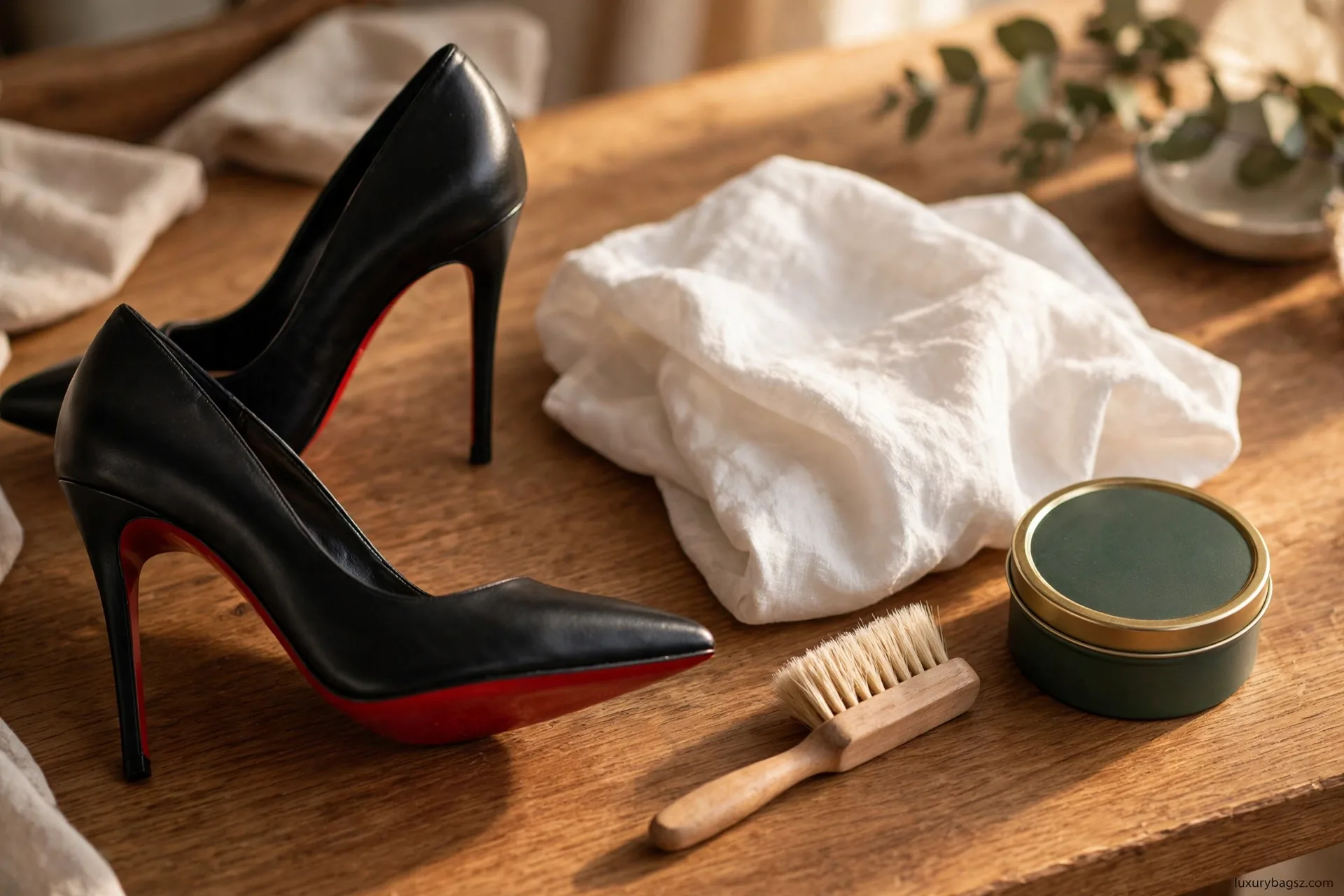
The most important care decision happens before the first wear. The red lacquer will scuff on first contact with pavement, and you cannot undo that. Decide now whether to fit discreet rubber sole protectors or to wear the lacquer honestly and let it mark. Both are respectable. Drifting is not. After that, care is simple rhythm: wipe after wear, rest between wears, store in the bags, and replace heel tips early. This guide walks through each habit.
Key Takeaways
- Fit sole protectors before the first outdoor wear, or accept honest wear.
- Wipe soles and uppers with a soft cloth after every wear.
- Replace heel tips before the metal pin shows through.
- Store pairs upright in their dust bags, away from heat and sun.
- Rest shoes at least a day between wears, and keep them out of rain.
- Use a cobbler who knows red soles for anything beyond surface care.
First Wear: Decide on Sole Protection Early
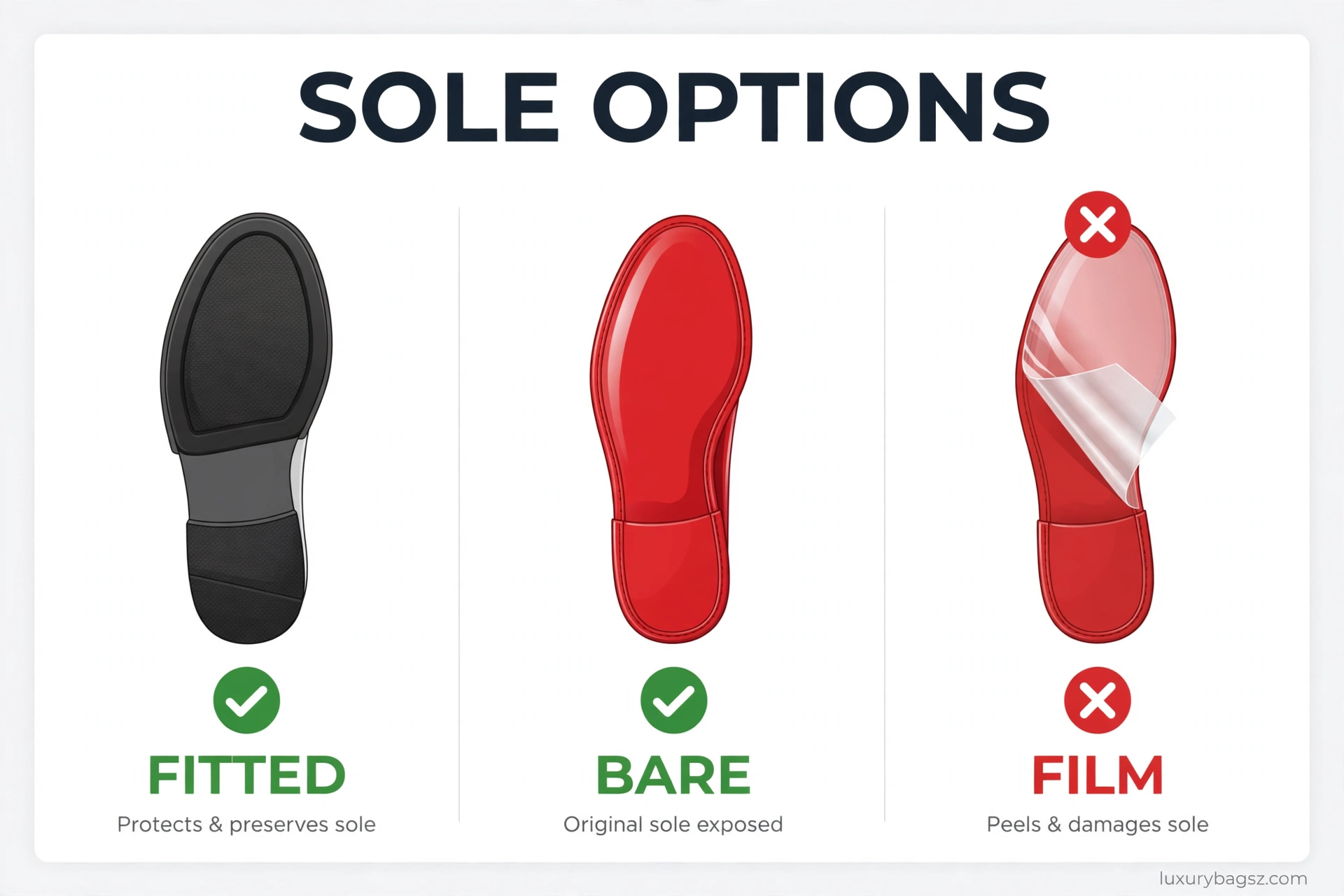
A new pair gives you a clean choice that a worn pair never does. Read the models first: our Christian Louboutin Pigalle pumps guide covers the classic shapes. A cobbler can add a thin rubber half sole in a matching red. It shields the forefoot lacquer, adds grip and can be replaced as it wears. The trade-off is honest: the covered area no longer shows bare lacquer, and a purist keeping a pair for resale may prefer untouched soles. Clear adhesive films are the risky middle path. They peel quickly and can lift lacquer when removed, so most careful owners skip them entirely.
Protecting the Red Sole in Daily Wear
If you skip protectors, protect by habit instead. Choose smooth floors over gravel, cobbles and rough tarmac whenever the route allows it. Our Christian Louboutin So Kate guide shows how much sole a high pitch puts on show, and how fast city wear tells. Wipe the soles after every wear with a barely damp soft cloth. Grit left sitting on lacquer gets ground in at the next outing. General leather sole care supports the routine. Our how to protect leather soles guide covers conditioning and storage for leather soles.
Cleaning Uppers by Material
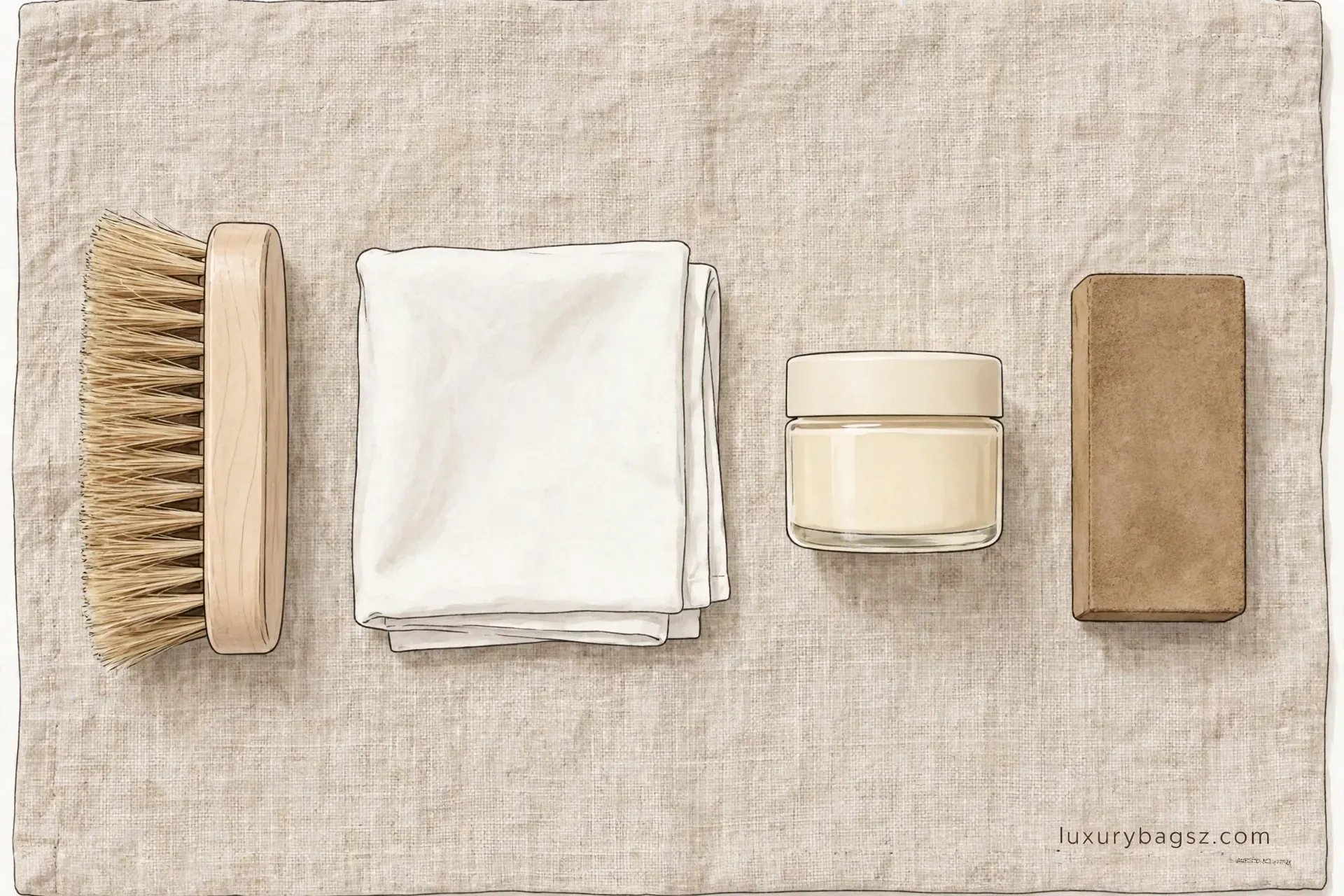
Smooth leather wipes clean with a soft dry cloth, then takes a tiny amount of neutral cream worked in thinly and buffed. Less is always safer. Patent needs only a damp cloth and a dry buff. Keep solvents and coloured polishes away from it, as they can cloud the surface. Suede and nubuck want a dry brush and a suede eraser for marks, never water. Satin and crystal styles want a dry cloth, patience and no rubbing at all. Build the right basics with our how to build a shoe care kit guide, and test any product inside the heel first.

Heel Tips: The Small Part That Saves the Shoe
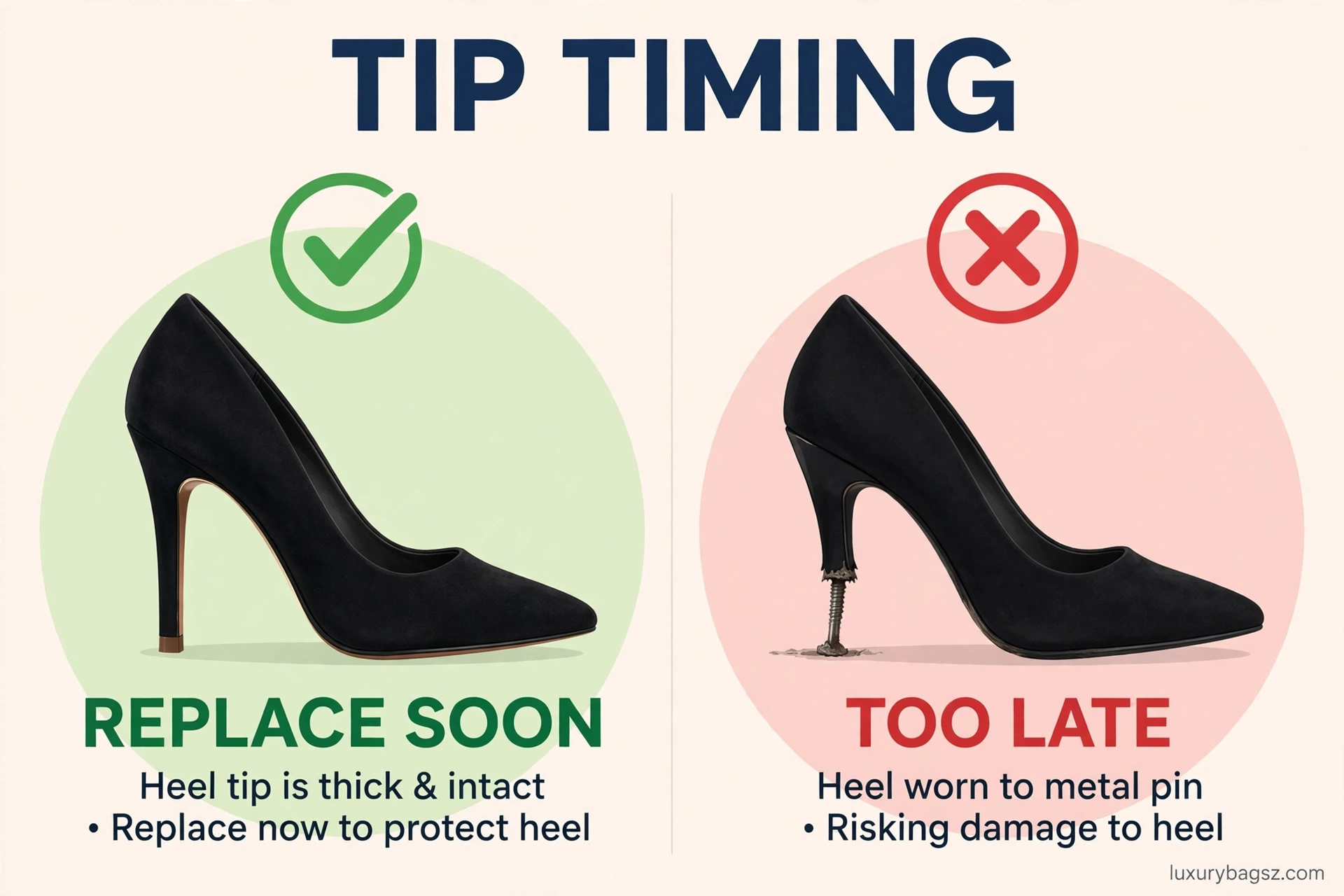
Heel tips are wear parts, designed to be replaced. Check them after every few wears, especially on slim stilettos that carry your weight on a tiny point. Replace a tip as soon as it wears thin or uneven. Wearing through to the metal pin can split or permanently damage the heel itself. A cobbler swaps tips quickly and cheaply compared with heel repair. Keep the spare tips supplied with the pair somewhere you will actually find them. If a heel feels wobbly or clicks as you walk, stop wearing the pair until it is checked. Walking on a failing heel bends the structure above it.
Storage That Protects Shape and Lacquer
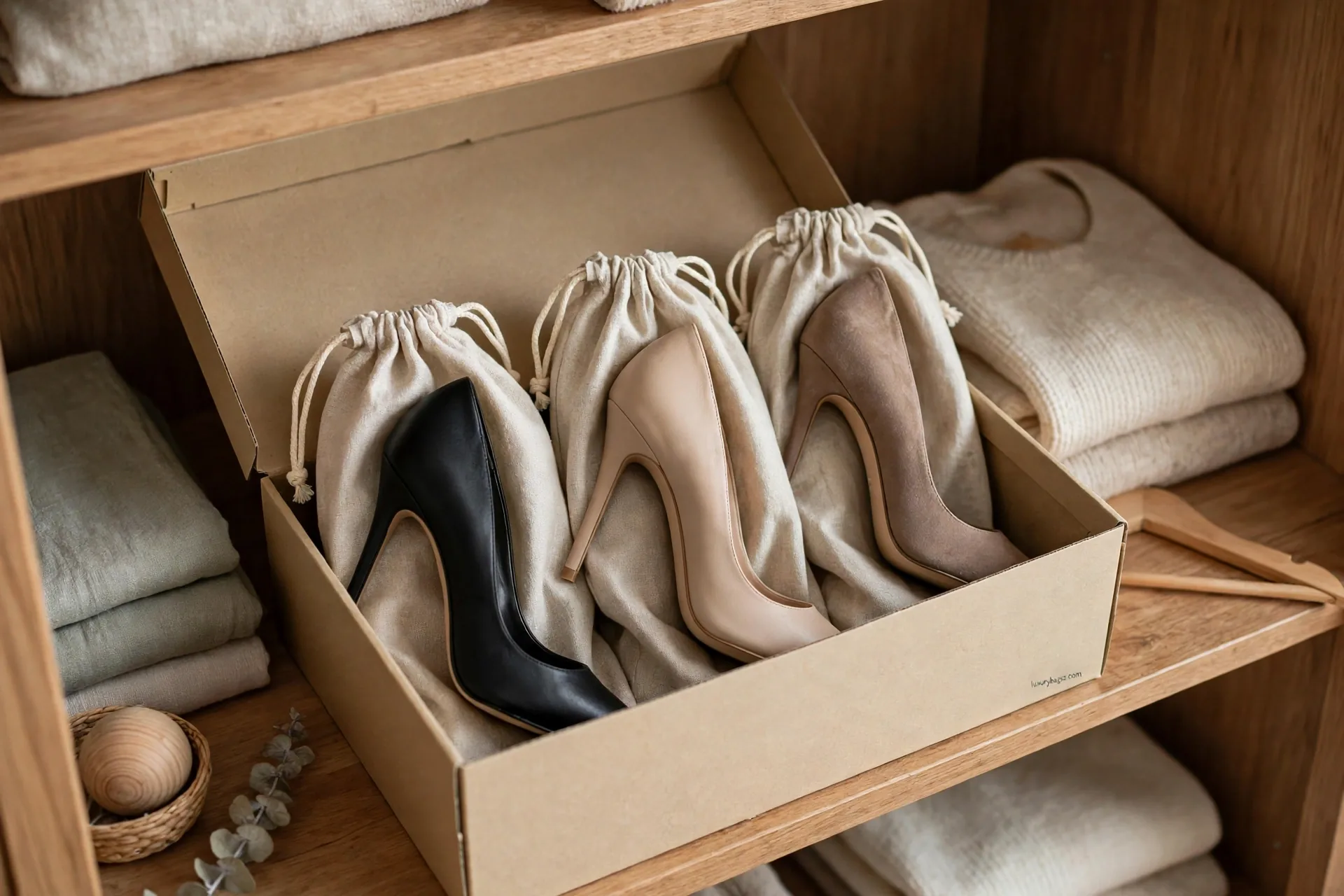
Rest each shoe on its dust bag or keep pairs in their bags inside the box. The bags stop dust, light and neighbourly scuffing in a crowded wardrobe. Stand stilettos upright or lay them on their sides with care. Never stack pairs sole-to-upper: red lacquer and gritty soles mark fine leather fast. Stuff the toe gently with tissue or a soft shoe form to hold the vamp's line, taking care not to stretch a low-cut style out of shape. Keep the storage spot cool, dry and away from radiators and sunny windows. Heat dries leather and can fade both uppers and lacquer over time.
Rotation, Weather and Travel
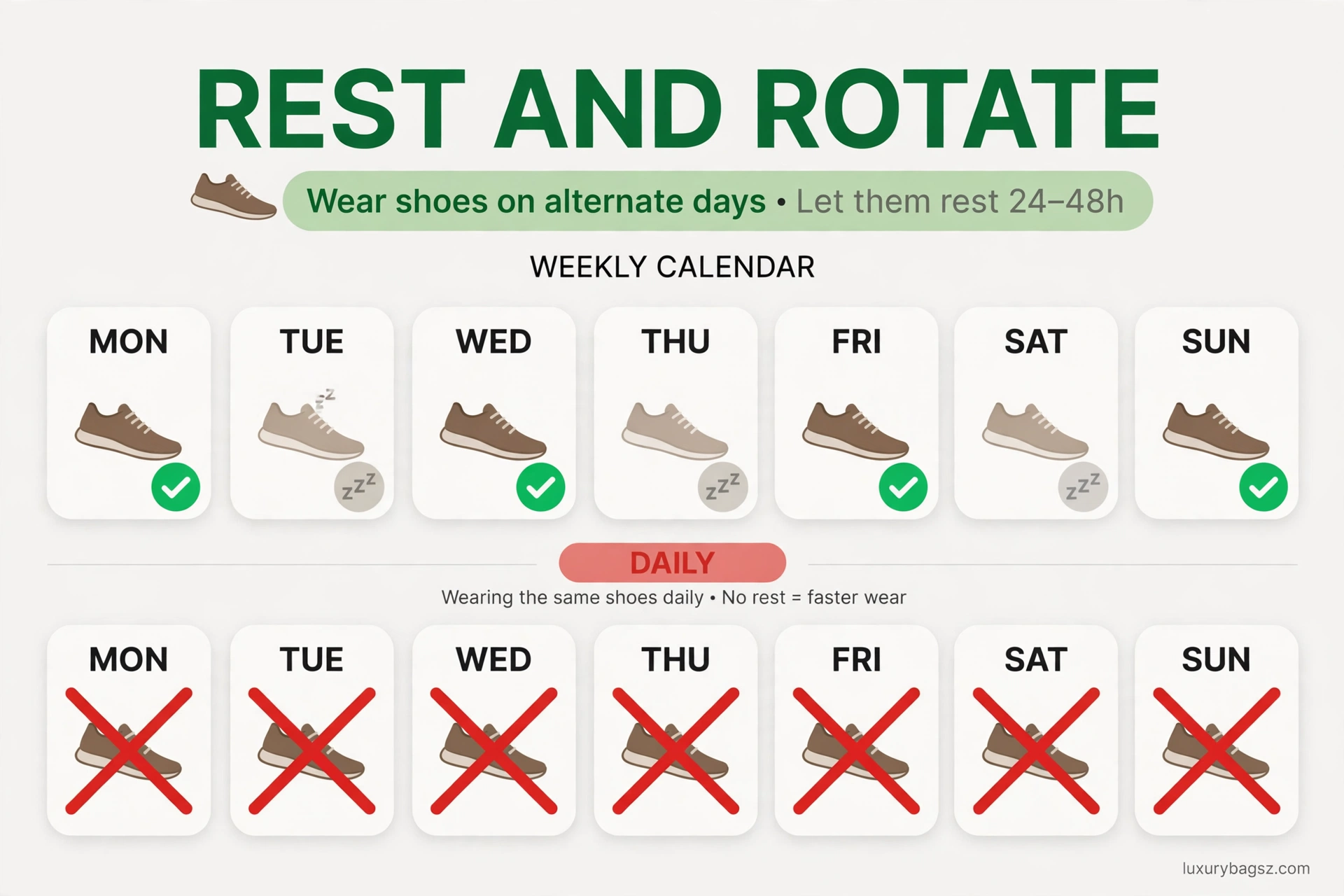
Leather shoes need rest. Give a pair at least a full day, ideally two, between wears so the lining dries and the shape recovers. Rain is the enemy of lacquer, satin and suede alike. If a pair gets wet, blot it, stuff it lightly and dry it slowly at room temperature, never on heat. Our rotation rule applies double to very high styles, where your feet and the shoes both work harder. Alternate heights across the week where you can. For travel, pack each shoe in its own dust bag, heels set apart from clothing, with tissue in the toes. Suitcase pressure creases vamps surprisingly fast.
Scuffs, Touch-Ups and Honest Wear
Small sole scuffs are normal life, not damage. Many owners leave them, because a worn-in red sole still reads unmistakably from across a room. Specialist sole paints exist for light touch-ups on the lacquer. Apply thinly, let it dry fully and accept that a repaint is cosmetic, not armour. Upper scuffs on smooth leather often respond to cream and buffing. Deep cuts, loose crystals and lifting satin belong to a professional, not a home kit. Photograph a loved pair once a year. Comparing photographs shows you creeping wear at heels and vamps long before it becomes a repair bill.
Cobblers, Repairs and Resale-Ready Care
Choose a cobbler with designer heel experience and ask what they use on red soles. The house's own repair route in Paris is the reference standard for purists. Our how to spot fake Christian Louboutin So Kate pumps guide explains why honest soles matter when a pair is later sold or authenticated. Keep receipts for protector fitting, tip changes and repairs. A documented care history reassures future buyers and supports a stronger resale price. Finally, our how to spot fake Christian Louboutin shoes guide shows how condition grades are judged, so you can keep yours at the top of the scale.
The Maker’s Own Position: Wear Is Not a Defect
Calibrate your expectations with the house’s own words. Christian Louboutin’s official care guidance states plainly that the red lacquer will wear off with use, that this is usual wear and tear rather than a manufacturing defect, and that the soles are fragile enough that new pairs should be tried on only on a clean carpeted surface.
That official honesty reframes this whole guide. Care slows the lacquer’s wear, directs it and keeps the rest of the shoe beautiful; nothing makes the red permanent, and any product or seller promising permanence is contradicting the maker.
One modern exception deserves its own note: the house has introduced an everlasting red sole, using a newer coating technique for lasting colour, on the Miss Z collection and some flat styles. If your pair carries that sole, its wear behaviour differs from classic lacquer, and it should be judged, and insured, and resold, as the different construction it is.
For classic pairs, wear the red proudly and maintain everything around it. A sole that shows honest miles under a pristine upper is the look of a shoe that was loved correctly.
The Footbed and Lining: The Forgotten Half
Care guides stare at the red sole while the inside quietly ages. The pale footbed darkens with wear, picking up marks and moisture, and a neglected lining is what makes a beautiful shoe feel tired long before the upper fails.
Build a small routine: wipe the footbed after wear with a barely damp cloth, then let the pair air before it goes back into its bag. That single habit slows darkening, keeps odours away and preserves the lining leather, which cannot be reconditioned as easily as an upper.
Never soak a lining, and keep sprays and powders minimal: residues build up against the foot and can mark socks and skin. If the footbed has already darkened unevenly, accept it as patina or ask a cobbler about professional interior cleaning; home scrubbing with household cleaners risks glue, dyes and stitching all at once.
The same gentleness applies to ankle straps and slingback elastics inside the shoe: check them as you wipe, because elastic fatigue announces itself quietly and fails publicly.
Sole Protectors in Detail: What the Cobbler Actually Does
Because the protector decision opened this guide, here is what fitting one really involves. A thin rubber half sole, around a millimetre and a half, is bonded over the forefoot area that meets the ground. Fitted well in matching red, it shields the ball of the foot, adds grip, and leaves the arch and heel showing their lacquer.
The risk lives in the fitting. A careless cobbler may sand the sole aggressively to make the rubber stick, stripping colour beyond the covered area. Choose the fitter as carefully as the product: ask to see previous red-sole work, agree the protector covers only the ground-contact area, and confirm the colour match before anything is glued.
Budget honestly: quality fitting costs a modest fee per pair and the rubber itself wears and can be renewed, typically lasting months of regular wear rather than forever. Compare that with the alternative honestly too: unprotected lacquer in daily city use shows wear within the first outings.
Protectors are maintenance, not preservation in amber. They serve owners who wear their shoes, which is the category this guide has assumed you are in from its first paragraph.
Colour Migration: Choose Your Shoes’ Neighbours
The house’s official guidance carries a warning most owners never hear: do not store nude or light-coloured pieces beside black or dark ones, because colour migration between leathers can be irreparable. Pale patent and light satin are the most vulnerable neighbours in a crowded wardrobe.
The same caution covers contact in use. Keep light uppers away from dark denim’s crocking dye, freshly polished dark shoes, and the alcohol, grease and make-up the maker also names as hazards: hand cream applied before handling pale shoes is a classic, invisible transfer route.
Individual dust bags, which the storage chapter already prescribed, are the practical cure: one bag per pair, every time, with pale pairs given their own shelf space rather than a shared row. Migration damage looks like neglect and is actually geography.
Check pale pairs under bright light a few times a year. Early shadowing at contact points can sometimes be lifted by a professional; established migration generally cannot, which is why this quiet risk earns its own place in the routine.
Frequently Asked Questions
Should I put protectors on my Louboutin soles?
If you will wear the pair often outdoors, yes, fitted by a cobbler before the first wear. If the pair is for rare occasions or resale purity, honest bare lacquer is a fair choice.
Will the red lacquer wear off?
Yes, at the ball of the foot and heel, sometimes quickly on rough ground. That is normal behaviour for a thin lacquer over leather, not a fault in the shoe.
How do I clean the red soles?
Wipe them with a barely damp soft cloth after wear and let them dry at room temperature. Do not soak them or use harsh cleaners on the lacquer.
When should heel tips be replaced?
As soon as they wear thin or uneven, and always before the metal pin shows. Tip swaps are cheap; repairing a split heel is not.
How should I store my Louboutins?
Upright or carefully laid, each in its dust bag, toes lightly stuffed, in a cool dry place away from sun and radiators. Never stack pairs sole to upper.
Can I wear them in the rain?
Try not to. Rain spots satin and suede and dulls lacquer. If a pair gets wet, blot it and dry it slowly at room temperature, never with direct heat.
How often can I wear the same pair?
Rest them at least a day between wears, ideally two. Rotation lets linings dry fully and keeps high styles holding their shape for far longer.
Can scuffed soles be repainted?
Lightly, yes, with specialist sole paint applied thinly. Treat it as a cosmetic touch-up rather than protection, and leave deep sole work to a cobbler.
What should I ask a cobbler before trusting them?
Ask whether they have worked on red soles, what protector material they fit, and whether they can match the red. Vague answers mean you should look elsewhere.
Does careful care help resale value?
Yes. Honest soles, early tip changes, dust bag storage and repair receipts all support a stronger price, because buyers and authenticators grade condition closely.
Summary: Protect Early, Wipe Often, Rest Always
Care for a pair of Louboutins the way you would any fine instrument: decide on sole protection early, wipe them down after wear and rest them between outings. Replace the little heel tips before they become a big heel problem, store each pair in its bag, and let a trusted cobbler handle the rest. The red will thank you.






