How to Spot Fake Air Dior Jordan Sneakers
Scarcity, Jacquard and the Wings Emblem
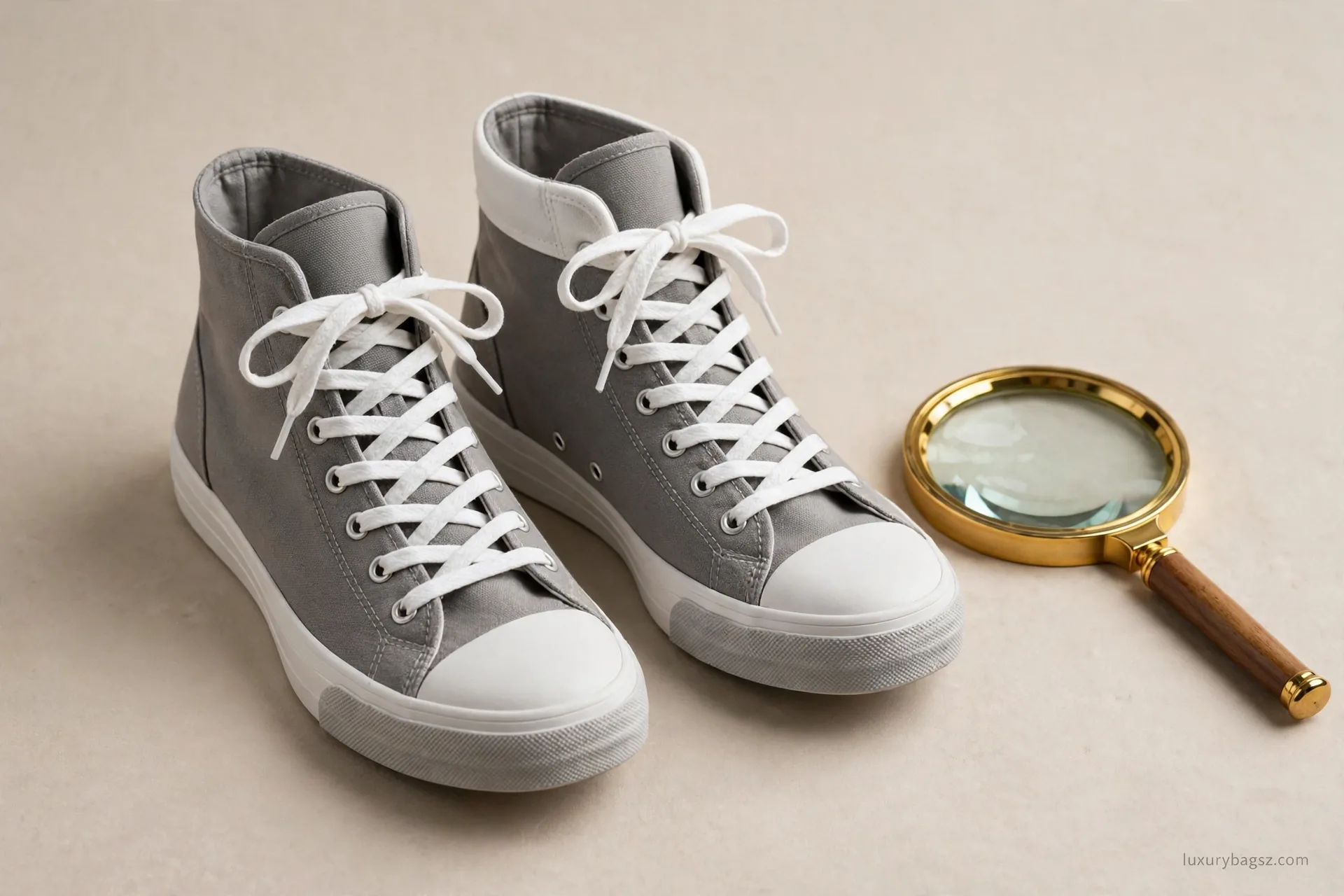
Treat easy availability as an early warning: the High version was made in very limited numbers, widely reported at 8,500 pairs, so a seller holding many sizes at a low price deserves immediate scepticism. Genuine pairs change hands well above their original luxury retail price.
Inspect the swoosh closely. Its Dior Oblique pattern should be woven into the jacquard itself, with clear, regular motifs and a neatly stitched edge, not a surface print that blurs or stretches. Leather and suede should likewise feel supple and premium, with tight, even stitching throughout.
Check the ankle Wings emblem for crisp, evenly pressed lines, then confirm that tongue labelling, the inner size tag and the box label all agree on sizing and style details.
The Air Dior in Brief
The Air Jordan 1 High OG Dior, released in 2020 as a collaboration between Dior and Jordan Brand, is one of the most counterfeited sneakers ever made. That is no surprise: it was produced in very limited numbers — widely reported as 8,500 pairs of the High and 4,700 of the Low — it carried a luxury price, and its grey-and-white Dior Oblique jacquard swoosh made it instantly recognisable. The base shoe behind the collaboration is covered in full in our Air Jordan 1 guide.
High demand, low supply and a high resale price are exactly the conditions fakes thrive in.
No single check proves a pair is real, and the best fakes copy many details well. Your protection is stacking checks: box and labelling, materials, swoosh, Wings logo, stitching, sole, size tag, laces and seller evidence together. Also remember that sources disagree about some minor details, such as exact box-label wording across regions, so where reputable guides conflict, this guide says so rather than pretending certainty.
If several checks fail together, or the seller cannot provide complete photographs, walk away however tempting the price.
Key Takeaways
- The Air Dior High was extremely limited, so an abundant supply, a low price or a seller with many pairs in many sizes is itself a warning.
- The Dior Oblique jacquard swoosh should be crisp, evenly woven and correctly placed, with clean stitching around its edge.
- The Wings logo, tongue labelling, size tag and box label must all agree on style, spelling, sizing and region codes.
- Real pairs use premium leather and suede with careful stitching; plasticky leather, fuzzy suede or wandering stitch lines point away from genuine production.
- Never authenticate from a single photograph or a box alone: request the full photograph set and check the pair, not just one shoe.
Part 1: Know Which Air Dior You Are Looking At
Confirm the model first. The famous collaboration produced the Air Jordan 1 High OG Dior and the Air Jordan 1 Low OG Dior, in a grey, white and Dior grey colourway with the Dior Oblique jacquard swoosh. The High and the Low differ in cut, collar height, lacing and box, so a Low detail judged against a High reference — or the reverse — will mislead you.
Ask the seller to state the model, the size in US, UK and EU terms, and the colourway, and to photograph the box label showing the style code. The High is widely referenced under style code CN8607-002. If the seller's label shows a different code, a different colourway name or a size conversion that does not match standard Jordan conversions, stop and resolve that mismatch before anything else.
A seller who cannot name the model or size precisely is not necessarily selling a fake, but you cannot verify a pair you cannot identify.
Part 2: The Price and Availability Reality Check
Before inspecting leather, do the market check. Genuine Air Dior pairs trade at a large multiple of their original retail price, and supply is genuinely scarce. A pair offered near retail, far below comparable sold listings, or in bulk quantities should be treated as suspicious until proven otherwise. Scarcity alone does not prove a fake — a motivated seller can price low — but scarcity plus other fails is a powerful combination.
Compare sold listings, not just asking prices, for the exact model and size, and be wary of sellers who claim to have multiple pairs in every size. Limited production means genuine private sellers usually have one pair, in one size, with one story. Also be wary of "deadstock" claims paired with photographs showing wear, yellowing or a replaced box.
Deadstock means unworn with the original box and accessories; if any part of that claim fails, the price should reflect it and the seller should explain why.
Part 3: The Dior Oblique Swoosh
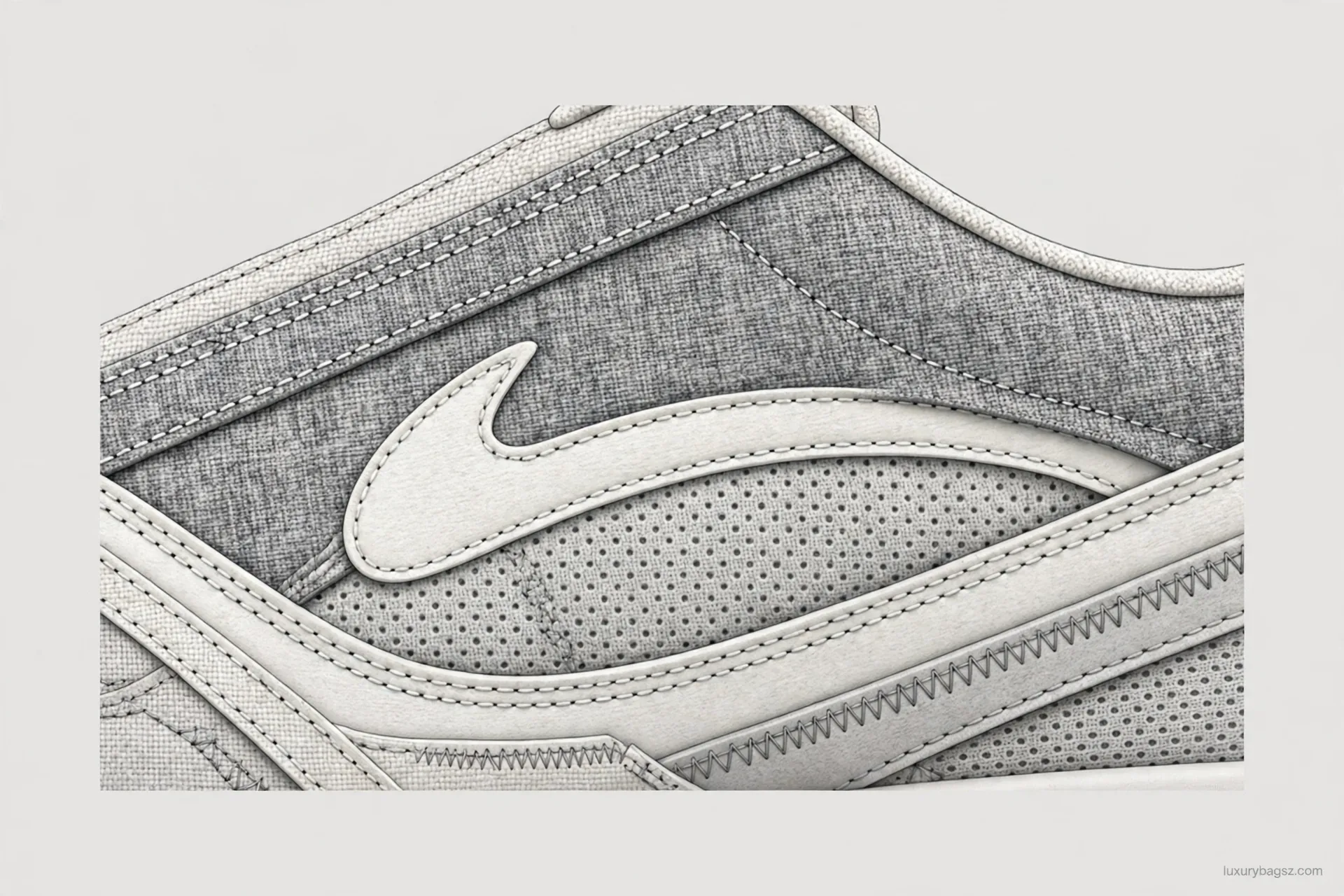
The swoosh is the pair's signature, and it deserves the closest look. On a genuine Air Dior, the swoosh is cut from Dior Oblique jacquard fabric, with the monogram pattern woven crisply and evenly, not printed on top of plain material. The pattern should read clearly at normal viewing distance, with consistent motif size and spacing, and the swoosh edge should be cleanly finished and stitched down evenly.
Fakes often fail here in subtle ways: a pattern that looks printed rather than woven, motifs that blur, stretch or change size across the swoosh, or an edge that lifts, frays or shows glue. Check both shoes, since a genuine pair matches left and right, while copies sometimes differ between shoes.
Also check where the swoosh sits on the panel: it should follow the same curve and placement as genuine pairs, neither riding too high toward the collar nor drooping toward the midsole. Photograph requests should always include straight-on side shots of both swooshes in daylight.
Part 4: Leather, Suede and Overall Materials
Genuine Air Dior pairs use premium materials: smooth, substantial leather on the overlays and panels, with quality suede or textile where the design calls for it. The leather should feel supple and full, not thin, stiff or plasticky, and the grain should look natural rather than printed or coated in a thick shine. Suede should feel soft and napped, with a consistent nap direction, not shiny, matted or patchy.
Run your eyes and, in hand, your fingers over every panel. Fakes often mix materials badly: leather that looks right on the toe but plasticky on the heel, suede that feels like felt, or panels whose colour differs slightly between the two shoes. Colour matters too. The Air Dior grey is a specific, muted Dior grey, not a bright or blue-grey.
A pair whose grey reads noticeably different from genuine photographs, or whose two shoes differ in shade, deserves scrutiny. Remember that lighting changes colour in photographs, so compare under the same daylight conditions where possible and ask for unfiltered shots.
Part 5: Stitching Discipline
Stitching on a genuine Air Dior is even, tight and consistent, with constant stitch length and straight lines that follow panel edges at a steady distance. The thread colour should match the design intent on each panel, and there should be no loose loops, frayed ends or skipped stitches across the pair.
Compare matching areas on both shoes: the toe box stitching, the collar stitching, the swoosh edging and the heel panel. Genuine production usually matches left and right; copies often do not, with one shoe showing more stitches, a wandering line or different tension from the other. Also inspect stitching on the reverse side where visible inside the shoe and under the tongue.
Loose threads and uneven tension there are manufacturing signs, not wear, especially on a pair sold as unworn. One damaged stitch on a worn pair can be use, but a pattern of sloppy stitching across both shoes is a strong warning.
Part 6: Midsole, Outsole and Sole Pattern
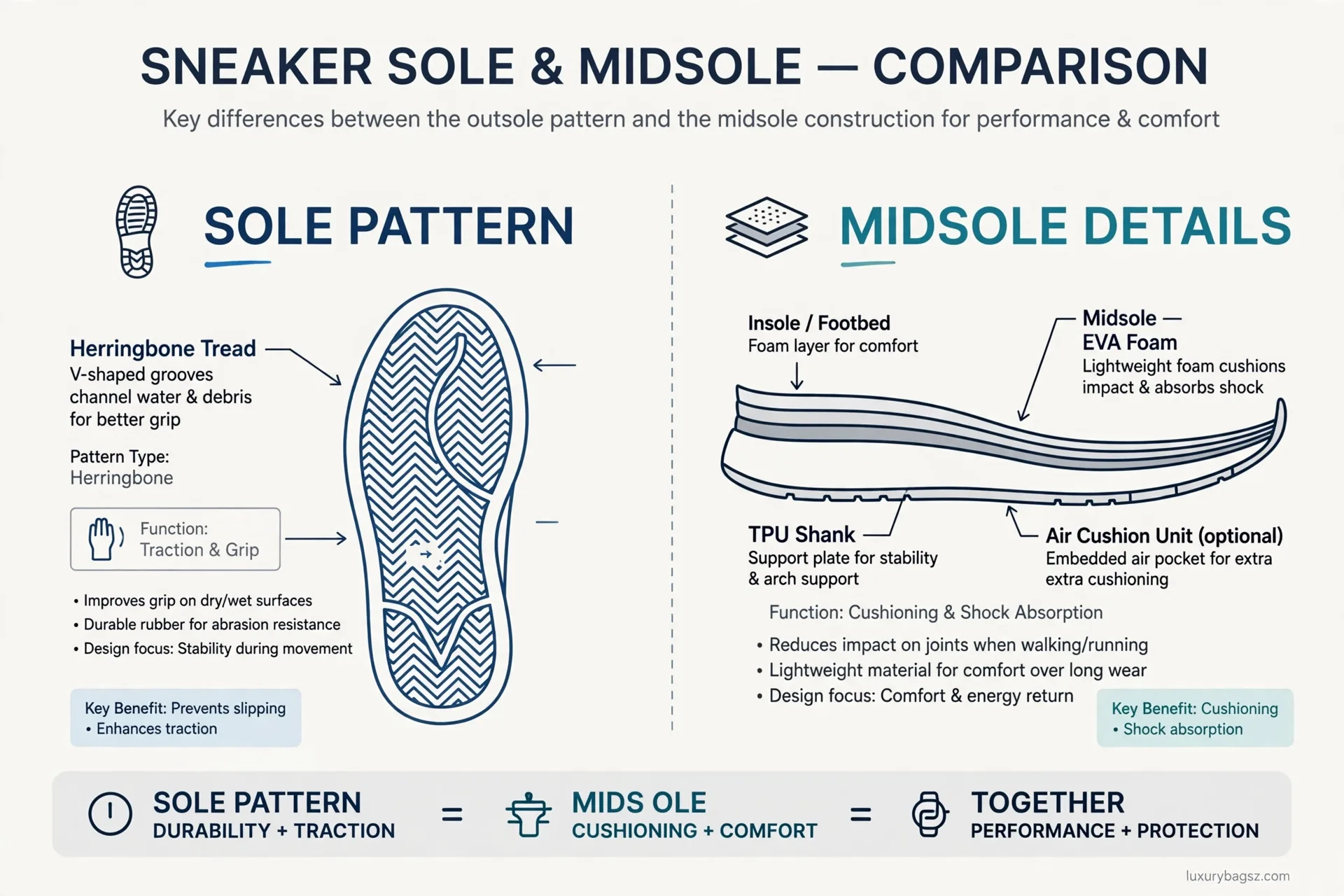
Turn the shoes over. The midsole should be cleanly finished, evenly coloured and correctly proportioned, with the Air cushion unit — where visible or felt — sitting as it does on genuine pairs. The outsole pattern, including its tread blocks and grooves, should be crisp and deeply moulded, not shallow, blurry or rough at the edges.
Check the sole's colour and ageing honestly. A deadstock pair should not show heavy yellowing or wear, while a worn pair should show wear consistent with its story. Fakes sometimes show soles that are too glossy, too matte, incorrectly tinted or moulded from a visibly different pattern. Also compare the two soles: they should match in pattern, colour and finish.
A pair with one sole noticeably different from the other, or with glue overflow around the midsole edge, has a manufacturing problem that genuine quality control rarely lets through.
Part 7: The Wings Logo and Ankle Detailing
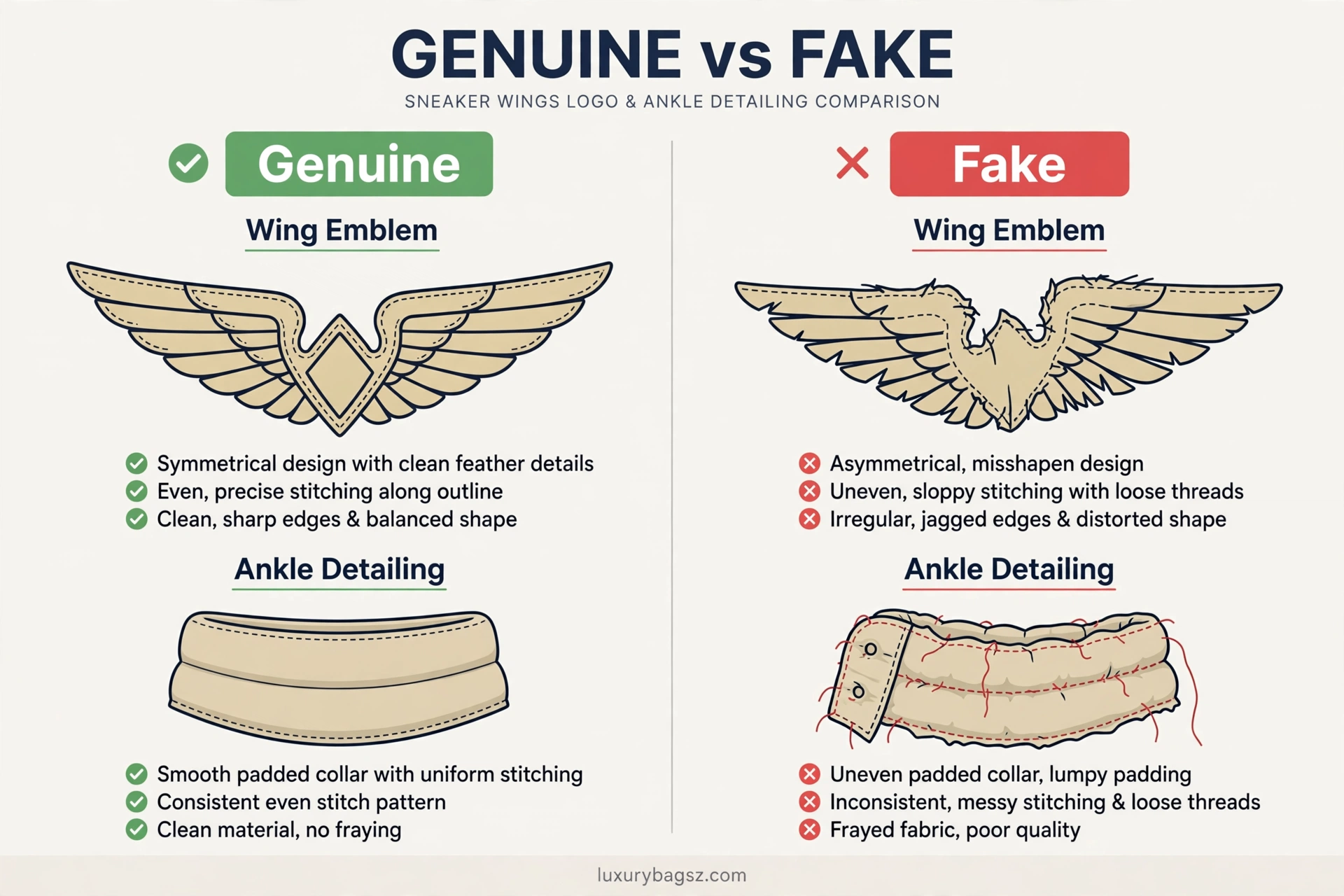
The Wings logo on the ankle collar is a classic fake tell. On a genuine Air Dior High, the Wings emblem should be cleanly debossed or applied, with crisp lines, correct proportions and even depth. The basketball, wings and lettering should read clearly, without blurred edges, doubled lines or uneven pressure where one side bites deeper than the other.
Study reference photographs of genuine pairs at high resolution and compare the logo shape, not just its presence. Counterfeiters often get the logo roughly right but wrong in detail: wings too thick or too thin, a ball that is slightly misshapen, or lettering spaced too widely. Check both shoes, since genuine logos match, and check the collar padding and shape around the logo too.
A collar that is too puffy, too flat or misshapen changes how the logo sits, and that overall collar shape is itself a useful check against genuine pairs.
Part 8: Tongue, Laces and Interior Labelling
Inspect the tongue carefully. Genuine tongue labelling should be crisp, correctly spelled, correctly sized and cleanly attached, with stitching that is even and tonal. The tongue itself should be well padded where the design calls for padding, and its shape should match genuine pairs rather than looking too long, too narrow or unevenly cut.
Laces matter more than buyers expect. The Air Dior ships with extra laces, and the laces themselves should be the correct length, thickness, colour and tip finish for the model. Thin, shiny, incorrectly coloured or wrongly tipped laces are a warning, especially when combined with other fails. Inside the shoe, check the insole and any printed branding for crispness, correct spelling and correct placement.
Fakes often let interior printing slip, with blurry text, wrong fonts or branding in the wrong position, because buyers photograph the outside far more than the inside.
Part 9: Size Tag, Style Code and Box Label
The interior size tag is one of the most informative checks, and one of the most copied. On a genuine pair, the tag should show clear, correctly formatted information: size conversions that match Jordan standards, the style code, the country of manufacture and any region codes, all printed crisply without spelling errors, blurry text or misaligned lines. The tag material and stitching should also look right, firmly attached and evenly stitched.
Compare the tag against the box label: style code, colourway, size and region information should agree. A tag that says one size and a box that says another, or a style code that does not match the model, is a major inconsistency.
Sources do disagree about minor tag wording across production runs and regions, so a small wording difference alone is not a verdict — but a spelling error, a wrong style code or a size conversion that no genuine Jordan tag uses is a serious warning. Photograph both tags, both shoes, and the box label before paying.
Part 10: Box, Tissue, Accessories and Extras
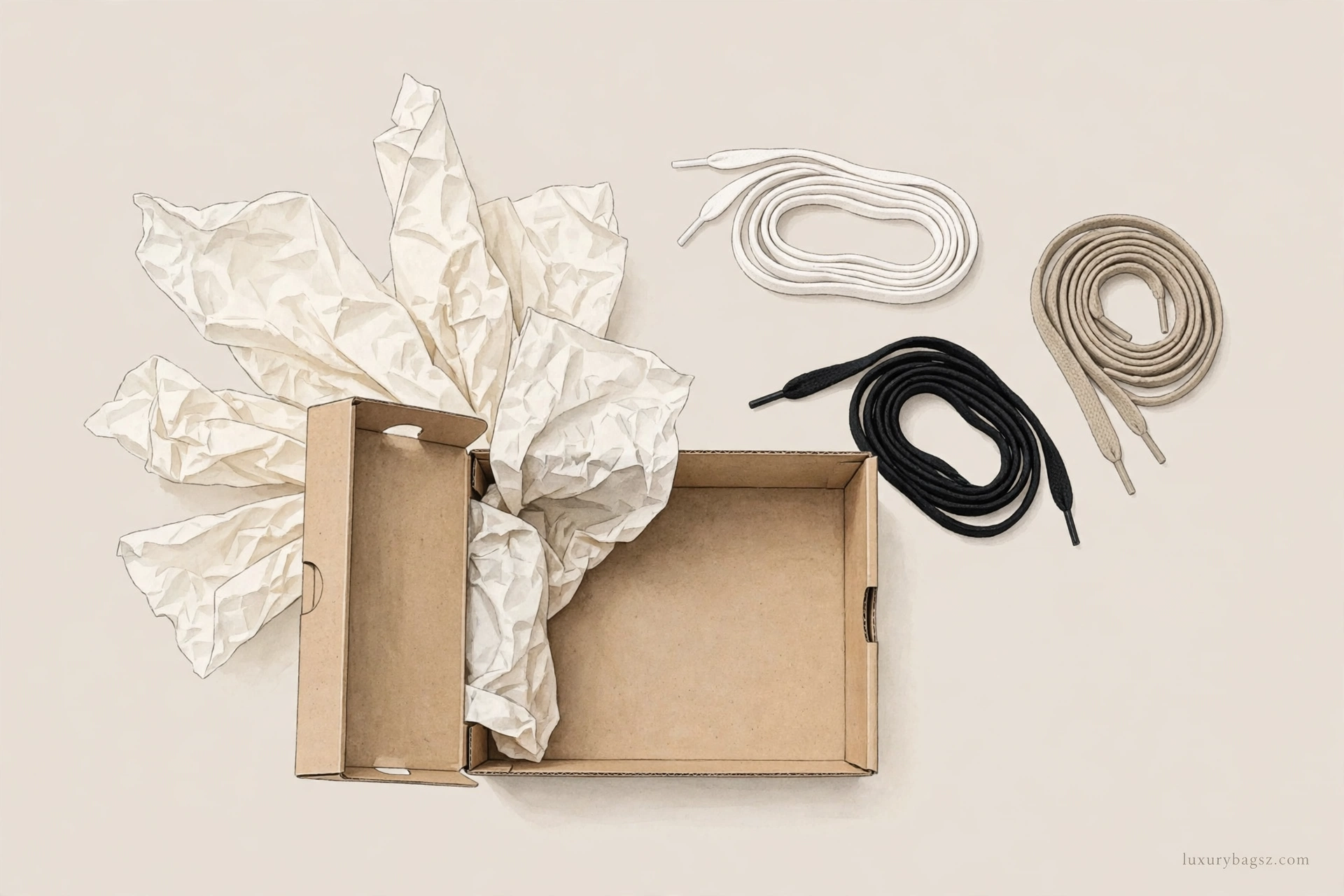
The Air Dior box is part of the product, and fakes often betray themselves there. The box should be sturdy, correctly sized, correctly printed and correctly labelled, with crisp graphics, correct spelling and a label that matches the shoes inside. Tissue paper, extra laces, dust bags or booklets where included should feel like quality items, not thin, blurry or misspelled afterthoughts.
That said, treat the box as weak evidence on its own. Boxes are swapped, replaced and copied, and a genuine pair can be sold without its original box. What matters is consistency: a box label that matches the shoes, accessories that match the model, and a seller story that explains any missing item. A perfect box with failing shoes proves nothing, and a missing box with perfect shoes is a different, smaller problem.
Never pay a large premium for a box alone, and never accept a box photograph as a substitute for shoe photographs.
Part 11: Shape, Toe Box and Overall Profile
Study the pair's overall shape from the side, front and back. A genuine Air Jordan 1 High has a recognisable profile: a structured toe box that holds its shape, a collar that rises cleanly, and a silhouette that looks balanced rather than chunky or elongated. The Air Dior should match that profile, with the jacquard swoosh and grey panels sitting naturally on it.
Fakes often distort the profile: a toe box that is too tall, too flat or too pointed, a collar that is too thick or too thin, or a shoe that looks stretched or squashed compared with genuine pairs. Check both shoes together, standing side by side, since profile errors are easier to see in a pair than in a single shoe.
Also check the toe box perforations where present: they should be evenly spaced, cleanly punched and consistent across both shoes, not ragged, uneven or partially closed.
Part 12: Photographs That Actually Prove Something
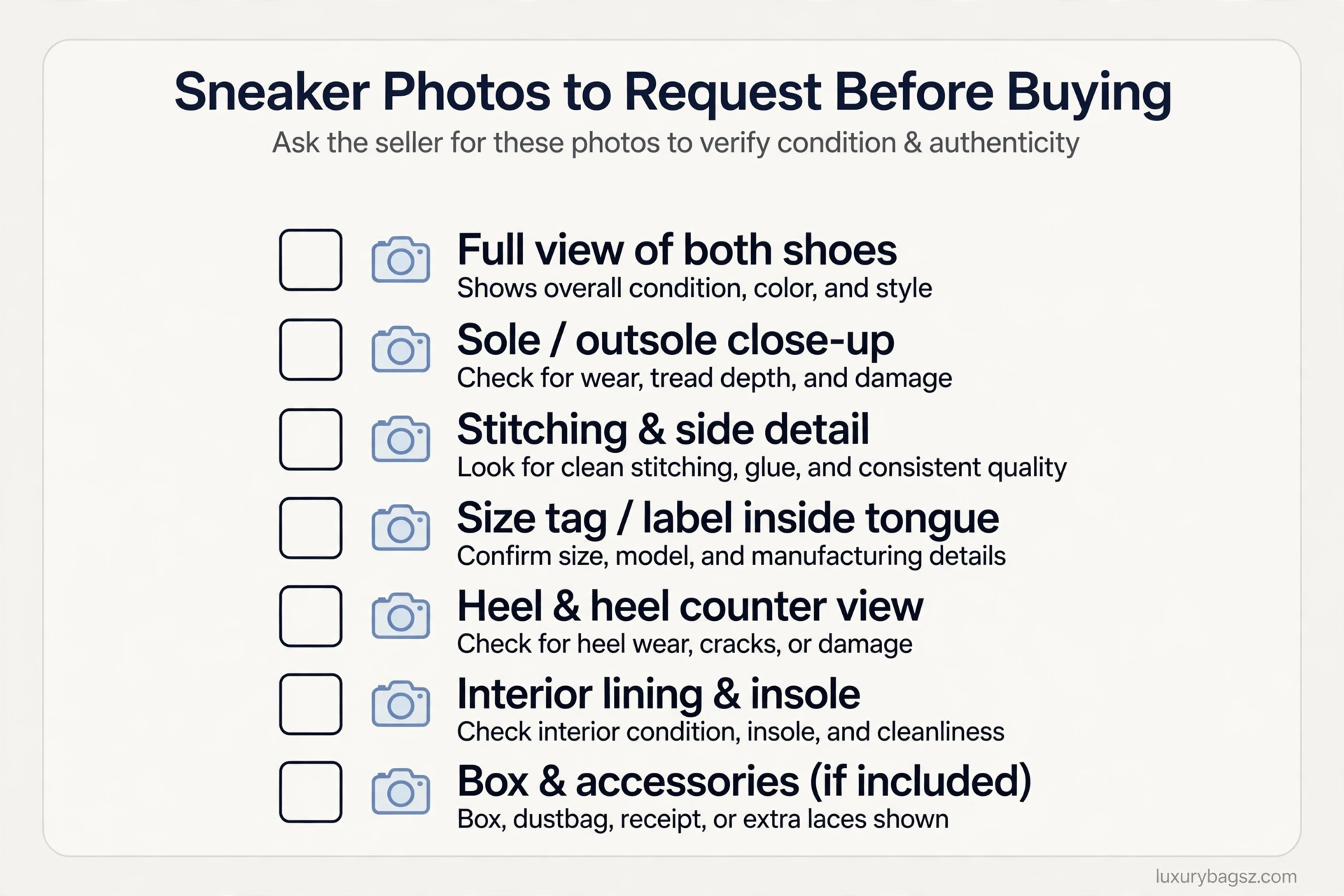
Request a full photograph set before paying: both shoes from the outer side, inner side, front, back and top, both swooshes close up, both Wings logos, tongue labels, size tags in both shoes, insoles, midsoles and outsoles, box label and box sides, extra laces and accessories, and any wear or flaws. Ask for daylight, in-focus, unfiltered shots, with both shoes in frame for comparison shots.
Be wary of listings with a single glamour shot, stock photographs, heavily filtered images or photographs that show only one shoe. Reverse-search the main image if anything feels borrowed, and compare backgrounds across photographs. A genuine seller can usually produce one extra photograph on request, such as both shoes beside a handwritten note with the date.
Refusal to provide basic detail shots is a strong reason not to proceed, since high-value sneakers cannot be authenticated from a single angle.
Part 13: Seller, Price and Listing Language
Seller evidence matters as much as shoe evidence for a pair this valuable. Check the seller's history, feedback and other listings: a new account selling multiple Air Dior pairs in many sizes at low prices is a classic fake pattern. A long-standing seller with a single pair, detailed photographs and a clear, consistent story is a different proposition.
Read the listing language carefully. Vague descriptions, copied marketing text, refusal to answer specific questions, pressure to pay outside the platform and stories that change between messages are all red flags. Use a platform with buyer protection and a clear returns process, and keep all messages on the platform.
For a purchase at this level, consider a professional sneaker authentication service before or immediately after purchase, since the fee is small compared with the price of a fake pair.
Part 14: What to Do If You Already Bought a Pair
If doubts arise after purchase, do not wear the pair heavily until you have an answer, since wear complicates a return and can damage a deadstock claim. Photograph everything first: the listing, the box and accessories as received, and every detail you now question, including both shoes side by side.
Contact the seller promptly and in writing, naming the specific checks that failed rather than making a general accusation, and keep copies of every message. If the seller will not resolve it, use the platform or payment provider's buyer protection route promptly, since deadlines are often short, and consider a professional authentication report naming the failing details. If the pair is confirmed fake, do not resell it as genuine at any price.
Report the seller through the platform so the listing can be reviewed.
Part 15: Where Fake Air Dior Pairs Most Often Appear
Fakes do not appear evenly across the sneaker market, and knowing where they concentrate helps you calibrate your caution. Social media marketplaces, classified sites and messaging-app sales carry a high share of fake Air Dior pairs, because listings there often lack buyer protection, photographs are easy to copy, and sellers can disappear after payment.
That does not mean every social-media listing is fake — many genuine private sellers use those channels — but it does mean the burden of proof is higher there, and unprotected payment should be a deal-breaker for a purchase at Air Dior prices.
Sneaker resale platforms with authentication services are safer but not foolproof. A platform check usually examines the physical pair or detailed photographs, comparing swoosh, Wings logo, tags, sole and box against reference pairs, and it reduces risk substantially. Even so, the best fakes are designed to pass quick checks, so a platform pass should sit alongside your own photograph review, not replace it.
Established sneaker consignment stores offer another layer — reputation, expertise and a physical premises to return to — usually at a higher price that reflects that service. Retailers selling new pairs at original retail are effectively unavailable for a 2020 limited release, so any "new retail" claim for an Air Dior pair deserves immediate scepticism.
The practical lesson is to match your checking effort to the channel. A platform purchase with physical authentication needs the full photograph set plus a careful reading of the platform's terms, including what happens if its opinion later proves wrong.
A private, unprotected purchase needs the most work of all — complete photographs of both shoes, a video call showing the pair, a written description of model, size and condition, and a payment method with recourse — or it is not worth doing at all. Channel risk is part of authentication, not separate from it, and for a pair this valuable and this faked, the channel you choose is itself a risk signal.
Part 16: How Professional Sneaker Authentication Works, and Its Limits
When your own checks leave doubt, a professional sneaker authentication service is the sensible next step, and understanding what it does helps you use it well. Most services examine detailed photographs, and some examine the physical pair, comparing the jacquard swoosh, Wings logo, materials, stitching, sole pattern, size tags and box label against reference pairs and production knowledge.
A good report names the specific details that passed or failed, explains its reasoning, and states its confidence level, rather than offering a bare yes or no that you cannot test.
Choose a service with a track record for high-value Jordan collaborations, clear terms about what it examines, and a written report you can use in a dispute. Be wary of free, instant authentications from anonymous accounts, which carry no accountability, and of services that guarantee a result before seeing the pair.
Costs vary, but for an Air Dior-priced purchase the fee is small compared with the loss from a fake, and many services offer a faster turnaround for an additional fee where a purchase deadline requires it. Ask in advance what photographs the service needs, since a service given only a side photograph of one shoe cannot do its job, however expert its authenticators.
Understand the limits too. Photograph-based authentication cannot judge leather feel, weight or sole flexibility, and even in-hand authentication is an expert opinion, not a legal guarantee. Two reputable services can occasionally disagree on a borderline pair, particularly where wear, repair or a regional production variation complicates the evidence.
That is why a professional opinion should sit alongside your own checks and the seller evidence, not replace them. When your checks, the seller's story and a professional report all point the same way, you have the strongest position a buyer can reasonably obtain, and when they disagree, the disagreement itself is information worth acting on before money changes hands.
Part 17: Reading an Air Dior Listing Like an Authenticator
A listing tells a story, and authenticators read that story for consistency before they ever examine a stitch. Start with the title and description: does the seller name the model, colourway, size and condition in specific terms, or does the listing rely on vague praise and copied marketing language?
Specific, verifiable detail — "Air Jordan 1 High OG Dior, Dior grey and white, US 10, worn twice indoors, includes original box, extra laces and dust bag" — is the language of a seller who knows the actual pair. Vague language — "100% authentic limited sneakers, high quality, fast shipping" — is the language of a seller describing a category, not an object, and it should lower your confidence before you look at a single photograph.
Next, compare the listing's claims against its photographs, line by line. If the description says "deadstock" but the photographs show sole wear, yellowing or a creased toe box, the story and the evidence disagree, and the disagreement matters more than either claim alone. If the description says one size but the box label photograph shows another, stop and resolve that mismatch.
If the description mentions extra laces or a dust bag, those items should appear in photographs; their absence, when the description promises them, is a gap to close before paying, not a detail to overlook.
Then examine the seller's other activity and the price as part of the same story. A private seller with a history of varied personal items and consistent photographs is a different proposition from an account created weeks ago that lists only high-demand sneakers in many sizes at low prices. A price is not just a number; it is a claim about the pair's model, size, condition and completeness.
A deadstock Air Dior High in a popular size, with a full set, priced far below comparable sold listings, is a story that does not add up, and the gap needs an explanation that survives scrutiny. If no explanation survives, the price is not a bargain; it is the most honest warning the listing contains.
Part 18: Caring for and Storing a Genuine Air Dior Pair
Authentication is only the first half of ownership; care decides whether a genuine Air Dior pair still looks deadstock-adjacent in five years. Store the shoes in their original box where possible, with shoe trees or tissue inside to hold the toe box shape, in a cool, dry place away from direct sunlight, which yellows soles and fades materials.
Never stack heavy items on the box, since pressure creases the toe box and distorts the collar, and never store shoes in a damp garage or loft, where mould and sole separation thrive.
Clean little and often, and gently. Brush off dust, wipe leather with a soft, slightly damp cloth, and address scuffs promptly with products suited to the specific material, testing any product on a hidden area first. Protect the jacquard swoosh from aggressive scrubbing, since harsh cleaning can fray or dull the woven pattern, and keep the pair away from prolonged water exposure, which damages leather, suede and adhesives alike.
For yellowing soles, resist aggressive chemical treatments that promise instant whitening but can damage the sole or midsole; gentle cleaning and proper storage prevent most yellowing far better than any treatment cures it.
Finally, keep your authentication evidence with the pair. Retain the listing, photographs, box label photographs, professional report if you obtained one, and all accessories, since that file protects resale value and makes a future buyer's authentication far easier.
A genuine Air Dior pair, well stored and well documented, holds its value and its shape far better than a neglected one, and the habits that protect it — shoe trees, gentle cleaning, proper storage — cost little compared with the price of replacing it.
One last habit separates confident Air Dior owners from anxious ones: photograph the pair once a year, in the same daylight and from the same angles as your purchase photographs, and keep those photographs with your purchase file.
Annual photographs make slow changes — sole yellowing, leather creasing, jacquard wear — visible before they become damage, and they give you a dated record if you ever need to prove condition for insurance, repair or resale. A pair whose life is documented is a pair whose value is protected, and the few minutes this takes each year are the cheapest insurance a collector can buy.

Frequently Asked Questions
What is the fastest way to spot fake Air Dior Jordan sneakers?
Check the swoosh, the Wings logo and the size tag together. If the jacquard looks printed, the Wings logo is blurry or misshapen, or the tag and box label disagree, you already have strong evidence.
How many Air Dior High pairs were made?
Production is widely reported as around 8,500 pairs of the High, with around 4,700 of the Low. That scarcity is why supply, seller quantity and price are themselves useful checks.
Does a correct style code prove a pair is real?
No. Style codes are copied routinely. A correct code is necessary but not sufficient; the materials, stitching, logos and tags must also pass.
Can a genuine Air Dior have minor flaws?
Yes, handmade and mass-produced shoes can show minor variation, and worn pairs show wear. Widespread sloppy stitching, mismatched shoes or blurry logos are manufacturing signs, not normal variation.
Is a missing box proof a pair is fake?
No. Boxes are lost, damaged and swapped. A missing box lowers value and removes one check, but perfect shoes without a box are a different issue from failing shoes with a perfect box.
What photographs should I ask a seller for?
Both shoes from every angle, both swooshes, both Wings logos, tongue labels, both size tags, insoles, soles, box label and accessories, all in daylight and in focus.
Should I trust a low price on Air Dior sneakers?
No, not without a convincing explanation. Genuine pairs trade far above retail, so a near-retail price usually means a fake, hidden damage or a misdescribed pair.
Can Air Dior sneakers be authenticated from photographs alone?
Often yes, when photographs are complete, and professional services do this routinely. Borderline pairs may need an in-hand examination, since materials and weight are hard to judge from photographs.
Do fakes ever pass the swoosh check?
Yes. The best copies reproduce the jacquard look well, which is why you must stack checks rather than relying on the swoosh alone. Stitching, tags, sole and seller evidence often catch what the swoosh misses.
What should I do if a professional service disagrees with the seller?
Keep the written report, the listing and all messages, and raise the case through the platform or payment provider promptly, since claim deadlines are short. Specific failing details carry far more weight than a general claim.
Summary
The Air Dior is a high-value, high-fake target, and it rewards a buyer who refuses to rush. Identify the exact model, check the market reality, inspect the swoosh, Wings logo, materials, stitching, sole, tags and box as a set, demand complete photographs of both shoes, and weigh the seller as carefully as the sneakers.
A genuine pair is consistent in every detail; a fake usually is not, provided you look at enough details to let the inconsistencies show. When in doubt, pay for a professional opinion before you pay for the shoes. That single habit — opinion before payment, evidence before enthusiasm — is the cheapest insurance in this entire guide, and it protects every future purchase as well as this one.