

How Luxury Sneaker Reselling Works
The Short Version: Scarcity Creates the Market, Checks Keep It Safe
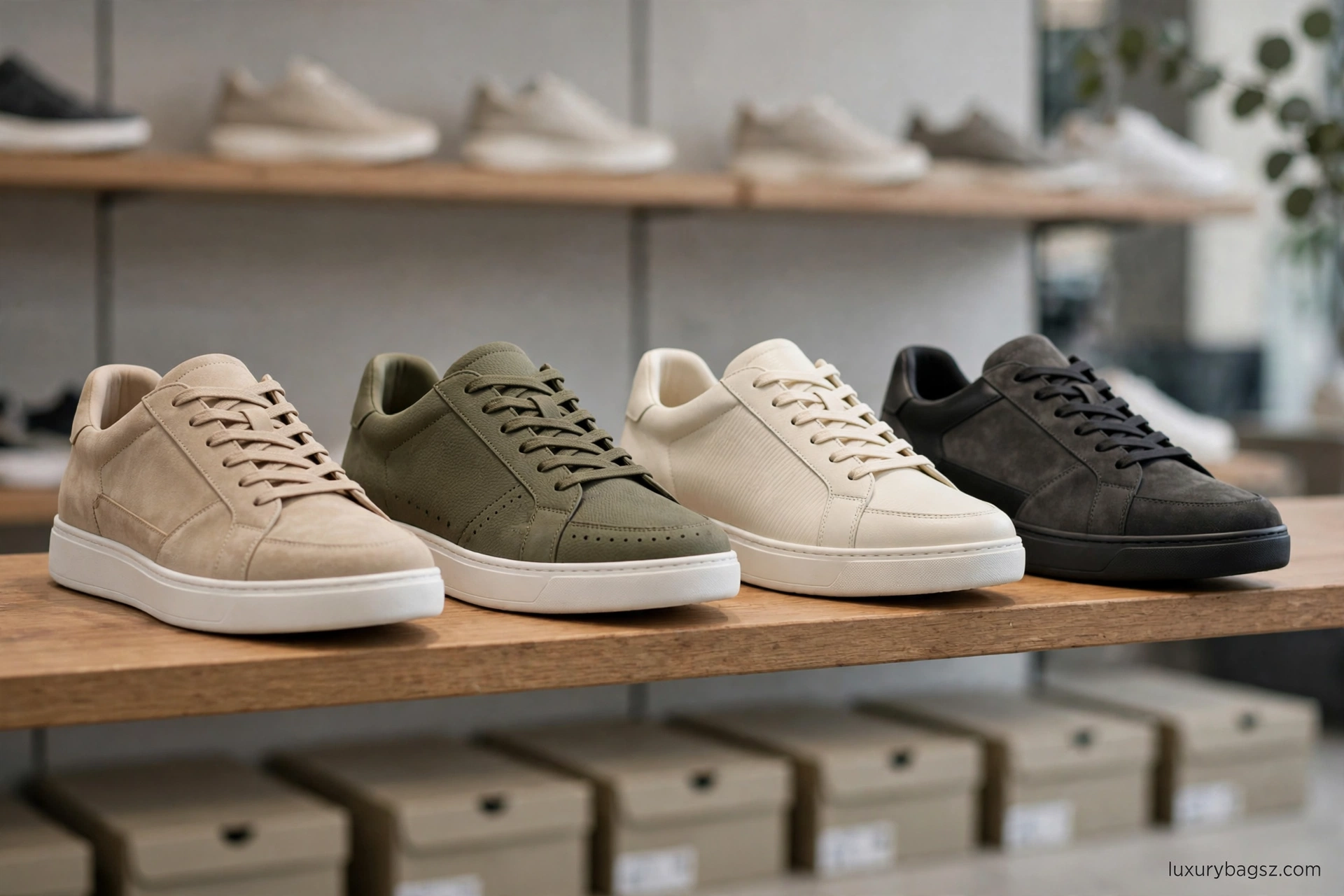
Luxury sneaker reselling works because some sneakers are made in limited numbers, released at a set retail price, and wanted by far more people than can buy them at retail. When demand exceeds supply, a second market appears, where the same pair sells for more than retail, less than retail, or somewhere in between, depending on size, condition, and timing.
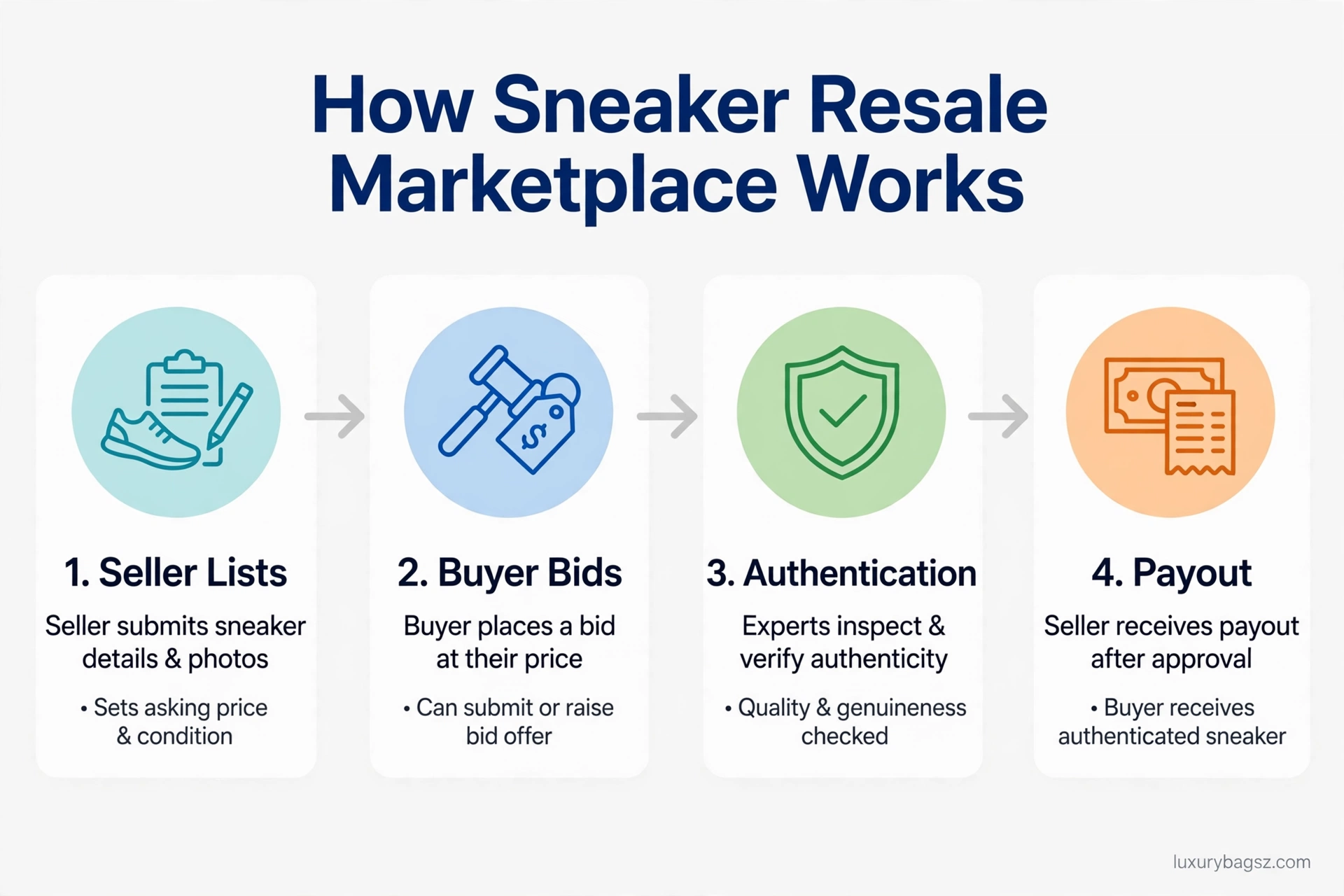
That second market runs mainly through specialist marketplaces that match buyers and sellers, authenticate pairs, and handle payment. A seller lists a pair, a buyer agrees a price, the seller sends the pair to an authentication centre, and only after the pair passes does the buyer receive it and the seller get paid. That middle step, authentication, is what separates modern sneaker reselling from a simple classified advert.
The market is fast, volatile, and unforgiving of mistakes. Prices can move sharply after a restock, a celebrity sighting, or a collaboration announcement. A pair that earns a premium in one size may sell below retail in another. And a pair sent in the wrong box, with the wrong laces, or in worn condition can be rejected at authentication, leaving the seller with return shipping and no sale.
This guide explains the whole chain in order: how pairs enter the market, how marketplaces work, how authentication is done, how prices are set, and how sellers actually get paid.
Key Takeaways
- Sneaker reselling is driven by limited supply meeting wide demand. Scarcity, not just brand, creates resale premiums.
- Most high-value reselling runs through marketplaces that authenticate pairs between seller and buyer.
- Size matters enormously. The same model can command a premium in a popular size and sell below retail in a rare or unpopular one.
- Deadstock, meaning unworn with original box and accessories, commands the highest prices. Worn pairs sell in a separate, lower market.
- Fees, shipping, and authentication rejections all reduce the payout. Compare net payout, not headline sale price.
- Prices move fast. A restock, a new colourway, or a shift in fashion can change a pair's value in days.
Part 1: Why Sneakers Became a Resale Market
Sneakers became a resale market because they sit at the meeting point of fashion, sport, collecting, and street culture. A limited sneaker is not just footwear. It is a design object, a cultural reference, and, for some buyers, a status signal. When a release is limited, owning the pair says something about access, knowledge, and timing, and buyers will pay for that signal.
Luxury houses entered this market by collaborating with sportswear brands and by producing their own high-end sneakers. Those collaborations combine two buyer pools: luxury buyers who want designer quality and sportswear collectors who want the collaboration itself. The result is demand that exceeds even a generous production run, and a resale market that forms within hours of a release.
Scarcity is managed in several ways. Some releases are numbered or produced in a single run. Some are released only in certain regions or stores. Some use raffles, so even willing buyers cannot simply queue and buy. Each method creates the same outcome: more buyers than pairs, and a reason for buyers who missed out to turn to resale.
It is worth stating plainly that most sneakers do not resell above retail. The market focuses on a minority of releases, while the majority of general-release sneakers sell below retail once worn, and often below retail even unworn. Reselling works as a system because the minority of strong releases draws attention, not because every pair is an asset.
Part 2: Drops, Raffles, and How Pairs Enter Resale
A drop is a scheduled release of a sneaker, often announced in advance with a date, time, and retail price. Buyers enter through a brand's own app or website, through a retailer's raffle, or, for some releases, by queuing at a store. Raffles are now the norm for high-demand pairs, because they spread access more fairly than a first-come website rush, though they still leave most entrants disappointed.
Resellers enter the market at this stage, just like other buyers. They enter raffles, buy at retail, and then list pairs for resale. There is nothing secret about that route, and marketplaces do not distinguish between a reseller and a collector at listing stage. The distinction appears later, in volume: a reseller may handle many pairs, while a collector usually sells occasionally.
Some pairs enter resale through retail overstock, employee or early access, or regional releases. A pair released only in one country may command a premium elsewhere, because buyers in other countries cannot buy it locally. Regional premiums are real, but they are also fragile, because a later wider release can remove the scarcity that created them.
Timing at entry matters. A pair bought at retail and listed immediately, while demand is hottest, often achieves the highest price. A pair held for months may rise if supply dries up, or fall if interest moves on. There is no reliable rule for holding versus selling at once, because each release follows its own pattern, and past patterns for one model do not guarantee the same pattern for the next.

Part 3: Deadstock, Used, and Everything in Between
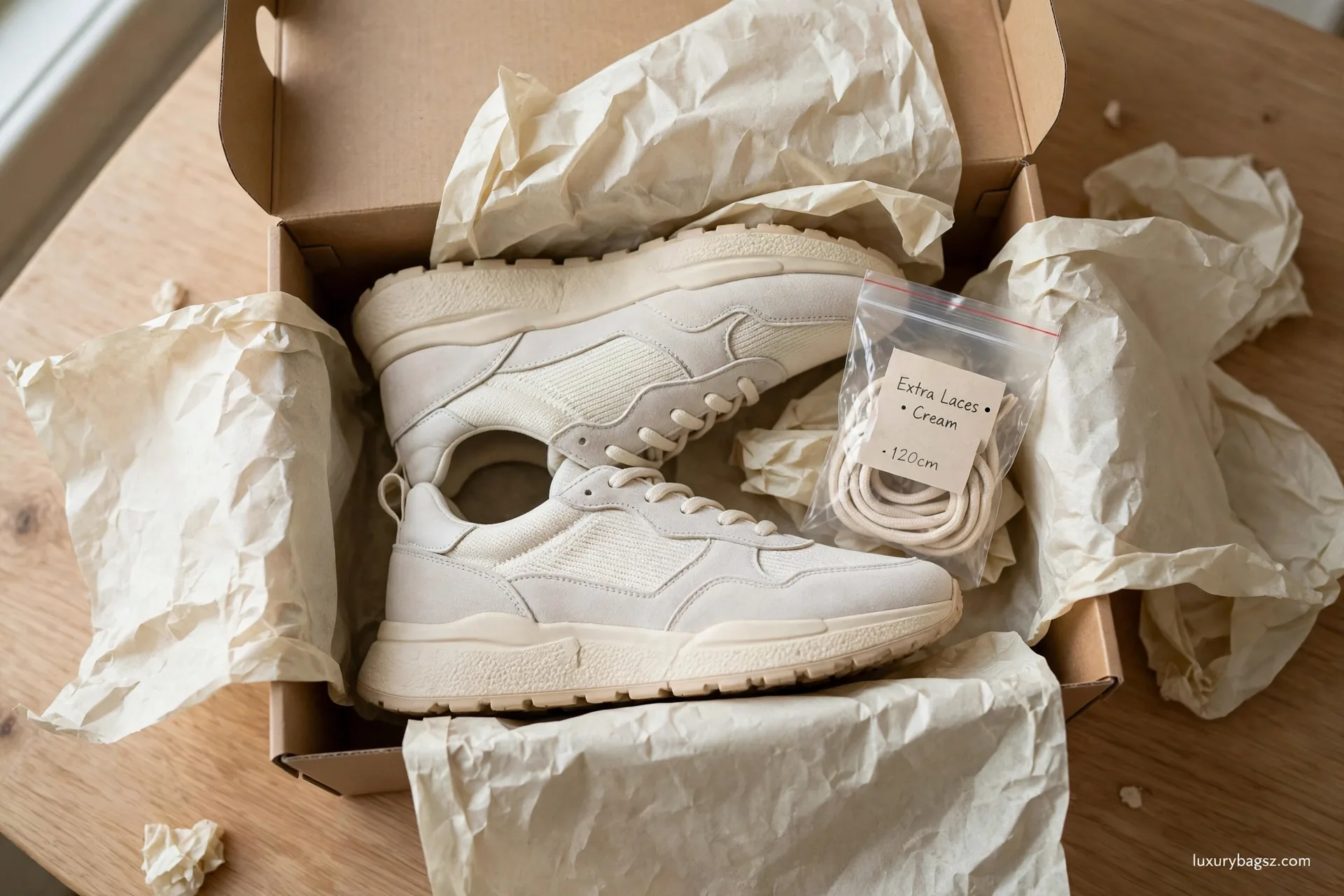
Condition language in sneaker reselling is precise, and sellers must use it honestly. Deadstock, often shortened to DS, means unworn, in the original box, with original laces, tissue, and any extra accessories. A deadstock pair should look as it did when it left the store, allowing for normal storage. Anything less is not deadstock, even if the pair was only tried on indoors.
Worn pairs are graded by wear, and marketplaces usually require clear photographs and honest descriptions for them. Light wear, such as a single indoor try-on, is different from regular outdoor wear, which shows on soles, toe boxes, and heel counters. Creasing, yellowing, scuffing, and sole wear all reduce price, and the reduction grows with visibility and with how much the wear affects future use.
Box condition matters more in sneakers than in many other resale categories. A crushed, torn, or mismatched box lowers value, because collectors treat the box as part of the product. A missing box lowers it further, and a replacement box from a different pair, even if it looks similar, can cause an authentication problem if the size label does not match the pair inside.
Keep boxes stored flat, dry, and undamaged, and never swap lids between pairs.
Accessories matter too. Extra laces, special packaging, hangtags, and collaboration extras are part of the deadstock package for many releases. A pair missing its extra laces may still sell, but at a discount, and a pair missing a collaboration extra may lose a larger share. Photograph every accessory with the pair, so buyers can see exactly what they will receive.
Part 4: Marketplaces — How Buyers and Sellers Meet
Specialist sneaker marketplaces work like a stock exchange for shoes, with one crucial difference: every pair passes through authentication before reaching the buyer. A seller lists a pair at an asking price, or accepts a buyer's offer. A buyer places a bid, or buys at the asking price. When a price is agreed, the seller sends the pair to the marketplace, not directly to the buyer.
The marketplace then checks the pair, and if it passes, sends it to the buyer and releases payment to the seller, minus commission and any fees. If it fails, the sale is cancelled, the pair is returned to the seller, and the buyer is refunded. That structure protects buyers from fakes and protects sellers from false claims, because the marketplace, not the buyer, judges the pair.
Different marketplaces use different fee models, payout speeds, and authentication standards, and sellers should compare them before listing. Some charge a percentage commission plus a fixed transaction fee. Some charge for payment processing. Some offer faster payout for a higher fee, or slower payout at a lower cost. The headline sale price can be identical on two platforms while the net payout differs by a meaningful amount.
Marketplaces also provide price history, which is one of their most useful features for sellers. A price chart showing recent sales by size gives a realistic view of what buyers actually paid, rather than what sellers are asking. Asking prices that sit far above recent sales are unlikely to sell, and they can mislead new sellers into holding a pair while its market cools.
Part 5: Bids, Asks, and the Last Sale Price
Sneaker marketplace pricing borrows language from trading, and understanding it helps sellers avoid common mistakes. An ask is the lowest price a seller will accept for a pair in a given size. A bid is the highest price a buyer is willing to pay for that size. When a bid meets an ask, a sale happens. The last sale price is the price of the most recent completed sale in that size, and it is the best single guide to current market value.
New sellers often price by the highest ask they see, or by a price they saw on social media, rather than by the last sale. That approach leads to listings that sit unsold while the market moves. A better approach is to look at the last several sales in the exact size, note whether prices are rising, flat, or falling, and price at or slightly below the recent range if a quick sale matters, or slightly above it if patience is possible.
Size splits are the most important pricing detail. Popular sizes, often in the middle of the range, usually have the deepest buyer pool and the most stable prices. Very small and very large sizes have fewer buyers, and their prices can be volatile, sometimes higher because of scarcity, sometimes lower because of thin demand.
Never price a pair using the last sale for a different size, because the market for that size may behave entirely differently.
Offers and negotiations exist on some platforms, where a buyer can offer below the ask and a seller can counter. Accepting a low offer quickly can be wise if the market is falling, while holding firm can be wise if the market is rising. There is no formula for this choice, but a seller who checks the price trend before deciding will usually do better than a seller who decides on feeling alone.
Part 6: Authentication — What Gets Checked and Why Pairs Fail
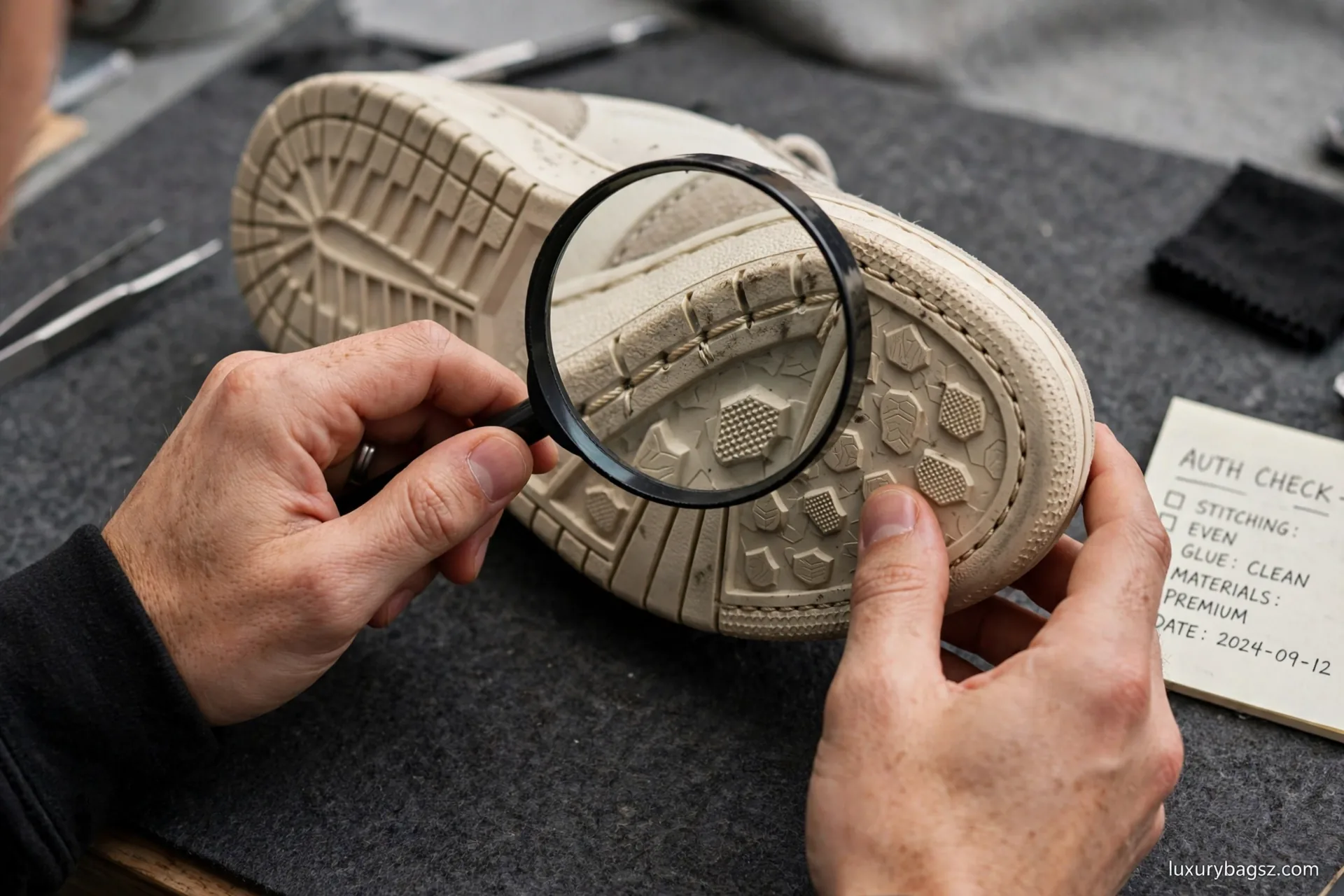
Authentication is the heart of modern sneaker reselling, and it is more thorough than many sellers expect. Authenticators check the box label against the pair, the size, the style code, and the production details. They check materials, stitching, glue work, sole shape, lacing, insoles, and interior labels. They compare the pair with known genuine examples, including details that vary by factory and production run.
Pairs fail authentication for several reasons, and not all of them mean the pair is fake. A mismatched box, a missing accessory that the listing promised, a pair in worse condition than described, or a pair that shows signs of wear when listed as deadstock can all cause a failed check. Genuine pairs fail for condition and description reasons more often than new sellers realise, and each failure costs time, return shipping, and sometimes a fee.
Counterfeit pairs also fail, and the marketplaces' standards have tightened as counterfeits have improved. Modern counterfeits can look convincing in photographs, which is why in-hand authentication matters. An authenticator who can feel materials, smell glue, flex a sole, and compare stitching under magnification will catch details that a photograph hides.
Sellers should welcome that scrutiny, because it is what makes buyers willing to pay resale prices at all.
If a pair fails, the seller should ask for the reason in writing, with photographs where available. That feedback is valuable, because it may reveal a box error, a condition issue, or a listing mistake that can be fixed before relisting. A pair that fails for authenticity reasons should not simply be listed elsewhere in the hope of a less careful check.
That route risks account penalties, buyer disputes, and, for valuable pairs, wider consequences.
Part 7: Storage, Care, and Keeping a Pair Resale-Ready
A pair's resale value is decided long before it is listed, by how it was stored and worn. Deadstock pairs should be stored in their boxes, in a cool, dry place, away from direct sunlight and damp. Sunlight fades colours and yellows soles, while damp encourages mould and box damage. Storing pairs in a loft or garage, where temperatures swing widely, can age materials faster than a stable indoor cupboard.
For worn pairs, care between wears matters. Clean soles and uppers with methods suited to the materials, and let pairs dry fully before boxing them again. Stuffing shoes with tissue or shoe trees helps them hold shape, which matters for photographs and for buyer confidence. Avoid over-cleaning, which can strip finishes, and avoid harsh chemicals on suede, nubuck, or special materials, where damage is hard to reverse.
Rotation also matters for sellers who wear their own pairs. A pair worn daily will show wear far faster than a pair worn occasionally, and that wear will show in the price. That is not a reason to avoid wearing a pair you love, but it is a reason to be realistic about its resale future.
A daily-worn pair is a consumption purchase, not a resale asset, and pricing it as if it were deadstock will only lead to a failed authentication or a disappointed buyer.
Keep purchase evidence as well. Receipts, order confirmations, and raffle win notices all support a pair's history, even though marketplaces authenticate in hand rather than on paper alone. For high-value pairs, that evidence can also help if a dispute arises, because it shows where and when the pair was bought. Store the evidence separately from the box, so a box problem does not also mean a paperwork problem.
Part 8: Pricing, Timing, and Market Moves
Sneaker prices move for reasons that are often visible in advance, if sellers watch the right signals. A restock announcement usually lowers resale prices, because supply rises. A celebrity or athlete wearing a pair publicly can raise prices, because demand rises. A new colourway in the same model can either lift interest in the whole range or draw buyers away from older colourways, depending on how the new version is received.
Seasonal patterns play a role too. Some styles sell more strongly in particular seasons, and gifting periods can lift demand across the market. A seller with no deadline can wait for a stronger period, while a seller who needs a quick sale should price for the current market rather than for a hoped-for future rise. Holding a pair in the hope of a rise is a bet, and it should be recognised as one, not treated as a certainty.
Hype cycles deserve caution. A pair that rises sharply on social media attention can fall just as sharply when attention moves on, especially if the rise was driven by speculation rather than by collectors who want to wear the pair. Sellers who bought at retail and sell into a hype rise do well. Sellers who buy at a hype peak, hoping for a further rise, often become the buyers who absorb the fall.
The safest approach is to sell into strength when you already hold a pair, rather than buying into strength in the hope of more.
Price tracking tools on marketplaces help sellers follow these moves, but they should be used with care. A single sale at an unusual price does not set a new market level, and a price chart that mixes sizes, conditions, or regions can mislead. Always filter by the exact size and condition, and look at a run of recent sales rather than a single data point.
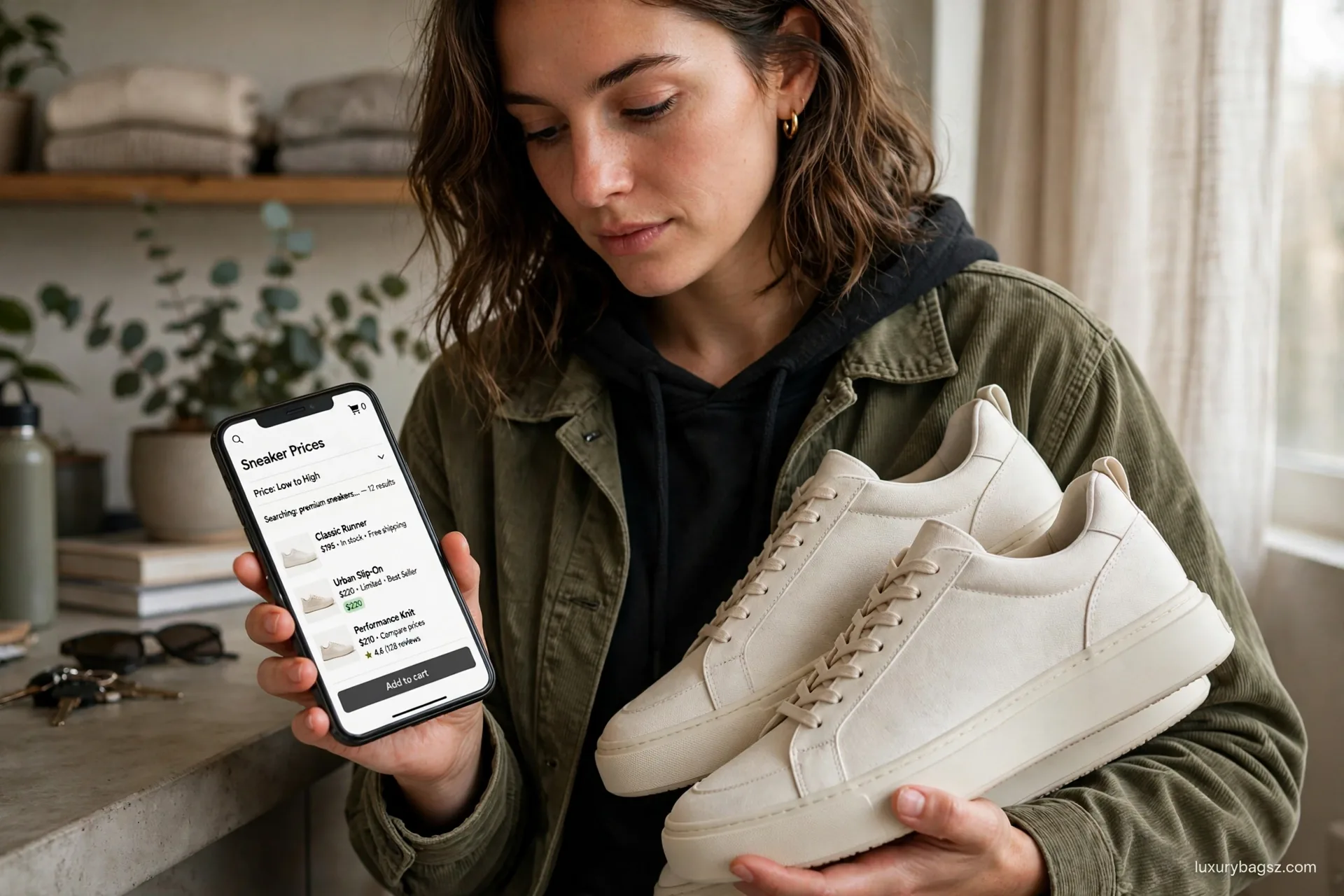
Part 9: Fees, Payouts, and the Net Figure
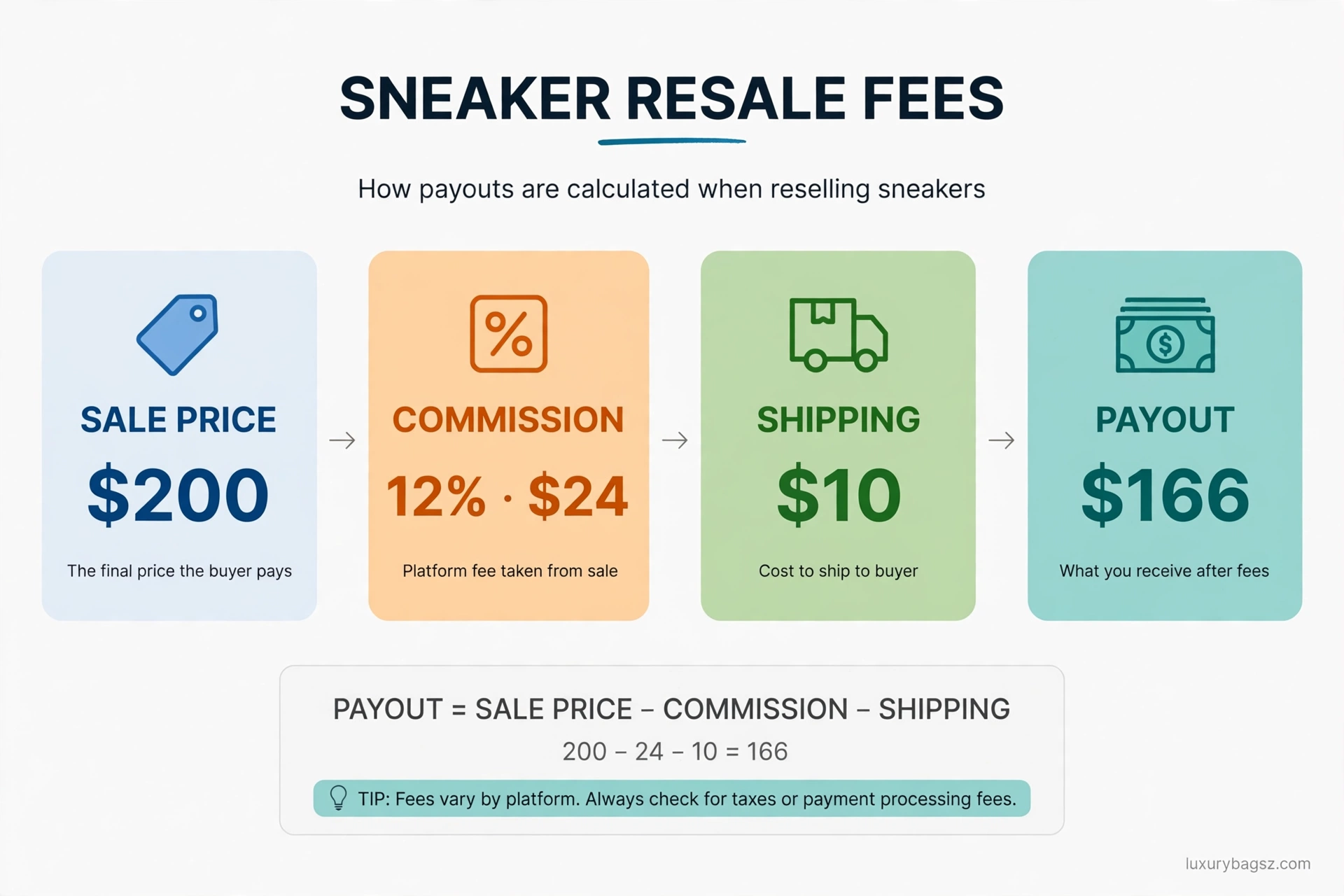
Fees are where many new resellers lose money without realising it. A sale price is not a payout. Commission, transaction fees, payment processing, and shipping all sit between the two, and on some platforms the seller also pays for authentication or for a payout method. A pair sold for 300 may pay out 240 after all deductions, and a pair sold for 200 may pay out far less in proportion if fixed fees are high.
Work out the net figure before listing, using the platform's own fee calculator or fee page, and compare platforms at the same sale price. A platform with a lower commission but higher fixed fees may be worse for low-priced pairs and better for high-priced ones. A platform with faster payout may charge more for that speed, which matters only if timing is important to you.
Payout timing also varies. Some platforms release payment soon after authentication passes and the buyer confirms receipt. Others hold payment for a short period to cover returns or disputes. Sellers should know the timetable before listing, especially if they rely on the payout to fund another purchase.
A delayed payout is not automatically a problem, but an unexplained delay, or a platform that changes its timetable without notice, deserves attention.
Tax treatment depends on country and on whether selling is occasional or regular trading, and sellers who resell at volume should take local advice rather than assuming personal-sale treatment applies. Keep records of purchase prices, sale prices, fees, and payout dates for every pair, because those records are the basis for any tax calculation and for judging whether reselling is actually profitable after costs.
Part 10: Risks, Scams, and Protecting Yourself
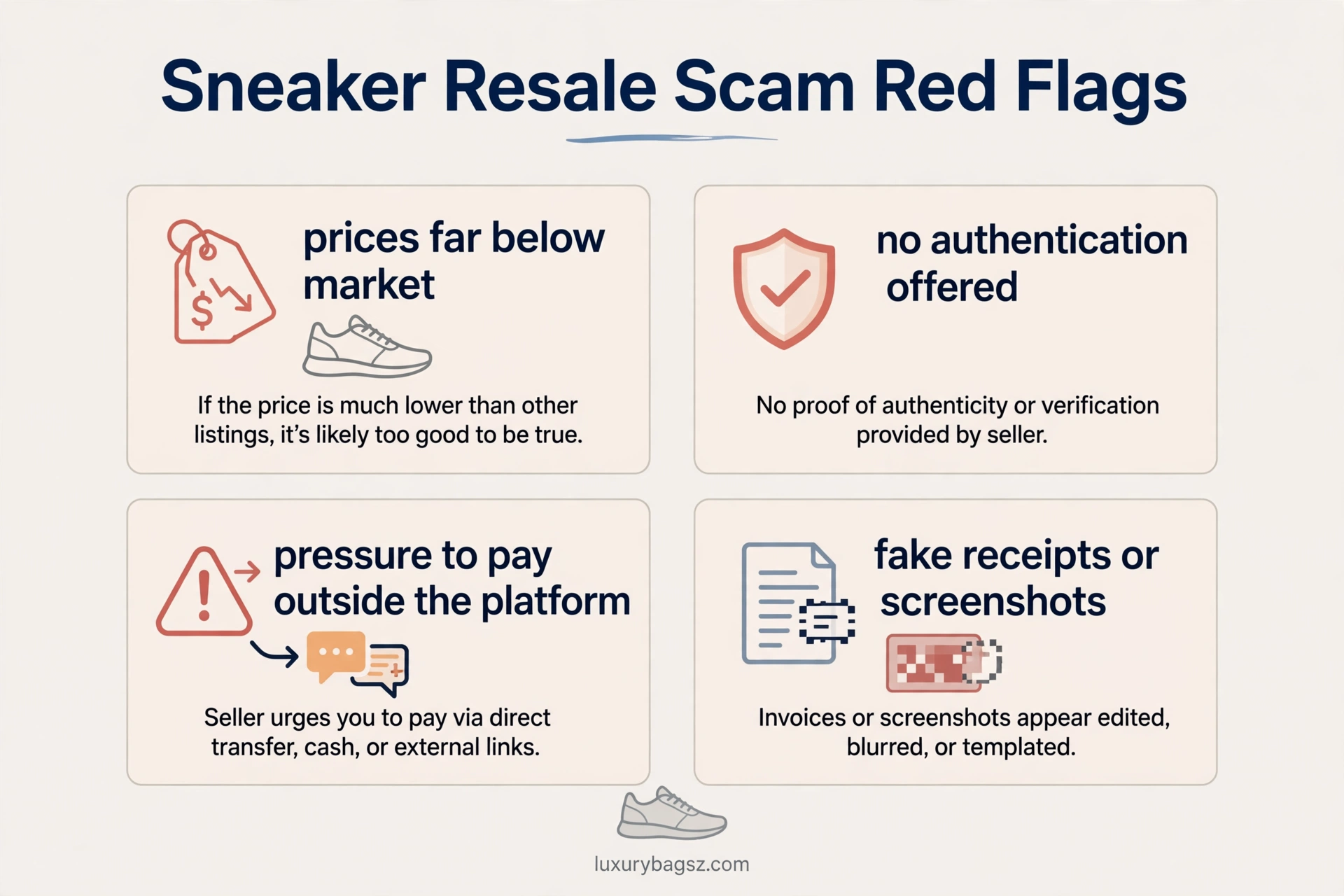
Sneaker reselling carries risks that new sellers underestimate. The most common is the fake pair entering the market, whether bought unknowingly at retail from an unreliable source, or bought pre-owned without authentication. Buying only from reputable retailers, brands, and authenticated marketplaces reduces that risk sharply, while buying from unknown sellers on social media, without authentication, increases it.
Payment scams are another risk, especially for private sales outside marketplaces. A buyer who offers to pay by an untraceable method, who asks the seller to send the pair before payment clears, or who proposes a deal far above market price in exchange for unusual payment terms, should be treated with suspicion.
Marketplaces exist partly to remove that risk, and private sales should use traceable payment, insured delivery, and written terms agreed before dispatch.
Account risks matter too. Marketplaces penalise sellers who repeatedly send misdescribed pairs, mismatched boxes, or counterfeits, and penalties can include fees, suspension, or a ban. A seller's account reputation, built over many successful sales, is an asset worth protecting. One careless listing can damage it, while a pattern of honest, accurate listings builds buyer trust and repeat sales.
Finally, reselling at volume brings practical risks: storage space, capital tied up in stock, and the chance that a market falls while stock is held. A collection of pairs bought at resale prices, in the hope of further rises, is an investment portfolio in all but name, and it carries investment risk.
Sellers should only commit money they can afford to have tied up, and should treat any single pair's future price as uncertain, however strong its current market looks.
Part 11: Buying Resale Sneakers — A Buyer's Mirror Image
Everything in this guide so far has been written largely from the seller's side, but buyers need the same knowledge in reverse, because a buyer who understands how reselling works is far harder to mislead. Start, as a buyer, with the same price history a seller uses: recent sales in the exact size and condition, not asking prices, not social media claims, and not a single unusual sale.
A pair whose last sales cluster tightly around one price has a stable market. A pair whose sales scatter widely has a volatile market, and a buyer should price for that volatility rather than paying the top of the range.
Check the seller's history as well as the pair's history, especially for private sales outside marketplaces. A seller with many successful sales, detailed listings, and clear flaw photographs is a lower-risk prospect than a new seller with a single glamour photograph and a price below market.
That does not mean new sellers are dishonest, because every seller starts somewhere, but it does mean a new seller's pair deserves extra scrutiny, ideally through an authenticated marketplace rather than a direct payment.
Inspect on arrival with the same checklist used for grading: soles, box label, heel tips, toe boxes, insoles, and accessories, compared with the listing photographs. Do this promptly, in daylight, before wearing the pair outdoors, because once a pair is worn, a return becomes far harder to argue.
If anything differs from the listing, photograph it at once and contact the seller or platform, with the listing details and your photographs side by side. A clear, prompt, factual message resolves most disputes faster than an angry one sent days later.
Buyers should also think about fit and wearability, not just authenticity and price. A deadstock pair in a size that does not fit is a poor purchase, however good its market price, because returning or reselling it costs time and fees. Check sizing guidance for the specific model, because sneaker sizing varies by design, and a size that fits in one model may not fit in another.
Where possible, try the model on in a store before buying it resale, even in a different colourway, so the resale purchase is about the pair, not about guessing fit.
Buyers should also set a personal maximum price before they start bidding, and stick to it even when a listing is about to close. A maximum price, written down before emotion enters the decision, protects against the auction effect, where each small increase feels harmless until the total far exceeds the pair's market value. If a pair passes your maximum, let it go.
Another pair, in the same size and condition, will appear, and buying it at a calm price will feel far better than winning a bidding contest at a price you later regret.
Finally, buyers should resist the pressure that surrounds hyped releases. A pair that sells out in minutes creates urgency, and urgency creates poor decisions, from paying far above market to buying from an unauthenticated seller. The pair will usually appear again, either through a restock, a wider release, or a resale listing at a calmer price.
Waiting a week, checking the price history, and buying through an authenticated route is almost always wiser than paying a panic premium on the day of release.
Frequently Asked Questions
How does luxury sneaker reselling work?
A seller lists a pair on a marketplace, a buyer agrees a price, the seller sends the pair for authentication, and once it passes, the buyer receives it and the seller is paid minus fees. Limited supply and wide demand create the resale market in the first place.
What does deadstock mean in sneaker reselling?
Deadstock means unworn, in the original box, with original laces and accessories, looking as it did when bought. A pair tried on, worn outdoors, or missing its box or accessories is not deadstock, even if it looks nearly new.
Why do some sneakers resell above retail and others below?
Above-retail prices come from limited supply meeting strong demand for a specific model, colourway, and size. Below-retail prices are normal for general-release pairs, unpopular sizes, or worn pairs, where supply exceeds buyer demand.
How does sneaker authentication work?
An authenticator checks the pair in hand against known genuine examples, including box labels, materials, stitching, soles, and interior details. Pairs can fail for fakes, but also for mismatched boxes, missing accessories, or condition worse than described.
What fees do sneaker marketplaces charge sellers?
Fees vary by platform and usually include a percentage commission plus fixed transaction or payment fees, and sometimes shipping or payout charges. Always calculate the net payout at your expected sale price before listing, rather than comparing headline prices alone.
Does size affect sneaker resale value?
Yes, greatly. Popular middle sizes usually have the deepest buyer pool and most stable prices. Very small and very large sizes can be volatile, sometimes higher through scarcity, sometimes lower through thin demand. Always price by the exact size.
Can I resell worn sneakers?
Yes, through marketplaces and private sales that accept used pairs, provided the condition is described honestly with clear photographs. Worn pairs sell for less than deadstock, and the discount grows with sole wear, creasing, and visible damage.
How long does it take to get paid when reselling sneakers?
It depends on the platform, authentication time, delivery time, and any hold period after the buyer receives the pair. Days to a couple of weeks is common, and sellers should check the platform's stated timetable before listing rather than assuming instant payment.
Is sneaker reselling profitable?
It can be, for sellers who buy at retail, sell into strong demand, and control fees and shipping costs. It is not reliably profitable for buyers who purchase at resale peaks, ignore fees, or hold stock through market falls. Most pairs do not resell above retail.
How do I avoid buying fake sneakers for resale?
Buy from reputable retailers, brands, and authenticated marketplaces, keep purchase evidence, and have any doubtful pair authenticated in hand before reselling it. Avoid unknown social media sellers, deals far below market price, and any seller who refuses authentication.
Summary
Luxury sneaker reselling works as a system because scarcity, marketplaces, and authentication fit together. Limited pairs create demand, marketplaces match buyers and sellers, and authentication gives buyers the confidence to pay resale prices.
Sellers who do best in that system are disciplined. They buy at retail where possible, keep pairs deadstock with complete boxes, describe condition honestly, price by recent sales in the exact size, and calculate net payout before listing. Sellers who chase hype, ignore fees, or send misdescribed pairs pay for those mistakes quickly.
Treat sneaker reselling as a fast-moving market, not as a guaranteed profit route. Respect its speed, use its authentication, and let a realistic net figure, not a headline sale price, decide whether a pair is worth selling.
That discipline is what separates sellers who last from sellers who burn out after a few hype cycles. The market rewards patience, accurate descriptions, and complete boxes far more reliably than it rewards chasing the next release. Build a record of clean sales, learn one model's market deeply before moving to the next, and keep enough margin in every deal to absorb a fee, a return, or a price move without turning a good sale into a loss.
Done that way, sneaker reselling can be an enjoyable, sometimes profitable side activity, grounded in knowledge rather than in hope. Keep records of every pair, review your results honestly after each sale, and be ready to walk away from a deal whose fees, condition, or timing do not add up. The sellers who survive in this market are not the ones who win every release.
They are the ones who protect their capital, their account reputation, and their judgement, sale after sale, until good decisions compound into steady results.






