

How to Spot a Fake The Row Margaux Bag
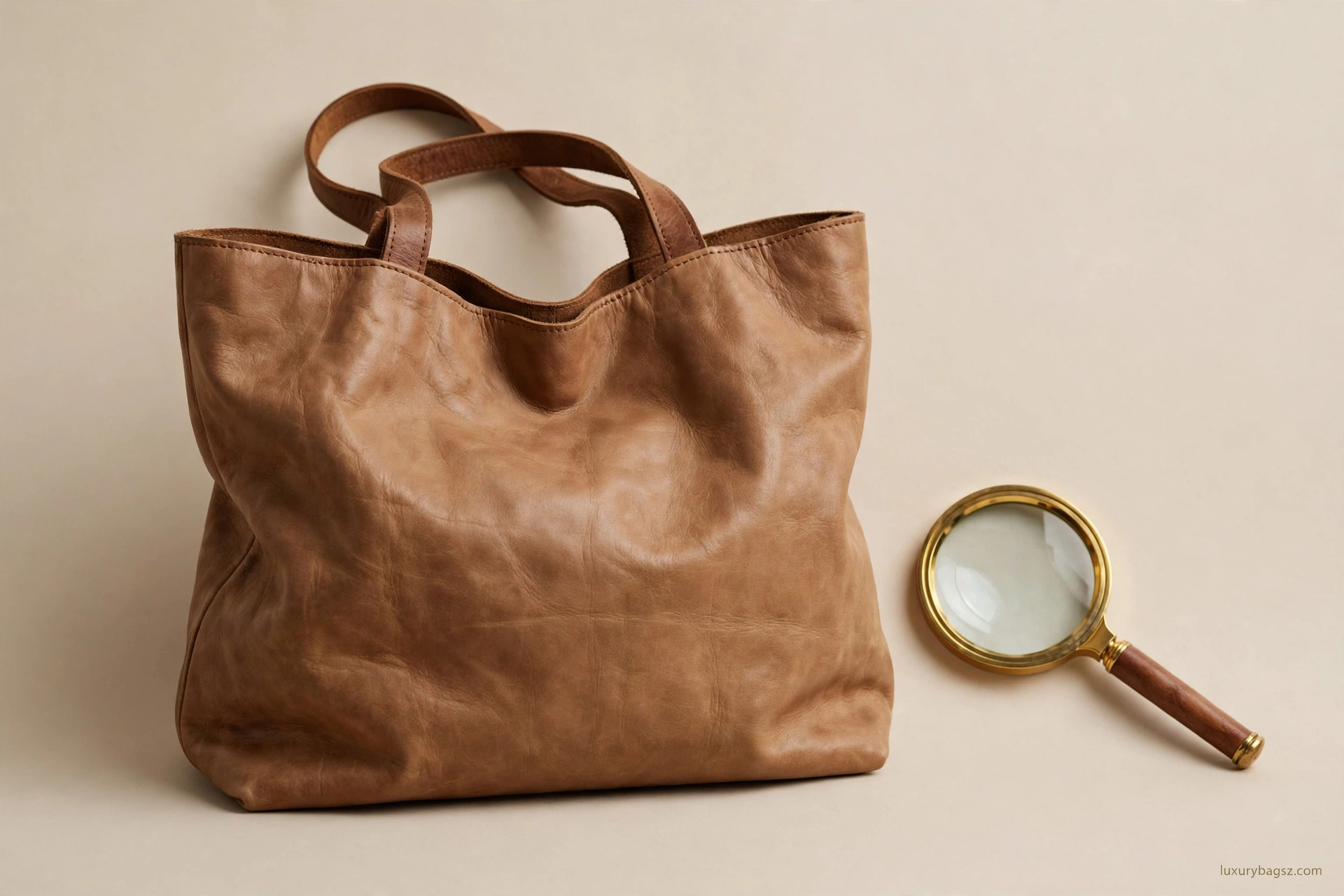
Where a Quiet Bag Cannot Hide Flaws
With almost no branding to distract the eye, start with leather and outline. A genuine Margaux feels supple, full-bodied and natural to the touch, whether in smooth calfskin, grained leather or suede, and it should never seem thin, stiff or sealed beneath a heavy shine.
Set it down empty and study the silhouette. The form widens at the base and narrows gently toward the top, standing with soft definition rather than collapsing into a pouch or holding the hard corners of a box. Handles should drop evenly on both sides.
Because the detailing is so restrained, small faults stand out. Look for tonal stitching of uniform length, smoothly finished edges and corners, and measurements that match the stated size, whether 10, 12, 15 or 17.
The Margaux in Brief
The Row Margaux is a difficult bag to authenticate precisely because it is deliberately quiet. There is no loud monogram, no busy hardware and no decorative detail to copy badly. The Margaux, introduced as part of The Row's understated luxury offering and named with the brand's usual restraint, is a trapezoid tote in soft, high-quality leather, carried by top handles with a detachable shoulder strap on many versions.
Its luxury is in the leather, the proportions and the finishing — which means a fake must get those quiet things right, and most do not.
That quietness cuts both ways for buyers. A genuine Margaux can look plain in a photograph, and an ordinary-looking tote can pass a casual glance. So do not authenticate from a single glamour shot. Work through the checks below as a set: shape, leather, stitching, edges, hardware, interior and seller evidence together.
Genuine Margaux bags vary by size — including 10, 12, 15 and 17 — and by leather, from smooth calfskin to grained and suede versions, so always judge the bag against its own version. When several checks fail together, walk away, however convincing the price or the story sounds.
Key Takeaways
- The Margaux's trapezoid shape and soft structure are the first test: it should taper gently, sit cleanly and never look like a rigid box or a shapeless sack.
- Real Margaux leather is the star: supple, full-bodied and natural-looking, never plasticky, papery or coated in a thick shine.
- Stitching is tonal, even and almost invisible by design, which makes uneven or contrasting stitching a strong warning.
- Minimal branding means every logo, stamp and fitting must be perfect: crisp, correctly spelled and correctly placed, with no excess hardware.
- A fake Margaux often fails on proportion and finishing before it fails on logos, so measure the bag and inspect edges and corners closely.
The Margaux leaves me almost nothing to read, which is exactly why I trust my hands on it. I start with the leather — smooth calfskin, grained or suede, it should feel supple and full-bodied, never thin, stiff or sealed under shine. Then I set the bag down empty and study the silhouette as it widens at the base and narrows gently at the top. With branding this quiet, flaws have nowhere to hide, and stitching, edges and measurements must all be perfect. Having examined over 500 bags, I find the Margaux the purest test of leather judgement there is.
Part 1: Know Which Margaux You Are Looking At
Identify the size and leather before judging anything. The Margaux numbering broadly reflects size, with the 10 being the smallest everyday option and the 17 a large tote, and each size has its own proportions, handle drop and interior layout. A bag sold as a 12 that measures like a 15 is not a measuring difference; it is a misdescription or a fake.
Ask the seller to state the size, leather and colour, and to photograph any receipt, care card or listing details that support those claims. Seasonal colours and special leathers, including suede versions, change the feel and the care of the bag, so a suede Margaux should not be judged by smooth-leather standards.
If the seller cannot name the size or leather, proceed only with extra caution and complete photographs, since you cannot verify proportions without knowing which version you are verifying against.
Part 2: The Silhouette Test
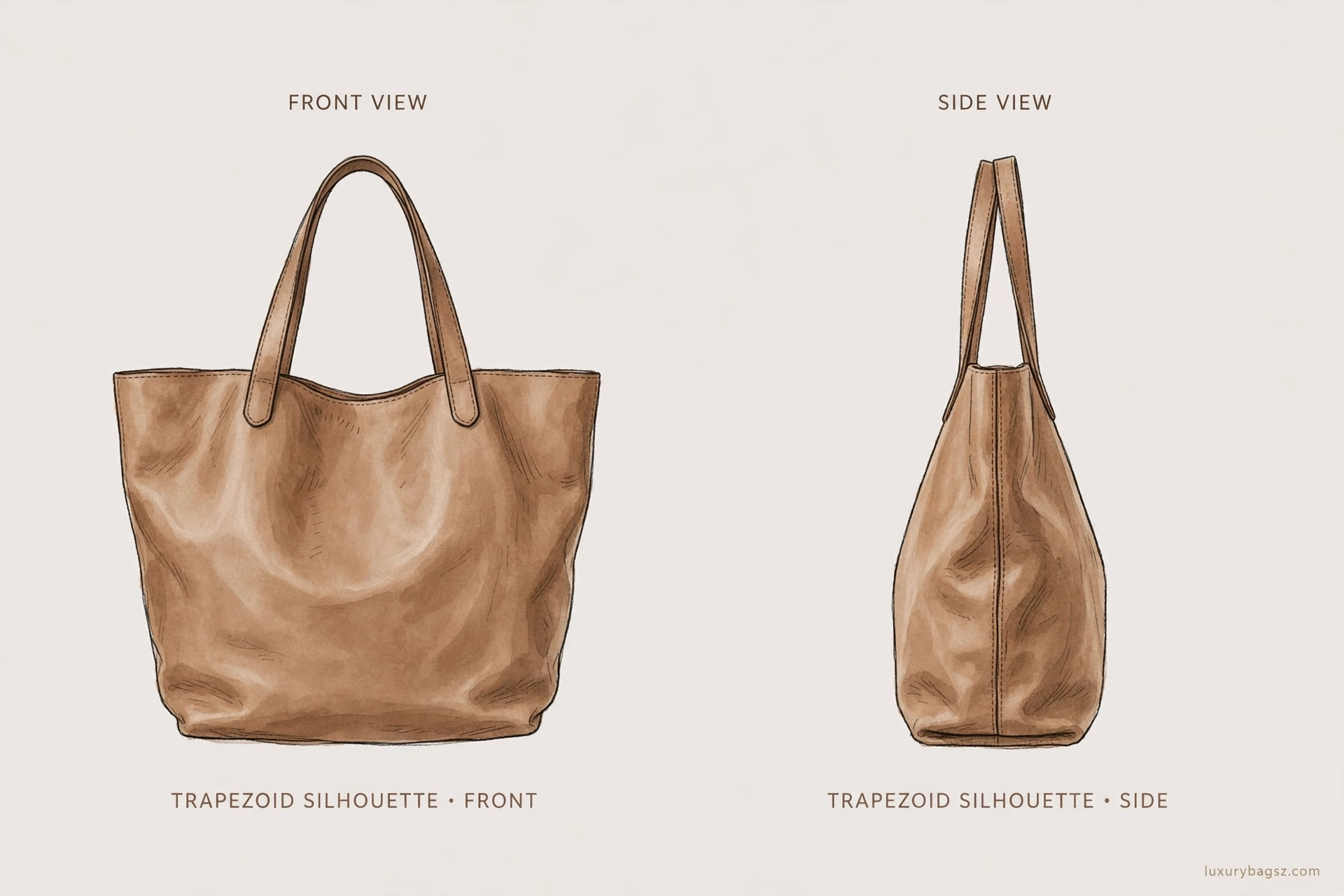
Set the bag on a flat surface, empty, and study its outline. A genuine Margaux has a clear trapezoid silhouette: wider at the base, tapering gently toward the top, with soft but defined sides. It is structured enough to stand, yet soft enough to show the natural drape of leather. The top handles should fall symmetrically, and the bag should not lean, twist or collapse to one side.
Fakes fail this test in two directions. Some are cut too rigidly, standing like a stiff box with hard corners that the real bag never has. Others are too soft, slumping into a shapeless pouch that loses the trapezoid outline entirely. Neither matches the genuine balance of soft structure.
Check the bag both empty and pictured full: a real Margaux fills without bulging at the sides or distorting the taper, while a poorly cut copy often balloons or pulls out of shape once loaded. Corners deserve special attention, since rounded, puffy or uneven corners betray poor pattern cutting.
Part 3: Leather Quality Above All
If one check matters most for the Margaux, it is the leather. The Row built its reputation on exceptional materials, and a genuine Margaux feels it immediately: supple, substantial, smooth to the touch and natural in grain. Smooth calfskin shows a fine, even grain; grained versions show a deeper, irregular pebble; suede versions feel soft and napped without bald patches or a shiny, pressed surface.
Fakes most often fail here. Leather that feels thin, stiff, plasticky, coated or unnaturally uniform across the whole bag should raise suspicion, as should a strong chemical smell, although smell alone proves little and should only support other evidence.
Look at the leather in natural light and across different panels: real leather shows gentle natural variation, while many fakes show a printed, repeating grain pattern that looks identical everywhere. Also inspect areas that receive less finishing, such as inside a pocket or under a handle attachment, where synthetic backing or a uniform foam-like reverse can give a copy away.

Part 4: Proportions and Measurements
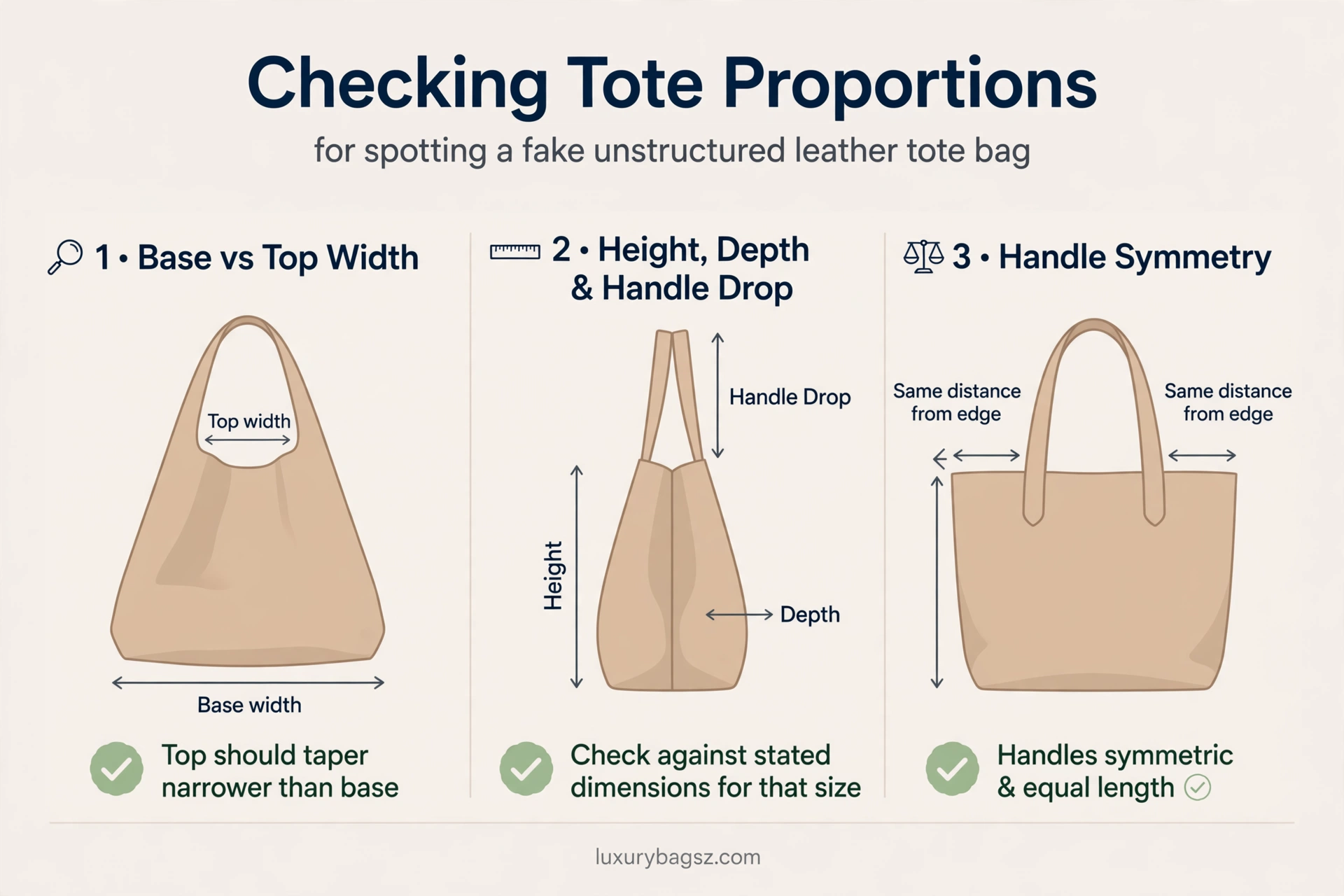
Because the Margaux is minimal, proportions carry unusual weight. Measure width at the base and at the top, height and depth, and compare with the stated dimensions for that size, allowing only a small margin for measuring method and leather softness. Also measure the handle drop and, where a shoulder strap is included, its length and width.
A bag that is several centimetres out in any dimension, or whose top opening is nearly as wide as its base instead of tapering, has a proportion problem that no story about leather softness explains. The same applies to handle placement: handles should sit symmetrically and at the same distance from each edge. Handles that are visibly off-centre, uneven in length or attached at different heights were not made to The Row's standard.
When sources disagree about a dimension, compare several reputable listings measured the same way, and ask the seller to re-measure in a photograph with a tape measure visible.
Part 5: Edge Finishing and Corners
Examine every cut edge: the top edge, the sides, the base corners, the handle edges and the strap edges. On a genuine Margaux, edges are finished smoothly and evenly, in a tone that matches the leather, without drips, bubbles, cracking or rough fibres catching a fingernail. The finish should look like part of the bag, not painted on as an afterthought.
Fakes frequently show edge shortcuts: paint that is too thick or glossy, edges left raw and fibrous, colour that does not match the leather, or finish that peels at a corner. Corners are the hardest part to finish well, so inspect them closely in photographs and in hand. A corner that is already cracking, peeling or uneven on a bag described as new or lightly used is a serious warning.
Edge work is slow and skilled; counterfeiters rush it, and the result is visible to anyone who looks closely rather than admiring the bag from across the room.
Part 6: Stitching So Quiet It Must Be Perfect
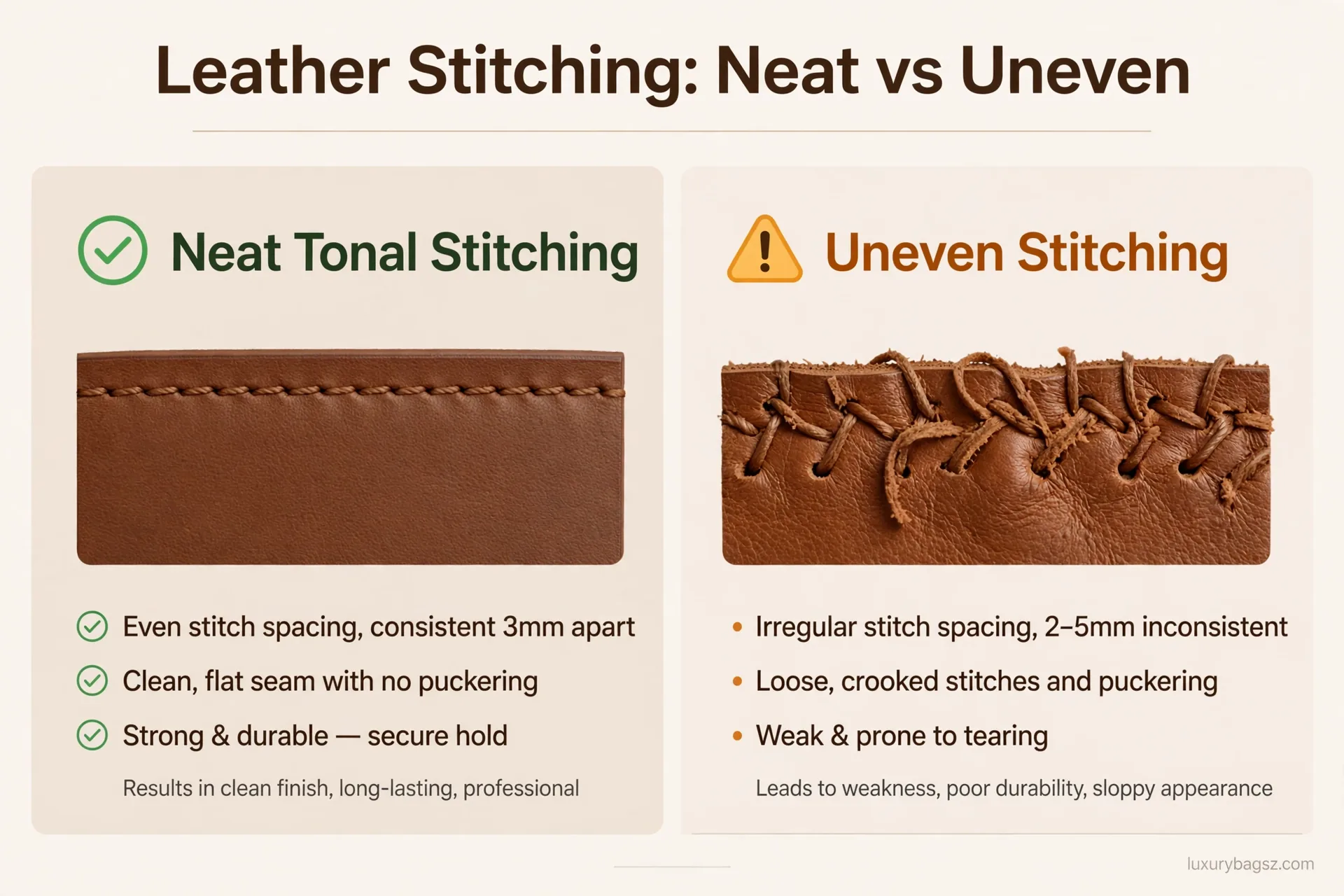
Margaux stitching is designed to disappear: tonal thread, even length, consistent tension and a straight line that follows the edge at a constant distance. That discretion makes flaws easier, not harder, to spot, because there is no decorative stitching to hide behind. Every stitch should look like its neighbours, and the thread colour should match the leather closely unless the version intentionally uses a contrast detail.
Compare matching areas, such as the two handle attachments or the two ends of a pocket, and count stitches where you can. Genuine work usually matches; fake work often does not, with one side showing more stitches than the other or a stitch line that drifts toward and away from the edge. Check the reverse of stitching wherever it is visible inside the bag for loose threads, knots and uneven tension.
A single damaged stitch on a used bag can be wear, but a pattern of wandering, uneven stitching across the whole bag is a manufacturing signature, not ageing.
Part 7: Branding, Stamps and the Quiet Logo
The Row branding is minimal, which means each instance must be flawless. Look for the brand stamp or logo where the version places it, usually discreetly inside, and read it letter by letter. Genuine stamping is crisp, evenly spaced and struck to a consistent depth, with a clean typeface and no doubling, blurring or misspelling.
Fakes sometimes use a slightly wrong font, letters that are too thick or too thin, spacing that is too wide, or a stamp placed crookedly or in the wrong position for the version. Because the branding is so restrained, a counterfeiter may also over-brand the bag, adding logos or embossing where the genuine version has none — an immediate warning.
Conversely, a faint stamp alone does not prove a fake, since stamps fade with use and some genuine stamps are light. Judge the stamp alongside the leather, stitching and edges: faint plus flawless elsewhere is a different picture from faint plus sloppy finishing everywhere.
Part 8: Hardware, Handles and Strap Fittings
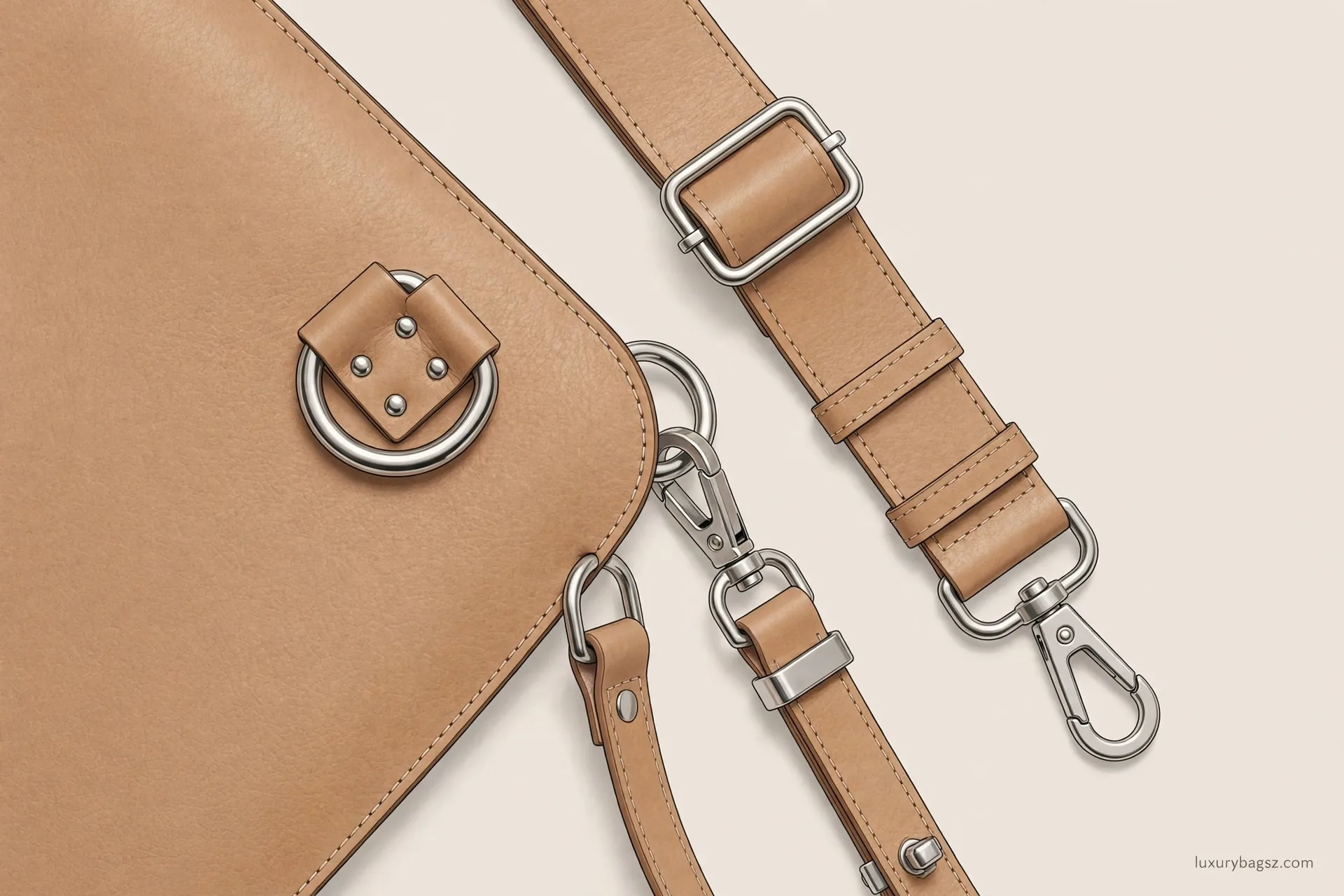
Margaux hardware is minimal and refined: small, well-finished fittings, smooth zips where present, and handle and strap attachments that feel solid and sit symmetrically. Metal should have a consistent tone and finish across every fitting on the bag, without patchy plating, bubbling, sharp unfinished edges or a tinny, hollow feel.
Test every moving part. Zips should glide smoothly without catching, clasps should close securely, and detachable straps should attach and detach cleanly without wobbling. Check handle construction carefully: handles should be evenly padded where the design calls for padding, evenly stitched, and attached with the same stitch count and placement on both sides.
A handle that twists, feels unevenly filled or shows different stitching on each side was not finished to genuine standard. As with other checks, a single replaced fitting on an older bag is possible, so ask about repairs before treating one fitting as a verdict.
Part 9: Interior, Lining and Pockets
Open the bag and inspect the interior with the same care as the outside. The lining should fit cleanly, without bunching, sagging, glue marks or loose threads, and interior pockets should be neatly stitched, correctly sized and positioned as on the genuine version. Suede or leather interiors vary by version, so confirm what your version should have before judging.
The interior stamp deserves close reading, and the base deserves attention too: a genuine interior base sits flat and is finished to match the rest of the bag, while a wrinkled, sagging or roughly cut base suggests rushed assembly. Fakes often concentrate on the exterior and let the interior slip, with thin-feeling linings, crooked pockets or blurry stamps.
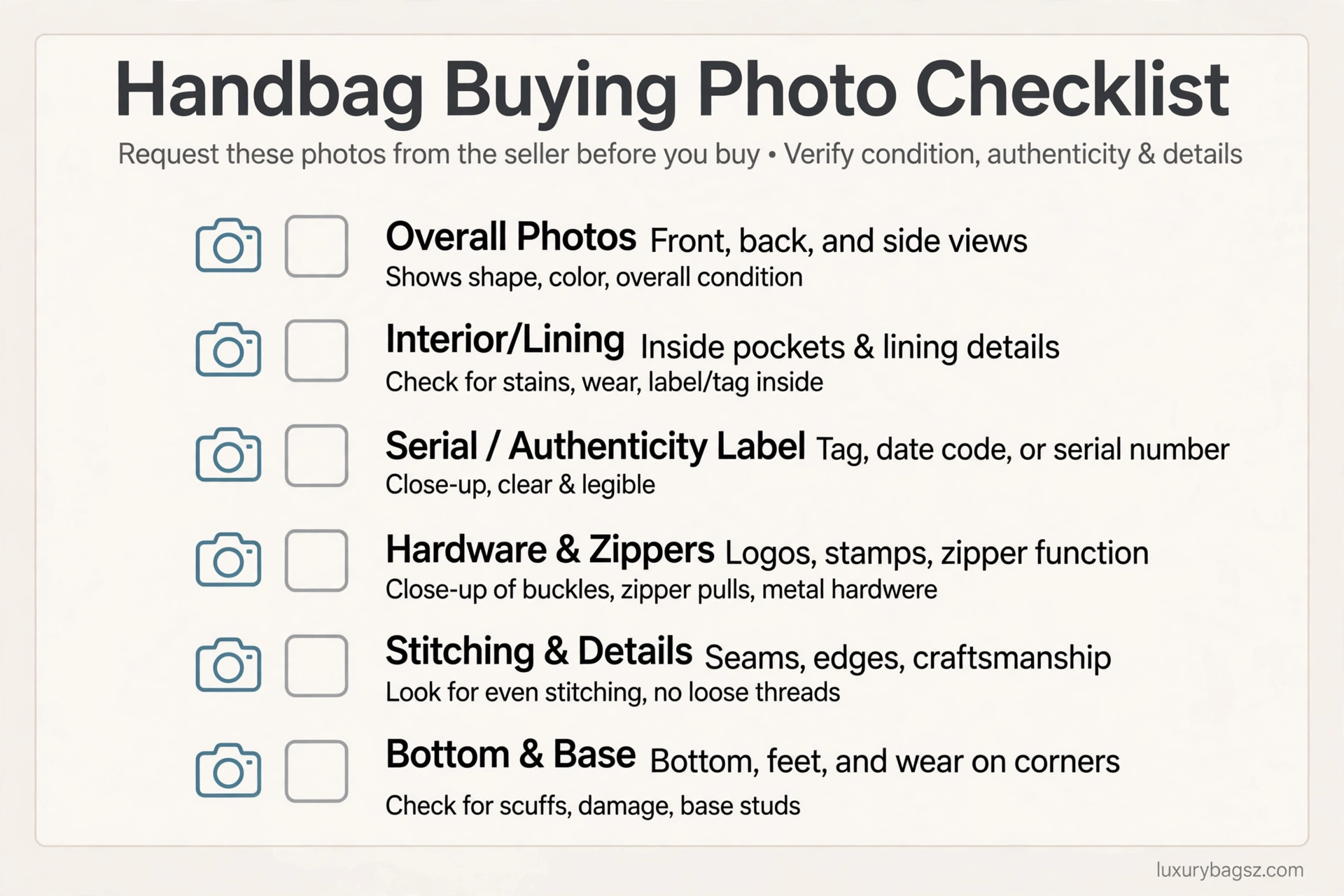
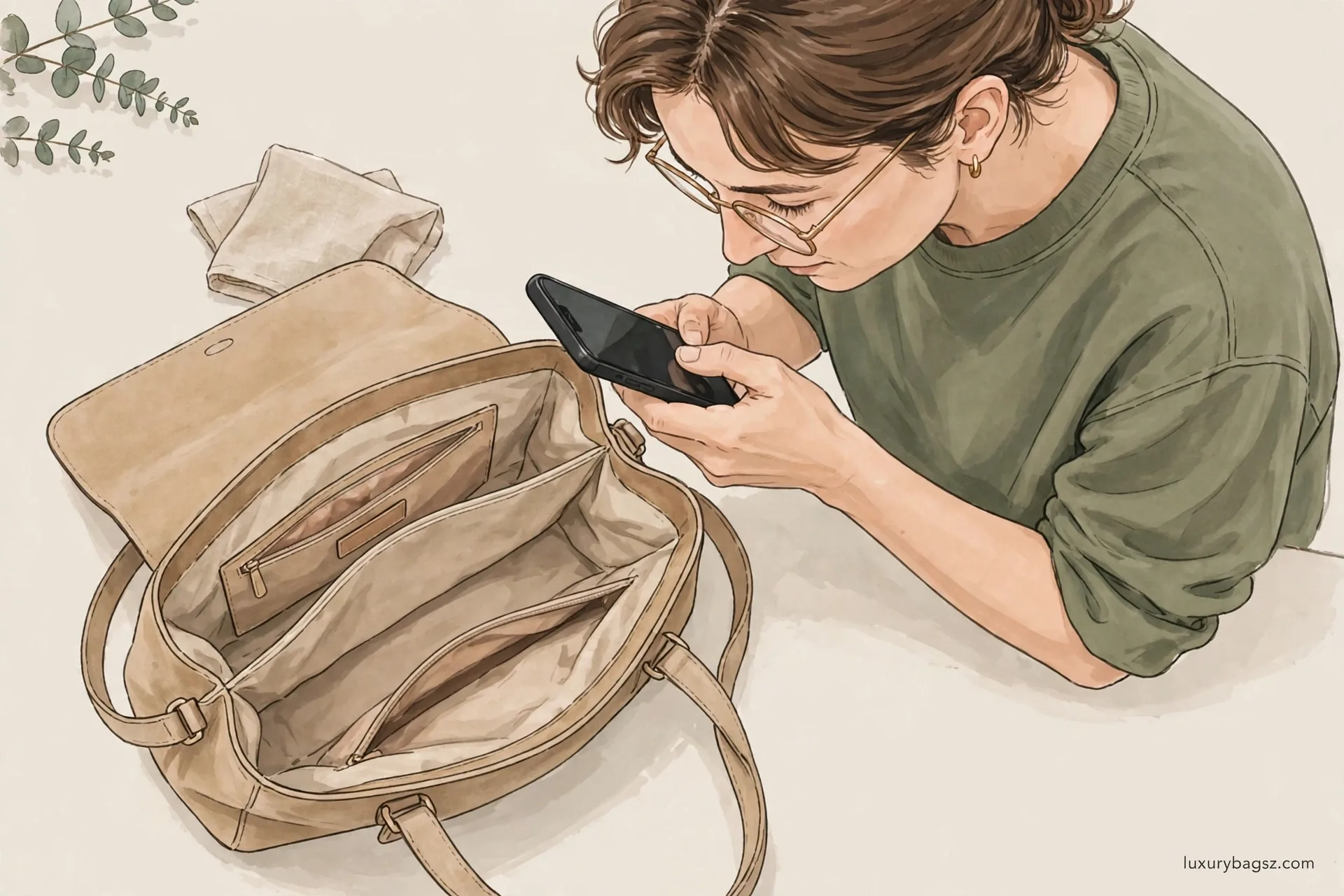
Request photographs of the empty interior, each pocket, the base and the stamp, all in daylight and in focus, before paying. A seller who photographs only the outside is asking you to authenticate half a bag.
Part 10: Cards, Dust Bag and Packaging
The Row's packaging is as understated as the bag: a quality dust bag, care materials and a box where supplied. Treat all of these as weak evidence on their own. Dust bags, cards and boxes are copied, and genuine pre-owned bags are frequently sold without the full set, so neither presence nor absence settles the question.
What you can check is consistency and quality. Does the dust bag feel like substantial fabric rather than thin, shiny material? Is printing on cards and boxes crisp rather than blurry or misspelled? Does the paperwork story match the bag story — the right size, leather and era, with no contradictions between receipt, card and listing?
A seller charging a premium for a "full set" should be able to show that set in photographs, and any mismatch between the paperwork and the bag itself should be resolved before payment, not after.
Part 11: Colour, Leather and Version Consistency
Verify that the combination you are offered actually exists: the size, leather, colour and hardware tone together. The Row's palette is refined and seasonal, and counterfeiters sometimes invent combinations, such as a colour in a leather it was never made in, or a suede version in a size that was only made in smooth leather. A combination that cannot be found in reputable listings or the brand's seasonal records deserves an explanation.
Also watch for details borrowed from the wrong version: a strap style from one size fitted to another, a pocket layout from a different year, or an interior finish that belongs to another leather. These cross-version errors are common in fakes because copiers mix reference photographs.
When in doubt, compare the bag against several listings of the exact same size and leather, not against Margaux bags in general, and note every detail that does not match.
Part 12: Photographs That Actually Prove Something
Most bad Margaux purchases happen because the buyer accepted too few photographs. Request a full set before paying: front, back, both sides, base, top view, handles and strap attachments, any zip or clasp, interior stamp, interior pockets, base interior, corners, edges and any wear mentioned. Ask for daylight, in-focus shots without filters, with the bag both empty and, if possible, lightly filled so its shape reads honestly.
Be wary of listings using only stock photographs, a single glamour shot or heavily filtered images. Reverse-search the main image if anything feels borrowed, and compare backgrounds across photographs for consistency. A genuine private seller can usually produce one extra photograph on request, such as the bag beside a handwritten note with the date.
Refusal to provide basic detail shots is not proof of a fake, but it is a strong reason not to proceed, since a quiet bag cannot be authenticated from a quiet photograph.
Part 13: Seller, Price and Listing Language
A price far below the going pre-owned rate for the size, leather and condition is a serious warning. The Margaux holds value well, particularly in popular sizes and neutral colours, so a near-new large Margaux at a fraction of comparable listings is either misdescribed, damaged in a way photographs hide, or fake.
Compare several completed and current listings for the exact size and leather before deciding what a fair price looks like.
Read the listing language as evidence too. Vague descriptions, copied marketing text with no detail about the actual bag, changing stories between messages, pressure to pay outside the platform and refusal to answer specific questions are all seller red flags. A trustworthy seller states size, leather, colour, condition honestly and what is included, and answers follow-up questions directly.
Buying through a channel with buyer protection and a clear returns process is worth more than a small saving from an unprotected payment.
Part 14: What to Do If You Already Bought One
If doubts arise after purchase, do not use the bag heavily until you have an answer, since further wear complicates a return. Photograph everything first: the listing, the packaging as received and every detail you now question. Contact the seller promptly and in writing, naming the specific checks that failed rather than making a general accusation, and keep copies of every message.
If the seller will not resolve it, consider a professional authentication service and check the buyer protection route of your platform or payment method, since claim deadlines are often short. A reasoned report naming failing details carries far more weight in a dispute than a feeling. If the bag is confirmed fake, do not resell it as genuine at any price; that passes the problem to the next buyer. The full checklist sits in our authentication process.
Report the seller through the platform so the listing can be reviewed and other buyers protected.
Part 15: Where Fake Margaux Bags Most Often Appear
Fakes do not appear evenly across the market, and knowing where they concentrate helps you calibrate your caution. Social media marketplaces and classified sites carry a high share of fake Margaux bags, because listings there often lack buyer protection, photographs are easy to copy, and sellers can disappear after payment.
That does not mean every social-media listing is fake — many genuine private sellers use those channels — but it does mean the burden of proof is higher there, and unprotected payment should be a deal-breaker for a purchase at Margaux prices.
Resale platforms with authentication services are safer but not foolproof. A platform check usually examines photographs or, in some cases, the physical bag, and it reduces risk substantially, but it cannot eliminate it, particularly for a quiet bag like the Margaux where leather feel and weight matter and photographs capture only part of the evidence.
Auction houses and established vintage dealers offer another layer: reputation, expertise and a physical premises to return to if something goes wrong, usually at a higher price that reflects that service. Boutiques and authorised retailers selling new bags carry the lowest risk, but they also carry full retail prices and limited stock in popular sizes and colours.
The practical lesson is to match your checking effort to the channel. A boutique purchase needs little authentication work. A platform purchase needs the full photograph set and a careful reading of the platform's authentication terms, including what happens if the platform's opinion later proves wrong.
A private, unprotected purchase needs the most work of all — complete photographs, a video call showing the bag, a written description of size, leather and condition, and a payment method with recourse — or it is not worth doing at all. Channel risk is part of authentication, not separate from it, and for a bag whose value lies in quiet quality, the channel you choose is itself a quality signal.
Part 16: How Professional Authentication Works, and Its Limits
When your own checks leave doubt, a professional authentication service is the sensible next step, and understanding what it does helps you use it well. Most services examine detailed photographs, and some examine the physical bag, comparing shape, leather, stitching, edges, hardware, stamps and version consistency against reference examples and production knowledge.
A good report names the specific details that passed or failed, explains its reasoning, and states its confidence level, rather than offering a bare yes or no that you cannot test.
Choose a service with a track record for The Row and for understated leather goods generally, clear terms about what it examines, and a written report you can use in a dispute. Be wary of free, instant authentications from anonymous accounts, which carry no accountability, and of services that guarantee a result before seeing the bag.
Costs vary, but for a Margaux-priced purchase the fee is small compared with the loss from a fake, and many services offer a faster turnaround for an additional fee where a purchase deadline requires it. Ask in advance what photographs the service needs, since a service given only glamour shots cannot do its job, however expert its authenticators.
Understand the limits too. Photograph-based authentication cannot judge leather feel, weight or suppleness — the very qualities that matter most for the Margaux — and even in-hand authentication is an expert opinion, not a legal guarantee. Two reputable services can occasionally disagree on a borderline bag, particularly where wear, repair or an unusual leather complicates the evidence.
That is why a professional opinion should sit alongside your own checks and the seller evidence, not replace them. When your checks, the seller's story and a professional report all point the same way, you have the strongest position a buyer can reasonably obtain, and when they disagree, the disagreement itself is information worth acting on.
Part 17: Reading a Margaux Listing Like an Authenticator
A listing tells a story, and authenticators read that story for consistency before they ever examine a stitch. Start with the title and description: does the seller name the size, leather, colour and condition in specific terms, or does the listing rely on vague praise and copied marketing language?
Specific, verifiable detail — "Margaux 15 in smooth calfskin, black, purchased 2023, light corner wear, includes dust bag and strap" — is the language of a seller who knows the actual bag. Vague language — "100% authentic luxury tote, high quality, fast shipping" — is the language of a seller describing a category, not an object, and it should lower your confidence before you look at a single photograph.
Next, compare the listing's claims against its photographs, line by line. If the description says "new with tags" but the photographs show a bag without tags, softened corners or a darkened handle, the story and the evidence disagree, and the disagreement matters more than either claim alone. If the description says "Margaux 12" but the photographs show proportions closer to a 15, measure from the photographs or ask for a tape-measure photograph.
If the description mentions a receipt, a dust bag or a strap, those items should appear in photographs; their absence, when the description promises them, is a gap to close before paying, not a detail to overlook.
Then examine the seller's other activity and the price as part of the same story. A private seller with a history of varied personal items and consistent photographs is a different proposition from an account created weeks ago that lists only high-demand luxury bags at low prices. A price is not just a number; it is a claim about the bag's size, leather, condition and completeness.
A Margaux 17 in a popular neutral colour, in excellent condition, with a full set, priced far below comparable listings, is a story that does not add up, and the gap needs an explanation that survives scrutiny. If no explanation survives, the price is not a bargain; it is the most honest warning the listing contains.
Part 18: Caring for a Genuine Margaux Once You Own It
Authentication is only the first half of ownership; care decides whether a genuine Margaux still looks exceptional in five years. Store the bag stuffed lightly with tissue or a soft insert that holds its trapezoid shape without stretching it, in its dust bag, in a cool, dry place away from direct sunlight, which fades colour and dries leather.
Never hang the bag by its handles for long periods, since hanging stretches handles and distorts the top, and never stack heavy items on it, since pressure flattens the soft structure that makes the Margaux distinctive.
Clean little and often. Brush off dust with a soft, dry cloth, wipe light marks with a barely damp cloth, and address stains promptly rather than letting them set, using products suited to the specific leather and testing any product on a hidden area first.
Keep the bag away from water, perfume, hand cream and dark denim, which can transfer dye onto light leathers, and be especially careful with suede versions, which need protector spray before first wear and a suede brush for regular care. For deeper cleaning, conditioning or repair, use a reputable leather specialist rather than experimenting with household products, since the wrong product can darken, stiffen or strip leather permanently.
Finally, keep your authentication evidence with the bag. Retain the listing, photographs, receipt, professional report if you obtained one, and any packaging, since that file protects resale value and makes a future buyer's authentication far easier.
A genuine Margaux, well cared for and well documented, holds its value and its soft, refined shape far better than a neglected one, and the habits that protect it — gentle storage, prompt cleaning, specialist repair — cost little compared with the price of replacing it.
One last habit separates confident Margaux owners from anxious ones: photograph the bag once a year, in the same daylight and from the same angles as your purchase photographs, and keep those photographs with your purchase file.
Annual photographs make slow changes — softening corners, darkening handles, loosening stitching — visible before they become damage, and they give you a dated record if you ever need to prove condition for insurance, repair or resale. A bag whose life is documented is a bag whose value is protected, and the few minutes this takes each year are the cheapest insurance a Margaux owner can buy.
Frequently Asked Questions
What is the fastest way to spot a fake Margaux bag?
Check the leather and the silhouette first. If the leather feels plasticky or thin, or the trapezoid shape collapses or looks boxy, you already have strong evidence, and the stitching, edges and proportions will usually confirm it.
Does a dust bag or card prove a Margaux is real?
No. Dust bags, cards and boxes are copied, and genuine pre-owned bags are often sold without them. Treat packaging as supporting evidence only, and judge the bag itself first.
Why does my Margaux look different from photographs online, and is a soft one automatically fake?
Not automatically. The Margaux is deliberately soft-structured, and leather relaxes with use. What matters is whether the trapezoid outline stays readable. A bag that has lost its shape entirely, especially when sold as new, deserves scrutiny.
Size, leather, colour and year all change the look. A suede Margaux looks and feels very different from a smooth calfskin one, and the trapezoid reads differently across sizes. Compare against the same size and leather.
Can stitching alone prove a Margaux is fake, and do Margaux bags have serial numbers?
Stitching is a strong signal but not a sole verdict. Widespread uneven, mismatched or loose stitching points away from genuine manufacture, while one damaged stitch on a used bag can be wear. Stack it with leather, edge and proportion checks.
The Row's identification practices are discreet and have varied, so do not rely on a single number or card format as proof. Consistency across the bag, its packaging story and the seller's account matters more than any one code.
Should I trust a very low price on a Margaux?
No, not without a convincing explanation. Prices far below comparable pre-owned listings usually mean a fake, hidden damage or a misdescribed bag. Check several comparable listings first.
What photographs should I ask a seller for, and can a Margaux be authenticated from photographs alone?
Often yes, when photographs are complete and detailed. Photographs cannot settle every case, since touch, weight and leather feel matter for this bag, so borderline cases may need an in-hand examination or professional opinion.
Front, back, sides, base, top, handles, strap fittings, interior stamp, pockets, interior base, corners, edges and any wear, in daylight and in focus. A seller who provides only glamour shots is asking you to guess.
What should I do if a professional service disagrees with the seller?
Keep the written report, the listing and all messages, and raise the case through the platform or payment provider promptly, since claim deadlines are short. Specific failing details in a report are far stronger than a general claim.
Conclusion
The Margaux rewards a buyer who trusts touch, proportion and finishing over logos. Its quiet design leaves nowhere for poor leather, bad cutting or sloppy stitching to hide, which is good news if you inspect properly and bad news if you buy from a single photograph.
Identify the exact size and leather, demand complete daylight photographs, measure the bag, weigh the seller and the price alongside it, and seek a professional opinion whenever the checks disagree. A real Margaux feels exceptional before you ever read a stamp; when a bag does not, believe the leather first.






