Louis Vuitton Date Code Checker: Read Your Exact Code by Era
Your Code, Read in Under a Minute
Find the stamp inside your bag, match its shape to its era, then read the digits in the right order for that era. That is the whole checker method, and it works on almost every code you will meet.
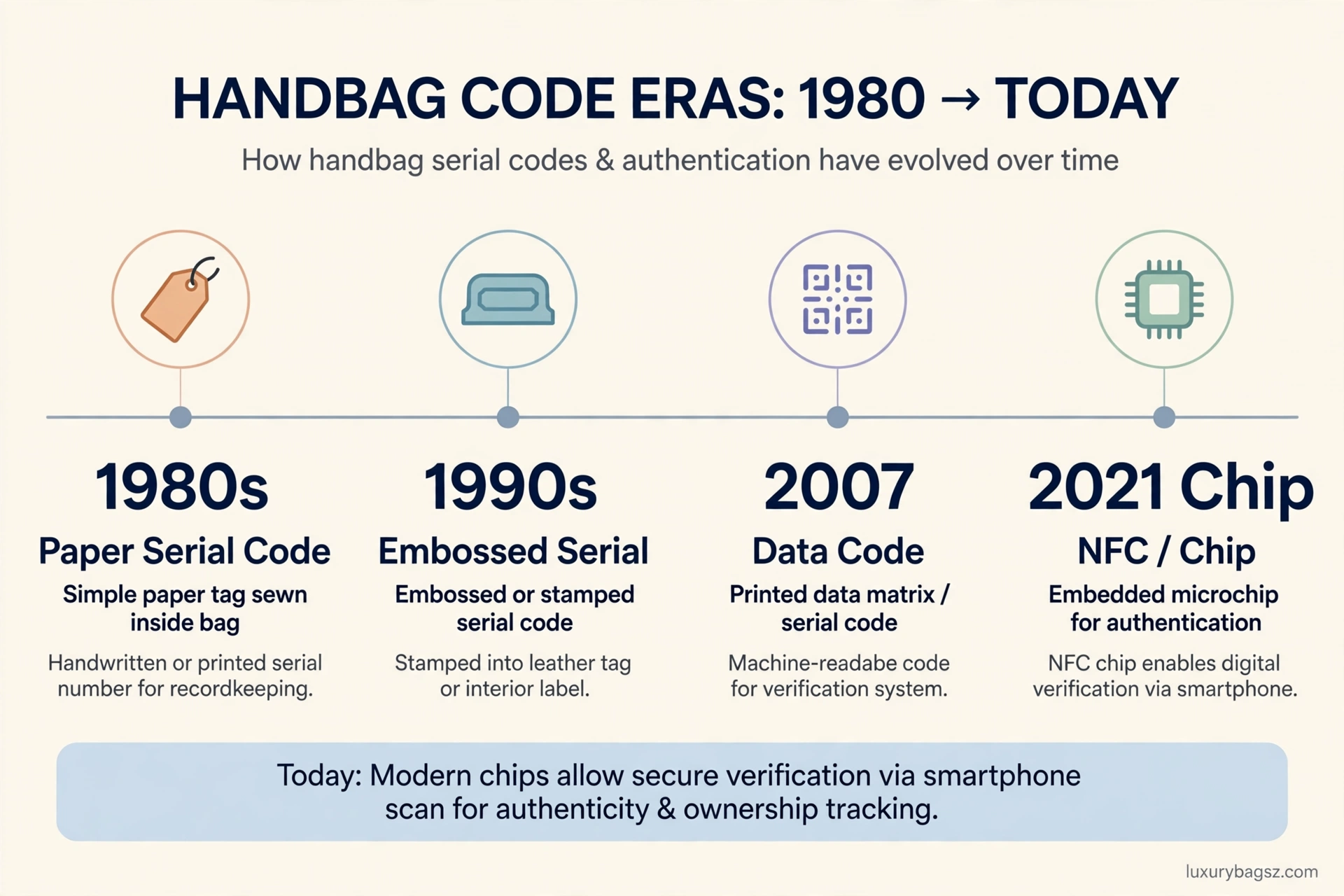
From 1990 to 2006, two letters plus four digits mean month and year. From 2007 to early 2021, the same shape means week and year. Earlier codes are digits first, and from around March 2021 there is usually no printed code at all.
A code that decodes cleanly has passed one check only. A code that cannot decode, or that clashes with the model or the made-in stamp, is a serious warning. Treat those two outcomes very differently.

Key Takeaways
- Read the year first: on 1990 to 2021 codes it is the 2nd and 4th digits put together.
- Then read the 1st and 3rd digits: the month up to 2006, the week from 2007 onwards.
- 1980s codes read straight across: year, then month, with factory letters added later in the decade.
- Before the early 1980s there was no code, and from around March 2021 a hidden chip replaced it.
- Factory letters overlap between countries, so check them against the made-in line with care.
- A valid code never proves a bag is genuine; an impossible code can prove a story is wrong.
How This Checker Works, Step by Step
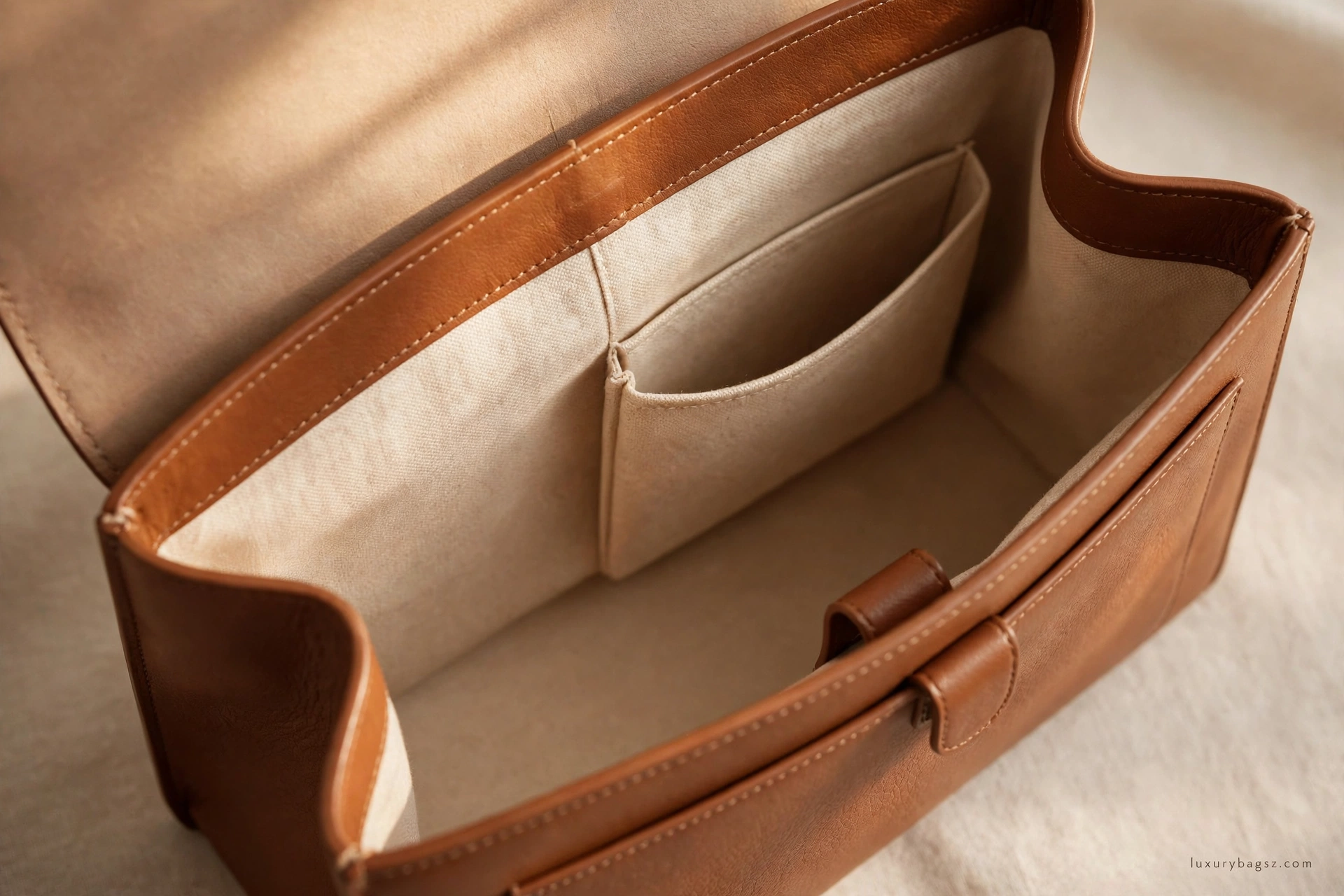
Step one is finding the code and copying it exactly, letter by letter. Photograph it in raking light, with a torch held low, because a misread digit will decode to a false date and mislead every later check.
Step two is era-matching. Count the characters and note where the letters sit. Two letters followed by four digits points to 1990 onwards, whilst digits alone, or digits then letters, points to the 1980s.
Step three is decoding. Split the four digits into two pairs by position, never by reading them in order. The 2nd and 4th digits give the year, and the 1st and 3rd give the month or the week.
Step four is the sense check. The factory letters should suit the made-in line, and the date must fall after the model was launched. If either test fails, stop and look much more closely at the bag.
For the wider story behind the system, including how the chip rollout unfolded, read our full guide to Louis Vuitton date codes and microchips alongside this checker.
Every Era at a Glance
| Era | Format | How to read it | Example |
|---|---|---|---|
| Before early 1980s | No code | Nothing to decode; date the bag by design and materials | None |
| 1980s | Three or four digits | Year first, then month | 834 = April 1983 |
| Early 1990s | Letters settle into place; transitional shapes occur | Read cautiously and cross-check with the model | Varies by piece |
| 1990 to 2006 | Two letters + four digits | Digits 1 and 3 = month; digits 2 and 4 = year | SP0046 = April 2006 |
| 2007 to early 2021 | Two letters + four digits | Digits 1 and 3 = week; digits 2 and 4 = year | SR3179 = week 37 of 2019 |
| From around March 2021 | No printed code | Embedded microchip instead; only the brand can read it | None |
Sources differ slightly on the earliest years, and some place the first codes around 1982 rather than the very start of the 1980s. For a 1980s piece, lean on craftsmanship as well as the digits.
Before the 1980s and the 1980s Codes
A genuine bag from the 1970s or earlier normally has no date code at all. Absence is correct for the period, so never reject a true vintage piece simply because you cannot find a stamp inside it.
Early 1980s codes are three or four digits read straight across. In 834, the 83 is the year and the 4 is the month, so the piece was made in April 1983. A four-digit code such as 8412 reads as December 1984.
Later in the 1980s, two factory letters were added, usually after the digits. A code such as 882 VI reads as February 1988, with VI pointing to a French workshop. Letter position varies, so read patiently.
The Early 1990s Transition
Around the turn of the 1990s the familiar shape settled: two factory letters first, then four digits. Transitional pieces can look less tidy than later codes, so judge them against the model and its launch date.
Once the new shape is in place, the month rule applies. If a supposed early 1990s code will not decode under that rule, treat the mismatch as a prompt for expert help rather than a verdict on its own.
Codes From 1990 to 2006: The Month Rule
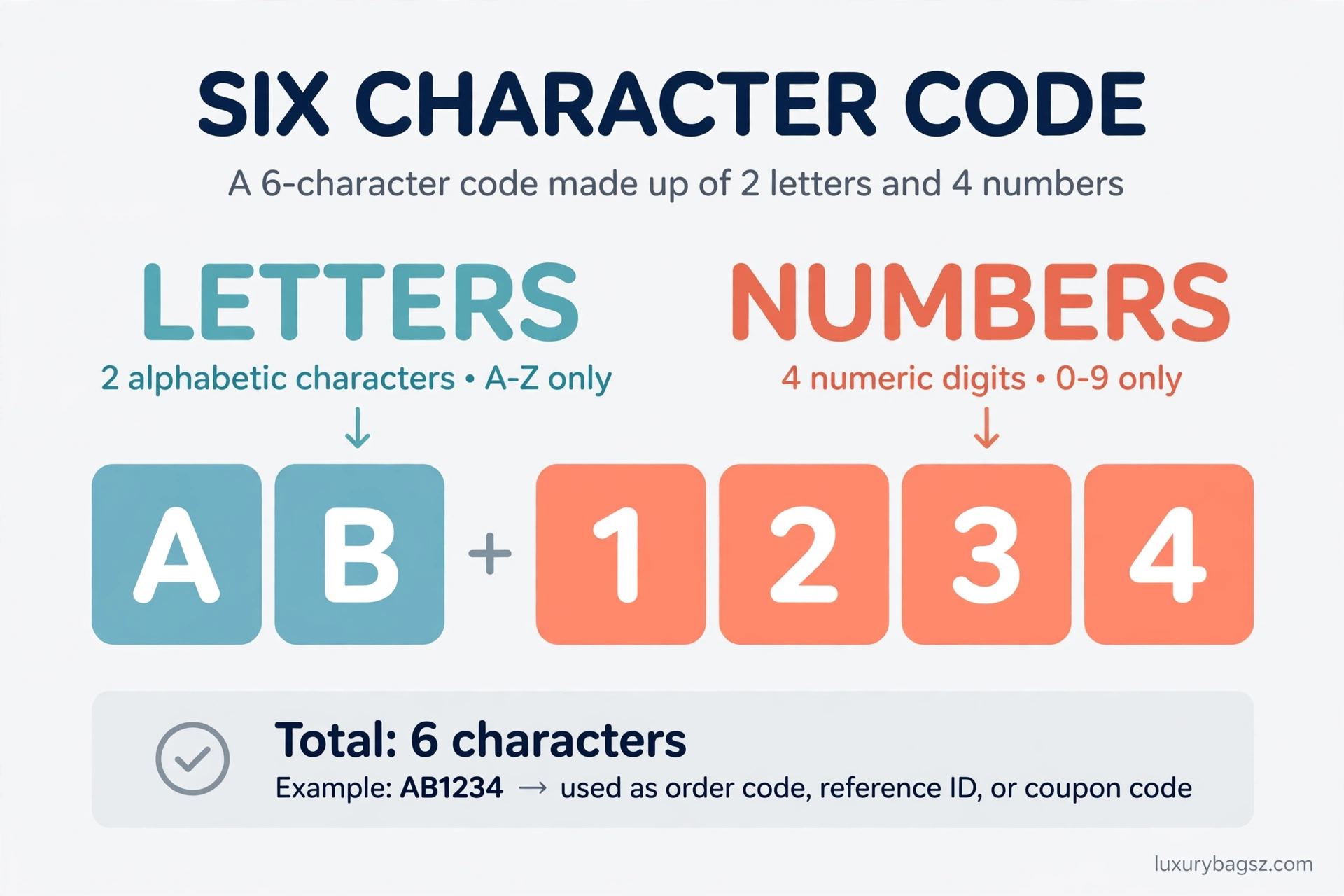
Take SP0046 apart slowly. S and P are the factory letters, listed for France. The digits are 0, 0, 4 and 6, so the 2nd and 4th digits, 0 and 6, give the year 2006.
The 1st and 3rd digits, 0 and 4, give month 04. The full reading is therefore April 2006, made in France. Check that the made-in line says France and that the model existed by 2006, and the code fits.
Try VI1025 the same way. The 2nd and 4th digits give 05, so 2005, and the 1st and 3rd give 12, so December. Any month above 12 under this rule means you have misread a digit or the code is wrong.
Codes From 2007 to 2021: The Week Rule
The shape stayed identical, but the meaning changed. From 2007 the 1st and 3rd digits give the week of the year, from 01 to 53, whilst the 2nd and 4th digits still give the year.
Work SR3179 letter by letter. S and R point to France. The digits 3, 1, 7 and 9 give year 19 from the 2nd and 4th digits, and week 37 from the 1st and 3rd. So the bag was made in week 37 of 2019.
Now test FL3089. The year is 09, and the week is 38, so week 38 of 2009. FL is listed for both France and the USA, so here the made-in line, not the letters alone, settles where it was made.
The commonest error I see is reading a week code as a month. Week 37 is not an error and not a fake tell; it is simply the later rule. Always decide the era from the year digits before you judge the first pair.
The Microchip Era From 2021
From around March 2021, Louis Vuitton phased out printed codes on bags in favour of an embedded microchip. The change was a rollout rather than a single day, so some 2021 pieces may still carry a code.
A bag sold as 2022 or later with no code is behaving exactly as expected. A bag from that period carrying a crisp printed code in the old format deserves hard questions, because the format had been retired.
You cannot read the chip data yourself in any useful way. A phone may detect that something is present, but detection is not verification, and a dummy chip can be sewn into a copy just as easily.
That is why I check chip-era bags on materials, stitching, hardware and stamps first. When I authenticate professionally, I use Entrupy, including for microchip checks, alongside the physical evidence in front of me.
Where to Find the Code, by Model
| Model or type | Where to look first |
|---|---|
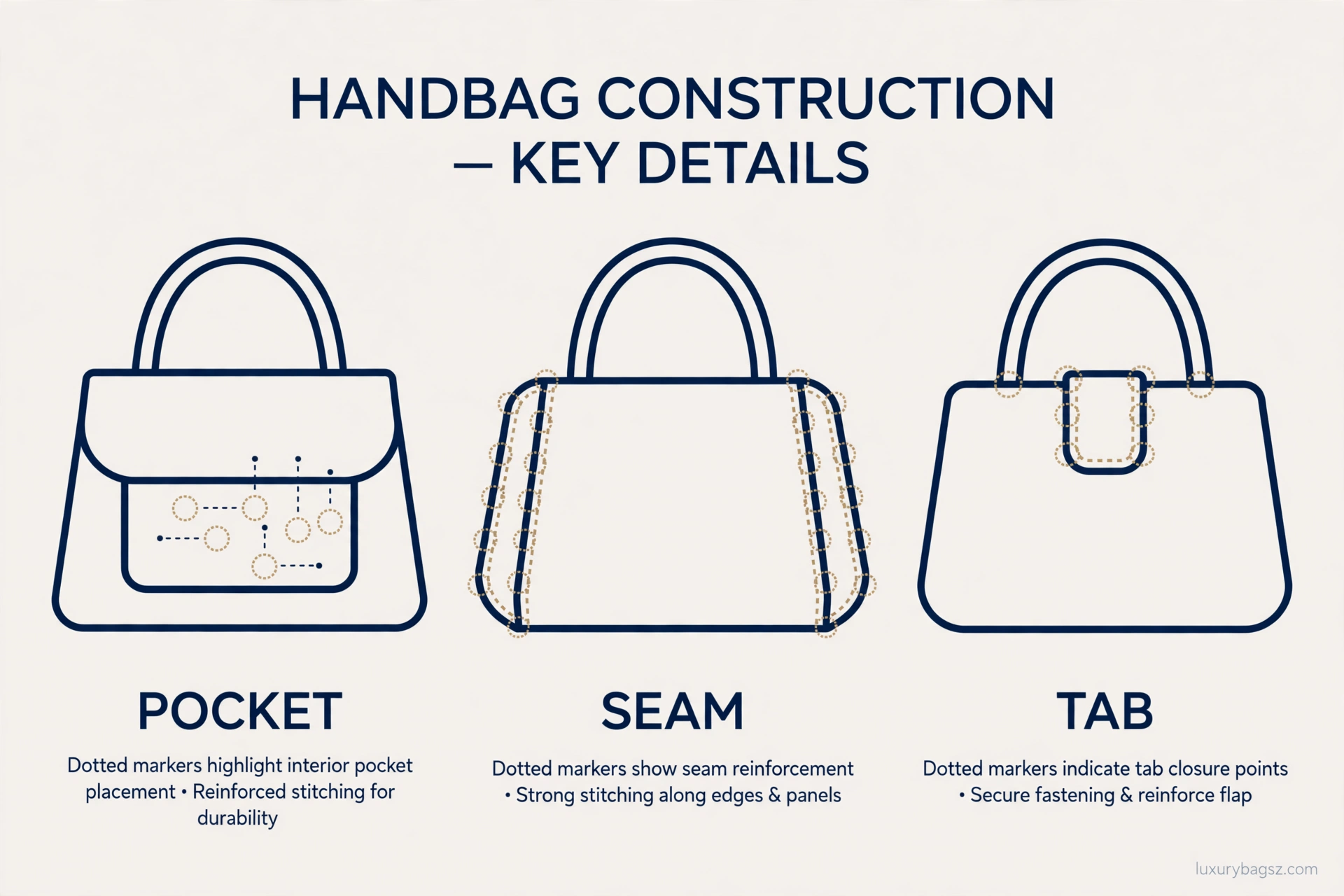
| Speedy | On a small leather tab inside, under the interior pocket near the side seam |
| Neverfull | Under the large hanging pocket inside, usually on the right; the detachable pouch can carry its own code |
| Alma | Inside the flat interior pocket, on a small tab, or stamped into Alcantara lining on older pieces |
| Pochette Métis | On a tab inside the zipped back pocket, behind the flap |
| Wallets and small leather goods | Along a side seam, under a flap, or inside a slip pocket, often very small |
| Keepall and luggage | On an interior leather patch or tab; check pocket edges and seams |
Placement moved over the years, even within one model, so use the table as a starting point rather than a promise. Empty every pocket, pull linings gently taut, and use side light before concluding a code is missing.
On Alcantara and microfibre linings the code is often stamped straight into the material and fades with use. A faint, half-readable stamp is common on honest older bags and is not the same as no code at all.
Factory Letters Without the Guesswork
Louis Vuitton has never published an official factory list. The tables in circulation were compiled by resellers and authenticators, and they overlap: SD and FL appear for both France and the USA, for example.
Commonly listed letters include AR, SP, VI and TH for France, CA and LO for Spain, FC, FH and OS for the USA, and BC, CE and MA for Italy. Germany and Switzerland appear far less often on bags.
Use the letters to test plausibility, not to deliver a verdict. A pair listed only for Spain on a bag stamped made in France is a genuine inconsistency, whilst a shared pair proves nothing either way.
Common Misreads That Condemn Good Bags
- Reading the digits in order, so SP0046 becomes year 00 or 46 instead of 2006.
- Applying the month rule to a post-2006 code and calling week 37 impossible.
- Misreading a worn 1 as a 7, or a faded 0 as an 8, then decoding a false date.
- Calling a shared factory pair such as SD a country mismatch without checking both listings.
- Expecting a printed code on a post-2021 bag, or on a genuine pre-1980s vintage piece.
- Treating a faded Alcantara stamp as a missing code and walking away too quickly.
After examining more than 500 bags, the pattern is clear to me: most code panics are reading errors, not fake bags. Slow down, photograph the stamp, and decode it twice before you judge anything.

Fake-Code Red Flags Worth Acting On
- An impossible number: a month above 12 before 2007, or a week above 53 from 2007 onwards.
- A production date from before the model, colourway or material was ever launched.
- A printed old-format code on a bag sold as made well after the 2021 chip change.
- Factory letters that belong only to a different country from the made-in stamp.
- A code printed in ink, blurry or uneven where a genuine stamp should be cleanly heat-embossed.
- A seller whose receipt is dated before the code says the bag was even made.
For a model-specific worked check, our guide on how to spot a fake Louis Vuitton Speedy bag shows how the code sits alongside canvas, stamps and hardware on the most copied style of all.
What a Valid Code Does Not Prove
A date code is not a serial number. Many genuine bags share the same code, there is no public database to look one up in, and no website can verify a bag from its code alone, whatever it promises.
Counterfeiters copy valid codes, including correct factory letters and plausible weeks. A code that decodes cleanly inside a poorly made bag changes nothing: the bag still fails on its physical evidence.
As founder of Luxury Bagsz and a handbag specialist with more than 10 years in the bag industry, I personally check every bag on the full evidence. My visits to leather factories in Spain and France taught me how much the materials alone can tell you.
For higher-value purchases, use our authentication process before the return window closes. Professional authentication costs far less than the gap between a genuine bag and a good copy.
Frequently Asked Questions
How do I read a Louis Vuitton date code from 2015?
Use the week rule. The two letters are the factory, the 2nd and 4th digits give the year, and the 1st and 3rd digits give the week. A code ending in the pattern for 15 was made in 2015, in the week shown by the other pair.
Why does my new Louis Vuitton have no date code?
Because printed codes were phased out from around March 2021 and replaced by an embedded microchip. A recent bag with no visible code is normal, and nothing is missing from it.
Does a correct date code prove my bag is authentic?
No. The format is public and copies carry correct codes routinely. A fitting code is consistent with a genuine bag, but authenticity rests on canvas, stitching, hardware, stamps and construction taken together.
What does it mean if my code shows week 56?
There is no week 56, so something is wrong. Either a digit has been misread, which is common on worn tabs, or the code itself is false. Photograph it in side light and decode it again before deciding.
Can I look up my Louis Vuitton serial number online?
No, because Louis Vuitton bags do not carry serial numbers. They carried date codes, which many bags share, and there is no public lookup database. Any service claiming to verify a bag by code alone is only decoding it.
My vintage bag has no code at all. Should I worry?
Not on age alone. Bags made before the early 1980s legitimately have no code, and codes on later bags can fade or be lost when a lining is replaced. Judge an older piece on its materials and craftsmanship.
Final Verdict
Use this checker in order: find the code, match its era, read the year first, then the month or week, and test the result against the model and the made-in line. That sequence catches most errors in minutes.
Hold the limit firmly in mind as well. A clean decode lets a bag keep being checked; it never finishes the checking. An impossible decode, by contrast, is a reason to walk away or seek expert help at once.