

Louis Vuitton Pochette Metis Guide: Sizes, Prices and Pre-Owned Checks
Pochette Metis at a Glance
Buy the Original Pochette Metis if you want the classic version. It fits a full-size wallet, phone, sunglasses, keys and cosmetics, and it works as a crossbody, shoulder or top-handle bag.
Buy the East-West if you want a wider, flatter, more modern shape. It fits a smartphone and daily essentials, but it will not swallow a full-size wallet as comfortably as the Original, so check your wallet size first.
Buy the Soft if you want a lighter, more relaxed version of the same idea. It is slimmer than the Original, and it suits buyers who found the Original a little boxy or heavy for all-day wear.
Do not buy any version by name alone. Mini, Micro, East-West and Soft overlap confusingly, and guides disagree about several dimensions, so this guide reconciles every version in one table before you spend.
Key Takeaways
- Original: 25 x 19 x 7 cm (one guide says 9 cm deep — disagreement flagged in the versions comparison).
- East-West: 21.5 x 13.5 x 6 cm, wider and flatter than the Original.
- Soft: 25 x 15 x 5 cm; Mini (2022): 19.5 x 11.5 x 6.5 cm; Micro: 14 x 11 x 3.5 cm, discontinued August 2026.
- August 2026 USA prices: Monogram $2,840, Empreinte $3,100, East-West Monogram $3,300, Soft $3,150.
- The S-lock is the bag's signature and its most-checked authentication point.
- Pre-owned checks must cover the S-lock click, strap wear, corners, interior ink marks and vachetta condition.
What the Pochette Metis Is
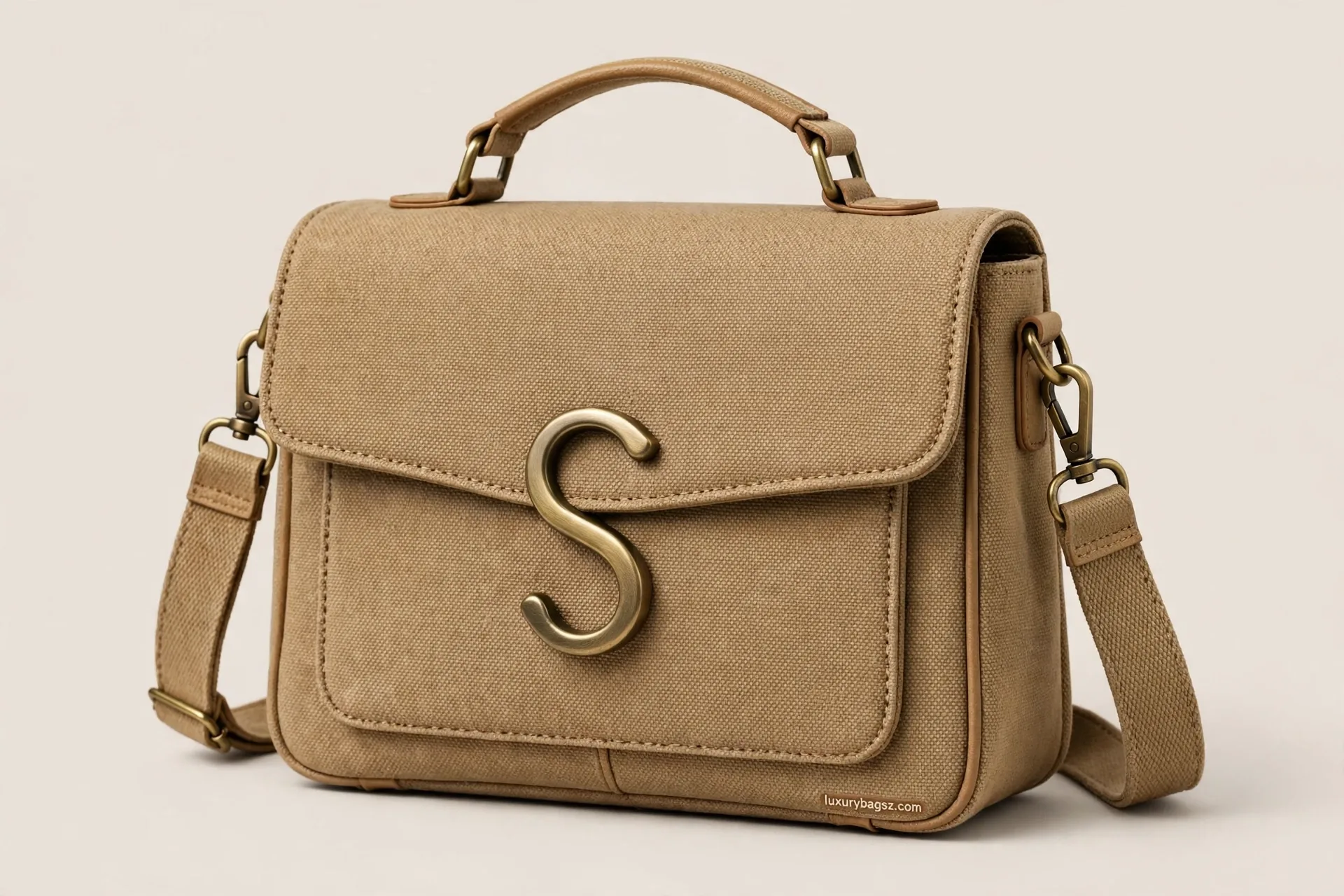
The Pochette Metis is a structured satchel-style crossbody bag with a front flap, an S-shaped lock, a top handle and a removable, adjustable shoulder strap. It opens to three compartments, including a zipped middle pocket, plus a rear zipped pocket outside.
That organisation is the bag's real selling point. Unlike a single-compartment crossbody, the Metis keeps a phone, wallet and keys separated, so owners spend less time digging and more time simply using the bag.
Its size sits in the sweet spot for daily use: large enough for real essentials, small enough to wear crossbody without dominating the body. That balance is why it became one of Louis Vuitton's most popular bags within a few years of launch.
It is also one of the most faked Louis Vuitton bags, with one authentication service reporting that about 37 percent of Metis bags submitted to it between 2022 and 2025 failed authentication. That figure shapes this guide's pre-owned advice throughout.
The flap design also protects the contents better than an open tote, since the S-lock holds the flap shut even when the bag is jostled. That security matters on public transport, where an open bag invites both rain and opportunistic hands.
Owners often mention the bag's weight as a surprise. The structured body, the S-lock and the hardware together make the Metis heavier than a soft crossbody of the same size, so a full Original can feel substantial by the end of a long day.
A Short History, With the Disagreements Stated
FifthAvenueGirl dates the Pochette Metis debut to 2012, noting its tenth birthday in 2022, and traces its inspiration to the Monceau bag of 1986. That is the most detailed origin account, and this guide follows it.
JoliCloset, however, says the bag launched in 2014 and was inspired by the original Metis of the 1990s. Those are two different origin framings, not a rounding difference, and buyers dating a pre-owned bag should know that guides disagree.
What is not disputed is the bag's rise. Influencer attention from around 2015 onward pushed demand sharply, waiting lists of up to nine months were reported, and the Metis moved from a new style to a core Louis Vuitton icon.
Louis Vuitton's canvas icons have been reworked in many playful directions over the years, and the Louis Vuitton Richard Prince bag is one example of how far a familiar house canvas can be pushed. The Metis, by contrast, has grown by adding versions rather than by changing its core design.
The waitlist era also changed how buyers shop for the Metis. When boutiques could not supply demand, pre-owned prices rose and fakes multiplied, and that pattern has never fully reversed, even as boutique supply improved.
Seasonal colours from that era now trade as collectors' pieces in some cases, while others have faded in demand. A seasonal Metis should therefore be judged on its current sold prices, not on the excitement it generated at launch.
All Versions, Side by Side
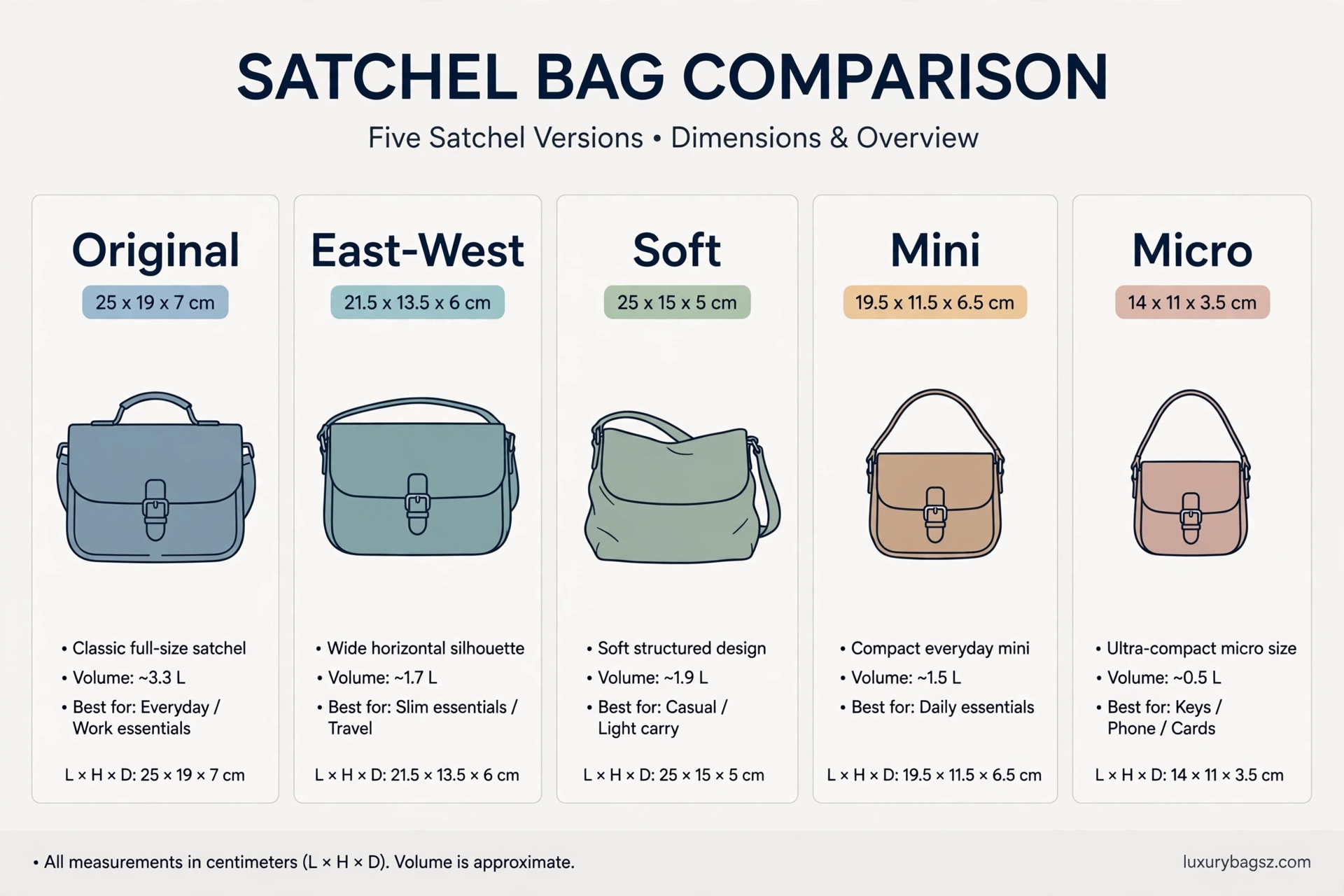
Here is the reconciled size table, combining FifthAvenueGirl and JoliCloset. No single guide lists every version, which is itself one of the gaps this guide fills.
| Version | Dimensions (cm) | Dimensions (inches) |
|---|---|---|
| Original | 25 x 19 x 7 | 9.8 x 7.5 x 2.8 |
| East-West | 21.5 x 13.5 x 6 | 8.5 x 5.3 x 2.4 |
| Soft | 25 x 15 x 5 | 9.8 x 5.9 x 2.0 |
| Mini (2022) | 19.5 x 11.5 x 6.5 | 7.7 x 4.5 x 2.6 |
| Micro (discontinued Aug 2026) | 14 x 11 x 3.5 | 5.5 x 4.3 x 1.4 |
The Original depth disagreement must be stated plainly: FifthAvenueGirl gives 7 cm, while JoliCloset gives 9 cm. The 7 cm figure matches the current listing pattern, but a pre-owned Original should be measured rather than trusted to either table.
The Mini versus Micro confusion is the other trap. The Mini, listed by JoliCloset at 19.5 x 11.5 x 6.5 cm from 2022, is a genuinely usable small bag, while the Micro, at 14 x 11 x 3.5 cm, is a tiny novelty size that is no longer in production as of August 2026.
Weight figures are another gap in the guides. Only the East-West Monogram listing gives a weight, 0.6 kg, while other versions have no published weight in the top guides, so this guide gives no weight table beyond that single verified figure.
Strap-drop figures are similarly sparse. The Empreinte East-West range of 11.4 to 17.7 inches is the only verified drop range found, and no equivalent range is published for the Original in the top guides, so crossbody fit must be tested in person.
Original Versus East-West in Detail
The Original is the taller, deeper, more satchel-like bag. Its height of 19 cm lets a full-size wallet stand upright, and its depth gives room for sunglasses in a case alongside a phone and a pouch.
The East-West is wider than it is tall, at 21.5 cm wide but only 13.5 cm high. That shape looks modern and sits neatly against the body, but it changes what fits: long items fit, tall items do not, and a bulky wallet can force the flap.
Louis Vuitton's own East-West Monogram listing says the bag fits a smartphone, a Rosalie coin purse, keys and lipstick, and weighs 0.6 kg. That is an honest, modest capacity claim, and buyers should believe it rather than a seller's claim that the East-West swallows everything.
The Empreinte East-West listing gives a strap drop of 11.4 inches, rising to 17.7 inches at maximum. That range covers shoulder wear comfortably, but crossbody wear depends on body height, so taller buyers should test the maximum drop before assuming crossbody comfort.
The flap shape also differs subtly between versions. The Original's flap follows its taller satchel proportions, while the East-West flap is wider and lower, which changes how the S-lock sits visually and how the bag opens when worn crossbody.
Opening the bag one-handed is easier on the Original, because the taller flap gives more leverage. The East-West flap, being wider and flatter, sometimes needs two hands when the bag is full, which matters for buyers who open their bag constantly.
What Each Version Actually Fits
The Original fits a full-size wallet, smartphone, sunglasses, keys, cosmetics and a passport, according to FifthAvenueGirl's FAQ summary. That makes it the only Metis version that genuinely works as a full daily bag without editing your carry.
The East-West fits a smartphone and daily essentials, in FifthAvenueGirl's words, which is a smaller promise. A card holder, keys, lipstick and phone fit well, but a full-size wallet, a sunglasses case and a pouch together will strain it.
The Soft, at 25 x 15 x 5 cm, is as wide as the Original but shorter and slimmer. It fits a phone, card holder, keys and lipstick comfortably, plus a slim wallet, but it is not a full-wallet-and-sunglasses bag in the way the Original is.
The Mini fits a phone, card holder, keys and lipstick, while the Micro fits little more than a phone, a card and a key. Buy the Mini as a small bag and the Micro only as a collector's piece or an evening novelty, never as a daily bag.
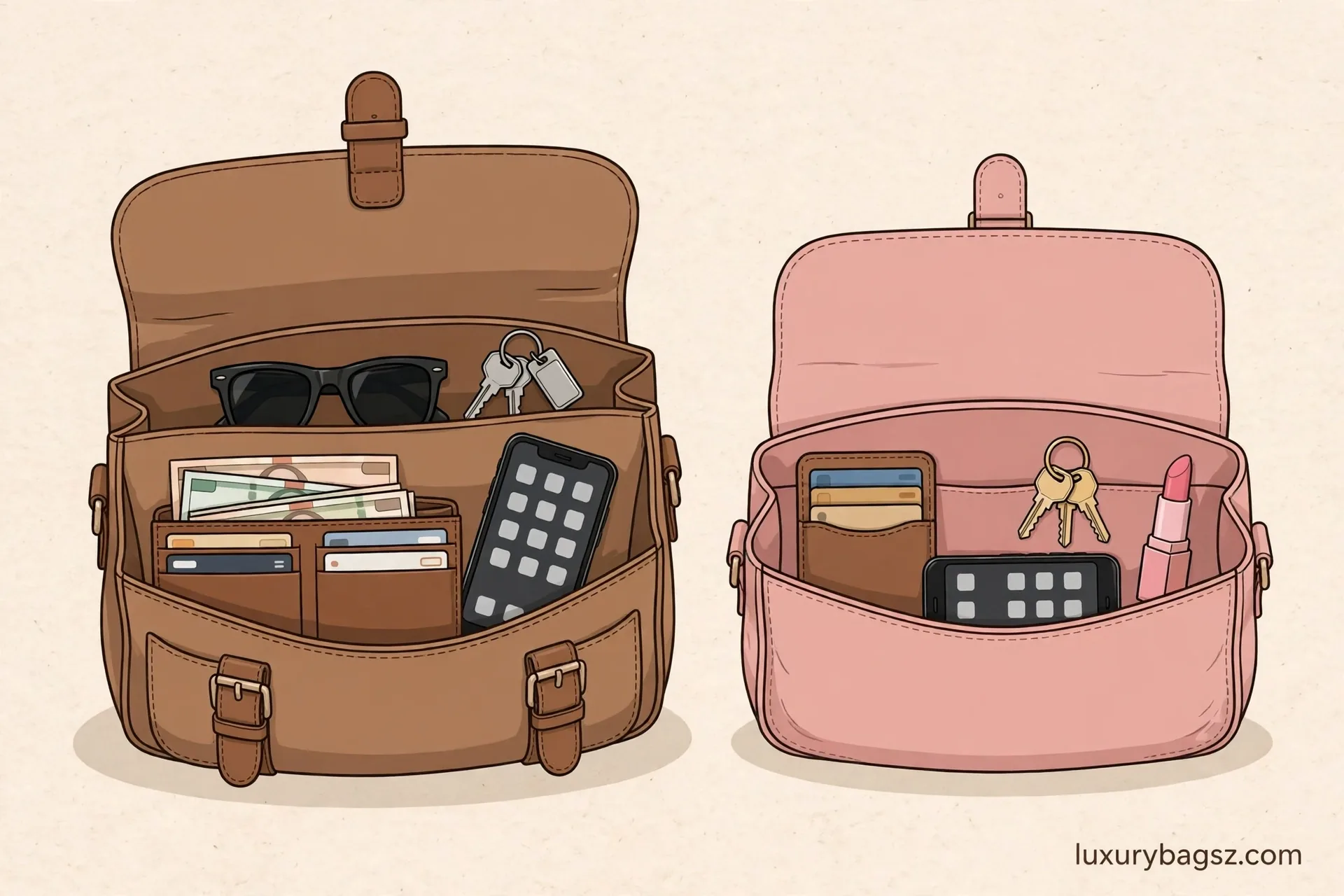
A sunglasses test separates the versions quickly. The Original takes a hard sunglasses case alongside a wallet, the East-West takes sunglasses only if the wallet is slim, and the Mini and Micro take sunglasses only in a soft pouch, if at all.
A passport test is useful for travellers. The Original fits a passport flat in a compartment, the East-West fits it only diagonally or folded into a pouch, and the smaller versions are not travel-document bags at all.

The S-Lock, the Handle and the Strap
The S-lock is the Metis signature: a metal S-shaped clasp on the front flap, heavy in the hand, engraved on the back, and closing with a firm click. On a genuine bag the lock feels substantial, not hollow or rattly.
One authentication guide gives a specific measurement: genuine S-lock engraving depth of 0.3 to 0.4 mm, with sharp serifs. That depth is hard for counterfeiters to copy consistently, which is why the S-lock is the single most reliable Metis authentication indicator according to that guide.
The top handle lets the bag be carried in the hand for short stretches, while the removable, adjustable strap covers shoulder and crossbody wear. Strap wear shows first at the adjustment holes and at the attachment points, so check those areas closely on any pre-owned bag.
A wobbling S-lock, a lock that does not click cleanly, or a lock that feels light are all warnings. So is a strap that has stretched unevenly, since an uneven strap makes the bag hang crookedly however carefully it is worn.
The handle attachment points deserve a close look on pre-owned bags. The small leather loops that hold the handle take the bag's full weight when carried by hand, and cracking or stretching there appears before the handle itself shows wear.
Strap adjustment holes also tell a story. Evenly worn holes suggest normal use, while a single heavily stretched hole suggests the bag was always worn at one length, which may also mean the strap has stretched unevenly over time.
Prices in 2026, With the Disagreements Stated
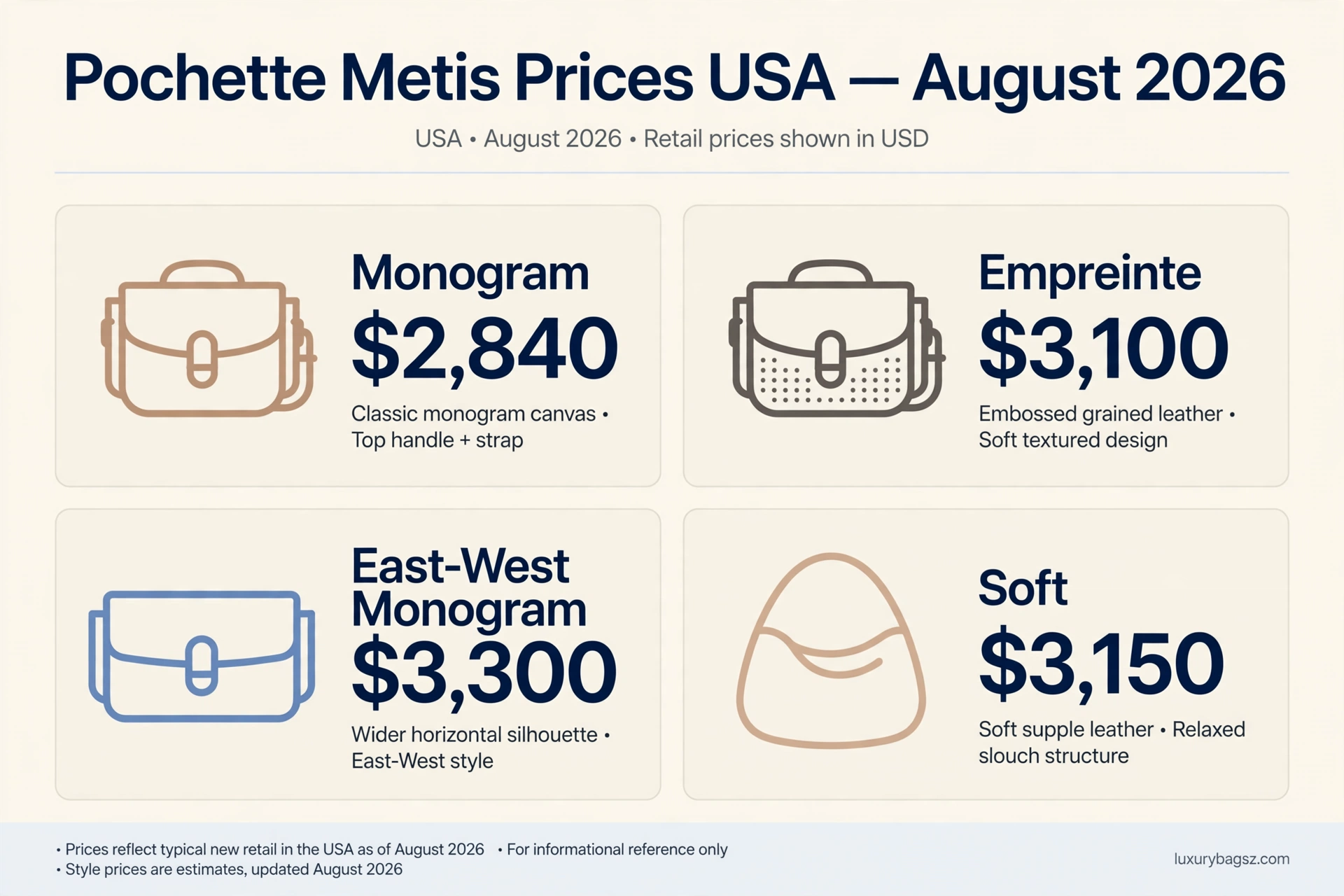
FifthAvenueGirl's August 2026 price table gives: Original Monogram $2,840, Original Empreinte $3,100, East-West Monogram $3,300 and Soft $3,150, in US dollars. The East-West Monogram costs more than the Original Monogram, despite being smaller, which surprises many buyers.
LegitGrails gives a lower figure, $2,760 in the USA and €2,250 in France, for the Pochette Metis generally. That figure is undated in the excerpt and may pre-date the August 2026 table, so this guide follows the dated August 2026 figures and flags the lower figure as an older or differently-sourced alternative.
JoliCloset says only that the Monogram exceeds $2,600 and Empreinte exceeds $3,100, without a date. Those bands are consistent with the August 2026 table, but they are too vague to shop from, which is why a dated table matters.
Reverse Monogram pricing is not separated in the August 2026 table, and its introduction year is itself disputed: FifthAvenueGirl says 2015, JoliCloset says 2017. Do not pay a premium for a Reverse edition based on a claimed introduction year alone.
Boutique pricing also varies by region in ways that confuse online shoppers. A euro price converted at a spot exchange rate is not the price a buyer pays after taxes, and a price from one country should never be quoted as if it were a USA price.
Seasonal editions can also carry premiums that are not in any standard price table. A limited colour in the Original shape may cost more than the standard Monogram, while an unpopular seasonal colour may trade below standard, so edition matters as much as version.
Materials: Monogram, Reverse, Empreinte and Soft
Monogram canvas is the classic brown print with vachetta trim. It is the most recognisable Metis, the easiest to resell, and the version whose care routine is best understood, since canvas wipes clean while vachetta needs protection.
Reverse Monogram flips the print, with the darker canvas on the flap and the lighter on the body, or vice versa depending on the panel. It avoids some vachetta exposure and looks bolder, but it shows wear differently, and its introduction year is disputed, as noted above.
Empreinte leather is embossed with the Monogram pattern and feels softer and more leather-like than canvas. It resists the boxy rigidity of canvas slightly, but it scratches more easily, especially in light colours, and scratches show plainly on a structured satchel.
The Soft version uses a softer construction that drapes more than the structured Original. It suits buyers who found the Original too rigid, but it also loses some of the satchel crispness that defines the Metis look, so try both before deciding.
Reverse Monogram care follows the canvas routine, but its darker panels show dust and lint more plainly than standard Monogram. A quick wipe with a dry cloth before wearing keeps the contrast crisp, especially on the flap where lint collects.
Empreinte in dark colours hides scratches better than Empreinte in light colours, which is why black and navy Empreinte Metis bags are popular daily choices, while pale Empreinte versions are more often kept for occasions.
Care by Material
Canvas Metis bags need the routine covered in this batch's canvas-cleaning guide: a soft, barely damp cloth for the canvas, water kept off the vachetta trim, and no alcohol, bleach or harsh cleaners. The structured shape also means the bag should be stored stuffed, so it does not lose its form.
Empreinte needs gentler handling: wipe with a soft, dry cloth, keep it away from sharp objects and rough surfaces, and be especially careful with light colours, where dye transfer from dark clothing shows quickly. A leather conditioner made for embossed leather can help, but test it first on a hidden area.
Vachetta trim, on Monogram and Azur versions, starts pale and darkens to honey. Handle it with clean, dry hands, keep it out of rain where possible, and accept that water spots and uneven darkening are part of its life, not defects to be scrubbed away.
The microfibre lining picks up ink easily, according to JoliCloset, so keep uncapped pens out of the Metis. An ink mark inside a light lining is one of the hardest pre-owned flaws to live with, because it is visible every time the bag is opened.
Hardware care is simple but often neglected. A soft jewellery polishing cloth restores shine to the S-lock and zip pulls, while liquid metal cleaners should never be used, since they can strip plating and damage surrounding leather.
Storage position matters for a structured bag. Keep the Metis upright and stuffed, in its dust bag, away from direct sunlight, and never hang it by its strap for months, since hanging stretches the strap and distorts the flap alignment.
The S-Lock and Hardware in More Depth
The S-lock's weight is a quick test in the hand: genuine hardware feels heavy for its size, with warm, even gold-tone plating that does not flake. Light, hollow-feeling hardware is a warning, as is plating that looks too yellow or too pale.
Engraving quality matters as much as weight. Genuine engraving is crisp, evenly spaced and struck to a consistent depth, while counterfeit engraving is often shallow, blurry or uneven, especially on the back of the S-lock where buyers look less often.
Canvas grain is a subtler Metis-specific check. One guide reports a grain angle of about 60 degrees on post-2012 production, shifting to about 110 degrees on some March 2024 and later batches. That shift means grain angle alone cannot condemn a bag without knowing its production era.
The rear zipped pocket and the interior zipped pocket also carry hardware that should match the S-lock in tone and quality. Mismatched hardware tones across one bag suggest replacement parts, which should be disclosed by the seller and priced accordingly.
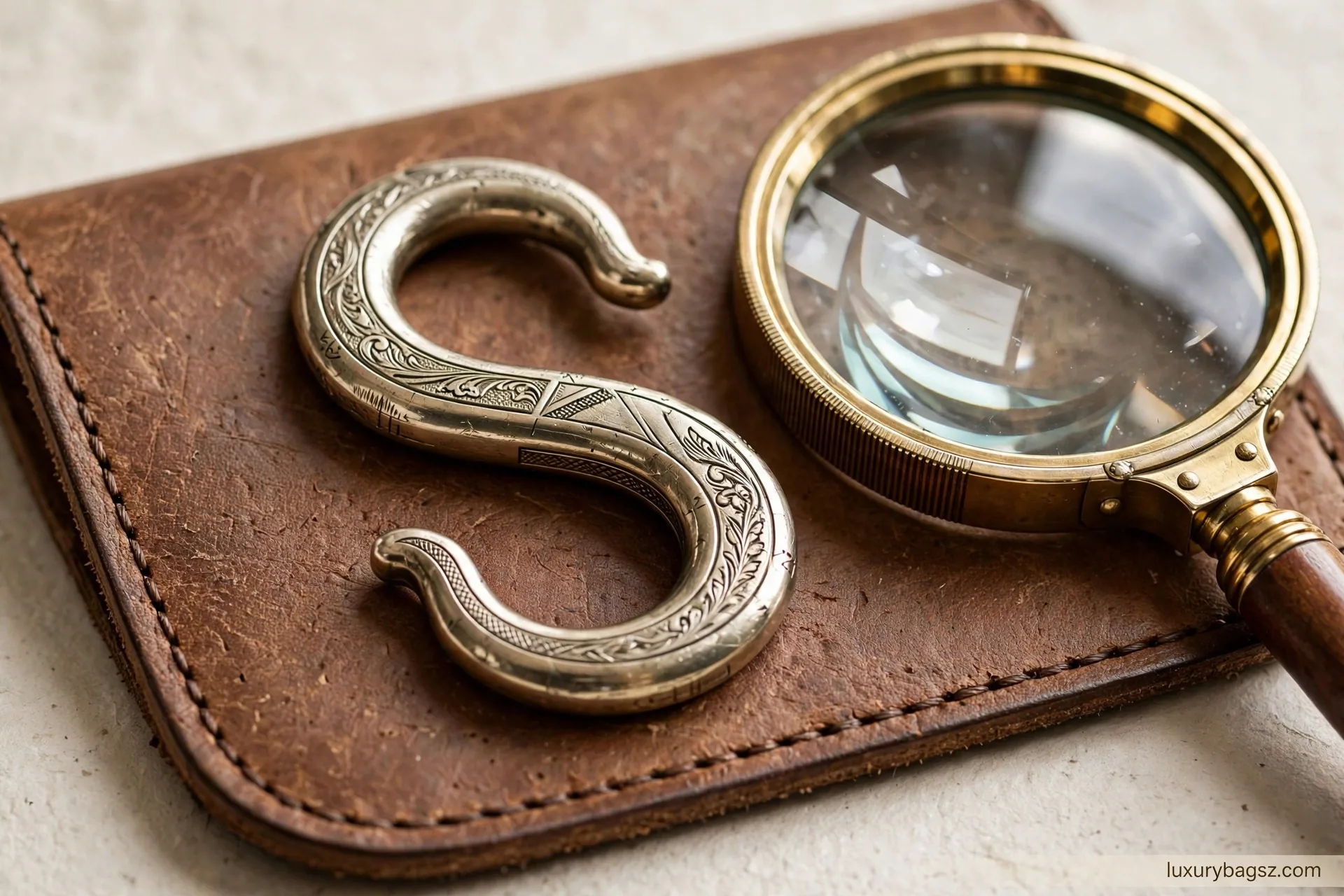
The interior compartments also carry small hardware, including zip pulls that should match the S-lock in tone. A zip pull that looks newer or different from the S-lock may have been replaced, which is not fatal, but it should be disclosed.
Stitching around the S-lock plate is another check. Even, tight stitching in matching thread holds the plate firmly, while loose or mismatched stitching suggests a repair, and a repaired S-lock plate should be tested for wobble before purchase.
Current, Retired and Seasonal Editions
The Original and East-West are the two main current versions, with the Soft as a newer addition. The Micro is no longer in production as of August 2026, so any Micro listed as new after that date deserves a careful question about when and where it was bought.
Seasonal editions include a braided-handle version from 2018 and a Since 1854 jacquard version, mentioned in passing by guides but never mapped in one place. Those editions can be beautiful, but their trim, lining and hardware may differ from the standard bag.
The Pochette Metis Backpack is a separate silhouette that reuses the Metis name and S-lock on a backpack body, listed at $3,400 in the USA at the time of checking. It is not a size of the handbag, and it should not be priced or compared as one.
When buying a seasonal edition, confirm exactly which edition it is, what material it uses, and whether its parts match the standard Metis. A seasonal premium is only justified if the edition is genuinely scarce and in good condition, not merely because the seller calls it limited.
The braided-handle edition from 2018 is a good example of a seasonal detail that changes care. Braided leather handles need gentler cleaning than flat handles, since dirt collects between the braids, and a damaged braid is harder to repair than a flat strap.
Jacquard editions like Since 1854 use a woven textile rather than coated canvas, so their cleaning routine differs entirely. A jacquard Metis should never be treated with a canvas routine, and buyers should ask the seller for the exact material before applying any cleaner.
Pre-Owned Checks Before You Pay
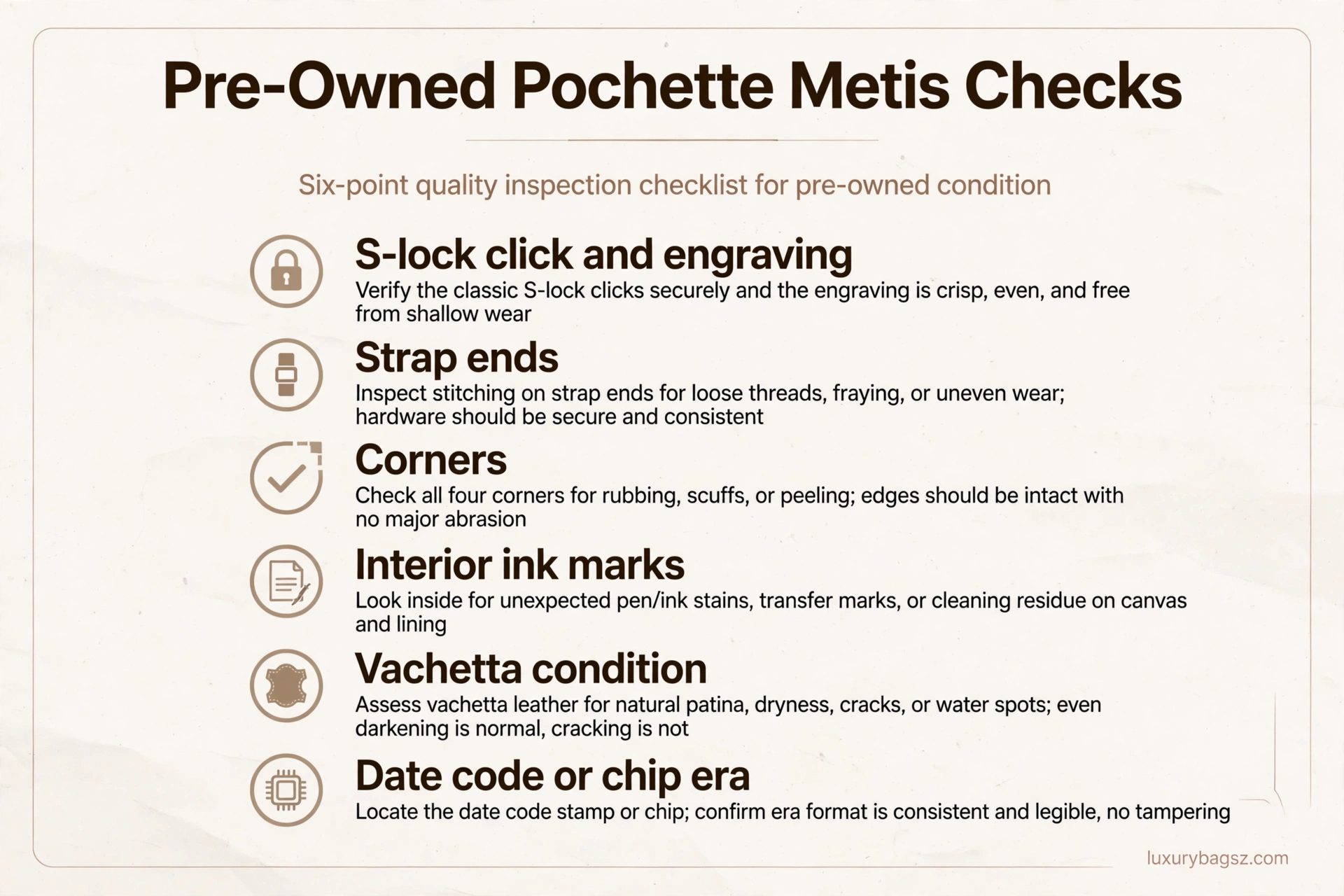
Ask for photographs of the S-lock front and back, the heat stamp, the date-code tab or chip-era interior, the stitching at 8 to 9 stitches per 3 cm in beige-orange waxed thread, the canvas alignment at the side seams, the strap ends and adjustment holes, and all four corners.
Test the S-lock click in person where possible, or ask the seller to film it. A lock that wobbles, sticks or closes without a clean click may need repair, and S-lock repairs are not cheap, so factor that into the price.
Check the interior for ink marks and stains, especially on the light microfibre lining, and check the Empreinte versions for scratches, particularly on the flap and corners. Check the vachetta at the base, handles and S-lock surround for darkening versus damage, since those areas age fastest.
Confirm the date-code or chip era against the claimed year, using this batch's date-code guide. A Metis claimed as post-March 2021 production with a visible printed date code is a major warning, since genuine post-2021 bags use chips, not printed codes.
Seller behaviour is itself a check. A seller who provides the requested photographs promptly, answers questions precisely, and offers a return window is usually more reliable than a seller who answers only with reassurance and stock photographs.
Payment method matters too. Use a platform with buyer protection where possible, and be wary of sellers who insist on payment methods with no recourse, especially for a bag as heavily faked as the Metis.
Pre-Owned Prices and Resale Reality
JoliCloset's undated pre-owned bands give: Monogram in good condition about $1,400 to $1,800, Empreinte about $1,600 to $2,100, Mini about $1,100 to $1,600, and Reverse often exceeding recent retail. Those bands have no condition definitions and no date, so treat them as rough background, not as a price list.
FifthAvenueGirl notes only that classic canvas Metis bags have excellent resale, without giving bands. That vagueness is typical, and it means buyers must check sold listings for the exact version, material and condition they want, rather than trusting a single band.
Reverse Monogram's tendency to exceed retail is worth noting, because it is unusual for a current-production bag. If you own a Reverse Metis in good condition, it may be the version that holds value best, though that pattern can change with supply.
Professional authentication costs about $15 to $35 according to LegitGrails, which is small against a Metis price. For a bag in the $1,400 to $3,300 range, that cost is worth paying when any single check feels uncertain.
Condition grading also varies between sellers, with no shared standard. One seller's very good condition may mean light corner wear, while another's may mean a bag that looks new, so photographs of corners, handles and lining matter more than the grade word.
Full sets, with dust bag, box and receipt, command a small premium, but the premium is modest for a Metis. A missing dust bag should not change the price much, while a missing strap or a damaged S-lock should change it a lot.
Metis Versus Its Rivals
The Coach Cassie is the rival FifthAvenueGirl names, and it offers a similar structured satchel look at a much lower price. It lacks the Metis's resale strength and canvas heritage, but for buyers who love the shape more than the brand, it deserves a look.
Within Louis Vuitton, the Pochette Accessoires is the smaller, simpler alternative, with less organisation and no S-lock. It suits buyers who want a light pouch-style bag, while the Metis suits buyers who want compartments and a statement clasp.
The Alma BB is the structured, formal alternative, with a dome shape and a more rigid body. It holds less than the Original Metis for its size, but it looks more formal, and buyers who attend formal events may prefer it.
The Speedy 25, covered in this batch's Speedy guide, is the softer, rounder alternative. It holds more than the Metis and costs less, but it has no compartments and no S-lock, so the choice comes down to organisation versus capacity.
The Cassie comparison also highlights a price truth: a similar shape at a lower price is attractive, but it will not hold value like a Metis, and buyers who later resell often recover far less. That matters only if resale matters to you, and for keep-forever buyers it may not matter at all.
Within Louis Vuitton, the choice between Metis and Speedy often comes down to security habits. Metis buyers like compartments and a locked flap, Speedy buyers like a single roomy compartment and a zip, and neither preference is wrong.
The Alma comparison turns on formality. An Alma BB looks more formal than any Metis, but it is less practical daily, so buyers who attend formal events weekly may prefer the Alma, while daily commuters will usually prefer the Metis.
Frequently Asked Questions
What is the difference between Original and East-West Metis?
The Original is taller and deeper at 25 x 19 x 7 cm, while the East-West is wider and flatter at 21.5 x 13.5 x 6 cm. The Original fits a full-size wallet more comfortably; the East-West suits a phone and essentials.
Is the Pochette Metis still in production?
Yes, the Original, East-West and Soft versions are current. The Micro version is no longer in production as of August 2026, so new Micro listings after that date need careful checking.
Does the Pochette Metis fit a full-size wallet?
The Original does, comfortably. The East-West does not do so as easily, and the Soft, Mini and Micro versions are progressively tighter, so check your wallet's measurements against the version you want.
What is the S-lock?
The S-shaped metal clasp on the front flap, and the bag's signature hardware. Genuine examples feel heavy, close with a firm click, and carry crisp engraving on the back.
Is the Pochette Metis heavily faked?
Yes. One authentication service reports about 37 percent of submitted Metis bags failed authentication between 2022 and 2025, so pre-owned checks and professional authentication matter more than usual.
Which Metis material is easiest to care for?
Monogram canvas, because the canvas wipes clean and only the vachetta trim needs protection. Empreinte scratches more easily, especially in light colours, and Reverse shows wear differently.
Can the strap be worn crossbody?
On the Original, yes, with the removable, adjustable strap. On the East-West, crossbody comfort depends on body height and the strap's maximum drop, so test it before buying.
What should I check on a pre-owned Metis?
The S-lock click and engraving, strap ends and holes, corners, interior ink marks, Empreinte scratches, vachetta condition, stitching count and the date-code or chip era.
How much does Metis authentication cost?
About $15 to $35 through a professional service, according to LegitGrails. That is small against the bag's price and worth paying when any check feels uncertain.
Is Reverse Metis worth more pre-owned?
Often, according to JoliCloset's undated bands, which say Reverse often exceeds recent retail. That pattern reflects scarcity and demand, but it can change, so check current sold listings.
Final Verdict
The Original Pochette Metis remains the version to buy first: it fits a real daily load, carries three ways, and holds its value best among the standard versions. The East-West suits buyers who prefer a wider, flatter shape and a lighter load, while the Soft suits buyers who want a more relaxed version of the same idea.






