How to Spot a Fake Cartier Panthere Watch
Flex the Bracelet Before You Read the Dial
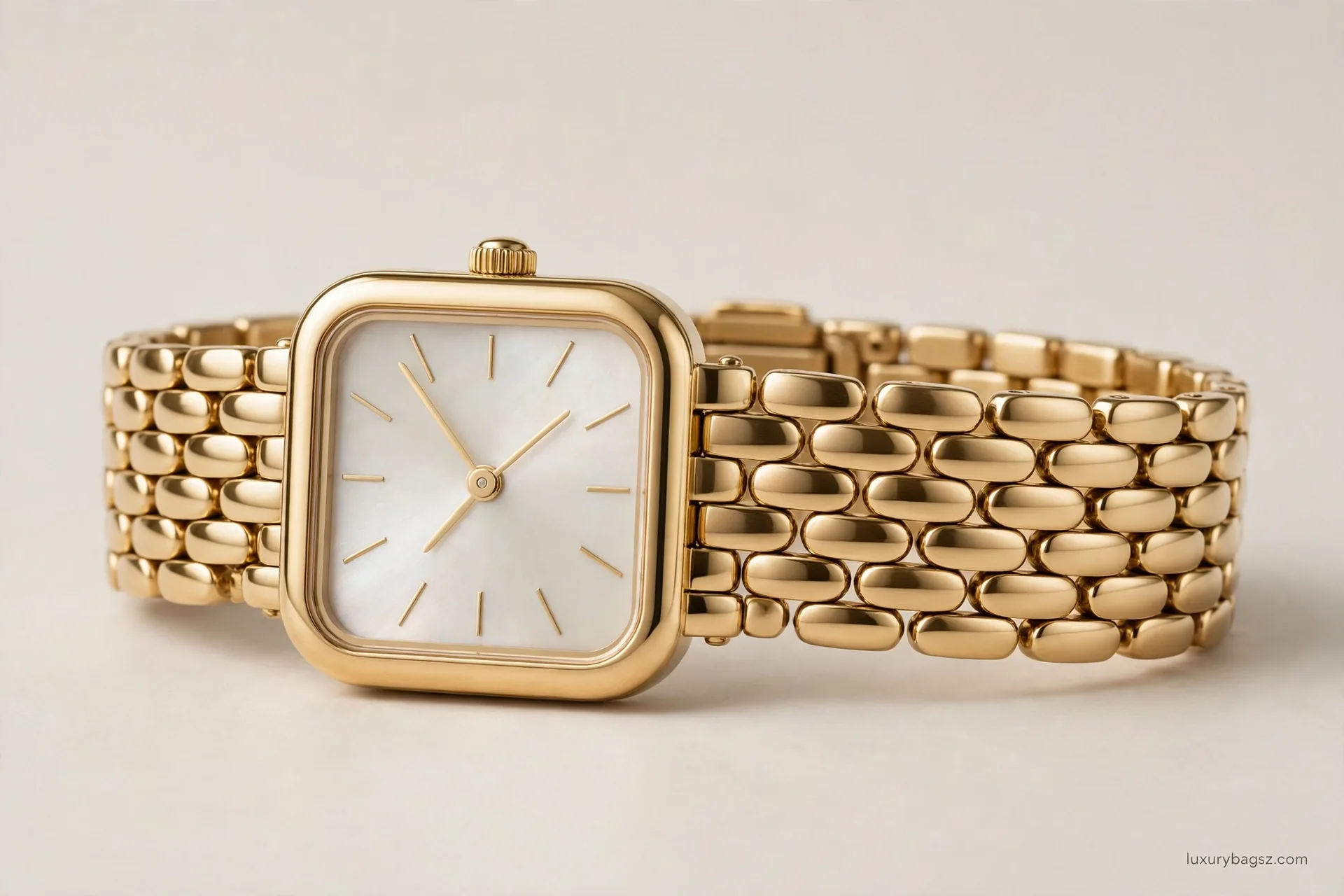
Run the bracelet through your fingers first. On a genuine Panthère each link flexes freely, the gaps between links stay uniform, and the clasp closes firmly with a neat finish; a copy usually fails two or three of this guide’s checks at once, and the bracelet is often where the failures start.
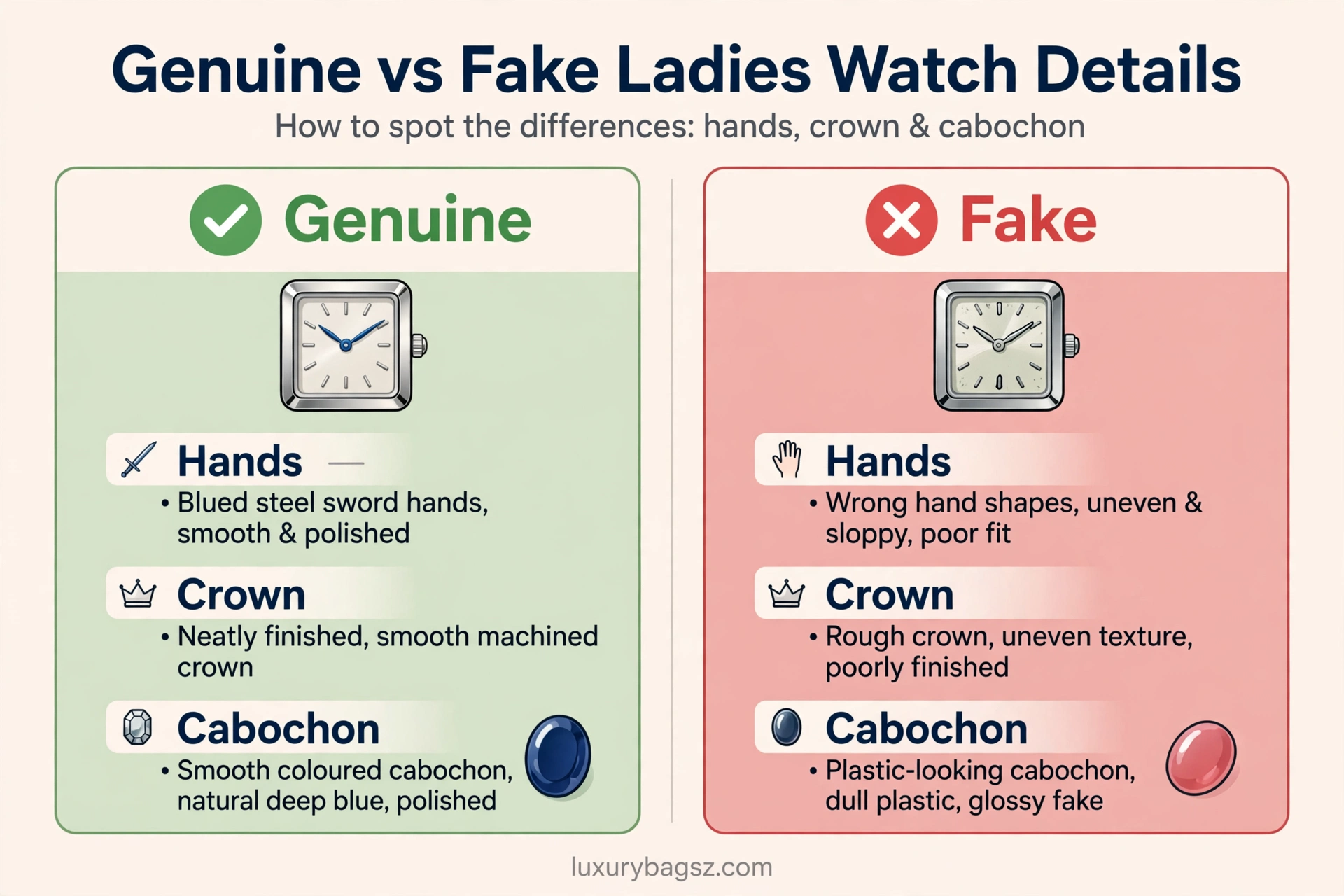
Pin down the exact reference before judging anything else, since size, material, dial layout and movement type all follow from it. The dial should have sharp Roman numerals and a clean, correctly placed signature, with blued sword hands that show depth rather than a painted look. The crown cabochon must be neatly set, and the case edges should be softly rounded and even, never crude or sharp.
Engravings need to be sharp and correctly spelt, the serial must agree with any papers, and the movement fitted — quartz on most modern models — must match the reference.
The Panthere at a Glance
The Cartier Panthere, launched in the 1980s, is a small, square-ish watch with softly rounded corners, a Roman-numeral dial, and a bracelet made of articulated links that move like a panther's body. It is one of the most copied Cartier watches in the world, precisely because it looks simple.
That simplicity is the trap: on a genuine Panthere, every simple-looking detail is finished to a standard that cheap copies rarely sustain across the whole watch.
Before you spend anything, decide your route. If the watch is being sold without papers, without a verifiable serial number, or at a price far below comparable sold listings, treat those as reasons to slow down, not as bargains to chase. A pre-purchase inspection by a reputable watchmaker, or authentication through a trusted dealer, costs far less than a fake Panthere.
Key Takeaways
- The Panthere case has softly rounded square corners, a beaded or polished bezel depending on the reference, and a cabochon crown; sharp, crude, or uneven case edges are a warning.
- Genuine dials use crisp Roman numerals, a clean Cartier signature, and correctly shaped blued-steel sword hands; fuzzy printing, wrong fonts, or painted-looking hands fail the check.
- The bracelet should articulate smoothly link by link, with even gaps and a secure, well-finished clasp; stiff, rattly, or roughly finished bracelets are a common fake giveaway.
- Most modern Panthere models use a quartz movement, while some vintage and larger references are mechanical; the movement type must match the reference, not your assumption.
- Engravings on the caseback should be sharp, evenly spaced, and correctly spelled, with a serial number that matches the papers and the reference.
- No single check authenticates a watch. Papers can be faked, boxes can be bought, and a genuine-looking dial can sit on a fake case. Judge the whole watch.
Know Which Panthere You Are Looking At
Cartier has made the Panthere in many sizes, materials, and generations since the 1980s, including small, medium, and large cases in steel, yellow gold, and two-tone combinations, plus diamond-set versions. Before you check anything, pin down the exact reference number. The reference tells you the correct case size, material, movement type, bracelet style, and dial layout. Without it, you are guessing.
Ask the seller for the reference number, the case measurements, and clear photographs of the dial, caseback, clasp, and bracelet. Compare those against Cartier's own descriptions and against several reputable dealer listings for the same reference. If the seller cannot name the reference, or if the measurements do not match any known Panthere variant, stop. That gap alone is enough to walk away or to demand an independent inspection.
Vintage Panthere watches add another layer. Early examples may show honest wear, replaced straps on some variants, or serviced parts. Wear is not automatically a fake tell, but a replaced dial, a re-cut case, or a non-Cartier crown on a watch sold as fully original should be disclosed and priced accordingly. Ask directly whether anything has been replaced or restored, and get the answer in writing.
The Dial: Roman Numerals, Signature, and Printing
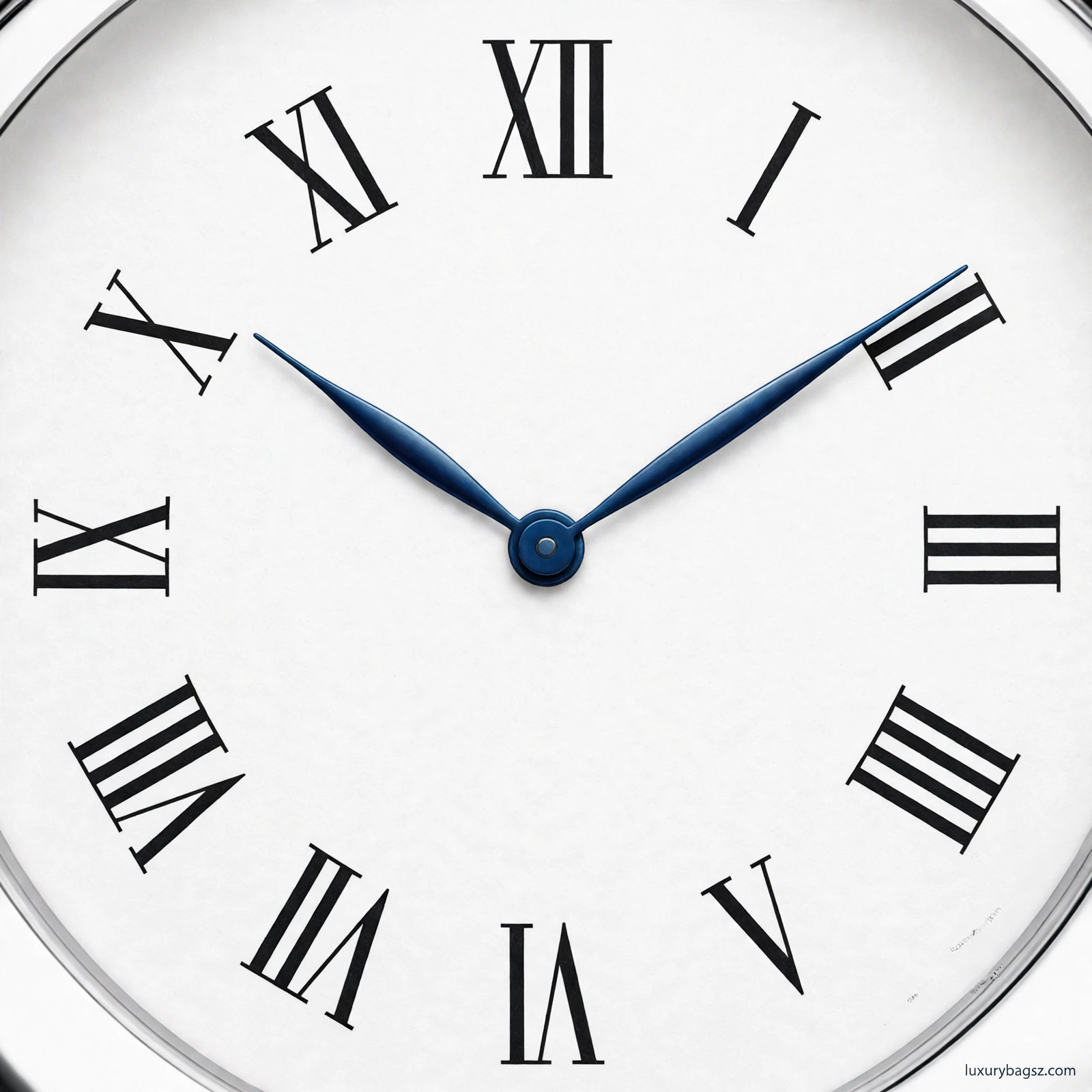
Start with the dial, because it is where most fakes betray themselves first. On a genuine Panthere, the Roman numerals are crisp, evenly weighted, and correctly proportioned, with the familiar Cartier quirk of the numeral IIII rather than IV on many dials. The printing sits flat and clean on the dial surface, with no fuzzy edges, no bleeding, and no uneven ink density when viewed under magnification.
Check the Cartier signature carefully. It should be spelled correctly, in the right typeface, and placed where it belongs for that reference, usually under the 12 o'clock position. Fakes often get the letter spacing slightly wrong, make the signature too bold or too thin, or place it a fraction too high or too low. On its own, a millimetre of difference proves nothing, but combined with other flaws it matters.
Look at the minute track and any subsidiary details. Genuine dials show consistent, fine printing around the full track, with no wobble, no missing ticks, and no smudging near the edges. The date window, where fitted, should be neatly cut with clean edges and a correctly aligned date disc. A date that sits crooked in its window, or a window with rough or painted edges, is a strong warning.
Finally, examine the dial under different light. A genuine dial has depth and a consistent finish, whether lacquered white, silvered, or another colour for that reference. A dial that looks flat, plasticky, or oddly reflective, or one whose colour shifts strangely between photographs, deserves a closer look by someone who handles Cartier regularly.

Hands, Crown, and the Cabochon
The hands on a Panthere are typically blued-steel sword hands, and their finish is a precise test. Genuine blued hands show a deep, even blue with clean edges and a smooth, polished surface. Fake hands often look painted rather than blued, with a flat or purplish colour, rough edges, or uneven coverage, especially at the tips. Under magnification, painted hands can show tiny bubbles or brush-like texture that blued steel never has.
Check the hand lengths against the reference. Hands that are too short to reach their markers, too long and overlapping the minute track, or mismatched in style between the hour and minute hands all point to a replacement or a fake. Also watch the sweep: on a quartz Panthere, the seconds hand, where fitted, should step once per second with a crisp tick. On a mechanical Panthere, it should sweep smoothly.
A quartz watch that sweeps, or a mechanical watch that ticks, has the wrong movement for its claim.
The crown is another Cartier signature. Panthere crowns typically carry a cabochon, often a blue sapphire, set smoothly into the crown with no glue visible, no wobble, and no uneven seating. A cabochon that looks like plastic, sits crooked, or shows glue around its edge is a warning. The crown should also wind or set with a smooth, precise feel, not a gritty or loose one.
A crown that pulls out too easily, or that feels rough when turned, suggests poor manufacturing or a replaced part.
The Bracelet: Articulation Is Everything
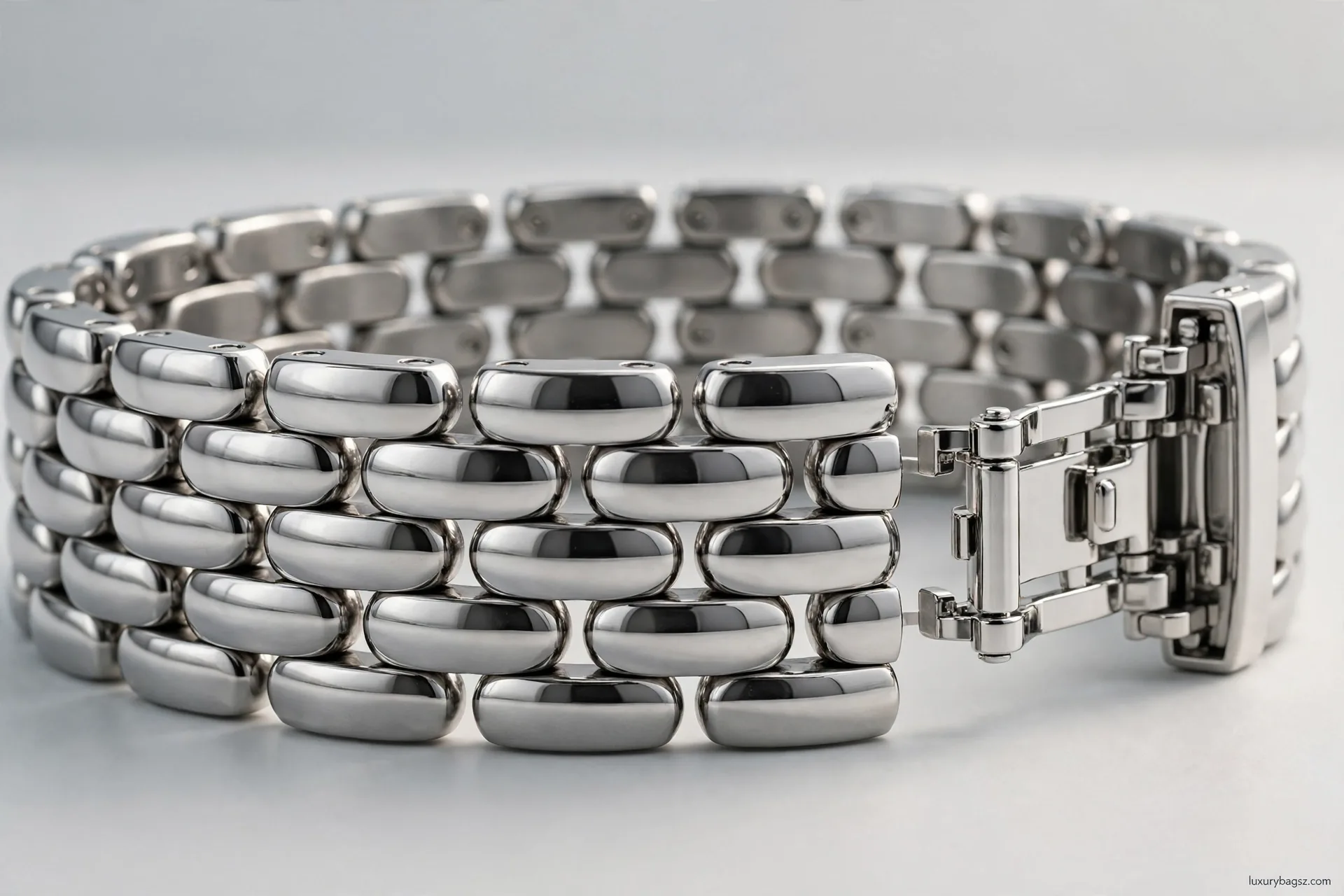
The Panthere bracelet is its most distinctive feature, and its hardest test for counterfeiters. Genuine Panthere bracelets articulate smoothly, link by link, draping around the wrist like a flexible chain rather than a stiff band. Pick the watch up and flex the bracelet gently. Each link should move freely and evenly, with consistent gaps and no catching, grinding, or stiffness in one spot.
Look closely at the link finishing. Genuine links are smoothly polished or brushed as the reference requires, with clean edges and no rough casting marks, sharp burrs, or pitting. Fake bracelets often show rough edges inside the links, uneven polishing, or links that vary slightly in size. Run a fingertip along the inside of the bracelet: it should feel smooth against the skin, not scratchy or snagging.
Check the clasp with the same care. A genuine clasp closes with a firm, precise snap, sits flush when closed, and carries clean, correctly spelled markings. A clasp that feels flimsy, closes loosely, gaps when shut, or shows shallow or misspelled engraving is a serious warning. Also check the end links where the bracelet meets the case: they should fit snugly with even gaps on both sides, not sit proud on one side or leave an uneven gap.
Movement and Caseback: What Should Be Inside
The movement check separates careful buyers from hopeful ones. First, confirm what movement the reference should have. Many modern small and medium Panthere models are quartz, powered by a Cartier quartz calibre, while some larger and vintage references are mechanical.
A seller claiming a mechanical movement in a reference that Cartier only made in quartz, or vice versa, is either mistaken or dishonest, and either way you should not proceed without verification.
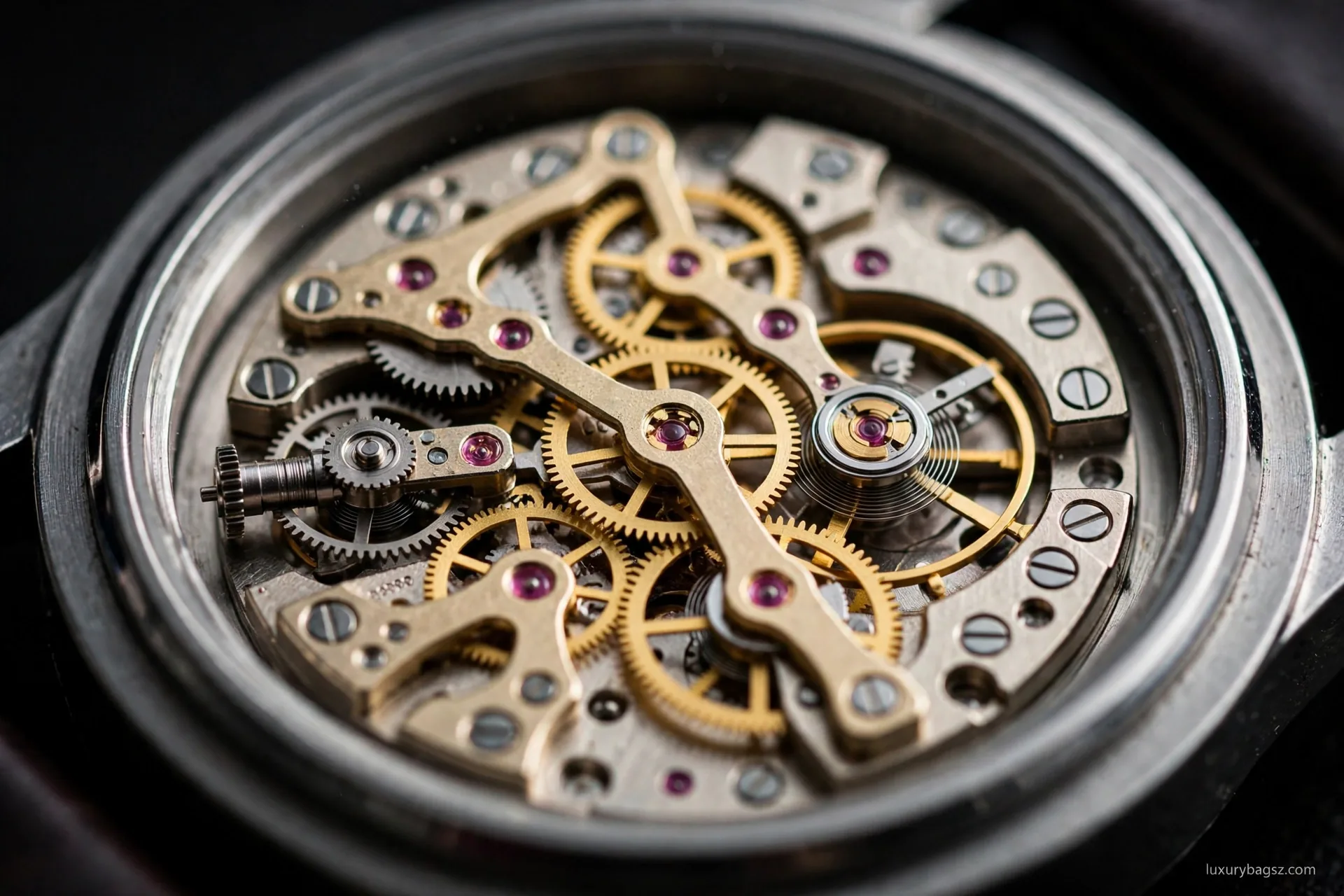
If the caseback can be opened by a watchmaker, the movement itself should be cleanly finished, correctly marked, and consistent with Cartier's calibres for that era. Genuine movements show tidy bridges, clean screws, and proper jewelling, not rough castings, glue, or generic unmarked parts.
Never open a watch yourself unless you know how: a slipped case knife can damage the case, the gasket, and the water resistance, and it can void any remaining service position.
The caseback engravings matter even when the case stays closed. Genuine Panthere casebacks carry sharp, evenly deep engravings: the Cartier name, the reference number, the serial number, and material marks where applicable. Fakes often show shallow, uneven, or slightly blurred engraving, with letter spacing that drifts across the line.
Photograph the caseback in raking light, which throws shallow engraving into relief and makes uneven depth obvious.
One caution: some genuine Panthere casebacks are relatively plain, and some fakes copy a plain back convincingly. A plain back is not proof of fakery, and a busy back is not proof of genuineness. The engraving quality, and whether the numbers match the papers and the reference, is what counts.
Serial Numbers, Hallmarks, and Reference Matching
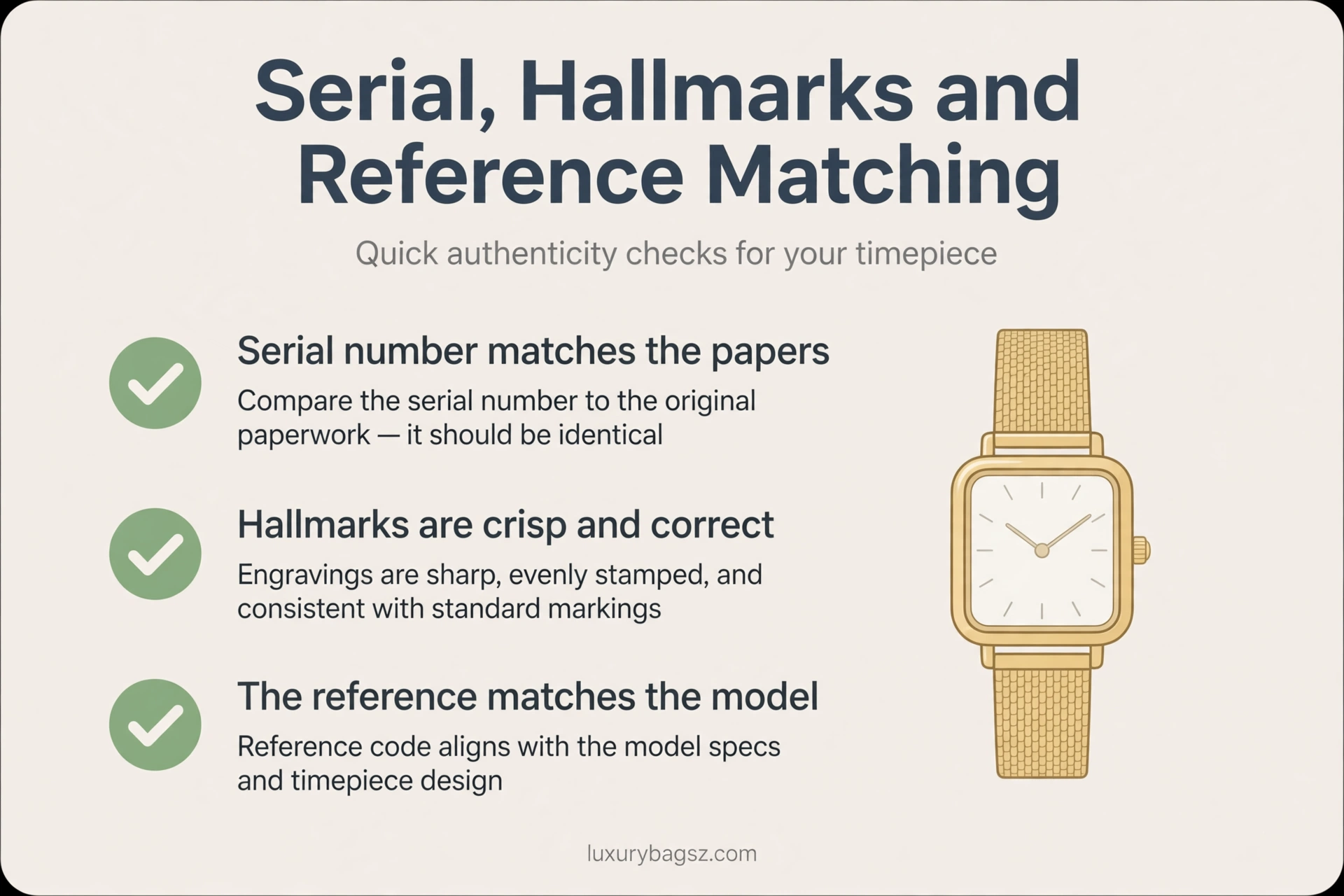
Every genuine Panthere carries identifiers that must agree with each other. The serial number on the caseback should match the number on the guarantee card or certificate, where those papers exist, and the reference number should match the case size, material, and movement you have already checked. A mismatch between any two of these is a hard stop until it is explained by a documented service or a verified Cartier record.
Check the hallmarks for the material claimed. Gold Panthere models should carry the appropriate hallmarks for their market and era, struck cleanly and in the right place for the reference. Hallmarks that look cast rather than struck, that sit in the wrong position, or that do not correspond to the claimed gold content are warnings. Steel models should not carry gold hallmarks, and a watch claimed as solid gold should not feel suspiciously light.
Be wary of serial numbers that look freshly engraved on an otherwise worn watch, or numbers whose font differs from the rest of the caseback engraving. Counterfeiters sometimes add a plausible serial to a fake case, and the mismatch in engraving depth or font is the giveaway. If you can, have the serial checked against Cartier's records or a reputable dealer's database before purchase.
Not every serial can be verified this way, and a failed verification attempt is not by itself proof of fakery, but a verified match is strong supporting evidence.
Weight, Feel, and Finish
A genuine Panthere has a reassuring density. Gold models feel heavy for their size, steel models feel solid rather than hollow, and two-tone models balance evenly on the wrist. Fakes often use cheaper base metals, plating, or hollow links, and the result is a watch that feels too light, too tinny, or oddly balanced.
Weight alone never authenticates a watch, because a well-made fake can be weighted, but a watch that feels wrong in the hand deserves the full checklist, not a quick pass.
Finish is the companion test. Run your eyes over every surface: the case flanks, the bezel, the bracelet links, the clasp, and the crown. Genuine finishing is consistent, with polished areas evenly polished and brushed areas evenly brushed, and with crisp transitions between the two.
Fakes often show polishing that bleeds into brushed areas, brushed areas that look scratched rather than grained, or case edges that are either too sharp or too soft and rounded from poor moulding.
Also check the crystal. Panthere crystals are typically sapphire on modern references, with a clear, hard surface that resists scratching. A crystal that already carries fine scratches on a supposedly unworn watch, or one that looks like mineral glass or plastic, is a warning. A single scratch proves nothing on a vintage piece, but a soft, easily marked crystal on a modern reference does not fit.
Box, Papers, and Provenance
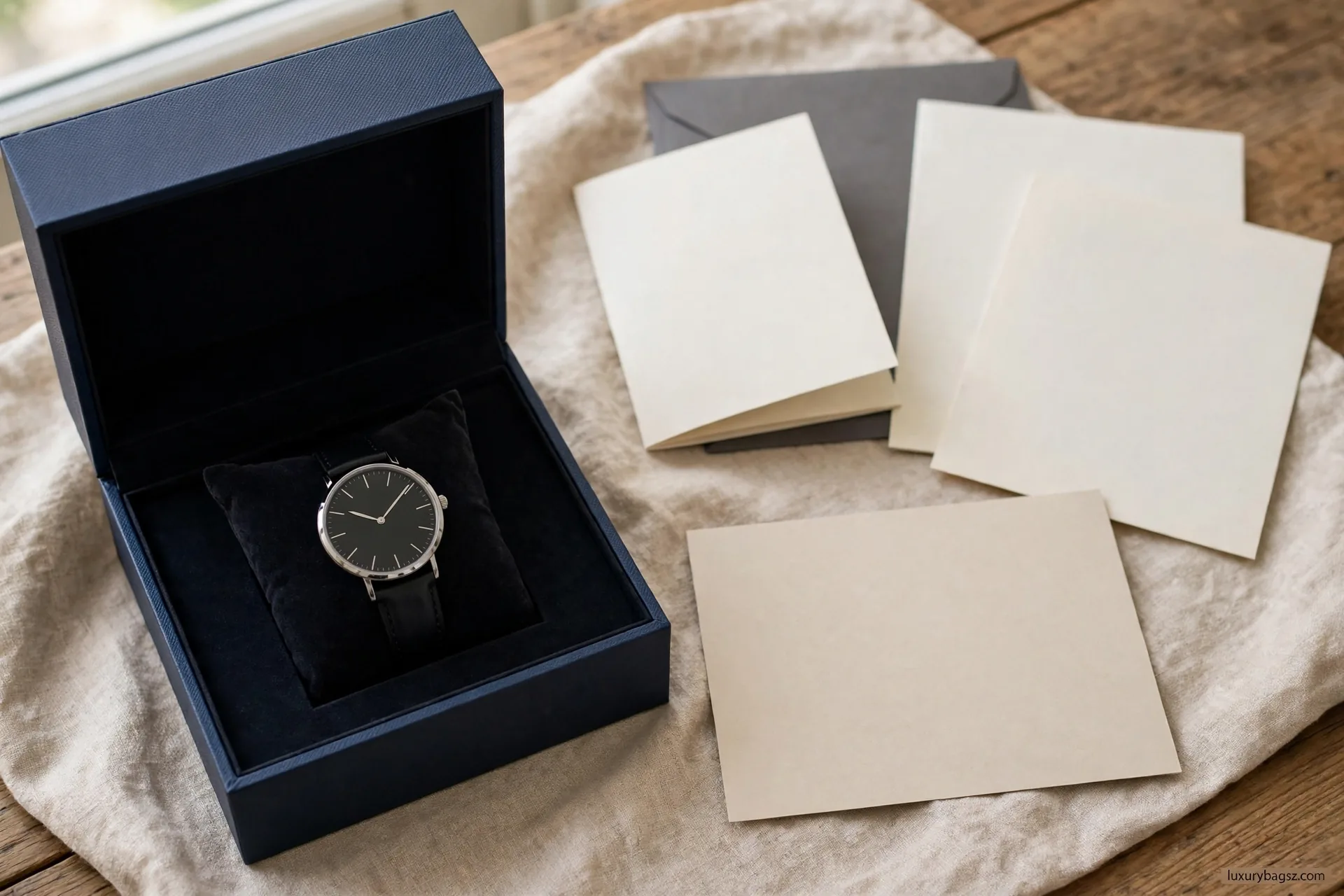
Box and papers help, but they never authenticate a watch on their own. Genuine Cartier boxes are well made, with clean stitching or finishing, correctly spelled branding, and materials that match the era of the watch. Papers should show the reference, serial number, date of purchase, and retailer stamp where applicable, with printing that is crisp and consistent.
Fakes increasingly include convincing boxes and papers, so treat them as supporting evidence, not as a verdict.
Look for internal consistency. The box style should suit the watch's era: a modern box with a 1980s watch, or a vintage-style box with a current reference, needs explaining. The papers should match the watch's serial and reference exactly, not approximately. A guarantee card with a serial number one digit different from the caseback is not a near miss; it is a mismatch.
Provenance adds weight when it is verifiable. A purchase receipt from a known authorised dealer, a service record from Cartier, or a listing history from a reputable dealer all support genuineness. A vague story about an inheritance, a duty-free purchase with no paperwork, or a seller who refuses to provide additional photographs is not provenance. It is a reason to insist on independent authentication before money changes hands.
The Traps That Prove Nothing
Several popular "tests" mislead buyers, and knowing them saves you from false confidence. The first is the price test in reverse: a fake can be priced high, and a genuine watch can be priced low by a seller who needs a quick sale or who does not know what they have. Price is a prompt to investigate, not a verdict.
The second is the magnet, water, and scratch test family. Home tests can damage a genuine watch, and they rarely distinguish a good fake from a real one. A fake can use sapphire crystal and non-magnetic steel; a genuine watch can fail a clumsy home water test because its gaskets are old. Leave physical testing to a watchmaker with proper equipment.
The third is the logo test. Counterfeiters copy logos well. A correct-looking Cartier signature on the dial proves only that the counterfeiter could copy a signature, which most can. The signature matters as part of the whole, in its font, spacing, and printing quality, not as a single pass-or-fail stamp.
The fourth is the weight test done in isolation. Some fakes are deliberately weighted to match genuine specifications, and some genuine vintage watches are lighter than modern buyers expect because of wear or replaced parts. Weigh the watch if you can, but weigh it alongside every other check, not instead of them.
Buying Safely: Inspection, Escrow, and Returns
If you are buying pre-owned, build authentication into the deal before you pay in full. Ask for a written return period that allows an independent inspection, and use it. Take the watch to a reputable watchmaker or dealer, ask them to check the movement, the caseback engravings, and the bracelet, and get their opinion in writing. If the seller refuses a return window for inspection, treat that refusal as information and walk away.
Use payment methods that protect you where possible, and avoid irreversible transfers to unknown sellers, especially for high-value pieces. Escrow services offered by reputable marketplaces add a layer of protection, but read their terms: some authenticate only the listing photographs, not the watch in hand, and some exclude certain references or conditions. Know exactly what is covered before you rely on it.
Finally, keep records. Photograph the watch, its serial number, its papers, and the seller's description before and after purchase. If a problem emerges later, those records are what let you make a claim, return the watch, or report the seller. A genuine Panthere is a joy to own and a strong long-term piece; the few days spent verifying it are the cheapest insurance you will ever buy for it.
The same inspection-first approach applies to Cartier jewellery purchases, as the Cartier Love bracelet fake guide and the Cartier Juste un Clou guide both show: check the whole piece, not just its most famous feature, before money changes hands.
Vintage Versus Modern: Different Rules for Different Eras
A 1980s Panthere and a current Panthere are not the same watch with a different date, and applying modern expectations to a vintage piece, or vintage tolerance to a modern piece, causes both false alarms and missed fakes. Vintage Panthere watches were made with the manufacturing methods of their era, and their dials, bracelets, and engravings show era-appropriate characteristics.
A vintage dial may have developed a warm patina, and its printing may look slightly softer under magnification than a freshly printed modern dial. That softness, on its own, is ageing, not fakery, provided the font, layout, and signature remain correct for the period.
Modern Panthere watches, by contrast, should look precise. Current production benefits from tighter tolerances, cleaner laser and mechanical engraving, and more consistent bracelet finishing. A brand-new or unworn modern Panthere with fuzzy printing, uneven bracelet gaps, or shallow engraving has no vintage excuse, and those flaws should weigh heavily against it.
Conversely, a vintage watch in suspiciously perfect condition, with a dial that looks freshly printed and a bracelet with no wear at all, deserves scrutiny in the opposite direction: it may be a restored watch, a re-dialled watch, or a fake dressed as vintage.
Servicing complicates the picture further. A genuine vintage Panthere may have had its crystal replaced, its bracelet re-polished, or its movement serviced with later Cartier parts. Each of those is legitimate maintenance when disclosed, but heavy re-polishing can soften case edges and blur engravings, mimicking fake characteristics.
Ask for service history, compare the watch against other examples from the same era rather than against current production, and let a watchmaker who knows vintage Cartier judge whether the wear pattern is honest. Era-appropriate comparison is the difference between spotting a fake and wrongly condemning a genuine old watch.
Where Fakes Cluster, and What Fair Prices Look Like
Fakes cluster where demand is highest and buyers are least likely to inspect: small and medium steel Panthere models, popular two-tone versions, and diamond-set variants sold through general marketplaces rather than watch specialists. Listings that use only stock-style photographs, that refuse close-up photographs of the caseback or clasp, or that describe the watch in vague terms without a reference number are disproportionately risky.
None of those traits proves a listing is fake, but together they describe the environment where fakes thrive, and they justify demanding more evidence before paying.
Price context helps, but only as a range, not a rule. Panthere prices vary widely by size, material, condition, and whether the watch has box and papers, and they move with the broader pre-owned market, so any fixed price quoted in a guide goes stale quickly. Instead of memorising a number, compare the asking price against several recently sold listings for the same reference and condition from reputable dealers.
A price far below that cluster, especially combined with pressure to pay quickly or outside the platform, is a warning. A price inside the cluster is not a guarantee, but it removes the most common fake-sale incentive.
The same logic applies to "too good to be true" stories: estate finds, liquidation lots, and one-time offers that expire within hours. Genuine sellers of genuine Panthere watches generally accept inspection windows, answer reference questions, and provide additional photographs, because those steps cost them nothing and close the sale. Sellers who resist all three are telling you something, even if they never say it directly.
Trust the pattern, not the story, and let the watch itself, examined properly, make the final case.
Servicing, Water Resistance, and Long-Term Ownership
Authentication does not end at purchase, because a genuine Panthere still needs care, and its service history becomes part of its future authentication story. Cartier recommends periodic servicing, and for a pre-owned Panthere the first service question is simple: when was it last serviced, and by whom?
A watch with a recent Cartier service record is easier to trust and easier to resell, because the service itself involved inspection by people who know the reference. A watch with no service history for many years is not necessarily fake, but its movement condition, gaskets, and water resistance are all unknown, and a service should be factored into your budget.
Water resistance deserves particular attention on a Panthere, especially a vintage one. Gaskets age, crowns wear, and a watch that was water-resistant when new may no longer be so after decades without service. Never assume a pre-owned Panthere is safe for swimming or showering, even if the seller claims it is, unless a watchmaker has pressure-tested it recently.
For most Panthere owners, the practical rule is to treat the watch as splash-resistant in daily wear, to keep it away from water where possible, and to have its seals checked at service intervals. That caution protects both the movement and the dial, which water damage can ruin beyond economical repair.
Bracelet care matters too, because the Panthere bracelet is both its beauty and its vulnerability. Articulated links collect dirt and skin products in their joints, and that buildup, left for years, can stiffen articulation and accelerate wear. A gentle clean with a soft brush and mild soapy water, followed by thorough drying, keeps the bracelet supple, and a jeweller or watchmaker can advise on deeper cleaning for bracelets with heavy buildup.
Avoid ultrasonic cleaning for a Panthere bracelet unless a watchmaker advises it for that specific watch, because ultrasonic energy can affect older bracelets and any set stones. Finally, keep the service habit documented: retain service receipts, note service dates, and store the watch's papers together.
A documented service history is not only good ownership; it is the provenance that makes your genuine Panthere easier to authenticate, and easier to sell, years from now.
Buying Vintage Panthere: Patina, Restoration, and Honest Wear
Vintage Panthere watches reward buyers who understand honest wear, because a 1980s or 1990s Panthere that looks brand new is more suspicious than one that shows its age gracefully. Genuine vintage bracelets develop fine scratches, softening of polished surfaces, and slight loosening of articulation over decades, all evenly distributed from normal wear.
Dials develop a warm tone, luminous material ages, and case edges soften slightly from polishing during services. That even, gradual ageing is the signature of a genuine watch that has lived a normal life, and it should be valued, not feared, provided the watch's reference, engravings, and movement all check out.
Restoration is where vintage Panthere buying becomes nuanced. A vintage watch may have had its bracelet re-polished, its crystal replaced, its movement serviced with later Cartier parts, or its dial professionally cleaned, and each of those interventions is legitimate when disclosed and correctly done.
What should concern you is restoration that changes identity: a re-dialled watch sold as original, a re-cut case that alters proportions, a replaced bracelet from a different reference passed off as original, or a movement swapped for a different calibre.
Ask the seller directly for restoration history, in writing, and compare the watch against other examples from the same era, not against current production, to judge whether its condition is era-appropriate.
Pricing context for vintage Panthere watches follows the same principles as other pre-owned luxury watches, without fixed numbers that would go stale. Compare recently sold examples of the same reference, size, material, and condition, from reputable dealers, and adjust for box and papers, service history, and restoration.
A vintage Panthere with honest wear, a recent service, and complete papers commands the stronger end of its range, while a heavily polished example with no papers and unknown service history sits at the weaker end, even if it photographs well. That comparison, done patiently across several sold examples, protects you from both overpaying for a polished-up watch and undervaluing a genuinely well-preserved one.
Vintage Panthere ownership, done this way, is deeply rewarding: you wear a piece of 1980s design history that still looks modern, with the confidence that its age is honest and its identity is verified.
Frequently Asked Questions
Can I tell a fake Panthere from photographs alone?
Sometimes, when the fake is crude, but often not. Good fakes photograph well, and the decisive details, bracelet articulation, movement finishing, and engraving depth, need the watch in hand or a watchmaker's inspection. Treat photographs as a screening step, not a verdict.
What is the most common fake Panthere tell?
In practice, it is a combination: fuzzy dial printing plus a stiff or roughly finished bracelet. Either flaw alone can occur on a worn or serviced genuine watch, but the pair together is a strong warning that should trigger a full inspection.
Do all genuine Panthere watches have a sapphire cabochon crown?
Most modern references use a sapphire cabochon, but crown details vary by reference and era, and some vintage examples differ. Check the crown against the specific reference, not against a general rule, and be suspicious of plastic-looking or glued cabochons on any reference.
Are quartz Panthere watches less valuable or more likely fake?
Neither. Quartz is correct for many Panthere references, and fakes exist in both quartz and mechanical forms. Judge the movement by whether it matches the reference, not by whether it is quartz or mechanical.
Does a missing box or papers mean a Panthere is fake?
No. Many genuine vintage watches have lost their boxes and papers over decades. Missing papers lower the price and raise the need for inspection, but they do not prove fakery, just as present papers do not prove genuineness.
Can Cartier authenticate a Panthere I already own?
Cartier service centres can service and inspect watches, and they will typically decline to work on a watch they identify as counterfeit. Policies and charges vary by location and era, so contact the service centre first and ask what inspection or service options apply to your reference.
Should I buy a Panthere from an overseas seller at a big discount?
Only with strong protections: verified seller history, a return window for independent inspection, and a payment method with recourse. A large discount combined with no returns and an irreversible payment method is the classic fake-sale pattern.
How much does professional authentication cost?
It varies by provider and by whether the case is opened, but a basic dealer or watchmaker opinion is usually a small fraction of the watch's value, and far less than the loss on a fake. Get a quote before purchase and factor it into your budget.
Do diamond-set Panthere watches need extra checks?
Yes. Check that the stone setting is even, that stones sit at a consistent height, and that none are loose, cloudy, or mismatched in colour. Poorly set or visibly uneven stones on a watch sold as factory-set are a warning, and stone quality claims should be supported by paperwork.
Is a Panthere with replaced parts still worth buying?
It can be, if the replacements are disclosed, correctly done, and reflected in the price. A serviced movement or a replaced crown is normal maintenance; an undisclosed replacement dial or bracelet is a different matter. Disclosure and price are what separate the two.
Conclusion
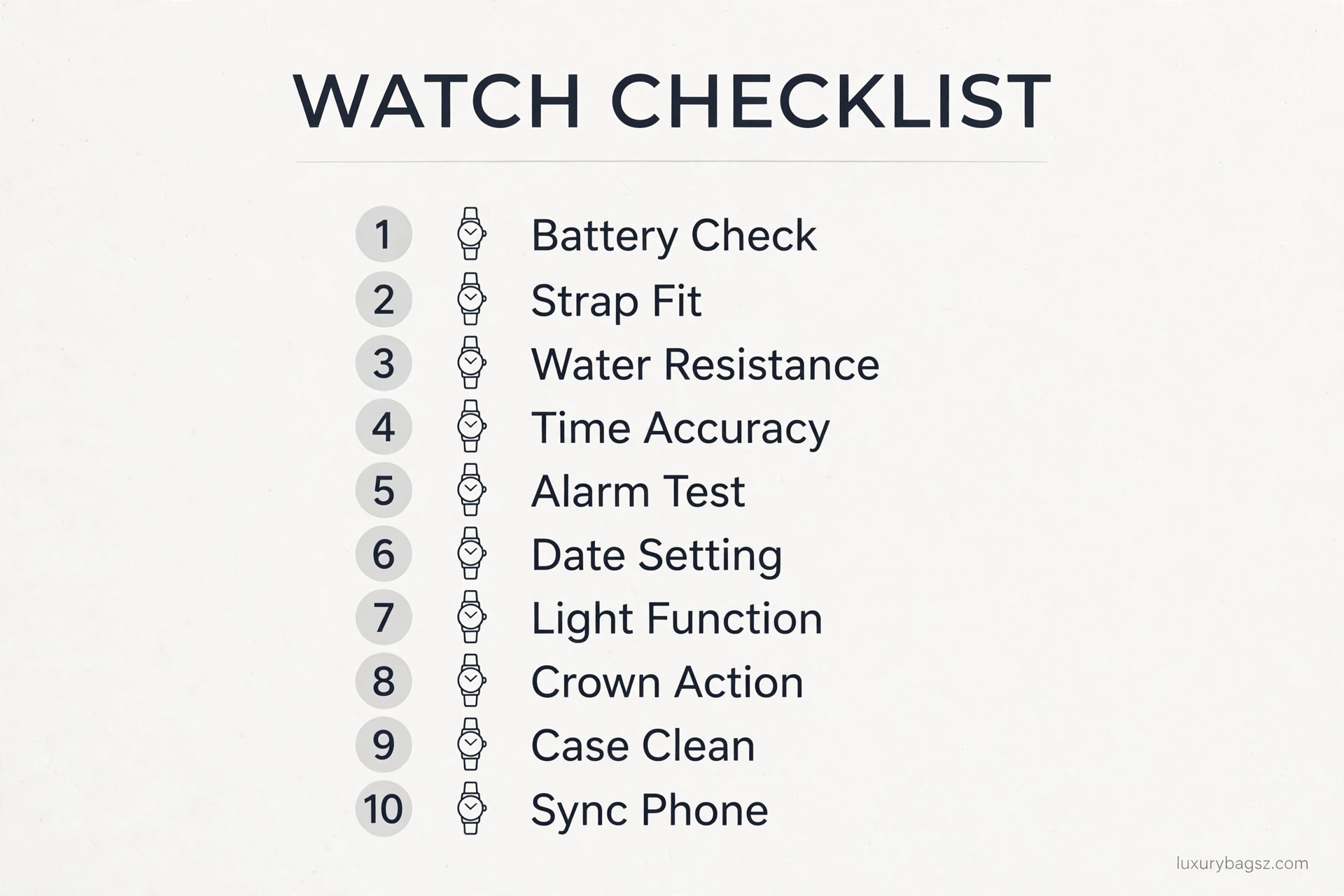
A genuine Cartier Panthere reveals itself across the whole watch: a crisp dial, smooth bracelet articulation, sharp engravings, a movement that matches its reference, and a weight and finish that feel considered rather than copied. No single check carries the verdict, and no box or paper substitutes for it. Check the reference first, run the ten checks above, and buy only with an inspection window.
Done that way, the Panthere you bring home will be the panther it claims to be: small, elegant, and unmistakably Cartier.