Are Cartier Watches Worth the Money? Design, Movements, Resale and Honest Costs
The Short Answer: Yes, If Design Is What You Value
A Cartier watch is worth the money if you value design that never dates, careful finishing and a watch everyone recognises as jewellery and timepiece at once. It is harder to justify if you measure value only in movement complications. Cartier sells icons first and engineering second, and honest buyers should know that before paying. For the model-by-model detail, browse our complete Cartier guide collection.
Key Takeaways
- You pay mainly for design history, finishing and the Cartier name.
- Tank, Santos and Panthère have lasted for decades without dating.
- Many models use quartz or straightforward automatic movements.
- Resale demand for the icons is strong compared with most fashion-adjacent watches.
- Ownership costs include servicing, straps and, for quartz, batteries.
- Pre-owned buying sharpens the value case, if you check carefully.
What the Money Actually Buys
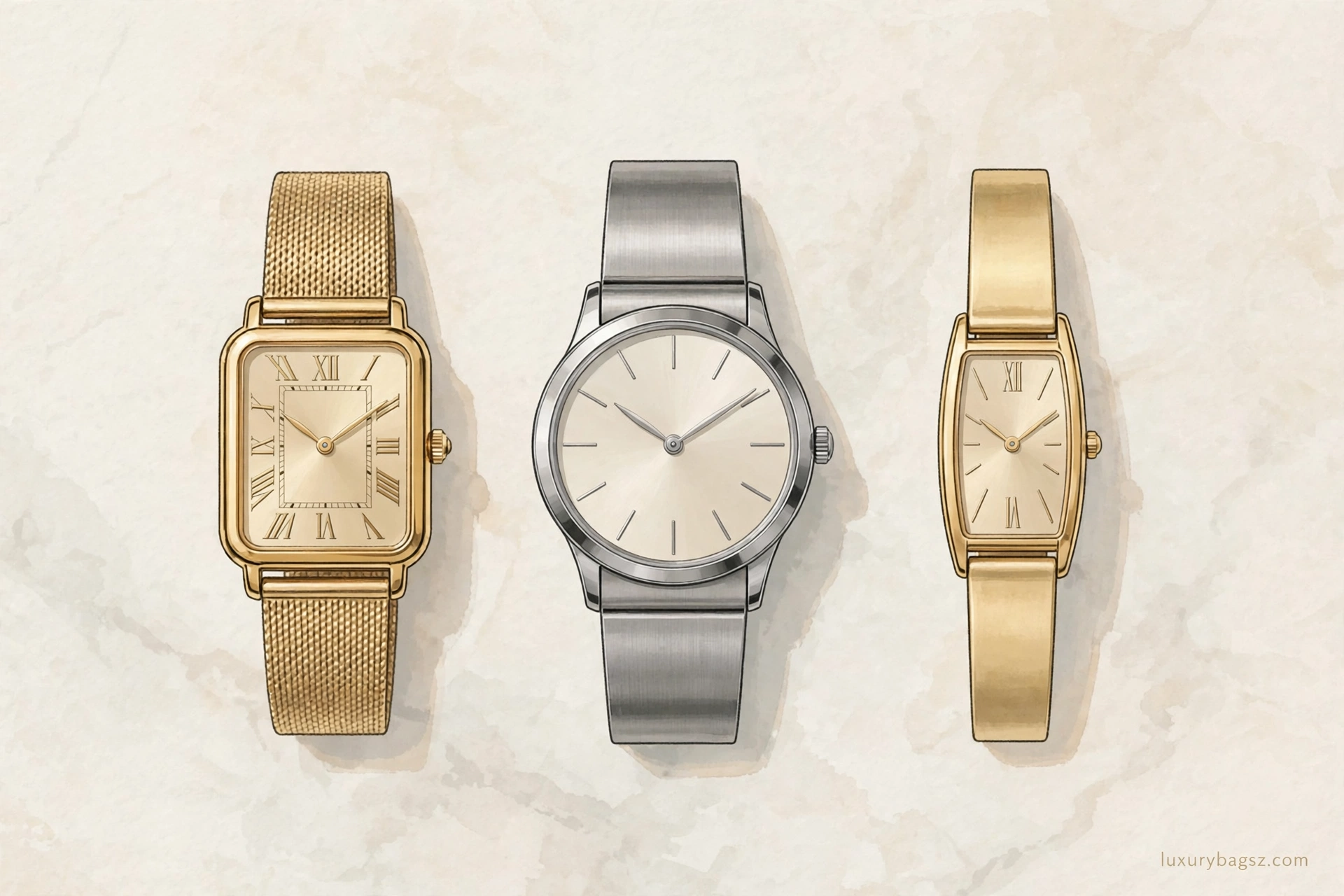
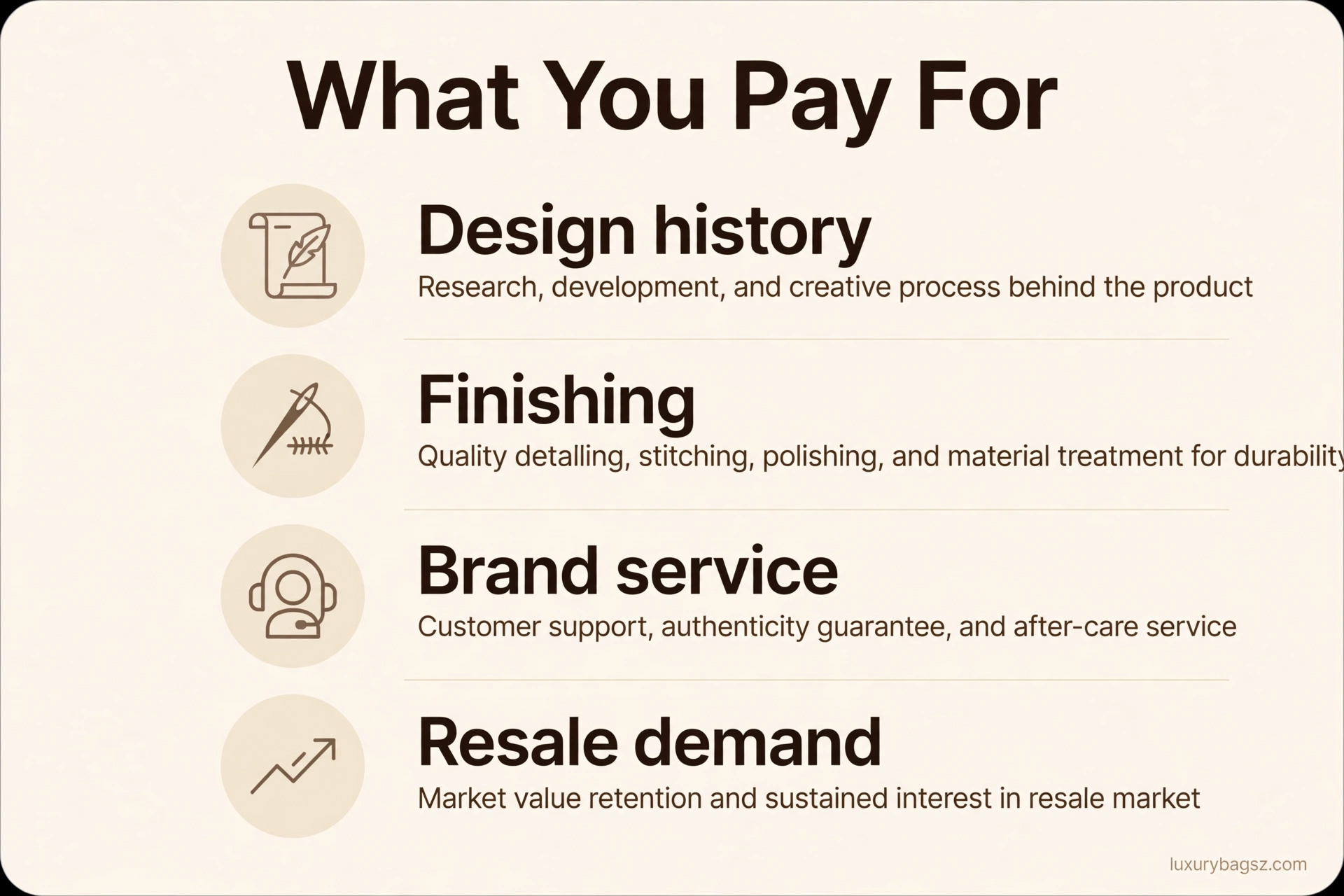
Cartier is a jeweller that makes watches, and that order matters. The money buys line, proportion and polish: a Tank's brancards, a Santos's screws, a Panthère's bracelet. Start with the icon itself in our Cartier Tank watch guide. Designs from 1917 still sell today, which is the strongest value argument Cartier has. You also buy consistency. Cartier does not chase trends, discount openly or flood the market, so your watch will not look replaced by next season's idea. None of that shows on a specification sheet. It shows on your wrist in ten years, when the watch looks exactly as right as the day you bought it.
Recognition is part of the return. A Cartier is understood across generations and countries in a way few watch designs are, and that shared recognition is a real, if unmeasurable, part of ownership pleasure.
Design That Refuses to Date
Most luxury watches date by their decade. Cartier's best designs do not, because they were drawn as jewellery: balance and line first, fashion last. At the extreme sits our Cartier Crash watch article, where a 1967 joke about shape became a collector legend. Even Cartier's wildest watch has lasted. That longevity is practical value. A Tank bought at thirty can be worn at sixty, inherited, and still be in production in some form for servicing and parts. If you plan to keep a watch for decades, few brands reduce the risk of regret like Cartier does.
Longevity also protects against the costliest luxury mistake: replacing a watch you tired of. A design that pleases for decades costs less per year than a fashionable watch changed every few seasons.
Movements: The Honest Caveat
Here is the balance. Many Cartiers use quartz movements, especially smaller Tank and Panthère models, and the automatics are usually capable rather than exotic. Our Cartier Santos guide shows the stronger mechanical side, with in-house automatic movements in current models. Judge by your priorities. If a finely decorated movement is your joy, rivals at this price may offer more to admire through a display back. If you wear a watch as design and jewellery, the movement question matters less. A quartz Tank is not a lesser Tank to most of the people who love them.
Finishing and Daily Feel
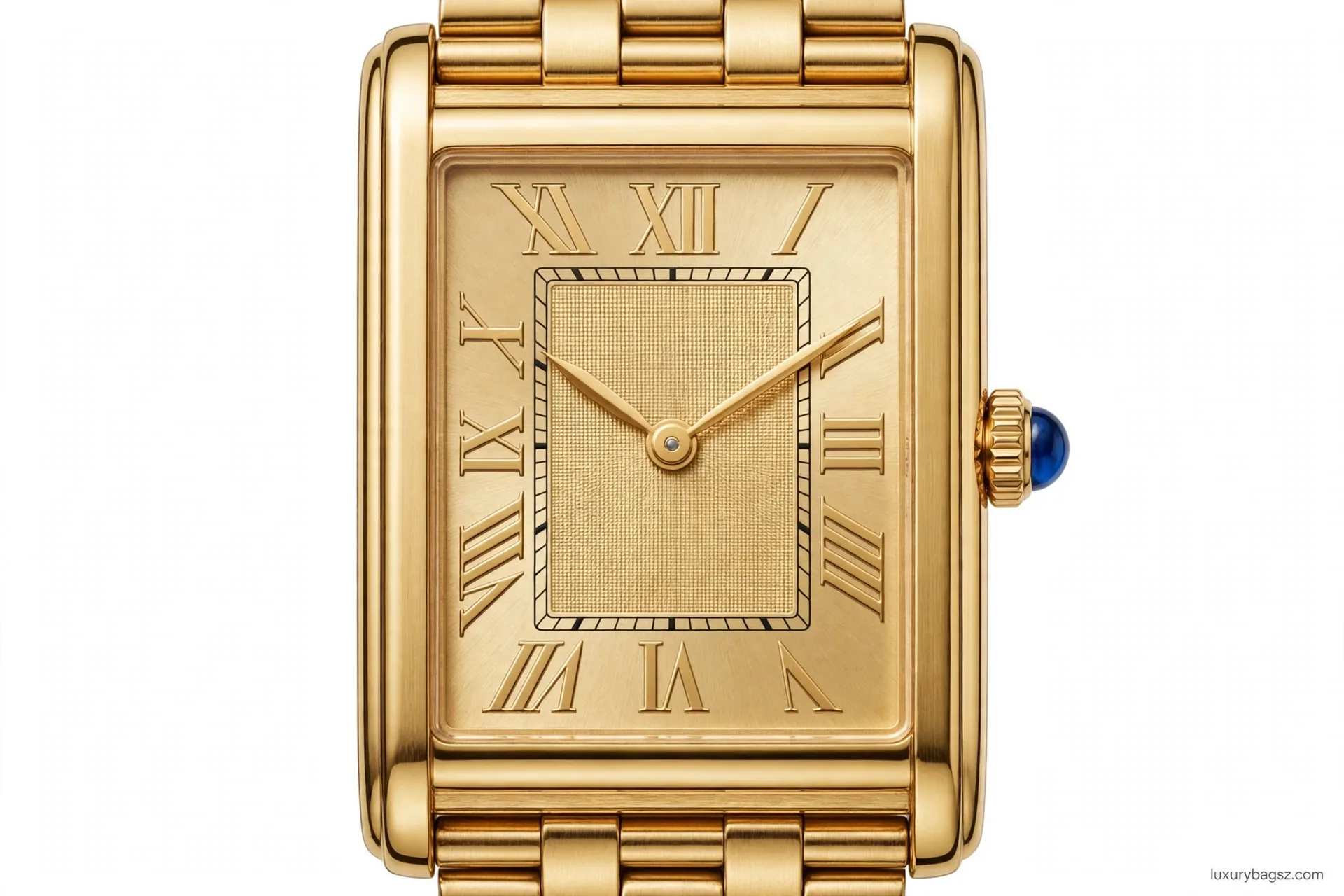
Handle a Cartier beside cheaper design watches and the gap is tactile. Cases are crisply polished, dials are cleanly printed and bracelets move like jewellery. Small details carry the price: the secret signature in a Roman numeral, the blue cabochon crown, sword hands and the way a Panthère bracelet drapes. On the wrist, Cartiers tend to wear slim and light. That comfort is a real, daily return on the money, not a brochure claim. It also explains the audience. Many buyers are not watch hobbyists at all; they are jewellery buyers who want one perfect watch.
Try the watch with your own clothes, not boutique lighting alone. Cartier's polish and proportions are meant for real wrists and ordinary daylight, which is where their finishing quietly proves itself daily.

The Range: Where Value Sits Best
Value is strongest in the steel icons. A steel Tank Must, Santos or Panthère gives the full design at the range's sensible end of pricing. Our Cartier Ballon Bleu guide covers the softer, rounder modern bestseller, which many buyers choose as a first Cartier. Gold models raise the price steeply for material and jewellery presence. They are worth it to buyers who want that warmth, not as a value calculation. Diamond-set pieces should be bought for delight. Their resale rarely rewards the first buyer the way plain steel icons can.

Resale and Pre-Owned Value
Iconic steel models tend to hold a healthy share of their price pre-owned, because demand is broad and the designs never leave the catalogue for long. That same market is your value route in. A checked, full-set pre-owned Tank or Santos can cost meaningfully less than new while looking nearly the same. Apply these checks: papers, known service history, correct dial and hands, and a case that has not been over-polished into softness. Buy from sellers who guarantee authenticity in writing. The saving from a risky listing can vanish with one wrong part or one fake bracelet.
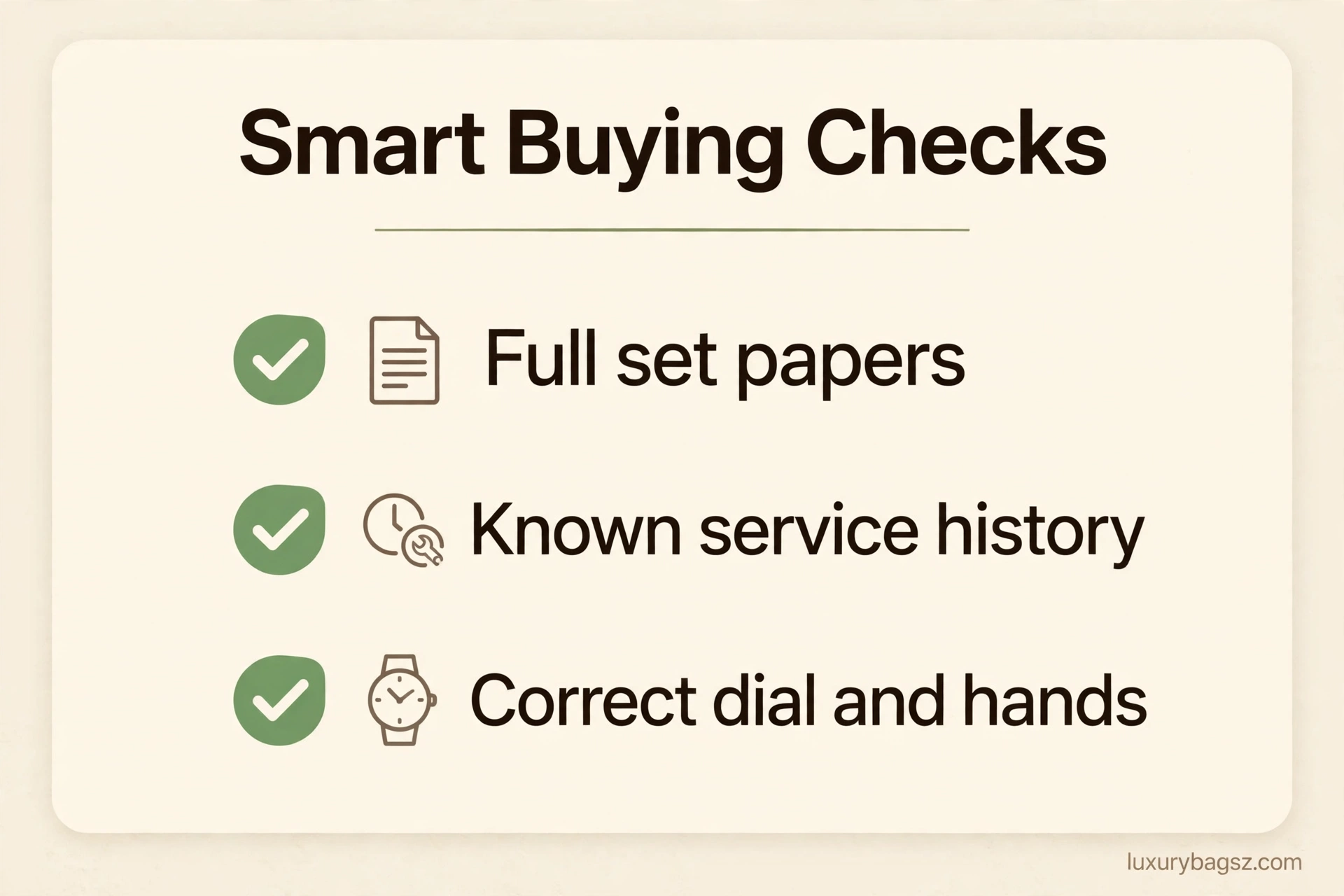
Full set means the box, papers and, ideally, service records together. Each missing element is a negotiating point, because the next buyer will make exactly the same deduction from your price.
The Costs Nobody Mentions
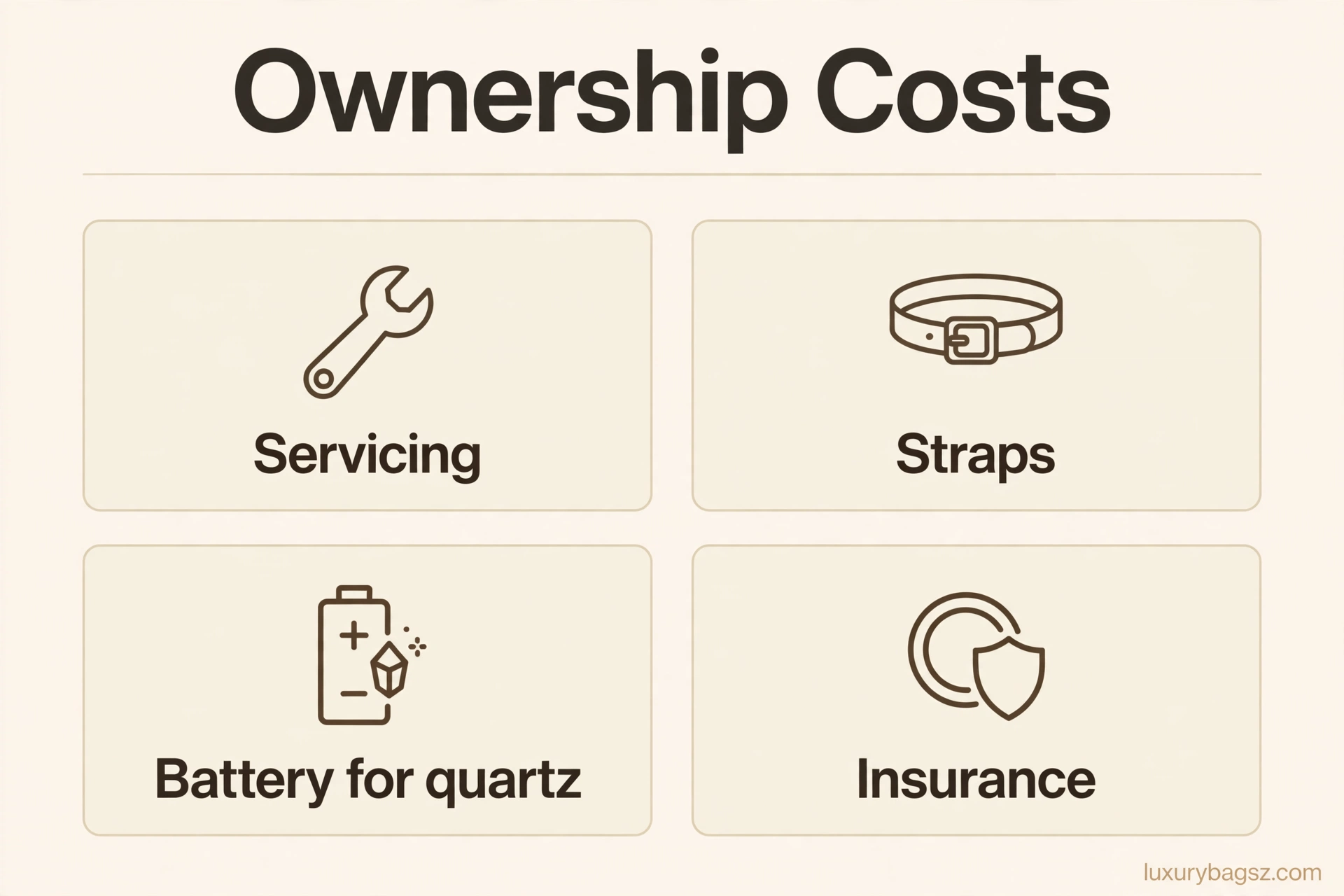
Budget beyond the ticket. Mechanical models need periodic servicing, leather straps need replacing, and quartz models need batteries and seal checks. Cartier's service network is a plus here. Boutiques worldwide can take the watch in, quote properly and return it with the brand's own parts and standards. Insurance is worth considering for gold and diamond pieces. It is a small recurring cost that belongs in an honest worth-it calculation. None of these costs are unusual for luxury watches. They are simply part of the true price, and planning for them keeps ownership relaxed.
So, Worth It for You?
Worth it, if you want one beautiful watch for decades, care about design more than complications, and choose an icon in steel or a well-checked pre-owned piece. Less worth it, if you want maximum movement for the money, frequent novelty, or a guaranteed financial return. No honest guide should promise that from any watch. The thinking in our are Cartier bracelets a good investment guide applies here too. Buy the object for your life first; value kept is a bonus. Decide that way and a Cartier rarely disappoints. It is one of the few luxury purchases whose appeal is documented across a full century.
Gift and inheritance value deserves a line in the calculation. A recognised Cartier passes between generations without explanation, which is a form of worth no specification sheet can capture for a family.
Retention by Model: The Numbers Behind the Resale Talk
Resale percentages get quoted loosely, so here is the honest shape of them, drawn from secondary-market trackers reporting through 2026 and certain to drift with the market. Read them as weather, not law: useful for choosing, useless as a promise.
The steel Tank Must is the range’s quiet outperformer, with trackers placing strong examples around 85 to 90 percent of retail. The Santos in medium steel sits a step behind at roughly 70 to 86 percent depending on completeness and condition. The Ballon Bleu, despite its popularity at retail, has tracked softer, around 50 to 65 percent in the same reporting.
The pattern behind the numbers matters more than the numbers: plain steel icons with broad demand hold value, fashion-led shapes and heavily decorated pieces soften fastest, and gold models swing widest because their retail includes a jewellery premium the second market prices coldly.
None of this makes a Cartier an investment in the financial sense. It makes the better-chosen models a store of most of their value, which for a luxury purchase worn for decades is the realistic version of the claim.
Warranty and Aftercare: The Support Behind the Price
Part of the money buys the service network described earlier in this guide, and its terms are better than many buyers realise. New Cartier watches carry an international warranty, and the brand’s care programme has allowed owners to extend coverage substantially, up to eight years in total on eligible watches when registered.
That length of cover changes the ownership maths. A mechanical watch whose maker stands behind it for most of a decade carries less surprise-cost risk than the same watch with two years of cover and independent servicing thereafter.
Servicing through the brand also protects the value discussed above: a Cartier service history, documented by Cartier, is the paperwork pre-owned buyers trust most, and correct parts preserve the dial, hands and case originality that over-polishing destroys.
Register the watch, keep the service receipts with the box and papers, and the boring administration becomes a real component of what the watch is worth to its next owner, who may be your own family.
The Alternatives at the Same Money
Honest worth-it judgements need the comparison shelf. At Tank Must money, rivals offer strong Swiss automatics with longer watchmaking pedigrees, and at Santos money the shelf holds serious sports watches from the traditional makers, some with waiting lists attached.
What those rivals generally do not offer is Cartier’s combination: jewellery-house finishing, designs a century old that still look current, and wearability for people who do not consider themselves watch people. The comparison is not engineering versus nothing; it is engineering emphasis versus design emphasis at the same price.
The buyer who will actually be happier is easy to identify. If you read movement specifications for pleasure, shortlist the rivals first. If you have worn the same jewellery for a decade and want the one watch that joins it, Cartier’s premium is buying exactly your kind of permanence.
Either answer is respectable. The only wrong purchase is paying Cartier money for engineering bragging rights, or rival money and then wishing daily that the watch looked like a Tank.
Cost Per Wear: The Arithmetic That Decides It
Strip the romance away and run the plain numbers. A steel icon bought new, worn three times a week for ten years, passes fifteen hundred wears. Even if it were worth nothing at the end, which the resale evidence above contradicts, the cost per wear lands in the territory of a coffee.
Compare the fashionable watch replaced every few seasons: each cycle repays full retail for novelty, and the per-wear cost of the rotation quietly exceeds the icon’s, while building no lasting value and no attachment either.
This arithmetic is why the design longevity in this guide is a financial feature, not an aesthetic one. The watch that stays pleasing stays worn, and the watch that stays worn is the only luxury purchase whose cost per use falls every single week.
Run the same sums on a watch you would wear monthly and the case collapses, which is the honest boundary of the argument: Cartier is worth the money to the person who will live in it, and an expensive ornament to the person who will not.
Vintage Cartier: Romance, Bargains and Traps
The vintage market offers the strongest prices and the sharpest risks in the same listings. Older Tanks and Santos models trade well below modern retail, and a good one delivers the full design argument of this guide at a fraction of the entry price.
The traps are specific. The Must de Cartier era produced gold-plated, or vermeil, cases whose plating wears and cannot be polished like solid metal; price any plated watch for what it is, not for the gold watch it photographs as. Dials crack, hands get replaced and movements get serviced with whatever parts were to hand across forty years.
Fakes and marriages, watches assembled from parts of several, exist throughout the vintage end of this brand because demand outruns surviving supply. Buy vintage from dealers who guarantee authenticity in writing and accept returns, and favour examples with documented recent service.
Servicing an old Cartier through the brand can be reassuring but may involve restoration choices that collectors debate, such as dial refinishing. Decide before you buy whether you want a preserved original or a renewed watch, because vintage value lives in originality.
Frequently Asked Questions
Do Cartier watches hold their value?
The steel icons usually hold a healthy share of their price, thanks to constant demand. Gold, diamond and niche models vary more, so buy those to wear.
Is a quartz Cartier worth buying?
Yes, if you love the design. Many classic Tank and Panthère models are quartz, they are accurate and slim, and owners value them as jewellery first.
Which Cartier offers the best value?
A steel Tank Must, Santos or Panthère is usually the sensible end of the range. Pre-owned, with papers and service history, the value case gets stronger.
Are Cartier movements good?
Current Santos and larger models use in-house automatics, while many smaller models use quartz. They are reliable; they are simply not the main reason to buy.
Is Cartier a luxury watch brand or a jewellery brand?
Both, with jewellery first in its history. That heritage is exactly why its watch designs have lasted so long without dating.
Should I buy new or pre-owned?
New buys boutique service and certainty. Pre-owned buys value, provided you insist on papers, history and a written authenticity guarantee.
How much does ownership cost over time?
Allow for servicing every few years on mechanical models, straps as they wear, batteries on quartz models and insurance on precious pieces.
Does a Cartier suit everyday wear?
Steel Tank, Santos and Panthère models do, within normal care. They are slim and comfortable, though they are not sports watches for rough use.
Will a Cartier go out of fashion?
Its core designs have been in production, in evolving forms, for decades to more than a century. That record makes sudden unfashionability unlikely.
What is the biggest mistake buyers make?
Paying icon money for a non-icon model, or buying pre-owned without checks. Choose a true classic and verify it, and the value case holds up.
Final Verdict: Worth It, Chosen as an Icon
A Cartier watch is worth the money when you buy what Cartier is actually selling: timeless design, jewellery finishing and a century of recognition. Choose a Tank, Santos or Panthère, new or carefully pre-owned, and the price buys decades of wear. That is a fair definition of value.