How to Buy Your First Designer Shoes
Your First Designer Pair in Brief
Buying your first designer shoes is different from buying ordinary shoes, because you are paying for materials, construction and design that should last, and because the price makes a mistake expensive. The good news is that a first pair does not need to be the most famous, the most expensive or the most limited shoe available.
It needs to be a shoe you will wear often, that fits your life, that fits your feet properly, and that you can look after.
Start with use, not hype. Decide where the shoes will be worn, how often, and with what clothes, then choose a style, a material and a budget that fit that use. Then judge sizing, construction, authenticity and seller evidence with the care a designer price deserves. This guide walks through that decision in order, so you end with a pair you wear weekly, not a pair you admire in a box and fear wearing outside.
Key Takeaways
- Choose for use first: a versatile first pair you wear often beats a rare pair you rarely wear.
- Fit matters more than brand: designer sizing varies by maker and model, so measure, compare and try before committing where possible.
- Materials and construction decide longevity: quality leather, solid stitching and a resoleable or durable sole outlast flashy details.
- Set a total budget including care products and, where relevant, authentication, not just the purchase price.
- Buy from reputable sellers with returns protection, and authenticate before wearing if buying pre-owned or from a marketplace.
Part 1: Decide Where the Shoes Will Live
Before browsing, write down where the shoes will actually be worn. Everyday casual wear, smart-casual work, formal occasions, travel, or a mix of these each point to different styles. A white leather sneaker suits everyday and smart-casual wear and pairs with jeans, chinos and even relaxed tailoring. A loafer suits smart-casual and warmer weather. A derby or Oxford suits formal and office wear.
A Chelsea boot suits colder months and smart-casual outfits.
Be honest about frequency. A first pair should be worn at least weekly, otherwise the cost per wear stays high and the shoes age in storage rather than on your feet. If you wear trainers daily, a designer sneaker is a sensible first pair. If you wear tailored clothes daily, a designer loafer or derby makes more sense. If your life mixes both, choose the style that covers the most outfits, not the style that photographs best.
Versatility is the first pair's greatest virtue, and it is worth more than rarity.
Part 2: Choosing a Style — Sneaker, Loafer, Derby or Boot
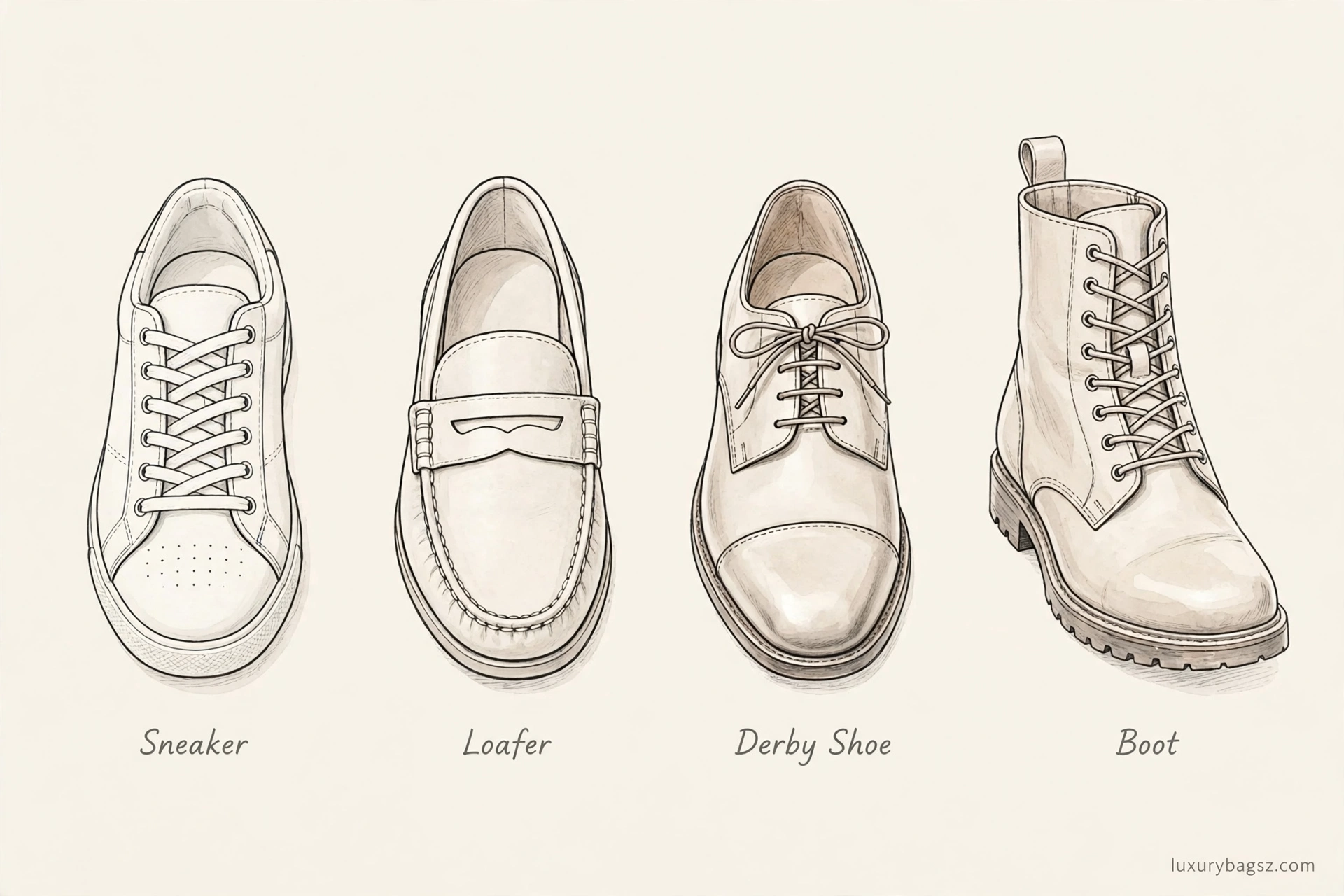
Each style has strengths and trade-offs for a first purchase. Designer sneakers offer comfort, versatility and easy resale, and they suit the widest range of outfits, but they also attract the most fakes and the most hype pricing.
Loafers offer slip-on ease, smart-casual polish and summer comfort, but they require careful fit, since there are no laces to adjust, and they suit fewer cold-weather outfits.
Derbies and Oxfords offer formal polish and, in good construction, decades of wear with resoling, but they need breaking in and suit fewer casual outfits. Boots, including Chelsea and lace-up styles, offer durability, weather resistance and smart-casual versatility, but they cost more, weigh more and need more care. For most first-time buyers, a clean white or neutral leather sneaker, or a dark leather loafer, is the safest versatile choice.
Choose the style you already wear in non-designer form, upgraded in materials and construction, rather than a style you have never worn before.

Part 3: Colour and Versatility — The One-Pair Wardrobe Test
Colour decides how often a first pair gets worn. White, off-white, black, dark brown and navy cover the most outfits, while bright colours, bold patterns and seasonal shades cover fewer. Apply the one-pair wardrobe test: can this pair work with at least five outfits you already own, across jeans, chinos or trousers, and across casual and smart-casual settings? If the answer is no, the pair is a second or third purchase, not a first.
Material colour interacts with care. White leather sneakers look superb new but show scuffs and dirt quickly, so they suit buyers willing to clean regularly. Black and dark brown leather hide wear better and suit formal and office wear, but show dust and need polishing to look their best. Suede looks luxurious and soft but stains easily and needs protector spray and careful weather choices.
For a first pair, a smooth leather in a versatile neutral colour is usually the lowest-maintenance, highest-use choice, with suede reserved for a later pair once you know your care habits.
Part 4: Sizing — Why Designer Sizes Vary and How to Handle It
Designer sizing is not standardised across makers or even across models from the same maker. A size 42 in one brand can fit like a 41 or a 43 in another, and sneaker sizing differs from dress-shoe sizing, which differs again from boot sizing. Never order a first designer pair by assuming your usual high-street size will translate exactly.
Check the maker's size chart, read model-specific sizing advice from reputable retailers, and compare insole measurements where available.
If you can try the pair in a store, do so, and try both shoes, walking on a hard floor, at the time of day your feet are largest — usually afternoon. Check toe room, heel grip, arch support and width, not just length. If buying online, choose a retailer with free returns, order your most likely size and, where returns allow, a neighbouring size to compare, and test indoors on carpet before wearing outside, so returns remain possible.
For pre-owned pairs, ask the seller for insole length and width measurements and for photographs of wear patterns, since a previous owner's foot shape affects fit. A pair that is slightly tight may stretch in leather, but a pair that is painfully tight or loose in the heel will not become comfortable with wear.
Part 5: Materials — Leather, Suede, Canvas and What Lasts
Materials decide how shoes look, feel and age. Full-grain leather is the most durable and develops a rich patina, making it ideal for a first pair you intend to keep for years. Top-grain leather offers a more uniform look at a lower price with slightly less durability. Suede offers softness and a luxurious look but needs protection from water and stains.
Canvas and textile offer lightness and breathability for sneakers, but wear faster and are harder to restore than leather.
Check materials honestly before buying. Leather should feel supple and substantial, not thin, plasticky or coated in a thick shine. Suede should feel soft and evenly napped, without bald patches or a shiny, pressed surface. Canvas should feel tightly woven and substantial, not thin or flimsy. Soles matter too: leather soles offer elegance and can be resoled, rubber soles offer grip and weather resistance, and hybrid soles offer a compromise.
For a first pair, prioritise materials you can care for confidently: smooth leather with a rubber or hybrid sole is a forgiving, versatile combination for most buyers.
Part 6: Fit Checks — Toe, Heel, Arch and Width
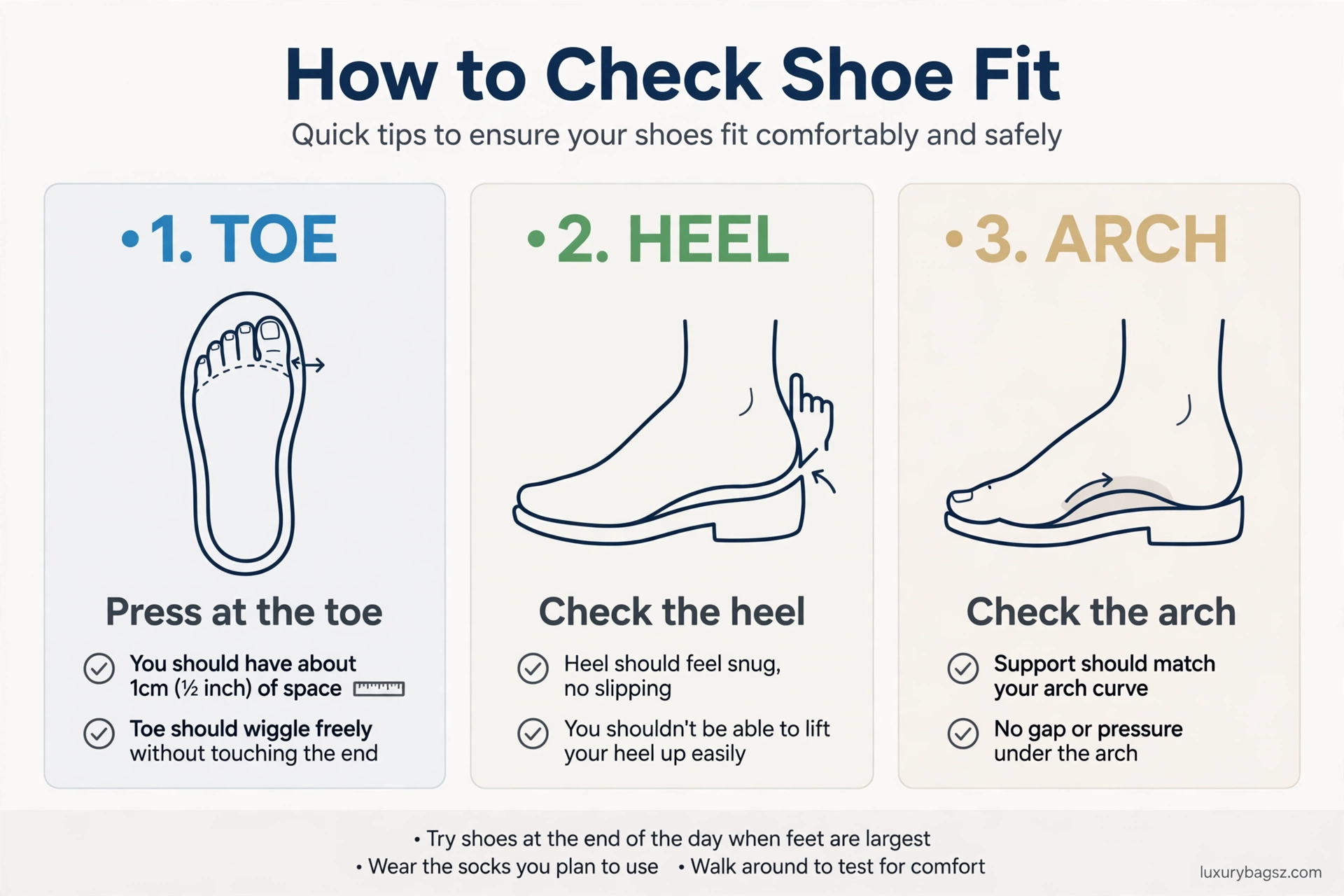
Fit is a set of checks, not a single feeling. Toe room: you should be able to wiggle your toes, with about a thumb's width between your longest toe and the shoe's end when standing, and no pressure on the sides of your toes. Heel: the heel should grip firmly without slipping with each step and without pinching or rubbing at the back. Arch: the shoe's arch should support your foot's arch without pressing painfully or leaving a large gap.
Width: the shoe should close or lace comfortably without bulging at the sides or feeling tight across the widest part of your foot.
Test fit properly. Wear the socks you will wear with the shoes, walk for several minutes, try stairs if possible, and check both feet, since feet differ in size and shape. A shoe that feels perfect sitting down but pinches walking is not a good fit. Leather shoes often need a short breaking-in period, during which they soften and mould slightly, but breaking in should ease mild stiffness, not cure pain, pinching or heel slipping.
If a pair hurts in the store or on a carpet test, it will hurt more outside, and no brand name compensates for that.
Part 7: Construction — Stitching, Soles and Resoling
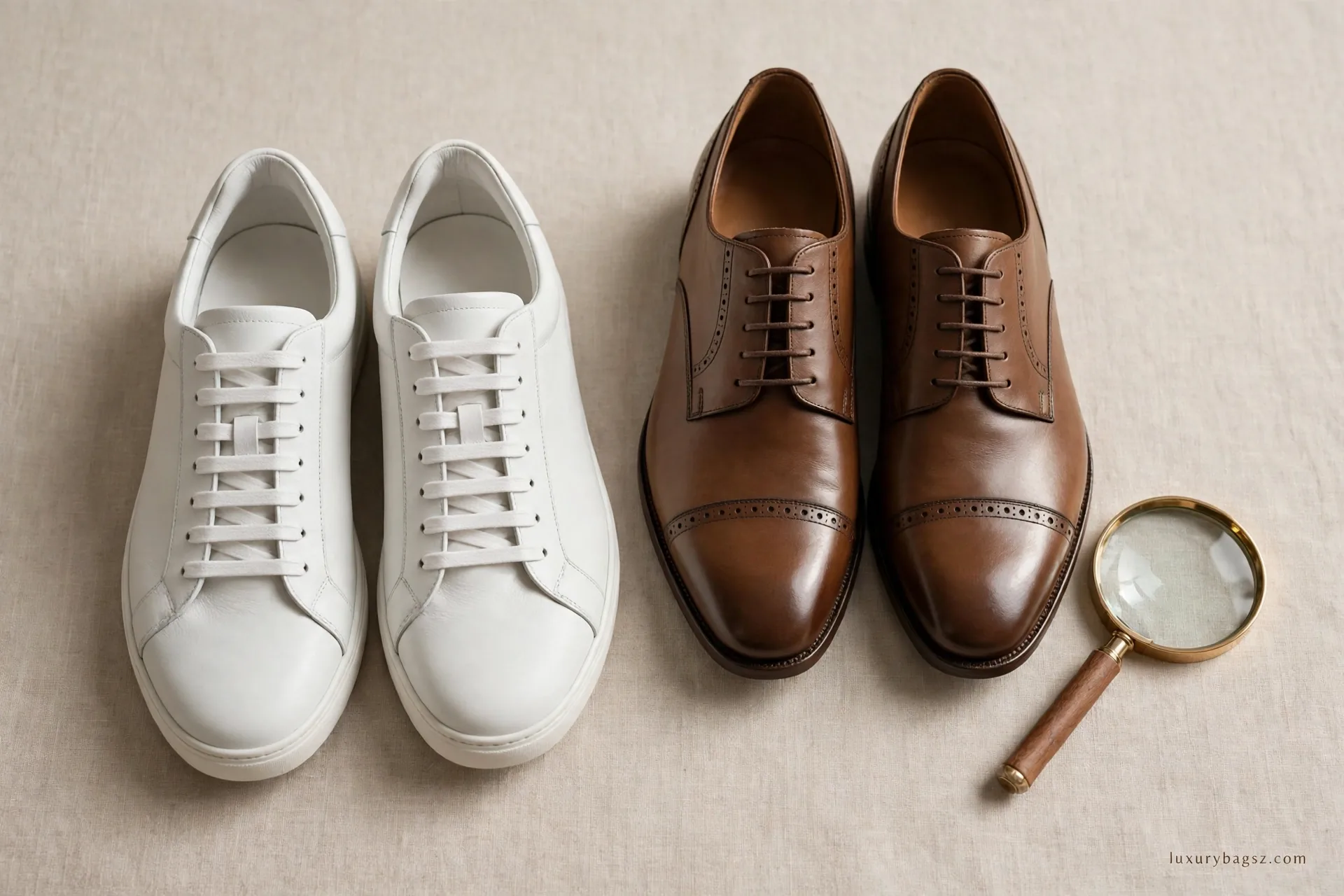
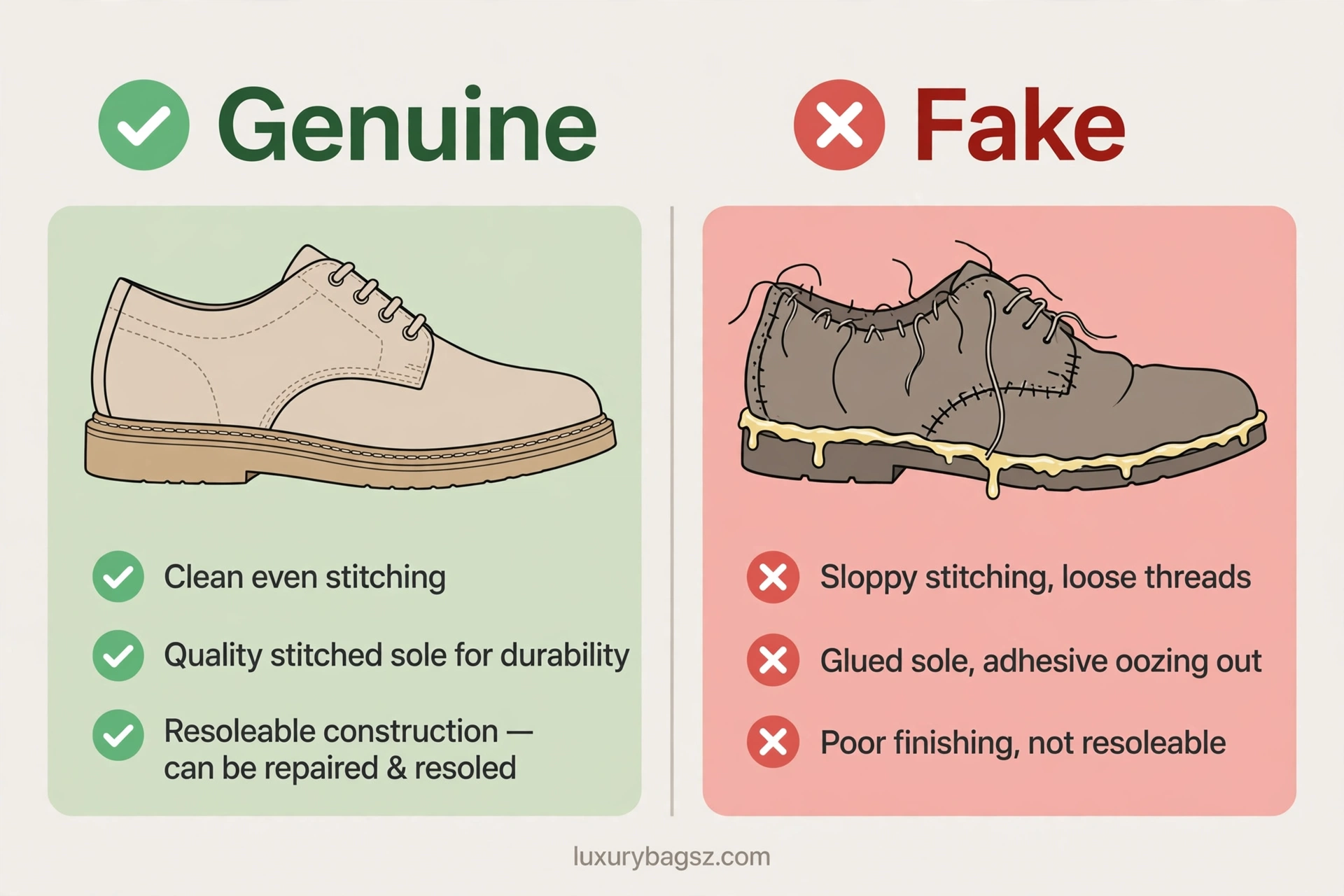
Construction quality separates designer shoes that last from expensive shoes that do not. Stitching should be even, tight and consistent, with no loose loops, skipped stitches or frayed ends, and it should follow panel edges at a steady distance. Soles should be firmly attached, evenly finished and correctly proportioned, without glue overflow, gaps or rough edges.
Uppers should be cleanly cut and finished, with no rough edges, puckering or uneven panels.
Ask whether the shoes can be resoled. Goodyear-welted and Blake-stitched dress shoes and boots can be resoled by a cobbler, extending their life for decades and making a higher initial price excellent value.
Most sneakers cannot be resoled in the same way, although some can have soles repaired or replaced by specialists, so judge sneakers by sole durability and overall construction rather than resoling promise. A first pair with solid construction and, where applicable, resoling potential is a better investment than a flashier pair with glued soles and sloppy stitching, however attractive its design.
Part 8: Budget — Total Cost, Not Just Purchase Price
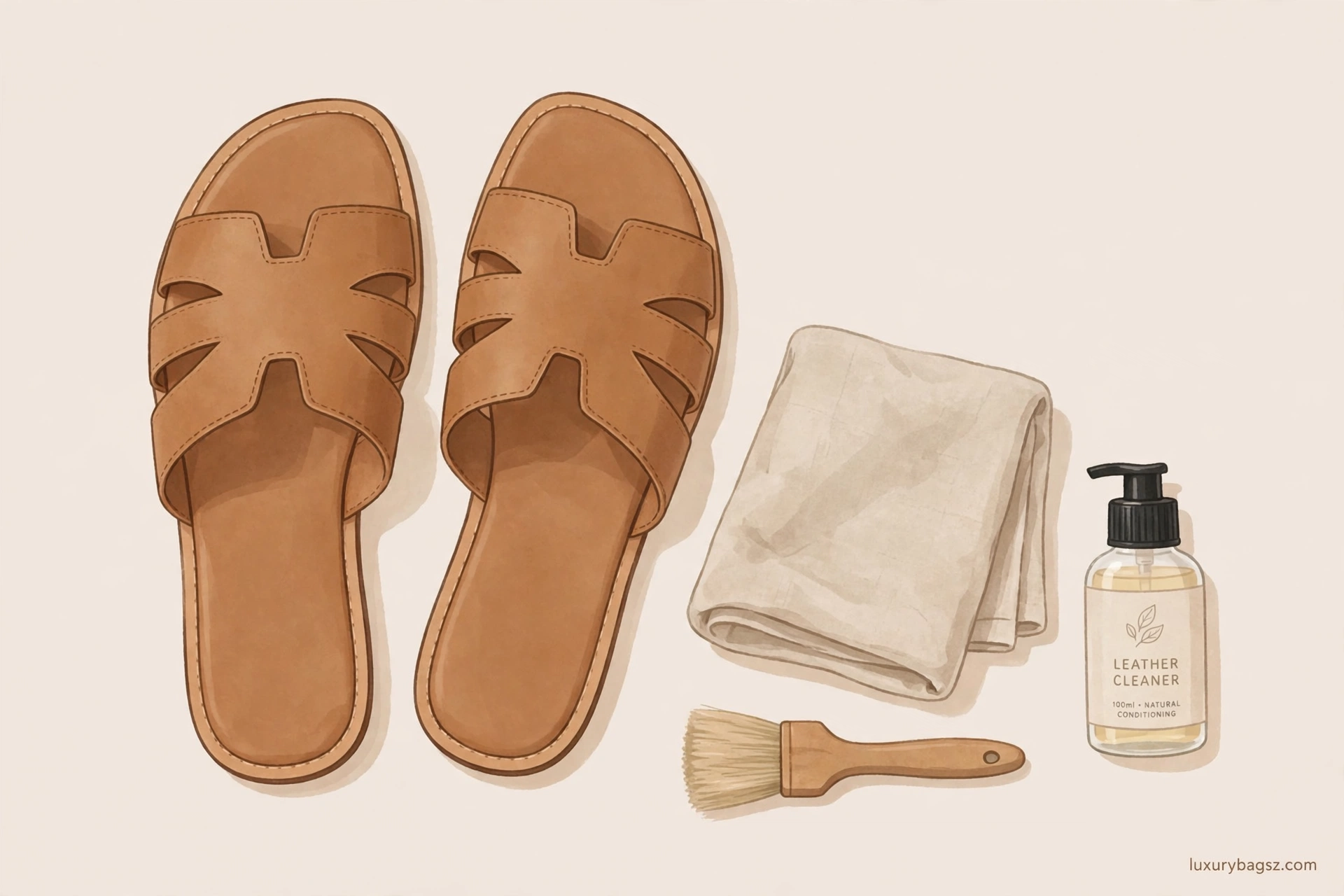
Set a total budget, not just a purchase price. Designer shoes cost more than the ticket price when you include care products — cleaner, conditioner, protector spray, brushes and shoe trees — and, for pre-owned or marketplace purchases, authentication fees. Shoe trees, in particular, are a wise first-pair investment: cedar shoe trees maintain shape, absorb moisture and extend life, and they cost far less than a replacement pair.
Judge value by cost per wear. A pair worn weekly for three years costs far less per wear than a pair worn monthly for one year, however cheap its ticket price. Set a budget range before shopping, then judge pairs inside it by use, fit, materials and construction, not by brand alone.
Avoid stretching your budget for a limited or hyped pair that does not suit your daily life; a versatile pair at a comfortable price, worn often, is better value than a rare pair at a stretched price, worn rarely and feared outside. If a pair requires you to change your wardrobe to wear it, it is not a first pair.
Part 9: New Versus Pre-Owned — Pros, Cons and Authentication
New pairs offer certainty: full warranty, correct box and accessories, easy returns and no wear history. They cost most, but for a first pair that certainty is valuable, especially if you are unsure about sizing or style. Pre-owned pairs offer lower prices and access to discontinued styles, but they carry wear, fit changes from a previous owner, and authentication risk, especially for hyped sneakers.
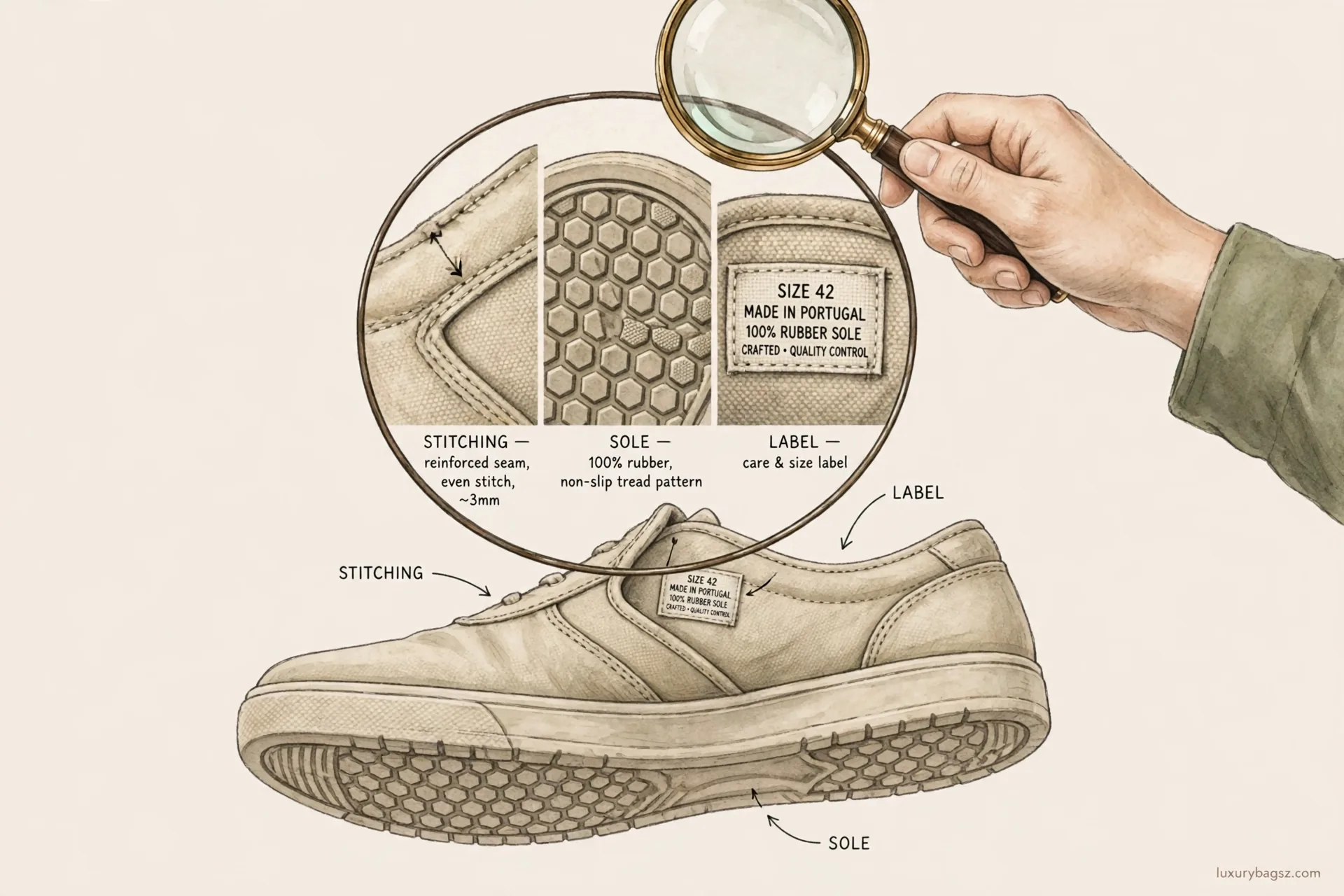
If buying pre-owned, authenticate before wearing. Check materials, stitching, sole pattern, labelling, size information and box label against genuine examples of the same model, and request complete daylight photographs of both shoes, labels, soles and box before paying. Consider a professional authentication service for higher-priced pairs, since the fee is small compared with the price of a fake.
Buy through a platform with buyer protection and a clear returns process, keep all messages on the platform, and do not wear the pair heavily until authentication is settled, since wear complicates a return. A pre-owned bargain that turns out fake is not a bargain at any price.
Part 10: Where to Buy — Retailers, Boutiques and Marketplaces
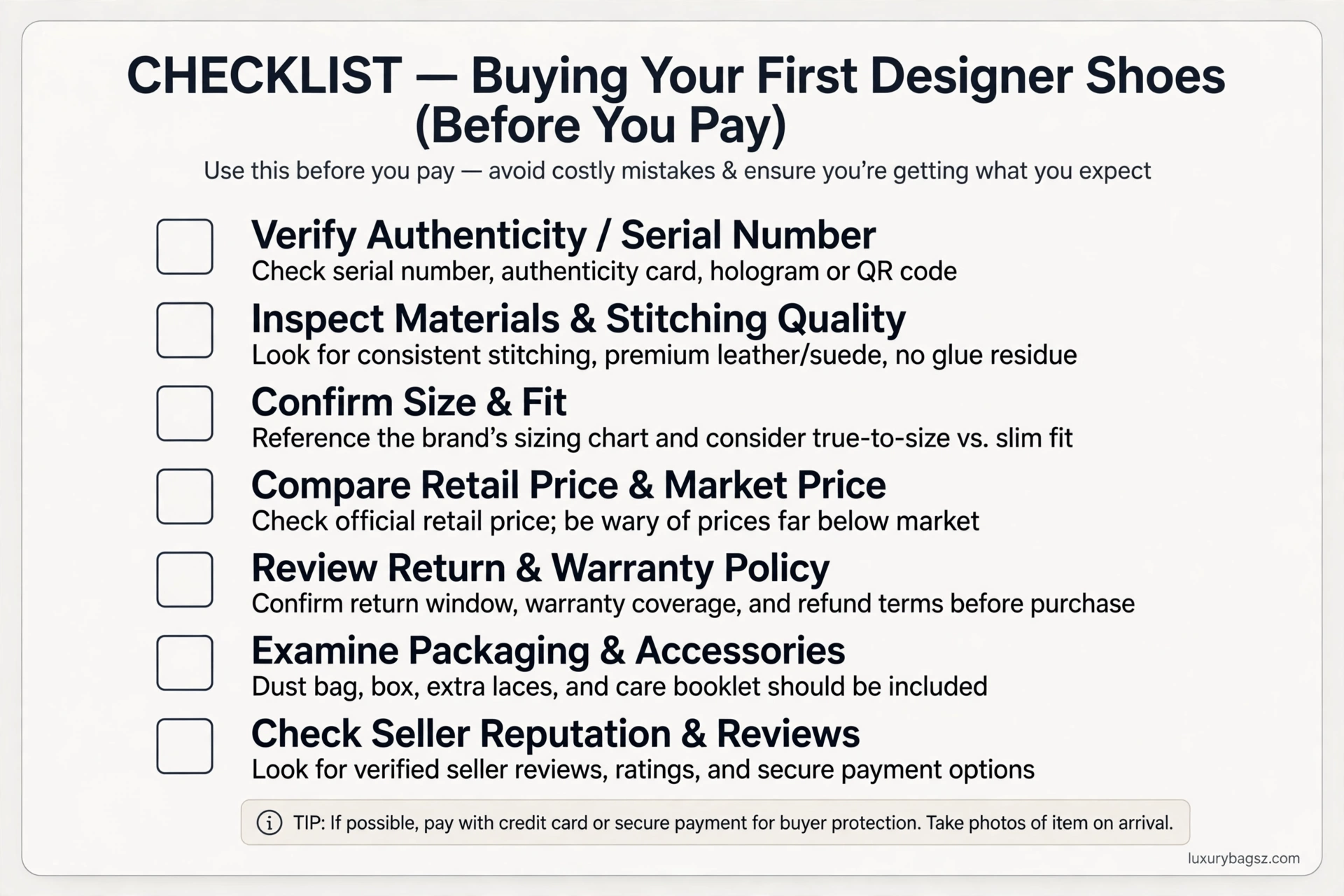
Where you buy affects price, authenticity certainty and returns. Brand boutiques and official online stores offer certainty and service but rarely discount. Authorised department stores and reputable multi-brand retailers offer certainty with occasional promotions and easier returns. Reputable resale platforms with authentication services offer pre-owned and limited pairs with an extra check, but charge fees and may have stricter return terms.
Marketplaces without authentication offer the widest choice and sometimes the lowest prices, but place authentication entirely on you, so they suit experienced buyers more than first-time buyers. For a first pair, prioritise a seller with a clear returns policy, buyer protection and a reputation you can verify, over a small saving from an unknown seller.
Check the seller's history, feedback and other listings, read the listing language for vagueness or pressure tactics, and keep all communication on the platform. A trustworthy seller states model, colourway, size, condition honestly and what is included, and answers specific questions directly.
Part 11: Trying, Testing and the Returns Window
Use the returns window deliberately. When a pair arrives, inspect it before wearing outside: check the box, labels, materials, stitching, soles and both shoes for consistency, and compare against the listing description. Test fit indoors on carpet, with the socks you will wear, walking for several minutes and checking toe, heel, arch and width.
If anything fails — fit, materials, construction or description mismatch — return promptly within the window, in original condition, with all packaging and accessories.
Do not wear a questionable pair outside "to see if it improves". Outdoor wear usually voids returns, alters soles and complicates authentication claims. Similarly, do not remove tags, discard packaging or apply protector spray until you have decided to keep the pair, since those steps can affect return eligibility.
A disciplined first-week test — inspect, carpet-test, decide — protects both your money and your enjoyment of the pair you ultimately keep.
Part 12: Care Basics — Protecting Your Investment From Day One
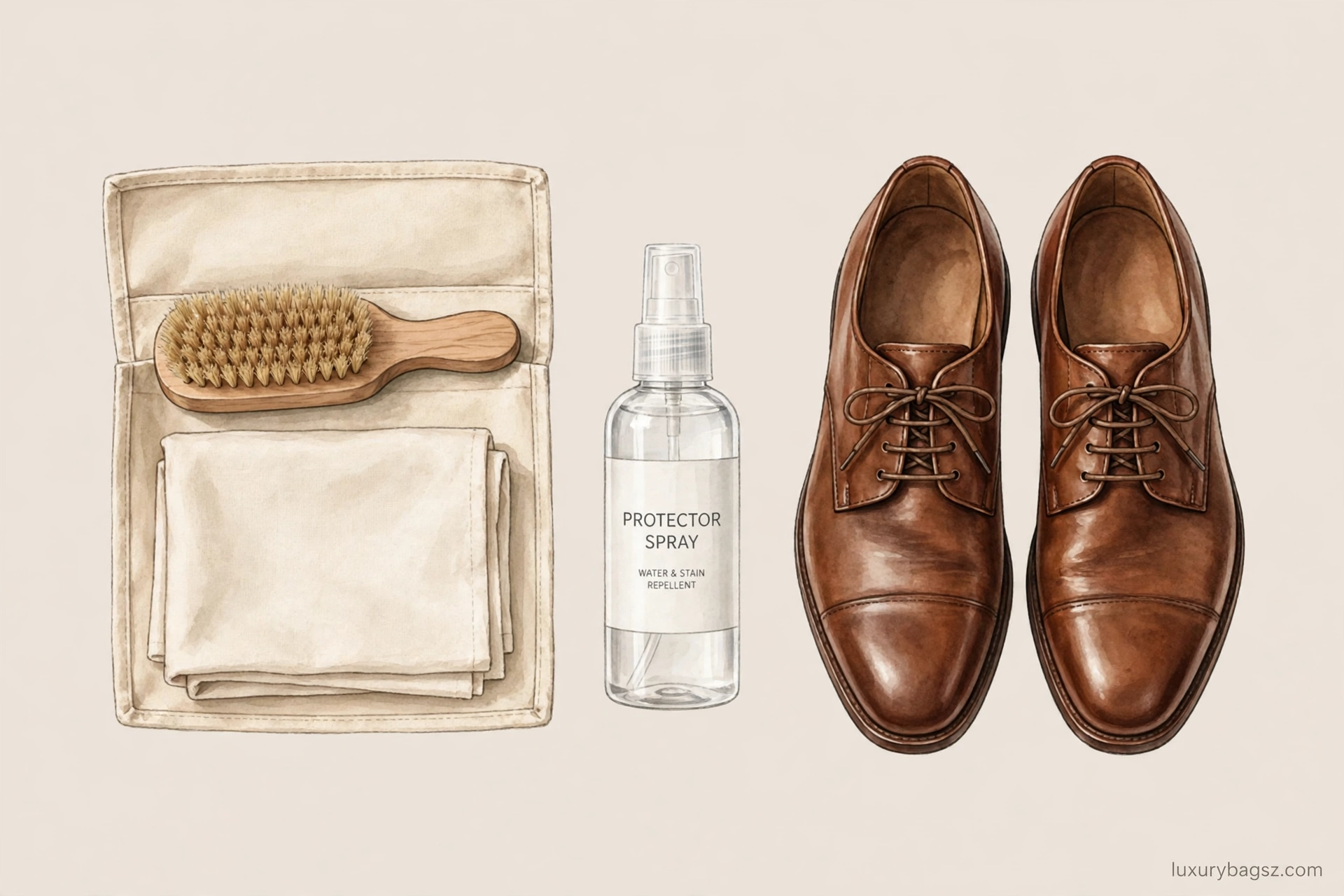
Care starts before first wear, not after first damage. For leather shoes, apply a suitable protector or conditioner as directed, use shoe trees after each wear, and rotate with another pair where possible so shoes dry fully between wears — leather needs at least a day to recover from moisture and pressure. For suede, apply protector spray before first wear and brush regularly with a suede brush to maintain nap.
For sneakers, a water and stain protector helps, and regular gentle cleaning prevents dirt from becoming ingrained.
Clean little and often rather than rarely and aggressively. Brush off dust, wipe leather with a soft, slightly damp cloth, and address scuffs promptly with appropriate products rather than letting them accumulate. Store shoes in a cool, dry place, in dust bags or boxes where supplied, with shoe trees inside, and avoid stacking heavy items on them.
A simple care routine — protect, brush, condition occasionally, tree after wear — costs little time and adds years to a first pair, making the designer price genuinely worthwhile.
Part 13: Styling a First Pair — Five Outfits, No New Wardrobe
A first pair should work with clothes you already own, not require a new wardrobe. A clean white sneaker works with jeans and a T-shirt, chinos and a shirt, relaxed tailoring, shorts in summer and dark trousers for smart-casual evenings. A dark loafer works with chinos, tailored trousers, jeans for smart-casual wear, summer tailoring and a shirt-and-blazer combination.
A dark derby works with suits, tailored trousers, smart chinos and formal occasions, and, in a more relaxed leather, with dark jeans.
Test versatility before buying by listing five outfits from your current wardrobe that the pair would complete. If you struggle to reach five, the pair is too narrow for a first purchase. Also consider seasonality: a first pair bought in winter should still work in spring, and a summer pair should not be unusable for half the year unless you already own a winter pair.
Versatility is not about boring choices; it is about choosing a pair whose design, colour and material let it earn its price through frequent wear.
Part 14: Common First-Pair Mistakes and How to Avoid Them
The commonest first-pair mistake is buying for hype rather than use: a limited sneaker that does not suit your outfits, your climate or your comfort needs, worn rarely and resold at a loss. The second is buying the wrong size by assuming designer sizing matches high-street sizing, then enduring pain or paying return postage.
The third is buying pre-owned without authentication, then discovering a fake after wearing the pair and losing return options.
Other mistakes are subtler. Buying white suede as a first pair guarantees stain anxiety. Buying a pair that needs a new wardrobe guarantees extra spending. Buying without checking returns guarantees being stuck with a poor fit. Buying the cheapest "designer" pair from an unknown seller guarantees authenticity risk.
Avoid all of these by deciding use first, testing fit properly, setting a total budget, buying from a reputable seller with returns protection, authenticating pre-owned pairs before wearing, and protecting the pair from day one. A first pair bought this way becomes a favourite, not a lesson.
Part 15: Breaking In Designer Shoes Without Damaging Them
Breaking in is the period when new shoes soften and mould to your feet, and handling it well makes the difference between a favourite pair and a painful mistake. Start indoors: wear the shoes on carpet for short periods — thirty minutes at first, then an hour — with the socks you will wear outside, and check for pinching, heel slipping or pressure points after each session.
Leather shoes soften gradually as the leather flexes and warms, while sneakers usually need little breaking in beyond a few wears to settle lacing and footbed shape.
Do not force breaking in with aggressive methods. Soaking leather shoes, bending them repeatedly by hand, or wearing a painful pair for a full day outside in the hope that pain will pass usually damages the shoes and hurts your feet.
Mild stiffness that eases over several short indoor sessions is normal breaking in; sharp pain, blistering, numbness or heel slipping that does not improve after several sessions is a fit problem, not a breaking-in problem, and the pair should be returned within its window if possible.
Use shoe trees between sessions to maintain shape, and consider thin socks for the first sessions if the shoes feel snug, moving to your normal socks as the leather relaxes.
Suede and textile shoes break in differently: suede softens quickly but should not be forced with water or heat, and textile sneakers mould through wear rather than through treatment. For boots, breaking in takes longer — often a week or more of short wears — and a leather conditioner applied as directed can help the leather flex, but it cannot cure a wrong size.
Keep a simple rule: breaking in should make a good fit better, never make a bad fit acceptable. If a pair still hurts after a fair indoor trial, it is the wrong pair, however much you like its design.
Part 16: Rotation, Storage and Seasonal Care
Rotation is the simplest longevity habit most buyers ignore. Shoes need at least a day to dry fully between wears, since feet produce moisture that leather and textile absorb, and wearing the same pair daily without rest shortens its life noticeably. A first designer pair lasts far longer when rotated with even one other pair, and shoe trees accelerate recovery by maintaining shape and absorbing moisture.
Cedar shoe trees are the standard choice: they absorb moisture, resist odour and hold the shoe's shape, and they cost far less than a replacement pair.
Storage matters as much as rotation. Store shoes in a cool, dry place, away from direct sunlight and radiators, which dry and crack leather, and away from damp, which encourages mould. Use dust bags or boxes where supplied, keep shoe trees inside, and avoid stacking heavy items on shoes or cramming them into a tight space that distorts their shape.
For seasonal shoes — suede in summer, boots in winter — clean and condition before storing for the off-season, so dirt and salt do not set into the material over months. Check stored shoes occasionally, especially in humid climates, for mould, insect damage or sole separation, since early detection saves a pair that neglect would ruin.
Seasonal care also means weather judgement. Leather shoes handle light rain with protector applied, but should not be worn in heavy rain or standing water without rubber soles or overshoes. Suede should be kept out of rain altogether where possible, and dried naturally — never with direct heat — if it does get wet, then brushed once dry to restore nap.
Salt, mud and road grit should be brushed off promptly rather than left to dry into seams and soles. A pair cared for seasonally, rotated regularly and stored properly will look and feel better after two years than a neglected pair looks after six months, whatever its original price.
Part 17: Building Beyond Your First Pair
A good first pair teaches you what you value, and that knowledge should guide your second pair rather than hype or habit. After several months of wearing your first pair, ask what it does well and what it lacks: does it cover formal occasions, or do you still reach for another shoe for those? Does it handle rain and winter, or do you need a boot for colder months? Does it suit summer, or do you need a lighter, more breathable pair?
The answers point to the most useful second pair, which is usually the style that covers the gap your first pair leaves, not a second version of the same shoe.
Build a small, versatile rotation before chasing rare or statement pairs. A sensible three-pair rotation for many men is a clean sneaker for everyday wear, a loafer or derby for smart-casual and formal wear, and a boot for colder weather and durability — each in a neutral colour, each in a material you can care for.
Once that rotation exists, a fourth pair can be a statement: a bold colour, a suede texture, a collaboration or a limited release, worn for pleasure rather than necessity, without the pressure of daily use.
Budget for the rotation, not just the pair. Each additional pair needs shoe trees, care products and storage space, and each pair worn less often costs more per wear, so add pairs slowly and wear each one enough to justify it. Sell or donate pairs you no longer wear rather than hoarding them, since unworn shoes still age in storage and take up space better used by a pair you will wear.
A wardrobe built this way — first pair for use, second pair for the gap, third pair for the season, statement pairs only after the basics are covered — gives you a rotation that works every day, not a collection that impresses in photographs and frustrates in real life.
Part 18: Resale and Long-Term Value of a First Designer Pair
A first designer pair is a purchase, but it can also retain value if you buy and care for it well, and understanding resale helps you buy smarter from the start. Classic, versatile styles in neutral colours — a clean white sneaker, a dark loafer, a black derby — hold value better than bold, seasonal or heavily branded styles, because more buyers want them second-hand.
Limited collaborations and hyped sneakers can appreciate sharply, but they can also fall sharply when hype fades, so resale value should never be the main reason for a first pair; versatility and wear should come first.
Condition drives resale more than any other factor after style. A pair kept with its original box, extra laces, dust bags and receipts, cleaned regularly, stored with shoe trees and worn with rotation, will command a far higher resale price than the same pair worn daily without care and sold without packaging.
Keep the box and accessories from day one, even if you never plan to sell, since completeness also helps with warranty claims and authentication if you ever need them. Photograph the pair when new, so you have a record of its original condition if a future buyer questions wear.
If you do resell, sell honestly and through a reputable channel. Describe the model, colourway, size, condition and wear accurately, photograph both shoes from every angle including soles, labels and flaws, and price against sold listings for the same model, size and condition rather than asking prices. Use a platform with buyer protection, keep all messages on the platform, and do not sell a pair you suspect is fake as genuine at any price.
A first pair bought well, worn often, cared for properly and sold honestly can return a meaningful share of its price — and, more importantly, it teaches you exactly what to look for in the pair that replaces it.
Frequently Asked Questions
What is the best first designer shoe to buy?
A versatile neutral pair you will wear weekly — usually a clean leather sneaker or a dark leather loafer — in a style you already wear in non-designer form, upgraded in materials and construction.
How much should I spend on my first designer shoes?
Set a total budget including care products and, where relevant, authentication, then judge pairs inside it by use, fit, materials and construction. Value is cost per wear, not ticket price alone.
Do designer shoes run true to size?
Not reliably. Sizing varies by maker and model, so check size charts, read model-specific advice, measure where possible, and try or order with free returns before committing.
Should my first designer pair be new or pre-owned?
New offers certainty, warranty and easy returns, which suits most first-time buyers. Pre-owned offers lower prices but carries wear and authentication risk, so authenticate before wearing if you choose that route.
How do I know designer shoes are authentic?
Check materials, stitching, sole, labelling, size information and box label against genuine examples of the same model, buy from reputable sellers, and consider professional authentication for higher-priced or marketplace pairs.
How long should designer shoes last?
Well-made leather shoes, cared for and resoled where possible, can last many years or decades. Sneakers last less long, depending on wear and sole durability, but quality construction and care still extend life substantially.
Do I need shoe trees for designer shoes?
Yes, for leather shoes and boots especially. Cedar shoe trees maintain shape, absorb moisture and extend life, and they cost far less than a replacement pair.
Can I wear designer shoes every day?
Yes, if the style suits daily wear and you rotate with another pair where possible so shoes dry fully between wears. Daily wear without rest shortens life for any shoe, designer or not.
What care do first designer shoes need?
Protect before first wear, brush and wipe regularly, condition leather occasionally, use shoe trees after wear, and store in a cool, dry place. Little and often beats rare, aggressive cleaning.
What if my first pair does not fit after buying?
Return promptly within the returns window, in original condition with packaging, if bought new or from a retailer. Do not wear outside first, since outdoor wear usually voids returns. For pre-owned pairs, check the seller's return terms before paying.
Final Verdict
Your first designer shoes should be a pair you love wearing, not a pair you love owning. Choose for the life you actually live, in a versatile style and colour, in a fit you have tested properly, in materials and construction that will last, from a seller you can trust, at a total price you can afford including care.
Get those decisions right, and your first pair will not just look like a designer purchase — it will feel like one, every time you put it on, for years to come.