

Cartier Panthère Watch: Sizes, Models and Prices
The Panthère in Brief
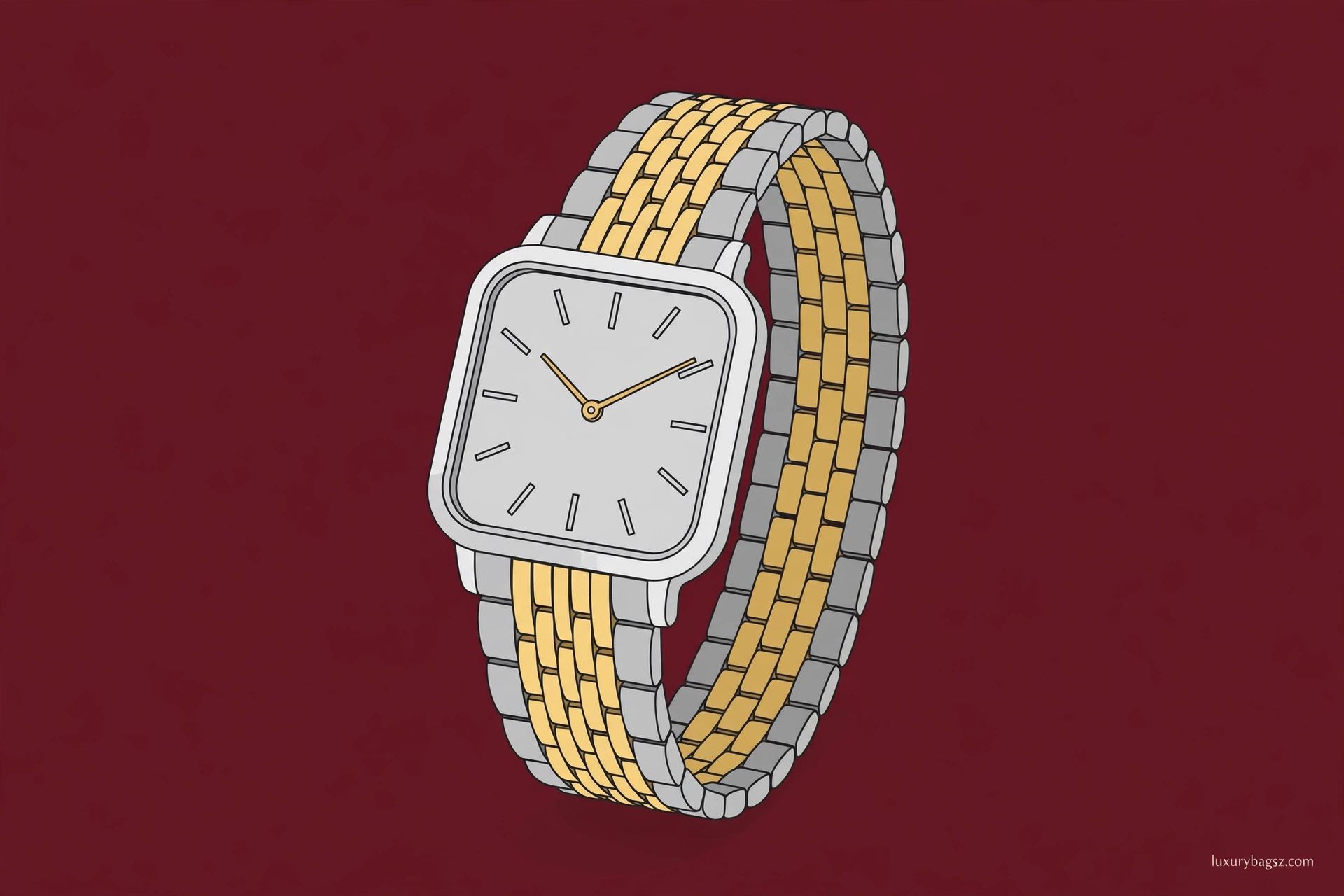
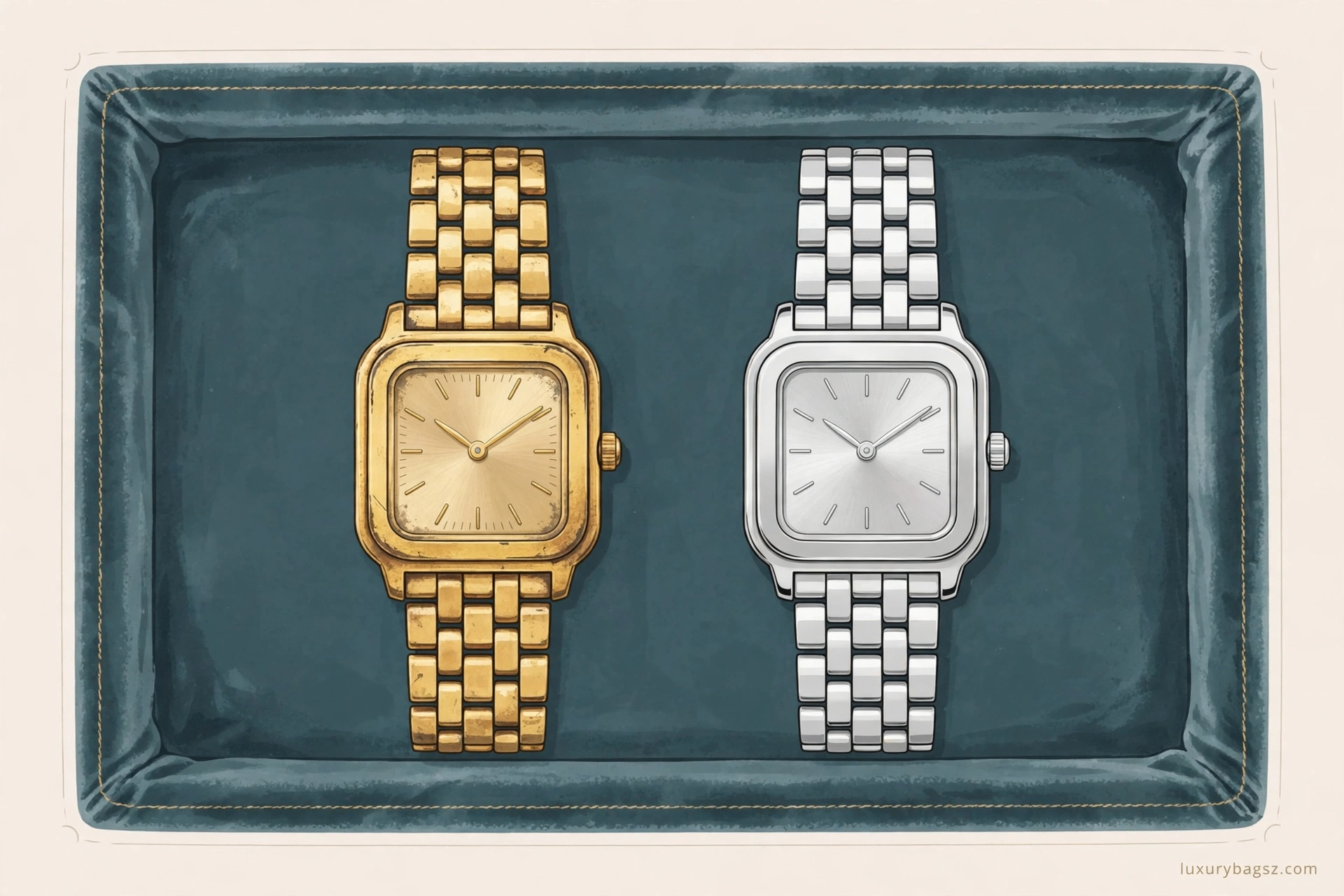
The Cartier Panthère is a square-case jewellery watch on a slinky brick-link bracelet, launched in 1983, discontinued in 2004 and revived in 2017 — and the modern range runs in four sizes.
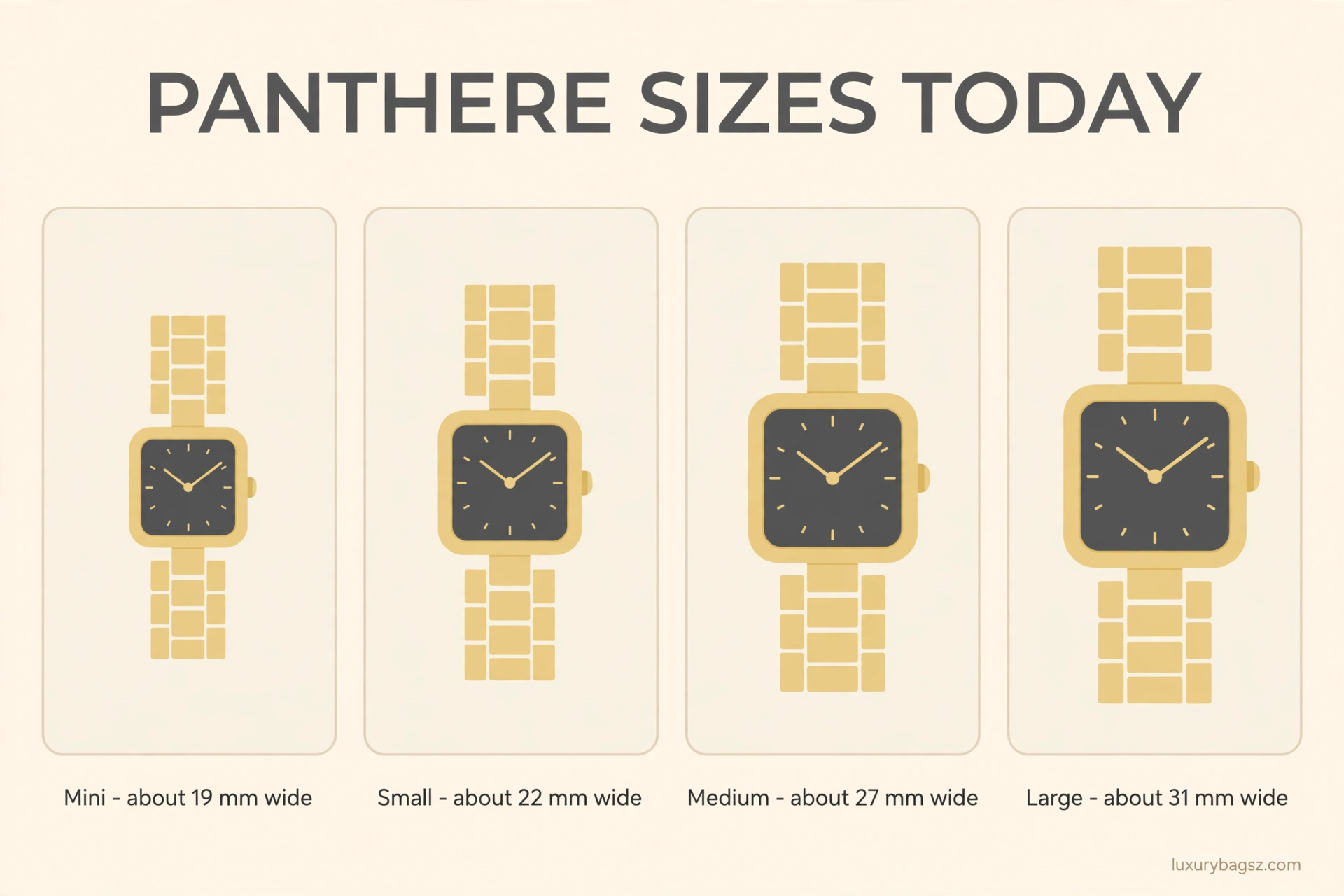
Measured by case width, today's sizes are roughly: Mini about 19 mm, Small about 22 mm, Medium about 27 mm and Large about 31 mm. Full case measurements include the length, so a Small is about 30 x 22 mm.
Small is the classic fit and the safest first buy. Mini wears like a bracelet, Medium reads clearly as a watch, and Large gives real presence. All current models are quartz, with water resistance of about 30 metres.
Key Takeaways
- Modern Panthère sizes: Mini about 19 mm wide, Small 22 mm, Medium 27 mm, Large 31 mm.
- The Small has kept its dimensions since 1983; vintage Large models, at about 29 mm, are nicknamed the Jumbo.
- Every current Panthère is quartz; the choice is size and material, not movement.
- Steel starts the range, two-tone warms it, full gold and diamonds top it.
- Reported US prices for plain steel run from about $4,300 for Mini to about $6,700 for Large.
- The bracelet is the design: it should drape like fabric, and it must be sized by a jeweller.
A Watch That Was Always Jewellery First
Cartier named a mood, not just a model. The Panthère takes its cue from the house's panther motif and from a watch designed to move like jewellery.
The square case has rounded corners, a screwed bezel and a crown set with the house's blue cabochon. The dial carries Roman numerals and blued sword hands.
Then comes the bracelet: five rows of brick-like links that flex and drape around the wrist instead of sitting on it like armour.
That is why sizing a Panthère is about presence as much as measurement. It is worn the way a bangle is worn — seen, not just read.
The Four Modern Sizes, Measured Properly
Cartier quotes rectangular cases as length x width, which confuses first-time buyers. The width is the number that matches how the watch feels across the wrist.
Mini measures about 25 x 19 mm. Small measures about 30 x 22 mm. Medium measures about 37 x 27 mm, and Large about 42 x 31 mm.
The gaps are bigger than they sound. Between Small and Medium there is no halfway size, which is why so many buyers try both on before deciding.
Judge by the length across your wrist, too. If the case ends overhang the wrist, the watch wears large whatever the width says.
Mini, Small, Medium or Large: Picking Your Fit
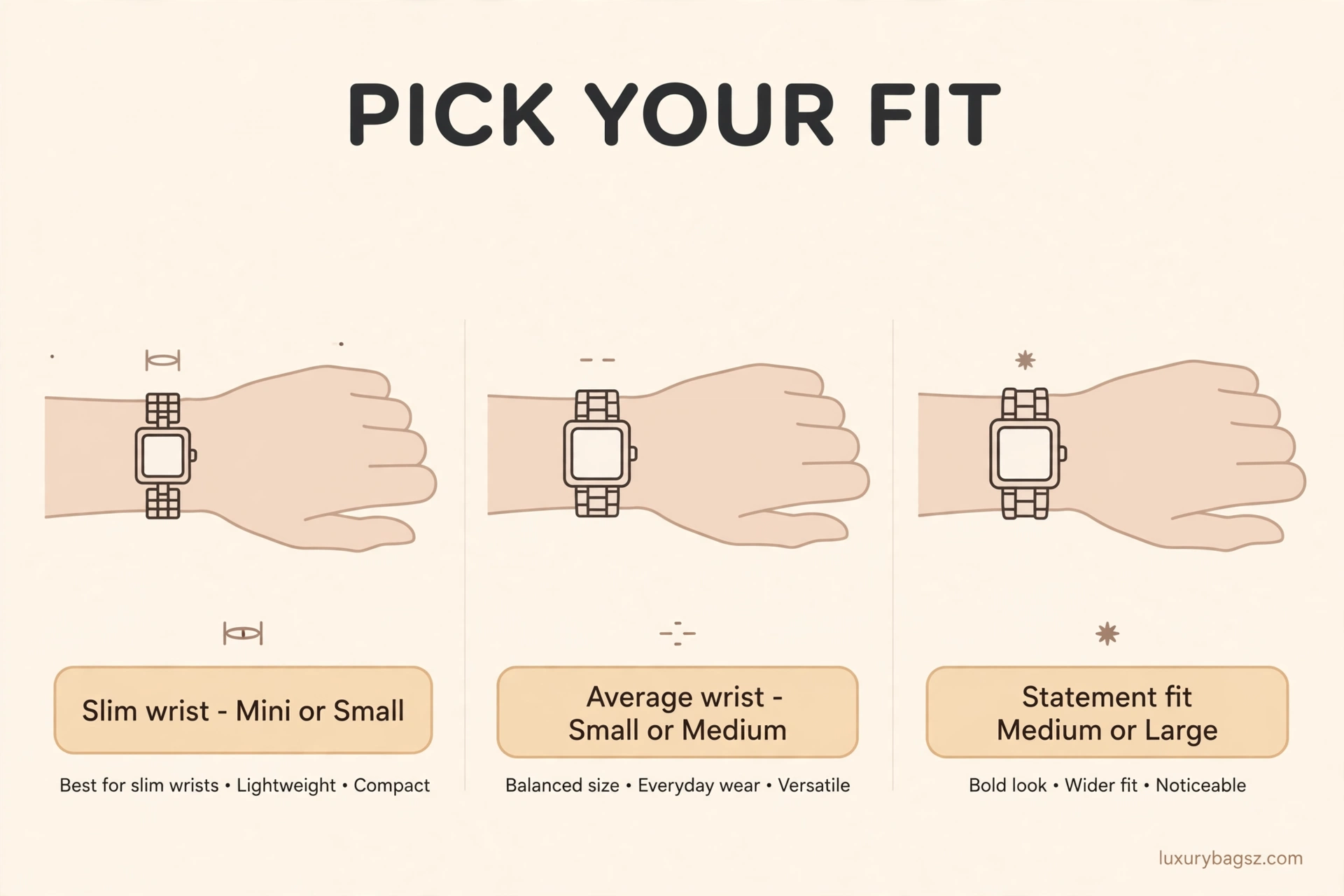
Mini is jewellery first: delicate, light and happiest on slim wrists or stacked with bangles. Reading the time is almost beside the point.
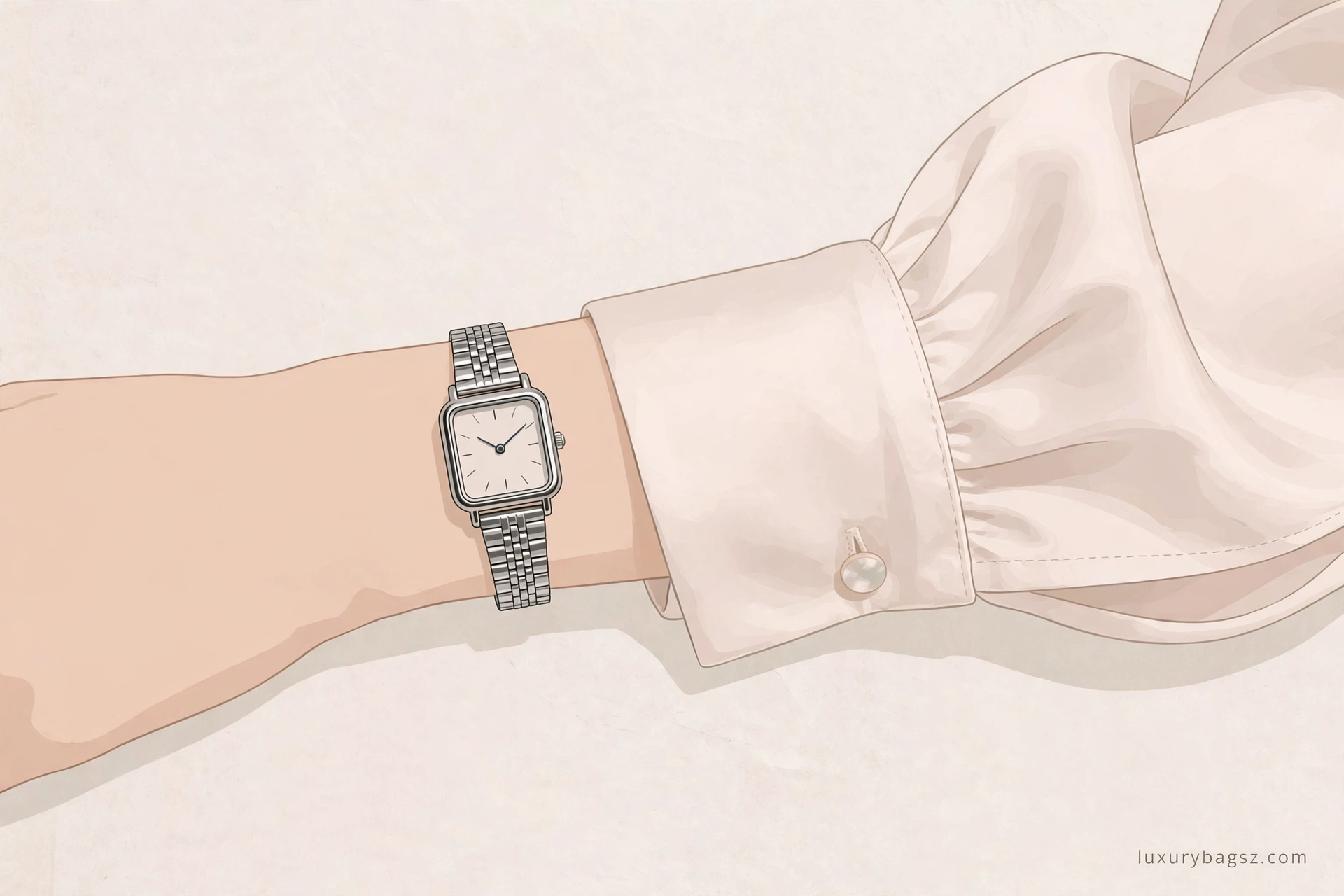
Small is the original proportion and the classic choice. On wrists under about 15–16 cm it looks exactly as the design intends.
Medium is the modern everyday answer: more dial, easier reading, still elegant. Many buyers who find the Small surprisingly petite land here.
Large is a statement that used to be the men's end of the range. On a bigger wrist, or worn boldly, it looks deliberate rather than oversized.

Materials: Steel, Two-Tone, Gold and Diamonds
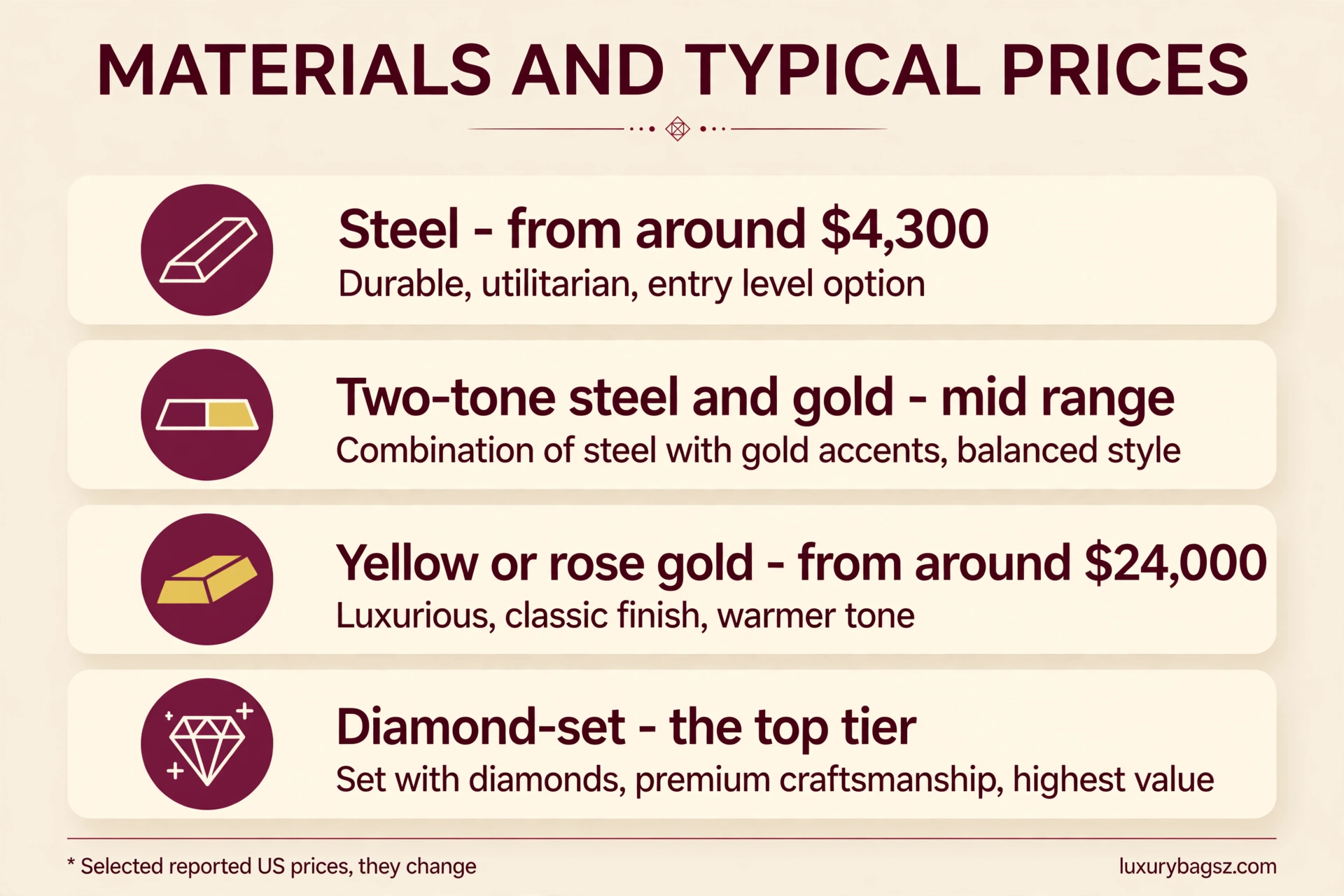
Steel is the entry point and the easiest daily wear: cool-toned, durable and the least precious about knocks and water splashes.
Two-tone, steel with yellow gold, is the era-defining Panthère look. It warms the watch and pairs with mixed-metal jewellery effortlessly.
Full yellow or rose gold turns the watch into fine jewellery. The weight rises, the price rises far more, and the mood becomes evening-leaning.
Diamond-set bezels and fully paved versions top the range. At that level you are buying a jewel that tells the time, and pricing follows the stones.
What a Panthère Costs
Material moves the price more than size does. Moving up one size adds hundreds; moving from steel to gold adds tens of thousands.
Selected reported US prices for plain steel models run about $4,300 for Mini, $4,950 for Small, $5,900 for Medium and $6,700 for Large.
Two-tone models sit above their steel equivalents. Yellow gold models have been reported from roughly $24,000 upwards, with diamond versions far beyond.
Pre-owned prices depend on era, condition and completeness. A well-kept steel Small with box and papers is the liquid end of the market.
Vintage Panthère: the 1983–2004 Originals
The first run lasted about twenty-one years, then Cartier withdrew the model in 2004 as the market chased large sports watches.
Vintage sizes ran Mini about 17 mm, Small 22 mm, Medium 27 mm and Large about 29 mm. Collectors call that largest vintage size the Jumbo.
Some vintage pieces differ under the surface, including early minis set by a recessed pusher rather than a crown. Every vintage watch needs individual checking.
The 2017 revival kept the look and refined the build: a reworked, more serviceable bracelet, a better clasp and water resistance brought to about 30 metres.
Buying Checks That Matter
Try the size on, in person if you possibly can. Panthère sizing gaps are unforgiving in photographs and honest on the wrist.
Have the bracelet sized by a jeweller who knows the model. Links are adjusted individually, and a badly sized bracelet wears wrong all day.
On pre-owned watches, check bracelet stretch, clasp snap, dial condition and service history, and confirm the reference matches the papers.
Fakes of this model are common at tempting prices, so read our guide on how to spot a fake Cartier Panthère watch before buying outside authorised channels.
Panthère or Tank?
Buyers cross-shop these two constantly. The Tank, from 1917, is the rectangular classic on a strap or bracelet; the Panthère is the square, bracelet-born jewel.
The Tank family is broader, with quartz, automatic and hand-wound options. The modern Panthère is quartz only, in a tighter, clearer range.
On the wrist, the Tank reads tailored and architectural; the Panthère reads fluid and decorative. Wardrobe usually decides before specifications do.
Our Cartier Tank watch guide gives the Tank the same sizes-and-prices treatment if you are torn between them.
Frequently Asked Questions
What sizes does the Cartier Panthère come in, and which is most popular?
Four modern sizes: Mini about 19 mm wide, Small about 22 mm, Medium about 27 mm and Large about 31 mm, quoted as full cases of roughly 25, 30, 37 and 42 mm long.
The Small is the classic and the most recognised proportion. The Medium has become the popular modern alternative for buyers who want more presence and easier reading.
Is the Panthère a quartz watch?
Yes, across the current range. The modern Panthère is quartz only; that is part of why it stays slim and wears like jewellery.
When was the Panthère launched, and what is the Jumbo?
The nickname collectors give the largest vintage size, about 29 mm wide, sold in the original run as the men's end of the range.
In 1983. Cartier discontinued it in 2004 and revived it in 2017, keeping the design and refining the bracelet, clasp and water resistance.
Can men wear the Panthère?
Yes. The original range included men's sizes, and the modern Large, at about 31 mm wide, is regularly worn by men who like a refined, smaller watch.
Is the Panthère water resistant?
Current models are rated to about 30 metres, or 3 bar — fine for splashes and hand washing, not a watch to swim or shower in.
How much does a Panthère cost, and does it hold its value?
Steel and two-tone models in good condition, with box and papers, have a steady pre-owned market. As with most jewellery watches, buy to wear and treat resale as a partial return.
Plain steel models have been reported from about $4,300 for Mini to about $6,700 for Large in the US. Gold and diamond models run from roughly $24,000 to far higher.
How should a Panthère bracelet fit?
Close and fluid, draping around the wrist without pinching or sliding over the hand. Have links adjusted by a jeweller; fit is half the design.
Final Verdict
Choose the Panthère by width and by mood: Mini for a jewel, Small for the classic, Medium for daily clarity and Large for presence.
In steel it is one of the easiest luxury watches to live with; in gold or diamonds it is jewellery that happens to tell the time. Either way, try the sizes on — this is a watch the wrist decides.






