How to Spot a Fake Gucci Marmont Belt: Buckle, Stamp, Serial Number and Leather Checks
The Marmont Belt Verdict in Brief: Weight, Stamp, Number
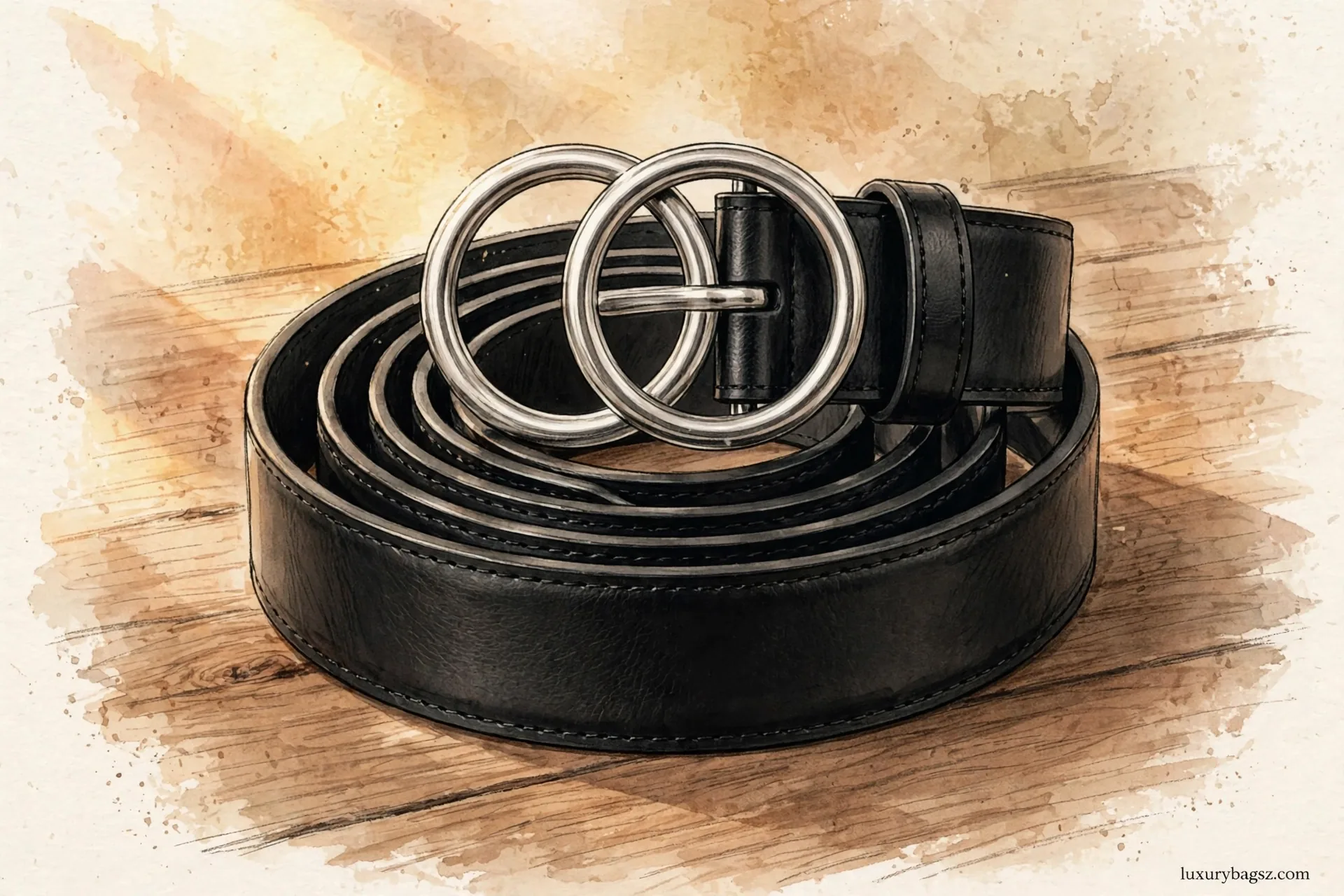
Pick the belt up and turn it over. A real Marmont belt has a weighty, muted Double G buckle, supple calfskin, and a crisp back stamp above a long serial number. A fake often feels light before it looks wrong. The buckle shines too brightly, the leather feels coated, and the stamp is bloated, shallow or missing its number.
Key Takeaways
- The Double G buckle is solid, symmetrical and muted, never light or mirror-shiny.
- Genuine leather is smooth, supple calfskin with neat edges and no plastic smell.
- Stitching is tight, even and colour-matched, with no loose ends.
- The back stamp reads the brand name and country line in crisp capitals.
- The serial number is long, typically 19 to 21 digits, often starting 114 or 223.
- Five clean holes and a tidy keeper are small details copies often get wrong.
Know the Marmont Belt You Are Checking
The Marmont belt pairs a smooth leather strap with the interlocking Double G buckle, in narrow and wider strap widths and several muted metal finishes. Study the bag from the same family in our Gucci GG Marmont bag guide. The buckle finish and lettering should feel like close relatives. Sizes are marked in centimetres and the strap should measure honestly. A belt sold as one size that measures clearly shorter is an early, simple warning. Copies often mix details from different versions: a buckle finish that never came on that strap colour, or a width the house never made in that style.
The Double G Buckle: Symmetry and Weight
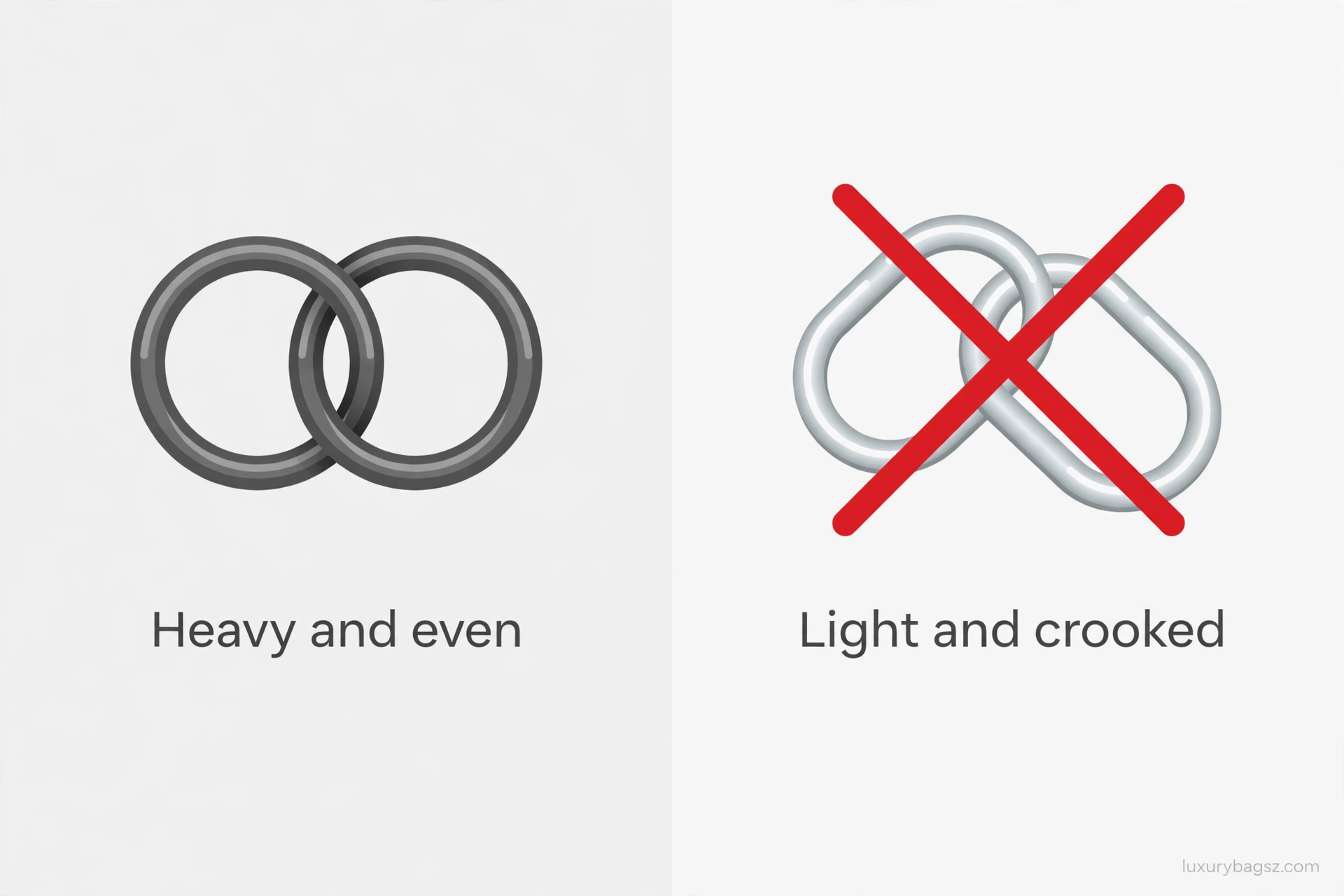
Hold the buckle first. On a genuine belt the two Gs interlock cleanly, face the same way and overlap with a tight join, in balanced and even proportions. The finish should be muted, like antique brass on many versions, rather than bright and reflective. A mirror shine is one of the fastest visual warnings. Weight settles doubts. Real buckles are solid metal and feel reassuringly heavy. A buckle that feels hollow, tinny or feather-light does not belong on this belt. Run a fingertip over the edges. Genuine casting is smooth with no sharp burrs, while copies often show rough seams or pitting around the curves of the letters.
Leather and Edge Finishing
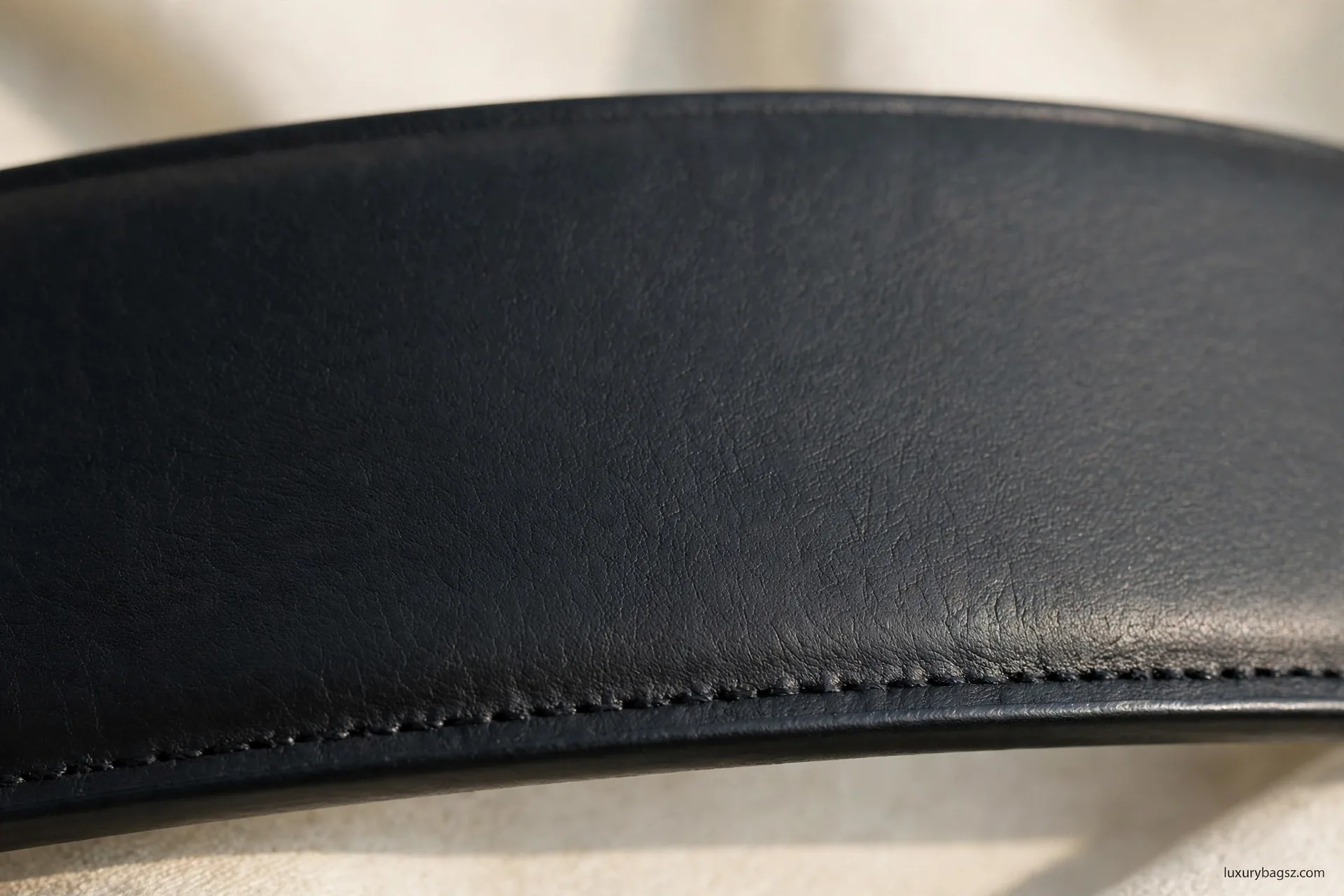
The strap should be smooth, supple calfskin that bends without cracking and recovers without leaving a sharp crease line across the surface. Smell the leather. A warm natural scent is right; a sweet chemical smell suggests coated or synthetic material dressed up to look like calfskin. Look along the edges. Edge paint on a real belt is neat, even and fully covering, with no drips, gaps or peeling at the holes and tip. Stiff, board-like straps that shine like plastic fail this check at once. So does leather that feels papery thin when you pinch the end of the strap.
Stitching: Tight, Even and Colour-Matched
Follow the stitch lines along both edges of the strap. On a genuine belt they run straight and even, with small regular stitches and no loose ends. Thread colour is matched to the leather so the line blends in. Stitching that jumps out in a contrasting shade is a common copy shortcut. Check around the buckle fixing and keeper. These stress points should be firmly made, with no glue showing and no stitches wandering off their line. Uneven spacing that changes halfway along the strap suggests rushed factory work. Compare both sides of the same belt; they should read like twins.
The Back Stamp and Serial Number
Turn the belt over. Near the buckle end you should find the brand name in capitals with the country line beneath it, stamped crisply into the leather. Letters should be sharp, evenly spaced and in proportion. Fake stamps often look bloated or thick, sit crooked, or fade unevenly across the wording. Beside or below the stamp sits the serial number. On these belts it is long, typically 19 to 21 digits, and often begins with 114 or 223. Our Gucci serial numbers explained guide shows how the house formats its codes, so you can judge shape rather than guess.
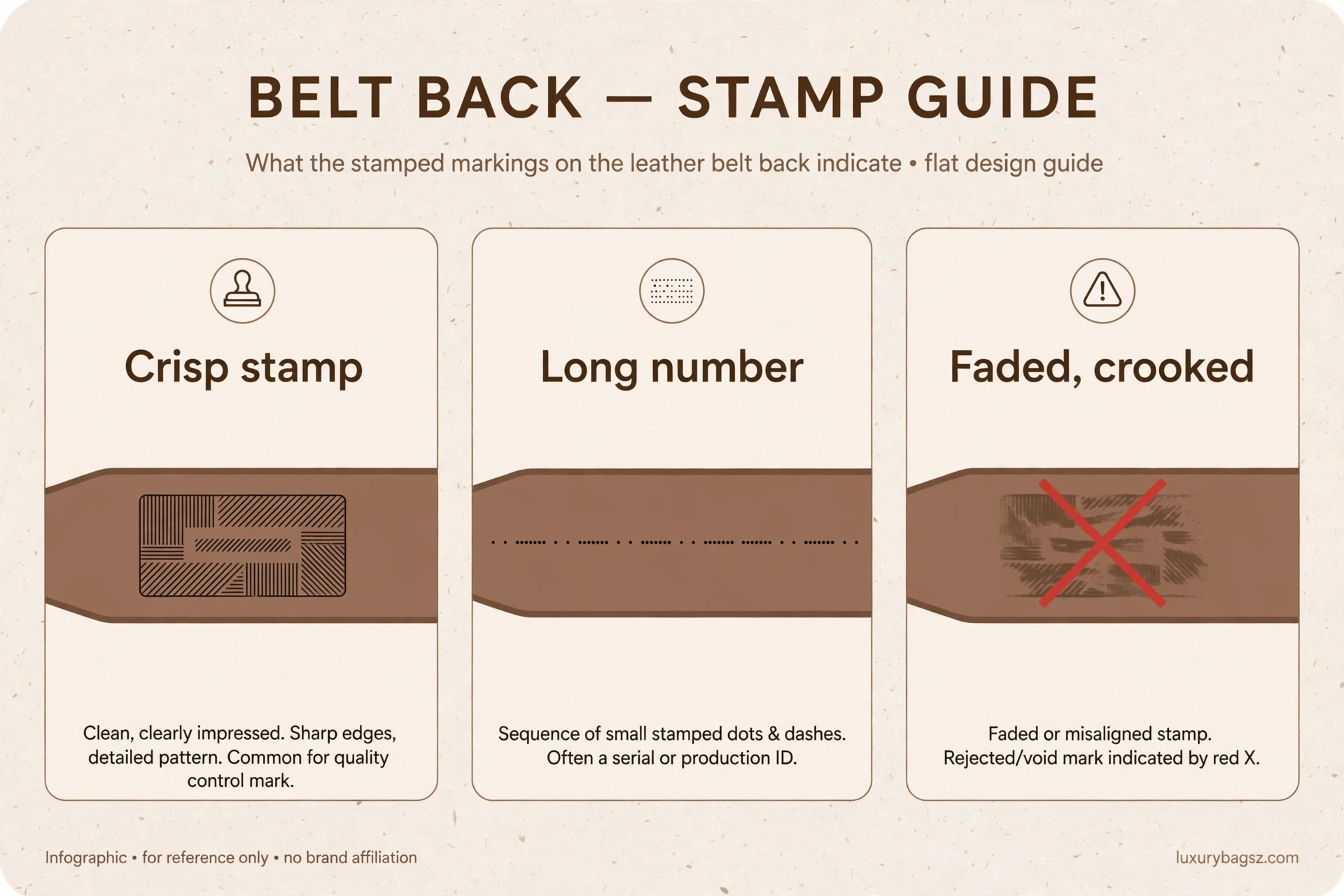
A short number, a number in the wrong place or digits that look printed rather than pressed should stop the purchase until an expert has seen the belt.

Holes, Keeper and Sizing Details
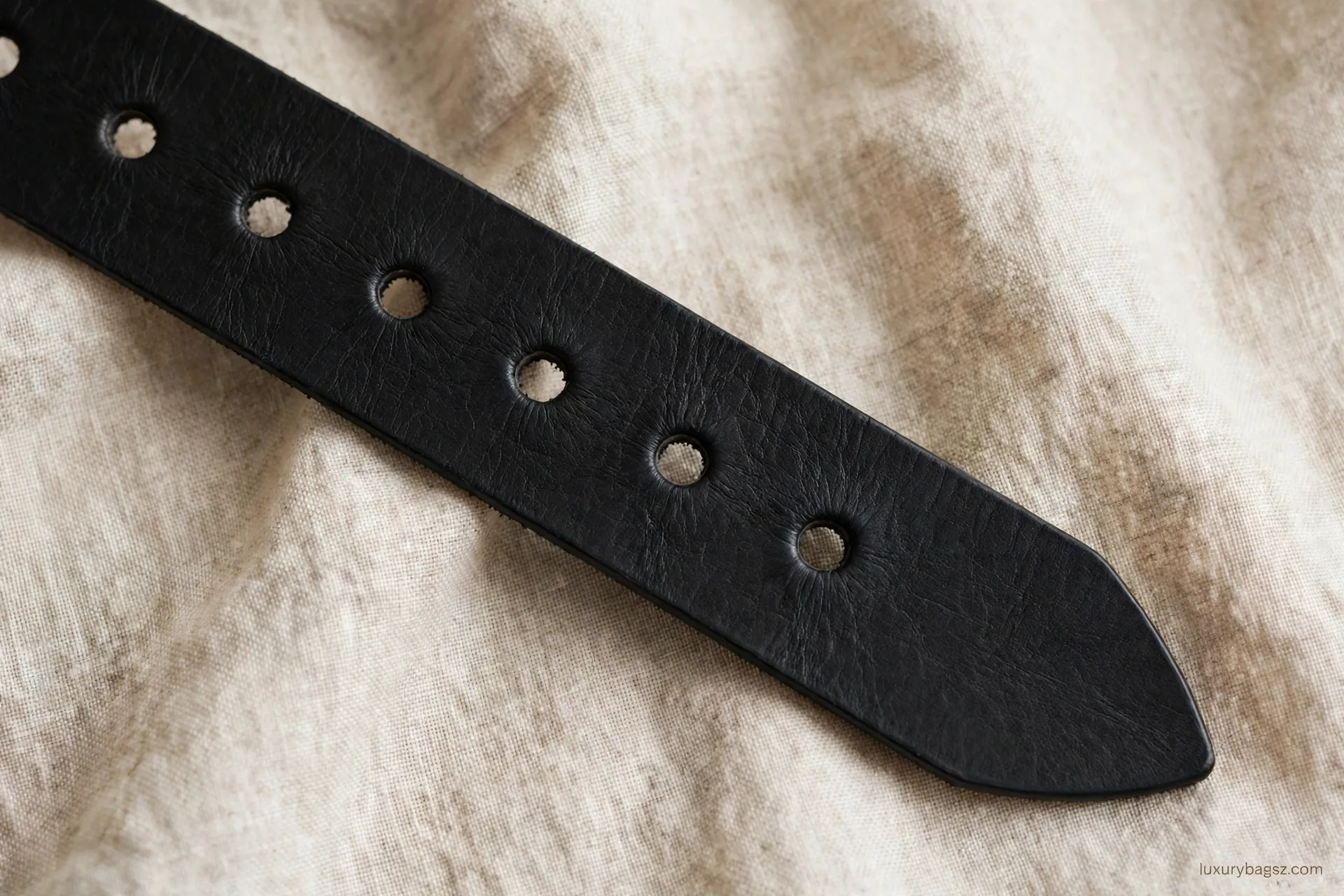
Count the holes. A typical Marmont belt has five, evenly spaced and cleanly punched, with smooth edges that do not tear or fray around the rim. The keeper loop should sit snug and neat, made from the same leather with the same edge finish. A loose, glued or mismatched keeper is a quiet tell. Try the buckle pin through each hole. It should sit cleanly without forcing, and the tip of the strap should lie flat rather than curling away. Our designer belts for women guide shows how well-made belts share these habits, whatever house name sits on the buckle.
Dust Bag, Box and Price Flags
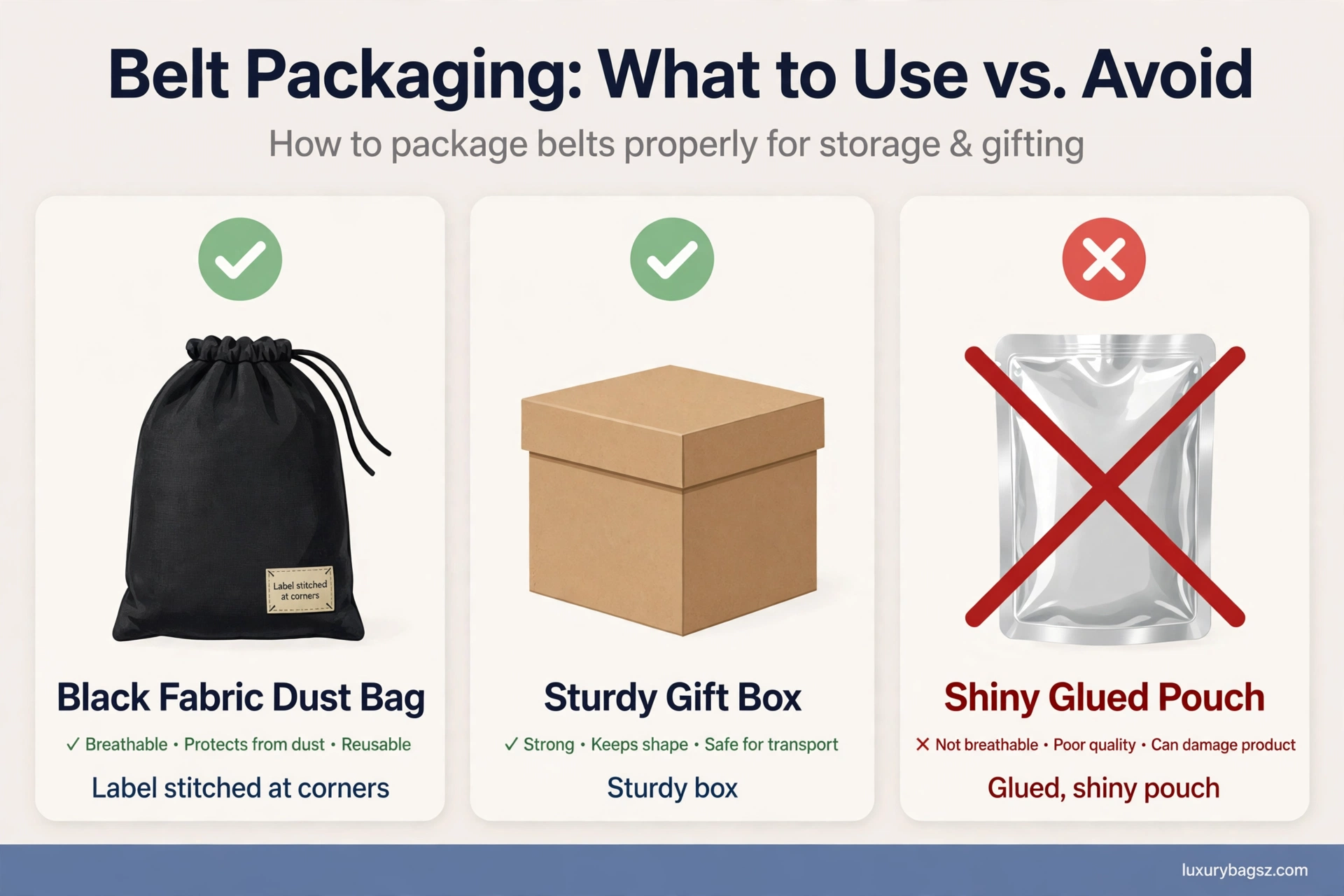
A genuine belt usually arrives with a dark dust bag with gold lettering and a sturdy box. On the bag, the label is stitched at its corners rather than sewn down fully. Thin fabric, blurry lettering or a stark white box are supporting warnings. Packaging is copied easily, so treat it as the last check, never the first. Our how to spot a fake Gucci bag guide shows the same packaging habits across the house, which helps you spot an odd set. Price closes the case. A new Marmont belt at a small part of boutique price, from a seller with no receipt or returns, is a story that rarely ends well.
Buying Pre-Owned Without the Risk
Ask for photographs of the buckle in daylight, the full back stamp and the whole serial number before you pay. A genuine seller loses nothing by showing them. Compare the belt against a second house as a sense check. Our how to spot a fake Hermès belt guide shows the same stamp discipline. Run the checks in order: buckle, leather, stitching, stamp, number, holes, then packaging and price. A belt should pass nearly all of them to earn your money. If one costly detail fails, use a paid authenticator while returns are still open. A small fee is cheap beside a belt you cannot resell honestly.
Where the Two Gs Touch: The Two-Point Rule
Look at the buckle’s geometry with fresh eyes. On a genuine Double G, the two letters meet at exactly two contact points, no more and no fewer, with clean negative space everywhere else. The overlap is engineered, and your fingertip can trace it: touch, gap, touch.
Copies merge the letters into a single blob, adding a third contact or fusing a curve, because casting two precise touches is harder than casting one lump. Others separate the Gs too far, leaving a logo that reads as two letters sitting near each other rather than one interlocked mark.
The same discipline holds in the letterforms themselves: both Gs share one size, one curve language and one weight. A reversed or rotated second G belongs to specific designs, and where a design uses it, the execution stays just as exact. On the Marmont buckle, symmetry is not decoration, it is the manufacturing signature, and it is worth a magnified photograph before any money moves.
Decoding the Serial: Style, Size and Supplier in Groups
The long number deserves reading, not just counting. Guides to the house’s belt codes agree that the groups carry information: the opening digits identify the style family, a later group records the belt’s size, and further digits relate to the supplier. The number is a description of the belt, in code.
That gives you a cross-examination copies fail. The size encoded in the number should match the size marked on the belt and, decisively, the belt’s actual measured length. A number describing a larger size than the strap in your hands is paperwork and product disagreeing, the same confession as a wrong card in a handbag set.
Read the opening digits with equal care. The long-standing starts for genuine belts are the ones this guide named, 114 and 223 among them; authentication writing has flagged numbers beginning 1212 as a recurring pattern on fakes. Treat any start as one clue among many, but let a flagged start raise the standard of proof for everything else.
Finally, judge the impression, not just the content: genuine digits are pressed with even depth in a consistent character style. Digits that vary in depth along the line were stamped by a process the house does not use.
The Little Screw: Buckle Fixing Hardware
Turn to the buckle’s attachment, where a small detail carries an outsized verdict. The buckle assembly on genuine belts is finished with a small screw or stud fixing on the inside, neatly made, and finished to match the buckle’s own metal: gold-tone with a gold buckle, silver-tone with silver.
Copies economise here because buyers rarely look: mismatched fixing colour, a rough or chewed screw head, or a loose assembly that lets the buckle shift against the leather. Test the join gently: a genuine fixing is tight, with no play between buckle and strap beyond the design’s intent.
This is the same law the hardware chapters of this site repeat across brands: fakes fund the view from the front and starve the view from behind. The back of this belt has now given you its stamp, its number and its fixing. When all three agree with the buckle’s weight and symmetry, the belt has passed the strongest screening a buyer can run without a professional.
Sizing in Centimetres: Measure the Belt Yourself
Gucci belt sizes are honest arithmetic, and copies often fail arithmetic. The marked size is a length in centimetres, measured to the middle hole: a size 90 belt should measure about 90 cm from the buckle’s pin base to the centre of its five holes, with the holes spaced evenly around that point.
Measure any belt you are judging, marked size against tape. A belt whose middle hole sits centimetres away from its stamped size has either been altered, which a seller should disclose, or was never made to the house’s sizing discipline in the first place.
Buyers can use the same measurement in reverse: measure a belt you already own that fits, buckle to the hole you use, and shop that number rather than a waist size. It prevents the commonest honest mistake in this market, a genuine belt bought in the wrong size and then doubted for the wrong reasons.
Frequently Asked Questions
How can I tell if a Gucci Marmont belt is real?
Check the weighty, muted Double G buckle, supple calfskin, even stitching and a crisp back stamp. Then confirm the long serial number, typically 19 to 21 digits.
How long is a real Gucci belt serial number?
Typically 19 to 21 digits, often starting with 114 or 223, stamped on the back near the brand stamp. A short or oddly placed number is a strong warning.
How many holes does a Marmont belt have?
Typically five, evenly spaced and cleanly punched. Extra holes, ragged punching or torn rims around the holes point towards a copy or later alteration.
What finish should the Double G buckle have?
A muted, antique-style finish on many versions, with smooth casting and real weight. A bright mirror shine or a hollow, tinny feel are classic fake signs.
Where is the stamp on a Gucci belt?
On the back of the strap near the buckle end. It shows the brand name in capitals with the country line beneath, pressed crisply and evenly into the leather.
Can the dust bag prove the belt is real?
No. Dust bags and boxes are copied and swapped. A dark bag with gold lettering and a corner-stitched label supports a genuine belt but never proves it alone.
Why does stitching matter on a belt?
Because it is hard to fake cheaply at scale. Genuine stitching is tight, straight and colour-matched. Wandering lines, loose ends or glue at the buckle suggest a copy.
What leather does a real Marmont belt use?
Smooth, supple calfskin that bends without cracking and smells naturally of leather. Stiff, plasticky or chemical-smelling straps fail the check immediately.
Is a cheap Marmont belt ever genuine?
Honest pre-owned belts do sell below retail, but a new-looking belt at a tiny price with no receipt or returns is a classic flag. Ask for proof first.
Who can authenticate a belt for me?
An established authenticator who handles Gucci leather goods. Send daylight photographs of the buckle, back stamp, full serial number, stitching and both strap edges.
Final Verdict: Let the Back of the Belt Speak
From the front, a good copy can pass in a photograph. From the back it usually cannot: the stamp softens, the number shortens and the leather shows its true quality. Weigh the buckle, read the stamp, count the digits and feel the strap. When those four agree, you are holding the real Marmont belt, not a story about one.