Bottega Veneta Serial Numbers and the Authenticity Tag, Explained
The White Tag Inside a Bottega Veneta, Answered
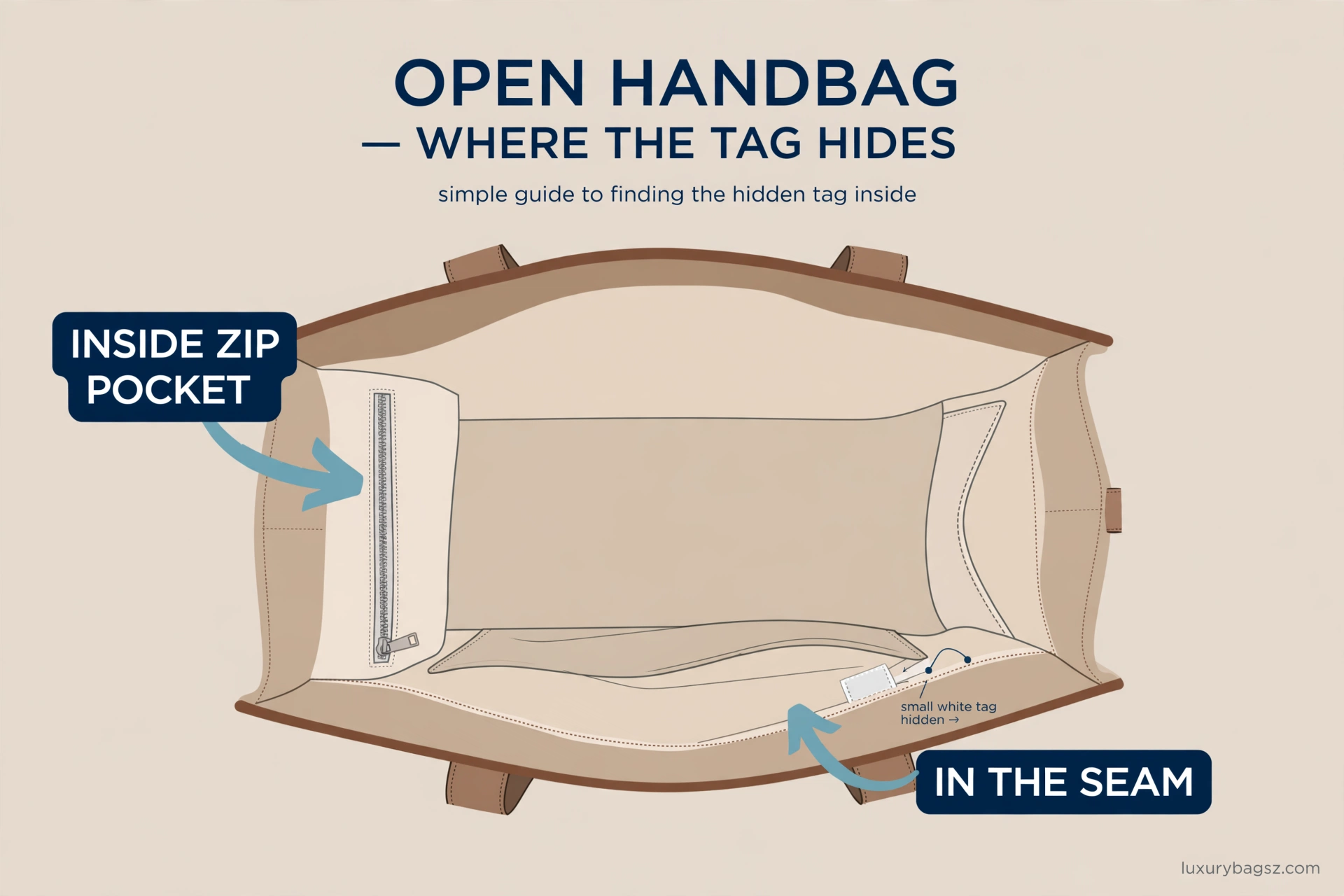
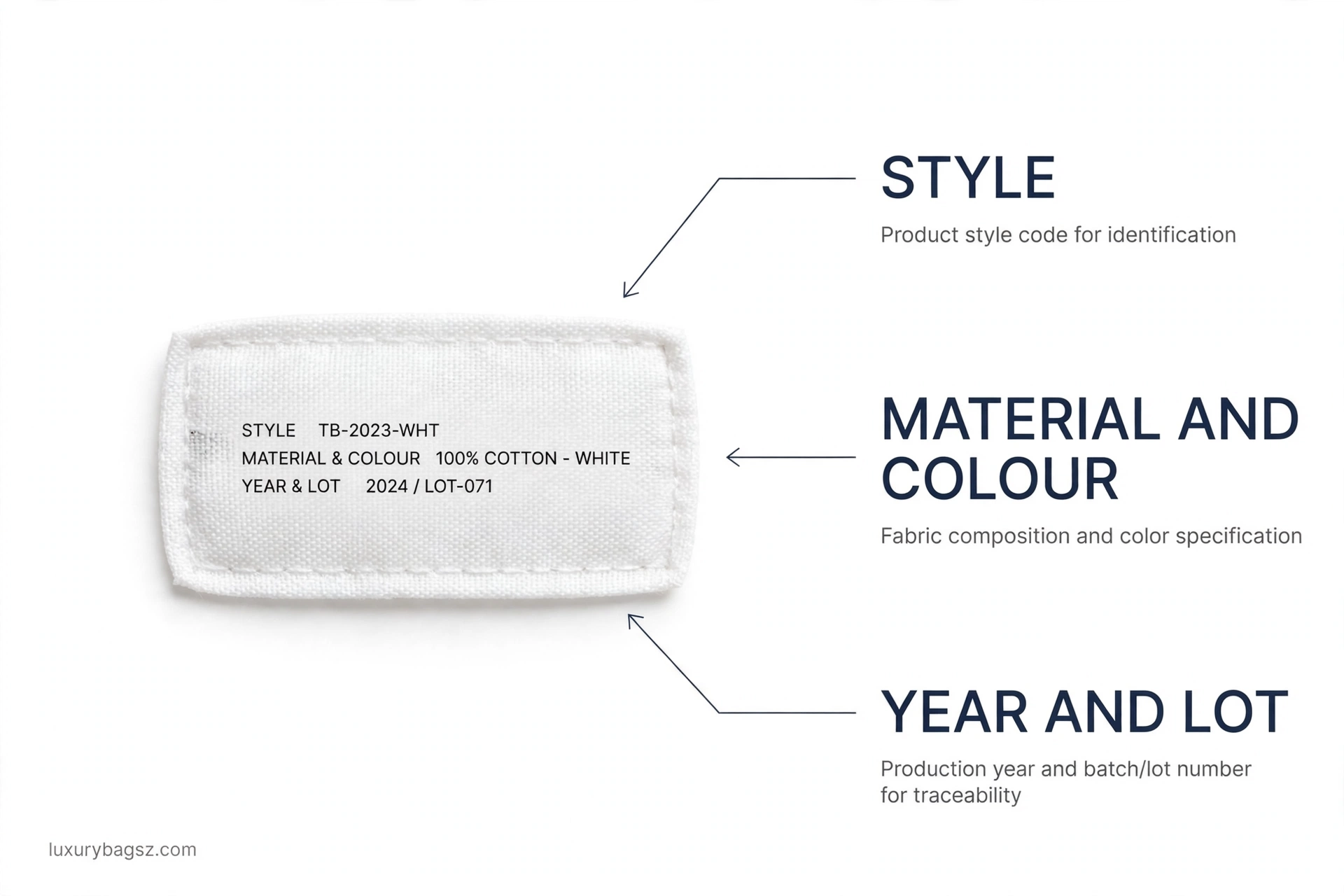
The serial number on a Bottega Veneta bag sits on a small white or cream fabric tag sewn into the seam of the interior zip pocket. On older tags, the lines record the style, the material and colour, and a year. Newer tags carry one line that only the brand can read in full.
That tag helps, but it never settles authenticity on its own. There is no public lookup for these codes, and counterfeiters copy real formats. Read the tag for consistency, then judge the weave, leather, stitching and stamp beside it.
Key Takeaways
- The tag hides in the seam of the interior zip pocket or lining.
- Older multi-line tags show style, material and colour, plus an EPEV year line.
- Newer single-line codes have no public decoding and no lookup.
- The intrecciato weave is the stronger check beside any tag.
- A correct-looking tag can sit inside a fake bag.
Where the Authenticity Tag Hides
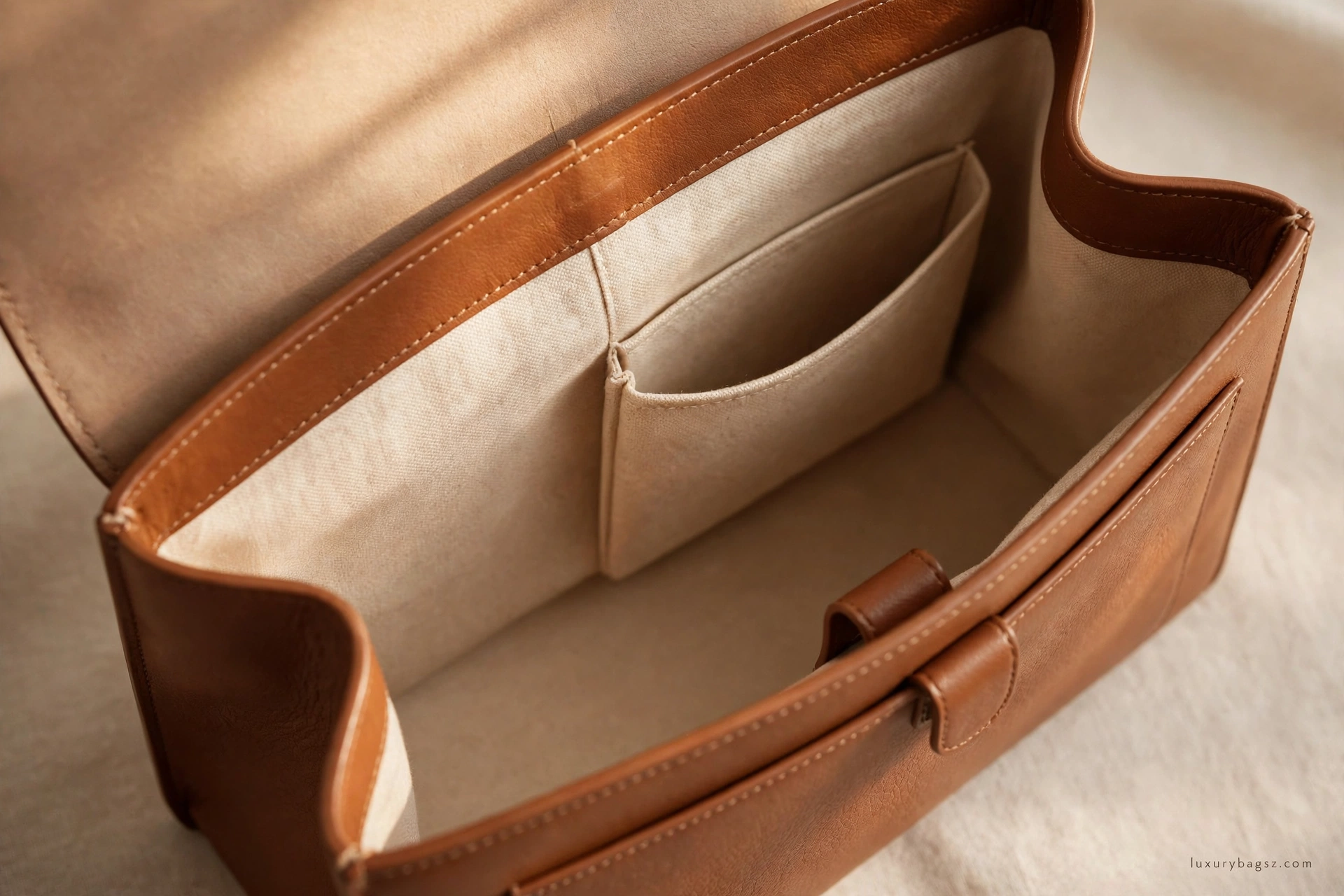
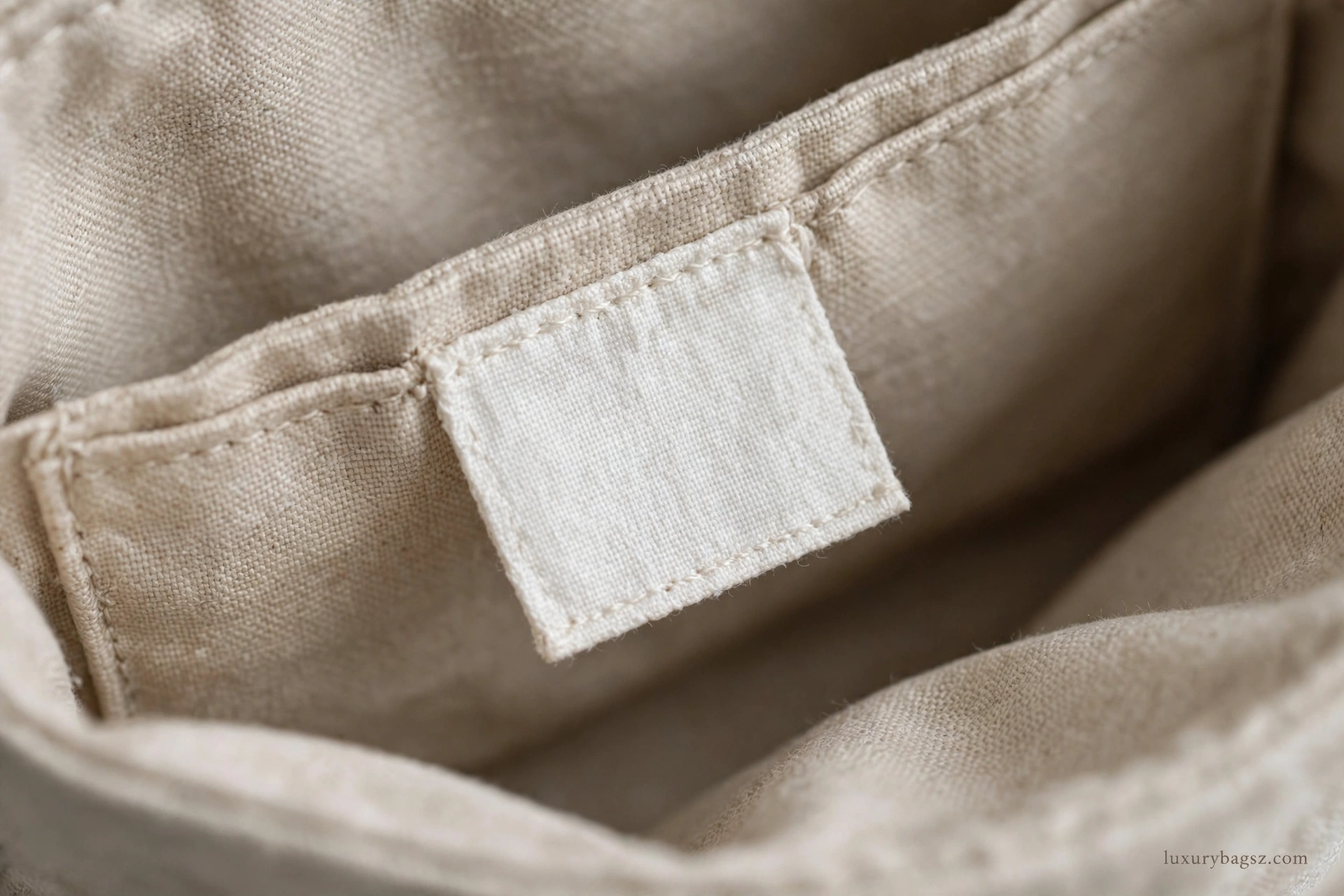
Open the bag and check the interior zip pocket first, running a finger along its seam and the lining seams nearby. The tag is a narrow flag, roughly 1.5 by half an inch, in light, paper-like fabric, white or cream.
One face carries the brand name with Made in Italy beneath it. The other face reads ORIGINALITY CERTIFIED, with the code printed below in a clear block style. The edges often look raw rather than hemmed, which is correct.
After more than ten years in the bag industry, and having examined over 500 bags, I still see this tag missed. It sits deep in a seam, so photos often skip it. Ask for a photo of both faces first.
What the Lines on the Tag Mean
Bottega Veneta has never published a full key to these codes. What follows is the reading reputable authenticators and collector discussions agree on for older multi-line tags: a well-supported convention, not a brand-confirmed formula.
| Part of the code | What it is read as |
|---|---|
| First group of digits | Style and size reference |
| Letters and digits in the middle | Material or leather code |
| Last four digits | Colour code |
| Second line starting EPEV | Four-digit year, then a lot reference |
An older first line such as 192931 VFFA1 1000 points to a style reference, a material code and colour code 1000, which collector references list as black. On the line beneath, read EPEV 2007 1234 as the year 2007, then a lot reference.
Other houses are easier to read. The patterns in our guide to Gucci serial numbers follow a tidier, widely documented logic.
How the Tag Changed Across Eras
Older Multi-Line Tags
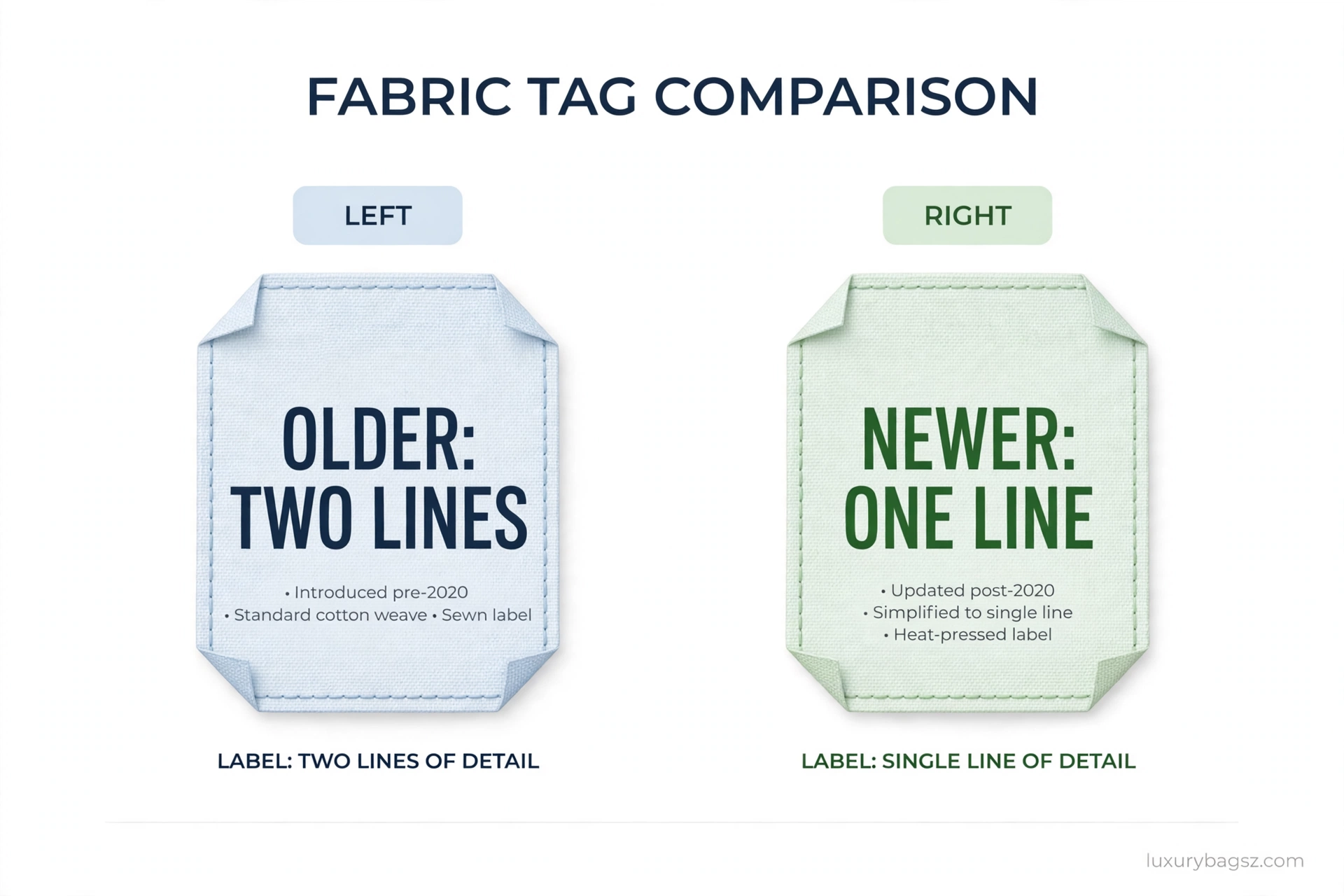
Bags from the 2000s into the early 2010s usually carry the fuller tag. Two or three lines give the style, material and colour blocks, then the EPEV line with its year. Most preloved bags with a readable year come from this period.
The Move to a Single Line
Around 2010 to 2012 the format changed, though sources differ on the exact moment. The newer tag carries one line, often a letter, a run of digits and a closing letter. No public source decodes it reliably.
Later tags vary again. Some carry a digits-only line, with no letters at either end. That variant has no public date key either, so do not read any four digits inside it as a year.
Nor did the brand move to a scannable system. That path belongs to the houses in our guide to Chanel serial numbers and microchips, where a chip replaced the sticker. A modern Bottega tag stays printed.
Vintage Bags With No Tag
Many genuine vintage bags predate this system and carry no coded tag. Some early linings instead show the old line about your own initials being enough. A missing tag there is normal, not evidence of a fake.
The Intrecciato Checks That Sit Beside the Tag
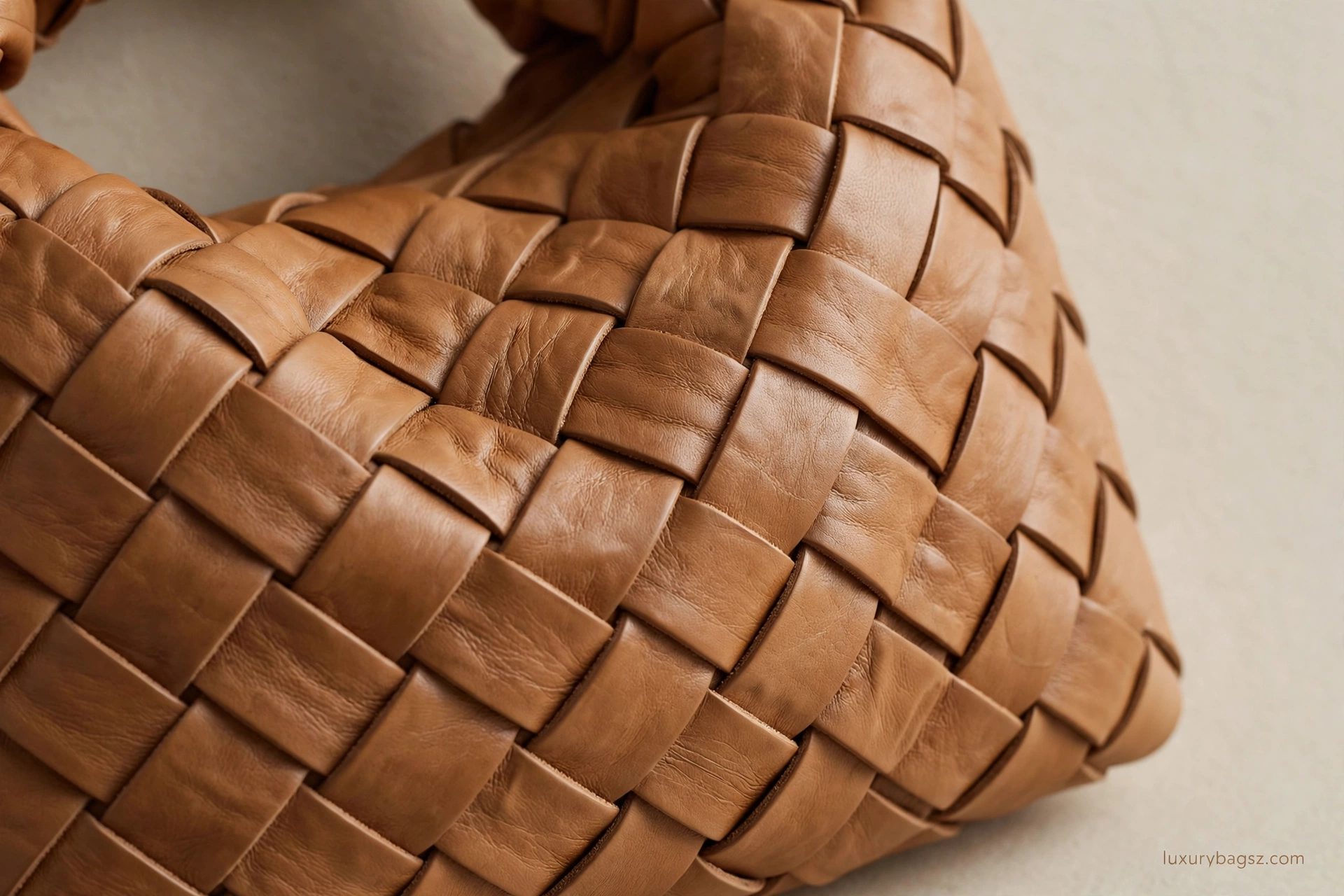
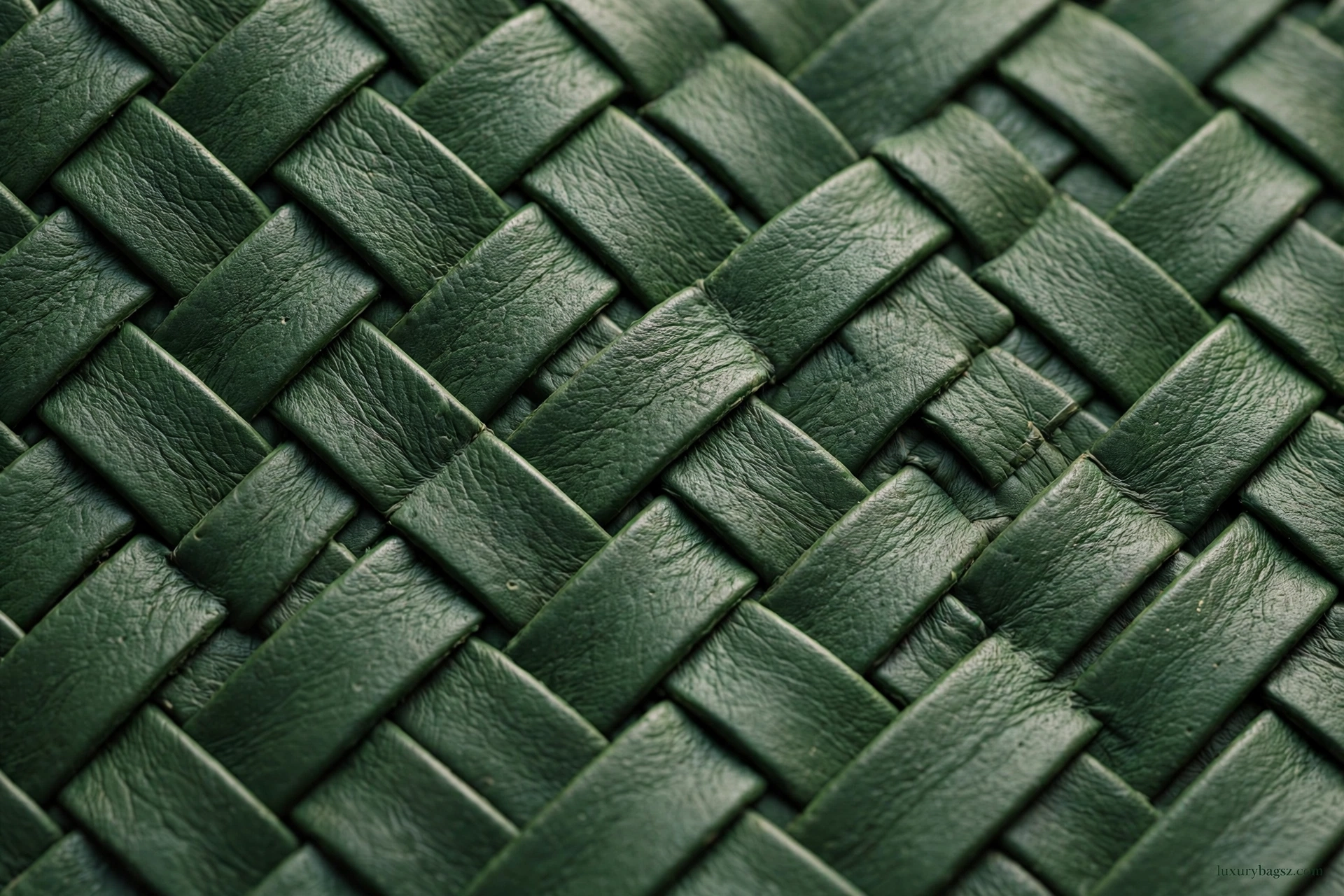
Start with the weave, because it is harder to copy than any print. On a genuine bag the leather strips are one even width, about 1.2 centimetres on classic styles, woven flat at a diagonal with no gaps or puckering, turning corners without breaking.
The strips are held by compression rather than thread, with no stitching along the weave edges. The leather feels supple and drapes softly. Stiff, shiny strips or a loose weave argue against the bag, whatever its tag says.
Why the Tag Alone Proves Nothing
Counterfeiters study these tags. They reproduce the wording, the block print and even genuine code formats copied from real bags, so a tag can look perfect inside a fake. A code in the expected pattern is one clue, never a verdict.
When I check a bag personally, the tag is one stop among many. I also use Entrupy, including its microchip checks where a bag carries one, alongside leather, stitching and hardware. Our authentication process page shows how the layers fit.
Fake-Tag Red Flags
No single sign here decides a bag alone. Each one earns a closer look, and several together are a strong warning.
- Tag glued in, sitting on the lining, or sewn in crooked
- Print that is blurred, overly bold or jet black rather than soft and even
- A code in the wrong format for the bag’s era
- A colour or style block that contradicts the bag in hand
- Misspelled wording, or a tag far larger than the usual narrow flag
- No tag on a modern bag that should carry one
When the Tag Is Cut Out or Unreadable
Tags do get cut out of genuine bags. Owners snip them because the flag catches in the zip, and heavy use can fade the print until the code will not read. Look in the pocket seam for a short stub or raw edge where the flag once sat.
Do not guess the missing digits or force a year from a partial code. Photograph whatever remains, exactly as it sits, then judge the bag on its weave, leather, stitching and stamp, or pay for a professional opinion before you buy.
Expect a cut or missing tag on a modern bag to make resale harder, even when every other check passes, because the next buyer faces the same gap you did. The price and paperwork should reflect that gap.
Frequently Asked Questions
Where is the serial number on a Bottega Veneta bag?
Feel along the seam of the interior zip pocket, then check the lining seams. The code sits on a small white fabric tag sewn into the seam, printed ORIGINALITY CERTIFIED on one face.
Can I check a Bottega Veneta serial number online?
No. There is no public lookup, and no database can confirm a bag from its code alone. Online checkers only test whether a code matches a known format, which a copied code also passes.
What does EPEV mean on a Bottega Veneta tag?
EPEV opens the second line on older multi-line tags. Reputable guides read the four digits after it as the year of manufacture, followed by a lot reference. The brand has never confirmed the full meaning publicly.
Do all Bottega Veneta bags have an authenticity tag?
No. Many vintage bags predate the coded tag, and some recent small leather goods omit it. Judge an older bag on its weave, leather and finishing rather than hunting for a tag it never had.
Can a fake Bottega Veneta bag have a real-looking tag?
Yes. Counterfeiters copy the tag’s wording, print style and even genuine code formats. So weigh the tag against the weave, leather, stitching, hardware and stamp before any verdict.
Final Verdict
Read the white tag for what it can tell you: style, material and colour on older bags, a printed year on the EPEV line, and consistency with the bag in hand. On newer bags it tells you far less, by design.
The verdict never rests on the tag. It rests on the weave, the leather and the finishing, checked together. Get those right, and the little flag inside the pocket becomes supporting evidence, not the whole case.