

How to Care for PVC Bags: Cleaning, Clouding, and Storage for Clear Bags
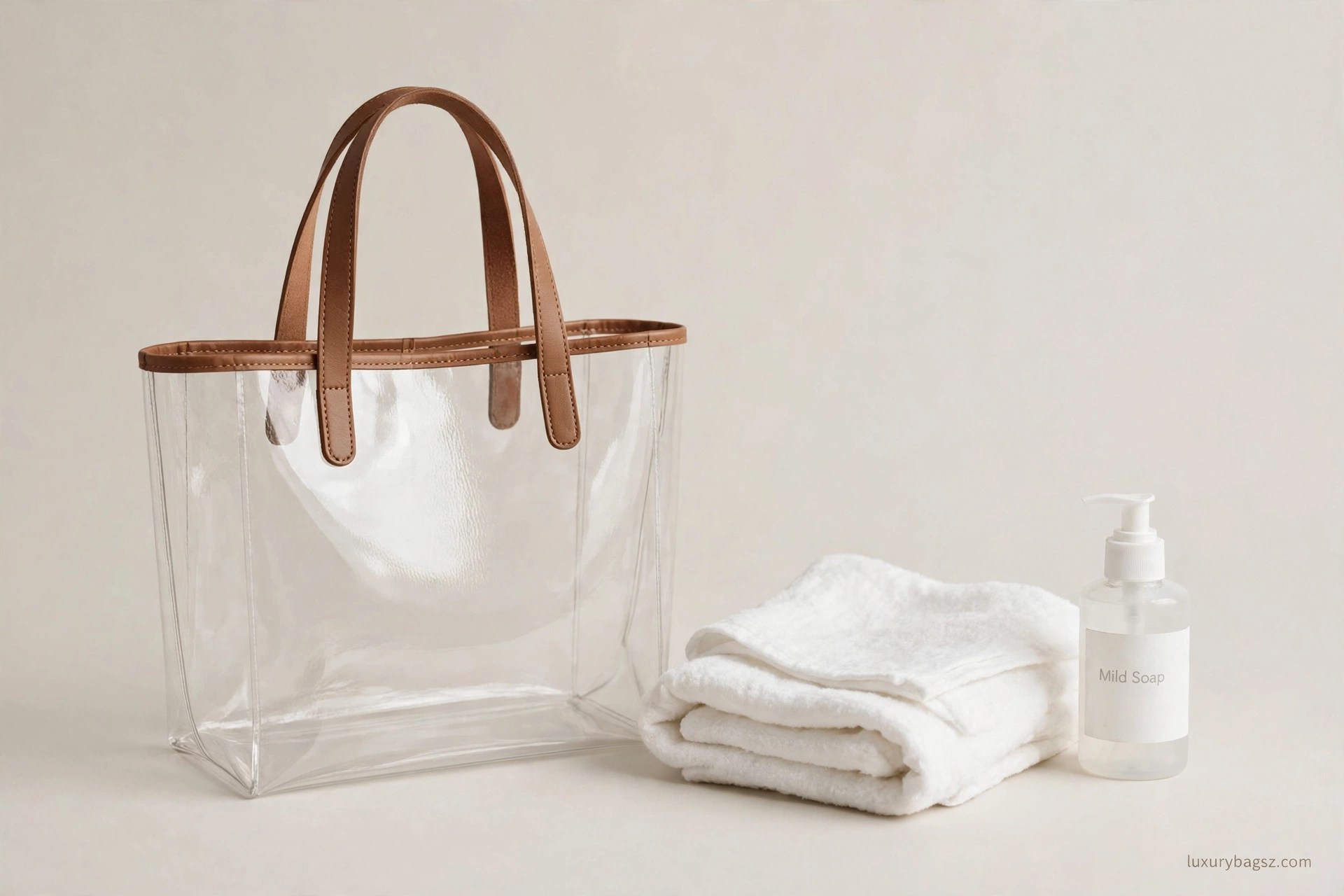
PVC Bags, Kept Clear With Gentle Care
PVC, or polyvinyl chloride, is a tough synthetic that wipes clean easily — and that is exactly why owners overdo it. Harsh cleaners, rough cloths, and heat cloud and yellow the clear surface, and once PVC turns cloudy, no polish reliably brings it back.
The safe routine is short: wipe with lukewarm water and a little mild soap, dry fully, and store the bag flat in a cotton dust bag away from sun and heat. That is most of the job.
Treat any leather trim, canvas panel, or fabric lining as its own material, and keep sharp or dye-heavy items from sitting against the clear panels. Clear bags show everything, so small habits matter more here than on any opaque bag.
Key Takeaways
- PVC is polyvinyl chloride, a clear synthetic: easy to wipe clean, easy to scratch, cloud, and yellow.
- Clean with lukewarm water and mild soap on a soft cloth — never solvents, bleach, alcohol, or abrasive pads.
- Wipe the bag after use so dirt and oils do not build into clouding.
- Keep PVC away from heat: never leave it in a hot car or in strong, prolonged sun.
- Store flat, stuffed lightly, inside a cotton dust bag — never folded, and never touching dark or printed materials.
- Clean leather trim and fabric linings with methods suited to those materials, not the PVC method.
- Test any new cleaner on a hidden spot first, and skip it if the surface looks hazy after drying.
Know Your Bag: Clear PVC, Trim, and Lining Are Three Jobs
Most clear bags are PVC or vinyl panels joined to other materials. A luxury clear bag may pair PVC with leather handles and trim, a canvas base, or a fabric pouch inside, and each part needs different care.
Read the maker's label before you clean anything. If the bag has leather trim, that trim wants the gentle leather approach in our guide to how to care for leather bags and shoes, not a soapy wipe meant for plastic.
Canvas parts have their own rules too, as covered in our guide to cleaning a Louis Vuitton canvas bag. Cleaning the whole bag with one product is how trim gets stained and PVC gets dulled in the same afternoon.
Routine Cleaning: The Mild Soap Wipe That Does Most of the Work
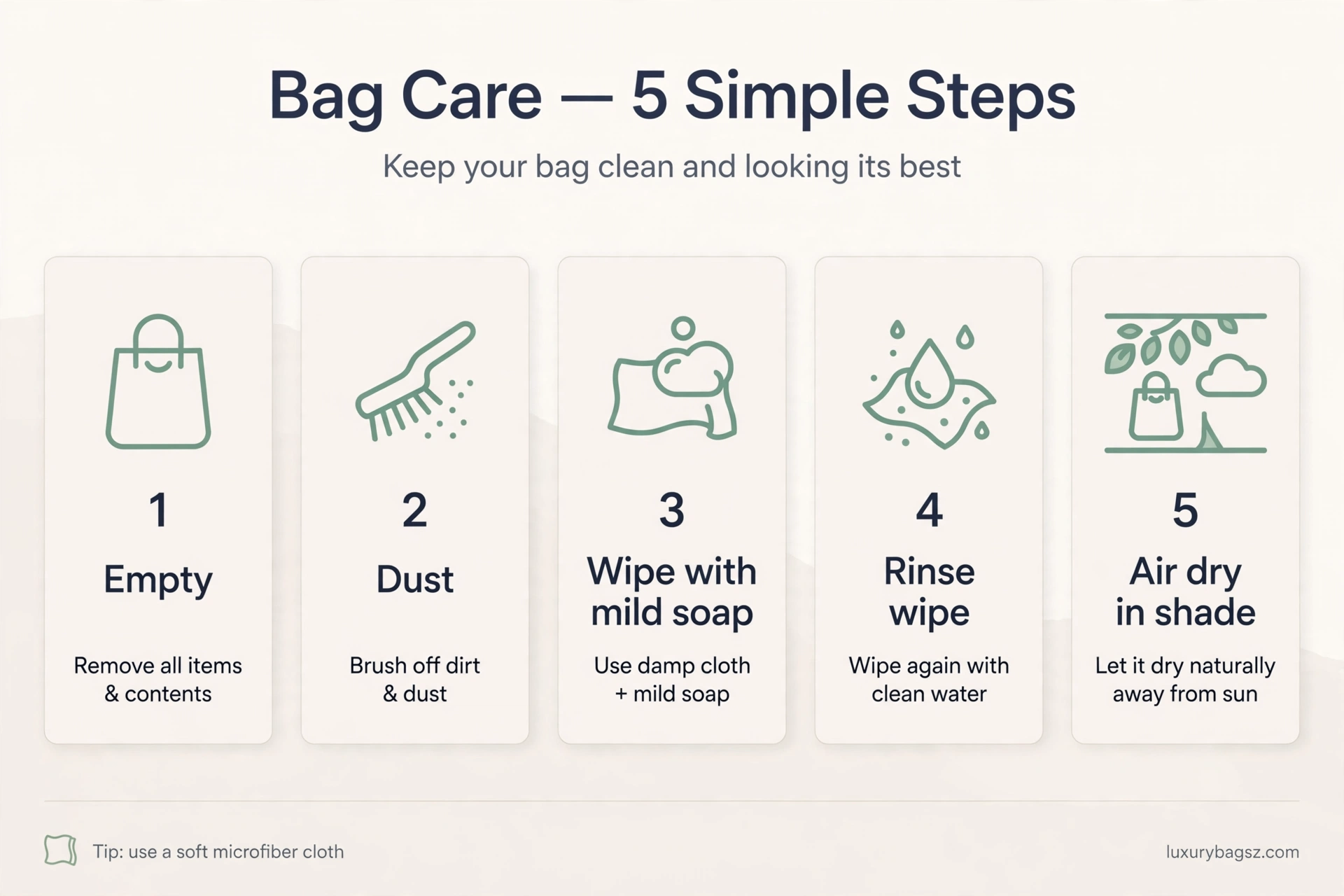
Empty the bag fully, including inner pockets, and shake out loose dust. Dust the outside with a soft, dry microfibre cloth, paying attention to corners, seams, and zips where grit collects.
Mix a few drops of mild dish soap or neutral detergent into lukewarm water. Dampen a soft cloth in the solution, wring it out, and wipe the panels in smooth lines, inside and out.
Wipe again with a cloth dampened in clean water to lift soap residue, then dry with a clean towel and let the bag air dry fully in the shade before use. For a light refresh between deeper cleans, a plain damp wipe is often enough, and a waterproofing spray guide such as our waterproofing spray guide is worth reading before spraying anything near a mixed-material bag.

Clouding, Yellowing, and Stains: What Causes Them and What Helps
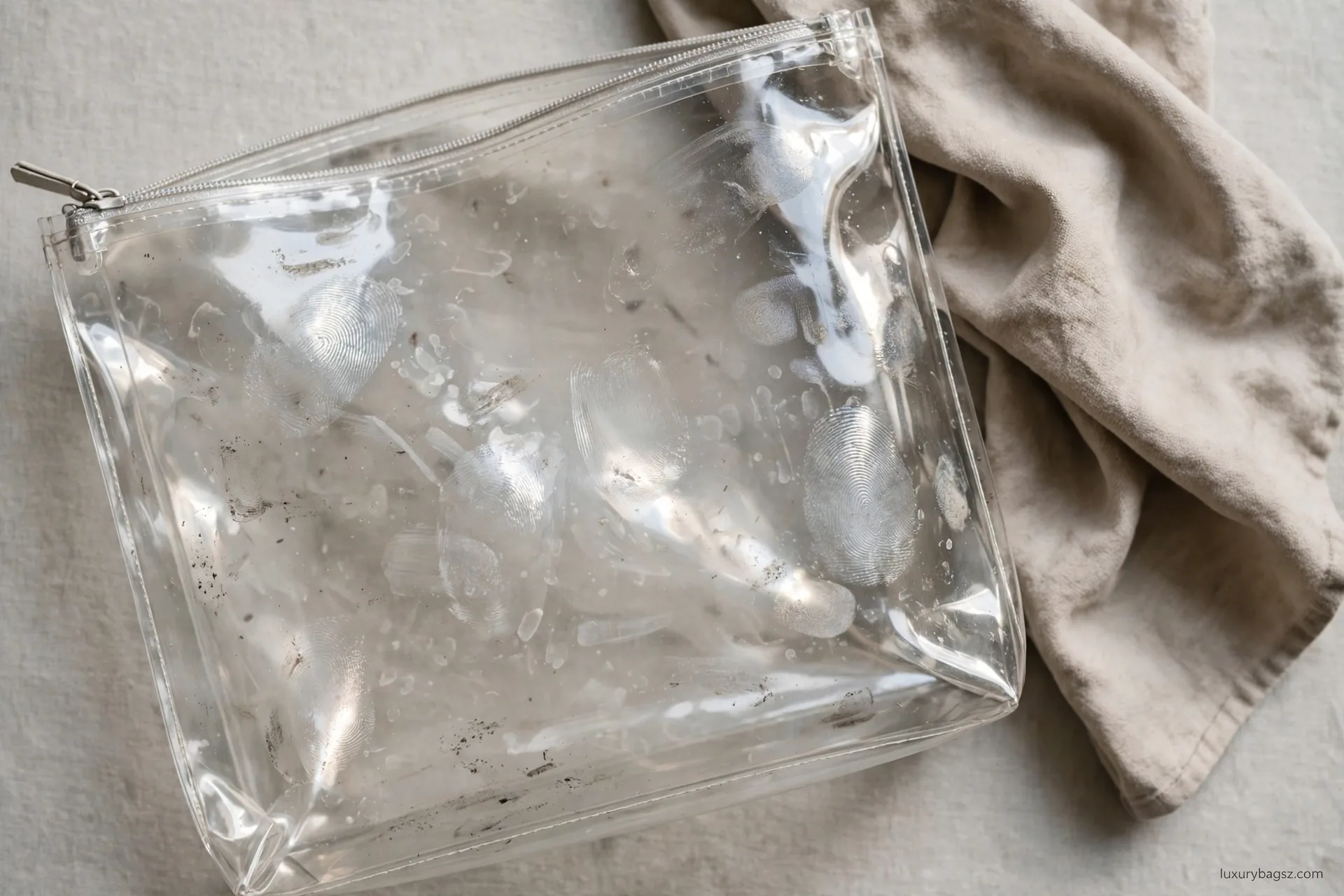
Clouding builds slowly from dust, skin oils, and fingerprints left unwiped, plus fine scratches from rough cloths and sharp contents. Wiping after use is the cheapest prevention there is.
Yellowing is mainly sun damage: prolonged direct sunlight breaks the surface down, and heat speeds it up. Once yellowing sets in, home remedies rarely reverse it, so shade and cool storage matter far more than any rescue product.
For a stubborn mark, a soft-bristled toothbrush with soapy water can lift dirt from seams and edges. Some guides suggest vinegar or baking soda paste for odour and marks; test any such remedy on a hidden spot first, rinse well, and stop if the surface looks hazy. Never use a scouring pad, paper towel, or gritty cleaner on clear PVC.
Heat, Sun, and Cold: The Weather Rules for PVC
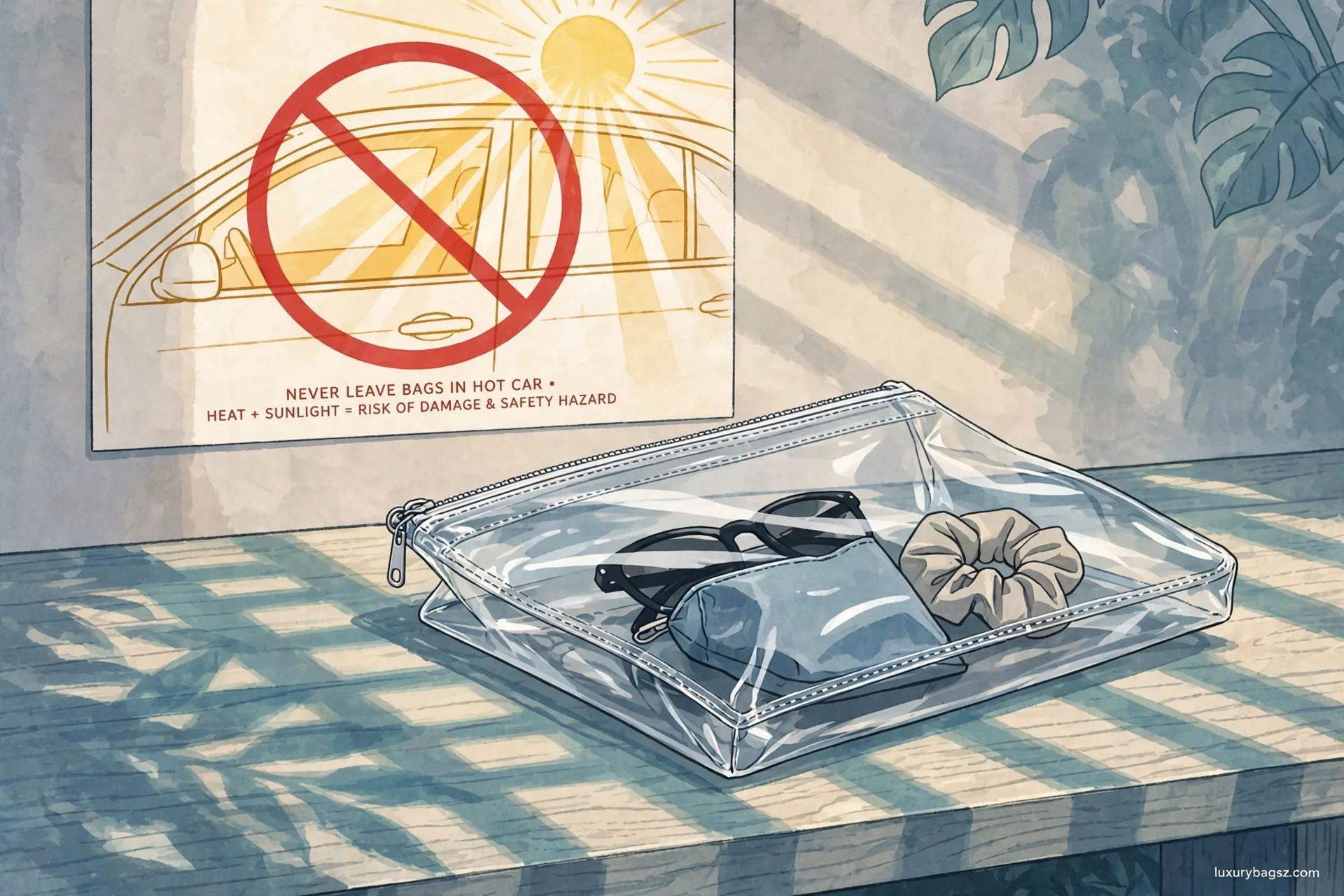
Heat is PVC's worst enemy. Even a hot car on a warm day can warp, distort, or melt a clear bag beyond repair, and radiators and hair dryers do the same damage faster.
Store and carry the bag away from prolonged direct sun, which yellows and weakens the panels over time. A shaded shelf or a cloth-covered spot beats a sunny windowsill every time.
Cold makes cheaper, thinner PVC stiff and more likely to crack if folded or knocked, so handle a cold bag gently and let it warm to room temperature before flexing it. Thicker, well-made PVC resists this better, but no clear bag likes being folded sharply in winter.
Everyday Wear: Scratches, Dye Transfer, and Keeping Contents Tidy
Scratches are the other slow killer of clear bags. Keep sharp items — keys, pens, metal tools — in a pouch rather than loose against the panels, and set the bag down gently instead of dragging it.
Dye transfer is real with PVC: it absorbs colour easily from dark jeans, printed papers, and coloured pouches left pressed against it. Keep dark or printed items in their own pouch, and wipe the panels after a long day out.
Clear bags also display their contents, so a small inner pouch keeps the look tidy and protects the panels from pens, makeup, and snack crumbs. The same tidy-carry logic helps any bag, as our guide to care for designer clothing shows for keeping outfits and accessories in good order.
What NOT to Do to PVC Bags
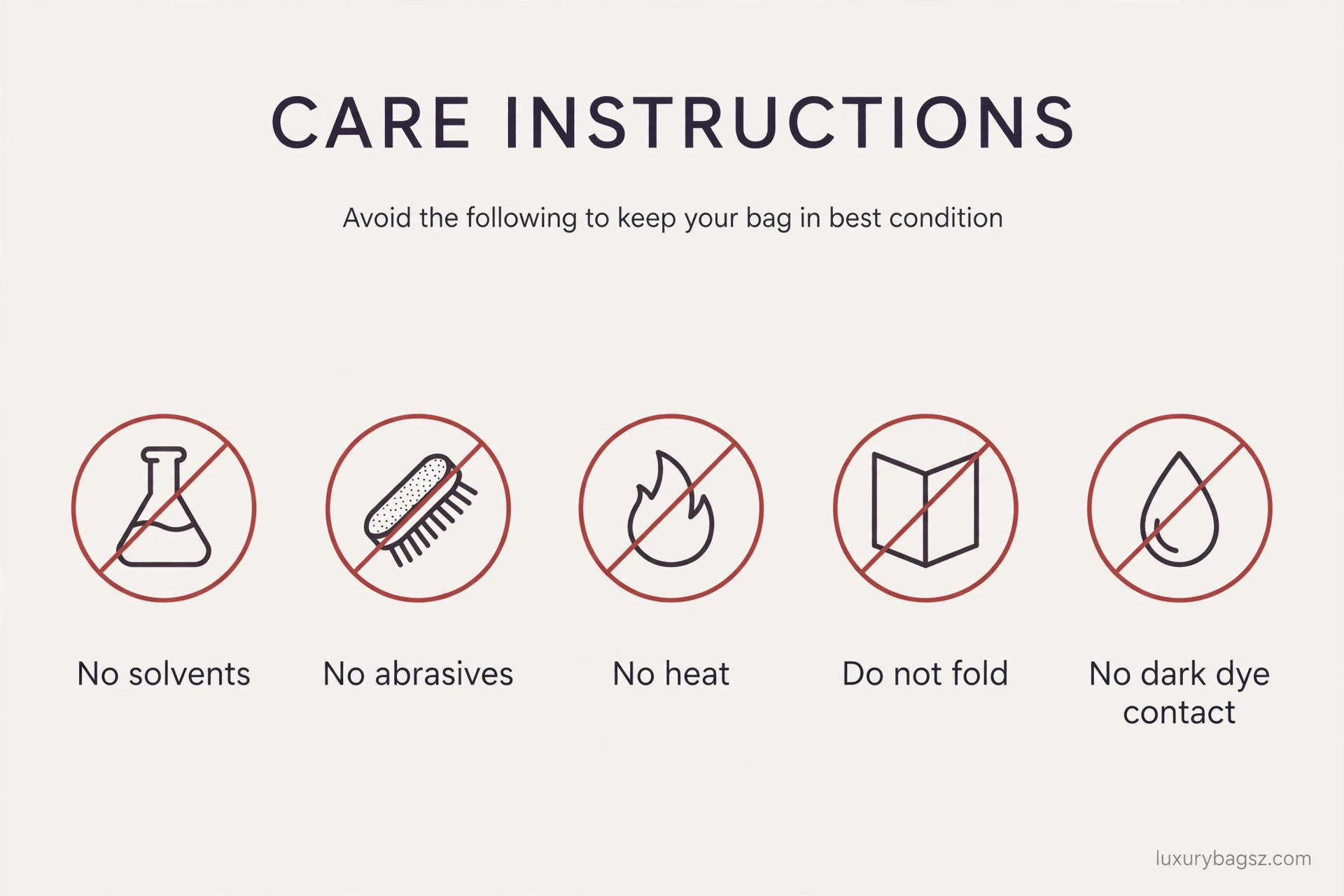
Do not use organic solvents, acetone, alcohol wipes, ammonia-based glass cleaner, or bleach on PVC. These dissolve, distort, or yellow the surface, and the damage is usually permanent.
Do not scrub with abrasive pads, rough sponges, or paper towels. Every scratch catches light and dirt, and a scratched panel reads as cloudy even when it is clean.
Do not fold a PVC bag for storage, stack heavy items on it, or store it pressed against leather, printed, or dark-coloured items. PVC can bond to other materials over time in warm storage, and folded creases can become permanent.
Storage and Pre-Owned Checks: Keeping a Clear Bag Clear
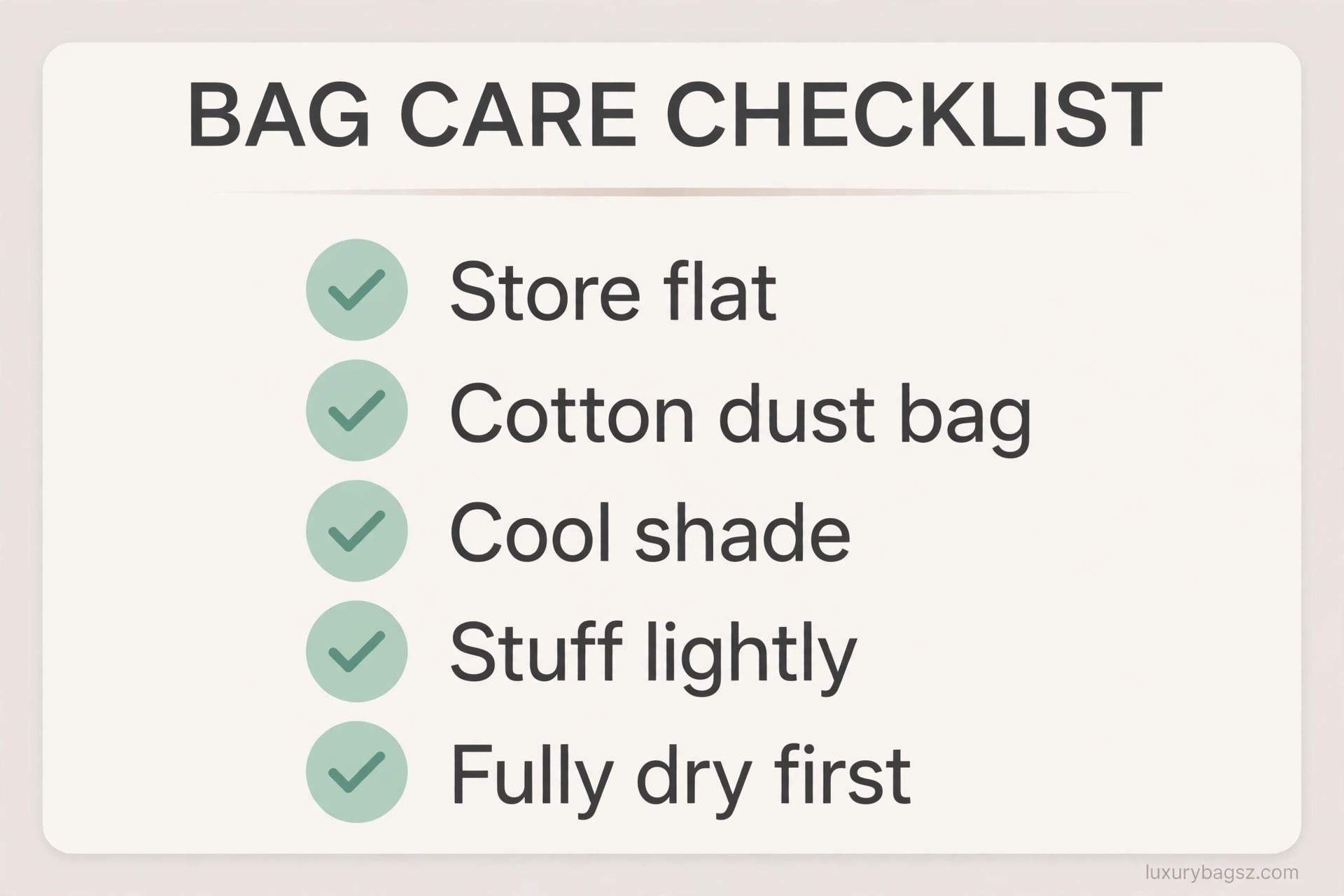
Store the bag flat or stuffed lightly with acid-free tissue so it holds its shape, inside a cotton dust bag, in a cool, dry, shaded place. Never store it folded, and never let it sit touching another bag's leather or print.
Before seasonal storage, wipe the panels clean and make sure the bag is fully dry, inside and out. Trapped dampness smells, and damp linings stain. Check the bag every few weeks in warm weather, since heat and contact damage happen quietly.
When buying pre-owned, hold the bag to the light and look for overall yellowing, fine scratch haze, warped panels, and creases at folds. Check seams, zips, and trim separately, since a clear panel can look fine while the trim is worn. The structured storage habits in our guide to storing a Kelly bag transfer well to any shaped bag, clear or not.
Frequently Asked Questions
How do I clean a clear PVC bag?
Empty it, dust it with a soft cloth, wipe with lukewarm water and a little mild soap, wipe again with clean water, and air dry fully in the shade. Avoid solvents, bleach, and abrasive cloths.
Can I use glass cleaner on a PVC bag?
No. Ammonia-based glass cleaners, alcohol wipes, and acetone can cloud, yellow, or distort PVC. Mild soap and water is the safe default for clear panels.
Why is my clear bag turning cloudy?
Clouding usually comes from built-up oils and dirt, fine scratches, or harsh cleaners. Regular gentle wiping prevents most of it, but deep scratch haze and yellowing are hard to reverse.
Why is my clear bag turning yellow?
Prolonged sun exposure is the main cause, with heat speeding it up. Store the bag in shade, keep it out of hot cars, and do not expect a home remedy to restore a yellowed panel.
Can a PVC bag go in the washing machine?
No. Machine washing can warp, crease, and damage PVC panels, seams, and trim. Hand wiping is the safe method for clear bags.
How do I remove a stain from a PVC bag?
Try soapy water with a soft cloth first, and a soft toothbrush for seams and edges. Test any stronger remedy on a hidden spot, rinse well, and stop if the surface turns hazy.
How should I store a clear PVC bag?
Flat or lightly stuffed, inside a cotton dust bag, in a cool, dry, shaded place. Never fold it, and never store it pressed against leather, print, or dark-coloured items.
Can I leave a PVC bag in the car?
Not on a warm day. A hot car can warp or melt PVC beyond repair, so take the bag with you rather than leaving it in the heat.
How do I stop scratches on a clear bag?
Keep sharp items in a pouch, set the bag down gently, and wipe only with soft microfibre cloths. Paper towels and rough sponges scratch clear panels quickly.
What should I check when buying a pre-owned clear bag?
Hold it to the light for yellowing, scratch haze, warping, and fold creases, and check seams, zips, and trim. A panel can look clear in photos while hiding haze in daylight.
Final Verdict
PVC care is gentle care: mild soap, soft cloths, shade, and flat storage. The bag is easy to clean and easy to ruin, and the difference is almost always the cleaner, the cloth, or the heat it sat in.
Wipe it after use, keep it out of sun and hot cars, and store it breathing in cotton — and a clear bag stays clear far longer than one cleaned hard and stored carelessly.






