

What Is Saphir Super Invulner and How to Use It: A Waterproofing Spray Guide for Shoes, Bags and Jackets
Waterproofing in Brief
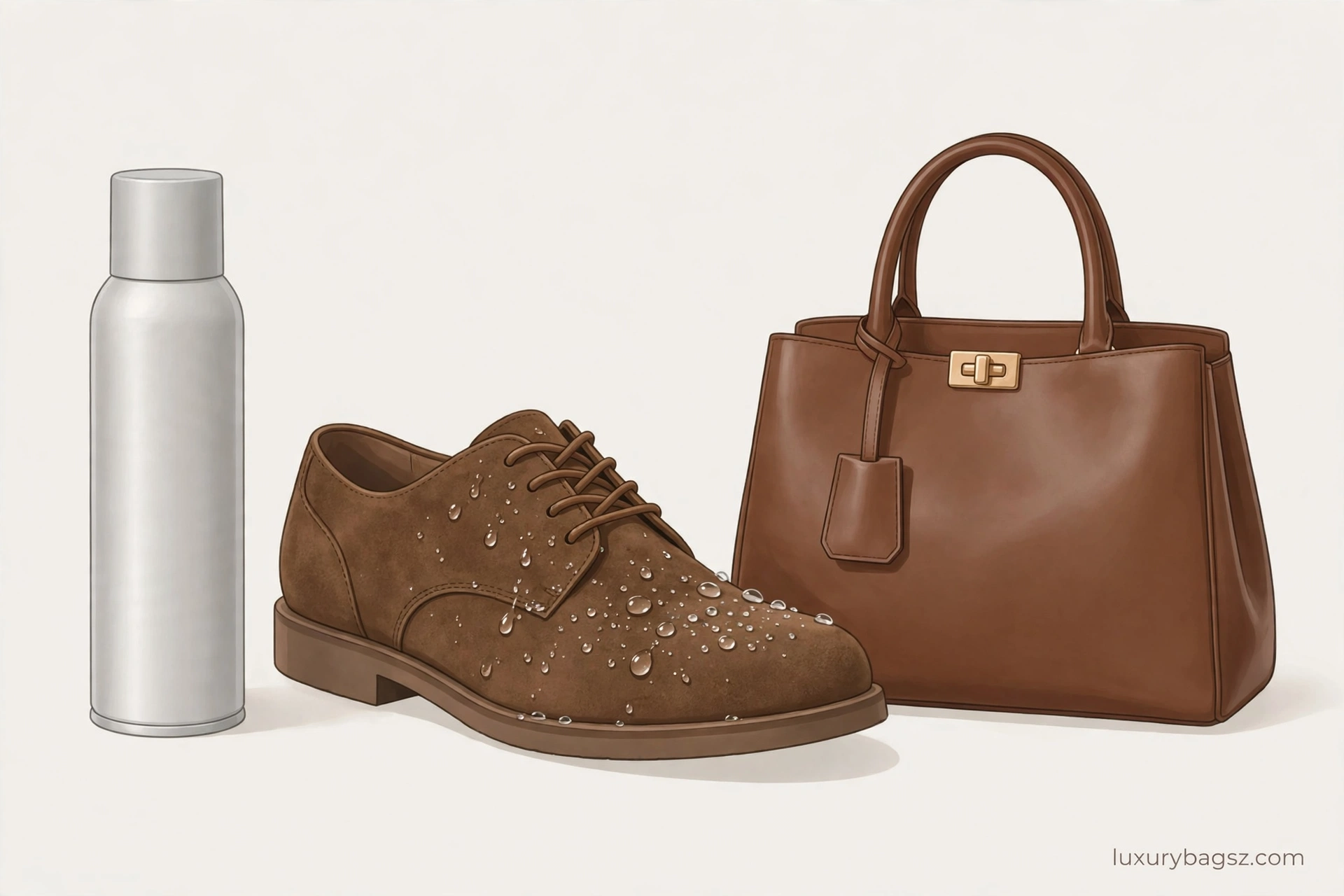
Saphir Super Invulner is a highly concentrated, silicone-free waterproofing spray from Saphir's Médaille d'Or line. It lays an invisible, fluorinated-resin layer over leather and textiles so rain, snow, dirt, grease and drink stains bead up instead of soaking straight in.
It is a protector, not a cleaner or a conditioner. Spray it on clean, dry leather or fabric, let it dry for 30 minutes, and it adds water and stain resistance without changing how the material looks or feels. It will not make any leather truly waterproof forever, and it will not fix damage that is already there.
Use it before first wear on new shoes, bags and jackets, and reapply after cleaning, heavy rain, or when water stops beading. Spray outdoors or in a well-ventilated room, keep the can moving, and never soak the item.
Key Takeaways
- Super Invulner is a silicone-free, fluorinated-resin protector spray, not a cleaner, conditioner or colour restorer.
- Saphir lists it for smooth leather, nappa, box calf, veal, suede, nubuck, cotton, silk, satin, velvet and TEX materials.
- Spray from about 20 cm in even passes, without saturating the item, then let it dry for 30 minutes.
- On smooth leather it goes on last, after cleaning, conditioning and polishing, because creams applied on top dissolve its layer.
- Reapply regularly, especially after cleaning or heavy rain, and whenever water stops beading on the surface.
- Always spot-test a hidden area first, and keep the spray off hardware, linings and soles where you can.
What Super Invulner Is
Super Invulner is Saphir Médaille d'Or's 300 ml, silicone-free, fluorinated-resin spray. It dries invisible, changing neither colour nor texture, so one neutral can suits every colour.
Which Materials It Suits
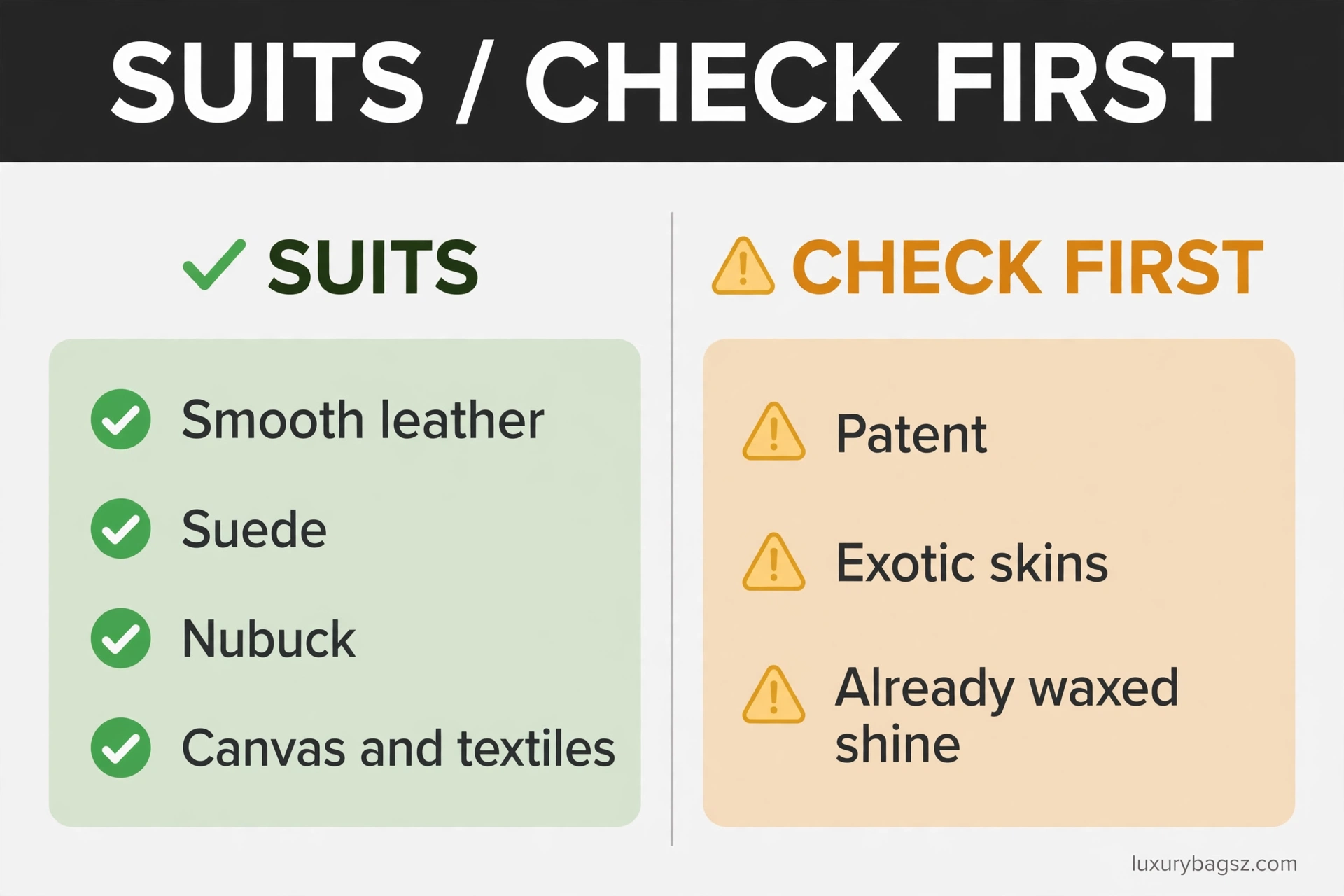
Saphir lists it for smooth leather, nappa, box calf, veal, suede and nubuck, plus cotton, silk, satin, velvet and TEX materials. Suede and nubuck gain most, as both soak up water fast. See leather bags and shoes care.
Which Materials Need a Check First
Check first on patent leather, exotic skins and mirror-shine shoes. Patent cannot absorb it, Saphir does not list exotic skins, and it can dull a mirror shine.
Step by Step: From Brush to Dry Coat
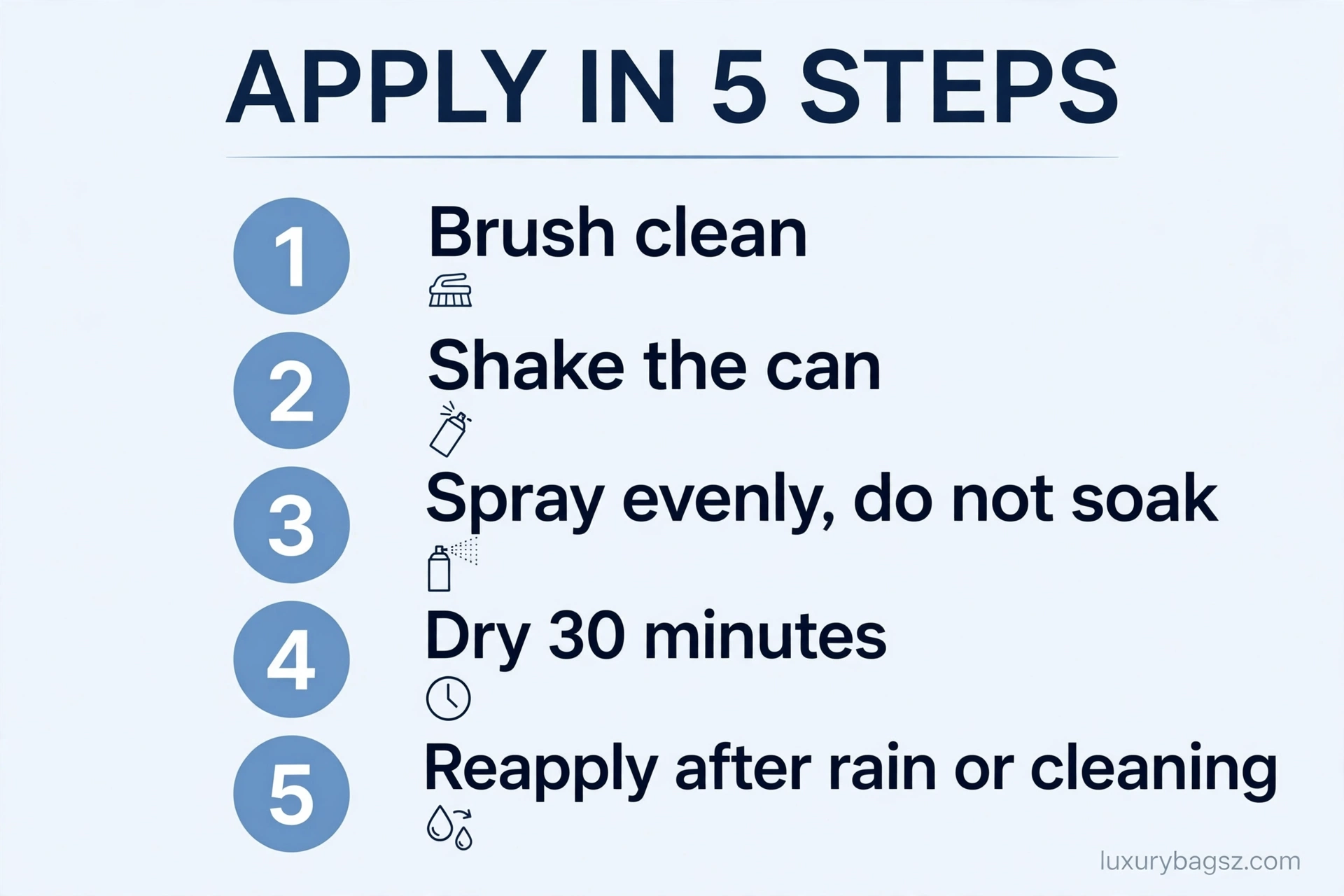
Start clean and dry, and on smooth leather condition and polish first. For suede brushing see suede brush, and for conditioning see Saphir Renovateur guide. It always goes on last, since creams dissolve its layer.
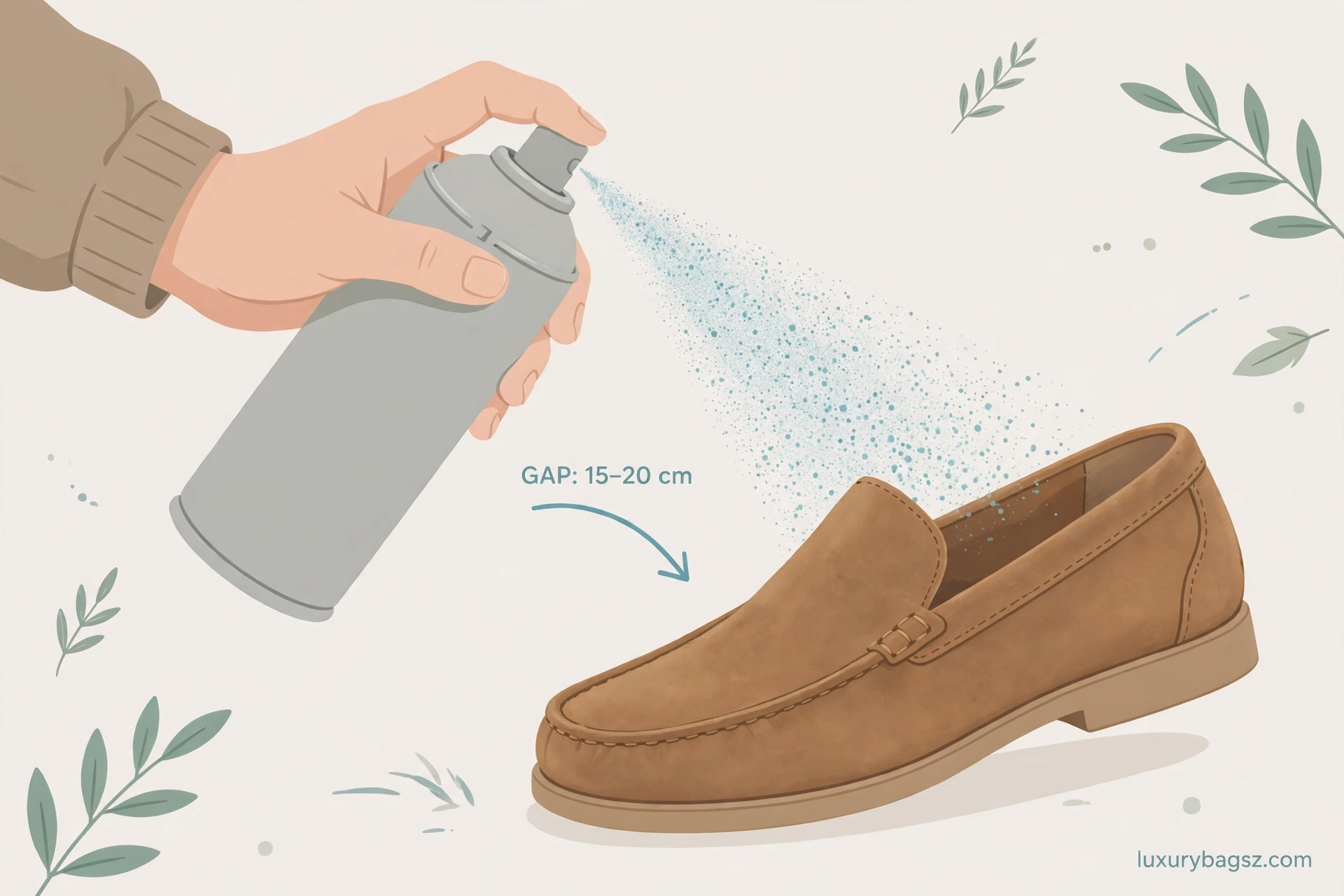
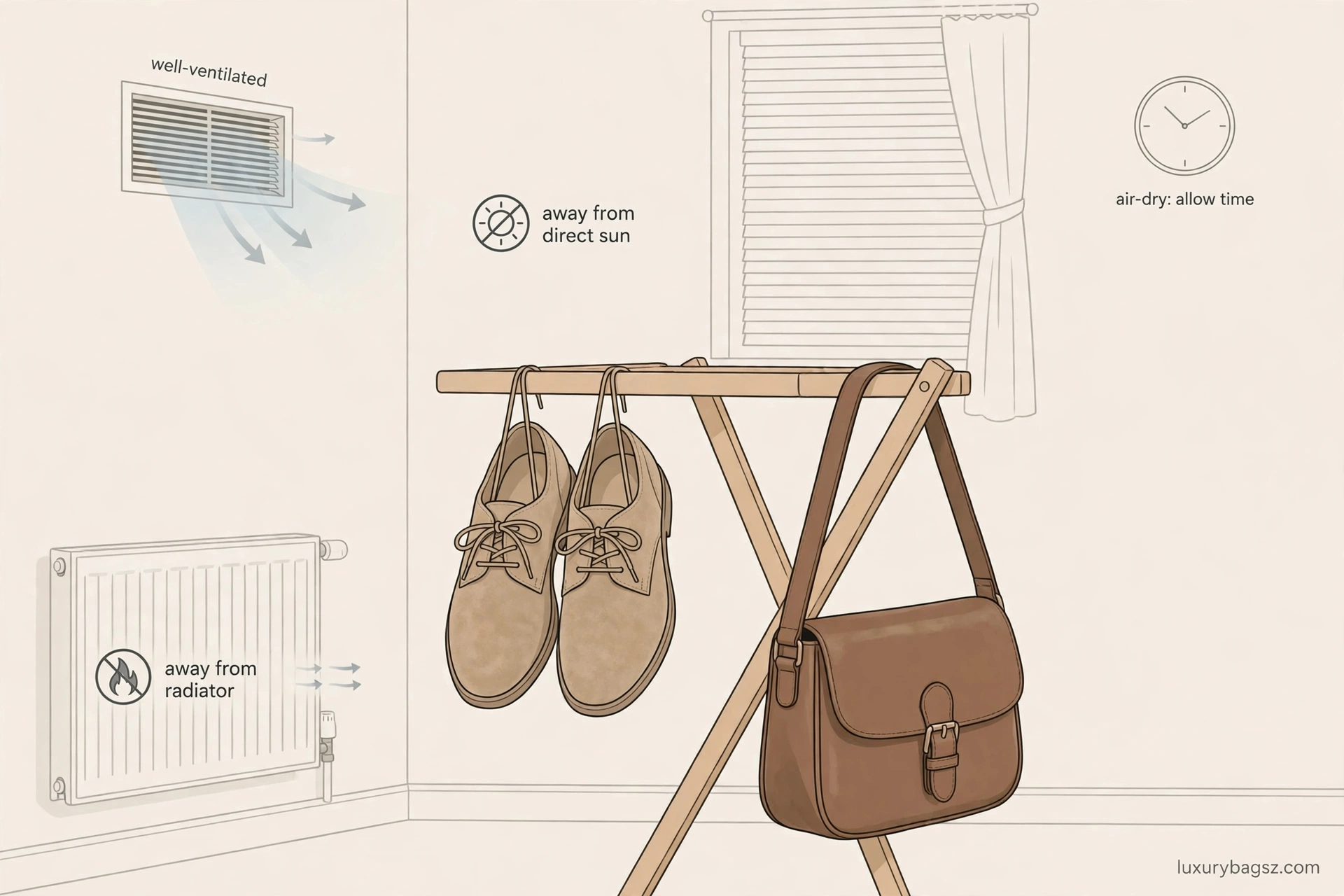
Shake the can, spray outdoors or in moving air from about 20 cm in even passes, and stop before the surface looks wet. Cover seams and corners, dry 30 minutes without heat or sun, then brush suede lightly.

How Often to Reapply It
Reapply when water stops beading, after cleaning, and after heavy rain.
Limits, Mistakes and Safety
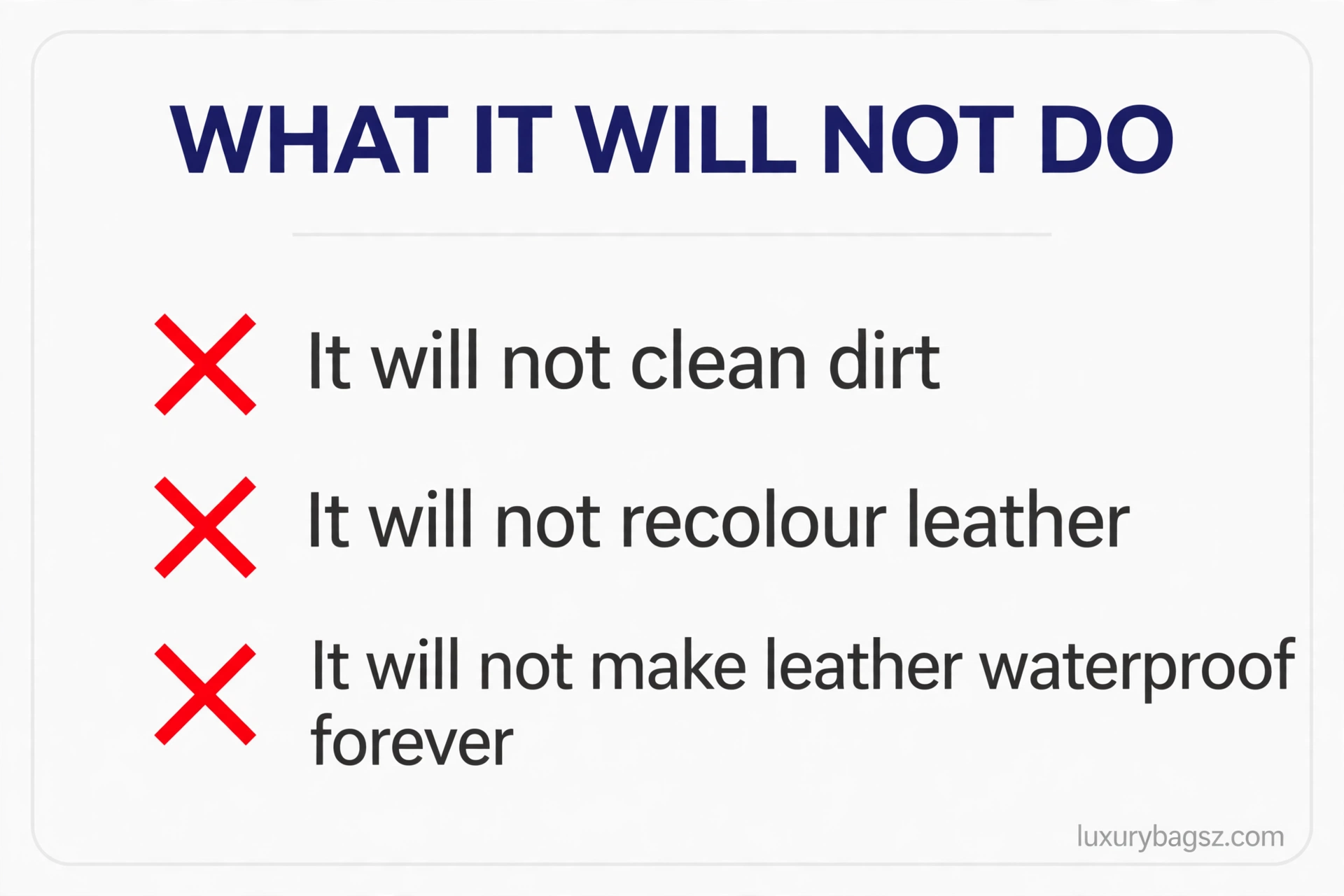
It protects only: it will not clean, recolour, or keep standing water out. Avoid soaking, spraying too close, spraying without air, or spraying damp leather. Keep from flames.
How the Protection Actually Works
Super Invulner does not plug the leather’s pores or wrap it in plastic. Its fluorinated resins settle on and between the fibres as an invisible, low-energy surface, and liquids behave differently on that surface: instead of spreading and soaking in, they hold together as beads and roll or sit on top until you wipe them away.
That is why treated suede still feels like suede and treated leather still breathes. The protection is a surface effect, not a sealed coating, and it works on anything the liquid would otherwise wet first: rain, puddle splash, coffee, wine and road salt spray.
It is also why the protection has honest limits. Standing water, a soaked-through walk or liquid left sitting for an hour will eventually defeat any surface treatment. Beading buys you time to get out of the rain and blot the item dry, which in practice is what saves shoes and bags.
Because the layer sits on the surface, friction wears it away. Heel counters, bag corners and the parts of a shoe that brush against trousers lose protection first, which is why reapplication is maintenance rather than a one-time treatment.
Super Invulner Versus the Alternatives
The cheapest waterproofing sprays are silicone-based, and silicone is what Super Invulner is defined against. Silicone sprays can darken suede and nubuck, leave a slightly greasy handle, and make later conditioning or recolouring uneven, because products applied afterwards sit on silicone instead of in the leather.
Saphir’s own range causes the other confusion. Renovateur Spray is a cleaning and nourishing spray for suede with only light protective effect; it is not a waterproofing treatment. Super Invulner is the protection step, and the two are used in sequence on suede, never as substitutes.
There is also a plainer Saphir Invulner in the standard line. The Médaille d’Or Super Invulner sits above it as the more concentrated formula, which is why one light pass is enough where cheaper sprays ask for two or three heavy coats.
Household names in sneaker protection compete on price and availability, and for canvas trainers they are reasonable. For fine suede, nappa and the leather on a good bag, the reasons to stay with a silicone-free, colour-neutral formula are the ones above: no darkening, no greasy film, no blocked conditioning later. If you are assembling the full kit around it, our guide on how to build a shoe care kit puts each Saphir product in its place.
Item by Item: Shoes, Bags and Jackets
Suede shoes are the home fixture. Brush the nap up first, spray in light passes from about 20 cm until the nap looks evenly, faintly damp rather than wet, then dry for 30 minutes and brush again to lift the nap. Two thin passes protect better than one soaking one.
Smooth leather shoes take the spray last of all, after cleaning, conditioning and any cream or wax polish has been brushed out and allowed to settle. Spraying before polish wastes the can, because the polish work strips the layer straight back off.
A leather handbag needs a minute of masking first. Cover or avoid metal hardware, zips and any fabric lining that peeks out, spray the body in even passes, and pay attention to the base corners, which meet wet pavements and car floors. Stuff the bag loosely while it dries so the shape stays true.
Suede and leather jackets are sprayed hanging up, ideally outdoors, working from the shoulders down with the same light passes. Collars and cuffs, which meet rain first and rub most, deserve a second pass once the first has dried.
White and pale items show the value of the spot test most. Super Invulner is colour-neutral, but pale suede shows any uneven application as patchiness, so even passes matter more on a white bag than on a black boot.
The Beading Test: Knowing When It Has Worn Off
Do not guess by the calendar. Flick a few drops of water onto a hidden or low-wear area and watch what they do. Drops that sit up as round beads mean the layer is alive; drops that flatten and darken the material within seconds mean it has worn away there.
Test more than one spot. The vamp of a shoe may still bead while the heel counter, rubbed by trouser hems and car pedals, has been bare for weeks. Reapply to the whole item anyway, because partial spraying dries patchy on suede.
As a rhythm rather than a rule: shoes worn weekly in a wet season may want a fresh coat every month or so, shoes worn occasionally in dry months can go a season, and bags and jackets sit somewhere between. The beading test always outranks the calendar.
Always reapply after any real cleaning. Shampooing suede, washing canvas or conditioning smooth leather all remove or cover the protective layer, so protection is rebuilt at the end of every proper clean.
Troubleshooting: Marks, Patches and Sticky Spots
White or greyish marks after spraying almost always mean one thing: too much, too close, or sprayed onto a damp surface. On suede, let the item dry fully, then brush firmly and evenly; most light marks lift as the nap is worked back up.
Dark patches are the same error seen from the other side, an area that got soaked while its neighbours got a mist. Drying and thorough brushing evens most cases out. A suede eraser used gently helps on a stubborn patch once everything is bone dry.
A slightly sticky or draggy feel on smooth leather means excess product pooled. Buff with a soft cloth after full drying; if it persists, the layer was applied over polish that had not finished settling, and a gentle clean and a lighter reapplication is the fix.
If spray lands on patent leather or a mirror shine by accident, wipe it off promptly with a soft cloth while fresh. Left to dry it can bloom and dull the finish, which then has to be polished back rather than simply wiped.
Storage, Travel and Safety
The can is an aerosol and behaves like one: flammable vapour, strong smell while spraying, and no place near radiators, flames or a hot car. Spray outdoors or beside an open window, and let items air after treatment; the smell fades as the solvents leave, usually well within a day.
Aerosols also travel badly in the legal sense. Pressurised cans are restricted in cabin luggage and many postal services will not carry them at all, which is why specialist retailers often sell Saphir sprays for collection or local delivery only. Buy it where you will use it.
Store the can upright, cool and dry, with the cap on. A can kept this way stays usable for years; a can left in a hot garage may lose pressure and spray unevenly, which ruins the fine mist the whole technique depends on.
Treated items should be fully dry before they go into boxes, dust bags or a wardrobe. Trapping solvent smell and residual moisture against leather in a closed space is the one storage mistake that can undo a careful application.
Cost, Coverage and Whether It Is Worth It
A 300 ml can costs more than a supermarket spray and less than one professional rescue of a water-marked suede bag, which is the comparison that matters. Judged per use it is cheap, because the concentrated formula is applied in mist passes rather than soakings.
Coverage depends on the item, but a can treats a lot of leather: dozens of light passes across shoes alone, or a rotation of shoes, a bag and a jacket through a season with plenty left. Most home users replace a can because it is old, not because it is empty.
The value case is strongest on the items that water ruins rather than merely wets: pale suede, nappa, satin and silk, and the corners of good bags. On hard-wearing boots that already take wax and grease products, a heavy-duty traditional treatment may suit better.
If you own exactly one pair of suede shoes and wear them twice a year, the standard line is honestly enough. If your wardrobe holds several suede, nubuck or fine leather pieces that see weather, the Médaille d’Or can earns its shelf space in a single saved pair.
Frequently Asked Questions
What is Saphir Super Invulner?
Saphir Médaille d'Or's silicone-free, fluorinated-resin waterproofing spray for leather and textiles.
Which leathers can I use it on?
Smooth leather, nappa, suede, nubuck and listed textiles — spot-test a hidden area first.
Can I use it on bags and jackets, not just shoes?
Yes, if clean and dry first. Keep spray off hardware, zips and linings.
How far away should I hold the can?
About 20 cm, moving steadily, stopping before the surface looks soaked.
How long does it take to dry?
At least 30 minutes; longer on thick suede before wearing.
Should I spray before or after conditioning?
After, always: clean, condition and polish first, then spray last.
Does it change the colour or texture of leather?
No, when used as directed. It dries invisible; soaking usually causes marks.
How often should I reapply it?
When water stops beading, after cleaning, and after heavy rain.
Will it clean my shoes or restore faded colour?
No — protector only. Clean and recolour first, then spray last.
Can I use it on patent leather or exotic skins?
Be careful: patent cannot absorb it, and exotic skins are not listed.
Final Verdict
Super Invulner belongs last in a care routine: spray lightly on clean, dry leather or fabric from about 20 cm, dry 30 minutes, and reapply when water stops beading.






