

How to Care for Fur: Cleaning, Storage, and Everyday Wear for Coats and Bags
Fur, Cared For Like Hair on a Hide
Fur is animal hair on a treated hide, and that hide is what fails first. Heat, damp trapped in plastic, and harsh cleaners dry the skin underneath until it stiffens and cracks, long before the hair itself looks worn.
The daily rule is simple: brush gently with the direction of the hair, keep fur dry and breathing, and leave deep cleaning to a fur specialist. Never machine wash fur, and never hand it to a standard dry cleaner.
Light rain and snow will not ruin fur, and a yearly professional clean keeps it soft and lustrous. Most of the damage owners see comes from storage, not wear.
Key Takeaways
- Fur is hair on a hide: protect the hide from heat, damp, and trapped air as much as the hair.
- Brush gently with the direction of the hair; never tug, and never brush a wet coat with a fine-toothed brush.
- Never machine wash fur or use a standard dry cleaner — use a fur specialist, about once a year.
- If fur gets wet, shake it out and air dry it away from heat; take a fully soaked piece to a furrier at once.
- Store fur cool, dark, and breathing — never in plastic, and never with mothballs or cedar.
- Keep perfume, hairspray, and jewellery pins away from fur, and do not sit on a fur coat for long periods.
- Faux fur is a different material with different rules; check the label before washing it.
Know Your Fur: Real, Faux, Flat Hair, and Full Pile
Real fur covers many animals — mink, rabbit, fox, calf, and pony among them — and the care differs by hair type. Flat-laying hair, such as calf and pony, is sturdier and takes a firmer touch than long, fluffy pile.
Faux fur is engineered synthetic pile made to look and feel like fur. It needs similar gentleness, but many faux pieces can be hand washed or machine washed if the label allows it. Never assume a faux care method is safe for real fur, or the reverse.
Fur often appears as a trim on a bag rather than a full coat, and the rest of the bag may be leather, canvas, or another material. Treat each material on its own terms, as our guide to how to care for leather bags and shoes explains, and read our guide to care for reptile leather if your bag mixes fur with an exotic skin.
Everyday Care: Shake, Brush, and Smooth by Hand
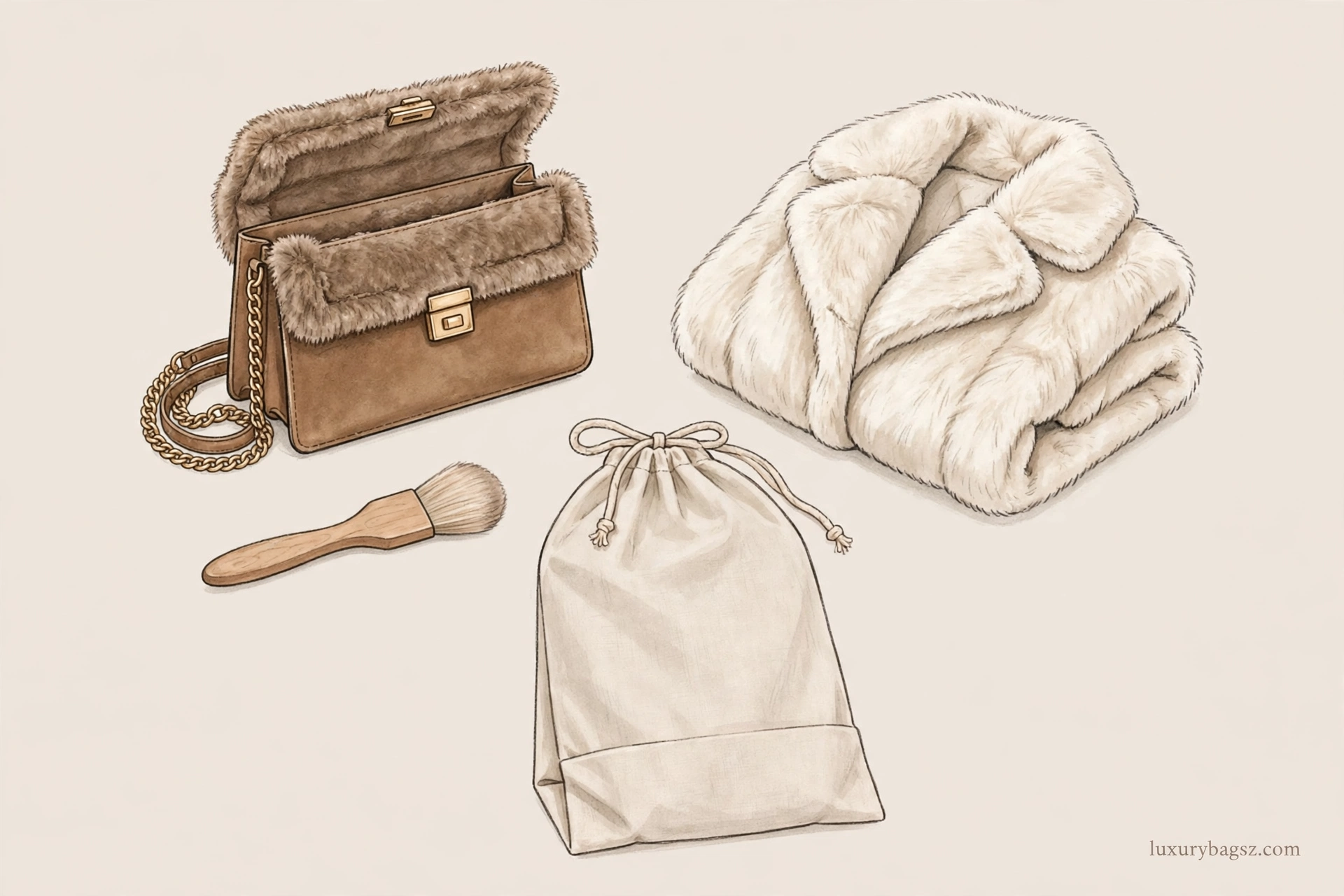
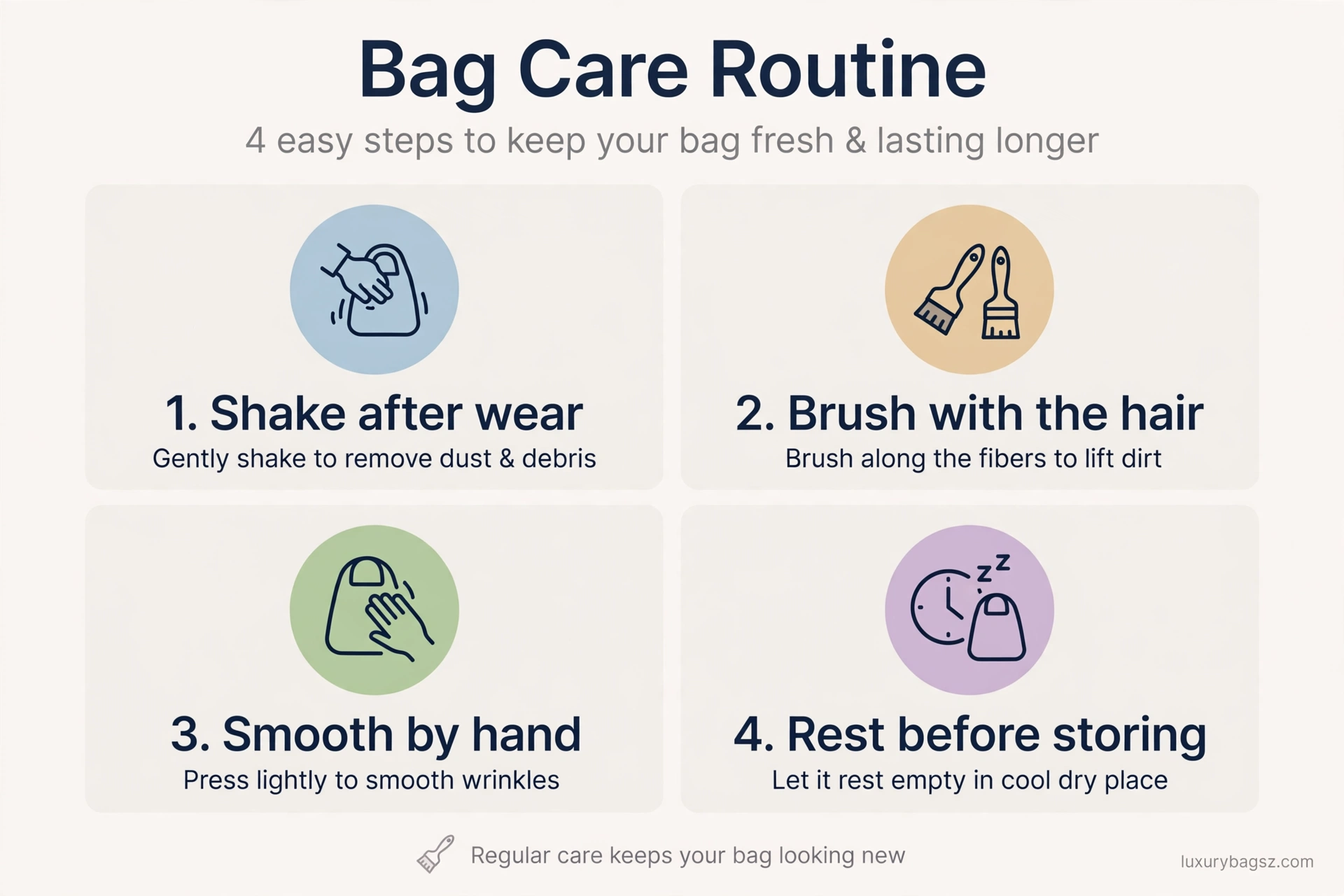
Shake the piece after wear to drop dust, snow, and loose dirt. Then brush lightly with a brush made for fur, always working in the direction the hair lies, never against it.
For longer, fluffier fur, a small detangling brush worked gently through tangles is safer than pulling. For dense or flat-laying hair, a suede brush lifts surface dirt well. Work slowly: tugging sheds hair and thins the pile over time.
Once dry, smooth the fur with your hand rather than combing it hard. That hand-smoothing restores the lie of the hair without breaking it, and it is the safest finish after any drying or brushing.
When Fur Gets Wet: Drying Without Ruining the Hide
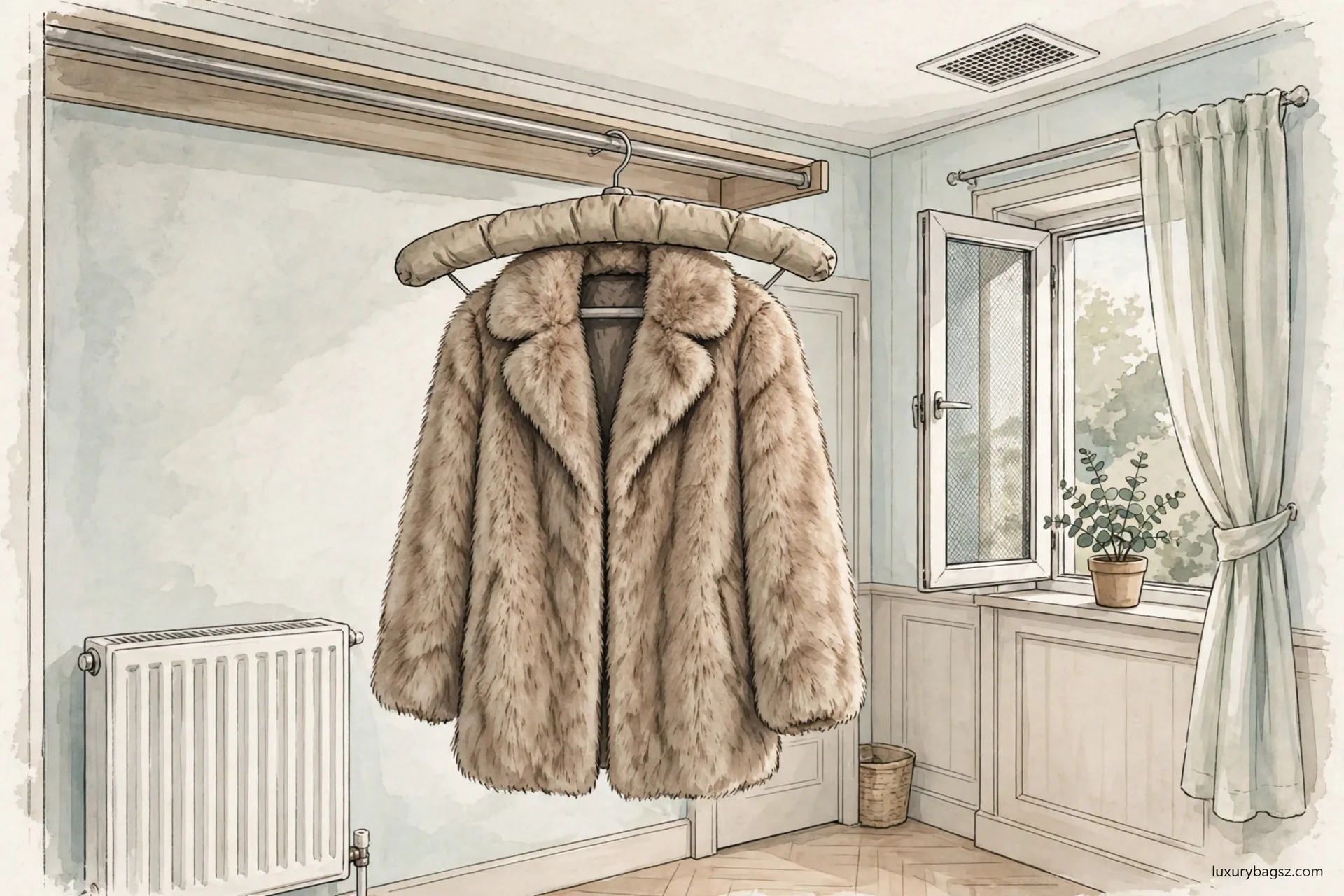
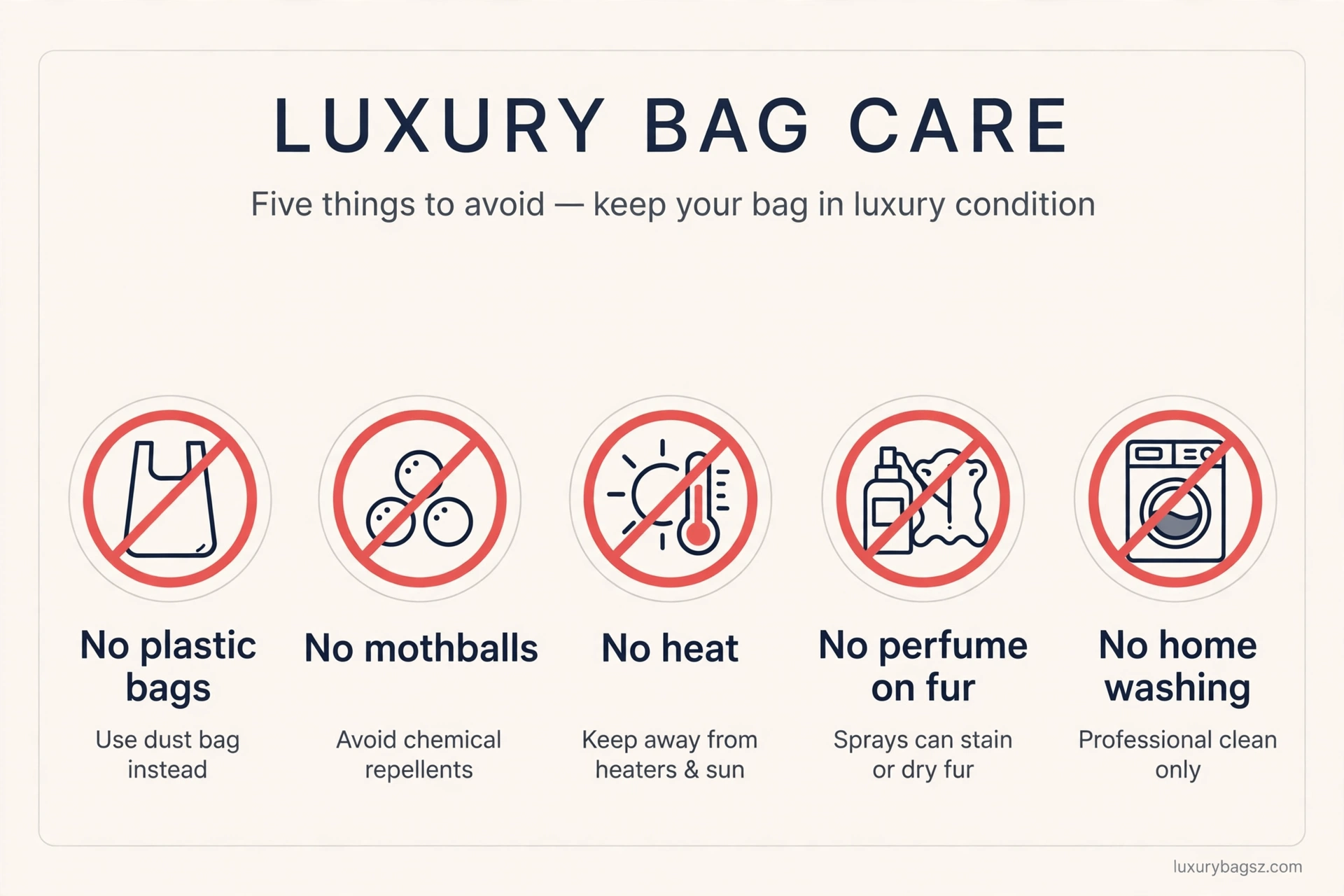
Fur handles light rain and snow well. Shake off the water, then hang the piece in a well-ventilated room to dry naturally, away from radiators, blow dryers, and direct sun.
Do not use heat of any kind to speed drying. Heat dries out the hide underneath, which is what makes fur stiff, brittle, and prone to shedding. Once fully dry, shake the piece again to fluff the hair.
A fully soaked coat or bag is urgent: take it to a fur specialist as soon as possible so the hide can be treated with oils before it dries out. Do not wait for it to dry at home and hope for the best.
Storage: Cool, Dark, Breathing — and Never Plastic
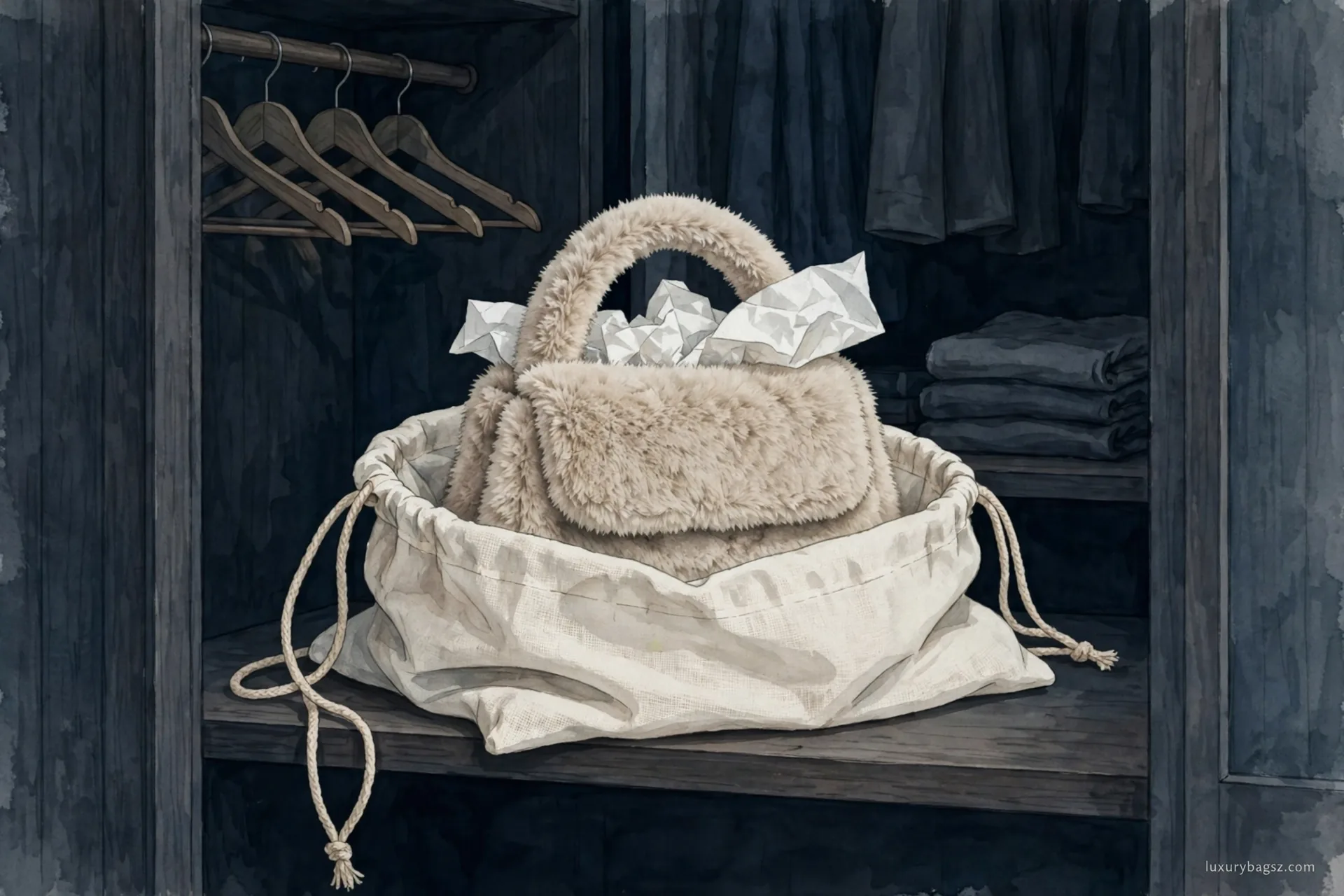
Hang coats on a broad-shouldered, padded hanger with room around them so the fur is never crushed. Bags should be stuffed loosely with acid-free tissue and kept in a loose, breathable cotton bag, in a cool, dry, dark place.
Never store fur in plastic, vinyl, or rubber-lined bags. Trapped air dries the hide and invites mildew, and plastic dry-cleaning bags are for the trip home, not for the season.
Skip mothballs and cedar chests too: both can change the smell of fur permanently, and cedar oils can harm it. For summer, a professional furrier's temperature- and humidity-controlled vault is the safest option, and it also protects against insects. The same loose, breathing storage logic applies to other structured bags, as in our guide to storing a Kelly bag.
Wearing Fur Well: What Rubs, Sprays, and Sitting Do
Do not sit on a fur coat for a long stretch, and change position often if you cannot take it off. Crushing one spot repeatedly mats the pile and can leave a bald patch over time.
Carrying a shoulder bag over the same spot every day wears fur away in the same way, so vary the side or carry the bag in hand when you wear fur. A light scarf at the neck protects fur from makeup and skin oils.
Keep perfume, hairspray, and hand lotion away from fur. These dry the hair, disturb the natural oils, and can leave it sticky or dull. Pinning brooches directly into fur mats and wears the pile, so fasten jewellery to clothing underneath instead. These small habits belong with any careful designer clothing care routine.
Cleaning: Light Marks at Home, Everything Else to a Specialist
For a light mark, a barely damp cloth with a little mild shampoo, worked only in the direction of the hair, can lift surface dirt. Do not soak the fur, and do not rub against the lie of the hair.
Do not try to treat a real stain yourself, and do not use commercial cleaners, bleach, or home conditioning products on real fur. Call a fur specialist right away for spills and stains — fast professional help saves more pieces than any home remedy.
One caution on sources: some care guides mix fur storage advice up with patent leather advice, warning about colour transfer to other items. Fur's real storage enemies are heat, trapped air, light, and insects, not patent-style colour transfer, so follow fur-specific guidance for fur pieces.
Pre-Owned Checks and Faux Fur: Buying and Telling Them Apart
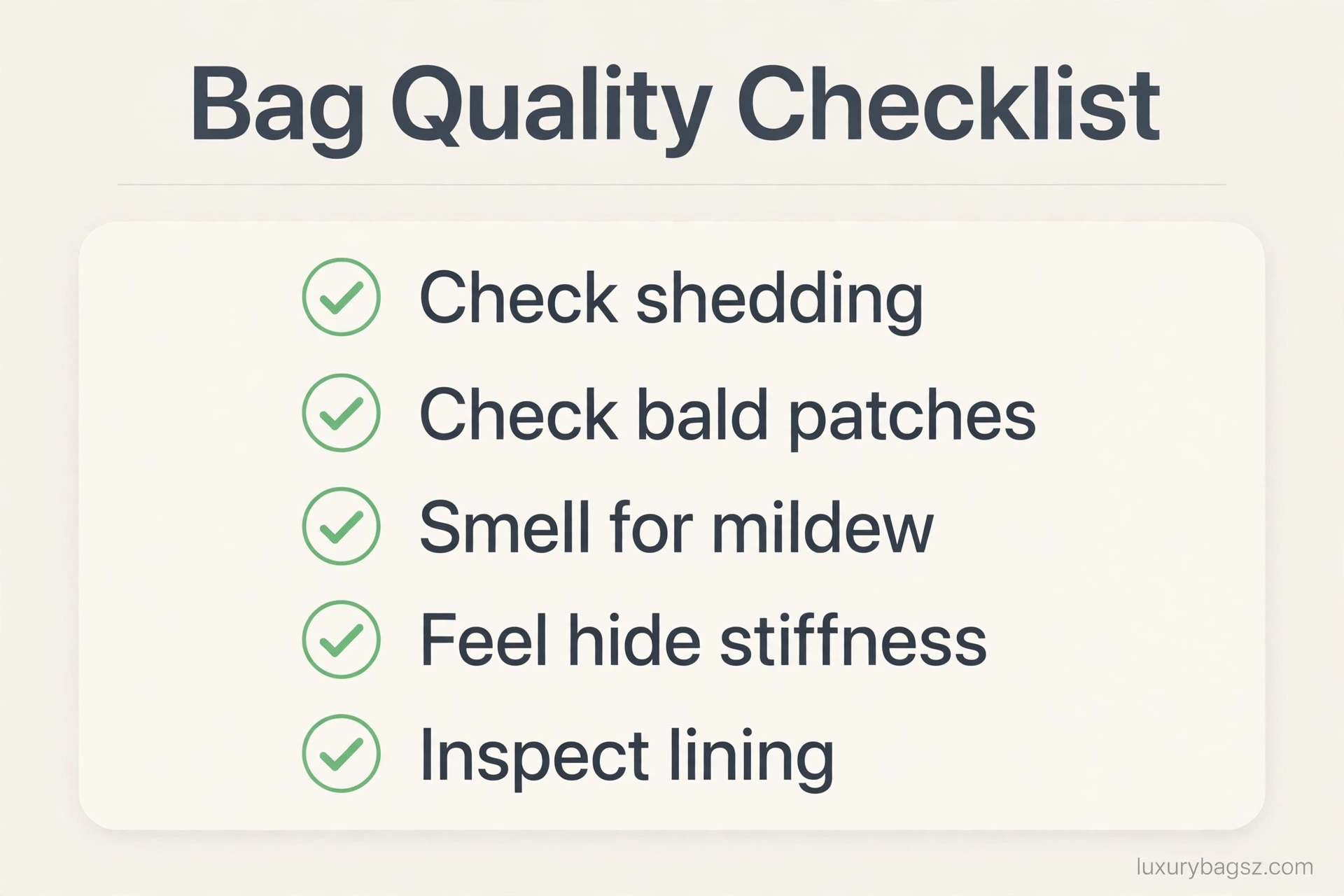
When buying pre-owned fur, run your hand over the whole piece and look for shedding, bald patches, matting, and a dry or stiff hide underneath. Smell for mildew or mothball residue, which can be hard to remove.
Check the lining, seams, and closures, since a furrier's yearly clean and repair visit usually covers tightening those. Ask how the piece was stored — a vault-stored coat and a plastic-bag-stored coat of the same age can be in very different condition. For the wider checks, see our guide to authenticating pre-owned bags.
Faux fur pieces need their own checks: look for flattened pile, heat damage, and a label that states the wash method. Many faux pieces can be hand washed in cool water with mild detergent and laid flat to dry, but only if the label allows it.

Frequently Asked Questions
Can I wash a real fur coat at home?
No. Machine washing and home washing damage the hide and the pile. Light surface dirt can be brushed out, but washing and deep cleaning belong with a fur specialist.
Can a regular dry cleaner clean my fur coat?
No. Standard dry cleaning solvents strip natural oils and can damage fur. Always use a cleaner who specialises in fur, not a general dry cleaner.
How often should fur be professionally cleaned?
About once a year, ideally after the cold season, even if you wear it rarely. Fur gathers dust, oils, and odours in storage, and cleaning restores lustre and prevents matting.
What do I do if my fur gets wet in the rain?
Shake off the water and hang it in a ventilated room to dry naturally, away from heat. Once dry, shake it again and smooth the hair by hand. Take a fully soaked piece to a furrier at once.
Can I store fur in a plastic garment bag?
No. Plastic traps air and moisture, dries the hide, and invites mildew. Use a breathable cotton bag for travel and storage, and give the piece room to breathe.
Should I use mothballs or cedar with fur?
No. Both can change the smell of fur permanently, and cedar oils can harm it. A professional cold-storage vault is the safest summer option for valuable pieces.
Can I spray perfume on my fur coat?
No. Perfume, hairspray, and lotions dry the hair and disturb its natural oils. Spray perfume on skin or clothing before putting fur on, never onto the fur itself.
Why is my fur shedding?
Shedding can come from a dried-out hide, repeated rubbing in one spot, or tugging during brushing. A furrier can judge whether the hide needs conditioning or repair.
How do I clean a small stain on fur trim?
Blot very lightly with a barely damp cloth and mild shampoo, working only with the direction of the hair, and never soak the fur. For a real stain, call a fur specialist right away instead.
Is faux fur cared for the same way as real fur?
Not entirely. Faux fur is synthetic pile, and many pieces can be hand washed in cool water if the label allows it. Real fur should never be washed at home, so check the label first.
Summary
Fur care comes down to three habits: brush gently with the hair, keep the piece dry and breathing, and let a fur specialist handle cleaning. Storage does more damage than wear, so a cool, dark, ventilated spot beats a sealed bag every time.
Treat the hide underneath as carefully as the hair on top, and fur stays soft, full, and lustrous for decades rather than a few seasons.






