

How to Care for Shearling: Cleaning, Drying, and Storage That Keeps It Soft
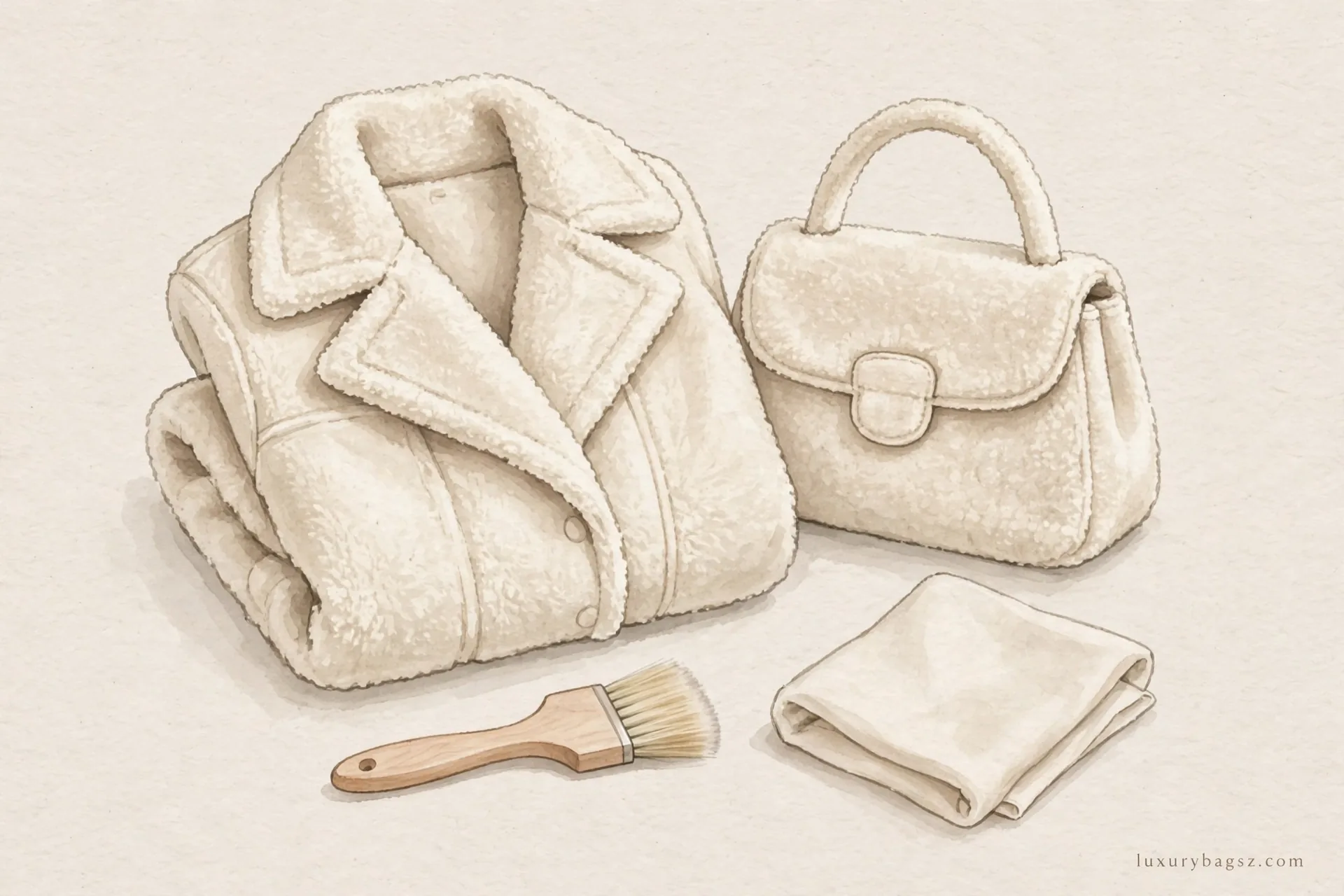
Shearling, Cared For the Gentle Way
Shearling is sheepskin with the wool still on it: wool on one side, tanned suede on the other. That double nature is the whole care story. Treat the wool like a soft sweater and the suede like delicate leather, and never soak the piece.
Brush the wool after wear, spot clean stains quickly, and let anything wet air dry at room temperature. Deep cleaning belongs with a specialist who handles shearling and leather, not a standard dry cleaner or a washing machine.
Most shearling damage comes from overdoing it: too much water, too much heat, or a harsh cleaner. Gentle, infrequent care keeps the wool lofty and the suede supple for years.
Key Takeaways

- Shearling is one hide, wool on one side and suede on the other — care for both sides differently.
- Brush the wool gently with the pile after wear; never brush it while it is damp.
- Spot clean only, with a barely damp cloth and mild detergent; never soak or machine wash shearling.
- Air dry flat or on a wide hanger, away from radiators, direct sun, and hair dryers.
- Store in a breathable cotton bag in a cool, dark spot — never in plastic.
- Do not overstuff shearling bags: the material stretches over time and can tear.
- Send heavily soiled or smelly pieces to a shearling specialist, not a standard cleaner.
Know What You Own: Real Shearling, Faux Fur, and the Suede Side
Real shearling is sheepskin, so the wool and the suede are the same hide. Reversible pieces can show either side out, and some bags pair a shearling trim with smooth leather or canvas.
Faux shearling, often called sherpa, is a synthetic pile fabric. It looks similar but it is not the same material, and it tolerates washing differently. Check the label before you clean anything, and follow the maker's care label over any general guide.
Learning the leather types in your piece helps you avoid using the wrong product on the wrong surface.
If your bag mixes materials, each part needs its own method. The wool gets brushed, the suede gets a suede brush, and smooth leather trim gets the lighter touch described in our guide to how to care for leather bags and shoes.
Everyday Care: Shake, Brush, and Let It Breathe
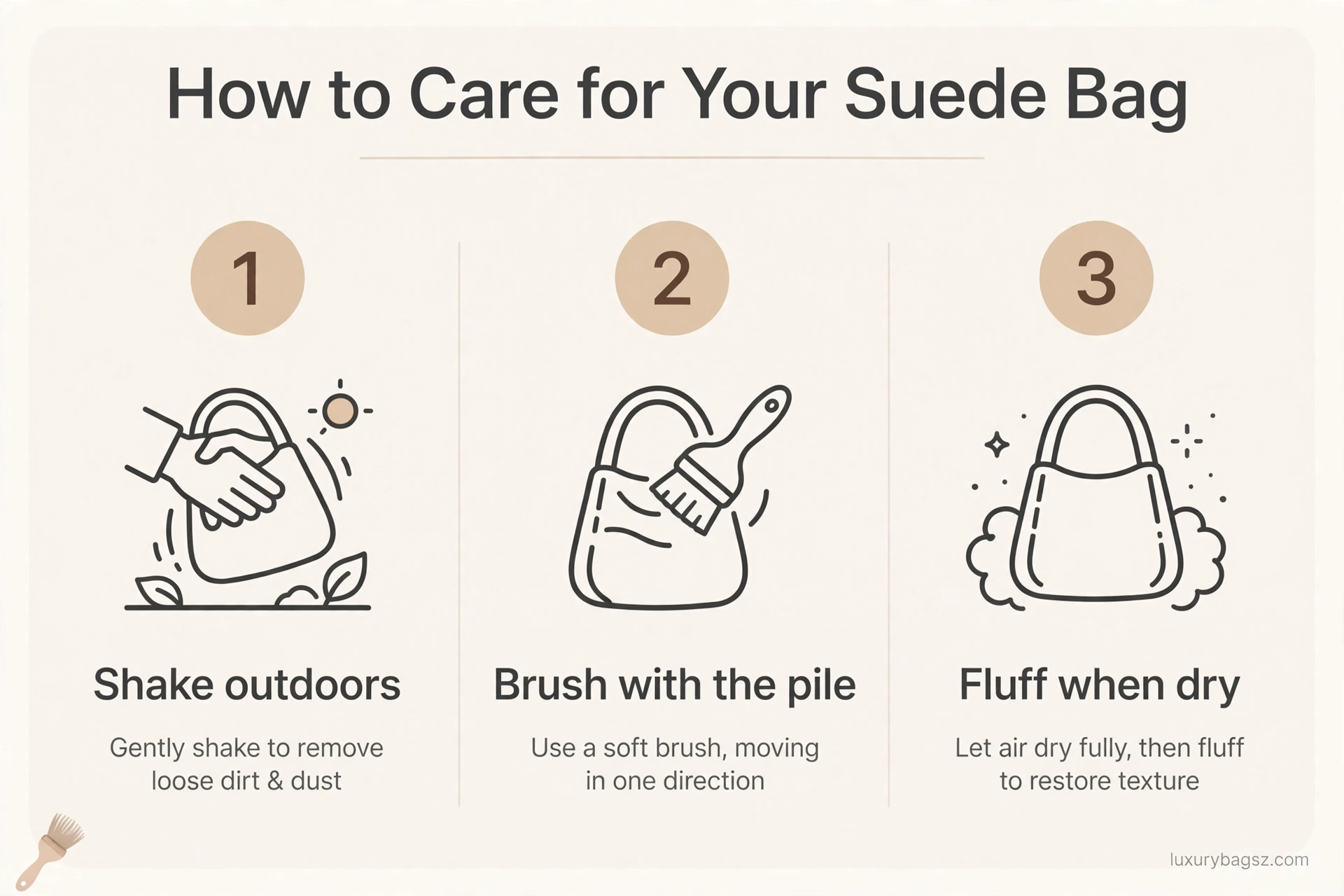
Shake the piece outdoors after wear to drop loose dust and dirt. Then brush the wool with a soft-bristle brush or a wide-tooth comb, always working in the direction the wool naturally lies.
Brushing keeps the pile lofty and stops light dirt from matting into clumps. Use a light hand: hard brushing wears the wool and can groove the suede backing underneath.
Let the piece air out between wears in a ventilated spot before it goes back in a bag or closet. Shearling resists odour better than many synthetics, thanks to the natural lanolin in wool, but trapped damp air still invites mildew.
Spot Cleaning: Small Marks, Small Amounts of Water
Act on a stain the same day if you can. Pick out trapped debris from the wool with tweezers rather than pulling, which tangles the fibres.
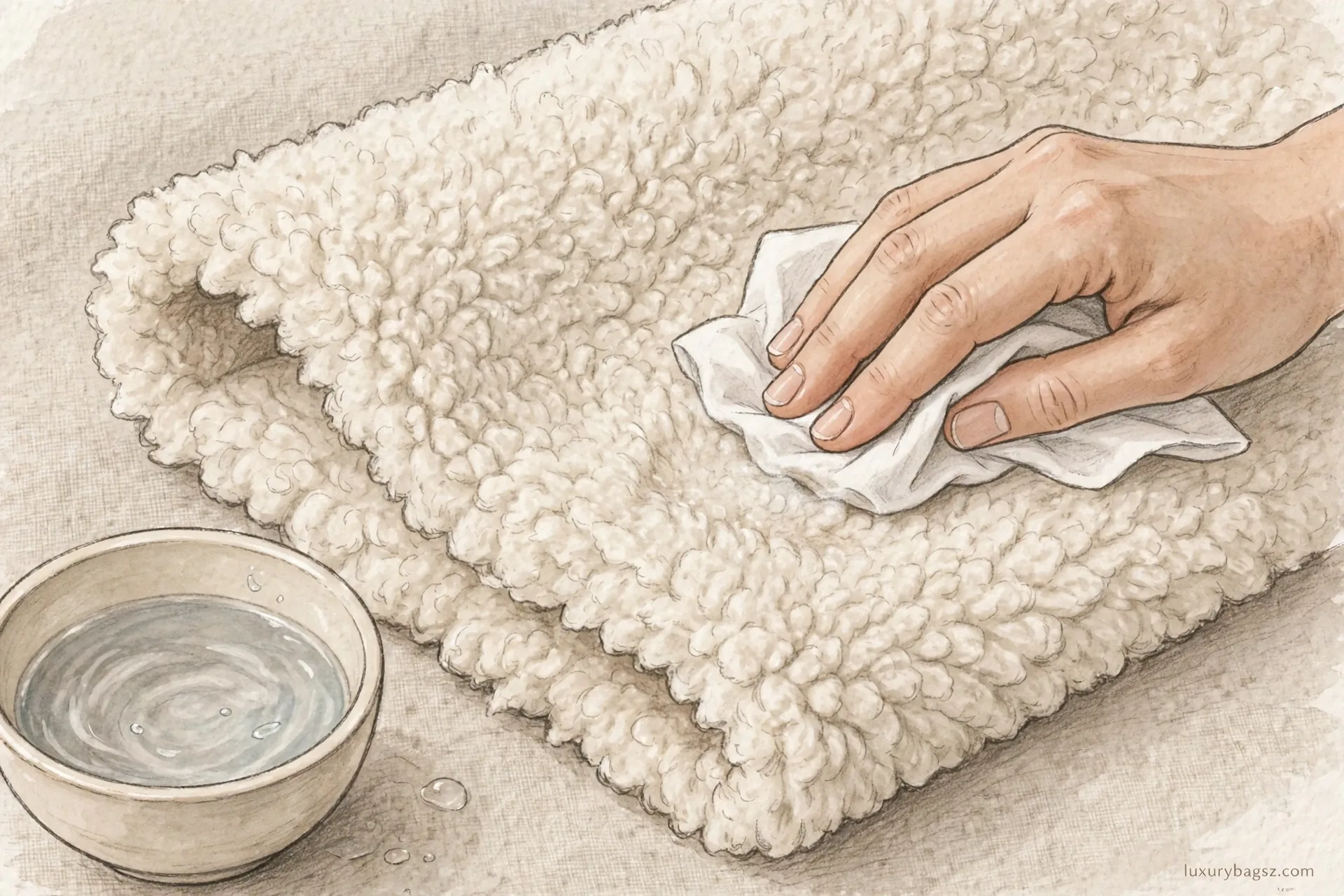
For a light mark, dampen a clean cloth with lukewarm water and a tiny amount of mild, dye-free detergent, then blot — never rub. Rubbing pushes the stain deeper and flattens the wool around it.
Test the solution on a hidden spot first, such as an inside seam, and let it dry before you judge the result. Keep moisture on the wool side only, and do not let it soak through to the suede side, where trapped dampness can breed mildew and odour.
When Shearling Gets Wet: Drying Without Damage
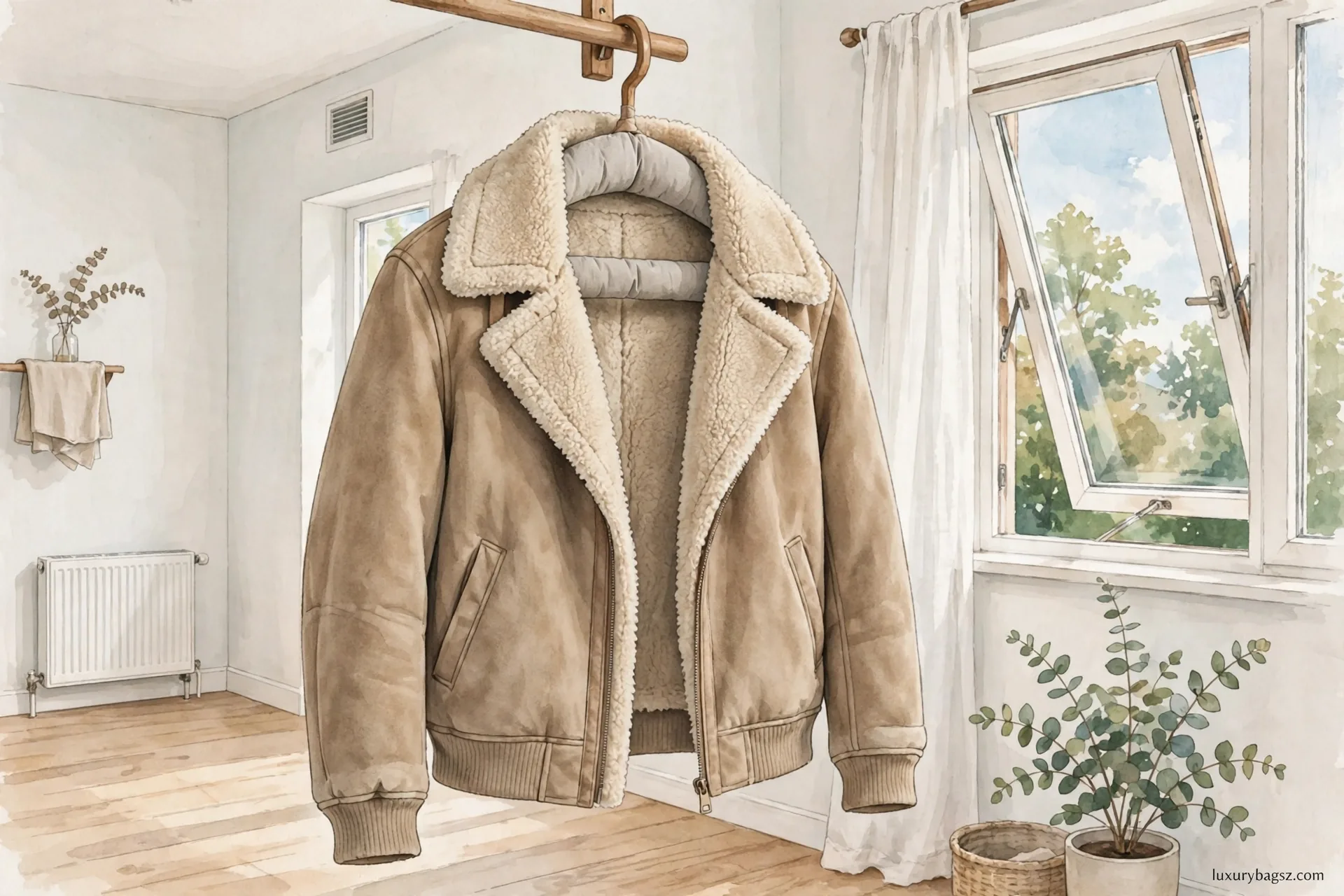
Light rain or snow is not a disaster. Shake off what you can, blot the surface with a dry towel, and let the piece air dry at room temperature.
Never use a radiator, a hair dryer, or direct sun to speed drying. Heat pulls oils out of the hide, and the suede side can stiffen or crack as it dries. If the piece feels rigid once dry, gentle kneading and flexing can help reopen the fibres before you brush it again.
A fully soaked piece is a specialist job. Take it to a shearling or leather cleaner promptly rather than trying to wash it at home, since soaking can shrink and harden the leather backing.
Stains, Smells, and Wear: What Home Care Can and Cannot Fix
Grease and oil respond to absorbent powder: dust cornstarch over the mark, leave it for several hours or overnight, then brush it away. Repeat once if needed, but stop if the mark is not lifting.
For odour, air the piece out first, and steam cleaning by a specialist can refresh a piece that smells musty after damp storage. Home deodorising sprays and perfumes should stay away from shearling, since alcohol-based products can dry the hide and stain the wool.
Wear habits matter as much as cleaning. Do not overstuff a shearling bag or hang heavy items from it, because the material stretches over time. Keep it away from dark, dye-heavy clothing during long contact, and follow the same rotation and resting habits as any designer clothing care routine.
What NOT to Do to Shearling
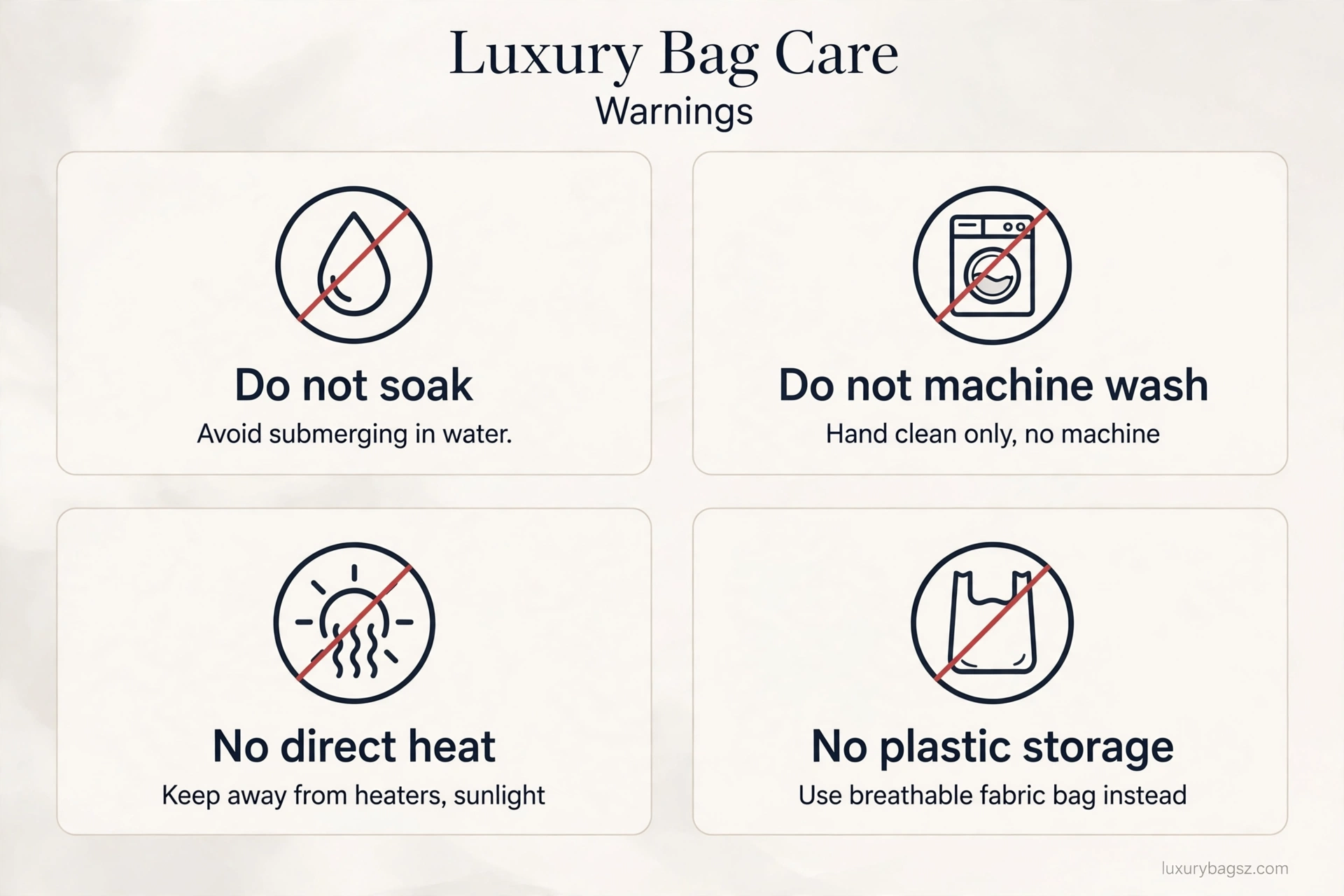
Do not machine wash or tumble dry shearling. Agitation and heat damage stitching, shrink the hide, and flatten the wool, even on a gentle cycle.
Do not use bleach, biological enzyme detergents, fabric softener, or harsh solvents on shearling. These strip natural oils and can discolour both the wool and the suede side.
Do not store shearling in plastic bags or airtight containers. Trapped moisture causes mildew, and heat plus light fade the colour and dry the hide until it cracks. The same goes for long sun exposure on a windowsill or a hot car boot.
Storage and Pre-Owned Checks: Putting Shearling Away Well
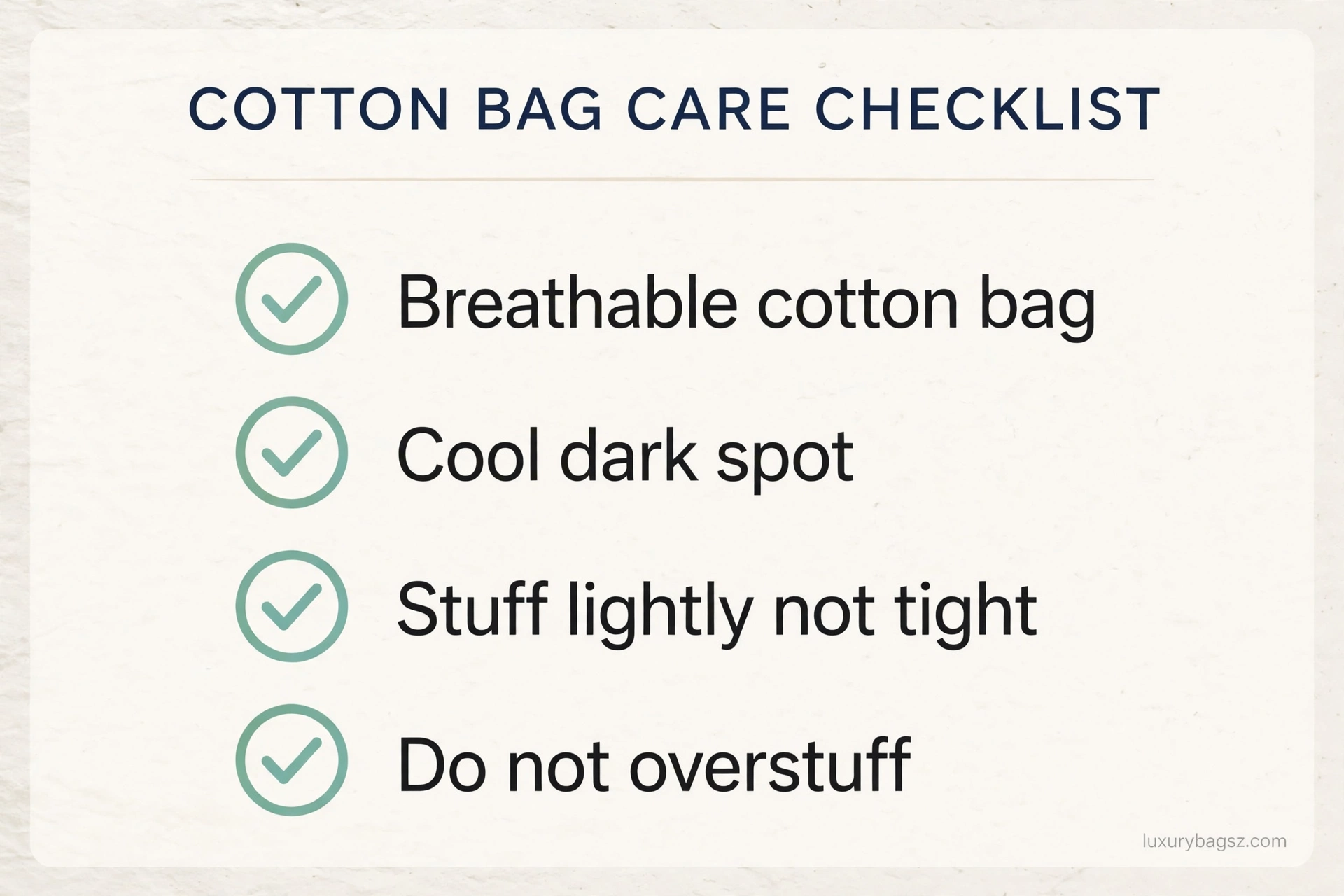
Clean the piece lightly before seasonal storage, and make sure it is fully dry. Store it in a breathable cotton garment bag or dust bag, in a cool, dark, dry spot, with room around it so the wool is not crushed.
Hang jackets on a wide, padded hanger that supports the shoulders. Bags should be stuffed lightly with acid-free tissue to hold their shape — filled, not packed tight — and kept upright rather than squashed under other bags.
When buying pre-owned, check the wool for matting, bald patches, and damp or musty smells, and flex the suede side for stiffness or cracking. Ask about storage history and cleaning, and read our guide to buying pre-owned safely before you pay. A piece stored in plastic or left damp may look fine in photos and fail on inspection.
Frequently Asked Questions
Can I wash a shearling bag or jacket in the washing machine?
No. Machine washing soaks the leather backing, and the agitation and heat can shrink the hide, stiffen the suede, and flatten the wool. Spot clean at home and leave deeper cleaning to a specialist.
How do I clean a small stain on shearling?
Blot with a barely damp cloth and a tiny amount of mild detergent, working from the outside of the mark inward. Test on a hidden spot first, let it dry fully, and never rub the stain.
What brush should I use on shearling wool?
A soft-bristle brush or a wide-tooth comb, used gently in the direction the wool lies. Never brush wool while it is damp, and avoid stiff brushes that can wear the suede backing.
Can shearling get wet in the rain?
Light rain or snow is fine if you shake it off and air dry the piece at room temperature. Heavy soaking is different: take a fully soaked piece to a shearling specialist promptly.
How do I remove grease from shearling?
Dust cornstarch over the mark, leave it for several hours or overnight, then brush it away. If the mark stays, a specialist is a better bet than a stronger home cleaner.
How often should shearling be professionally cleaned?
Once a year or at the end of the winter season is a sensible rhythm for pieces worn often, and sooner for heavy soiling or persistent odour. A standard dry cleaner is not a substitute for a shearling specialist.
How should I store shearling over summer?
In a breathable cotton bag, in a cool, dark, dry place, with room around it. Never use plastic bags or airtight containers, and keep it out of direct sun and away from heat.
Why is my shearling stiff after getting wet?
Heat drying or soaking can strip oils from the hide and harden the suede side. Gentle flexing once fully dry can help, but badly stiffened or cracked pieces need a specialist's judgement.
Is faux shearling cared for the same way?
No. Faux shearling, or sherpa, is synthetic pile, and many pieces can be machine washed on a gentle cycle if the label allows it. Always check the label, since trims and linings change the answer.
What should I check when buying a pre-owned shearling bag?
Check the wool for matting and bald patches, smell for damp or mildew, flex the suede for stiffness or cracking, and ask how it was stored. Avoid pieces stored in plastic or left damp.
Conclusion
Shearling care is mostly restraint: brush gently, clean small marks quickly, dry slowly, and store in something that breathes. The wool and the suede are one hide, so anything harsh enough to harm one side harms the whole piece.
Give it that light, regular attention and a specialist clean when it truly needs one, and shearling stays soft, lofty, and wearable for years rather than one winter.






