

How to Care for New Shoes: Protect Them Before the First Wear
New Shoes, Cared For From Day One
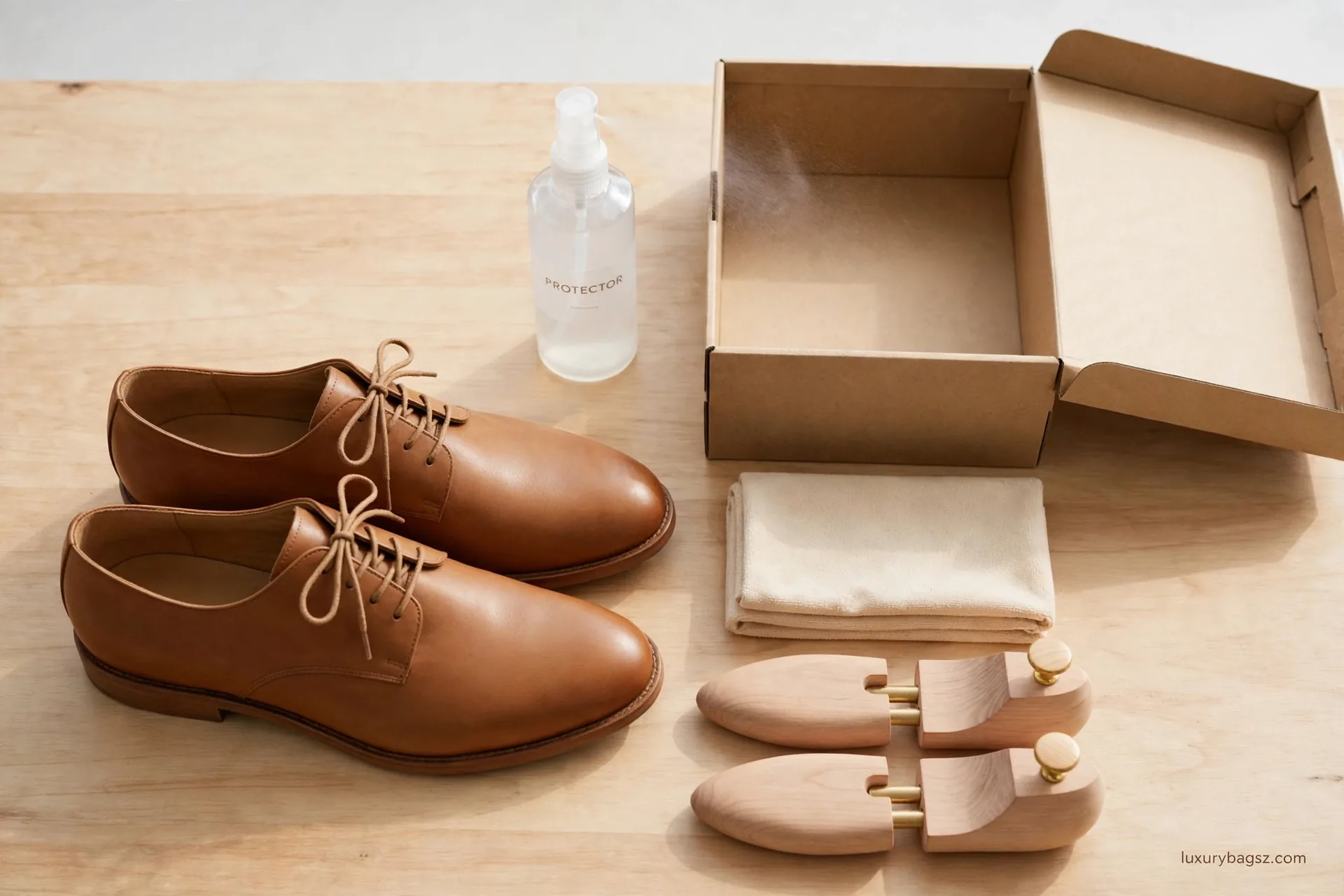
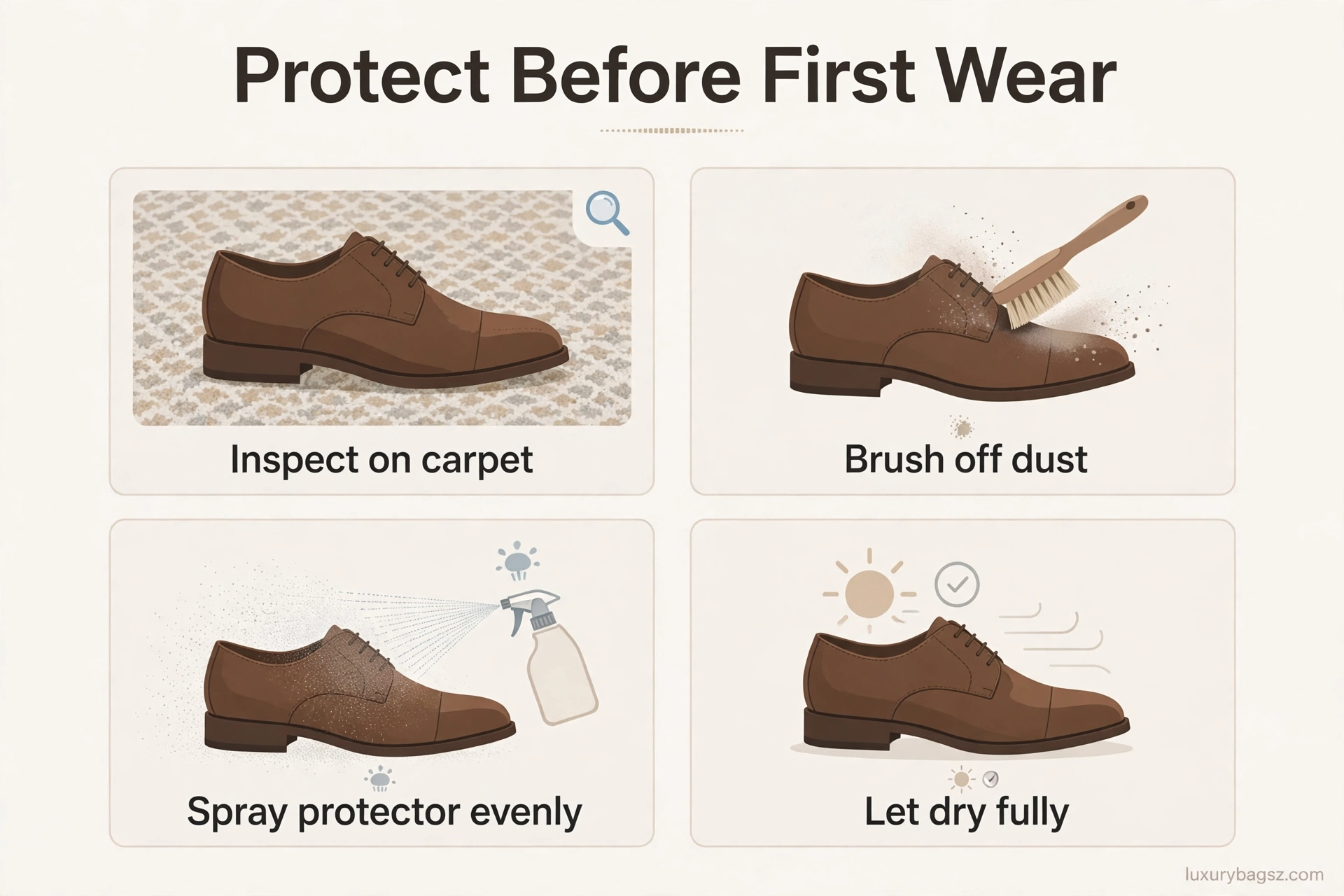
Care for new shoes before you wear them out, not after the first stain. Inspect them on carpet, brush off dust, and spray on a protector matched to the material. Let the protector dry fully before the shoes leave the house.
That one habit prevents most early damage. Protector keeps rain, spills, and street dirt sitting on the surface instead of soaking in. It works best on clean, dry shoes, which is why it comes before the first real outing.
New shoes need restraint more than product. Fresh leather often arrives with a factory finish, so heavy conditioner and thick polish on day one can darken it or stain light leather. Brush, protect, wear in slowly, and add heavier care only once the shoes show real wear.
Key Takeaways
- Try new shoes on indoors, on carpet, so the soles stay returnable while you judge fit.
- Spray protector on before the first outdoor wear, and test it on a hidden spot first.
- Do not condition or heavily polish brand-new smooth leather; wait until it looks dry or dull.
- Break shoes in with short indoor wears first, never a full day out on day one.
- Match care to the material: cream for smooth leather, brush and spray for suede.
- Never soak new shoes, machine wash leather shoes, or dry any new pair with direct heat.
- Rest shoes for a day between wears and use shoe trees to hold their shape.
Inspect First, On Carpet, Before You Commit
Check new shoes the moment they arrive, before the box and receipt go anywhere. Look for scuffs, loose stitching, uneven colour, and sole marks, and try both shoes on, since feet differ.
Do all of this indoors, on carpet or a rug. Hard floors scuff leather soles in a single walk, and scuffed soles can turn a return into a repair bill. Judge fit the same way you would when buying your first designer shoes: toes should wiggle, heels should not lift far, and sharp pain means the size or shape is wrong.
Protect Before the First Wear
Protector spray is the single most useful first step for new shoes. Spray the whole upper evenly, from the distance the label gives, covering seams and edges too. One even coat beats two heavy coats, which can darken the finish.
Test first on a hidden spot, such as the inside of a tongue or an inner edge. Wait until it dries and check for darkening or blotching before spraying the visible leather. Let the shoes dry fully, away from radiators and direct sun, before wearing them out.

Care by Material: Leather, Suede, and Canvas Differ
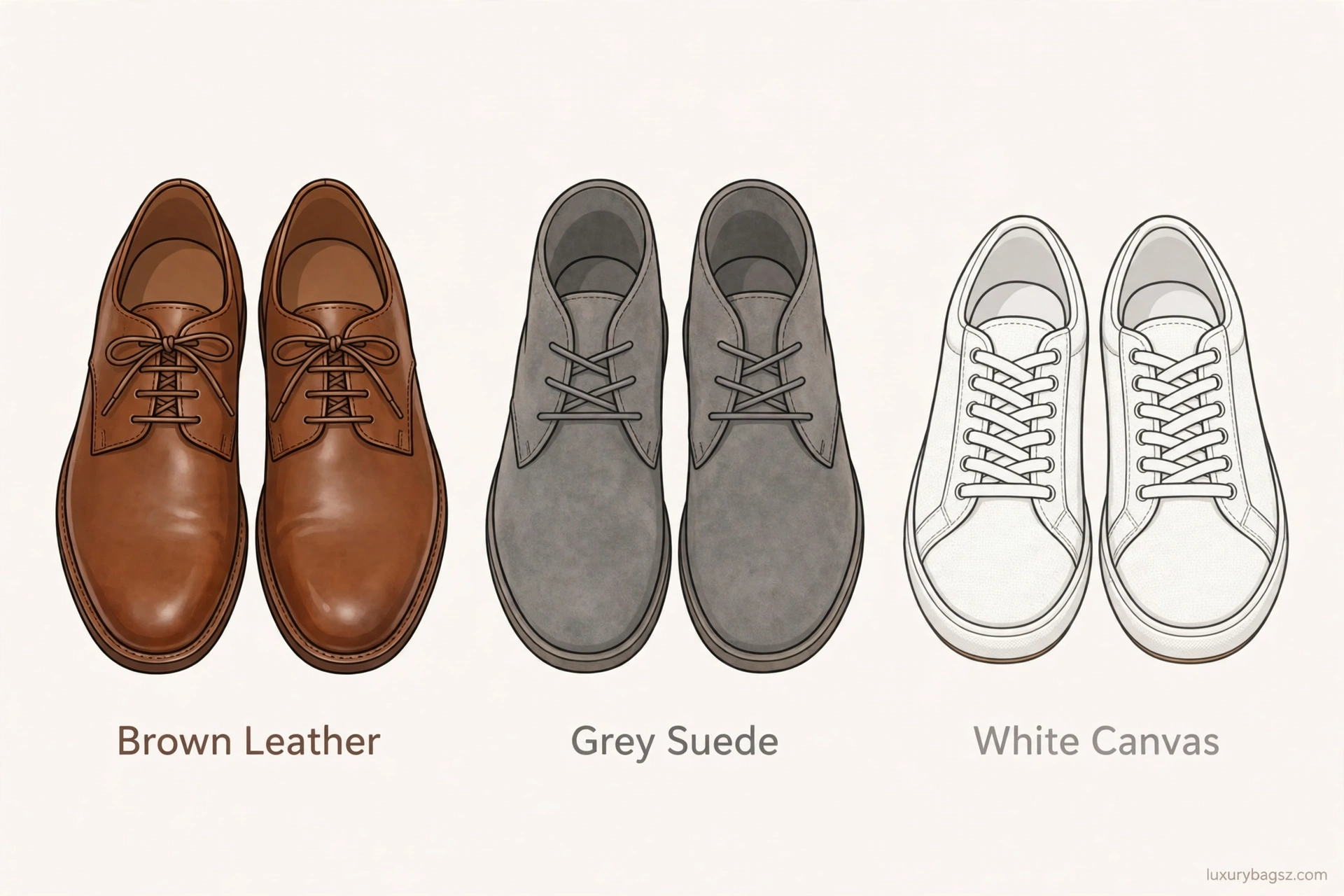
Smooth leather needs the lightest touch when new. Brush off dust with a soft brush, and leave conditioner and heavy polish alone until the leather looks dry or dull.
Suede and nubuck need no conditioner at all. Brush with a suede brush to lift the nap, then spray with suede protector before wear. Never use cream or polish on suede, since both flatten the nap and stain it. Canvas takes protector well too; our guide to clean sneakers covers dirt and drying.
Break-In Is Care Too, and It Is Not the Same Job
Break-in softens the shoe to your foot through short, gradual wears; care protects the material. New shoes need the first job most, and only a little of the second.
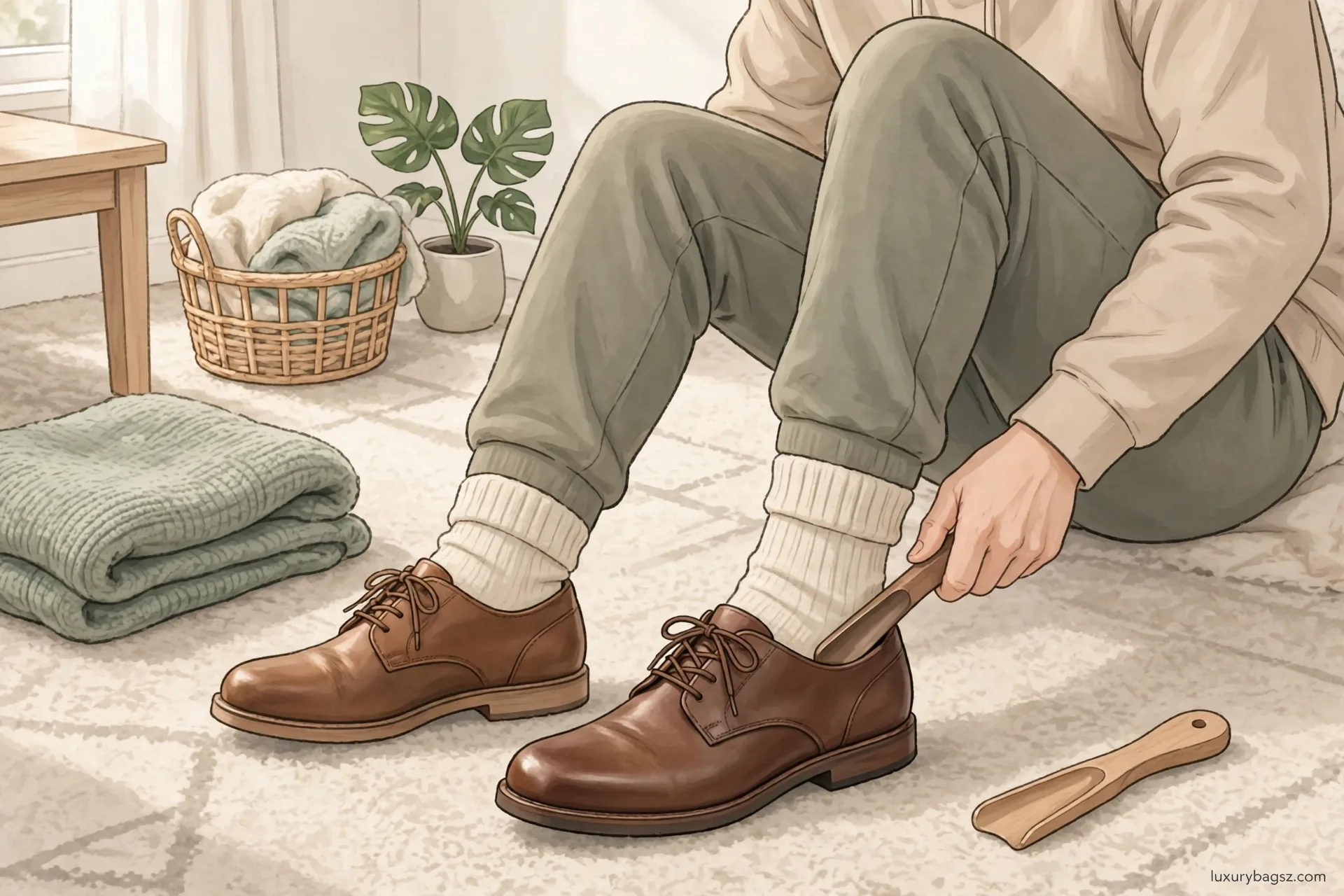
Start indoors for short wears, around an hour at a time, and build up over several days. Wear the socks you plan to wear with the shoes, and stop if a hotspot turns painful. For the full method, see our guide to how to break in boots, which uses the same short-session principle.
The First Day Out: Dry Weather and Sole Sense
Pick a dry day for the first real outing. New leather soles are smooth and slippery, and wet weather soaks into them fast, since leather is porous. A dry pavement walk also scuffs the sole lightly, giving grip that a brand-new sole lacks.
Watch the soles and heels from the start: heel tips wear down quickly and should be replaced before wear reaches the heel itself.
What NOT to Do to New Shoes
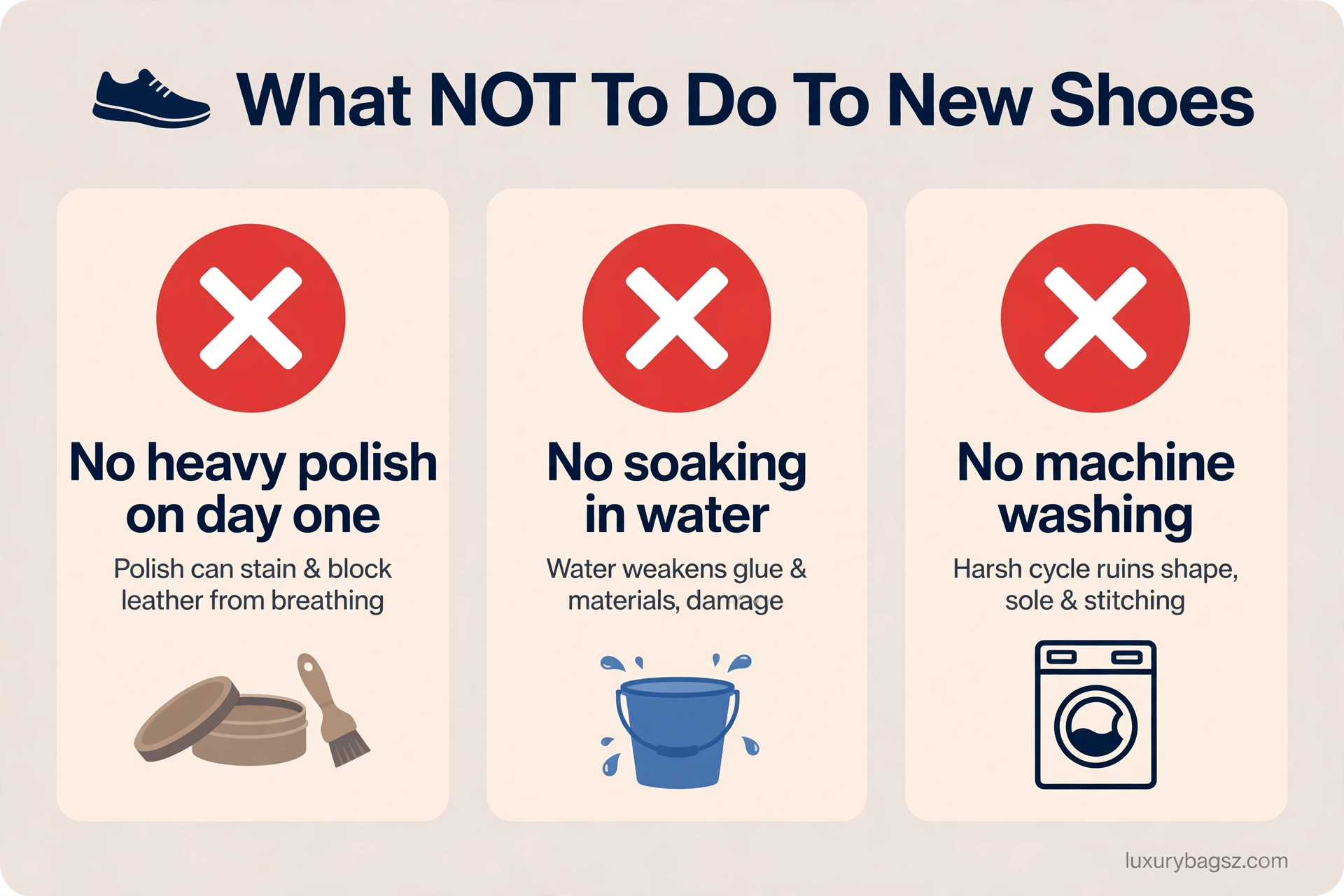
Do not pile on heavy polish on day one. Thick wax and heavy cream can sit on a fresh factory finish, darken the colour, and stain light leather. A light brush and protector are enough until the shoes show real wear.
Do not soak new shoes to soften them. Soaking swells leather, weakens glue, warps shape, and can rot stitching. Do not machine wash leather shoes or tumble dry any new pair, and skip direct heat, which cracks leather. Air dry at room temperature.
After the First Wears: Rest, Trees, and Brushing
Brush off dust after each wear, before dirt settles into creases. A quick brush takes under a minute and prevents dullness.
Use shoe trees between wears, especially for leather shoes. Wooden trees absorb moisture and hold shape, preventing deep creasing. Store shoes in a cool, dry spot away from direct sun, in dust bags or their box, never sealed plastic, which traps moisture.
The First-Week Schedule, Day by Day
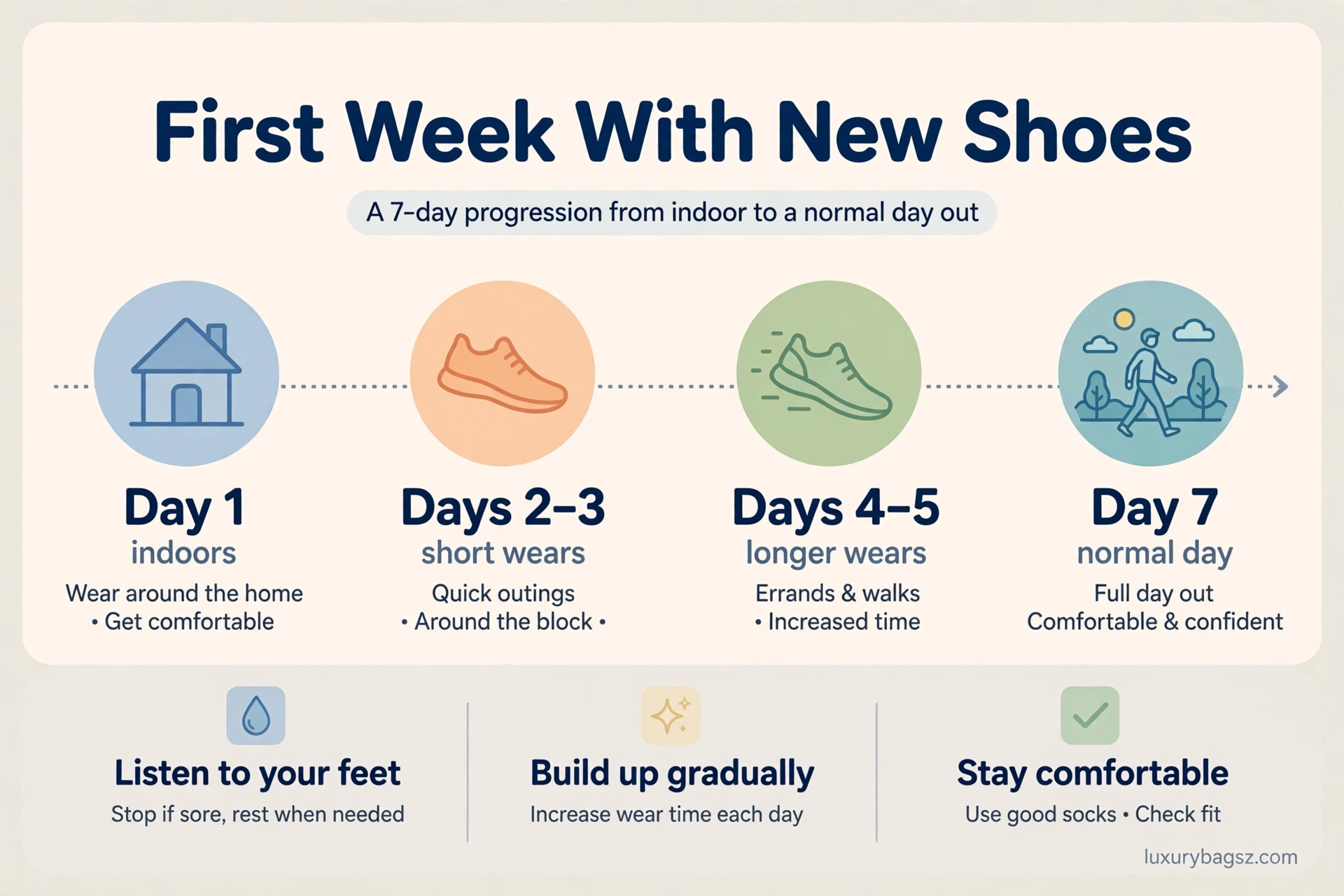
Days one and two belong indoors. Wear the shoes for 30 to 60 minutes on carpet and wood floors, with the socks you intend for them, then put the shoe trees back in. This is also your last honest chance to spot a fit problem while returns are still possible.
Days three and four add a short, dry outing: a coffee run or a school run on pavements, not a full day. Keep the old, trusted pair within reach at home in case a hotspot appears, and check the soles and heel tips when you get back.
Day five is a rest day for the shoes, not for you. Leather that has taken up moisture from your feet needs a full day on trees to dry and reset its shape; wearing the same pair daily in its first week builds creases in the wrong places.
Days six and seven graduate to a half day out if everything has felt fine. Any sharp, localised pain that is getting worse rather than better is not break-in; it is a fit verdict, and the schedule stops there.
Boots and stiff dress shoes run this schedule over two weeks rather than one. The principle does not change: short wears, rest days, dry weather first, and no heroics.
Sole Decisions: Protectors, Half-Soles and Grip
A cobbler can fit a thin rubber half-sole over a leather sole, and owners argue about it endlessly. In favour: grip on wet stone and marble, a sole that lasts years longer, and an end to the slippery first weeks. Against: it changes the shoe’s feel slightly and covers an original sole some buyers prize.
Timing decides most of it. Never add half-soles before you are certain of the fit, because the work usually ends any chance of returning the shoes. Wear the pair a handful of times first, then decide with real information.
Designer soles raise the stakes. A painted or lacquered sole is part of the shoe’s identity, and covering it is a personal call; many owners protect only the front half, where wear and water actually attack, and accept honest wear at the waist.
Stick-on grip pads are the reversible trial version. They cost little, peel off, and tell you whether you actually want the permanent version before a cobbler touches the shoe.
The Small Kit Every New Pair Deserves
A horsehair brush is the foundation: thirty seconds of brushing after each early wear keeps dust out of creases while the leather is still deciding its shape. Buy the brush before the shoes arrive if you can.
Cedar shoe trees are the second purchase. They absorb the day’s moisture, smooth the vamp’s creases overnight and stop the toes curling upward in storage. Sprung or hinged trees both work; unvarnished cedar absorbs best.
Protector spray matched to the material is third, and the material-matching is the point: suede spray on suede, a general protector for smooth leather, nothing at all on patent beyond a wipe.
Keep the small things in the shoe box: the spare heel tips and spare laces many makers include, a soft cloth, and heel grips for the day a heel starts to slip. A kit assembled on day one gets used; a kit planned for later usually does not.
Trainers, Dress Shoes and Heels: Where the Rules Differ
Dress shoes need the full ceremony: protection, the indoor schedule, trees and sole decisions. Their leather soles and structured uppers reward patience and punish shortcuts visibly.
Trainers need less than people think. Modern knit and mesh uppers need protector spray and little else, but leather trainers deserve the dress-shoe routine on the upper and the trainer routine everywhere else. Never machine wash a new pair to soften it; wash only when dirty, and only pairs made for it.
Heels concentrate every problem into the first wears: heel tips that wear fast, straps that cut, and soles with little grip. Break heels in on carpet, check tips after the first outing, and treat strap rubs early with moleskin before they become blisters.
Children’s shoes and school shoes follow the same protection logic at higher speed, because they meet puddles professionally. Spray them, rotate two pairs if you can, and accept that their break-in schedule is measured in hours, not weeks.
Fit Problem or Break-In Problem? Telling Them Apart
Break-in discomfort is dull, general and improving: a stiffness across the vamp, a heel that feels firm, an ache that is milder each wear. It fades as the leather moulds, usually within the first two weeks of sensible wear.
Fit problems are sharp, specific and stable or worsening: a toe joint that burns in the same spot, numb toes, a heel that lifts clear with every step, or pain that appears within minutes and stays. No schedule fixes these, because the shoe is the wrong size or the wrong shape for your foot.
The returns window is the deadline for honesty. Judge the shoes indoors early, while the soles are clean and the answer can still be an exchange rather than a regret.
If a pair is nearly right, a cobbler’s stretch targets width and single pressure points well. If it is wrong in length or overall shape, stretching is money spent postponing an admission.
Storing New Shoes So They Stay New
Store new shoes on trees, in their dust bags, inside the box or on an open shelf away from sun and radiators. Heat and light age leather and fade suede faster than wear does in the first months.
Keep the box and everything in it. Dust bags, spare tips, authenticity cards and the receipt protect resale value and prove provenance later, and they cost nothing but a shelf corner to keep.
Photograph the shoes once, soles included, before the first wear. If anything goes wrong, gets damaged or needs an insurance or warranty conversation, the before photographs settle arguments you cannot reconstruct afterwards.
Rotate from the very beginning. Two pairs worn alternately outlast the same two pairs worn one to death and then the other, because rest days are when leather recovers its shape and dries fully.
Waterproof, Water-Resistant and Other Honest Words
No spray makes a stitched leather shoe waterproof, and any product or salesperson using the word loosely is selling you confidence rather than fact. Protectors make leather water-resistant: rain beads and runs off instead of soaking straight in.
The seams and the welt are where water actually enters a shoe, not the middle of a panel. Spray seams generously, and understand that a puddle stepped in deeply defeats every treatment ever sold.
True waterproof footwear is built, not sprayed: membrane linings, sealed seams and gusseted tongues. If your life genuinely requires dry feet in standing water, that construction, not a care product, is the answer.
This honesty protects new shoes better than any claim, because an owner who knows the limits dries a soaked pair properly instead of assuming the spray made the weather irrelevant.
The First Real Clean: When New Shoes Stop Being New
Somewhere around the first month, or the first visible dirt, new shoes graduate to ordinary care. The first full clean follows the adult routine: brush, clean only if brushing is not enough, condition smooth leather lightly, and let everything dry before protecting again.
Order matters and stays the same for the shoe’s whole life: clean before conditioning, condition before polish, protector last of all, because each later step seals or strips the one before it.
Suede’s first clean is gentler: a suede eraser on marks, a brush for the nap, and shampoo only for real staining, diluted and used sparingly. Suede punished early with water and soap remembers it.
Keep a tiny log if you are building a rotation: purchase date, first wear, when protector was applied. It sounds excessive until the day you try to remember which pair was sprayed and which was only planned.
Caught in the Rain Early: The Rescue Routine
It happens despite every plan: new shoes, dry forecast, soaked by noon. The rescue is calm and mostly about drying. Take the shoes off, loosen laces, and stuff them loosely with plain paper or a soft cloth to draw water out of the leather.
Let them dry at room temperature, away from radiators, fires and direct sun, for at least a full day. Heat dries the surface while the inside stays wet, and that mismatch is what cracks leather and curls soles.
Once dry, smooth leather usually wants a light condition, because water strips natural oils as it leaves. Brush first, apply less conditioner than you think, and re-protect only when the leather feels normal again.
Suede dries differently: stuff it, let it dry completely, then brush the nap back up and use a suede eraser on any tide lines. Spraying protector onto damp suede seals the problem in, so patience is the whole technique.
Salt lines from winter pavements need a wipe with a barely damp cloth before drying, or the salt keeps pulling moisture and leaves a permanent ridge. Handle it the same evening and the rescue is nearly invisible.
Frequently Asked Questions
Should I spray new shoes before wearing them?
Yes, spray a protector matched to the material before the first outdoor wear, testing it on a hidden spot first and letting the shoes dry fully.
Should I condition brand-new leather shoes?
Usually not right away. Fresh leather often carries a factory finish, and early conditioner can darken it. Wait until the leather looks dry or dull.
Can I polish new shoes on day one?
A light brush and protector are enough on day one. Heavy wax or thick cream can darken the fresh finish, so save polishing until the shoes show real wear.
How do I break in new shoes without blisters?
Wear them indoors in short wears, with the socks you plan to wear, building up over several days. Tape known hotspots with moleskin first.
Should I wear new shoes in the rain?
Avoid rain on the first outing if you can. New leather soles are slippery and soak up water, and suede marks easily when wet. Protector beforehand limits the damage.
Can new shoes go in the washing machine?
Leather shoes should never go in the washing machine, and no new pair should be tumble dried. Hand cleaning keeps any shoe in better shape.
How do I protect new suede shoes?
Brush with a suede brush to lift the nap, then spray with suede protector before the first wear. Never use cream or polish on suede.
Do new shoes need shoe trees?
Shoe trees help, especially for leather shoes, since they absorb moisture and hold shape between wears.
Why are new leather soles so slippery?
Fresh leather soles are smooth, so they grip poorly on smooth floors. A few dry pavement walks scuff them lightly and add grip.
When should I take new shoes to a cobbler?
Before the first wear for sole protectors if you walk wet streets daily, and soon after if a tight spot survives a week of short wears.
Final Verdict
New shoe care is mostly restraint and timing: inspect on carpet, protect before the first wear, break in slowly, and match every product to the material. Skip the heavy polish, the soaking, and the machine, and your shoes will repay you.
Start with a brush, a protector, and a little patience. Shoes treated well from the box are the ones still looking sharp a year later.






