What Is a Shoe Horn and Why Use One? Types, Materials and Correct Use
What a Shoe Horn Does, in Brief
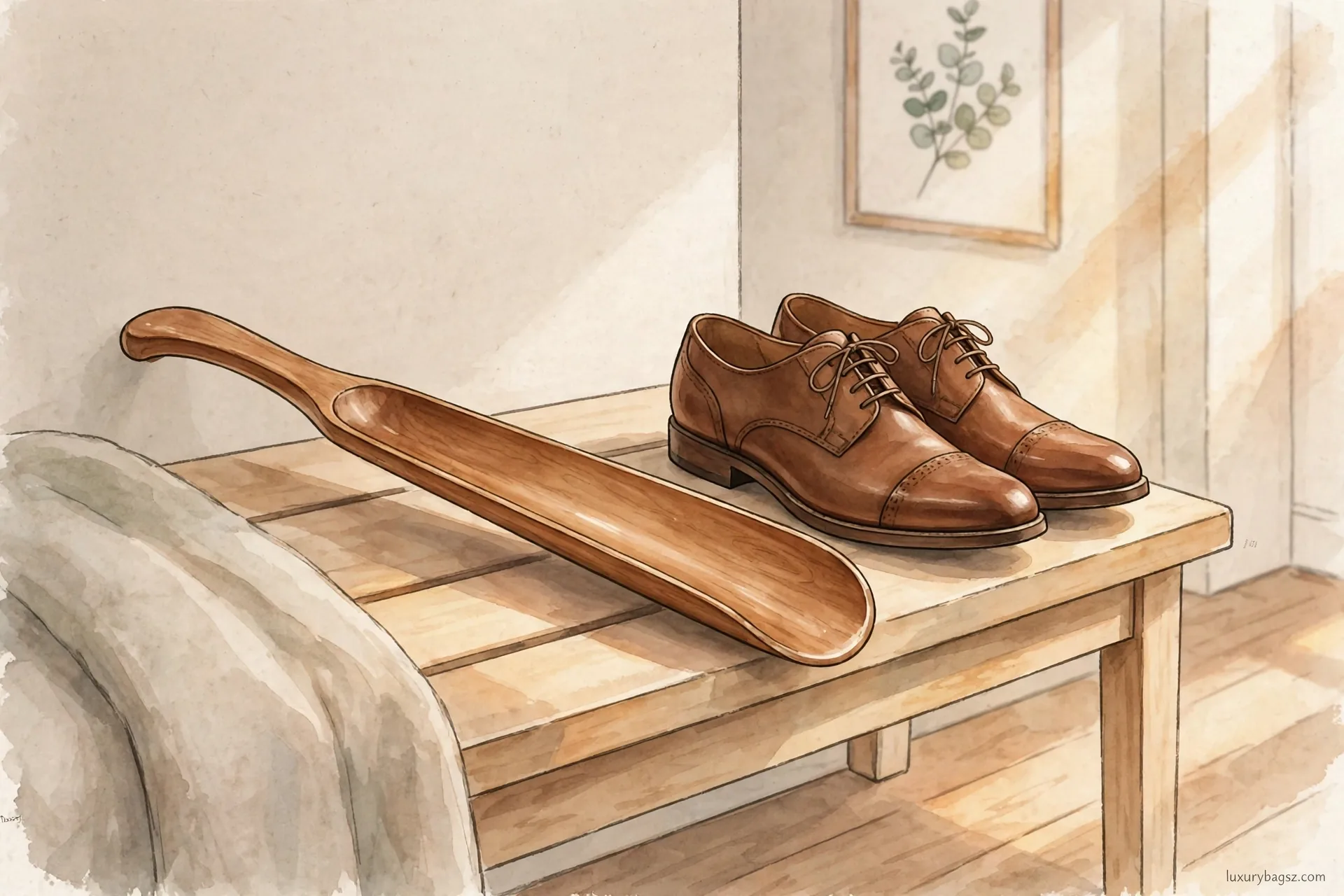
A shoe horn is a smooth, spoon-shaped tool that helps your foot slide into a shoe without crushing the back of it. You rest it against the inside of the heel, slide your foot in along it, then pull it out once your heel is seated.
The point is twofold: putting shoes on gets easier, and the shoes last longer. Without one, most people push the heel down with a finger or force the foot in, and the stiff heel counter folds, creases and eventually collapses.
Key Takeaways
- A shoe horn is a curved blade that guides your heel into a shoe without bending the heel counter.
- It matters most for snug leather shoes, loafers and boots, where a crushed heel ruins fit and shape.
- Short horns suit sitting down and travel; long horns let you put shoes on standing up.
- Horn, metal, plastic and wood all work; rigidity with a little flex matters more than the material name.
- Loosen laces first, scoop against your heel, slide in, then pull the horn out once seated.
- Keep one by the door and one in your bag, so you actually use it instead of skipping it.
What a Shoe Horn Actually Is
A shoe horn has two parts: a handle you hold and a curved blade, sometimes called the spoon, that goes inside the shoe. The blade is smooth and slightly cupped, shaped to follow the curve of your heel as it slides down into place. The name comes from history: early horns were carved from animal horn, smooth, strong and slightly flexible.
Today the same shape is made in horn, metal, plastic, wood and even carbon fibre. The material changes price, weight and feel, but the job stays identical: give your heel a smooth ramp into the shoe — most valuable for snug dress shoes, hardest to put on bare-handed.
Why Using One Matters
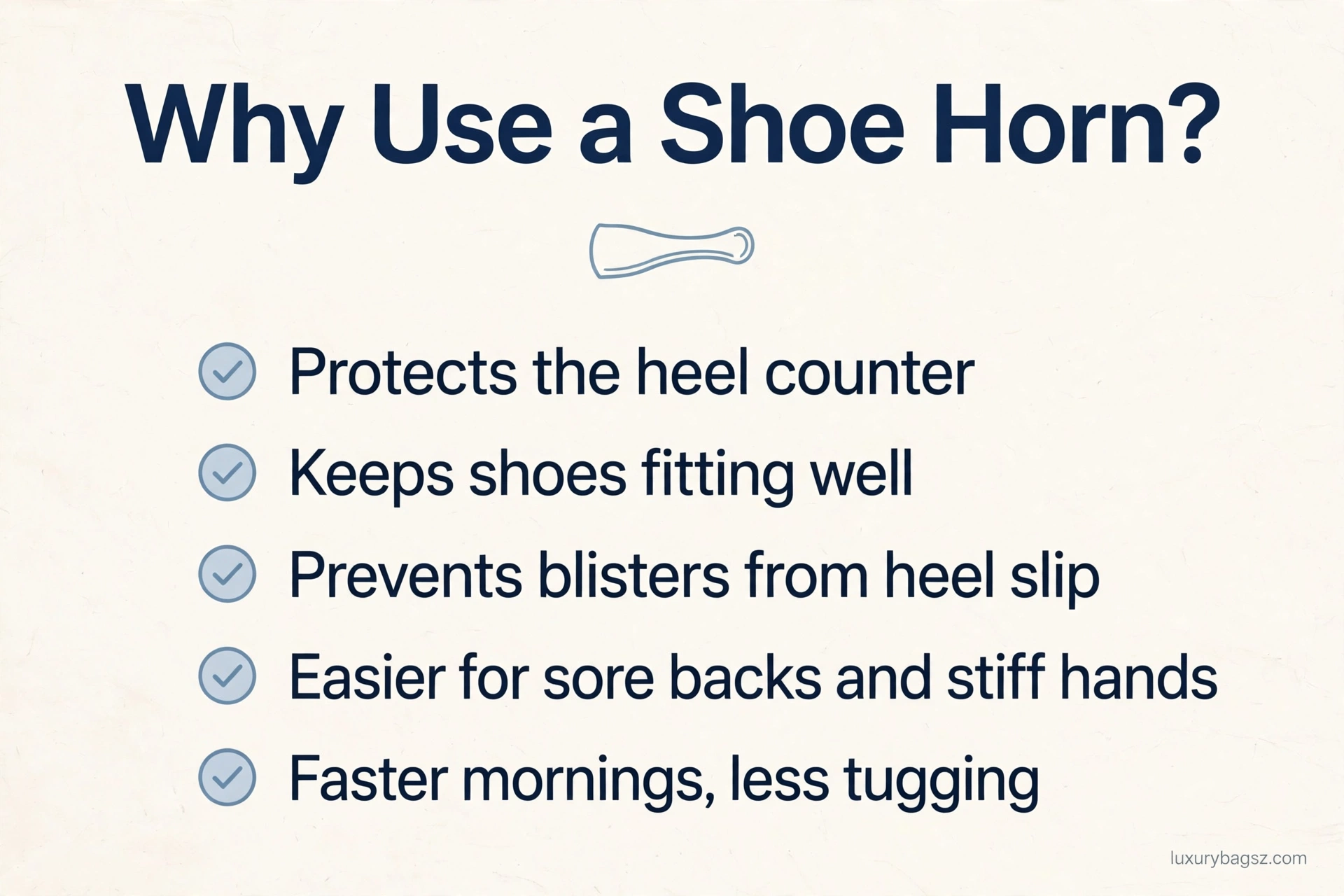
The clearest benefit is heel protection. Every time a heel counter is crushed, the shoe loses grip and structure, and over months of daily wear the back folds and creases until your heel slips out.
Fit is the second benefit. A shoe that slips at the heel rubs and causes blisters, so keeping the counter upright keeps the fit the maker intended.
Ease is the third benefit. Tight shoes, stiff new leather and tall boots all resist a bare foot, so a shoe horn removes the wrestling match — a real help for anyone with a sore back, stiff hands or limited mobility.
Types by Length: Short, Long and Travel
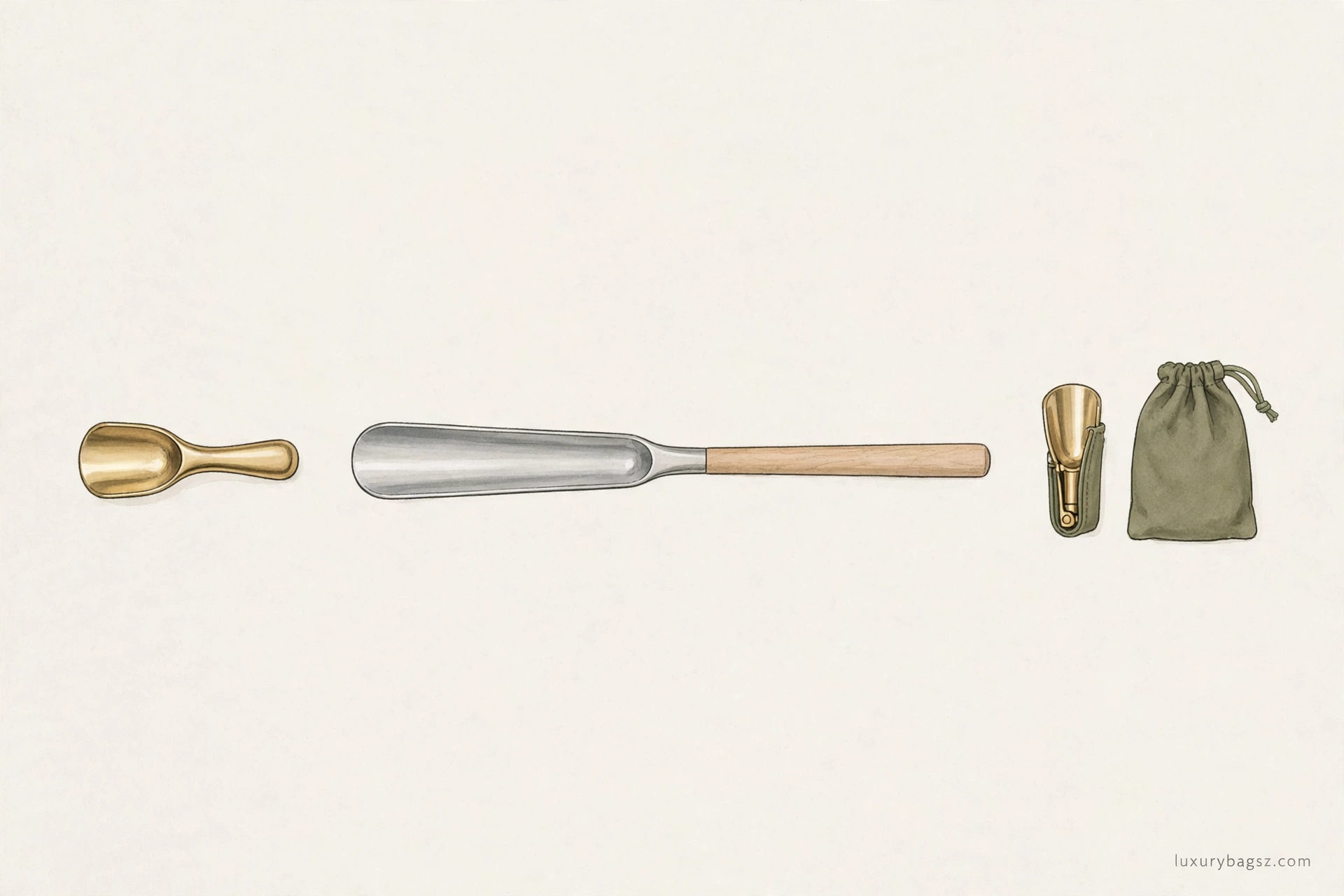
Short shoe horns are the classic pocket size. Sources disagree slightly on the exact range, with some giving 4 to 7 inches and others 6 to 8 inches, but the idea is the same: small, cheap and easy to stash in a drawer, bag or coat pocket.
Short horns suit people who sit down to put shoes on: hold the shoe steady, slip the blade in and slide your foot down. They work well for loafers and slip-ons, where an intact heel grip decides how loafers should fit over time.
Long shoe horns run from roughly 16 to 24 inches, with some reaching 31 inches. Their length lets you put shoes on while standing, without bending over. For anyone with a bad back, that alone makes them worth owning.
Long horns are also the better choice for boots: a short blade barely reaches into a tall shaft, while a long one guides your foot all the way down. If you wear boots daily, keep a long horn by the door, including while you break in boots and stiff leather resists most.
Travel versions fold or telescope for a bag, trading some sturdiness for packability.
Materials: Horn, Metal, Plastic and Wood
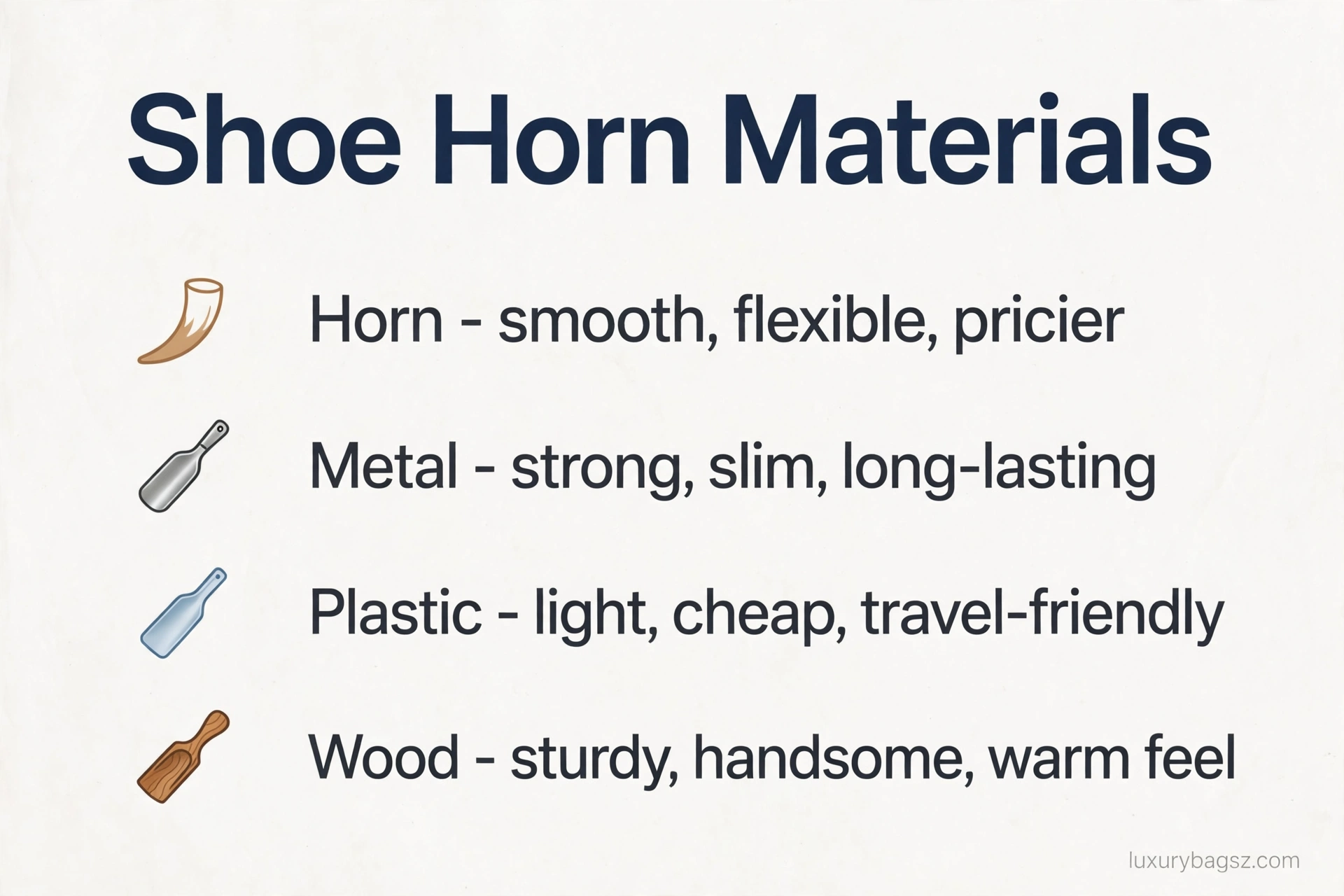
Genuine horn is the traditional choice for dress shoes: smooth, naturally slightly flexible and kind to linings, but costlier and best kept dry.
Metal horns are strong, slim and long-lasting. Stainless steel is the common choice for a long hallway horn, but thin, cheap metal can bend on very snug boots, so thickness matters.
Plastic horns are the cheapest and lightest option, and good ones are surprisingly tough. Rigid, high-quality plastic works well even at long lengths, but brittle, thin plastic can snap, so replace any horn that flexes oddly.
Wooden horns feel warm and sturdy on a hallway stand; hardwoods such as maple hold up well, while softer woods dent more easily.
For most buyers, the rule is simple: pick a horn that is rigid yet slightly flexible, smooth on both faces and comfortable to hold. Carbon fibre is light and strong, but usually pricier.
How to Use a Shoe Horn Correctly
Start by loosening the shoe. Untie laces or open straps so the shoe opens up, and hold the tongue forward if it helps; forcing a foot into a tightly laced shoe defeats the purpose.
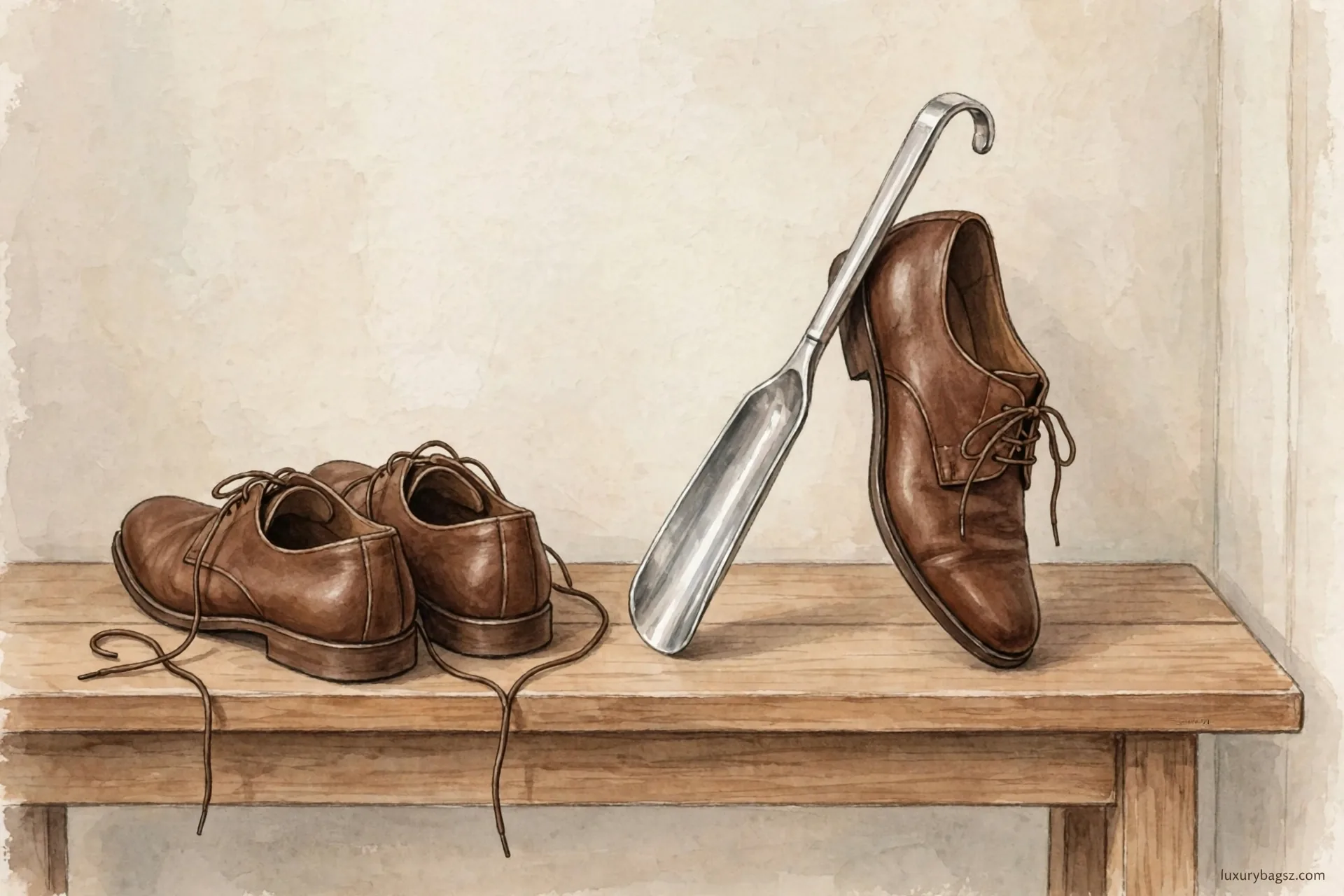
Next, slide the blade into the back of the shoe so the scoop faces your heel and the blade sits flush against the inner heel. The curved side should follow the shape of your heel, not point sideways or dig into the lining.
Now slide your foot in: toes first, then let your heel glide down the blade. As your heel seats fully, pull the horn gently upward and out; it should come free as your heel takes its place.
For a short horn, sit down and hold the shoe steady. For a long horn, stand, rest the shoe on the floor, and guide your foot down the blade without bending.
Two mistakes undo the benefit: pushing while the horn is misaligned can still crease the counter, so check the blade position first, and walking a step with the horn still in will bend it, so always remove it before standing fully.

Choosing the Right One for You
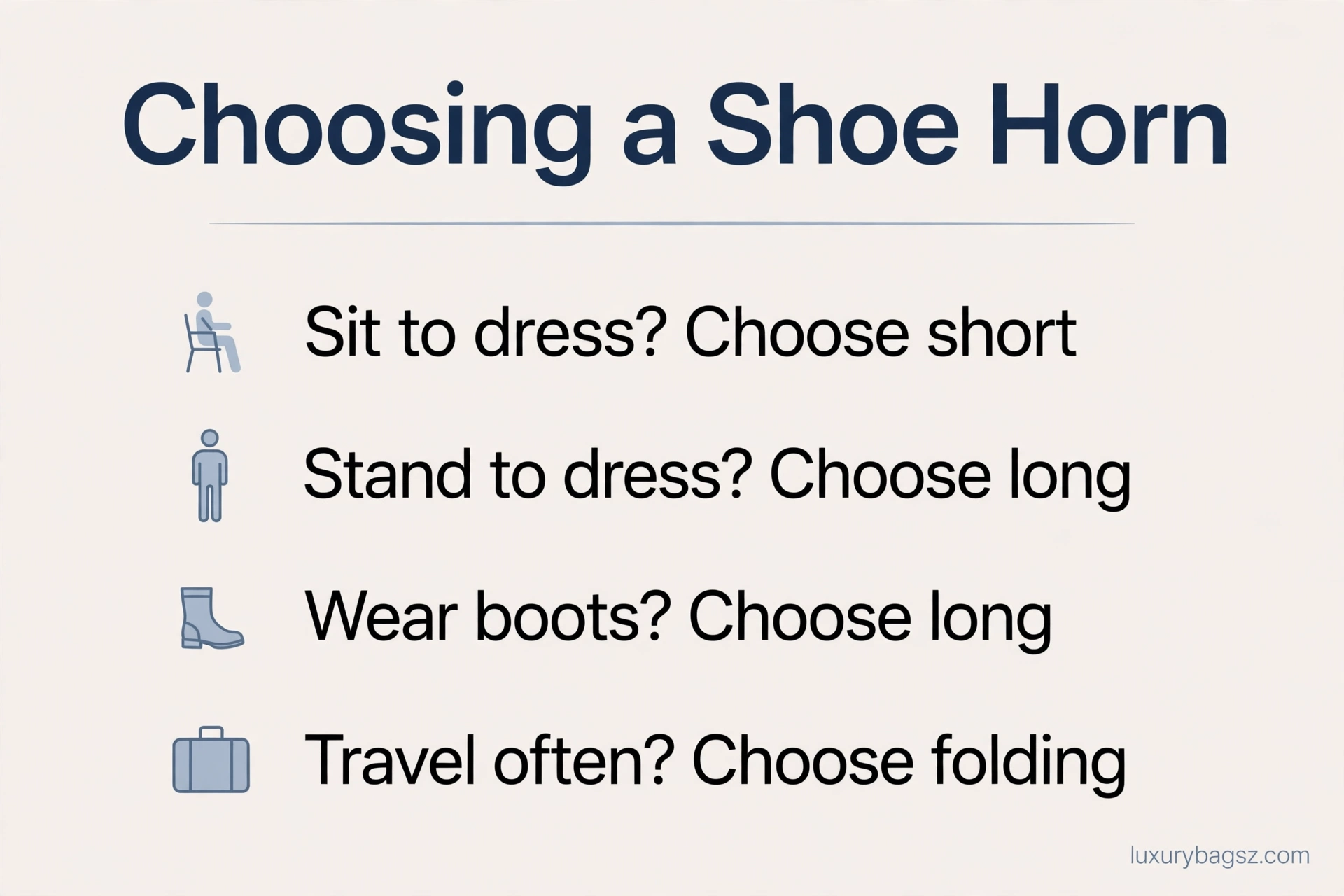
Match length to how you put shoes on. If you sit, a short horn is plenty; if you stand or have back trouble, go long; if you travel often, add a folding travel horn. Try it first with your tightest pair before deciding. For a daily hallway horn, metal or wood earns its keep; for a bag horn, light plastic or horn; for a gift, genuine horn.
Look for a smooth finish with no rough edges or seams. Run a finger over both faces and the rim of the blade before buying; any roughness will catch on socks and linings.
If you are building a first proper shoe kit, a horn belongs beside polish, brushes and trees. Buy it before shoes need rescuing, not after, and read a guide to first designer shoes before spending on pairs that deserve protection.
Frequently Asked Questions
What is a shoe horn used for?
A shoe horn helps your foot slide into a shoe without crushing the heel counter, protecting the shoe's shape and making snug shoes far easier to put on.
Do I really need a shoe horn?
You do if you wear snug leather shoes, loafers or boots regularly. Without one, the heel counter folds a little more each day and blisters become more likely. For loose, soft shoes it matters less.
What length shoe horn should I buy?
Buy short (around 4 to 8 inches) if you sit to put shoes on or want a travel option. Buy long (around 16 to 24 inches or more) if you stand, have back trouble, or wear boots.
Are metal shoe horns good?
Yes, good-quality stainless steel horns are strong and long-lasting for daily hallway use. Avoid very thin, cheap metal, which can bend on snug boots.
Are plastic shoe horns bad for shoes?
No, provided the plastic is rigid and smooth. Quality plastic horns are light, cheap and tough. Brittle, thin plastic can snap, so replace any horn that flexes oddly or shows cracks.
How do you use a long shoe horn while standing?
Rest the shoe on the floor, slide the blade against the inner heel, and guide your foot down without bending over. Pull the horn out once your heel is seated, before taking a step.
Can a shoe horn damage shoes?
A smooth, correctly used horn protects shoes. Damage comes from misuse: a cracked or rough horn, a misaligned blade, or forcing a foot into a tightly laced shoe.
Should I use a shoe horn for boots?
Yes, and use a long one. Short horns barely reach into a boot shaft, while a long horn guides your foot down without crushing the heel counter.
What can I use instead of a shoe horn?
In a pinch, a belt tip, a rolled magazine or a firm finger can substitute for one wear, slid against the inner heel as you would a horn. These are stopgaps; a real horn is smoother and safer for linings.
How do I clean and store a shoe horn?
Wipe it with a dry or slightly damp cloth and keep it dry. Hang a long horn by the door, and keep a travel horn in a pouch so it does not scratch other items.
Final Verdict
A shoe horn is a small tool with an outsized effect: easier mornings, better fit and shoes that hold their shape for years longer. Pick a length that matches how you dress and a material that suits daily use, and keep the horn where you actually put your shoes on. Once you feel a snug leather shoe glide on without a crushed heel, you will wonder why you ever put shoes on without one.