

How Does a Hermès Reversible Belt Work? The Kit, the Flip, and the Kelly Trap
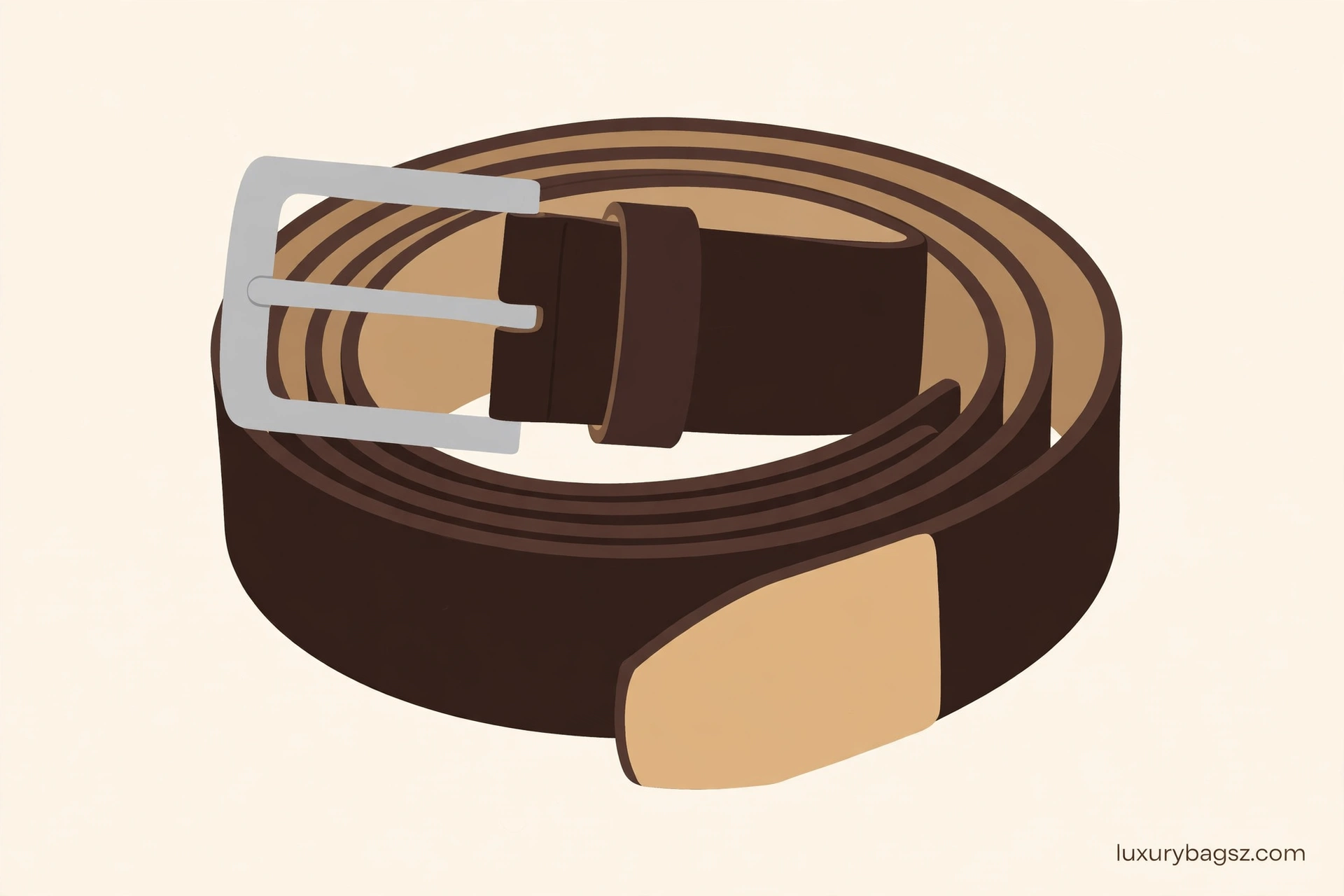
The Reversible Belt at a Glance
A Hermès reversible belt is a two-part kit, not one fixed belt. You buy a metal buckle and a leather strap, and the strap carries a finished leather face on each side, often in two different colours.
To change colour, you detach the buckle from one end of the strap, turn the strap over, and refit the same buckle. The buckle then fastens through the same pin and holes, with the other colour showing.
Here is the trap most guides miss. The classic Kelly 18 belt is not reversible. It is a slim, single-sided belt with a padlock-style turnlock clasp and a sliding fit. The reversible kit system belongs to the H buckle, also called the Constance belt family.
So check the buckle shape first. A padlock-style clasp means a Kelly-style belt. A bold H shape means the modular, reversible kit system. That one check prevents most buying mistakes.
A Hermès reversible belt works because two ideas combine: a strap finished on both faces, and a buckle that can be removed and refitted. Neither idea alone is enough. A two-colour strap with a fixed buckle cannot flip, and a detachable buckle on a single-sided strap has nothing to show on the reverse.
This guide explains the kit part by part, then shows the flip step by step. It also covers widths, sizing, leathers, care, and pre-owned checks. Where sources disagree, this guide says so plainly instead of picking one version quietly.
One warning up front: Hermès issues no authenticity cards as a general rule. If a seller waves a card at you as proof, treat that as a red flag, not reassurance. Real proof sits in the leather, the stitching, the stamp, and the hardware.
Prices in this guide are dated, single-listing examples only. They are never market averages. Boutique prices move by region and season, and resale prices move with condition, colour, and demand. Always confirm a current price before you buy.
The first surprise for many buyers is that the buckle and strap are priced as a kit, then sold separately later. Your first purchase is normally the full kit. After that, you can add straps in new colours and leathers to the buckle you already own.
That modular idea dates back to the H buckle design of 1967, credited to designer Catherine de Károlyi. The core concept has barely changed since: one buckle, many straps, and two colours on each strap. Collectors often own far more straps than buckles.
Key Takeaways
- A reversible Hermès belt is a kit: one detachable buckle plus one two-faced strap.
- The classic Kelly 18 belt is single-sided and sliding-adjustable, not reversible.
- The reversible kit system belongs to the H buckle (Constance) family, not the Kelly belt.
- Buckle width must match strap width exactly: a 32 mm buckle fits a 32 mm strap only.
- Belt size is a length in centimetres, measured to the hole you use most, not your trouser size.
- Hermès issues no authenticity cards as a general rule, so a card is a red flag.
- Exotic-skin straps are usually single-sided, even when calfskin straps in the same width reverse.
- Prices below are single listings, dated where given, never averages or guarantees.
Part 1: The Kelly Correction Every Buyer Needs First
Many briefs and resale listings call every slim Hermès belt reversible, and that error spreads fast. The classic Kelly 18 belt is built from a single layer of leather, dyed and finished on one face. Its reverse shows the flesh side or a plain coating, not a second colour.
Wearing a Kelly 18 inside out would look wrong at a glance. The back is not finished as a display face, and the clasp is not built to present from both sides. One resale guide states this plainly: the standard Kelly 18 has no reversible version, even though a few reversible Kelly-style straps are claimed elsewhere.
That last point is a genuine conflict, so note it. Some sources claim a small number of reversible Kelly straps exist, while others say the Kelly line is single-sided by design. The safe rule for buyers is simple: never assume a Kelly belt reverses. Ask the seller to show both faces.
The Kelly belt also fits differently. Instead of punched holes and a pin, it uses a sliding system that lets one belt sit at the waist or on the hips. Listings put its adjustable range at roughly 55 to 100 cm, though some give 60 to 100 cm. That range conflict matters if you sit near either end.
By contrast, the H buckle belt fastens with a pin through punched holes, usually three. That is a different mechanism, a different look, and a different buying checklist. Confusing the two systems is how buyers end up with the wrong width, the wrong fit, or a strap that cannot flip.
If you want the full Kelly story, read our Kelly belt guide, which compares the Kelly bracelet and the Kelly belt side by side. It helps you see why the padlock clasp and the H buckle belong to different families.
The buckle-shape test takes seconds. Look at the buckle face: a small padlock-style turnlock means Kelly. A large, open H letter means the Constance and H belt family. If the listing photo hides the buckle, ask for a straight-on shot before you pay.
This distinction also shapes every later part of this guide. Widths, sizing, care, and fake checks all differ between the two families. From here on, “reversible belt” means the H buckle kit system, unless a part says otherwise.
Part 2: The Kit System, Piece by Piece
A Hermès reversible belt kit has exactly two pieces: a metal buckle and a leather strap. Hermès itself describes these as customizable belts, and states that buckles cannot be sold separately while straps can be bought separately and combined with your buckle.
That policy creates a useful buying order. First, choose a buckle you love, because it anchors the whole collection. Then add straps over time in colours and leathers that suit your wardrobe. One buckle can serve many straps, which softens the cost per wear.
The strap is the clever piece. Two pieces of leather are bonded back to back, grain side out on both faces. Each face is fully finished, with painted edges and a complete colour. Common pairings include black with gold, black with etoupe, and other contrasting tones.
The buckle is the anchor piece. It has a metal loop on the back that the strap threads through, plus a pin that passes through a hole at the buckle end of the strap. The wearing end carries the punched holes that the same pin fastens through when you wear the belt.
Finishes vary widely. Gold-plated, palladium-plated, rose gold-plated, brushed steel, and lacquered editions all appear across the range. A newer H Day and Night edition even makes the buckle itself reversible, with polished metal on one face and black lacquer with stars on the other.
That special edition deserves a note, because it confuses the picture. In most kits, only the strap reverses while the buckle stays the same on both faces. In the Day and Night edition, the buckle also flips. Do not assume every H buckle does this.
Strap leathers include Togo, Epsom, Box calf, Swift, and printed or suede editions. Each leather behaves differently: Epsom is grained and structured, Box is smooth and glossy, Swift is soft and matte, and Togo is grained and supple. Your choice affects scratch resistance and care.
Hermès leather comes from several countries, and the tannage matters as much as the colour. Our guide to leather origins explains where Hermès leather is made and why that affects grain, structure, and ageing.
The kit arrives as a pair, usually in an orange box with separate soft pouches for buckle and strap. If a seller offers a “new” buckle alone with no strap history, ask questions. Hermès boutiques do not sell buckles alone, so a lone buckle normally comes from resale or from a split kit.


Part 3: How to Reverse the Strap, Step by Step
Reversing a Hermès belt takes under a minute once you know the motion, but the first attempt feels fiddly. Work on a clean, soft surface so the buckle cannot scratch and the leather cannot pick up grit. Lay the belt flat with the buckle face up.
First, unfasten the belt fully and slide the buckle end free. The buckle attaches at one end of the strap through a single hole, held by the buckle pin. Ease the pin out of that hole and draw the strap end back through the metal loop on the back of the buckle.
Second, turn the whole strap over, end to end, so the other colour faces up. Do not twist the strap into a spiral. A clean flip keeps the edges aligned and stops the strap from curling. Check that the buckle-end hole is still at the buckle end.
Third, thread the strap end through the buckle loop again, from the same direction as before. Push the pin through the buckle-end hole until it sits flat. The buckle should sit square on the strap, with no leather bunching under the loop.
Fourth, fasten the belt as normal, passing the pin through one of the wearing holes. The holes sit near the tip end, spaced about 2.5 cm apart on most kits. Try the middle hole first, then adjust one hole either way for waist or hip wear.
Fifth, check the tail. The tail end should tuck neatly under the first belt loop of your trousers when you use the widest hole, or sit flat against the strap. A tail that sticks out or curls usually means the size is off, not that the flip failed.
A common beginner error is flipping only the buckle and not the strap. The buckle is symmetrical in many editions, so flipping it alone changes nothing. The colour change comes from the strap faces, and the strap must be the piece that turns over.
Another error is forcing the pin. If the pin resists, the strap end is probably misaligned in the loop, or the hole is not centred. Back the strap out, realign it, and try again. Forcing a pin can stretch the hole and loosen the fit over time.
Some guides describe a rotating-pin or screw mechanism instead of this loop-and-pin method. That description fits other brands better than Hermès. The standard H kit uses the loop and pin described here, so be wary of guides that tell you to unscrew a Hermès buckle.
If your buckle is the special Day and Night reversible edition, flip the buckle too, following its own mechanism. For every standard H buckle, the buckle stays as it is and only the strap flips. When in doubt, ask a boutique to show you the motion once.
Practice the flip at home before you wear a new colour out. The first flip is the slowest, and the tenth is automatic. A quick practice run also reveals a stiff hole or a tight loop while you can still fix it calmly.

Part 4: How Wearing and Fastening Actually Works
Once the buckle is fitted, wearing the belt is simple, but the details matter. Thread the tip end through your belt loops from the buckle side, then pass the pin through the hole that fits. The tail should lie flat and point toward the buckle side, not flare outward.
Most H kit straps carry three wearing holes, spaced about 2.5 cm apart. That spacing gives roughly 5 cm of total adjustment, which is enough to move between a waist fit and a hip fit on some sizes, but not on all. Some owners ask boutiques to punch extra holes for more range.
Here a conflict appears in the guides. Some sizing guides say Hermès belts come with five holes as standard, while collector threads and strap makers describe three holes as the Hermès standard. The likely explanation is that different widths and eras differ, and extra holes are sometimes added later. Count the holes on your own strap before you quote a number.
The middle hole is the intended everyday hole. When you buy new, aim to fasten on the middle hole, so you keep one hole of slack in each direction. If you fasten on the last hole on day one, weight change or thicker clothing will leave you nowhere to go.
The pin itself is small but load-bearing. It passes through the buckle-end hole to hold the buckle, and through a wearing hole to hold the belt closed. A bent pin, a stretched hole, or a loose loop all show up as a belt that slips or twists. Check these three points first when a belt misbehaves.
Belt loops matter more than buyers expect. A 32 mm strap needs loops that comfortably take 32 mm of leather, and a 42 mm strap needs wider loops still. Forcing a wide strap through narrow loops curls the edges and strains the stitching. Match the strap width to your wardrobe, not just to your taste.
The tail length also tells you about fit. On a well-sized belt, the tail end tucks under the first belt loop past the buckle, or ends close to it. A very long tail looks untidy and catches on bags and coats. A tail that barely reaches the loop suggests the belt is too short.
Waist wear and hip wear need different lengths, often a full size apart. A belt that fastens on the middle hole at the waist may only reach the first hole on the hips. If you want both positions from one belt, size for the hips and accept a longer tail at the waist, or add holes.
One more wearing note: the buckle should sit centred and flat, not tilted. A tilted buckle usually means the strap is twisted in a loop or the buckle loop is holding a fold of leather. Unthread the belt, lay it flat, and rethread it straight. The fix takes seconds and saves the edges.
Part 5: Buckle Widths and Why They Must Match
Width is the number that decides whether a buckle and strap can work together at all. The buckle loop is made for one width, and a strap even a few millimetres off will either jam or wobble. Always match the numbers exactly before you buy a new strap.
The widths most often listed for the H kit family are 13 mm, 24 mm, 32 mm, 38 mm, and 42 mm. The 2026-10-31 Hermès scrape behind this guide records the kit system in 13 mm and 24 mm, while other sources centre on 32 mm as the classic women’s width and 38 mm as a wider option. Both pictures are real; they describe different corners of the range.
Here is a plain reading of the range. The 13 mm width is a slim, jewellery-like belt, often worn high on the waist. The 24 mm width, including the Mini Constance, is a neat everyday width. The 32 mm width is the classic H belt width, bold enough to show the buckle clearly.
Wider still, 38 mm reads as a statement belt, and 42 mm is the broadest standard width. Some strap makers also list 37 mm, which appears to be a third-party or variant measurement rather than a standard Hermès width. Treat 37 mm claims with care and measure the loop yourself.
Width also changes the outfit math. Slim widths suit dresses, fine tailoring, and waist definition. Middle widths suit jeans, trousers, and everyday wear. Wide widths suit coats, heavy denim, and looks where the buckle is meant to lead. There is no single best width, only a best width for a given wardrobe.
A related conflict concerns the Kelly family widths. Some guides list Kelly belts at 13, 24, 32, and 42 mm, while the classic Kelly 18 is defined by its 18 mm width. The 18 in the name is the width in millimetres, so a “Kelly 18” is an 18 mm belt. Do not confuse Kelly widths with H kit widths when shopping.
Compatibility follows one rule: same width, same system. A 32 mm H buckle fits a 32 mm H strap, whatever the colours or leathers. It does not fit a 24 mm strap, and it does not fit a Kelly strap of a different width. Width is not a suggestion; it is the fitting itself.
When buying pre-owned, measure the loop, not just the strap. Lay a ruler across the inside of the buckle loop, or slide a paper strip cut to the strap width into the loop. If the strip slides in snugly with no sideways play, the widths match. If it rattles or jams, walk away.
Limited editions can break the usual width story. Printed straps, lacquered buckles, and special buckle shapes sometimes appear in one width only. Always confirm the width on the actual listing, in millimetres, rather than trusting the model name alone.

Part 6: Sizing, Measured Properly, Conflicts Included
Hermès belt sizes are lengths in centimetres, usually from 70 cm to 120 cm in 5 cm steps. The number is not your trouser size, your dress size, or your waist in inches converted loosely. It is a belt length, and the exact definition is where guides disagree.
Hermès itself gives the simplest rule: measure a belt you own from the base of the tongue to the hole you use most, or measure your waist where you normally wear belts. On that rule, an 85 cm waist points to a size 85 belt. Many buyers find this rule works well for a first purchase.
Other guides add length instead. One method says to add 10 to 15 cm to your waist measurement, so an 82 cm waist becomes a size 95. Another says to add just 5 cm, so an 85 cm waist becomes a size 90. These methods cannot all be right for the same belt, so the conflict must be stated, not hidden.
The likely cause is that the guides measure different things. Some measure waist circumference alone, some measure to the middle hole, and some measure the full strap end to end. A size 75 strap, for example, measures about 90 cm tip to tip without the buckle in one collector measurement. End-to-end length is therefore a trap.
The reliable method uses a belt you already wear well. Put that belt on, note the hole you use, take the belt off, and measure from the buckle-end hole to your usual hole. That number, rounded to the nearest 5 cm, is your Hermès size. It already includes your clothing, your posture, and your preferred position.
If you own no belt to copy, measure your waist over the clothes you will wear with the belt. Wear the trousers or skirt, thread a soft tape through the belt loops, and read the tape snugly, not tight. Then compare that number with the boutique size guide for the exact model, and try the belt on if you can.
Position changes everything. Waist, mid-waist, and hip positions can differ by 5 to 10 cm on the same person. A belt bought for waist wear may not reach around the hips at all. Decide your main position before you buy, and treat a second position as a bonus, not a promise.
The three-hole layout limits adjustment to about 5 cm either way from the middle hole. Extra holes can be punched by a boutique, and many owners do this to span waist and hip wear. Ask before you punch: extra holes are permanent, and a badly placed hole weakens the strap tip.
Size labels on listings deserve the same care. A listing that says “90” should mean the belt length to the middle hole, but some sellers quote total strap length instead. Ask the seller to state the measurement method, or to photograph the tape from buckle hole to middle hole.
Children’s or very small sizes below 70 cm appear rarely, and very large sizes above 120 cm are usually special orders. If a listing claims an unusual size, verify it against the strap itself. Unusual sizes are also harder to resell, since fewer buyers need them.
Finally, remember the Kelly difference again. Kelly belts use a sliding fit, roughly 55 to 100 cm or 60 to 100 cm depending on the listing, rather than a fixed numbered size. Do not apply H kit sizing rules to a Kelly belt, or Kelly sliding rules to an H kit strap.

Part 7: Leathers, Colours, and the Two Faces
A reversible strap is two leathers in one, and the pairing is the whole point. Classic pairs put a dark neutral on one face and a lighter or brighter tone on the other, so one strap covers formal and casual days. Black with gold and black with etoupe are the pairs buyers cite most.
Each face is a full leather surface, not a printed backing. That is why both faces can take wear, patina, and careful cleaning. It is also why a reversible strap costs more than a single-sided strap of the same width: you are buying two finished faces and the bonding between them.
Togo is grained, supple, and forgiving of light scratches. Epsom is grained too, but firmer and more structured, which helps a strap hold its shape. Box calf is smooth and glossy, beautiful but quicker to show marks. Swift is soft and matte, with a gentle hand feel.
Printed straps add a different pleasure. The Hermès sur Mer strap in 24 mm, for example, pairs printed Swift with Epsom, hot-stamped with gilded leaf in shell and chain-link motifs. Printed faces need gentler handling, since aggressive rubbing can dull the print before the leather itself wears.
Suede and textured faces need their own care, covered in Part 9. A suede face looks soft and casual, but it marks easily and hates water. If you love suede, treat that face as the occasional face, and keep a smooth leather face for daily wear.
Exotic skins break the reversible rule. Crocodile, lizard, and ostrich straps are usually single-sided, because an exotic face cannot simply be bonded to a second exotic face at the same thickness and finish. Guides agree on this exception, so do not expect a reversible crocodile strap.
Colour choice also affects resale. Neutrals such as black, gold, and etoupe resell more easily than loud seasonal colours, because more buyers can use both faces. A strap with one neutral face and one bright face is a good compromise: the neutral face carries daily wear, the bright face adds fun.
Stitching runs along both edges and should look even on both faces. On a genuine strap, the stitching is neat, consistent, and matched to the leather tone or chosen as a contrast. Uneven stitching, loose threads, or glue showing at the edge all suggest a problem, covered fully in Part 11.
Edge paint matters on a reversible strap more than on a single-sided one, because both faces are on display. The edges should be smooth, sealed, and even in colour. Rough, cracked, or peeling edges mean the strap has lived hard, or the bonding between the faces is failing.
One practical tip: photograph both faces when a new strap arrives, in daylight, before first wear. Those photos become your baseline for wear, your proof for resale, and your reference if a colour dispute arises later. Colours shift in artificial light, so daylight shots are the honest record.
Part 8: Styling the Reversible Belt, Waist to Hips
The reversible belt earns its price in styling range. One strap, two colours, and one buckle can shift an outfit from office to evening without a second purchase. The trick is to treat each face as its own belt, not as a spare side.
Start with the dark face for formal days. Black Box or black Epsom with a gold or palladium buckle reads as classic tailoring. It suits dark trousers, a tucked shirt, and a blazer. Keep the buckle centred and the tail short for the cleanest line.
Use the lighter face for casual days. Gold, etoupe, or a brighter tone softens denim, linen, and knit dresses. The same buckle now reads as jewellery rather than hardware, especially in a slim 13 mm or 24 mm width. Let the colour lead and keep the rest of the outfit quiet.
Waist wear defines the silhouette. A slim width at the natural waist suits dresses and high-waisted trousers, and it pairs well with tucked blouses. A wider width at the waist is bolder, so balance it with a simple top and avoid competing prints near the buckle.
Hip wear relaxes the look. A 32 mm strap on the hips suits jeans and casual trousers, with the buckle as a clear focal point. Make sure the tail tucks under a belt loop, or the hip look turns untidy fast. Hip wear also demands the right size, as Part 6 explains.
Over coats and knitwear, size up or use a wider hole. A belt worn over a coat needs extra length, and a strap that fits over a shirt may not close over wool. If you plan coat wear, buy with that layer in mind, or keep a second, longer strap for winter.
Metal finish is a styling choice too. Gold-plated buckles warm up black, brown, and cream outfits. Palladium and brushed steel cool down navy, grey, and black. Rose gold sits between the two and suits blush, tan, and soft neutrals. Match the buckle to your other jewellery where you can.
Avoid stacking the belt against a busy bag buckle or a loud print at the same height. Two strong hardware pieces at the waist compete and clutter the middle of the outfit. Let the belt buckle lead, and keep the bag hardware quiet, or move the bag to the shoulder.
For evenings, the slim widths shine. A 13 mm or 24 mm strap with a polished buckle adds definition to a dress without shouting. The reversible trick helps here too: flip to the face that matches your shoes or clutch, and the whole outfit tightens up.
A final styling warning: never flip the strap mid-outfit to “fix” a clash you noticed late. A rushed flip in a restaurant or car risks a scratched buckle and a twisted strap. Choose the face at home, in daylight, with the full outfit on.
Part 9: Care, Cleaning, and Storage
Reversible straps need care on both faces, which doubles the work but not the difficulty. The rule is simple: clean gently, condition sparingly, and never soak the leather. Water is the enemy of both faces, and it is worse for suede and printed faces.
For smooth calfskin faces, start dry. Brush off dust with a soft, dry cloth, then wipe lightly with a barely damp cloth if needed. Let the strap air-dry flat, away from radiators and sunlight. Never use a hair dryer, which can dry and crack the surface.
Conditioner needs restraint. A small amount of a trusted leather conditioner, applied thinly and buffed off, keeps calfskin supple. Over-conditioning darkens light colours and can soften the bonding between the two faces. Test any product on the buckle-end underside first.
Our guide to using Saphir Renovateur explains how to apply a classic leather conditioner safely, a little at a time. The same restraint applies here: thin layers, full drying between coats, and no pooling near the stitching or holes.
Suede faces need a different tool. A dedicated suede brush lifts nap and dust without wetting the surface, and our suede brush guide shows the stroke and pressure to use. Brush one way, lightly, and never press hard enough to flatten the nap.
Box calf deserves extra caution. Its glossy finish shows scratches fast, and harsh rubbing dulls the shine. Wipe Box faces with the softest cloth you own, and store the strap so the Box face does not rub against hard hardware. Scratches on Box are hard to reverse.
Printed faces should not be scrubbed at all. Dust them dry, and leave any mark alone unless you are sure of the method. A printed motif can lift with solvents and strong cleaners, and a faded print hurts value more than a small dusty patch.
Store the belt flat or loosely coiled, never folded sharply. A sharp fold creases both faces and can crack the edge paint. Keep the buckle in its own pouch so it cannot scratch the leather, and keep the strap in its own pouch away from sunlight and damp.
Humidity matters. Very dry air stiffens leather, and damp air invites mould. A cool, dry wardrobe shelf suits belts well. Avoid bathrooms, car boots, and attic storage, where temperature and damp swing hard through the year.
Check the strap every few months, even if unworn. Look at the holes for stretching, the edges for peeling, and the bonding for any lifting between faces. Early signs are cheap to manage; a fully lifted face or a torn hole is a repair-shop job, not a home fix.
Part 10: Buying New, and What a Kit Costs
Buying new from a boutique is the simplest route, and the most expensive. You choose a buckle and a strap together as a kit, try the size on, and leave with the box, pouches, and receipt. Staff can also punch extra holes and show you the flip in person.
Prices move by region, width, buckle finish, and leather, so this guide gives dated examples, not averages. One 2026 guide puts a complete H buckle kit at roughly $890 to $960 for 32 mm, with a replacement strap near $610. Another puts a Constance buckle with a 38 mm strap near $1,190. These figures conflict because they describe different widths and dates.
The 2026-10-31 Hermès scrape behind this guide lists Kelly-family single listings that buyers often confuse with kit prices: Kelly 18 belt $1,375, Kelly Pocket 18 $2,150, Collier de Chien 32 $3,300, and Elan Pocket 24 $3,625. Those are Kelly-family examples, not H kit prices, and each is one listing at one date.
A Malaysian boutique listing for a Mini Constance buckle with a 24 mm reversible strap shows 5,150 MYR, while a Saudi listing for a similar kit shows 5,445 SAR. Currency, region, and date all differ, so these numbers cannot be averaged into one price. They show range, not a rate.
Replacement straps are the smart second purchase. Once you own a buckle, a new strap in a fresh colour pair costs less than a full kit and doubles your options, since each strap brings two faces. Ask the boutique to confirm the width in millimetres before ordering, not just the model name.
Buckles alone are the exception. Hermès states that buckles cannot be sold separately, and most boutiques follow that rule. Some guides add that a first purchase must be a kit, while later straps can be bought alone. A “new buckle only” offer from a boutique should therefore raise questions.
Seasonal colours and limited straps sell out fast, and boutiques cannot always reorder them. If you fall for a seasonal pair, buy the strap while it is available rather than planning to add it later. Core neutrals, by contrast, return regularly and can wait.
Keep the receipt, the box, and the pouches even if you never resell. They prove the kit story, they protect the belt in storage, and they raise resale value later. A kit sold with its full set always reads more credibly than a loose strap with no history.
Part 11: Pre-Owned Checks Before You Pay
Pre-owned H belts can be good value, but the kit system creates extra checks. You must verify the buckle, the strap, and the match between them. A genuine buckle on a fake strap, or a real strap on a wrong-width buckle, is still a bad buy.
Start with the width match. Measure the strap width and the buckle loop width, and confirm they agree exactly. A 32 mm strap in a 38 mm loop wobbles and wears the edges; a 38 mm strap will not enter a 32 mm loop at all. Mismatched kits are a common resale trap.
Next, check both faces. Each face should be fully finished leather, with even colour, sealed edges, and neat stitching. A face that looks like raw flesh, thin coating, or printed backing is not a genuine reversible face. Remember, a Kelly-style single-sided strap is not a failed reversible; it is a different product.
Look at the stamp. A genuine strap carries a debossed “HERMÈS / PARIS / MADE IN FRANCE” mark, with even letter weight and the grave accent on the “è”. Fakes often show uneven letters, a missing accent, or patchy depth. A stamp alone never proves authenticity, but a bad stamp ends the conversation.
Check the blind stamp too. Hermès belts carry no traditional serial number; instead they carry a small blind stamp with a year letter and a craftsman mark. Guides cite D for 2024 and K for 2025 as examples, with shapes marking the era. A long numeric “serial” offered as proof is itself a red flag.
Examine the stitching closely. Genuine saddle stitching is even, with slight handmade variation, and thread that sits cleanly in its holes. Machine-perfect, overly dense stitching, glossy thread that snaps, or glue at the edges all point away from genuine work. Count and compare against known genuine examples where you can.
Weigh the buckle in your hand. Genuine buckles feel solid and substantial, never hollow or light, with smooth edges and even plating. Chips, rough casting marks, uneven colour, or plating that differs where worn all suggest a copy. The buckle stamp, where present, should sit cleanly on the underside or edge, not smeared across the back.
Now the card test. Hermès issues no authenticity cards as a general rule, so any orange “authenticity card” in the box is a warning sign, not a bonus. The same applies to certificates printed by sellers. Real confidence comes from the belt itself and, where needed, a professional authenticator.
Ask for photos of both faces, both edges, the stamp, the blind stamp, the holes, and the buckle front and back. A seller who refuses clear photos, or who shows only one face, is hiding something. Compare the colours in daylight photos, since artificial light shifts leather tones badly.
Finally, consider professional authentication for high-value kits. Third-party services typically charge modest fees and use detailed imaging, while a boutique can inspect a belt without issuing a written certificate. Either route beats trusting a card, a receipt alone, or a seller’s story.
For the closest fake-check parallel in bags, our fake Kelly guide shows the same discipline: stamp, stitching, hardware, and proportion, checked one by one. Belts reward the same patience, and rushing the check is how fakes slip through.

Part 12: Mistakes, Troubleshooting, and Quick Fixes
The most common mistake is buying the wrong width. A buyer falls for a buckle, orders a strap by model name, and finds the loop will not take it. The fix is prevention: confirm the width in millimetres on both pieces, in writing, before paying. Width errors are rarely fixable after purchase.
The second mistake is buying the wrong length. A belt that fastens only on the last hole leaves no room for thicker clothes or small weight changes. If you sit between sizes, size up and use a tighter hole, or ask about extra holes. A slightly long tail beats a belt that will not close.
Twisting is the most common daily annoyance. A strap that twists in the loops usually means it was threaded with a fold, or the tail is too long and catching. Unthread the belt fully, lay it flat, smooth the twist out, and rethread it straight. Persistent twisting can also mean the strap is too long for your loops.
Stretched holes are a slower problem. A pin that slips, or a hole that has gone oval, usually means the belt was worn too tight for too long, or the pin was forced. Move to a neighbouring hole, and let a repairer assess a stretched hole before it tears. Do not punch a new hole right beside a stretched one.
A loose buckle loop feels alarming but is often simple. Check that the strap end is fully through the loop and the pin is centred in the buckle-end hole. If the pin is bent, replace the pin through a repairer rather than bending it back repeatedly, which weakens the metal.
Peeling edges need attention, not home glue. Edge paint that lifts or cracks suggests wear, damp, or bonding failure between the faces. A specialist leather repairer can reseal edges cleanly; household glue leaves a ridge and stains the faces. Stop wearing the strap until it is assessed if the lifting spreads.
Colour transfer is a quiet risk with light faces. A pale etoupe or gold face can pick up dye from dark denim or a new bag strap. Keep light faces away from raw denim and dark suede, and wipe the face promptly if transfer appears. Prevention beats cleaning here, since dye can set fast.
Scratches on the buckle are almost inevitable with daily wear. Gold plating and lacquer both mark on desks, keys, and bag hardware. Store the buckle in its pouch, keep it away from keys, and accept light marks as wear. Deep gouges or plating loss, however, affect value and may need professional refinishing.
If the flip itself feels stiff, the cause is usually a tight loop or a new, uncreased strap end. Work the strap end gently through the loop a few times without the pin, then fit the pin. Never oil the loop or the pin to free it; oil stains leather and attracts grit into the mechanism.
When in doubt, take the belt to a boutique or a trusted repairer. A five-minute inspection can separate a simple threading error from a real fault, and it costs far less than a wrong repair. Belts are working accessories, and working accessories deserve working maintenance.
FAQ
How does a Hermès reversible belt work?
It works as a kit: a detachable buckle plus a strap with a finished leather face on each side. You remove the buckle from the strap end, turn the strap over, refit the buckle, and fasten the pin through the wearing holes. The other colour then shows, with the same buckle.
Is the Hermès Kelly 18 belt reversible?
No, the classic Kelly 18 belt is not reversible. It is a slim, single-sided belt with a padlock-style turnlock clasp and a sliding fit. Its reverse is not finished as a display face. If you want reversibility, look at the H buckle kit family instead.
How do I flip a Hermès reversible belt strap?
Lay the belt flat, ease the buckle pin out of the buckle-end hole, and draw the strap back through the buckle loop. Turn the strap over end to end, thread it through the loop again, and push the pin through the buckle-end hole. Fasten through a wearing hole and check the tail lies flat.
Which buckle widths fit which straps?
Widths must match exactly. Common H kit widths are 13 mm, 24 mm, 32 mm, 38 mm, and 42 mm, and a buckle of one width fits only a strap of the same width. Measure the buckle loop and the strap in millimetres before buying a replacement strap, and do not trust the model name alone.
What size Hermès belt should I buy?
Measure a belt you wear well from its buckle-end hole to the hole you use most, then round to the nearest 5 cm. Sizes usually run from 70 cm to 120 cm. Guides conflict on whether to use your waist number directly or add length, so the worn-belt method is the most reliable.
Can I buy a Hermès buckle without a strap?
Hermès states that buckles cannot be sold separately, and a first purchase is normally a full kit of buckle plus strap. After that, straps can be bought separately and paired with your buckle. A lone “new” buckle usually comes from resale or a split kit, so check its history.
Are exotic-skin Hermès belts reversible?
Usually not. Crocodile, lizard, and ostrich straps are typically single-sided, even when calfskin straps in the same width reverse. Exotic faces cannot be bonded into a two-faced strap as simply as calfskin. Always confirm reversibility on the actual strap, face by face.
How do I clean a reversible Hermès belt?
Wipe smooth calfskin faces with a soft dry cloth, then a barely damp cloth if needed, and let the strap air-dry flat. Condition sparingly, and brush suede faces with a suede brush only. Never soak the strap, and keep printed faces dry, since scrubbing can dull the print.
Does a Hermès belt come with an authenticity card?
As a general rule, no. Hermès issues no authenticity cards, so a card offered as proof is a red flag, not reassurance. Judge the belt by its stamp, blind stamp, stitching, leather, and hardware, and use a professional authenticator for high-value kits when you need certainty.
How many holes does a Hermès reversible belt have?
Most H kit straps carry three wearing holes, spaced about 2.5 cm apart, with the middle hole as the intended everyday hole. Some guides claim five holes, and extra holes are sometimes punched later by boutiques. Count the holes on your own strap rather than trusting a guide number.
Summary
A Hermès reversible belt is a kit, and understanding the kit is understanding the belt. One detachable buckle, one two-faced strap, and a pin-and-hole fastening give you two colours from a single purchase, with more colours available as extra straps.
The Kelly trap is the lesson to carry away. A padlock clasp means a slim, single-sided Kelly belt with a sliding fit. An H buckle means the modular, reversible system. Check the buckle shape before you check anything else, and never assume a belt reverses because a listing says so.
Buy by width in millimetres and by length in centimetres, measured from a belt you already wear well. Care for both faces gently, store the buckle apart from the leather, and treat any authenticity card as a warning. With those habits, one good buckle and a few straps will serve you for years.






