Haute Couture Guide: How It Works, Who Buys It and Why It Matters
Couture, Demystified: The Guide in Brief
Haute couture is made-to-order clothing at the highest level of hand skill, made in Paris ateliers for individual clients, under a name that is legally protected in France. It is not a compliment brands pay themselves; it is a status they must earn and keep. A couture garment is cut for one body, fitted several times, and finished largely by hand. Prices start where ready-to-wear ends, but the ideas, fabrics and shapes couture tests each season flow down into the collections, bags and shoes everyone else buys.
Key Takeaways
- The words haute couture are legally protected; only approved Paris houses may use them.
- Every piece is made to order for one client, with several fittings before delivery.
- Ateliers split into tailoring and dressmaking teams, supported by specialist craft houses.
- Typical prices run from five figures for daywear to six for major evening gowns.
- Couture is fashion's laboratory: shapes and fabrics tested there reach shops later.
- You cannot buy true couture online or off a rail; you commission it, in person.
What the Words Actually Mean
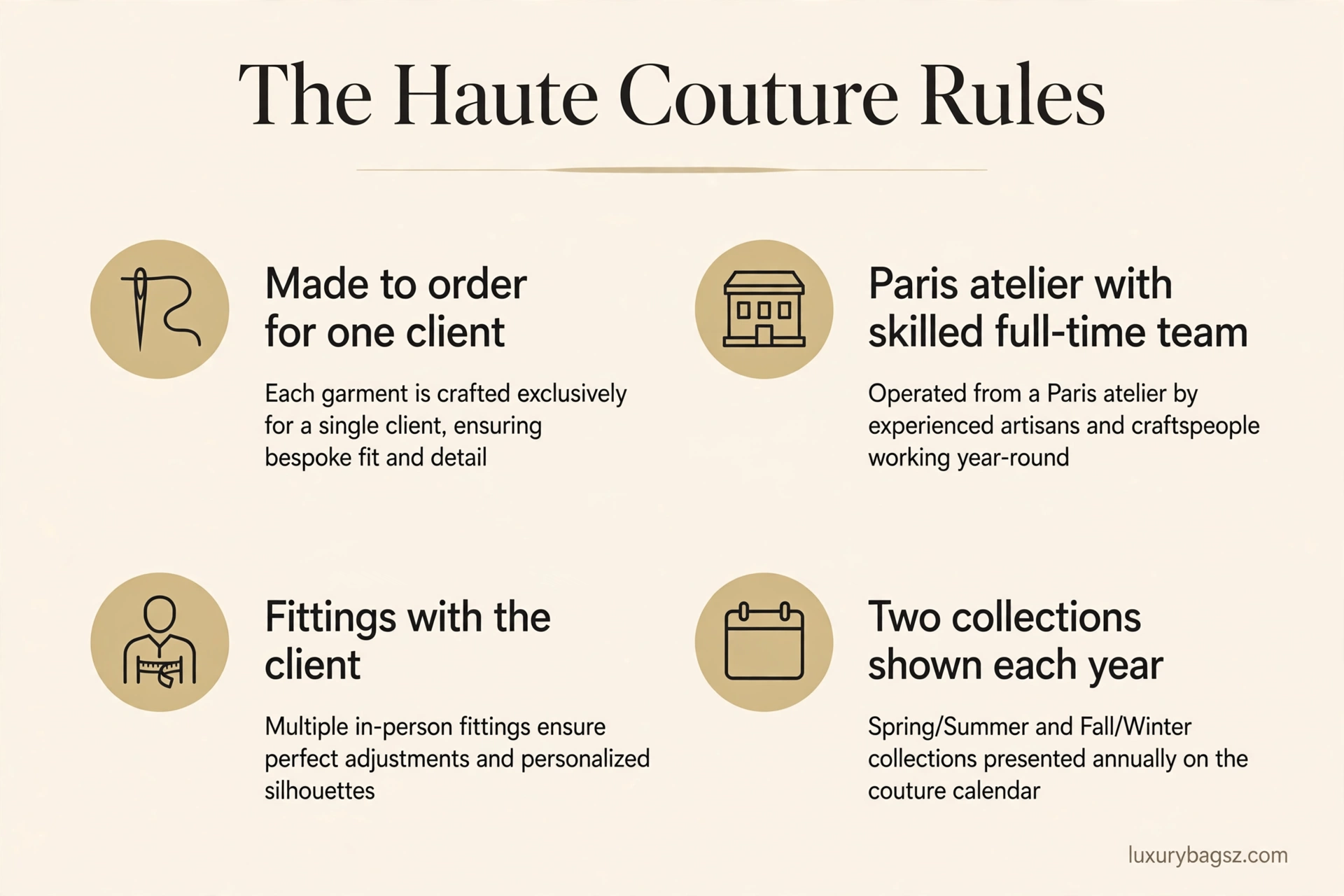
Haute couture translates simply as high dressmaking. Since 1945 the term has been protected by French law and overseen by the Fédération de la Haute Couture et de la Mode in Paris. To use the name, a house must make clothes to order for private clients, run an atelier in Paris with a minimum team of full-time staff, and show a set number of original day and evening looks twice a year. Guest members and foreign houses are invited to show on the couture calendar, but the core list of official members is small. That smallness is the point: the rules guard a standard, not a marketing mood. Plenty of brands sell very expensive clothes and call them couture loosely. If the house is not on the federation's list, the word is decoration, not a description.
The Rules a House Must Keep
The conditions cover the workshop as much as the clothes. A member house needs an atelier employing skilled full-time technicians, and each order must involve at least one fitting with the client. Collections are presented in January and July, showing both day and evening designs made for that season. Houses that slip on the rules can lose the right to the title. The system exists to protect crafts that would otherwise die out: hand embroidery, pleating, feather work, lace making and fine tailoring all survive because couture orders keep their workshops busy.
Inside the Atelier
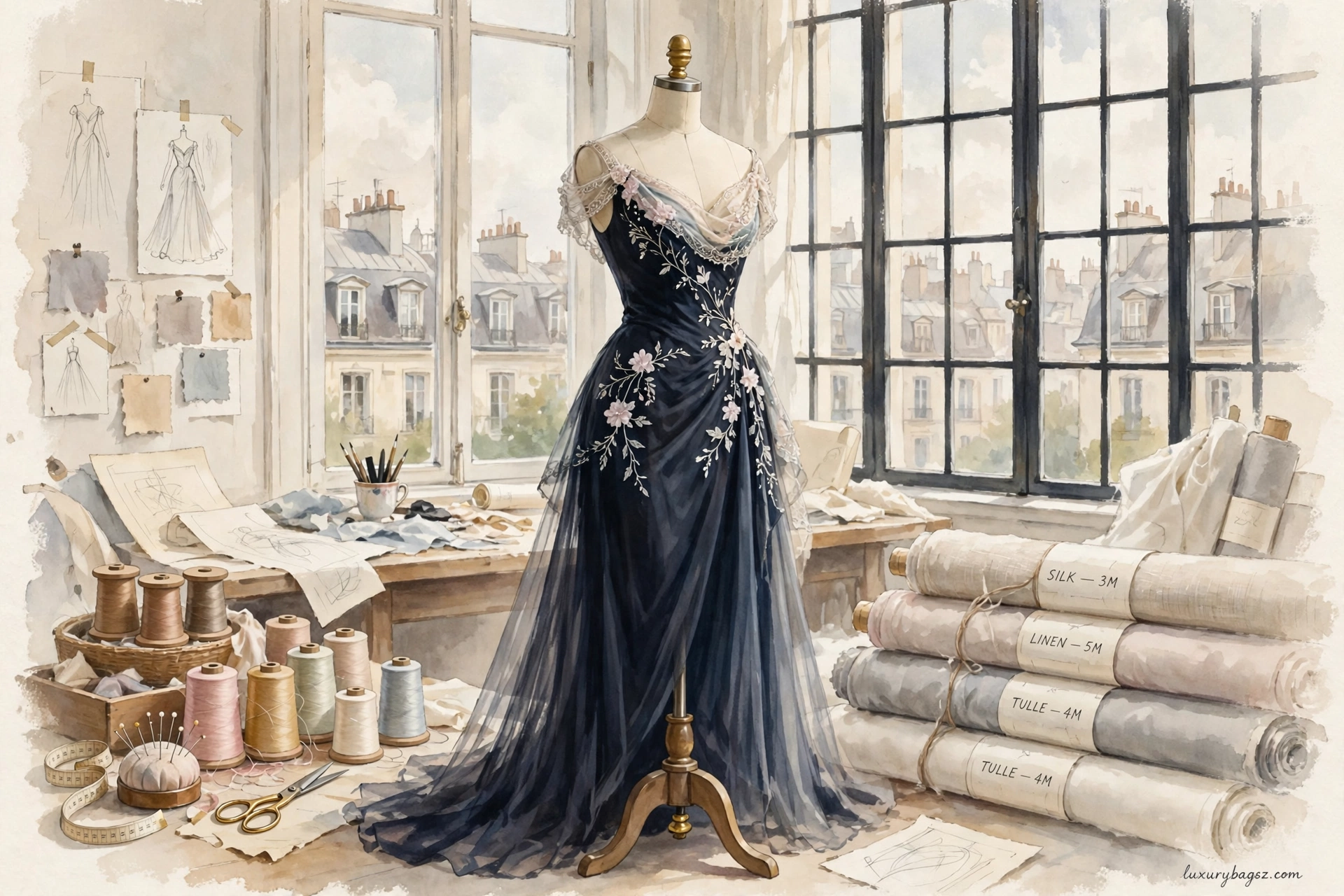
A couture house usually runs two workshops. The tailleur atelier handles structured tailoring — jackets, trousers, coats — while the flou atelier handles soft dressmaking in silk, chiffon and tulle. Above them sits the creative director's studio, and below them a chain of independent craft specialists: embroiderers, pleaters, milliners, shoemakers and jewellers, many gathered under one group's wing to keep them alive. The classic Chanel suit shows what the tailleur side does best: a soft, cardigan-like jacket that takes dozens of hand operations to sit perfectly on one woman's shoulders. A single evening gown can pass through many pairs of hands and take several hundred hours. The famous petites mains — the skilled seamstresses — are the reason the finished piece moves like cloth and not costume.
How an Order Works, Step by Step
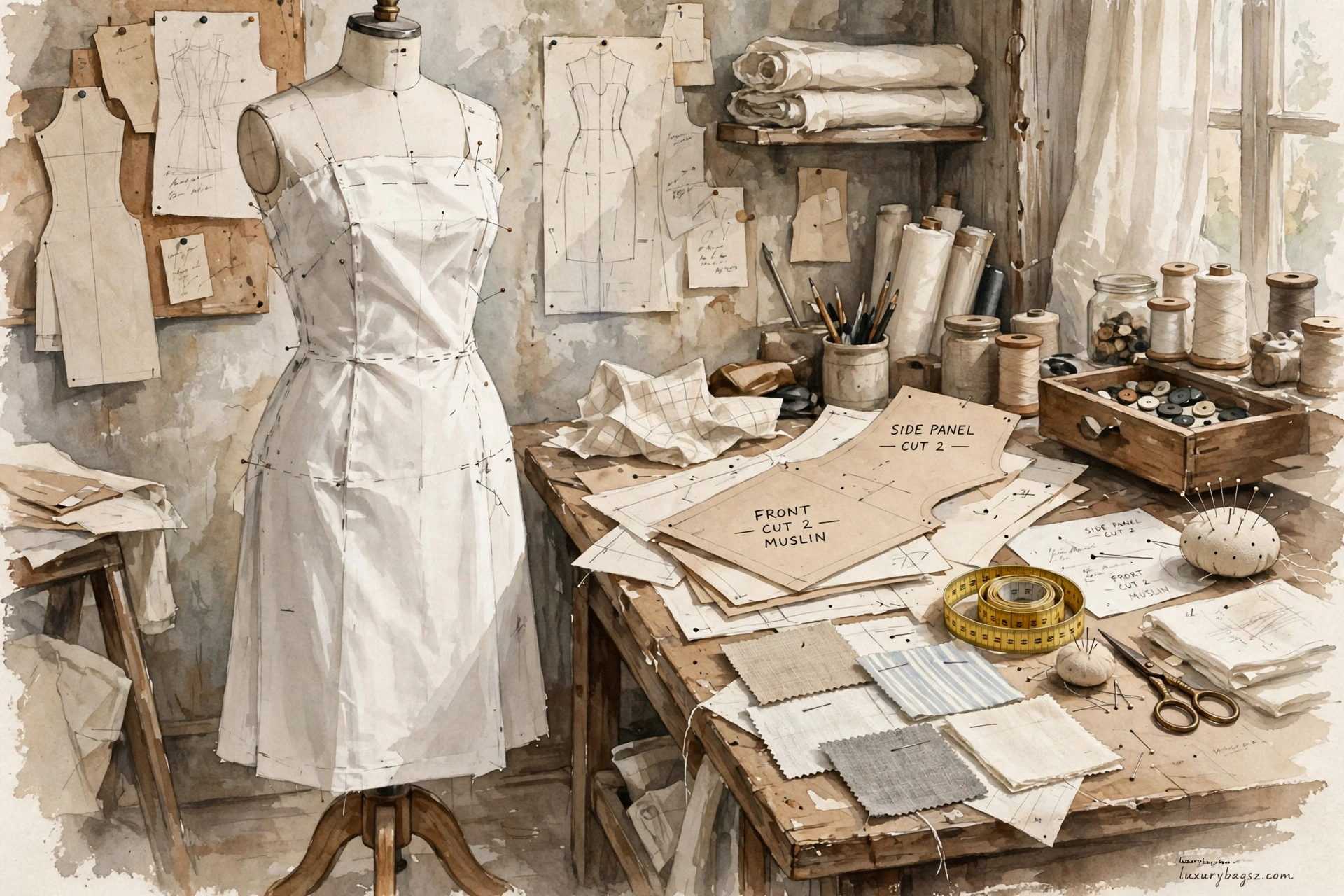
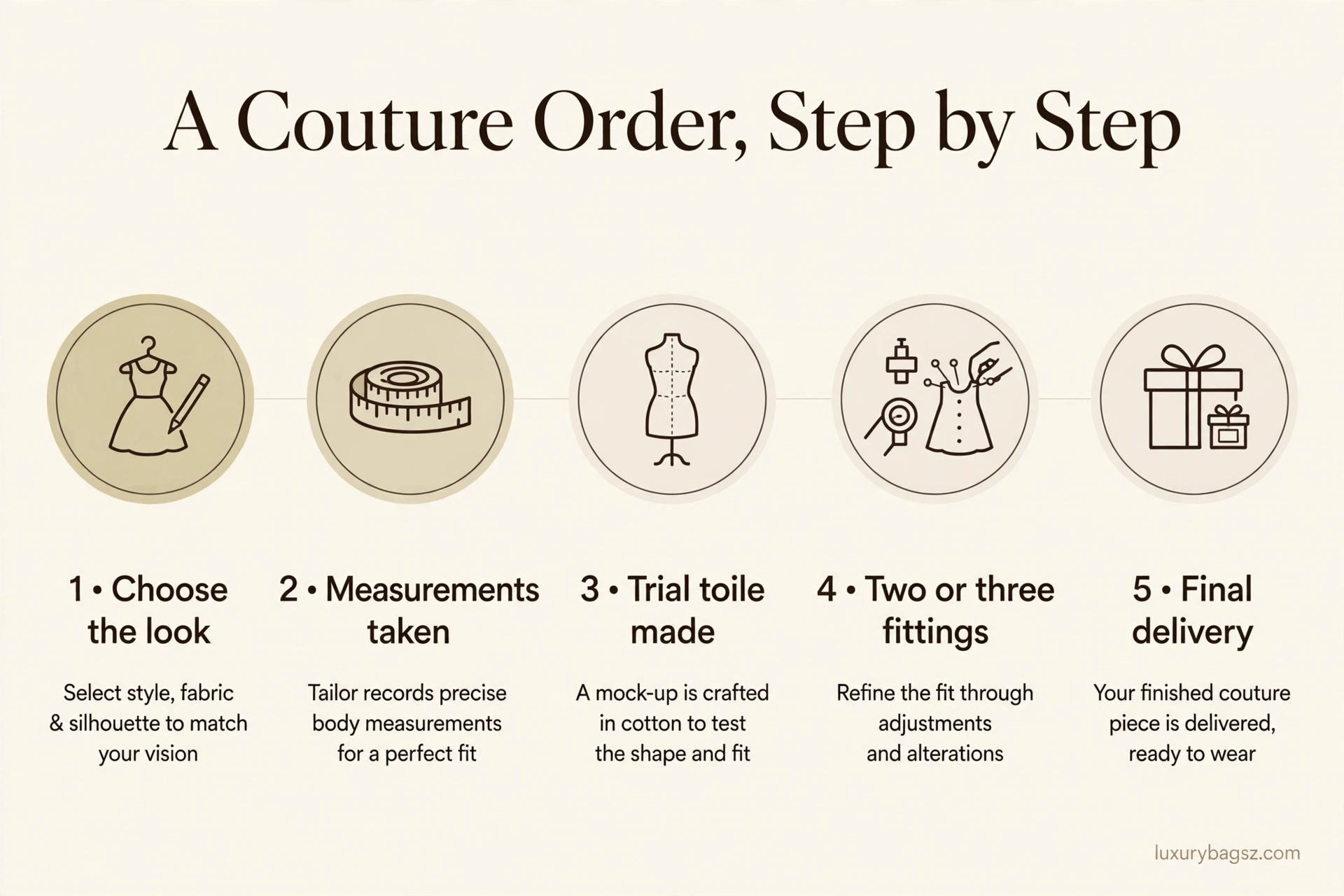
It begins at the show or in the salon, where a client chooses a look. Her measurements are taken, and the atelier first makes a toile — a trial version in plain cotton — to perfect the fit cheaply before precious fabric is cut. The client returns for fittings, usually two or three, while the real garment is built around her. Sleeves are adjusted, hems judged in the shoes she will wear, and details such as buttons settled in person. Delivery can take weeks or months depending on embroidery and beading. The house keeps her pattern and measurements on file, which is why couture clients tend to stay loyal for decades. Nothing about the process is fast or scalable, and that is deliberate. Couture sells certainty of fit and rarity, not speed.

Who Buys Couture, and Why
The global client base is often estimated in the low thousands, with a few hundred ordering regularly. They include royalty, collectors, brides, red-carpet names and women who simply want clothes made for nobody else. Some buy for occasions, some as an archive: important couture pieces are documented, resold at auction and exhibited in museums. The coverage of Dior runway shows under Maria Grazia Chiuri shows how those one-off pieces anchor a house's whole image. For the houses, couture rarely needs to be the profit engine. It is the flagship firework: it feeds perfumes, lipsticks, bags and ready-to-wear with prestige, and it trains the hands that keep quality high everywhere else. Clients also buy privacy. A couture order is discreet, unlogged by trends, and made in a room where the client's name never leaves the fitting book.
What Couture Costs, Honestly
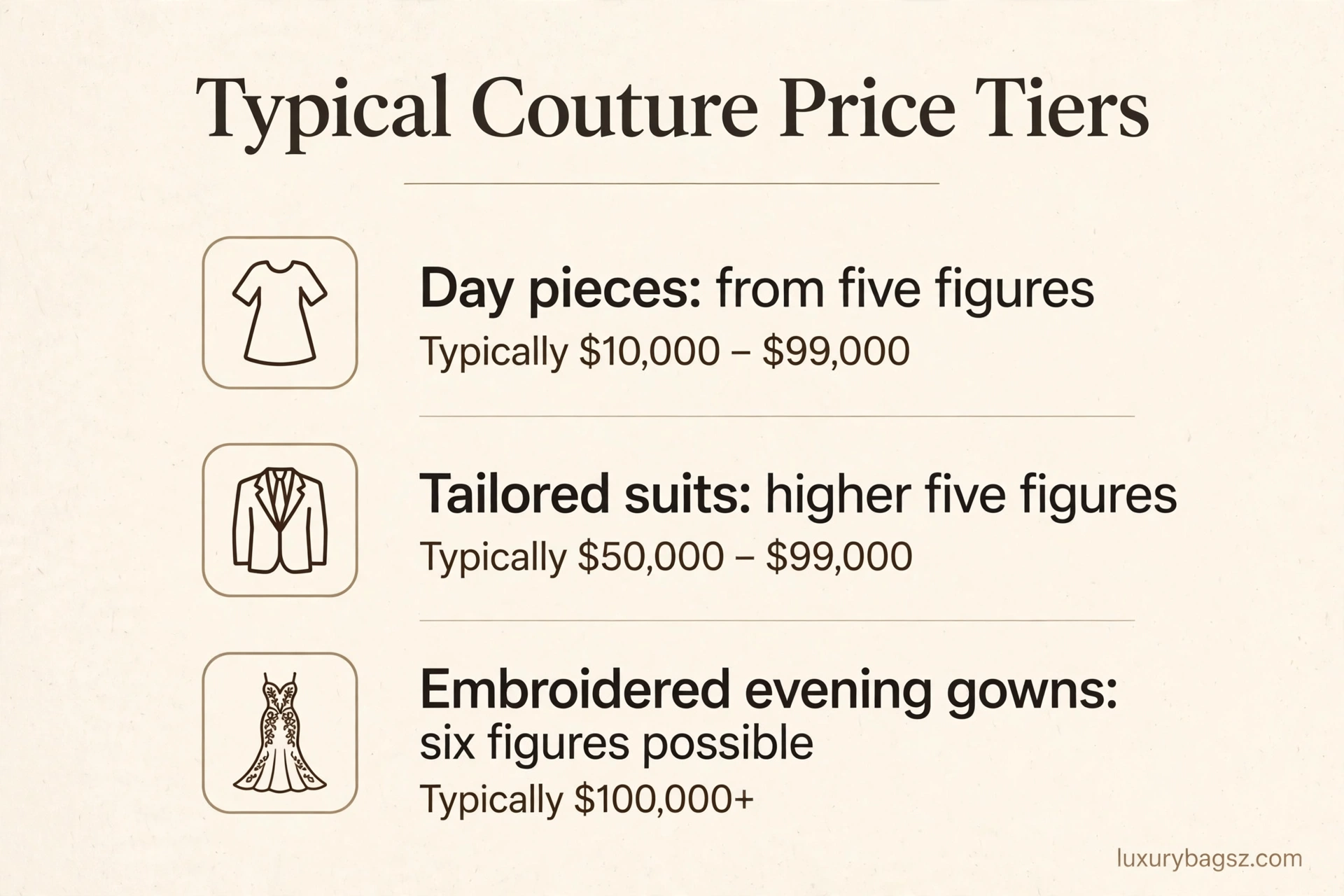
Prices are quoted per piece and vary widely, but typical reported ranges start around five figures for simpler day pieces, rise steeply for tailored suits, and reach six figures for heavily embroidered evening gowns. Wedding dresses and pieces with months of hand embroidery sit at the top. Clients also pay for fittings, and serious collectors budget for storage and conservation afterwards. Compare that with ready-to-wear from the same house and the gap looks absurd until you count the hours: hundreds of skilled hand hours, rare fabrics and a pattern made for one body only. Pre-owned couture does surface at auction and through specialist dealers, usually with house documentation. Provenance matters enormously to value, far more than condition alone.
Why Couture Matters Beyond the Salon
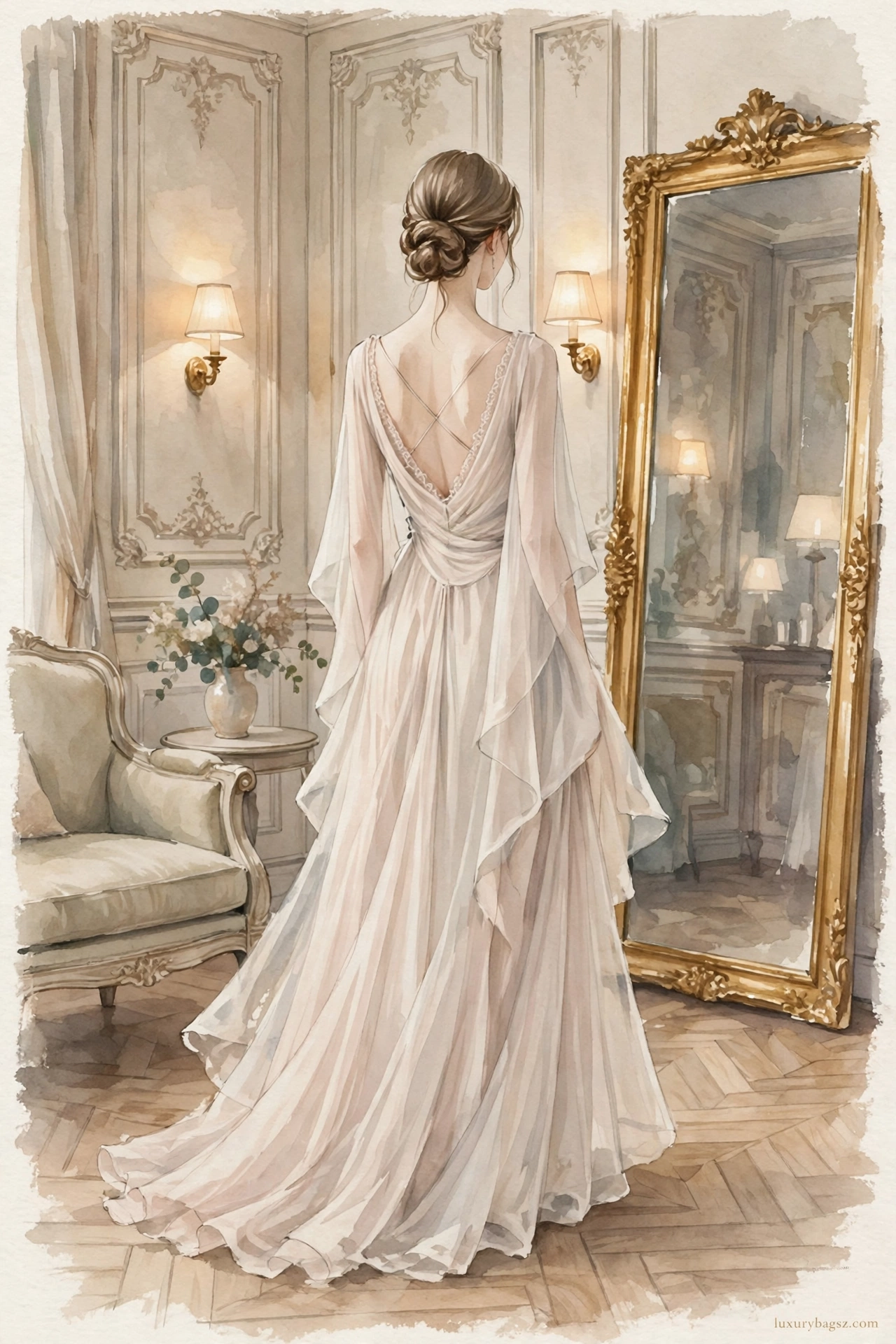
Couture is where houses test ideas with no commercial brake: a new shoulder, an impossible fabric, a construction nobody has tried. The successful experiments reappear, softened, in ready-to-wear within a few seasons. It also preserves the craft ladder. Apprentices learn hand skills on couture orders that no factory job would teach, and those skills then raise the standard of everything the house makes. Readers drawn to understatement may prefer our explainer on what is quiet luxury, which is couture's opposite mood — but both rest on the same respect for cloth, cut and restraint. Finally, couture sets the image of luxury itself. The gown photographed once in Paris sells a thousand handbags worldwide; that halo effect is the business model working as designed.
How to Enjoy Couture Without Buying It
Watch the January and July shows online and read them like a laboratory report: note the silhouettes, fabrics and colours, because edited versions will reach the shops you actually use. Visit museum exhibitions when major houses lend archives; seeing a gown at arm's length teaches more about construction than any photograph. Our profiles of influential women who changed fashion show how often couture clients shaped taste themselves. Buy the diffusion, not the dream: a house's scarf, bag or lipstick carries the same design language at a sane price, and vintage ready-to-wear from couture houses is a smart collector's route. And if you ever commission bespoke tailoring locally, you are using couture's own logic — one body, several fittings, cloth chosen in person — at a fraction of the Paris price.
Frequently Asked Questions
Is haute couture the same as luxury ready-to-wear?
No. Ready-to-wear is made in standard sizes for shops, however fine the fabric. Couture is made to order for one client, fitted on her body, and produced by a house approved to use the protected name.
Why can only Paris houses use the name?
The term is protected under French law and administered by the Paris federation, which sets rules on ateliers, staffing, fittings and twice-yearly collections. Houses elsewhere make superb bespoke clothing, but not, legally, haute couture.
How long does a couture order take?
Typically weeks to months. A toile is made first, then two or three fittings follow while the garment is built. Heavy embroidery or beading can stretch a major gown across a whole season.
How much does a couture dress cost?
Reported ranges usually begin in five figures for simpler pieces and rise to six figures for embroidered evening and bridal gowns. Exact prices are quoted privately per design, fabric and hours involved.
Can anyone order haute couture?
In principle, any client who books with a house and pays can order. In practice the client base is tiny, fittings happen in Paris, and the cost keeps the circle small and loyal.
What is a toile?
A toile is a trial garment made in plain, cheap cotton to perfect pattern and fit before the expensive fabric is cut. It is the atelier's insurance policy against a costly mistake.
Do couture clothes hold their value?
Important pieces with clear provenance can do very well at auction, especially from famous collections. Ordinary orders are bought to wear, not as investments, and should be valued that way.
What is the difference between tailleur and flou?
Tailleur is the structured tailoring workshop: jackets, coats and trousers. Flou is the soft dressmaking workshop: silk dresses, chiffon and evening gowns. A house needs both skills to show a full collection.
Are couture shows just marketing?
They are both art and marketing. The collections demonstrate craft and set the house's image, which supports its perfumes, bags and ready-to-wear, while the orders themselves serve a small, real clientele.
How can I tell if a brand is really a couture house?
Check the federation's official member list for the current season. If the house is not listed as a member or invited guest, its use of the word couture is informal, however expensive its clothes may be.
Final Verdict: Couture Is a System, Not a Superlative
Haute couture is a protected Paris system of ateliers, rules and fittings that produces clothes for one body at a time. Understand the system and the spectacle makes sense: the prices, the hours, the tiny client list and the huge influence. Enjoy it as fashion's laboratory, borrow its lessons in fit and cloth, and let its ideas reach your wardrobe in the softened, wearable forms that follow.