

The Classic Chanel Suit Guide: Tweed, Tailoring, Styling and Vintage Buying
The Classic Suit at a Glance: Freedom Tailored in Tweed
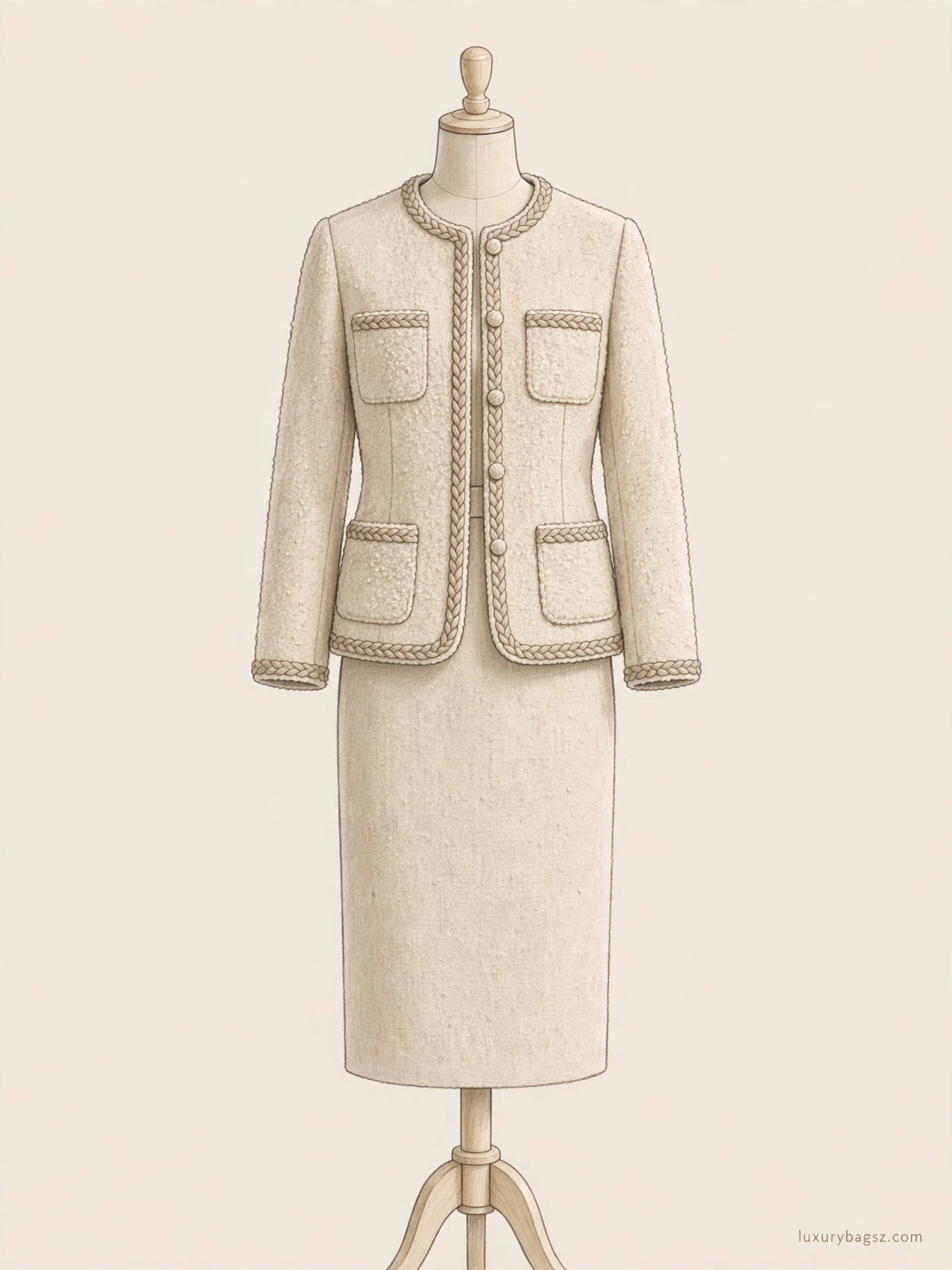
The classic Chanel suit is the most influential two-piece in women's fashion. A collarless, boxy tweed jacket paired with a straight knee-length skirt, it freed women from corsets and rigid tailoring and gave them what Chanel's biographer called the sartorial dignity previously available only to men. It remains the house's signature silhouette a century after its first appearance.
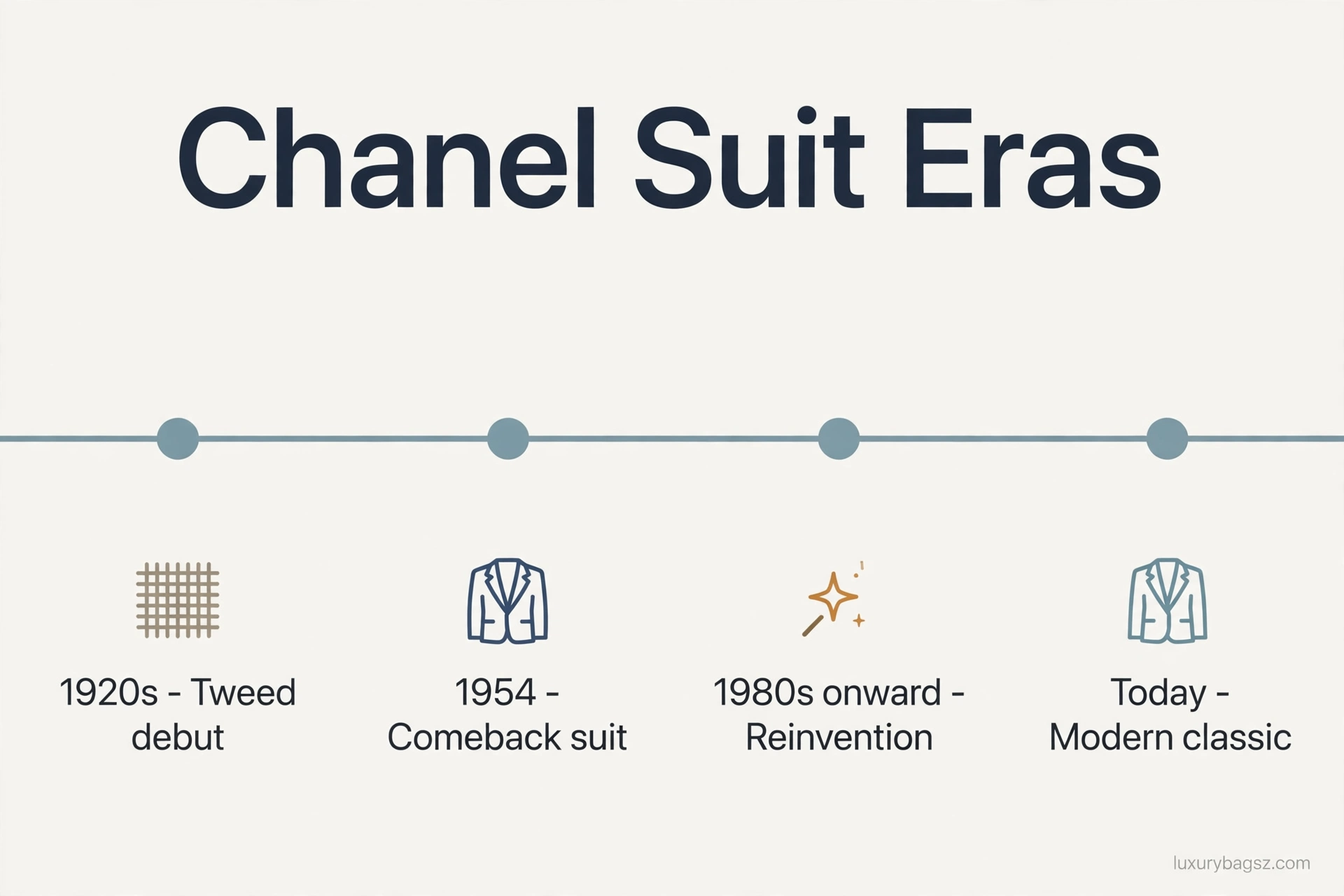
Two dates compete for the title of its birthday, and this guide states both plainly. Sources describe a tweed suit shown in Chanel's Rue Cambon salon in 1925, and a refined comeback version launched when Chanel reopened her house in 1954. The 1925 suit planted the idea; the 1954 suit perfected it. Both belong in the story, and neither should be quoted alone as the whole truth.
Key Takeaways
- A collarless tweed jacket with a straight knee-length skirt is the classic formula.
- Sources cite a 1925 debut and a refined 1954 comeback; both dates matter.
- Tweed came from British menswear and country cloth, softened for women.
- Signature details include four pockets, braid trim, silk lining and a chain-weighted hem.
- Jackets are cut to move, with soft shoulders and panels that match inside and out.
- Karl Lagerfeld reinvented the suit in new materials, colours and proportions.
- Vintage buyers should check the chain, lining, buttons and spare seam fabric.
Two Birthdays: 1925 and 1954 Explained
The 1925 story begins in Chanel's Paris salon on the Rue Cambon. By the mid-1920s she was already known for jersey sportswear and elegant dresses, and her tweed suit put her name on the lips of fashionable London society when it reached her Mayfair boutique from 1927. The suit comprised a knee-length skirt with a straight-cut, collarless jacket, tailored yet unlike anything else in French couture at the time.
The 1954 story is a comeback. After a long pause from fashion, Chanel reopened her house and reintroduced the suit in a refined form that became the template ever since. The jacket was boxy and collarless with soft, rounded edges, designed to skim rather than cling, and the skirt was straight and knee-length. Against Christian Dior's corseted New Look, the suit was a manifesto for comfort and independence.
Why do sources differ? Because both moments are real, and writers emphasise one or the other. Some trace the suit to its 1920s origins, others to the 1954 version that defined the modern classic. This guide treats 1925 as the debut and 1954 as the definitive relaunch, and readers should be wary of any account that presents either date as the only one.
From Menswear to Womenswear: Tweed's Unlikely Journey
Tweed was an unlikely couture fabric. In the 1920s it was practical cloth for farmers and men who enjoyed country sports: warm, hard-wearing and thoroughly unglamorous. Chanel saw past that reputation to its qualities: it held structure without stiffness, draped without sagging, and hugged the figure without restricting it. Those are exactly the qualities a comfortable tailored suit needs.
The influence was personal. Chanel's decade-long romance from around 1924 with Hugh Richard Arthur Grosvenor, the 2nd Duke of Westminster, put her in close contact with British country clothing, and she wore her lover's tweed jackets herself. From 1924 she worked with the Scottish-born tweed maker William Linton of Carlisle to produce lighter, softer versions of his cloth, transforming rugged tweed into the feminine bouclé wools recognised today.
That transformation is the suit's secret. Chanel did not simply cut women's clothes from men's cloth; she remade the cloth itself, using twisted and looped yarns to create a softer, more textured fabric. The result kept tweed's durability and added a luxury hand, which is why the suit could be both practical and couture at once.
Anatomy of the Classic Suit: Every Detail Earns Its Place
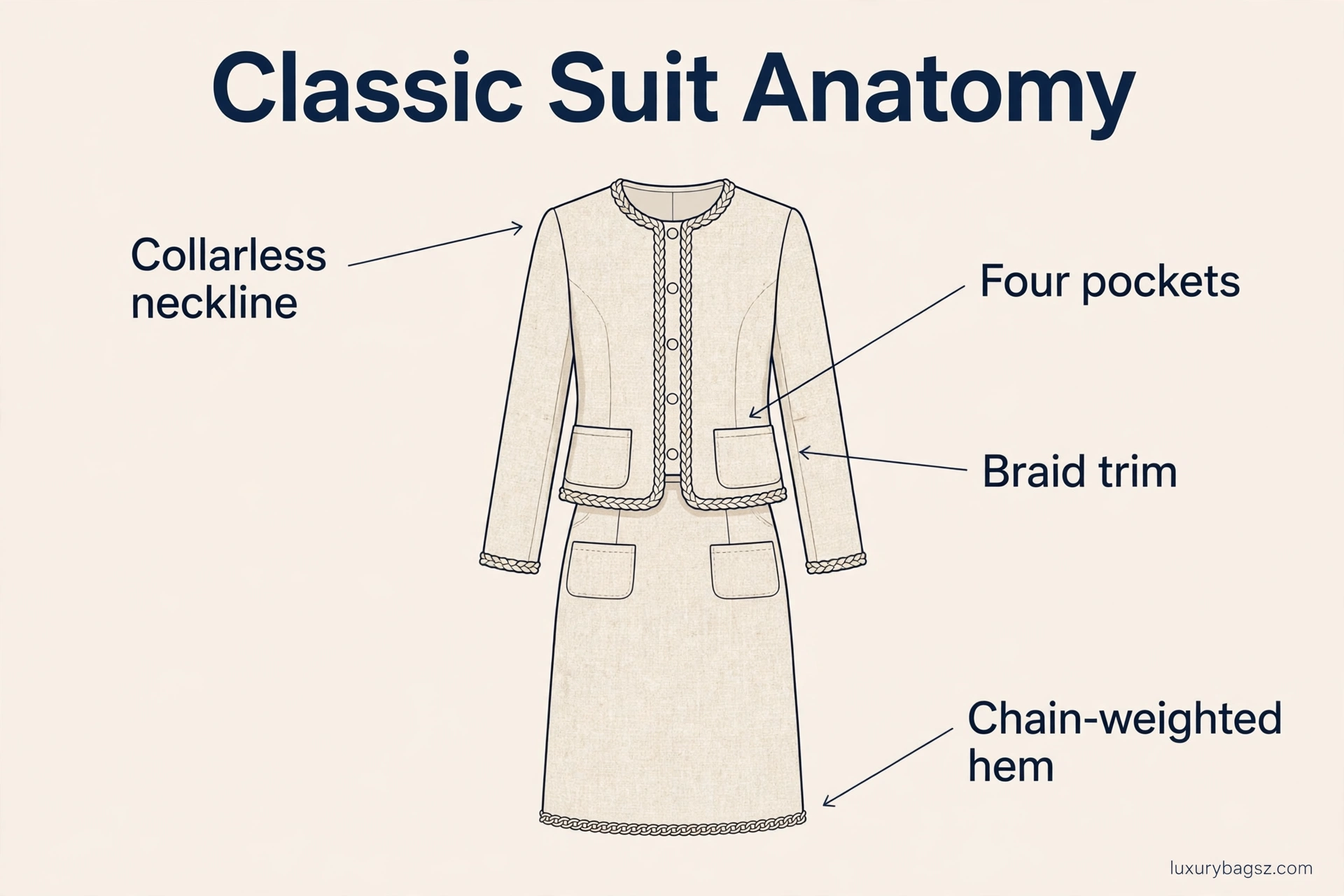
The jacket is the star. Classic versions are collarless, straight and structured, buttoned edge to edge or worn open, with four real front pockets that were themselves a small revolution. Pockets meant a woman could carry things without a bag, and Chanel made a point of them in her announcements. Braid trim outlines the edges, giving the jacket a finished frame and a touch of structure without stiffness.
The skirt is its quiet partner. Straight, knee-length and sitting on the hips rather than nipping at the waist, it allows walking and sitting without strain. Some versions use two zips to help the skirt hug the waist and stay in place. The proportions matter: the jacket skims the hip and the skirt ends at the knee, creating a balanced line that flatters without constricting.
Hidden details complete the design. The jacket is lined in silk, often in the same fabric as the blouse meant to be worn beneath it, and a fine chain is sewn into the hem so the jacket hangs perfectly and does not ride up. Buttons are typically gilded, and the whole suit is made to move: hours went into perfecting sleeves for total ease of movement, a priority Chanel never compromised.

Fabric and Construction: Why a Chanel Jacket Hangs Differently
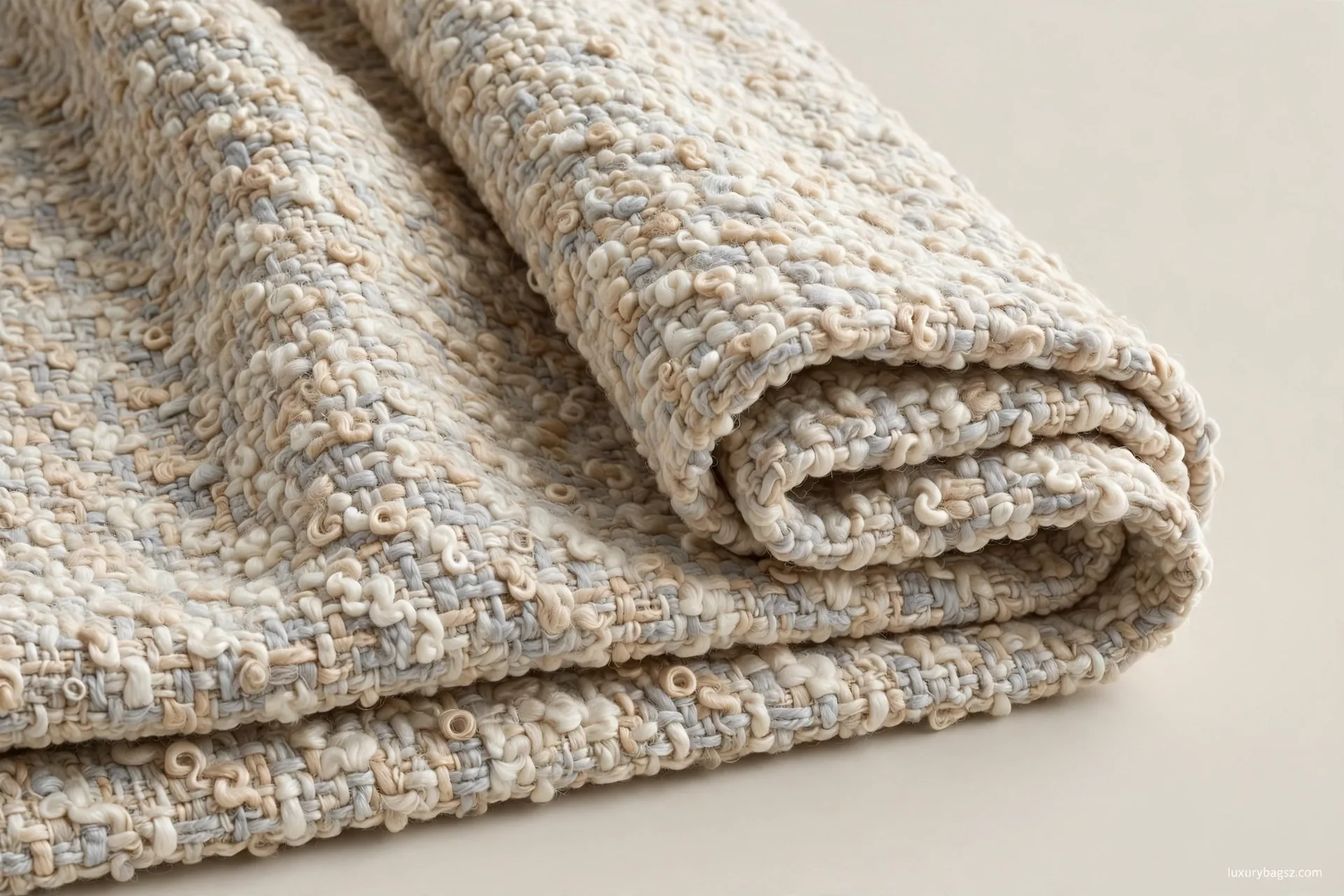
Bouclé tweed is the classic fabric, but the word covers a family of weaves rather than a single cloth. The yarns are twisted and looped with wool and mixed threads, creating a nubby, textured surface that catches light and hides wear. Over the decades Chanel has used tweed in countless colours, weights and thread mixes, from sober neutrals to metallic and sequinned party versions.
Construction is where the suit justifies its reputation. Jacket and skirt are made from panels and seams that follow the same pattern, so the outside and the inside match panel for panel. That technique helps the suit move with the body rather than against it, since no layer pulls in a different direction. Each seam also carries a little spare fabric, allowing the suit to be let out or taken in by a skilled tailor.
That spare fabric is a gift to vintage buyers, and it is worth checking before purchase. A suit that has already been altered to its limits leaves less room for future fitting, while an untouched seam allowance gives a tailor options. Ask the seller whether alterations have been made, and have a tailor inspect the seams before committing to a size that is only nearly right.
Lagerfeld and Beyond: Reinvention Without Losing the Code
After Coco Chanel's death in 1971, the suit's future was uncertain until Karl Lagerfeld became creative director in 1983. Lagerfeld treated the classic silhouette as a canvas, keeping its core identity while pushing it in every direction.
New materials, sequins, beads, pearls, feathers and camellias, ruffles and pleats, mixed and matched pieces, and proportions from cropped to oversized all appeared. The suit appeared in most collections thereafter, reinvented six times a year in spirit if not in every detail.
That reinvention kept the suit relevant across fashion cycles. In some seasons it was faithful tweed tradition; in others it was denim, leather, jersey or evening sparkle, all cut to the same familiar outline. The through-line was always movement and ease: even the most decorated Lagerfeld suit was meant to be worn, not displayed, and the chain hem and soft shoulders survived almost every experiment.
Later creative direction has continued that pattern, with the suit remaining a house anchor through changing trends. For buyers, this variety is good news: it means vintage and pre-owned Chanel suits exist in a wide range of colours, fabrics and price points, from sober workhorse tweeds to bold collector pieces. The classic formula is the starting point, not the only option.
How to Style the Classic Suit Today
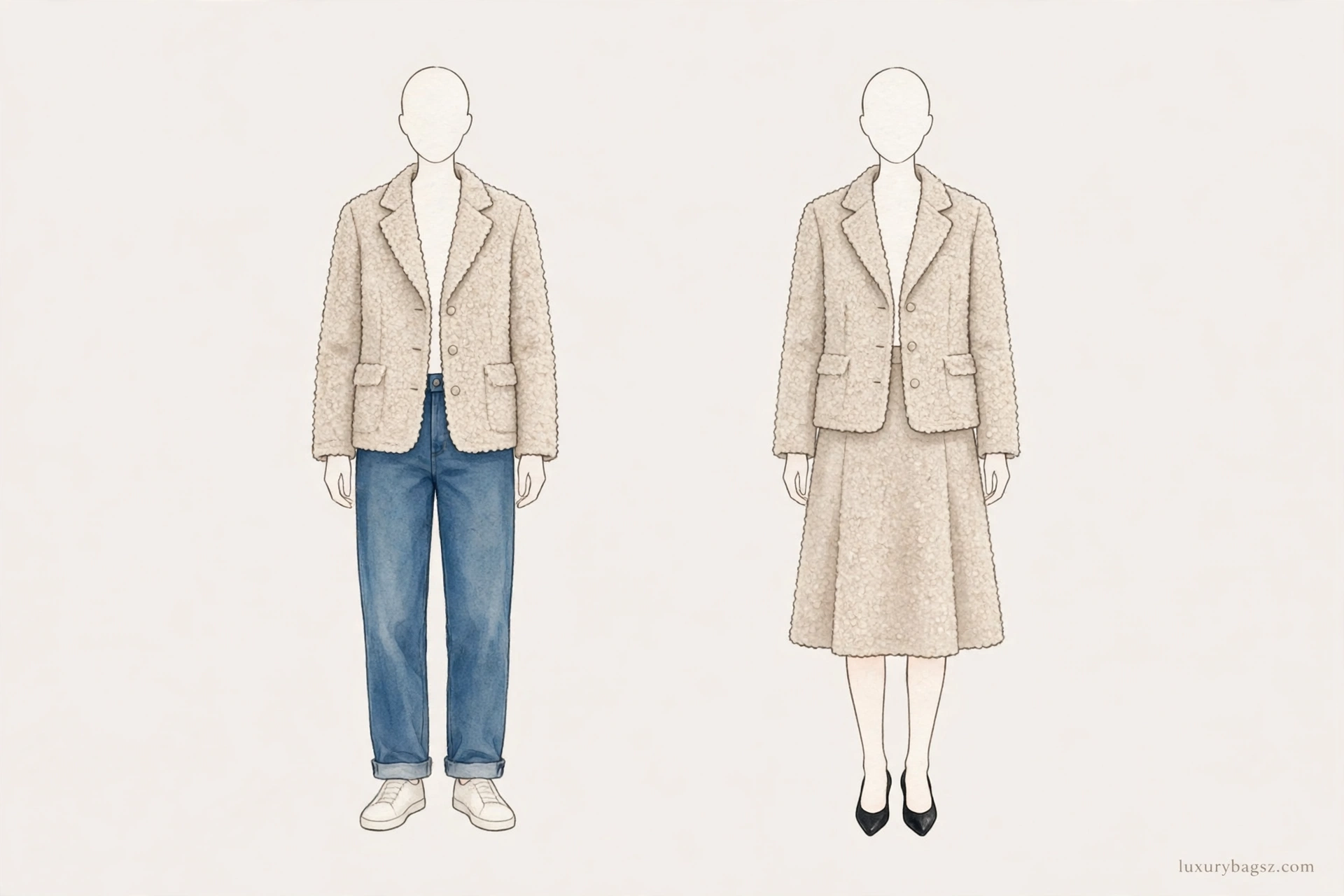
The most modern way to wear a Chanel suit is to break it up. The jacket works beautifully as a separate with jeans, a white shirt and loafers, turning a formal suit into an everyday statement. Our loafers with a suit guide covers footwear choices that keep the look relaxed rather than stiff. The skirt pairs equally well with a simple knit and ankle boots for a polished day outfit.
Worn together, the suit suits weddings, formal workdays and occasions that call for visible polish. Keep accessories simple: the tweed's texture is decoration enough, so a single necklace or a pair of earrings is usually plenty. Avoid competing patterns, and let the suit's colour set the palette for everything else in the outfit.
Fit is more important than styling tricks. The jacket should skim rather than pull, the shoulders should sit naturally, and the skirt should allow a comfortable stride. A good tailor is worth more than a new accessory: small adjustments to sleeve length, hem and waist transform a good vintage find into a suit that looks made for you.
Caring for Tweed: Storage, Cleaning and Repairs
Tweed is hard-wearing but not indestructible, and it rewards gentle care. Brush the suit lightly after wear to remove surface dust, and air it before returning it to a wardrobe rather than sealing it away damp. Store it on a wide, shaped hanger with the jacket buttoned, and keep the skirt clipped rather than folded, so creases do not set into the weave.
Cleaning should be specialist work for valuable or vintage suits. Dry cleaning is the usual route, but tell the cleaner about the chain hem, braid trim and any embellishment before handing the suit over, since aggressive processes can damage them. For minor marks, a specialist textile conservator is a safer choice than home remedies, which can spread stains through bouclé's looped yarns.
Repairs are often possible thanks to the suit's construction. Loose braid, missing buttons and worn linings can usually be restored by a skilled tailor, and the spare seam fabric allows careful resizing. Our how to restore leather guide covers material restoration principles that apply to accessories worn with the suit, though tweed itself needs a textile specialist rather than a leather worker.
Buying Vintage or Pre-Owned: A Practical Checklist
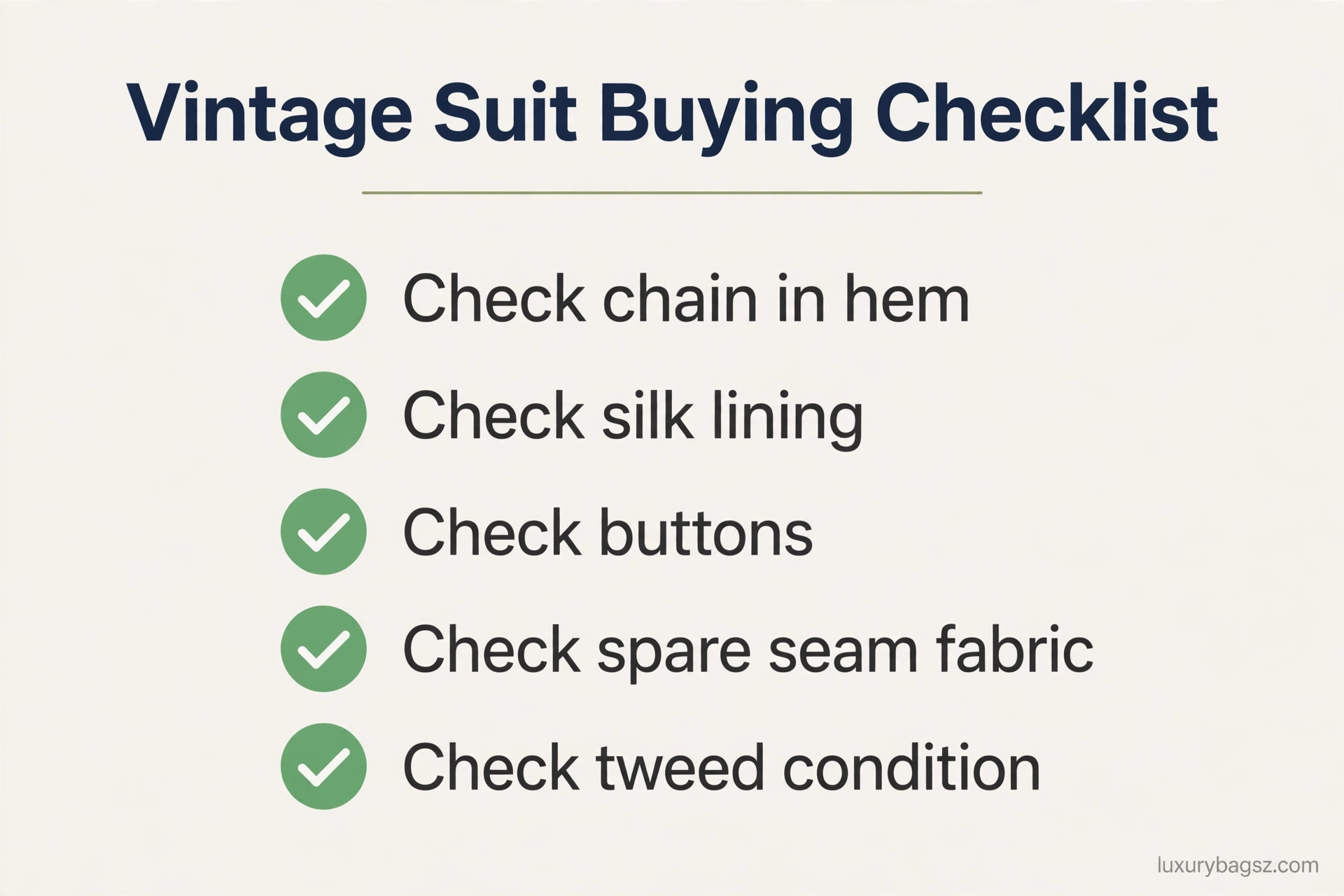
Start with the chain hem, the detail most often damaged or removed. Feel along the jacket's hem for the chain's weight and even run; a missing or replaced chain changes how the jacket hangs and should affect the price. Check the silk lining for tears and staining, the braid trim for fraying, and the buttons for replacements or mismatched finishes.
Next, assess fit potential. Check the spare fabric in the seams, ask about past alterations, and confirm the skirt's zips work smoothly.
Our coat vs jacket guide helps clarify length and layering questions, while our vintage vs retro clothing guide explains why a genuinely vintage Chanel suit differs from a retro-inspired copy. Both distinctions matter when a seller's wording is vague.
Finally, buy from a seller you trust, with clear photographs of labels, lining, chain and seams. Our how to buy vintage clothing online guide covers safe online buying in detail, including returns and authentication questions.
For a suit at this level, an in-person inspection or a trusted proxy is worth the effort, and a price that looks too good usually signals condition problems the photographs hide.
Frequently Asked Questions
When was the classic Chanel suit created?
Sources cite two key dates: a tweed suit shown in Chanel's Rue Cambon salon in 1925, and a refined comeback version launched when she reopened her house in 1954. This guide treats 1925 as the debut and 1954 as the definitive relaunch.
What defines a classic Chanel suit?
The classic formula is a collarless, boxy tweed jacket with a straight knee-length skirt. Signature details include four pockets, braid trim, silk lining, gilded buttons and a chain sewn into the jacket hem for a perfect hang.
Why is the suit made from tweed?
Chanel admired tweed's warmth, flexibility and ability to drape without stiffness, qualities she knew from British country clothing. Working with William Linton from 1924, she softened rugged tweed into feminine bouclé wools suited to couture tailoring.
What is the chain in the hem for?
A fine chain sewn into the jacket hem weights it so the jacket hangs evenly and does not ride up. It is one of the suit's most important hidden details, and its presence and condition are key vintage checks.
Can the jacket and skirt be worn separately?
Yes, and modern styling often favours separates. The jacket works with jeans, trousers or a simple dress, while the skirt pairs with knits and blouses. Worn together, the suit suits formal occasions and polished workdays.
How should a Chanel suit fit?
The jacket should skim rather than cling, with soft shoulders that sit naturally and sleeves that allow full movement. The skirt should be straight and knee-length, allowing a comfortable stride without pulling at the waist or hip.
What did Karl Lagerfeld change about the suit?
Lagerfeld kept the core silhouette while reinventing it in new materials, colours and proportions, adding sequins, beads, pearls, feathers and camellias, and mixing and matching pieces. The suit appeared in most of his collections, keeping it current across decades.
How do I care for a tweed Chanel suit?
Brush it lightly after wear, air it before storing, and keep it on a shaped hanger with the jacket buttoned. Use a specialist dry cleaner, warn them about the chain hem and trim, and seek a textile specialist for repairs rather than attempting home remedies.
What should I check when buying a vintage Chanel suit?
Check the chain hem, silk lining, braid trim, buttons and spare seam fabric, and ask about past alterations. Confirm the skirt zips work, inspect labels and seams in clear photographs, and buy from a seller with a clear returns policy.
Is a vintage Chanel suit worth the price?
That depends on condition, rarity, fit potential and how often you will wear it. A well-kept classic in a versatile colour, with its chain intact and room for tailoring, offers decades of wear. A damaged or poorly fitting example rarely justifies a premium, however famous the label.
Summary: Why the Suit Still Matters
The classic Chanel suit matters because it changed what women could wear and how they could move. It took a farmer's cloth, a lover's jacket and a couturier's eye, and turned them into a uniform for independence that still works a century later.
Buy it for its construction as much as its name: the chain hem, the matching panels, the spare seam fabric and the four real pockets. Wear it together for formality or broken up for everyday life, and choose a vintage example with its key details intact. A century of reinvention has not improved on the original idea, which is why the suit endures.






