Dior Runway Shows Under Maria Grazia Chiuri: Feminism, Craft and the Shows That Defined an Era
The Shows That Defined the Chiuri Era
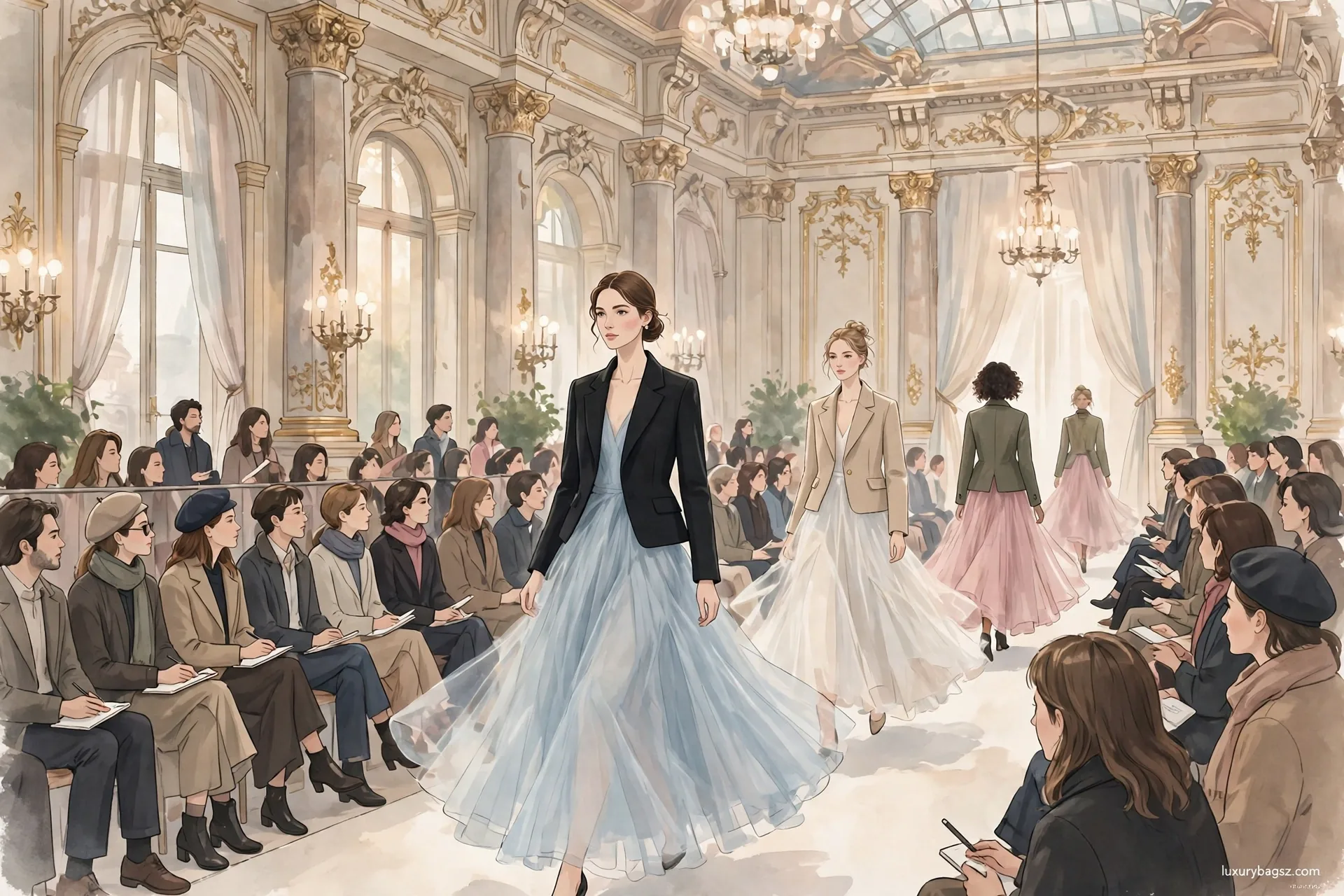
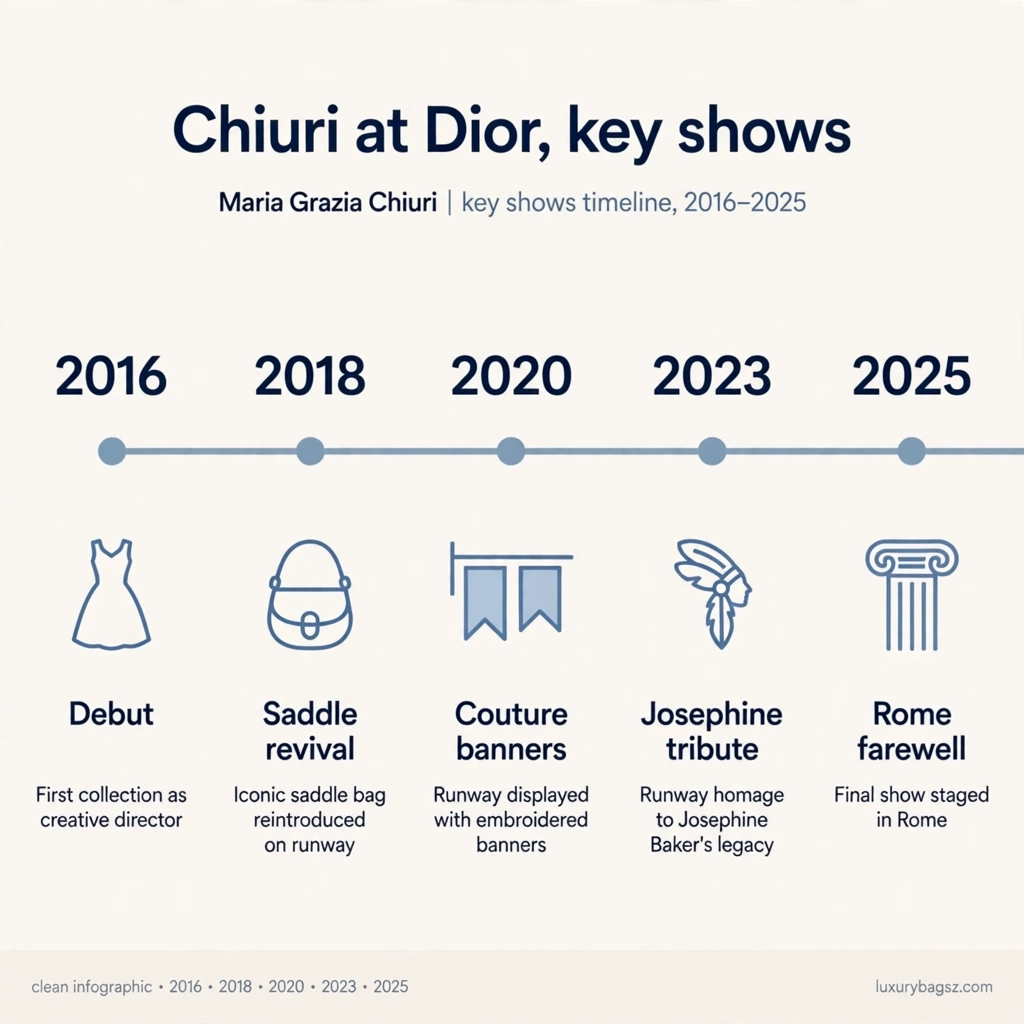
Start with four moments: the Spring/Summer 2017 debut in September 2016, the Spring/Summer 2020 couture with Judy Chicago, the travelling Cruise shows, and Cruise 2026 in Rome in May 2025. The debut paired tulle skirts and fencing-inspired jackets with T-shirts bearing the feminist slogan borrowed from Chimamanda Ngozi Adichie.
For couture, 21 embroidered banners — created by Chicago together with the Chanakya School of Craft — were shown at the Rodin Museum. Cruise then moved through Lecce, Seville, Mexico City and Scotland, each time working with local makers and craft traditions.
The Rome farewell closed nine years with 80 looks mixing ready-to-wear and couture, confirming an era built on artist collaboration, feminism and atelier skill.
The Chiuri Era in Brief
Maria Grazia Chiuri led Dior's women's collections from 2016 to 2025, the first woman to head creation at the house. Her runway shows mixed feminist slogans, artist collaborations and deep craft, and they turned the catwalk into a place for ideas as well as clothes.
Over nine years, Chiuri staged shows in Paris, Lecce, Seville, Mexico City, Scotland and Rome. Each show paired a place or an artist with atelier craft, from embroidered banners to local weaving. This guide walks through the shows that defined her era, and why they still matter.
Key Takeaways
- Chiuri was appointed in 2016, succeeding Raf Simons, and was the first woman to lead Dior creation.
- Her Spring/Summer 2017 debut made the "We Should All Be Feminists" T-shirt a cultural moment.
- Artist collaborations shaped her sets, from Judy Chicago's embroidered banners to Robert Wilson's Orlando staging.
- Cruise shows took Dior to Puglia, Seville, Mexico City and Scotland, working with local artisans.
- Her final show, Cruise 2026 in Rome in May 2025, closed the era with 80 looks blending ready-to-wear and couture.
The Debut That Changed the Conversation
Chiuri arrived at Dior from Valentino, where she had been co-creative director, and before that from Fendi, where she helped create the Baguette. Her Dior debut, shown in September 2016, was therefore watched closely by the whole industry.
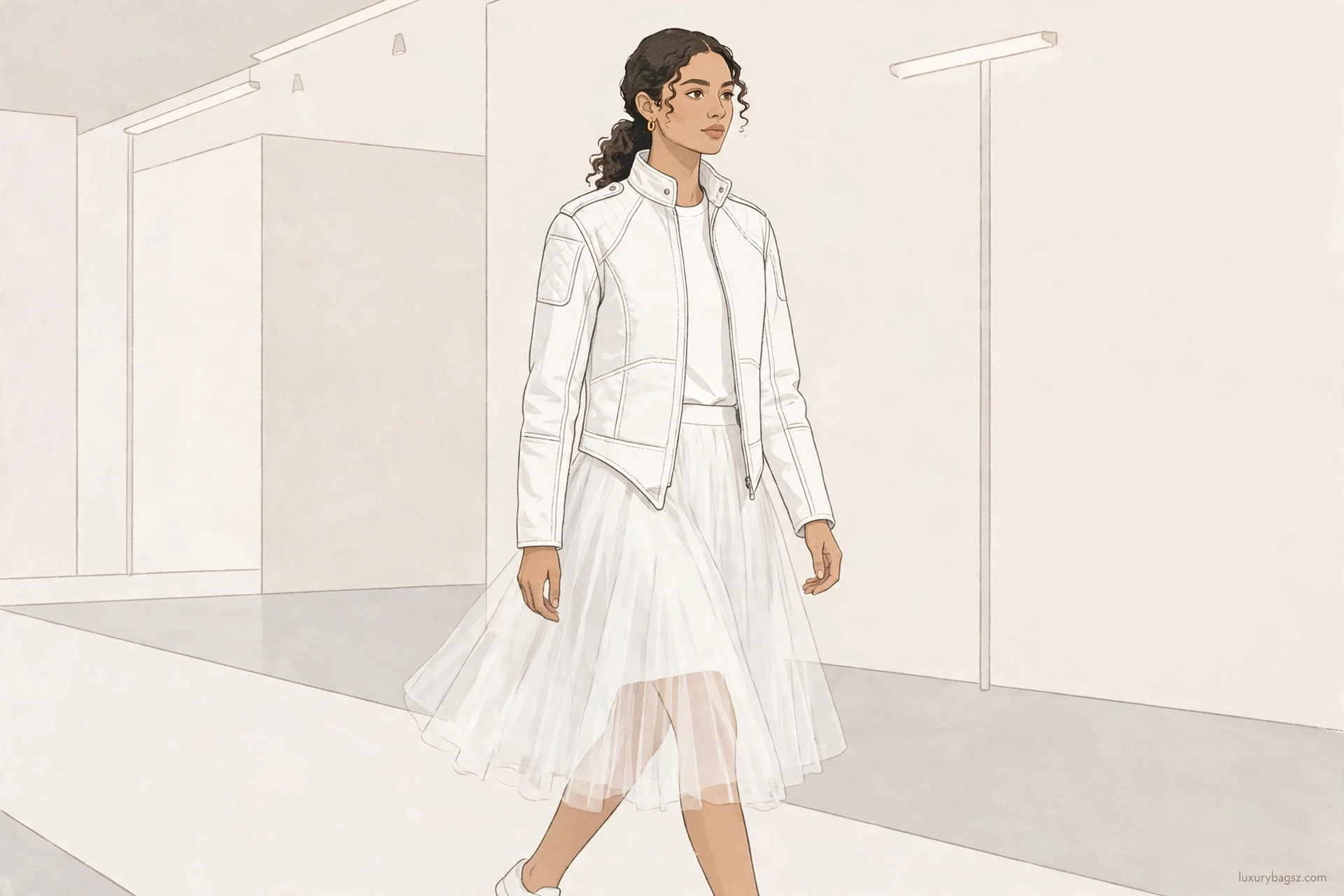
The show opened with the now-famous T-shirt, but the clothes around it mattered too. Tulle skirts, flat shoes, fencing jackets and simple tailoring gave the collection a youthful, wearable feel that contrasted with the formality many expected from Dior.
That mix was deliberate. Chiuri wanted Dior to speak to real women, not only to couture clients, and the runway became her way of saying so. The slogan tee sold widely and was copied endlessly, yet the deeper point was about who fashion is for.
Later debuts are often judged by their shock value alone. Chiuri's debut holds up because the clothes were strong enough to wear long after the slogan faded from headlines, and because it set a clear direction for everything that followed.
Artists, Sets and the Power of Collaboration
No Dior creative director has used artists quite like Chiuri. Her sets were not backdrops but arguments, built with women artists whose work echoed the collection's theme. That approach gave her shows a depth that a plain runway could never match.
The most famous example came at Spring/Summer 2020 Haute Couture, staged at the Rodin Museum in Paris. Judy Chicago worked with the Chanakya School of Craft on 21 embroidered banners, each celebrating a woman from history, which hung around the runway like a feminist hall of fame.
Other collaborations included references to Linda Nochlin's essay "Why Have There Been No Great Women Artists?" for Spring/Summer 2018, and the Teddy Girls of post-war London for Autumn/Winter 2019, with slogans such as "Sisterhood is Powerful" and "Sisterhood is Global".
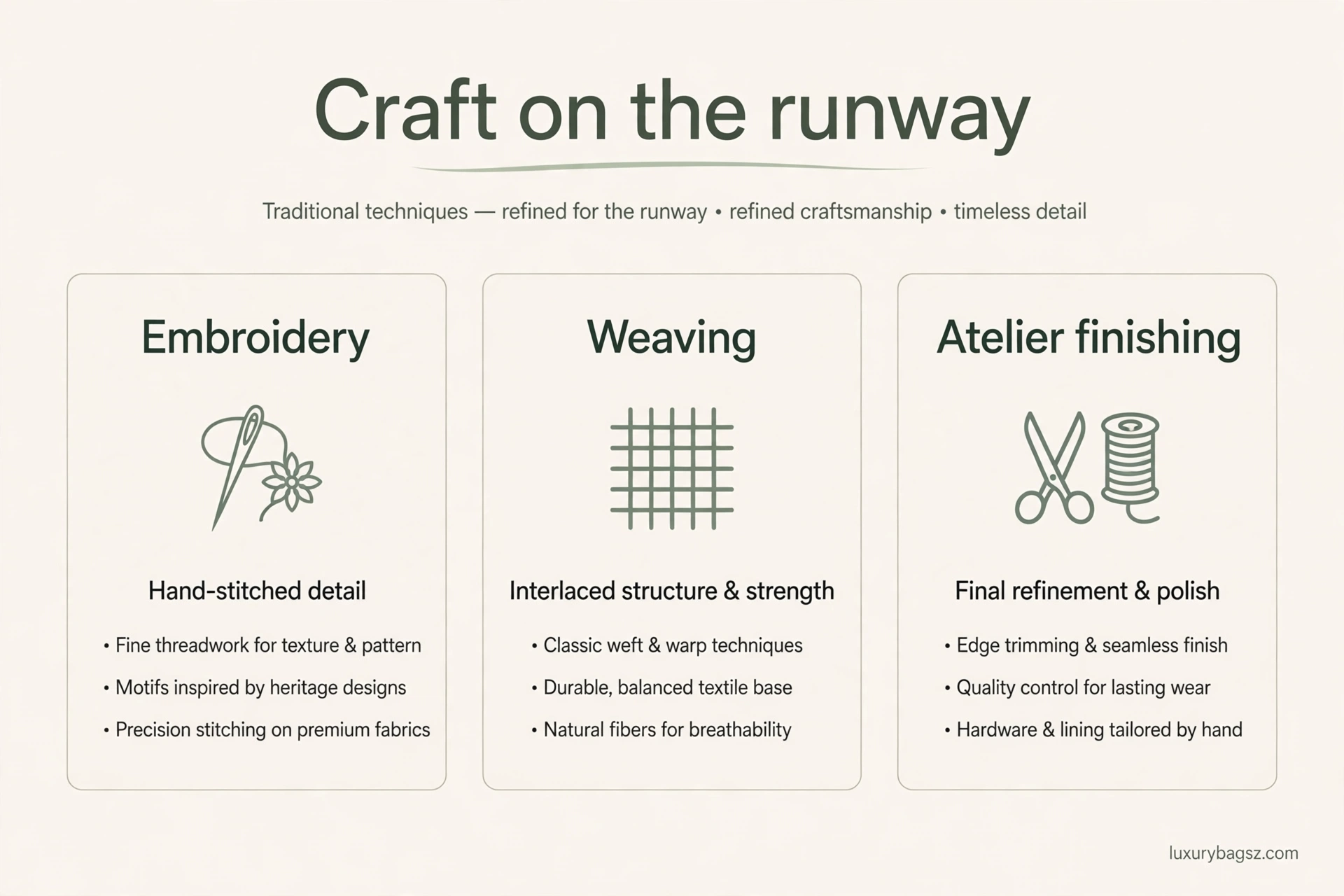
These sets also gave craft a starring role. Embroidery, weaving and hand finishing were visible on the runway, not hidden in the atelier, which helped audiences value the work behind each garment.
Cruise Shows That Travelled the World
Chiuri's Cruise shows were journeys, each one rooted in a place and its makers. Cruise 2021 took Dior to Lecce in Puglia, with 90 looks, local Luminarie lights and phrases by artist Marinella Senatore woven into the staging.
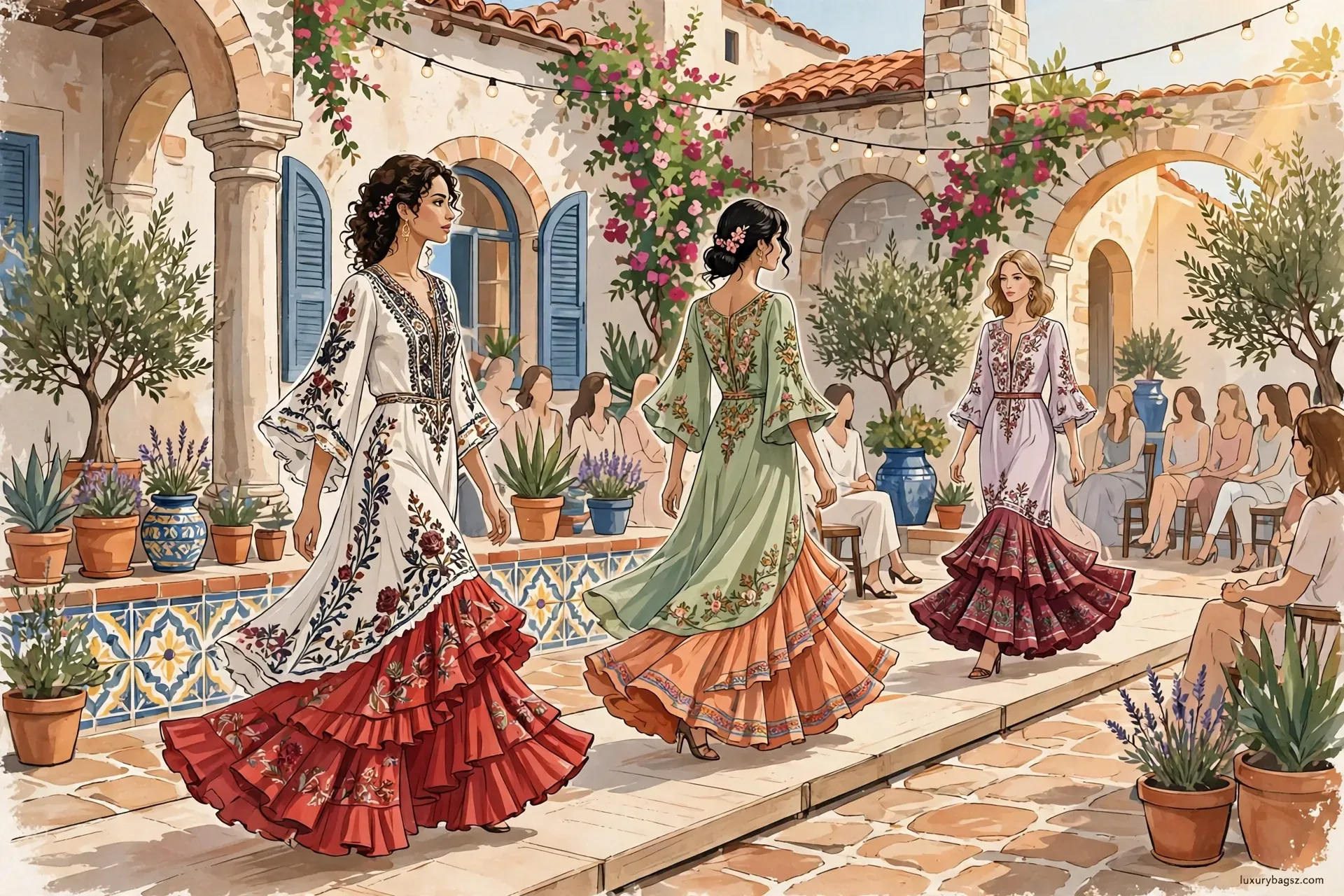
Cruise 2023 went to Seville in Andalusia, drawing on flamenco, equestrian culture and Spanish craft. Cruise 2024 travelled to Mexico City for a Frida Kahlo tribute, working with artisans from Oaxaca and Chiapas on embroidery and weaving.
Cruise 2025, staged in Scotland, honoured Mary, Queen of Scots, with tartan, tweed and knitwear reinterpreted through Dior's lens. Each show was criticised by some as cultural tourism, and praised by others for paying local artisans properly and giving them credit.
Whatever your view, the Cruise shows changed how luxury houses travel. They showed that a runway can be a meeting place between a Paris house and a local craft tradition, rather than a simple export of Paris style.
Couture Craft on the Runway
Chiuri's haute couture shows were quieter than her Cruise spectacles, but they carried her strongest craft message. She treated couture as living heritage, not museum work, and she put ateliers and schools of craft at the centre of the story.
The Judy Chicago banners are the best example, since they were made by embroiderers at the Chanakya School of Craft in Mumbai. That partnership lasted across several seasons and gave Indian embroidery a visible, credited place on a Paris couture runway.
Her couture also honoured women through its themes. The Spring/Summer 2023 Haute Couture show paid tribute to Josephine Baker, the dancer, singer and resistance figure, with fluid gowns and a stage that celebrated Black artistry.
For shoppers, the couture shows matter because their craft filters down. Embroidery techniques, colour stories and silhouettes from couture often reappear in ready-to-wear and accessories, including bags and shoes, within a season or two.
The Bar Jacket, Reimagined
Christian Dior's Bar jacket, from the 1947 New Look, is the house's most sacred silhouette. Chiuri returned to it again and again, but she refused to copy it. Instead she softened, cropped, lengthened and unbuttoned it for modern life.
Early shows paired a Bar-inspired jacket with jeans, flat shoes or a tulle skirt, turning a formal icon into everyday clothing. Later shows used the jacket in tailoring sets, in softer fabrics, and in versions that could be worn open rather than cinched tight.
That approach sums up Chiuri's method. She respected Dior's archive, but she treated it as a starting point for new women, not as a rule book. The Bar jacket survived her tenure precisely because she let it change.
If you love Dior tailoring, her Bar jacket versions are a useful reference point. They show how a historic shape can stay recognisable while becoming far more wearable, which is a good test for any heritage piece you consider buying.
Bags and Accessories Born on the Runway
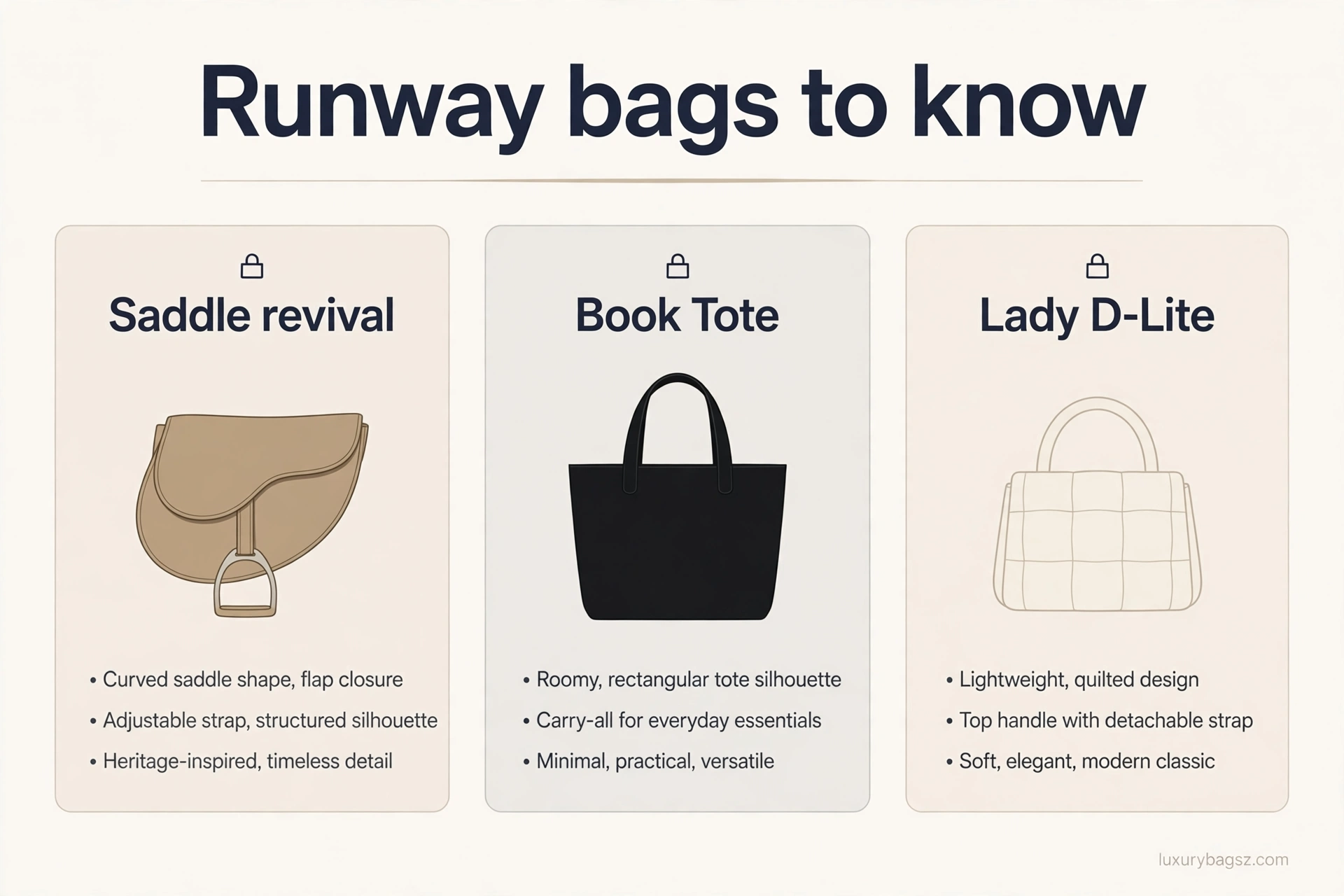
Chiuri's runways also reshaped Dior's accessories. The Saddle bag, first designed by John Galliano in 1999, was revived on her runways in 2018 and became one of the decade's biggest bag comebacks. Our Saddle bag guide explains the revival in detail.
The Book Tote arrived in 2018 too, as a practical, embroidered carry-all that worked on the runway and in real life. Its success showed that Chiuri's runway ideas could become commercial icons, not just show pieces. See our Book Tote sizes guide for the current sizes.
Other runway accessories included the J'adior slingbacks, the Lady D-Lite as a lighter take on the Lady Dior history and sizes story, and jewellery that echoed each show's theme. Accessories were never an afterthought in her shows.
That matters for collectors. Bags that debut on a memorable runway often hold interest longer, since buyers remember the show as well as the bag. The Saddle revival is the clearest proof of that effect.
The Later Years and the Rome Farewell
Chiuri's later years balanced spectacle with reflection. Her final ready-to-wear show, Autumn/Winter 2025-26, drew on Virginia Woolf's Orlando, with scenography by Robert Wilson, and it asked how identity shifts across time and gender.
That show is a fitting video companion to this guide, since it captures her late style: literary, theatrical and still wearable. The film of the show remains a good starting point for anyone new to her work.
Her very last Dior show came on 25 May 2025, when Cruise 2026 was staged at Villa Albani Torlonia in Rome. The 80-look show, split between 49 ready-to-wear and 31 haute couture looks, was themed "Bella Confusione" and made with the Tirelli atelier.
Rome was a homecoming for Chiuri, who was born in the city, and the show felt like a farewell letter to both Dior and Italy. She later returned to Fendi as chief creative officer, closing a circle that began with her early career there.

What Chiuri Changed, and What to Watch Next
Chiuri changed Dior in three lasting ways. She made feminist ideas a normal part of luxury runway language, she gave artist and artisan collaborations a central role, and she proved that commercial bags could grow directly from runway storytelling.
Her successor inherits a house where the runway is expected to say something, not merely show clothes. Future Dior shows will be judged against that standard, whether they embrace it or push against it.
For readers, the best way to judge her legacy is to watch the shows in order. Start with the 2016 debut, then the Judy Chicago couture, then a Cruise show such as Puglia or Mexico City, and finish with the Rome farewell.
You will see a designer who trusted her audience to care about craft, history and politics at once. That trust, more than any single slogan, is why her era still defines how we talk about Dior runways today.
Frequently Asked Questions
When did Maria Grazia Chiuri join Dior?
She was appointed artistic director of Dior women's collections in 2016, succeeding Raf Simons, and she was the first woman to lead creation at the house.
What was her debut show?
Her debut was Spring/Summer 2017, shown in September 2016, famous for the "We Should All Be Feminists" T-shirts paired with tulle skirts and fencing-inspired jackets.
Which artist made the embroidered banners for Dior couture?
Judy Chicago collaborated with the Chanakya School of Craft on 21 embroidered banners for the Spring/Summer 2020 Haute Couture show at the Rodin Museum.
Where did Chiuri stage her Cruise shows?
Key Cruise locations included Lecce in Puglia, Seville in Andalusia, Mexico City, and Scotland, each working with local artisans and craft traditions.
What is the Saddle bag revival?
The Saddle bag, first designed in 1999, was revived on Chiuri's runways in 2018 and became a major commercial comeback for Dior.
When did Chiuri leave Dior?
She stepped down in 2025. Her final show was Cruise 2026, staged in Rome on 25 May 2025, and she later returned to Fendi as chief creative officer.
What was her final ready-to-wear show?
Her final ready-to-wear show was Autumn/Winter 2025-26, inspired by Virginia Woolf's Orlando, with scenography by Robert Wilson.
How many looks were in the Rome farewell show?
The Cruise 2026 show in Rome featured 80 looks, split between 49 ready-to-wear looks and 31 haute couture looks.
Did Chiuri design the Book Tote?
The Book Tote was introduced under Chiuri in 2018 and became one of her most successful accessories, alongside the Saddle revival.
Why do her runway shows still matter?
They made feminist themes, artist collaborations and artisan craft central to luxury runways, and they turned runway moments into lasting commercial icons such as the Saddle and Book Tote.
Conclusion: A Runway Era Built on Ideas and Craft
Maria Grazia Chiuri's Dior runways will be remembered for more than a T-shirt. They joined slogans to skilled craft, Paris to Puglia, Seville, Mexico City and Scotland, and couture tradition to contemporary life.
Her shows asked audiences to look closely, to learn a name, a place or a technique, and to see fashion as part of wider culture. That ambition sometimes divided critics, but it never left her shows forgettable.
Watch the debut, the couture banners, a Cruise journey and the Rome farewell in sequence, and her era comes into focus. It was a nine-year argument that luxury can be both beautiful and thoughtful, and Dior is still living with its consequences.