Seasonal Trend Reports: Fall Denim, Y2K Revivals and Sneaker Cycles Explained
Relaxed Denim, Edited Y2K and Slim Retro Trainers
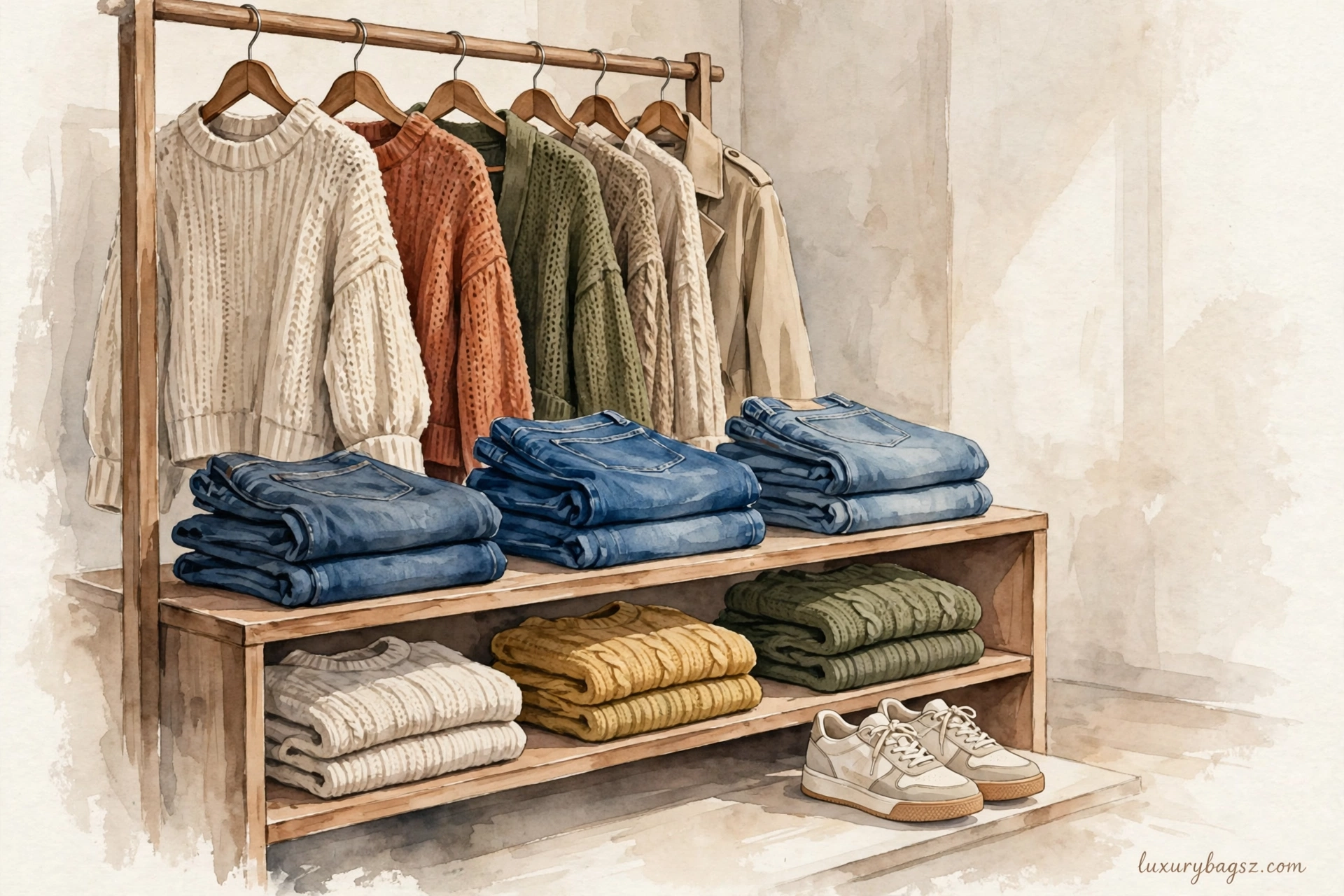
Fall 2026 denim is relaxed and darker: wide-leg and straight cuts, longer hems and cleaner washes, with barrel shapes as the bolder option. Skinny styles sit this season out. For staying power, an unadorned indigo pair cut straight through the leg is the safest purchase, while denim skirts and tailored jackets extend the look beyond jeans.
Y2K returns in edited form, so choose a single gesture such as a baguette bag, a low-slung belt or tinted sunglasses rather than a full costume. Trainers swing towards court styles and retro runners with a slim, low profile in suede with gum soles, though cushioned shapes remain the comfort choice. Shop your wardrobe first before buying.
Reading the Season Without Being Ruled by It: Reports in Brief
A seasonal trend report is a digest, not a decree: editors collect what repeated across runways, street style and retail, then group it into themes — a denim shape, a revived era, a sneaker silhouette — so readers can pick the one or two ideas that suit a real wardrobe. Used well, a report saves money. It tells you which of your existing pieces are suddenly current again, which single purchase would update everything, and which headline trend to admire and calmly skip.
Key Takeaways
- Reports summarise repetition: one show is an opinion, five are a theme.
- Fall 2026 denim centres on wide, straight and relaxed shapes in darker washes.
- The Y2K revival rewards raiding your own archive before buying anything new.
- Sneaker trends now swing between slim retro profiles and soft, cushioned runners.
- A viral film or celebrity moment can spike a trend for one season only.
- Filter every report through your wardrobe, budget and climate before shopping.
What a Seasonal Trend Report Actually Is
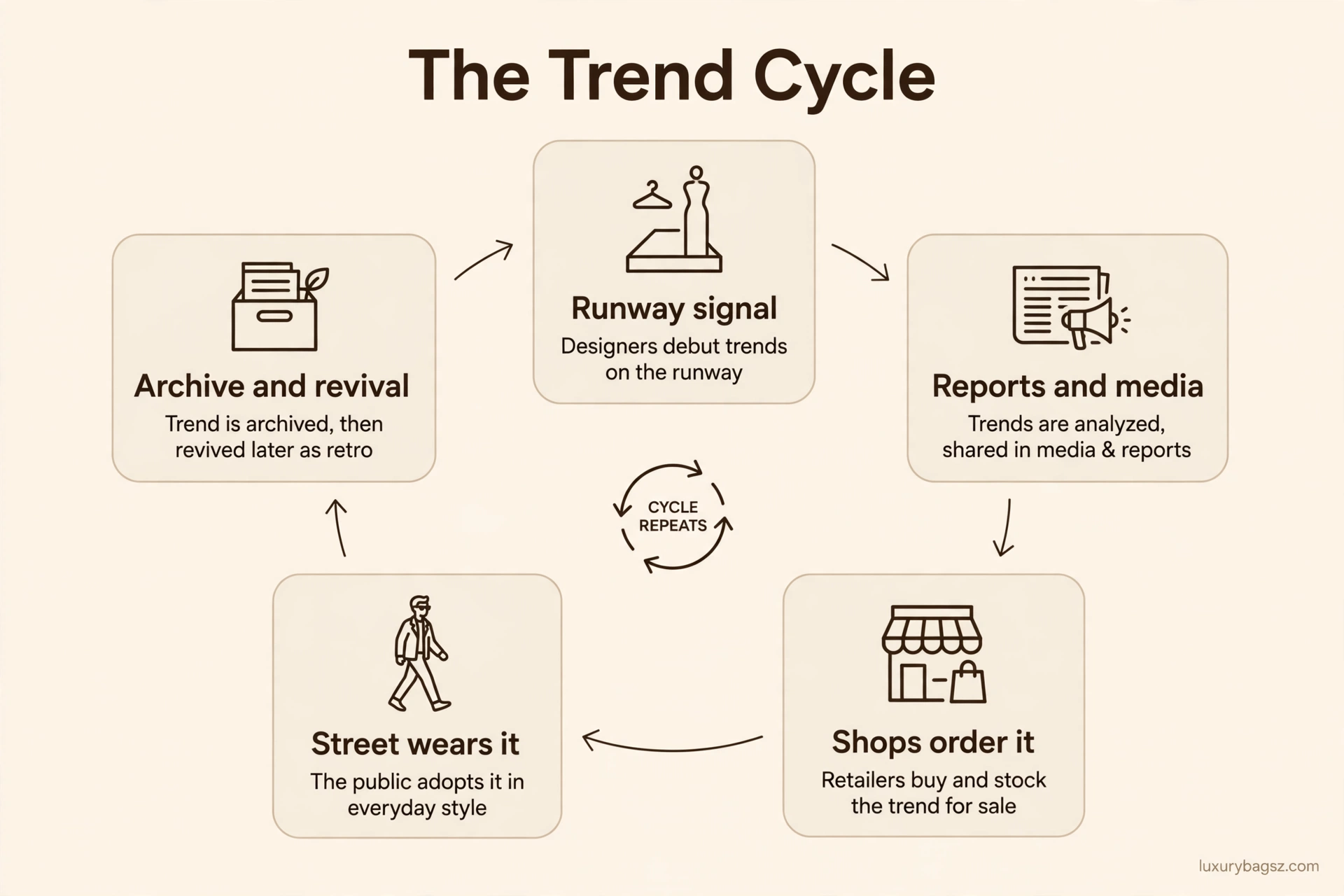
After each fashion season, editors, buyers and forecasters compare notes across hundreds of shows and presentations. The report they publish is a compression of that comparison: the colours, shapes and styling tricks that kept recurring. Good reports separate three layers — what was shown, what shops ordered, and what people are actually wearing. Weak reports blur them, which is why a headline trend sometimes never appears on a real street. Reports also come in flavours: runway digests, high-street edits, data-driven round-ups from search and sales figures, and the single-topic deep dive. Knowing which kind you are reading tells you how much to trust it.
The Five Building Blocks of Every Report
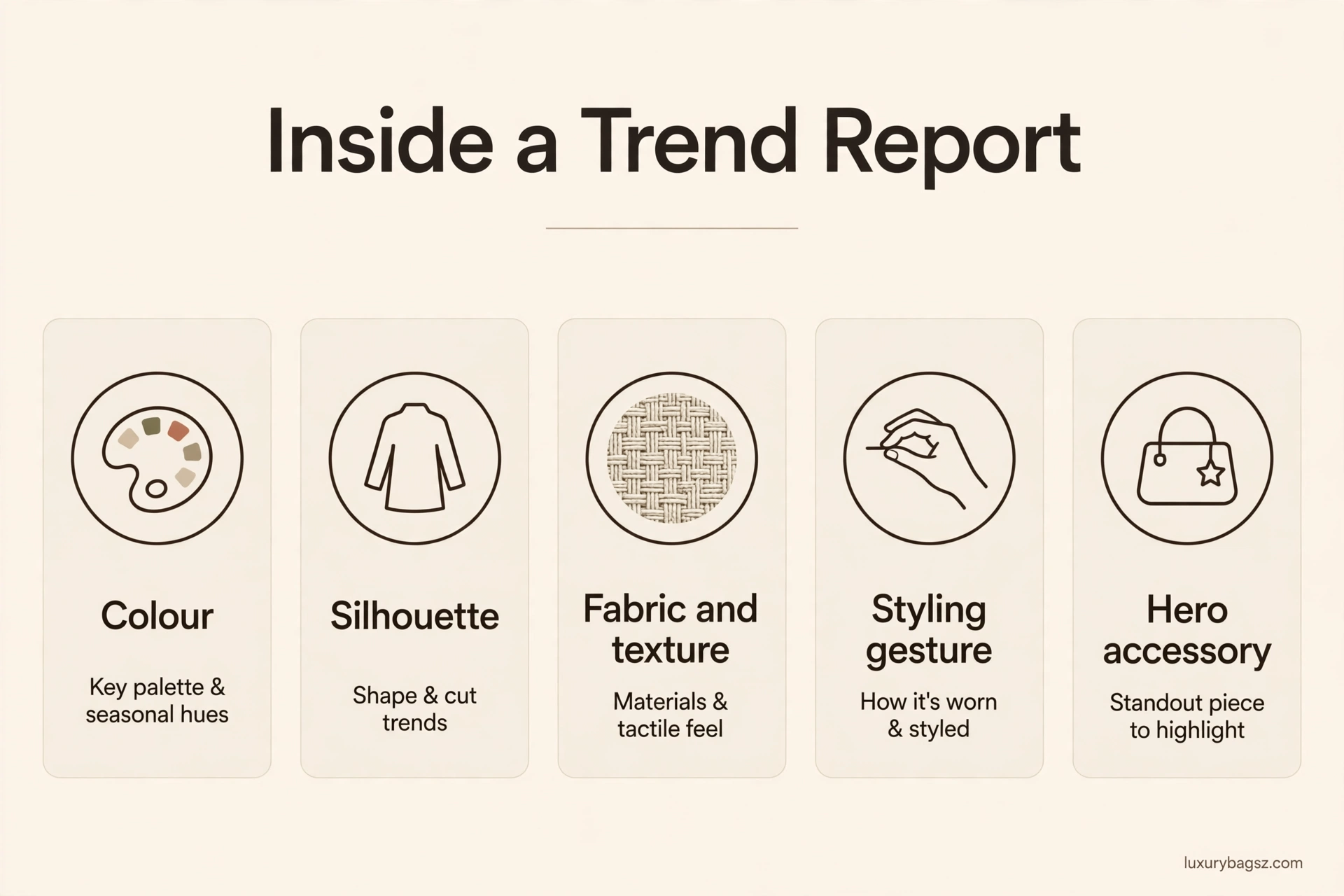
Almost every digest is built from the same five blocks: colour, silhouette, fabric or texture, styling gesture, and the hero accessory. A season feels new when at least two blocks change at once. Colour is the fastest block and the cheapest to join. Silhouette is the slowest and most expensive, because it asks for new trousers, coats and dresses rather than one scarf. The styling gesture — a tucked shirt, a belted coat, socks with loafers — is the free block. Smart readers mine reports for gestures first, because they update clothes already hanging in the wardrobe.
Fall Denim: The Shape of the Season
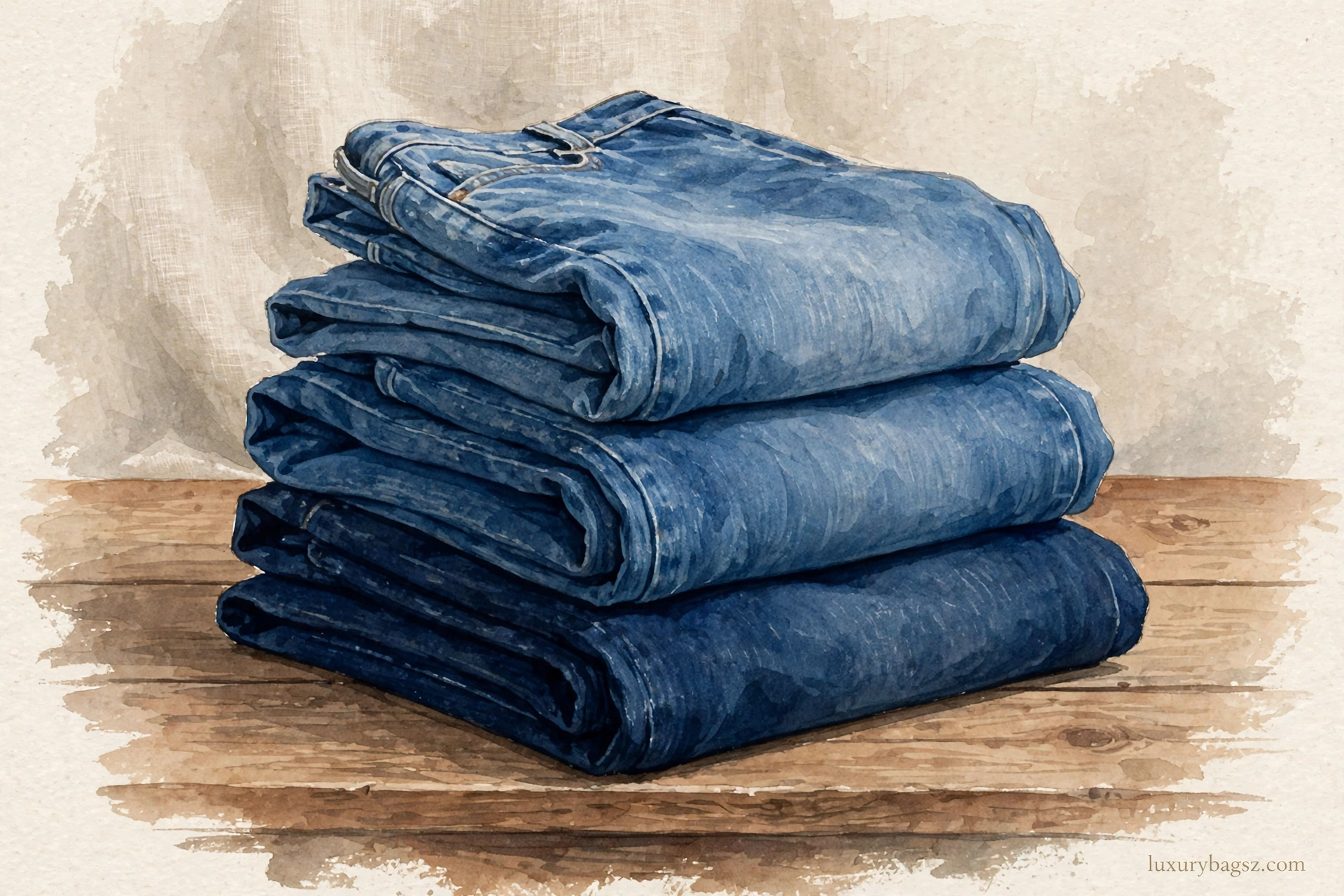
The Fall 2026 denim story is relaxed: wide-leg and straight jeans, long hems, darker and cleaner washes, and denim worn head to toe in matched tones. Skinny cuts rest in the archive for now. Barrel and horseshoe shapes are the fashion-forward option, while a plain straight leg in indigo is the buy that will still look right in three years. Denim skirts and tailored denim jackets carry the theme beyond jeans. The denim mood reaches accessories too: our edit of designer denim bags shows the same washes translated into carry. Whichever shape you pick, follow our guide on how to care for denim and wash jeans so the wash you bought is the wash you keep.
Y2K in 2026: Revival, Not Re-enactment
The Y2K revival has run long enough to become a wardrobe resource rather than a costume. Low-rise cuts, baby tees, baguette bags, butterfly details and shiny fabrics return each season in edited form. The 2026 way to wear it is selective: one Y2K gesture — a baguette bag, a low-slung belt, a pair of tinted sunglasses — against otherwise current, relaxed shapes. Head-to-toe 2002 reads as fancy dress. Original Y2K pieces are now genuine vintage, and pre-owned rails are full of them. Check zips, lining and denim weight carefully; the era's high-street quality varied wildly, and nostalgia is not a condition grade.

The Viral Moment: When a Film Sets a Trend
Some seasons are hijacked by a single cultural moment — a hit film, a star's wardrobe in it, a look that floods social feeds within a week. The so-called Marty Supreme moment is the current example: one character's styling becomes a shorthand everyone copies. Reports handle these spikes carefully, because moment-trends burn fast. The jacket shape or colour may be worth buying; the exact costume copy rarely is. A useful rule: if a trend needs the reference to make sense, it will date with the reference. If the piece works stripped of the moment — a good leather jacket, a clean trainer — it is a wardrobe buy wearing a trend's coat.
Sneaker Trends: The Slim-Retro Swing
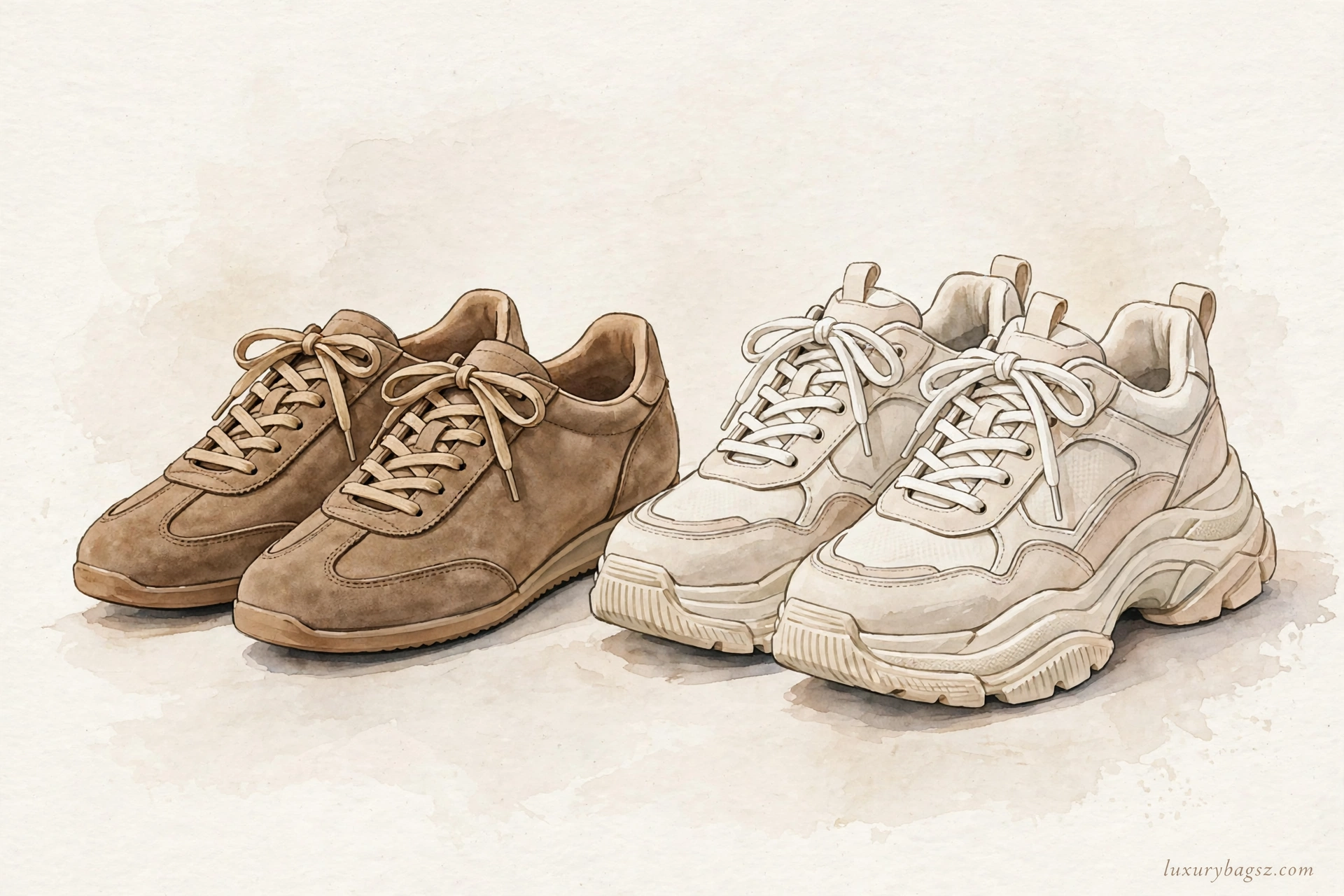
Sneaker reporting runs on its own faster cycle. The current swing is away from maximal chunky soles towards slim, low-profile retro runners and court shoes in suede and muted colour, with gum soles everywhere. Cushioned performance shapes remain the comfort choice and now come in cleaner, quieter colourways that work with tailoring. The two families coexist; reports that declare one dead are selling, not describing. Buy sneakers by use first and trend second. Our best sneakers buying guide walks through fit, sole and leather checks that matter more than the season's silhouette headline.
Turning a Report Into a Shopping List
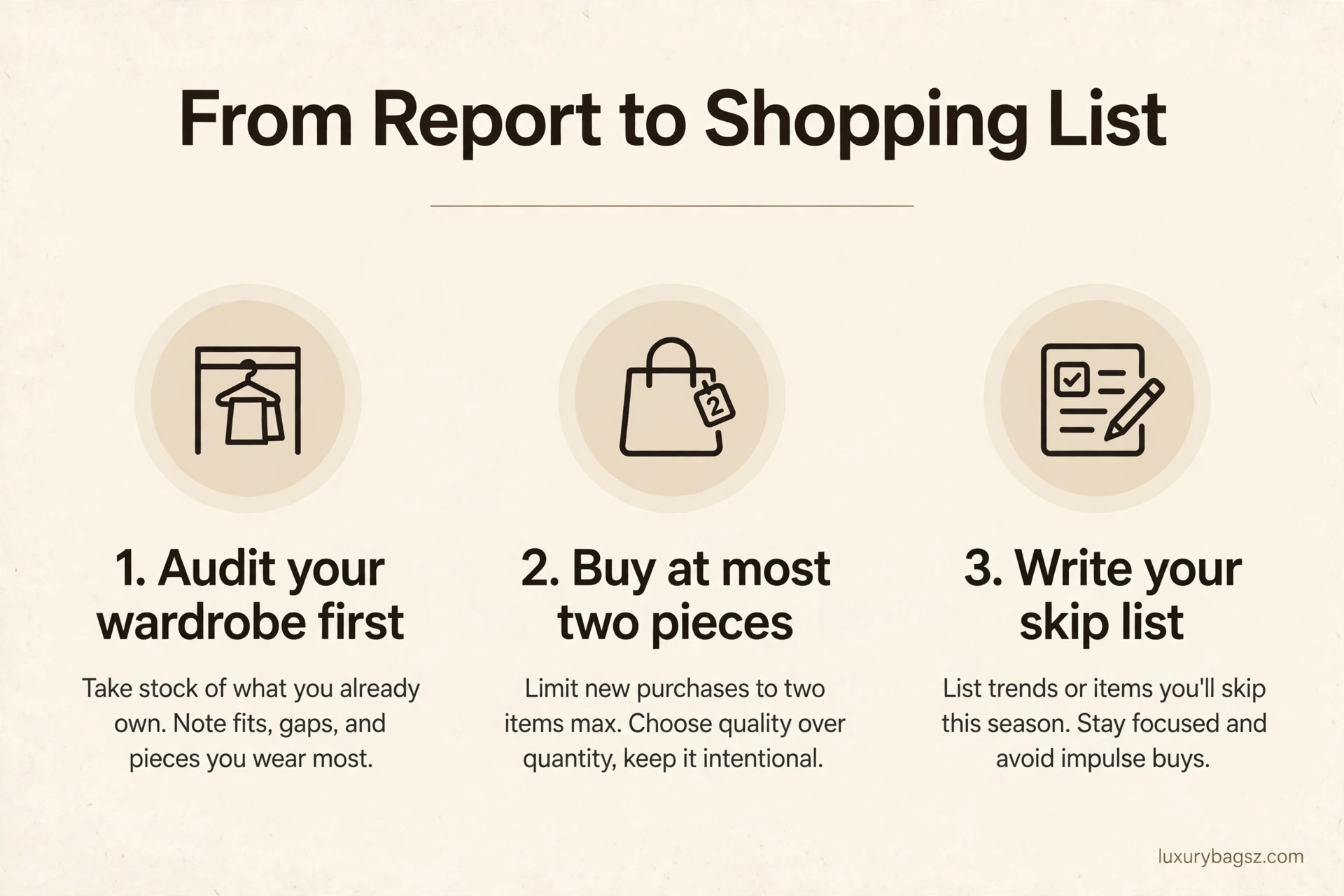
Start with a wardrobe audit: list what the report says is current that you already own. Most readers find two or three revived pieces waiting, which is the report's first saving. Then allow yourself one, at most two, purchases: the item that unlocks the most outfits. Our tracking of designer handbag trends follows this logic — one well-chosen bag in the season's shape or colour updates a whole rail of older clothes. Write the skip list too. Naming the trends you are consciously ignoring — the rise you dislike, the colour that drains you — stops the late-night, half-convinced purchase that reports are designed to provoke.
How to Spot a Report Worth Trusting
Trust reports that name evidence: how many shows, which retailers, what search or sales data. Distrust reports built on one celebrity photograph and a press release. Check whether the same theme appears in reports from rival publications. Independent agreement is the closest thing trend-watching has to proof. Finally, date-check everything. Trend content is recycled hard online, and a digest written for an earlier year is often reposted as new. A report that cannot tell you which season it describes is not a report; it is wallpaper.
Frequently Asked Questions
How often do seasonal trend reports come out?
The main digests follow the two big seasons, spring/summer and autumn/winter, with smaller resort and pre-fall updates between them. Sneaker and denim reports often run on a faster, quarterly rhythm.
What denim should I buy for Fall 2026?
A straight or wide leg in a dark, clean wash is the safest buy, because it suits most bodies and will outlast the season. Fashion-confident readers can try the barrel shape, ideally pre-owned first.
Is Y2K fashion still in, or is it over?
It has settled into a permanent revival resource. Individual Y2K items spike and fade, but baguette bags, low-slung belts and shiny fabrics now rotate through reports regularly, worn one gesture at a time.
What is a viral-moment trend?
It is a spike caused by one film, show or celebrity look rather than by many runways. These trends are fun and fast, so borrow the colour or shape in a cheap or pre-owned piece rather than investing heavily.
Are chunky sneakers finished?
No. Reports currently favour slim retro profiles, but cushioned chunky shapes remain the comfort staple and are styled more quietly now. Wear the pair that suits your feet and your clothes, not the headline.
How many trends should I adopt each season?
One or two is plenty for most wardrobes. Choose the ones that flatter you and connect with clothes you own, and consciously skip the rest. A written skip list prevents impulse buys later.
Do trend reports differ by country?
Yes. Climate, retail and local street style shift the emphasis, so a report from a hot-climate edition will stress fabrics a northern edition ignores. Read the edition closest to your own weather and shops.
Can I follow trends on a small budget?
Easily, if you start with styling gestures and colour. A belt worn a new way, a scarf in the season's colour, or a pre-owned bag in the current shape delivers the update for very little money.
Why do reports sometimes contradict each other?
Because they measure different things: runway shows, shop orders, search data or street style. When reports disagree, the wearable truth is usually in the overlap — the themes several methods agree on.
Should I throw out last season's shapes?
No. Silhouette cycles rotate over years, and stored pieces regularly return to reports. Keep quality basics and distinctive pieces in good condition, and retire only what is worn out or never fitted you.
Summary: Reports Are Maps, Not Orders
A seasonal trend report compresses hundreds of shows into a handful of themes: this season, relaxed dark denim, edited Y2K gestures, slim retro sneakers and the occasional viral spike. Read for the overlap, shop your own wardrobe first, buy at most two pieces, and write down what you are skipping. That is how a digest becomes a tool instead of a bill.