

Must-Have Jewellery Pieces for Women: The 10 Staples Every Jewellery Box Needs
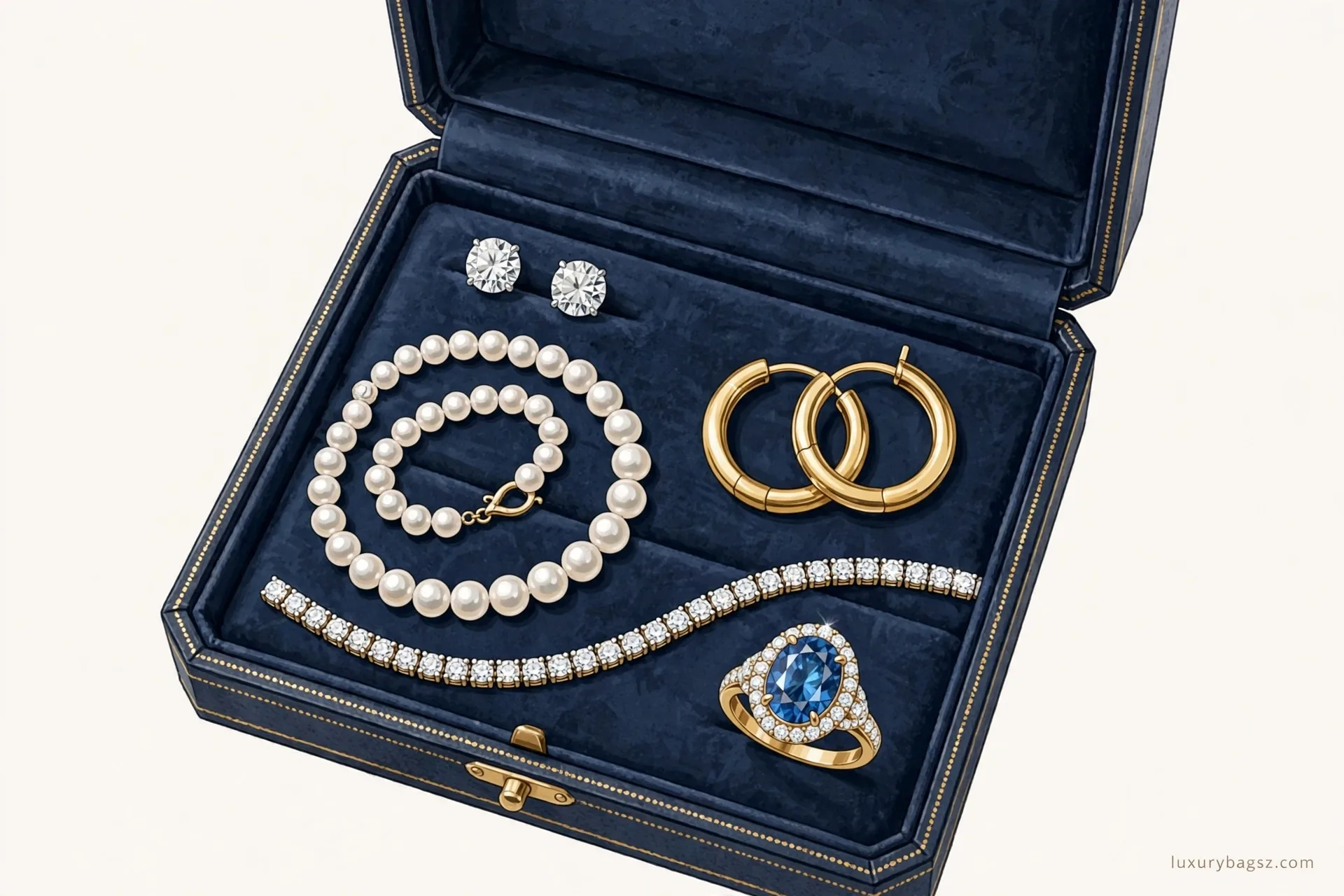
The Complete Box in Brief: Ten Pieces Cover Everything
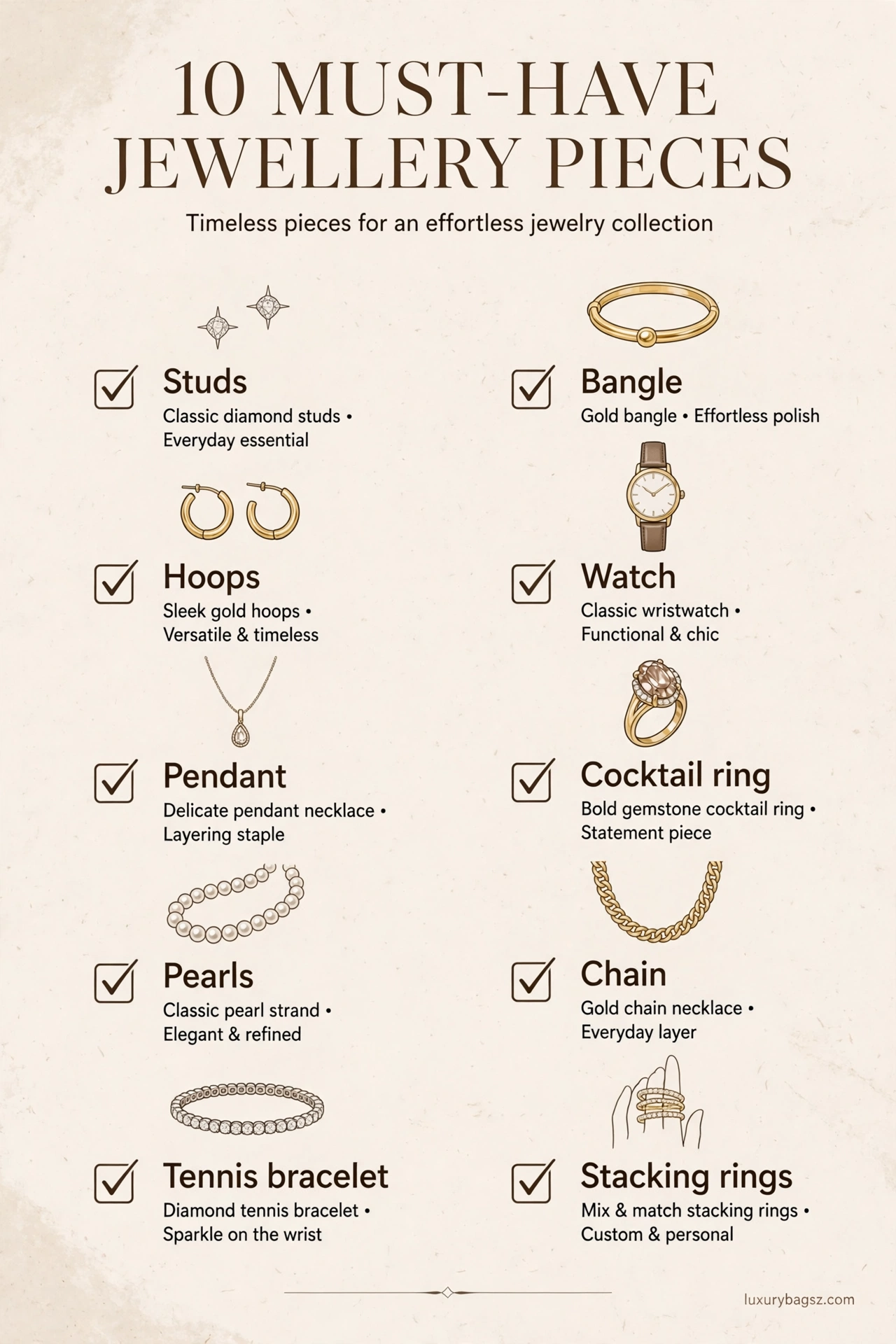
Ten pieces form a complete jewellery wardrobe: diamond studs, gold hoops, a pendant necklace, pearls, a tennis bracelet, a bangle, a classic watch, a cocktail ring, a chain and stacking rings. Together they cover work, weekends, weddings and everything between, in any decade, which is exactly what must-have should mean. You do not need them all at once. Bought in a sensible order, in one metal family first, they build into the box women actually use.
Key Takeaways

- Start with studs, hoops and a pendant: the most-worn three pieces.
- Pearls and a tennis bracelet handle formal dressing for life.
- A bangle or signature bracelet and a classic watch polish the wrist.
- One cocktail ring gives evenings their drama without a whole new set.
- Buy in order, in solid materials, and let milestone pieces come last.
- One metal family first keeps every combination looking deliberate.
Start Where the Wearing Is
The must-haves earn their place through use, not tradition. The pieces below are the ones women reach for weekly across decades of changing fashion. Our everyday fine jewellery guide shows how the core five work on ordinary days. Occasion pieces matter too, but they come after the daily staples in any sensible buying order. Judge every candidate by a simple question: which outfits in my wardrobe does this finish? Three or more answers means a staple.
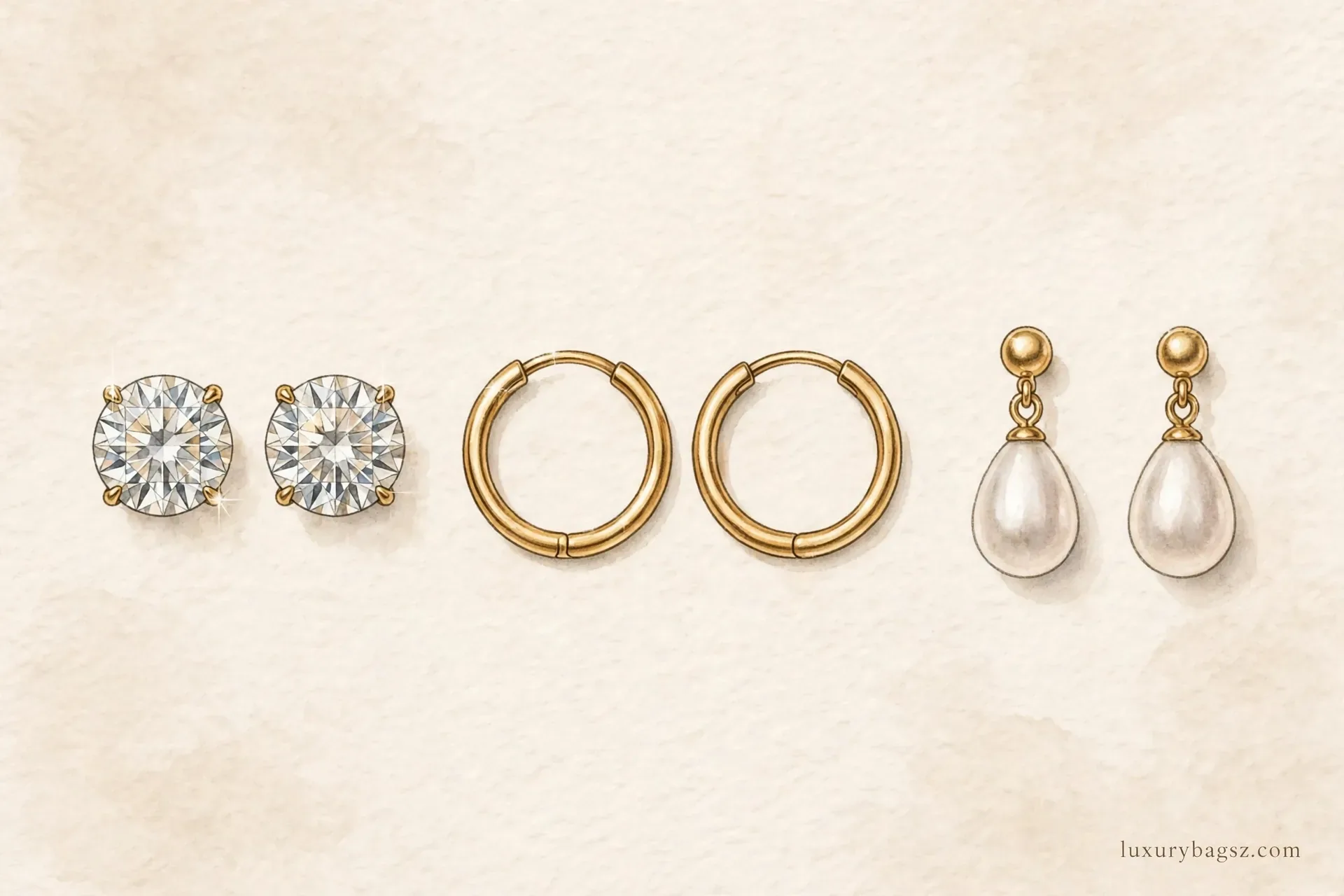
Studs and Hoops: The Earring Pair
Diamond studs are the single most versatile piece most women own: correct at the office, the gym and a black-tie dinner alike. Our everyday diamond jewellery guide covers stud sizes, settings and what to pay for sparkle. Gold hoops are the warmer partner: a medium polished pair lifts plain clothes the way studs cannot, and suits almost every face. Add pearl drops later if your evenings ask for them. Two or three earring pairs, well chosen, outperform a tray of fashion earrings.
The Necklaces: Chain, Pendant and Pearls
A fine chain in your base metal is the hardest worker in the box, worn alone, layered or carrying every pendant you own. A pendant adds the personal note: a small stone, a motif or an initial that becomes recognisably yours. Pearls complete the trio. A classic strand or a modern pearl pendant handles weddings, funerals, interviews and dinners with equal grace. Lengths matter more than quantity. A 45 cm chain and a 50–55 cm pearl or pendant length cover most necklines between them.
The Wrist: Tennis Bracelet, Bangle and Watch
A tennis bracelet is the formal wrist's answer to everything: a line of light that suits a watch, a gown or a plain black dress. A bangle or signature bracelet does the daily work. The Cartier Love bracelet history tells how one design defined the category. A classic watch counts as jewellery as much as equipment, especially in a metal that matches your base family. Wear one hero on the wrist at a time. Two compete; one, chosen well, looks like a signature.
Rings: Bands, Stacks and One Statement
Stacking rings let one hand change mood daily: plain bands, a small stone ring and a textured piece in rotation. A simple solitaire or stone ring serves as the dressed-up hand's centre when an occasion asks more. The cocktail ring is the deliberate exception to everyday restraint: one large, joyful piece kept for evenings and celebrations. Sizing is the practical secret. Rings bought a touch generous in summer and checked in winter get worn; tight rings live in the box.
The Buying Order That Works
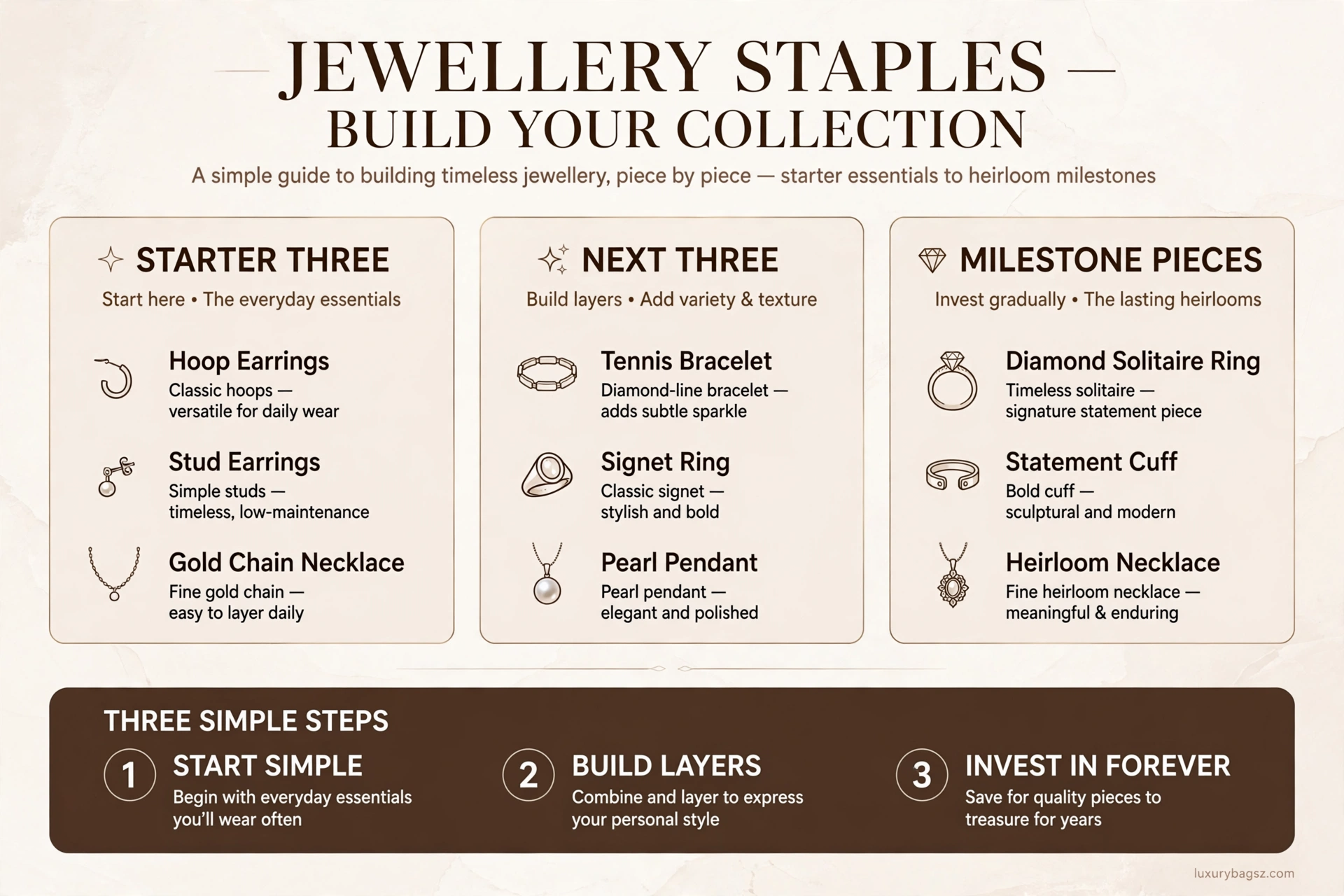
Starter three: studs, a chain with pendant, and hoops. These finish most outfits a woman owns and repay their cost fastest. Next three: a bangle or bracelet, a classic watch and stacking rings, which complete the wrist and hand. Milestone pieces last: tennis bracelet, pearls and the cocktail ring, bought for birthdays, promotions and anniversaries, when budgets stretch. This order keeps every stage coherent. Nothing bought early is wasted when the later, grander pieces arrive.
Budget Sense: Fewer, Better, Longer
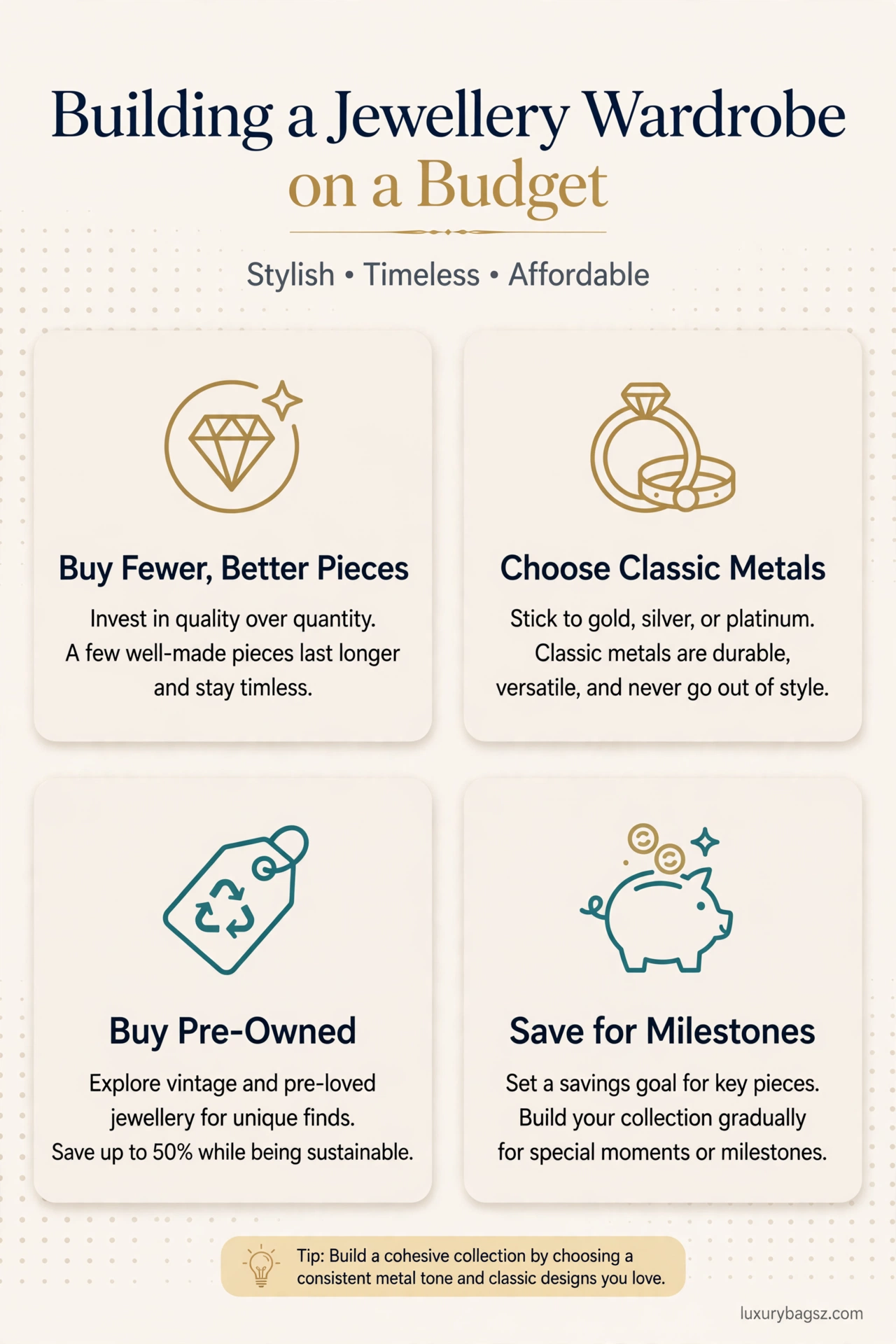
One solid piece outlasts three plated ones and usually out-looks them by the second year, when plating fades at every edge. Our guide to fine jewellery worth investing in explains which staples also hold resale value. Pre-owned is the budget's best friend for milestone pieces, where a tennis bracelet or watch can cost half its retail price. Set a per-piece floor for materials: solid gold, or silver and vermeil from makers who state exactly what they sell.
Making the Box Yours
Staples are a framework, not a uniform. Your version might swap pearls for a locket, or the cocktail ring for a beloved inherited piece. Skin tone guides metal: warm tones glow in yellow and rose gold; cool tones shine in white gold, platinum and silver. Sentiment counts as a category of its own. The piece tied to a person or a moment will be worn and kept when trendier pieces go. Review the box yearly. What was not worn needs a new pairing, a repair, or an honest farewell to a new owner.
After the Ten: The Eleventh and Twelfth Pieces
Once the ten are in place, two optional pieces complete most real collections. The first is a pair of statement earrings, because the starter box is strong on necklaces and wrists and light on evening drama at the face.
The second is a piece of colour: a coloured stone pendant or ring in the shade your wardrobe keeps asking for. The ten staples are deliberately neutral; the twelfth piece is where personality stops being a styling note and becomes an object.
Resist a thirteenth for a while. A box that pauses at twelve considered pieces gets worn completely, while the box that keeps growing develops the familiar problem of twenty pieces and nothing to wear, because nothing was chosen against anything else.
When a thirteenth does arrive, let it replace rather than add, or be the heirloom that no buying order can plan for. Collections stay useful by editing, not only by acquiring.
Fit Numbers for the Ten Pieces
Studs for daily wear usually sit between a quarter and one carat total weight: enough presence to read across a conversation, light enough to forget by lunchtime. Backs matter as much as stones; a secure screw or locking back is part of the piece, not an accessory.
Chains earn their keep at two lengths, around 45 cm for the collarbone and 55 to 60 cm for pendants over clothing, and at a thickness that survives daily wear, roughly 1.5 mm and upward for the chain you never take off.
A tennis bracelet should move a little on the wrist, about a finger’s ease, and never swing to the hand. Too tight strains the clasp with every movement; too loose catches on everything it passes.
Ring sizing deserves a season check: fingers swell in summer heat and shrink in winter cold, sometimes by half a size. Buy the staple rings in the middle of your personal range and have them checked by a jeweller rather than guessed from a chart printed online.
Inherited and Gifted Pieces: The Unplanned Collection
Most real jewellery boxes contain a second, unplanned collection: pieces inherited, gifted or kept from earlier lives that no buying order would have chosen. The staples framework is how you integrate them instead of storing them guiltily.
Start by sorting ruthlessly into three piles: wearable now, wearable with work, and keepsake only. A surprising number of inherited pieces join the daily rotation unchanged once they are cleaned and given a modern partner piece to sit beside.
The middle pile goes to a jeweller with a budget: restringing pearls, replacing a worn clasp, remounting a good stone from an unwearable setting into a simple pendant. Remodelling keeps the material and the memory while fixing the design, and it is usually far cheaper than buying the equivalent new.
Keepsakes stay keepsakes, stored properly and without apology. A box is allowed one drawer of pure sentiment; the mistake is letting sentiment silently occupy the whole box and crowd out the pieces you would actually wear.
Storage, Insurance and the Unglamorous Infrastructure
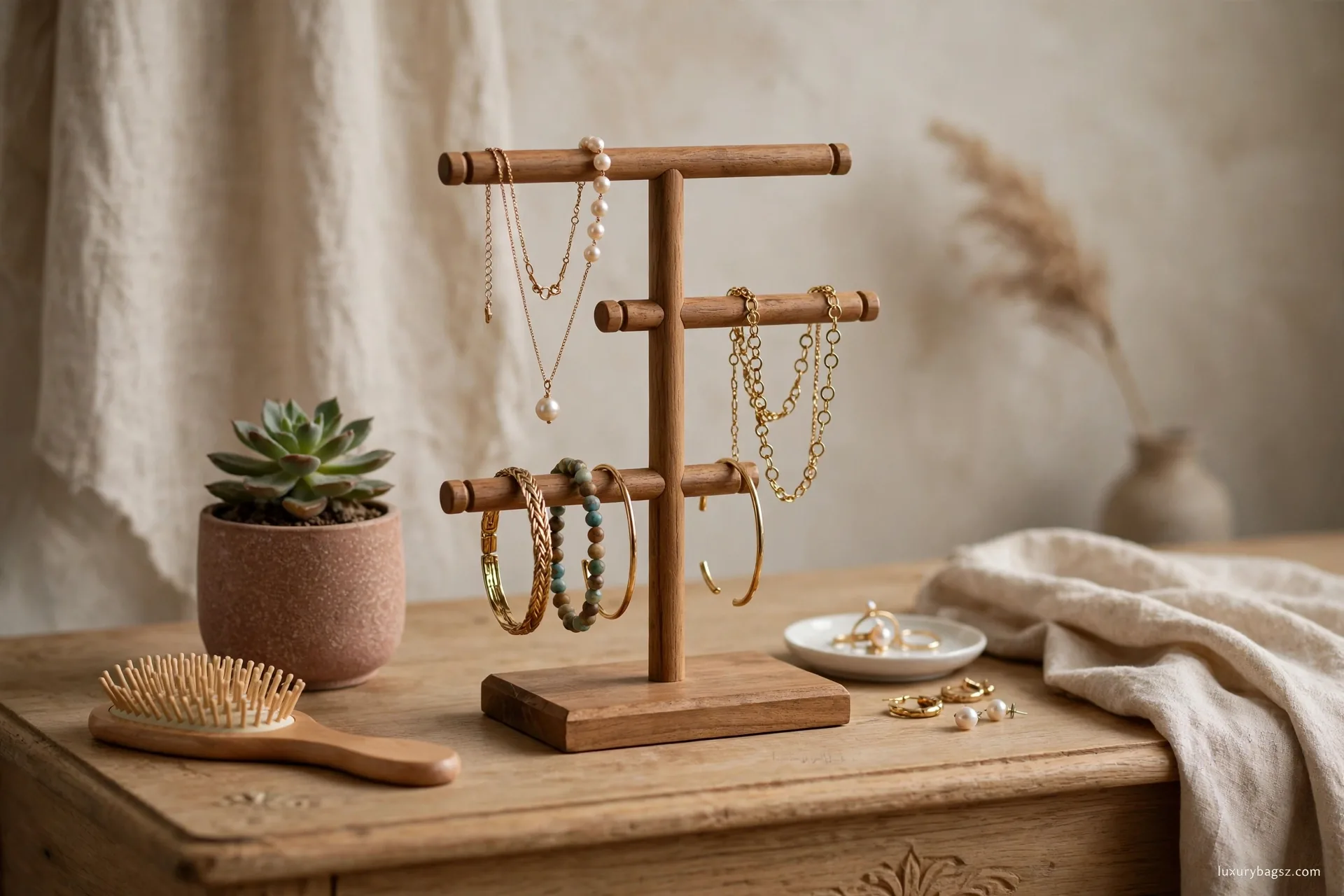
Ten good pieces deserve ten separate homes. Necklaces stored together tangle and abrade; stones stored loose scratch each other, and diamond, the hardest of them, scratches everything including other diamonds. Pouches, a lined tray or individual boxes are the whole system.
A travel roll with individual slots is the travel version of the same discipline, and it doubles as the grab-and-go case in an emergency. Jewellery left in bathrooms suffers steam, sprays and the drop into the sink that every plumber has a story about.
Insurance becomes sensible once the box holds milestone pieces. Photograph every piece, keep receipts and valuations together, and ask your insurer what counts as a listed item; thresholds vary, and discovering yours after a loss is the expensive way to learn it.
Finally, the yearly review from this guide’s earlier advice: clean everything, check clasps and settings, and note what went unworn. The infrastructure is boring precisely so the wearing can be effortless.
The Same Ten at Every Life Stage
The list does not change with age; the materials and the order flex. A first box in your twenties is the starter three in silver, vermeil or 9-karat and 14-karat gold, bought slowly, with the shapes exactly as described, because the shapes are the investment.
Working years add the wrist and hand pieces, in solid metal as budgets allow, and replace the earliest plated stand-ins one by one. Nothing is wasted: the vermeil chain that taught you your length becomes the travel chain you are not afraid to lose.
Milestone decades add the tennis bracelet, the pearls and the cocktail ring, often as gifts with dates attached, which is why those pieces carry the box’s stories as well as its sparkle.
Later, the direction reverses gently: fewer, better, and the pleasure of lending. A complete box built over thirty years in this order is not a collection of purchases; it is a biography you can wear, which is what must-have was always supposed to mean.
The Occasion Map: Which Pieces, Which Day
A job interview wants the quiet end of the box: studs, the fine chain, one ring, the classic watch. The jewellery’s job is to make you look finished, not fascinating, and anything that moves or sounds is a distraction you are paying for.
A wedding as a guest wants polish with restraint: the pearls or pendant, hoops or pearl drops, the bangle, and the rule from formal dressing everywhere, never outshine the couple. White-adjacent jewellery drama is the guest’s one real mistake.
A funeral wants the least jewellery that still looks cared for: studs or small pearls, a plain chain, nothing bright, nothing new-looking. The box serves here by having a respectful register ready without thought.
Black tie is the box at full stretch and the reason the milestone pieces exist: tennis bracelet, the good studs or drops, and the cocktail ring, worn together because the occasion, unusually, can hold all three at once.
An ordinary Tuesday, which is most of the box’s life, wants the starter three and one personal extra. A collection that only works at events has misunderstood its own purpose.
Mistakes People Make Building the Box
Buying matched sets first is the commonest error. Sets look like a shortcut and wear like a uniform, and most women end up splitting them and wearing half. Buy singles that combine freely; combination is the entire point of a wardrobe.
Buying the occasion piece first is the expensive version of the same mistake. The cocktail ring bought before the studs gets worn four times a year while the ears go bare daily, which is arithmetic no sale price can rescue.
Matching every metal perfectly creates the opposite problem from mixing carelessly: a box so uniform it cannot adapt when fashion, a watch or an inherited piece introduces a second metal. One base family with a planned bridge piece is the resilient structure.
Finally, buying by photograph alone. Jewellery is scale, weight and movement before it is sparkle, and every staple in this guide should be tried against your own neck, wrist and ear before it earns its place. Online measurements help; your own mirror decides.
Frequently Asked Questions
What jewellery should every woman own?
Ten staples: diamond studs, gold hoops, a chain, a pendant, pearls, a tennis bracelet, a bangle, a classic watch, a cocktail ring and stacking rings.
What should I buy first?
Studs, because they suit everything, then a fine chain with a pendant, then hoops. Those three finish most outfits and earn their cost back fastest in wear.
Are pearls still worth buying?
Yes. Pearls remain the most adaptable formal piece a woman can own, and modern baroque styles have made them an everyday option too.
How much should a starter set cost?
It varies widely by material. Solid gold staples cost more and last decades; silver and vermeil versions start far lower and teach you your taste first.
Is a tennis bracelet an essential or a luxury?
A luxury that behaves like an essential at formal events. Buy it as a milestone piece, pre-owned if the budget prefers, once daily staples are covered.
Can I mix metals across the ten pieces?
Yes, deliberately: repeat each metal more than once, or bridge them with a two-tone piece, so combinations read as styling rather than chance.
What if I do not wear earrings?
Replace studs and hoops with a second necklace length and a stronger ring stack. The framework bends; the coverage of occasions is what matters.
How do I know my ring and bracelet sizes?
Measure at a jeweller once and note the sizes. Bracelets should move on the wrist without passing the hand; rings should resist slightly over the knuckle.
Which pieces hold value if I resell?
Signed bracelets, classic watches, diamond studs and tennis bracelets in solid gold with papers. Fashion pieces and plated items return very little.
How do I care for a whole jewellery box?
Store pieces separately, wipe after wear, keep pearls away from perfume, and check clasps and settings yearly. Ten cared-for pieces outlast thirty neglected ones.
Final Verdict: Ten Pieces, Zero Panic
A complete jewellery box is not a large one. It is ten well-chosen pieces that between them answer every invitation, interview and ordinary Tuesday. Build it in order, in materials that last, and getting dressed becomes the calmest part of any day, however grand the occasion.






