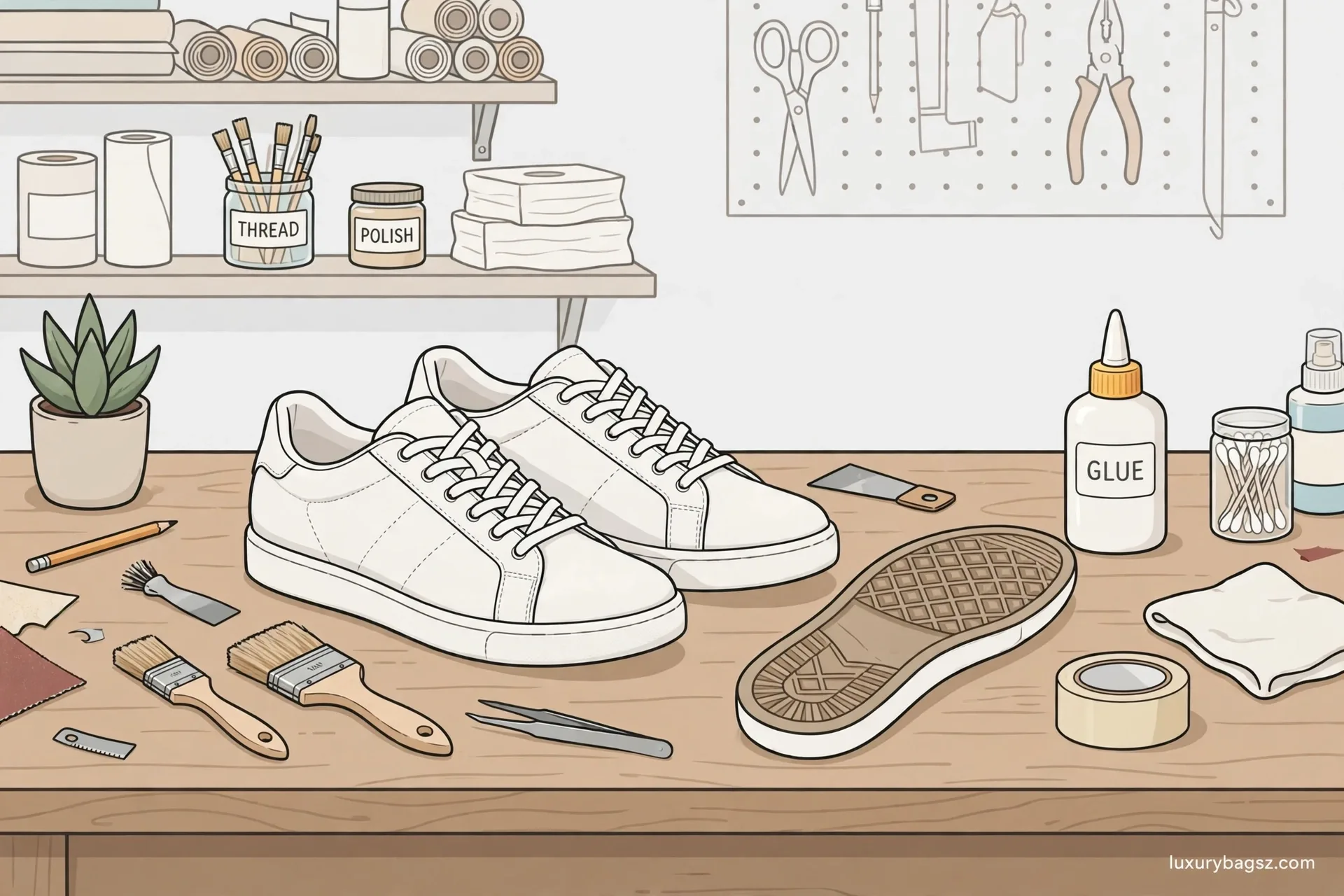
Some sneakers can be resoled, and most cannot be resoled well. The difference is construction and midsole health. Sneakers with stitched cupsoles, welted sneakers and sturdy leather lifestyle pairs are the best candidates. Vulcanised skate shoes and foam-heavy running shoes usually are not worth it, because the midsole wears out with the outsole.
The test is simple: if the upper is sound, the midsole foam is firm and intact, and the sole is stitched or can be cleanly re-cemented, a specialist can help. If the foam is crumbling, the upper is torn, or the shoe cost less than the repair, replacement wins.
Expect $60 to $120 for a sneaker resole from a specialist, with a turnaround of one to three weeks. That price makes sense for premium, limited or beloved pairs, and rarely makes sense for everyday pairs you can replace for the same money.
Key Takeaways
Yes, some sneakers resole well: stitched cupsoles, welted sneakers and sound leather lifestyle pairs.
Vulcanised soles are baked onto the upper and rarely resole well, though partial outsole work is sometimes possible.
The midsole decides everything. Crumbling, compressed or cracked foam cannot be saved by a new outsole.
A reglue fixes a loose sole cheaply, but it is not a resole and it will not fix worn-through rubber.
Sneaker resoles cost roughly $60 to $120, plus shipping for mail-in specialists.
Running shoes with dead foam should be replaced, not resoled, because cushioning is the shoe’s job.
Donor soles from another pair can restore rare sneakers, but fit and feel change.
Always use a sneaker specialist, not a general cobbler, for glued and vulcanised work.
The Short Answer, by Sneaker Type
Leather lifestyle sneakers are the best resole candidates. Pairs with sturdy leather uppers, a stitched cupsole or a welted build, and a firm midsole can be resoled cleanly and worn for years longer. Premium leather, timeless styling and a good fit all argue for repair.
Skate shoes split by build. Vulcanised skate shoes, thin and flexible with baked-on soles, rarely resole well. Cupsole skate shoes, sturdier with a moulded rubber cup, resole better, especially when stitched, though a full cupsole replacement changes board feel and needs a specialist.
Running and training shoes are usually poor candidates. Their foam midsoles compress and break down over 300 to 500 miles, around the same time the outsole wears through. A new outsole on dead foam gives a shoe that looks fixed but still feels flat and unsupportive.
Basketball, tennis and hiking-style sneakers follow the same logic: stitched, firm and sound means possible, while foam-dependent, glued and heavily worn means replacement. Limited editions and sentimental pairs are the exception, where donor soles and restoration make sense despite the cost.
How Sneaker Soles Are Built, and Why It Matters
Vulcanised soles are pressed onto the upper with foxing tape, then baked at high heat, curing the rubber into the fabric. The result is thin, flexible and close to the ground, which skaters love. Removing a vulcanised sole usually damages the upper, so a full resole is rarely worth attempting.
Cupsoles are pre-moulded rubber cups with raised sidewalls, into which the upper sits and is glued, and often stitched. They are sturdier and more supportive than vulcanised soles. A stitched cupsole can sometimes be resoled, while an unstitched, purely glued cupsole usually cannot be removed without tearing the upper.
Cemented soles are simply glued on, with no stitching. Many everyday sneakers use this method. A cobbler can re-glue a loose cemented sole, and can sometimes cement a new outsole onto a flat, sound midsole, but the bond is adhesive only and its life depends on surface prep and the midsole’s condition.
Welted and Blake-stitched sneakers are the exception that proves the rule. A few heritage and premium sneakers use boot-style construction, with soles sewn on through a welt or directly to the upper. These resole like boots, cleanly and repeatedly, and they are the sneakers most worth buying if long life matters to you.
The Midsole Test: Pass It or Replace the Shoes
Check the midsole before you spend anything on a resole. Press the foam firmly with a thumb: healthy foam springs back, while dead foam stays dented, feels hard and papery, or crumbles at the edges. Dead foam cannot be fixed by a new outsole, because the cushioning is gone.
Look for creasing and cracking along the midsole sidewall, especially at the heel and the ball of the foot. Deep, widespread creases mean the foam has compressed permanently. A shoe with dead foam may look fine from above, but it will feel flat, unsupportive and tiring on foot.
Check sole separation too. A small, localised gap between midsole and outsole can often be re-glued. Separation running around most of the shoe, or separation where the foam itself is tearing, means the structure is failing, not just the glue, and a resole will not hold.
Finally, check the upper honestly. Torn mesh, split leather, a collapsed heel counter or a broken eyelet row all argue against a resole. A new sole on a failing upper is money spent on a shoe that will fail next at the upper, not the sole.
What a Sneaker Resole Actually Replaces
A full sneaker resole replaces the outsole rubber, and sometimes the midsole layer, while keeping the upper. The specialist removes the old outsole, prepares the midsole surface, cements or stitches the new outsole on, and trims and finishes the edges. Some services also clean and condition the upper.
A half-sole repair replaces only the forefoot outsole, where wear is heaviest, leaving the heel area intact. This costs less and suits shoes with localised front wear and a sound heel. It changes grip slightly between front and heel, so it suits casual wear better than sport.
Midsole replacement is rarer and dearer. A few specialists can rebuild a foam midsole or fit a new one, but the work is fiddly, the materials must match the original shape, and the result rarely feels exactly like the original shoe. Ask for photos of previous midsole work before committing to this route.
What a resole cannot do is restore cushioning, fix a torn upper, or make a shoe waterproof again. It is a sole job, not a rebuild. If the shoe needs several major repairs at once, the combined cost usually exceeds replacement, and a new pair is the honest answer.
Sneaker by Sneaker: What Usually Works
Common Projects-style leather sneakers, Axel Arigato-style minimal pairs, and stitched Stan Smith-style leather pairs resole well, because their uppers are sturdy and their soles are simple. Specialists handle these often, and the result looks close to original.
Nike SB Dunks and similar leather skate and lifestyle pairs can sometimes be resoled, especially cupsole versions, but vulcanised versions are harder. Ask a sneaker specialist who has done that exact model, because model-level experience matters more than general cobbling skill.
Running shoes from major brands are usually a no, even premium ones. The foam is the product, and once it is dead, the shoe is done. Trail and approach shoes are a partial exception: specialist resolers handle some, especially stitched models, for hikers who value a broken-in upper.
Luxury sneakers, such as designer leather pairs, are often worth resoling despite high repair costs, because replacement costs far more and the uppers are built to last. Brand repair services exist for some luxury labels, and they use original-style soles that keep the shoe’s look intact.
Costs, Turnaround and the Replacement Maths
A sneaker resole from a specialist typically costs $60 to $120 per pair, depending on the sole, the construction and the region. Mail-in services add shipping both ways, and some charge a deposit, such as $85, before work starts. Half-sole repairs cost less, often $40 to $70.
Turnaround is usually one to three weeks, longer for donor-sole work or midsole rebuilds. If you need the shoes daily, that wait matters, and it is another reason resoles suit second pairs, limited pairs and beloved pairs better than a daily pair you cannot spare.
Do the replacement maths before committing. A $90 resole on a $100 sneaker makes little sense unless the pair is limited or sentimental. A $90 resole on a $300 premium pair, or a sold-out pair you cannot rebuy, makes clear sense, especially when the upper is still excellent.
Also count the remaining life. A resole typically adds six to twelve months of regular wear, longer for occasional pairs. If the upper has another year in it, that is good value. If the upper is already tired, the resole buys months, not years, and replacement wins.
Reglue, Donor Soles and DIY: The Cheaper Options
A reglue is the cheapest professional fix for a loose sole. The cobbler cleans the old glue, applies fresh adhesive, clamps the sole, and lets it cure. It costs far less than a resole and suits shoes where the rubber is intact but the bond has failed. It will not fix worn-through rubber.
Donor soles come from another pair of the same or a similar model, and they restore rare or limited sneakers to a wearable state. The donor must match size and shape closely, and the feel changes slightly, because donor rubber has its own wear pattern. This is restoration work, and it costs more than a standard resole.
DIY sole gluing is possible for a simple reglue, using shoe-specific adhesive, clamps and patience, but DIY full resoles rarely satisfy. Without a sole press, glue bonds weakly, edges lift, and the shoe looks home-repaired. For pairs you care about, a specialist’s press and finish are worth paying for.
One DIY job that is worth doing is sole protection: adding a thin protective sole or heel tap to a new pair before wear. This delays the first resole by months and costs little, and it is far easier than any repair after wear. Protect early, repair rarely.
Finding a Specialist and Caring for Resoled Sneakers
Use a sneaker specialist, not a general shoe repair shop, for most sneaker work. Sneaker construction, glues and sole shapes differ from boots and dress shoes, and a specialist will have the presses, donor stock and model experience that a general cobbler may lack. Ask for photos of their sneaker work first.
Brand services are worth checking for premium and luxury pairs. Some brands resole their own sneakers, or recommend authorised repairers, and these routes preserve original soles and styling. For rare pairs, a brand service may also hold donor stock that independent shops cannot source.
After a resole, break the shoes in gently for a few days, because new rubber grips and flexes differently from worn rubber. Avoid heavy rain and extreme heat for the first week, while adhesives fully cure, and check the sole edges early: a small lift caught in week one is an easy fix, while a peel in month three is not.
Care after a resole stays simple: brush off dirt, wipe with a damp cloth, keep shoes dry between wears, and rotate pairs when you can. A resoled sneaker that is cared for will reach the end of its second sole in far better shape than one that is worn daily without rest.
Frequently Asked Questions
Can all sneakers be resoled?
No. Stitched cupsoles, welted sneakers and sound leather pairs resole well, while most vulcanised, foam-heavy and purely glued sneakers do not resole well or are not worth the cost.
Can you resole Nike or Adidas sneakers?
Sometimes, depending on the model. Leather lifestyle pairs and stitched cupsoles can often be resoled by a specialist, while foam running shoes and vulcanised skate shoes usually cannot be resoled well.
How much does it cost to resole sneakers?
Typically $60 to $120 per pair from a specialist, plus shipping for mail-in services. Half-sole repairs cost less, around $40 to $70, while donor-sole restoration costs more.
Is it worth resoling cheap sneakers?
Usually not. When a resole costs nearly as much as a new pair, and the upper and foam are also tired, replacement is better value, unless the pair is limited or sentimental.
Can running shoes be resoled?
Rarely worth it. Running shoe foam breaks down around the same time as the outsole, so a new outsole on dead foam still feels flat and unsupportive. Replace running shoes instead.
What is the difference between a reglue and a resole?
A reglue re-bonds a loose but intact sole, while a resole replaces worn-out sole rubber entirely. A reglue is cheaper but cannot fix rubber worn through to the midsole.
Can vulcanised sneakers like Vans be resoled?
A full vulcanised resole is rarely worth it, because removing the baked-on sole damages the upper. Partial outsole repairs and reglues are sometimes possible through a specialist.
How long does a sneaker resole last?
Usually six to twelve months of regular wear, longer for occasional pairs. The remaining life depends on the upper and midsole, not just the new outsole.
Where can I get sneakers resoled?
Through sneaker restoration specialists, either local or mail-in, and through brand services for some premium pairs. Ask for photos of previous sneaker work before committing.
Do resoled sneakers feel different?
Yes, at first. New rubber grips and flexes differently from worn rubber, so break resoled sneakers in gently for a few days. The feel settles quickly with regular wear.
Final Verdict
Sneakers can be resoled, but only when the shoe deserves it: a sound upper, a firm midsole, and a construction a specialist can work with. Stitched and welted pairs qualify, while foam-dead runners and vulcanised skaters usually do not.
Check the midsole first, do the replacement maths honestly, and use a sneaker specialist for the work. When those three checks pass, a resole is a smart way to keep a beloved or premium pair going for another good year.
Jessica is the founder of Luxury Bagsz and a handbag specialist with more than 10 years in the bag industry. She owns and collects preloved designer bags, has examined over 500 bags by hand, and checks authenticity using the Entrupy app alongside stitching, hardware, engravings and date codes.
The Oran in Short The Hermès Oran is a flat leather slide sandal built around a single strap cut into the shape of the letter H. Designed in 1997 by Pierre Hardy for Hermès’ Year of Africa collection, and named after the Algerian coastal city of Oran, it has been in continuous production for nearly…
Louis Vuitton x Richard Prince is one of the most argued-over collaborations in luxury fashion, and also one of the most misunderstood. People remember it as “the watercolor bags” or “the joke bags,” as if it were one idea. It was actually several ideas at once, all shown for Spring/Summer 2008 under Marc Jacobs, who…
The Rolex 1908 is the watch that made people take Rolex dress watches seriously again. Launched at Watches and Wonders in 2023, it replaced the Cellini collection, introduced a brand-new movement, and — for the first time on a standard modern Rolex — showed that movement through a sapphire caseback. It is also a watch…
Getting an Appointment, in Brief A Hermès bag appointment is a booked meeting with a sales associate to talk about leather goods, not a ticket that guarantees a bag. That one fact explains most of the confusion around it. Hermès does not publish a single global appointment rule, so the right method depends on the…
Search for “Vivienne Westwood snail jewellery” and you will not find a single, current, catalogue product called the Snail Necklace or the Snail Ring, the way you can find the Orb Pendant or the Pearl Choker. That absence is the first thing to understand, and it is the reason this guide is written the way…
The Short Answer on Hermès Clothing Prices Most Hermès clothing sits between about $1,000 and $8,000 in the US: shirts and knitwear typically start in the low thousands, tailoring and dresses in the mid thousands, and coats and leather pieces at the top. Nothing in the clothing line is priced casually, but the spread is…