Coach Bags Guide: Iconic Styles, Price Tiers, Outlet vs Boutique and Pre-Owned Tips
Coach Bags in Brief: Real Leather Without the Four-Figure Leap
Coach bags are leather handbags from the New York house founded in 1941. The range runs from small crossbodies around £150 to premium leather satchels above £650, with the Tabby and Rogue as its best-known styles. The short answer for buyers is this. Buy boutique Coach for the current hero styles and best leather, consider the official outlet for simpler designs at lower prices, and look pre-owned for discontinued and vintage pieces. What sets Coach apart at this level is material honesty. Most bags are real leather with solid hardware, so a well-chosen Coach bag can work hard for years rather than a single season.
Key Takeaways
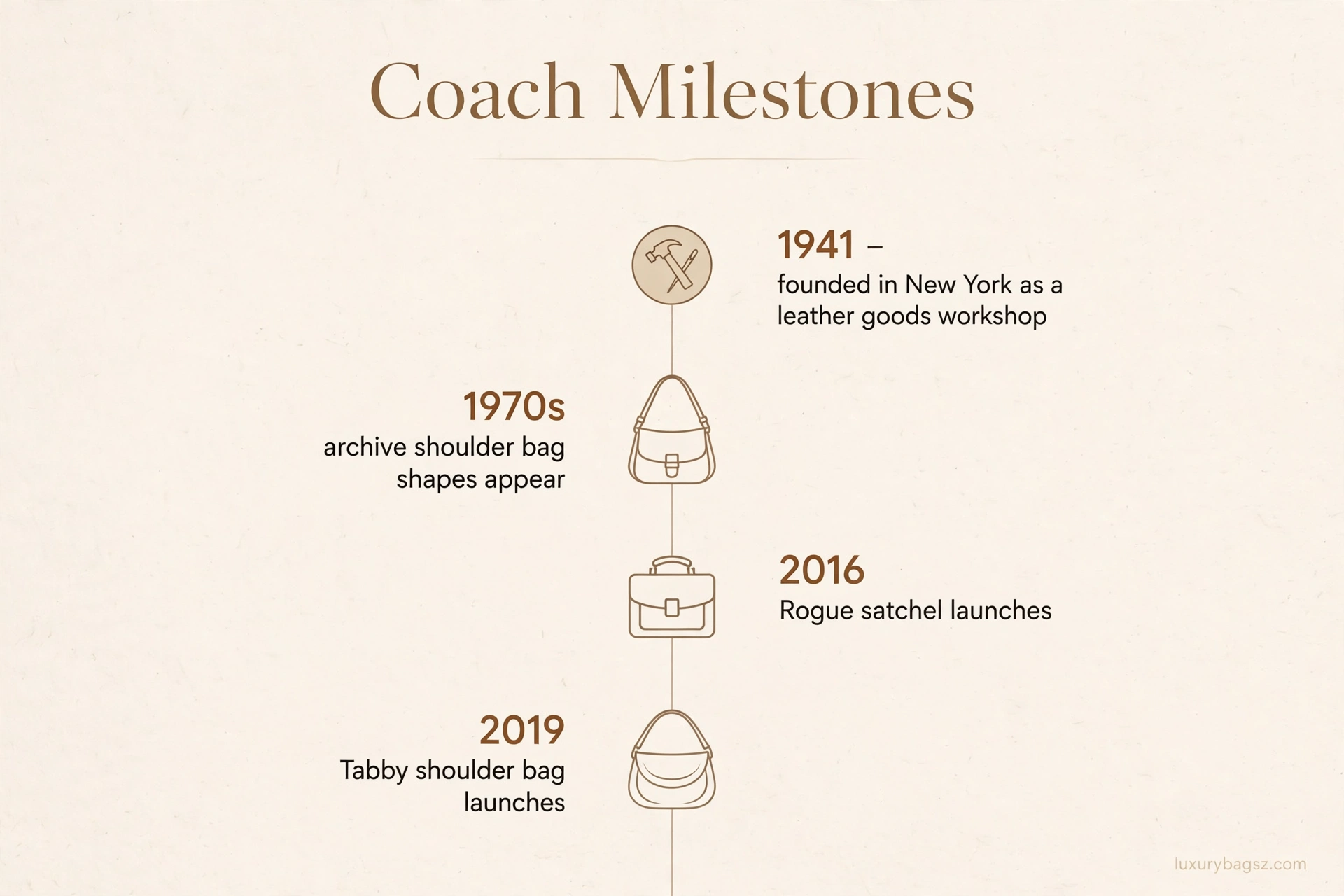
- Coach was founded in New York in 1941 as a leather goods workshop.
- Iconic styles include the Tabby, Rogue, Brooklyn, Empire Carryall and classic totes.
- Typical tiers run from around £150 for small bags to £650 and above for premium finishes.
- Boutique and outlet ranges differ: many outlet bags are made specifically for outlet stores.
- Vintage Coach leather bags are sought after for their thick, unlined glovetanned leather.
- Condition, leather type and a classic colour matter most when buying pre-owned.
A Short History of Coach Bags
Coach began in 1941 in a New York loft workshop, making men's leather goods such as wallets and billfolds. Women's handbags followed, and leather quality became the house's calling card. In the 1970s, under designer Bonnie Cashin and her successors, Coach produced the simple, sturdy shoulder bags that still inspire today's designs. The modern Tabby is a direct descendant of that era. The Rogue satchel launched in 2016 showed how far Coach craftsmanship could stretch, with suede interiors and detailed construction. The Tabby followed in 2019 and gave the brand a global hero bag. Recent ranges add slouchier shapes such as the Brooklyn shoulder bag and east-west carryalls. The through-line is consistent: American leather craft at prices below the European luxury houses. Coach's men's and travel ranges follow the same formula, with leather briefcases, backpacks and holdalls built for daily punishment rather than display. That consistency is useful for buyers. If you like how one Coach leather ages, the rest of the range behaves predictably, which makes building a small rotation of styles low-risk.
The Iconic Styles to Know
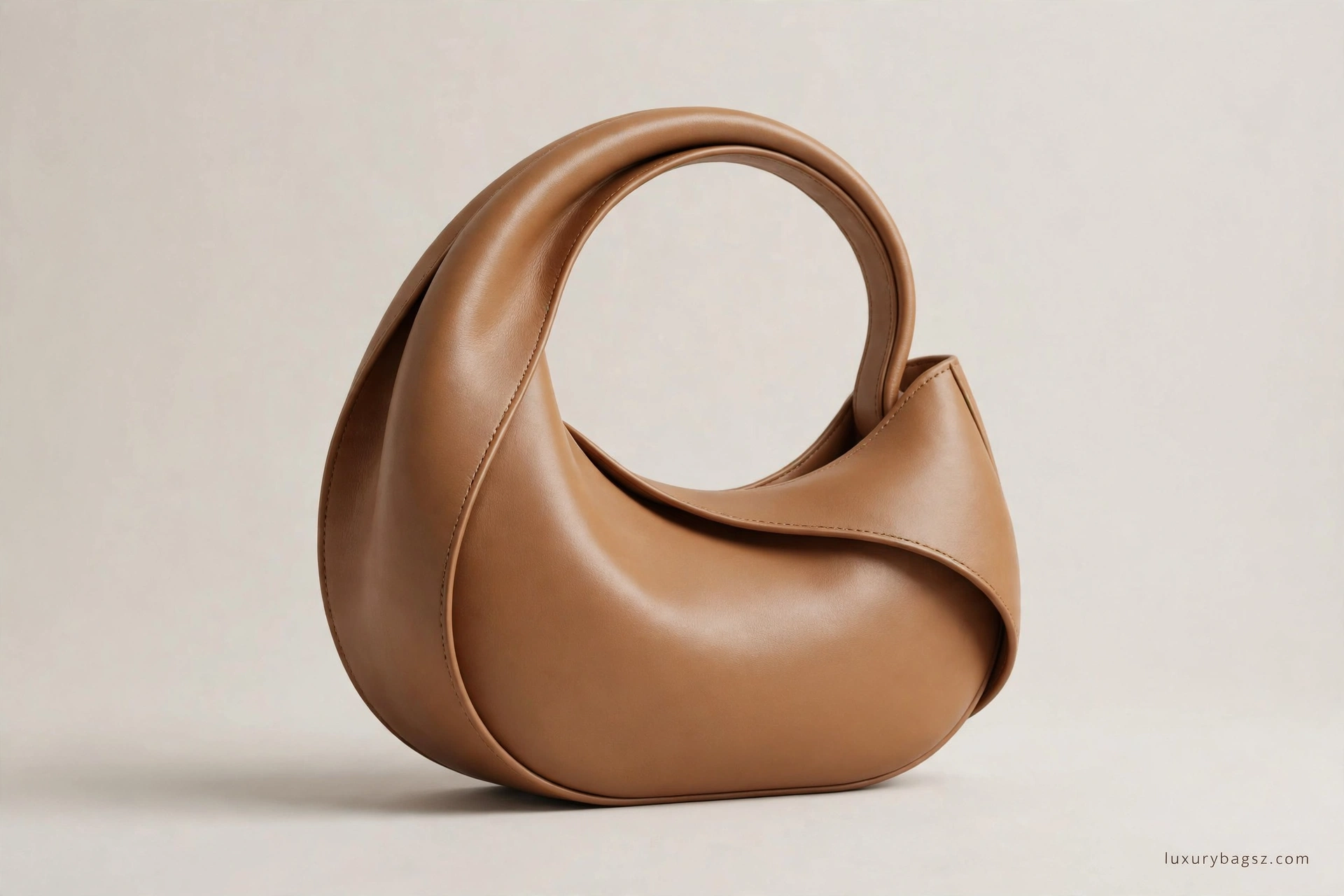
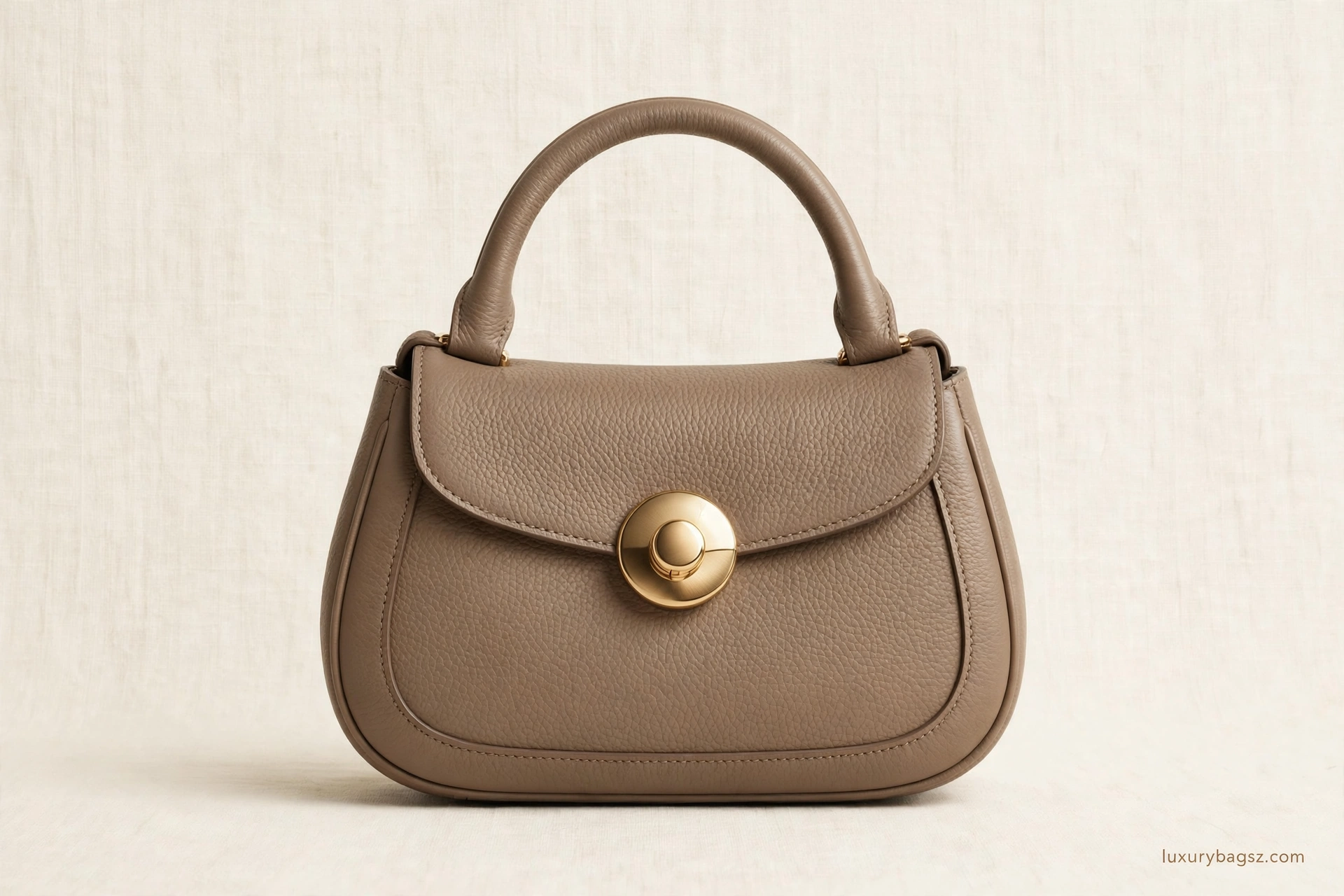
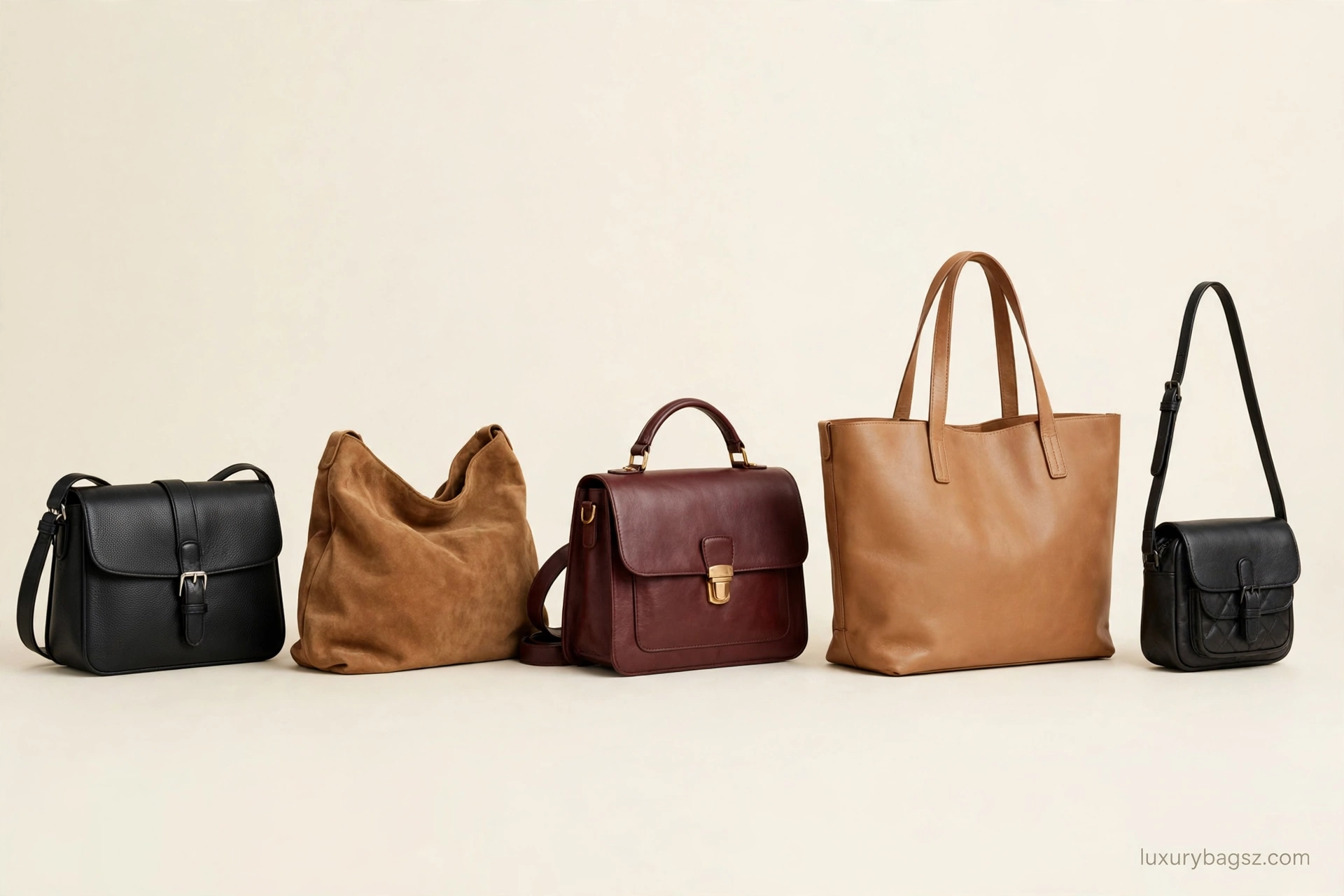
The Tabby is Coach's signature modern bag: structured, flap-fronted and finished with a bold C clasp. Our Coach Tabby bag guide covers its sizes, prices and checks in full. The Rogue is the connoisseur's pick. It is a structured top-handle satchel with side compartments, suede lining and substantial hardware, and it shows Coach leather and construction at their best. The Brooklyn offers the opposite mood: a slouchy, natural-grain shoulder bag that carries more and relaxes with wear. It suits buyers who find the Tabby too formal for daily use. Carryalls and totes, including the Empire Carryall line, handle work and travel loads. Smaller crossbodies and the compact Dinky-style bags cover evenings and light days. Beyond the headline names, Coach keeps a deep bench of practical shapes: saddle bags, hobos, bucket bags and camera-style crossbodies rotate through the range each season. That breadth is a strength and a trap. Seasonal shapes can be excellent, but the icons above are the safer buys, with steadier availability, repair familiarity and resale demand.
Price Tiers: What Coach Bags Typically Cost
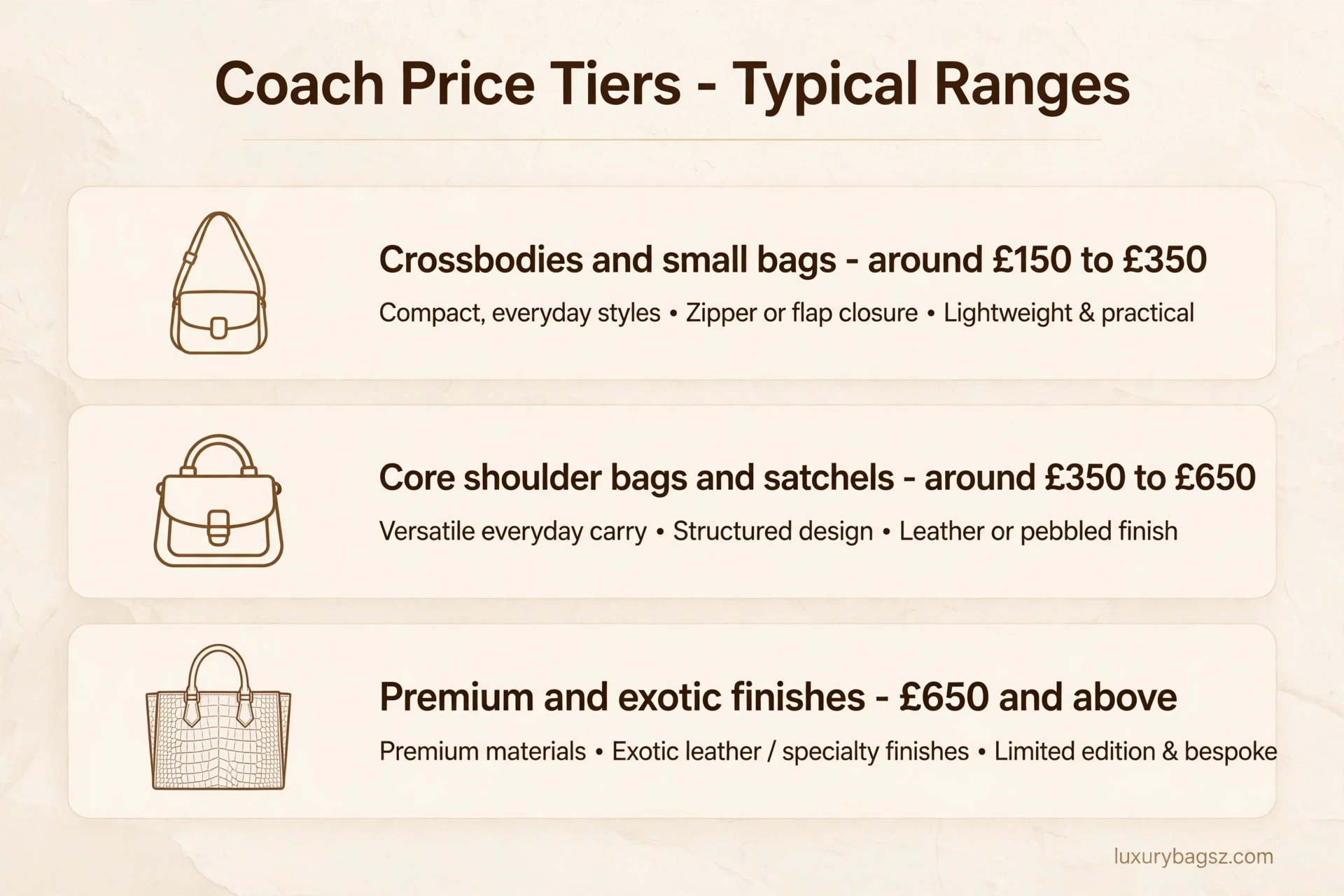
Coach pricing is tiered, and knowing the tiers helps you judge any discount. Small crossbodies and wristlet-style bags typically sit around £150 to £350 in the UK, varying by season. Core shoulder bags, satchels and the standard Tabby and Rogue sizes usually sit around £350 to £650. This is the heart of the range and where leather quality per pound is strongest. Premium finishes cost more. Exotic-embossed leathers, special collaborations and the largest Rogue versions can exceed £650, sometimes by a wide margin for rare materials. Sale and outlet prices can undercut these tiers significantly. Judge each bag on its leather, hardware and construction rather than the size of the advertised markdown. Currency matters too. Coach prices the same bag differently in the United States, the UK and Europe, and travellers often find US prices lower before taxes and duties are considered. When comparing across regions, compare the total landed cost, not the tag. A headline saving can disappear once shipping, taxes and return costs are added to the order.
Materials and Craftsmanship
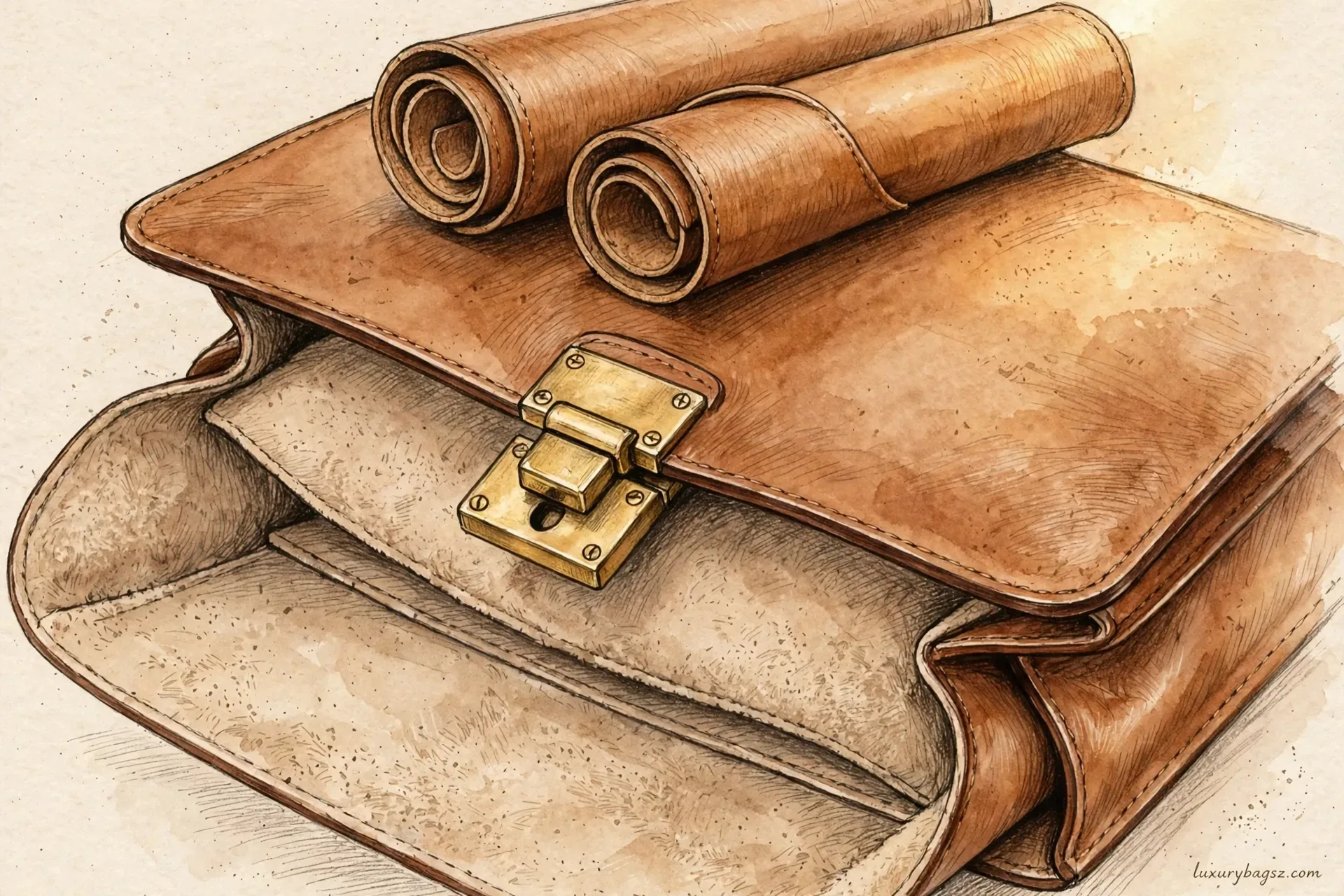
Glovetanned leather is Coach's historic material: thick, smooth and designed to soften and gain character. It appears on premium and vintage-inspired styles and ages beautifully when cared for. Polished pebble leather is the workhorse of the current range. Its grain hides light scratches, keeps structure well and suits structured bags such as the Tabby. Refined and nappa leathers feel smoother or softer, and suede adds texture at the cost of higher maintenance. Signature canvas styles trade some leather for lighter, coated practicality. Our leather types guide explains how these leathers differ. In store, feel the weight of the hardware and the lining: Coach bags should feel substantial, never flimsy. Hardware deserves its own check. Turnlocks, clasps and strap clips on core styles are typically metal with a reassuring heft, and zips should run smoothly without catching on lining fabric. Stitching tells a similar story. On a well-made Coach bag it is dense, even and colour-matched, including in places customers rarely inspect, such as inside pockets and strap undersides.
Boutique vs Outlet: What Actually Differs
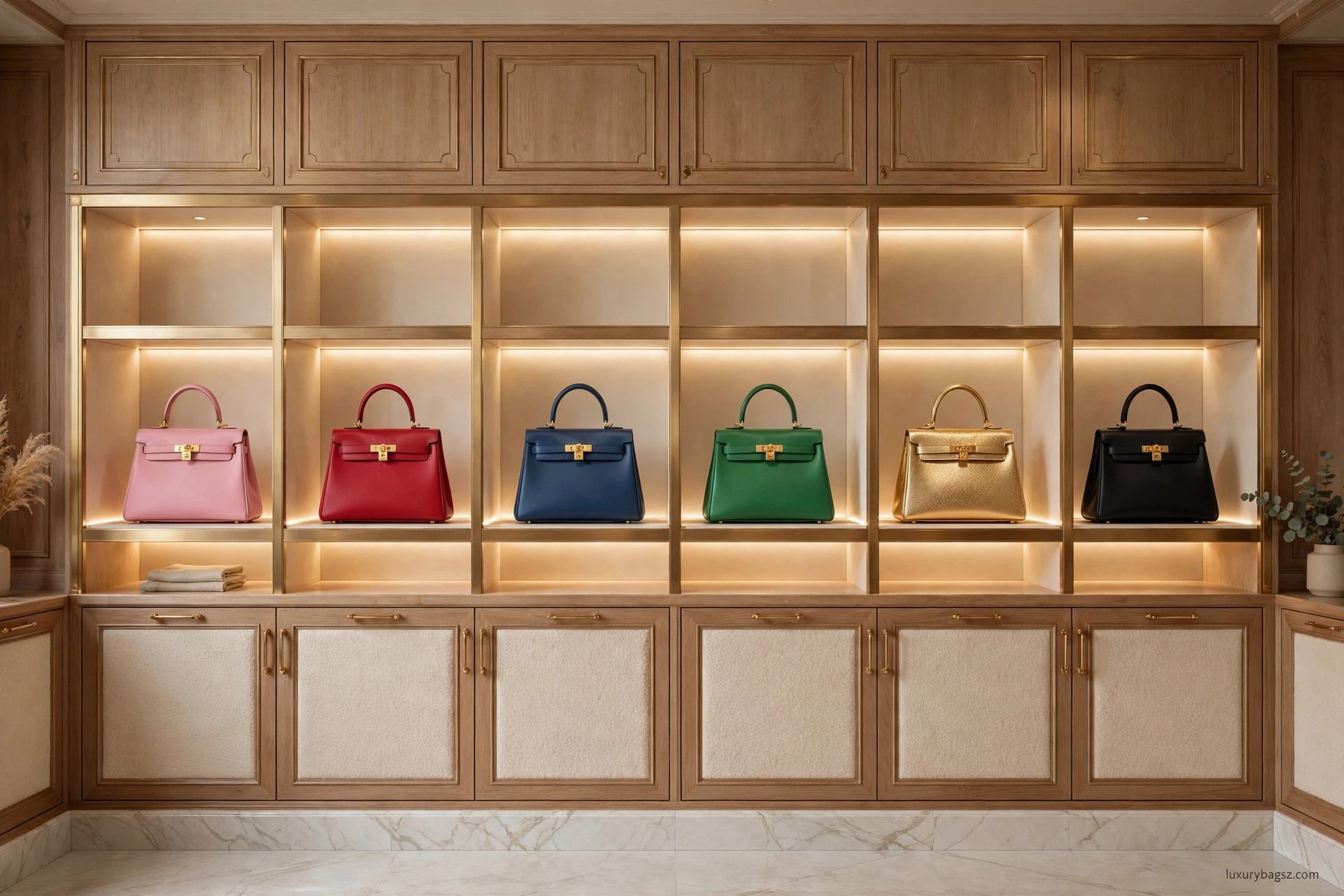
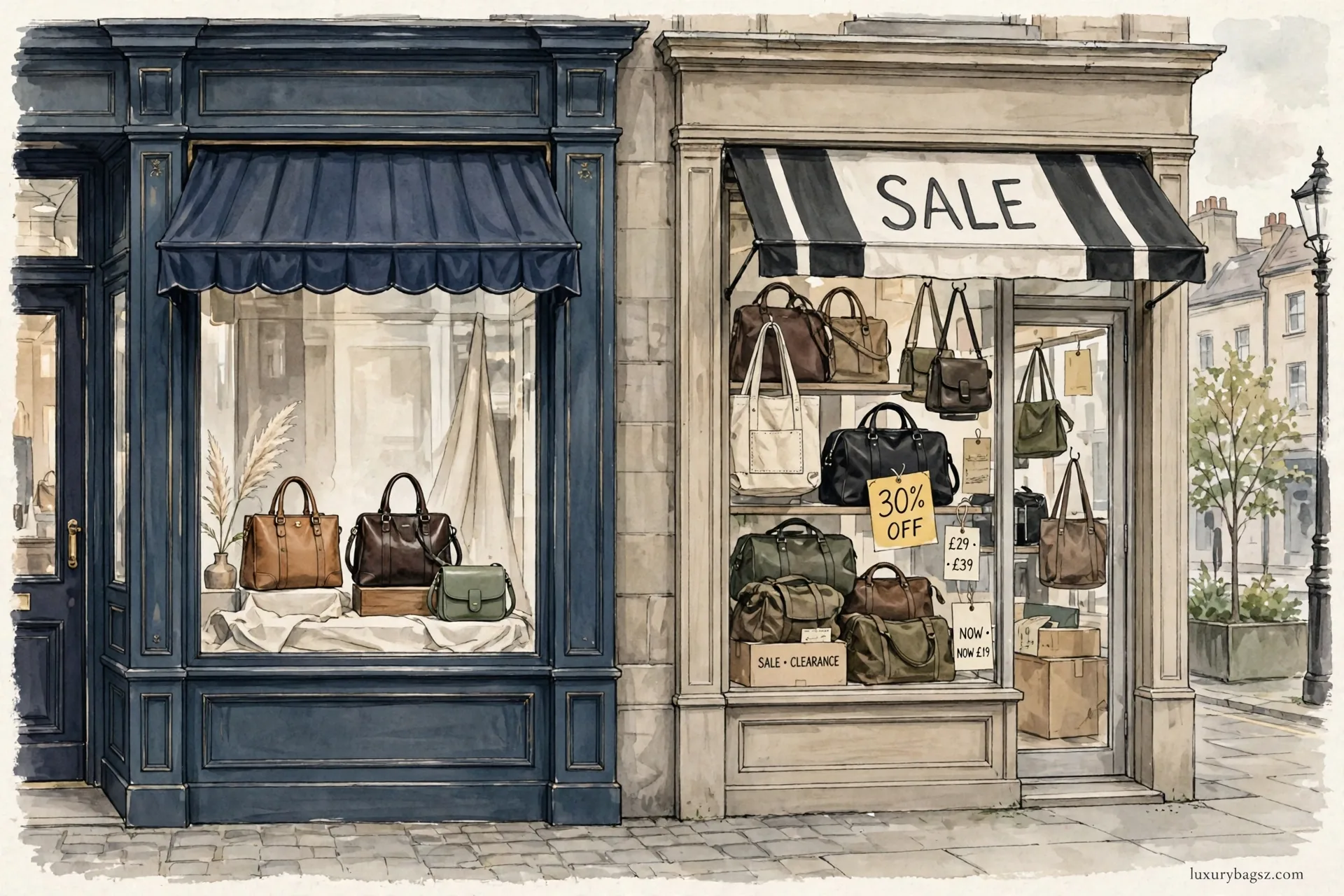
Full-price Coach boutiques and the brand's website carry the current collections: Tabby, Rogue and seasonal styles in the best materials, with full packaging and repair support. Coach Outlet stores and the official outlet site sell a mix of past-season stock and bags designed specifically for outlet. The made-for-outlet designs often use simpler construction and materials. Neither route is automatically better. An outlet bag can be excellent value for daily use, while a boutique bag is the right buy for a hero style you plan to keep for years. Check the interior label and product details when comparing, and be wary of third-party sellers using the Coach name. Buy outlet bags only from Coach's own outlet channels. A useful in-hand test is weight and lining. Boutique hero styles tend to feel heavier, with richer linings and more detailed interiors than their outlet counterparts at similar sizes. Neither test replaces reading the product name carefully. If a listing does not state whether a bag is a boutique or outlet style, ask before paying, especially when buying resale.
Resale, Vintage and Pre-Owned Coach
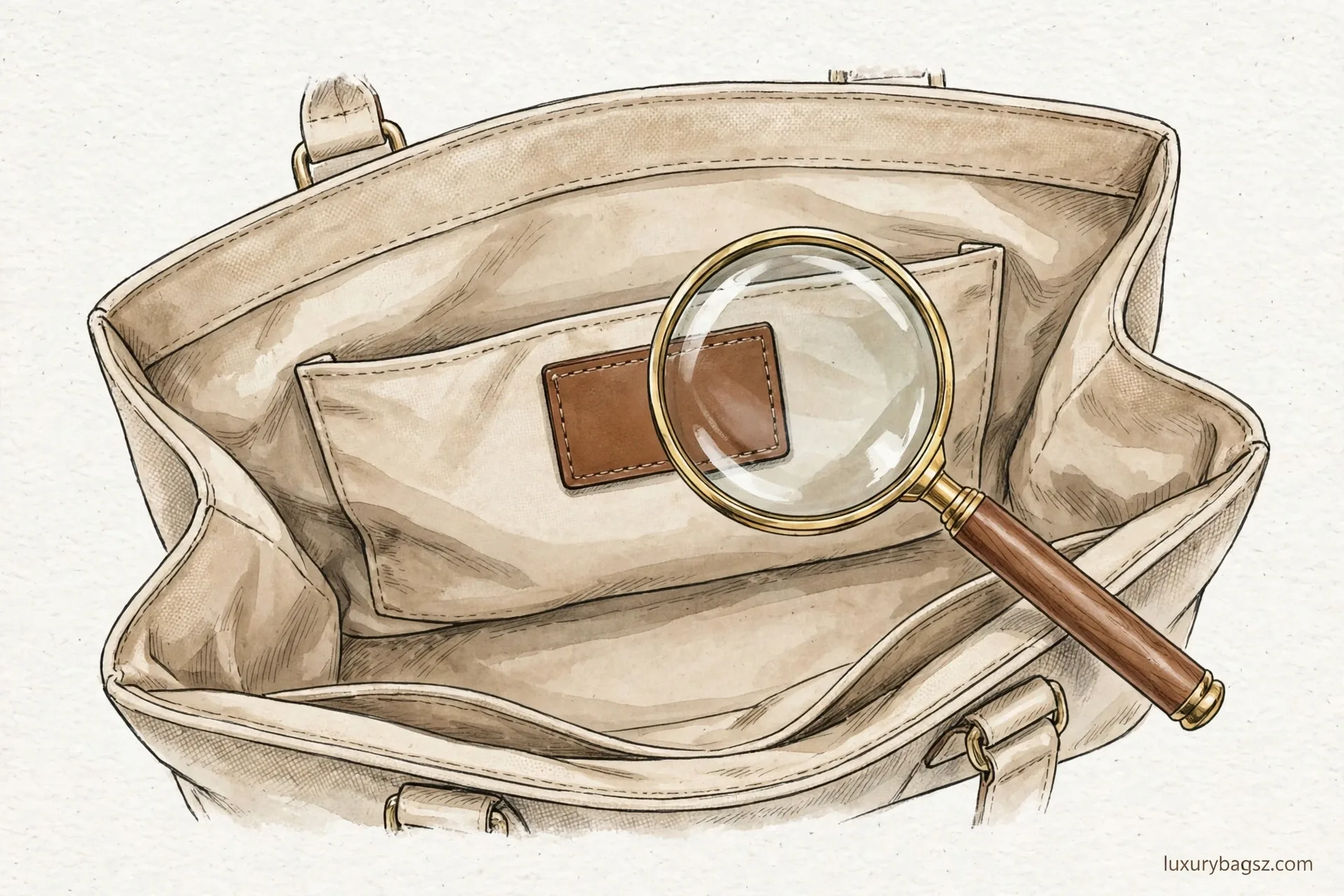
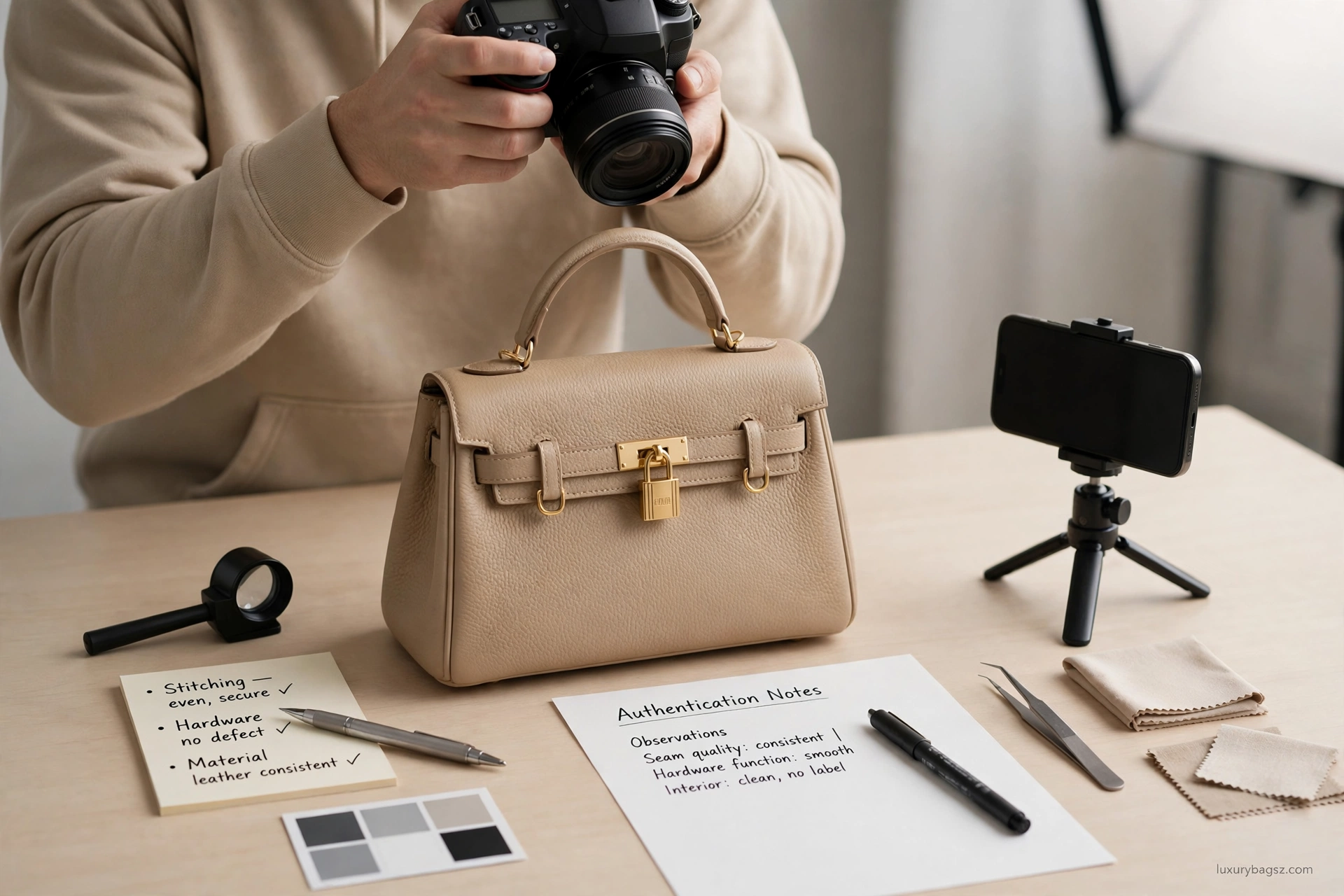
Pre-owned Coach offers two distinct hunts. Before paying for any of them, work through how to tell if a Coach bag is real, from the creed patch to the serial format. Current styles such as the Tabby trade steadily below retail, while vintage 1990s leather bags have a loyal following of their own. Vintage Coach is prized for thick, often unlined glovetanned leather that survives decades. Simple shoulder bags, satchels and totes from that era clean up well and carry a timeless look. For any pre-owned Coach, check hardware weight, stitching, strap edges and the interior label or creed patch. Our pre-owned designer bag authentication guide sets out the wider method. Grade condition honestly before comparing prices. Our pre-owned condition grades guide explains what terms such as excellent and very good should actually mean. Vintage buyers should budget for a clean and gentle conditioning on arrival. Many older bags need nothing more, but dry leather should be revived slowly rather than soaked in product. Hardware on vintage pieces is often solid brass-toned metal that polishes well. Tarnish alone is not damage, and gentle cleaning can transform a dull-looking bag surprisingly quickly.

Care That Keeps Coach Leather Looking Right
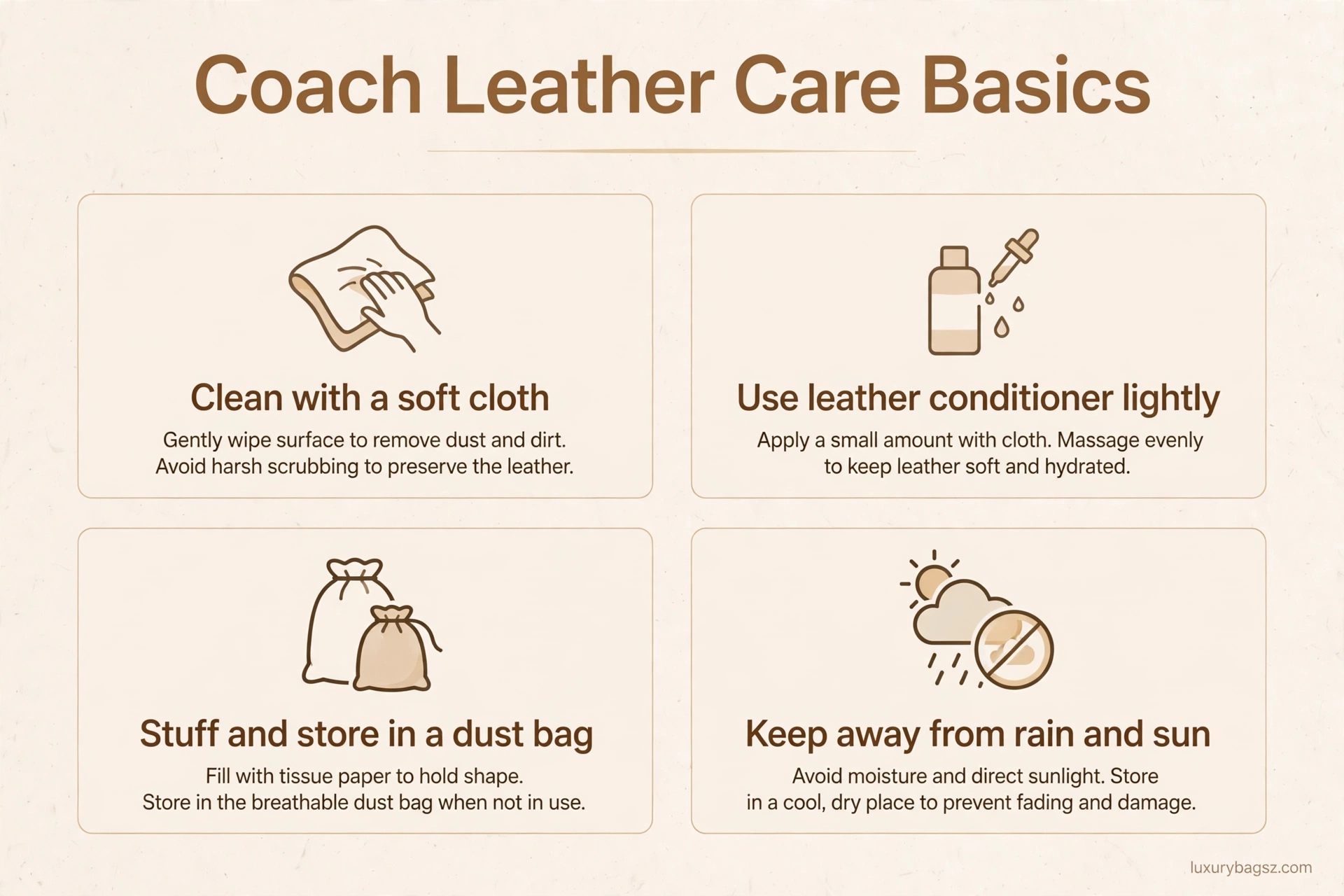
Wipe leather bags with a soft cloth after use and condition them lightly from time to time. Glovetanned and pebble leathers respond well to modest care and poorly to heavy, frequent products. Keep Coach bags out of prolonged rain and direct sun. If a bag gets soaked, empty it, blot it gently and let it dry naturally, stuffed with tissue to hold its shape. Store bags stuffed in their dust bags, away from radiators and damp cupboards. Suede styles need a suede brush and extra distance from water, perfume and dark denim dye. Rotate bags if you own several. Resting leather between uses lets creases relax and linings air, and it spreads corner and strap wear across the collection instead of one favourite. Our leather care guide covers cleaning and storage in depth, including reviving dry vintage leather without over-conditioning it.
How to Choose Your First Coach Bag
Start with your load, not the logo. Light carriers suit the Tabby 20 or a small crossbody, daily carriers suit the Tabby 26 or Brooklyn, and heavy carriers need a carryall or tote. Choose pebble leather in black or tan for the easiest first buy. It hides wear, pairs with most wardrobes and holds the steadiest resale interest if you later move it on. Buy boutique for a hero bag, outlet for a workhorse, and pre-owned for vintage leather character. Each route is legitimate when you know which product line you are actually getting. Our vintage designer bags investment guide puts older Coach in a wider value context. The rule holds across eras: buy condition and leather first, trend last. Finally, think about service life rather than novelty. A Coach bag carried weekly for five years costs little per use, which is the honest maths behind most of the brand's loyal following.
Frequently Asked Questions
Are Coach bags real leather?
Most Coach bags are made from real leather, including glovetanned and pebble leathers. Some styles use coated Signature canvas with leather trim, so check the product details for each bag.
What are the most iconic Coach bags?
The Tabby shoulder bag and the Rogue satchel lead the modern range. The Brooklyn, Empire Carryall and classic leather totes are also central styles.
How much do Coach bags cost?
Typical UK prices run from around £150 for small crossbodies to £350 to £650 for core shoulder bags and satchels, with premium and exotic finishes above that.
What is the difference between Coach boutique and Coach Outlet?
Boutiques sell current collections in the best materials. Outlets mix past-season stock with bags designed specifically for outlet, often with simpler construction.
Are Coach bags a good investment?
Coach bags hold steady resale demand in classic styles and colours, but they are best bought to use. Treat any resale value as a bonus, not a guarantee.
Why is vintage Coach so popular?
Vintage Coach bags often use thick, unlined glovetanned leather that lasts for decades. Their simple shapes clean up well and suit modern wardrobes.
How can I tell if a Coach bag is genuine?
Check weighty hardware, even stitching, clean strap edges and the interior label or creed patch, and buy from sellers offering clear photos and returns.
Which Coach bag is best for everyday use?
The Tabby 26 suits organised daily carry, the Brooklyn suits a softer, roomier carry, and a carryall or tote suits laptops and heavier loads.
Do Coach bags go on sale?
Yes. Coach runs seasonal promotions, and past-season colours often reach the official outlet channel. Core colours in hero styles are discounted less often.
How do I care for a Coach leather bag?
Wipe it with a soft cloth, condition lightly, keep it from prolonged rain and sun, and store it stuffed in its dust bag away from heat and damp.
Summary: Leather First, at Every Price Point
Coach earns its place by doing the basics properly: real leather, solid hardware and shapes drawn from a genuine archive. Few brands at these prices match that combination. Pick the style that fits your load, the leather that fits your habits and the channel that fits your budget. Do that, and a Coach bag is one of the safest buys in its class.