How to Tell If a Coach Bag Is Real: Creed, Serial Numbers and the Checks That Matter
Real or Fake? Start With the Creed, Then Check Everything Else
To tell if a Coach bag is real, start with the creed patch inside, read its number against the bag’s era, then check the leather, hardware, zips and stitching. No single detail proves a bag genuine, because good copies copy single details well.
A real bag passes every check together. The number matches the style, the leather feels right, the hardware has weight, and the stitching stays even in hidden places. One clear failure is enough to walk away from a pre-owned buy.
I am Jessica, founder of Luxury Bagsz and a handbag specialist. I personally check bags, I have examined 500+ bags, and this guide follows the same order I use at the table, from the patch outward to the smallest clip.
Key Takeaways
- The creed patch is the best starting point, but never the only check.
- Before 1994, Coach numbers are digits only and carry no style or date.
- From 1994, the part after the hyphen is the style number to look up.
- An F before the style number usually means made for outlet, not fake.
- Genuine hardware feels solid, and genuine zips run smoothly.
- Even stitching, honest leather and tidy lining should all agree.
- Buy pre-owned only with clear photos, returns and a fair price.

The Creed Patch and What It Actually Says
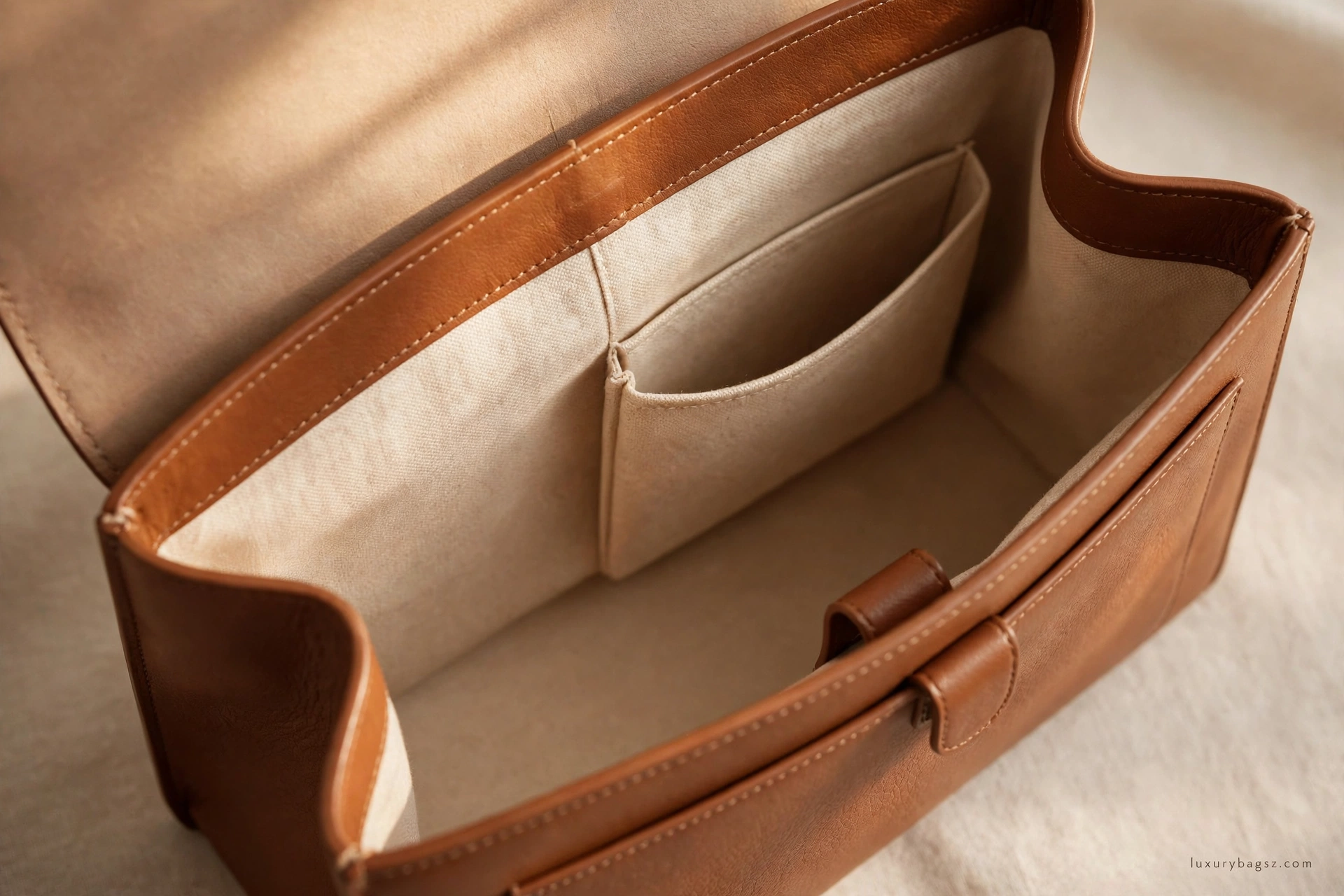
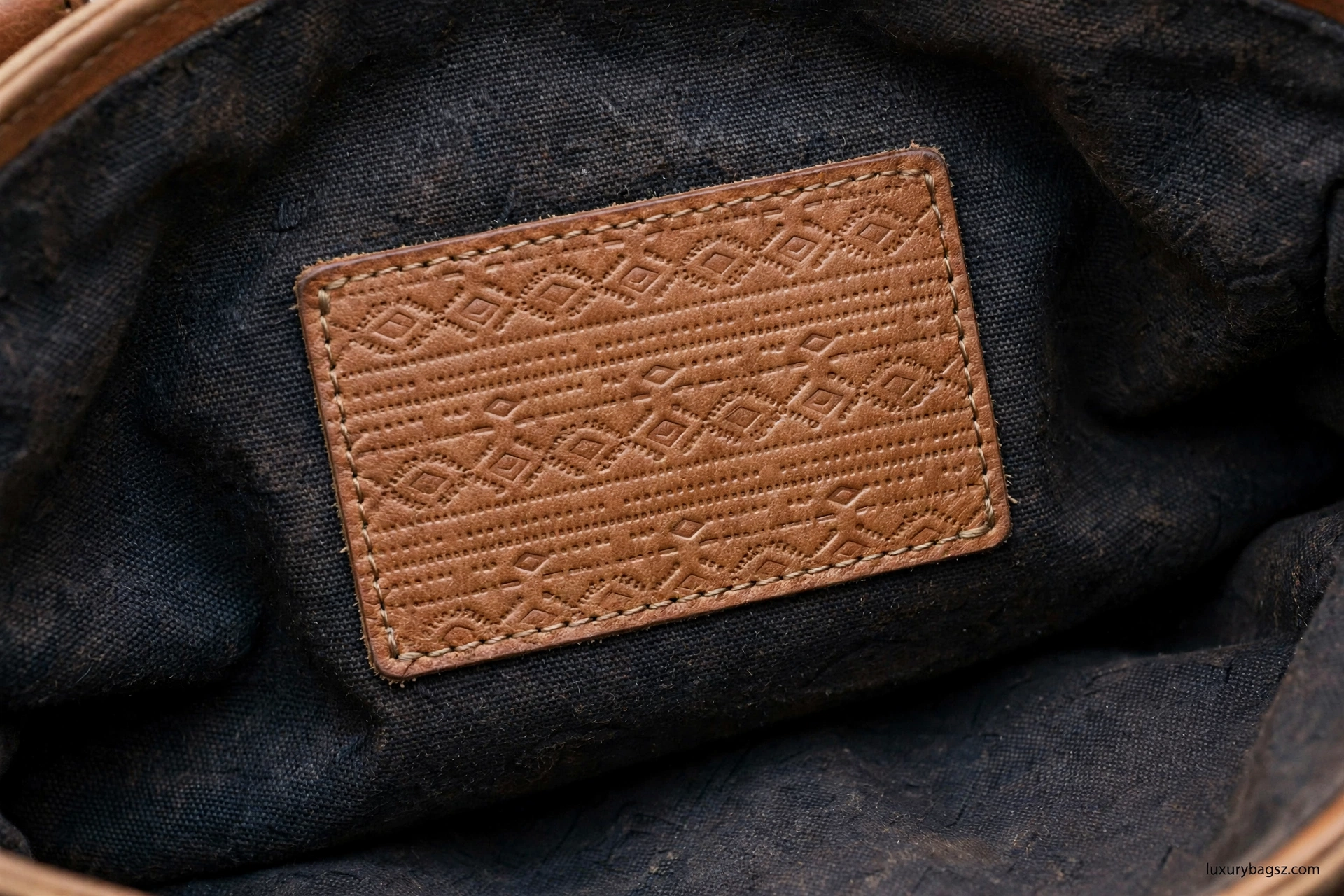
Most Coach bags carry a rectangular leather patch sewn inside the main compartment. Collectors call it the creed patch, and newer bags may call the same idea a story patch. It holds a short statement about Coach craft and materials.
Under that wording sits a line beginning with No, followed by the number you need to read. On a genuine bag the lettering is stamped or embossed into the leather, so you can feel the impression with a fingertip rather than seeing flat print.
Read the wording as carefully as the number. Spelling should be clean, spacing even and the country of manufacture named plainly. Coach has made bags in several countries over the years, so the country alone never settles authenticity either way.
Check how the patch itself is fitted. It should sit straight, with tidy stitching on all sides and no lifting corners or glue showing. A crooked, bubbling or loosely stitched patch is a warning, though one flaw still needs support from other checks.
Logo and Creed Wording by Era
Era matters on the lettering itself. Before 2013 the creed sits in a rectangular frame, with COACH in block capitals above a horse and carriage and EST. 1941 below. From 2013, under Stuart Vevers, Coach moved to a smaller, simpler crest.
Either form is genuine in its own period, so judge the match, not the logo alone. A pre-2013 frame on a style launched years later, loose or uneven letter spacing, or a blurred, simplified carriage all count against the bag.
Some genuine bags break the pattern. Very small accessories may have no patch or no number at all, and that can be normal for the item. From around late 2014, many bags moved the number onto a small white fabric tag hidden in a pocket or seam.
So a blank creed on a mid-2010s bag is not automatic bad news. Look for the white tag before you judge it. If neither a numbered patch nor a tag can be found on a full-size bag, ask the seller why before you pay anything.
Serial and Style Numbers by Era
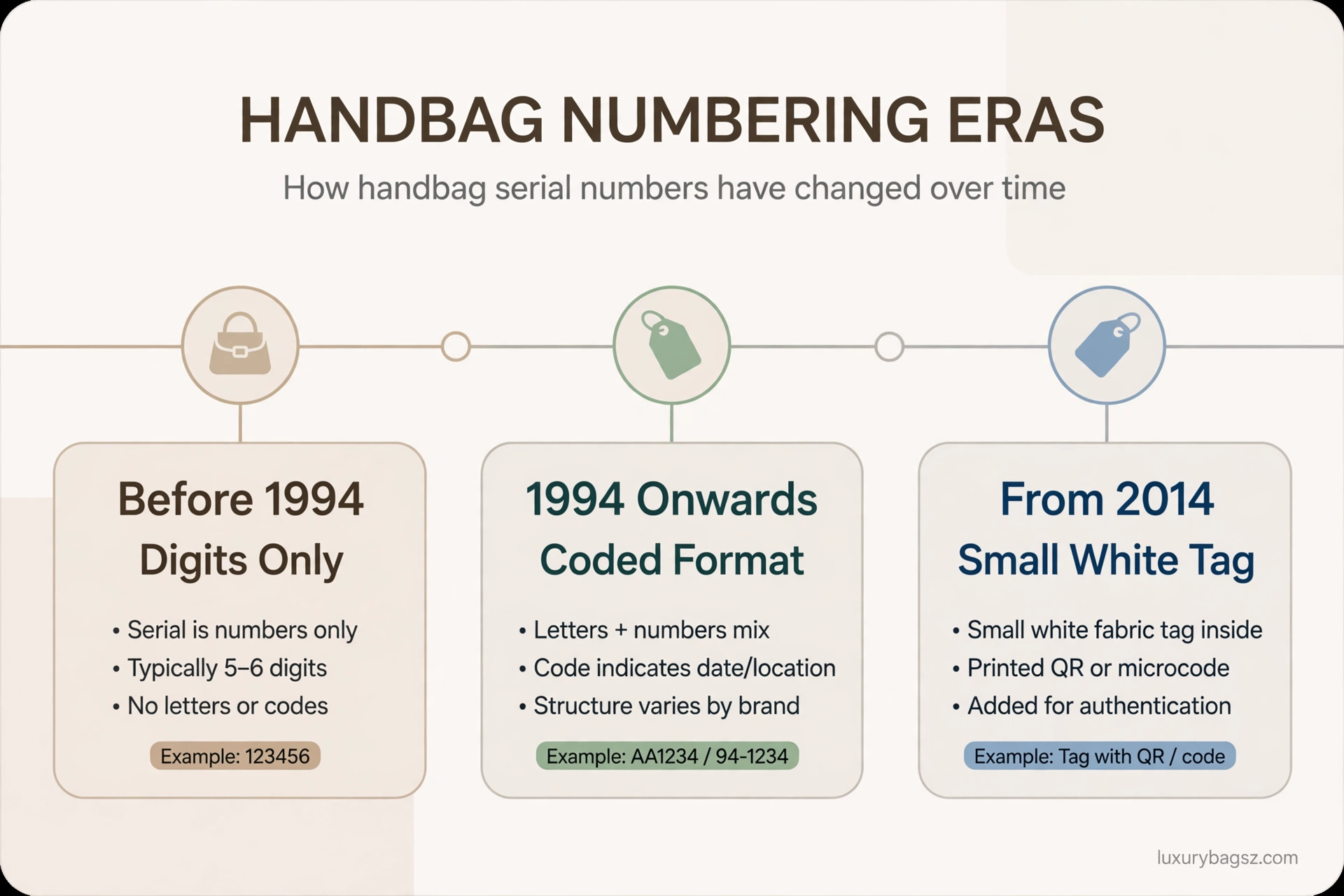
Coach numbering changed over time, and the format must suit the age the seller claims. Coach has never published the full system, so the readings below come from reputable collector and authenticator sources. Treat exact changeover years as approximate.
Before 1994: a true serial number
Before 1994 the number was a genuine serial number for that one bag. It is digits only, commonly three digits, a hyphen, then four digits, or later four digits, a hyphen, then three digits. Nothing in it encodes a date or a style.
That means you cannot look a pre-1994 number up and expect a model name to appear. Date a vintage bag instead from its creed wording, leather, hardware and shape. The earliest bags, from the 1960s, often carry no number at all.
From 1994: a production code plus a style number
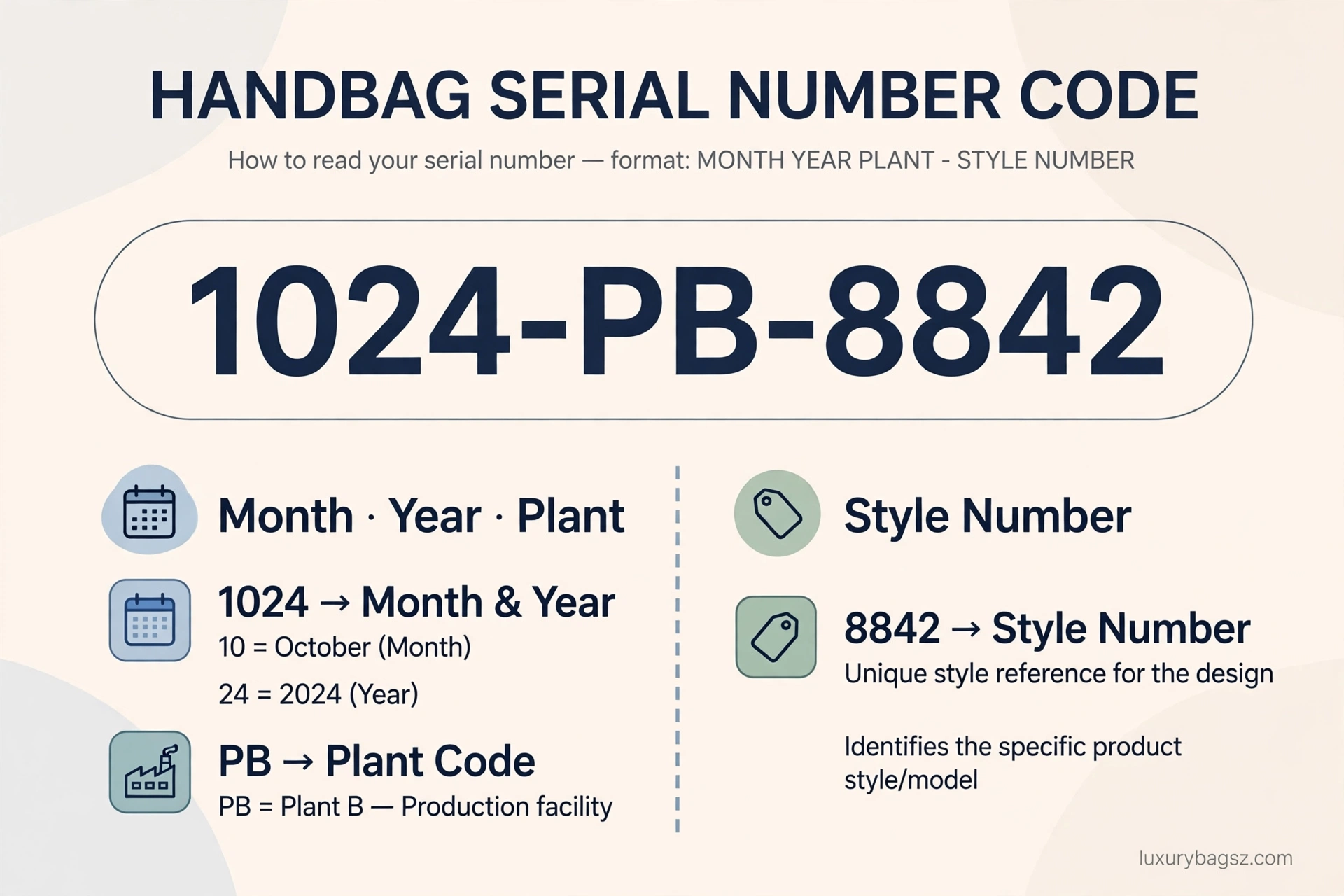
From 1994 Coach switched to a coded format. The part before the hyphen gives production details, widely read as a month letter, a year figure and a plant code. The part after the hyphen is the style number, and that is the part worth searching.
A classic example is K8P-9870. Sources read K as October, 8 as 1998 and P as the plant, with 9870 as the style number. Search that style number and the results should show the same model you are holding, in name, shape and size.
The month letters run A for January through M for December, with I skipped, so J is September, K is October and M is December. If a code uses I for a month, or a letter beyond M at the start, that alone counts heavily against it.
In the early coded years the style number usually had four digits. From the mid-2000s the codes grew longer, with two-digit years and five-digit style numbers becoming common. Later style numbers can begin with a letter, so do not reject a code on shape alone.
A modern example shows the longer shape. Take B1980-38124. B means February, 19 means 2019 and 80 is the factory code, which Coach does not publish. The style number is 38124, which searches to the Rogue 31, so the bag in hand should be that model.
Work it in that order every time. Read the month and year first, check they suit the style’s launch, then search only the part after the hyphen. If the search shows a different size, shape or material, stop and ask why before going further.
The vital point is agreement. A code dated before the style was launched, a style number belonging to a different model, or an impossible month letter all count heavily against the bag. Copies often borrow a real number from a different bag entirely.
Remember that the post-1994 code is shared, not unique. Two genuine bags of the same style, made in the same month at the same plant, can carry the identical code. A matching code supports a bag. It never proves it on its own.
There is also no official Coach lookup to save you. Coach does not offer a public checker and does not authenticate pre-owned bags on request. Our wider Coach bags guide sets out the styles those style numbers should lead you to.
| Era | Typical format | How to read it |
|---|---|---|
| Before about 1970 | No number | Normal for early bags; judge by build and leather |
| 1970s to 1994 | Digits only, such as 123-4567 | Unique serial; no date or style inside it |
| 1994 to mid-2000s | Letter, digit, letter, hyphen, four digits | Month, year and plant, then the style number |
| Mid-2000s onwards | Longer code, hyphen, four or five digit style | Style number after the hyphen is the lookup part |
| About late 2014 onwards | Code often on a small white tag | Check pockets and seams if the creed looks blank |
Hardware and Zips, Including the YKK Check
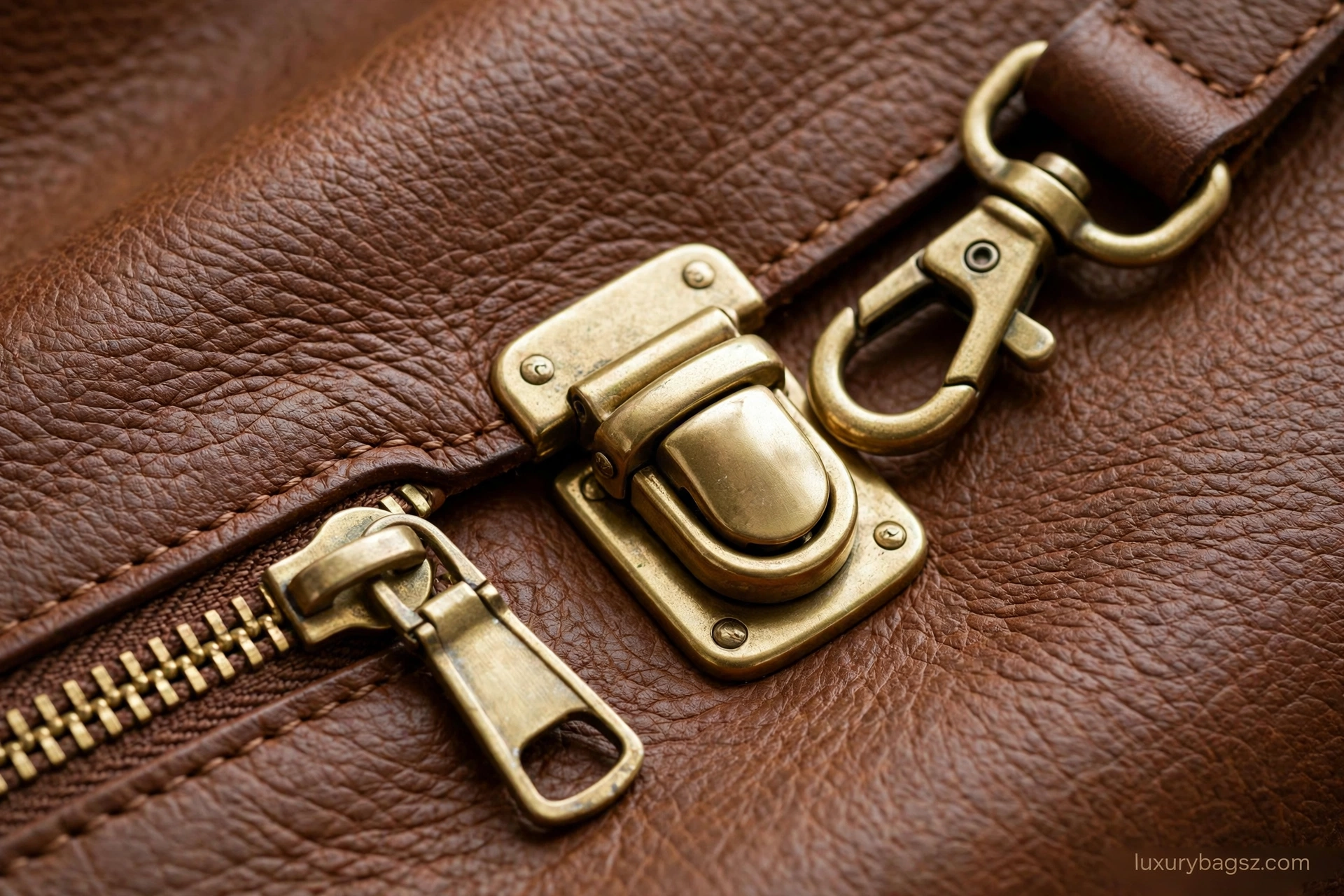
Pick the bag up and feel the hardware before you study it. Genuine Coach clasps, rings and strap clips are usually solid metal with real heft. A tap with a fingernail gives a low, solid sound rather than a thin, hollow ring.
Run every zip fully, twice. It should travel smoothly without biting the lining or stalling at the corners. Coach has commonly used YKK zips, and Ideal zips also appear, so look for a clear maker mark on the zip slider or stop where the design allows one.
Treat the zip brand as supporting evidence only. A YKK mark can be copied, and not every genuine zip shows its mark at an easy angle. A rough, sticking zip matters more than a missing mark in one poor seller photo.
Ignore any protective film still stuck on the hardware. Sellers leave it on genuine bags, and copies can add it just as easily, so its presence or absence proves nothing. Judge the metal underneath: its weight, finish and engraving.
Study the finish closely. Engraving should be crisp, edges clean and plating even, with no flaking or sharp burrs. Rings should meet neatly, clips should spring back firmly, and turnlocks should turn and settle without wobbling loosely in place.
Stitching, Leather and Lining
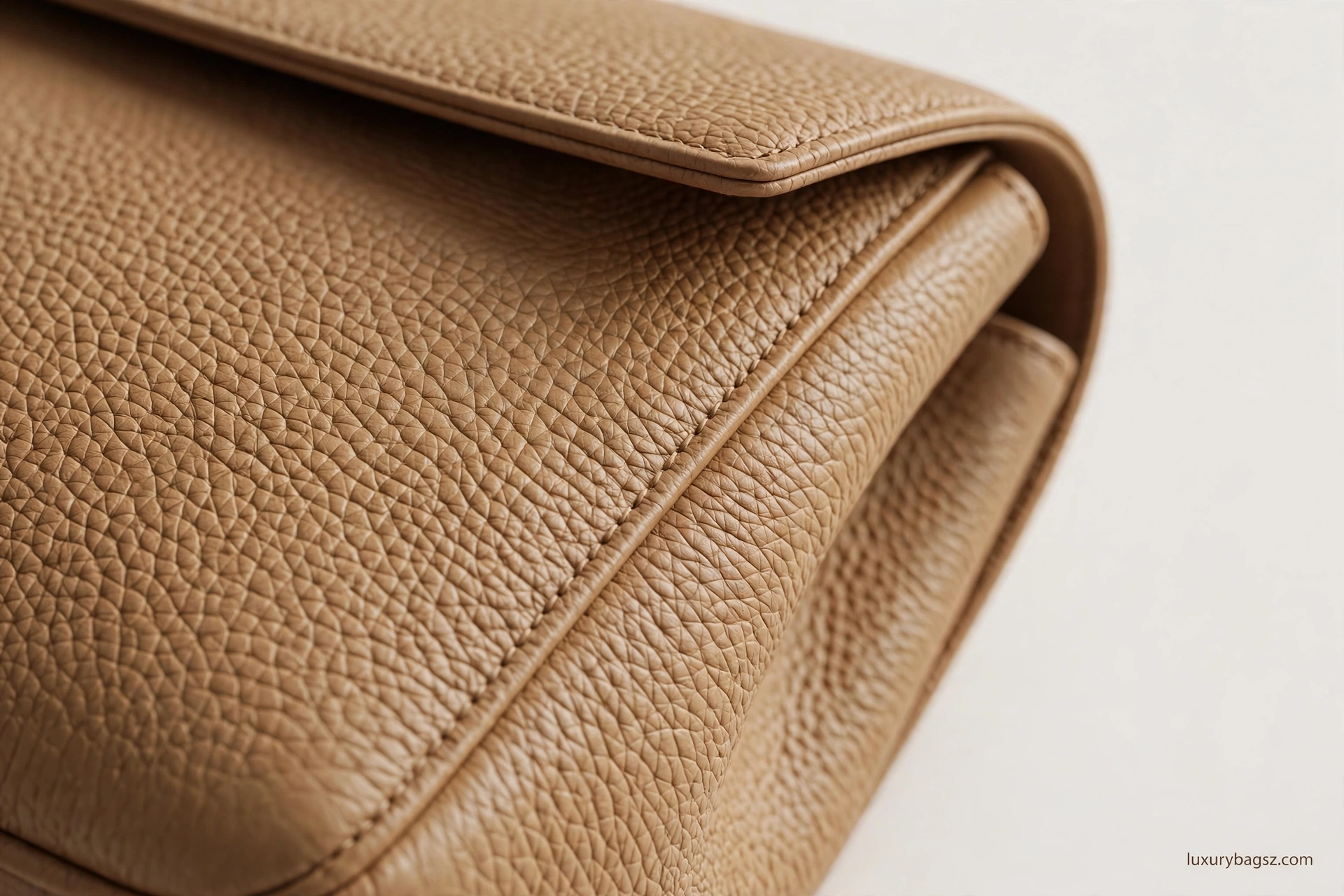
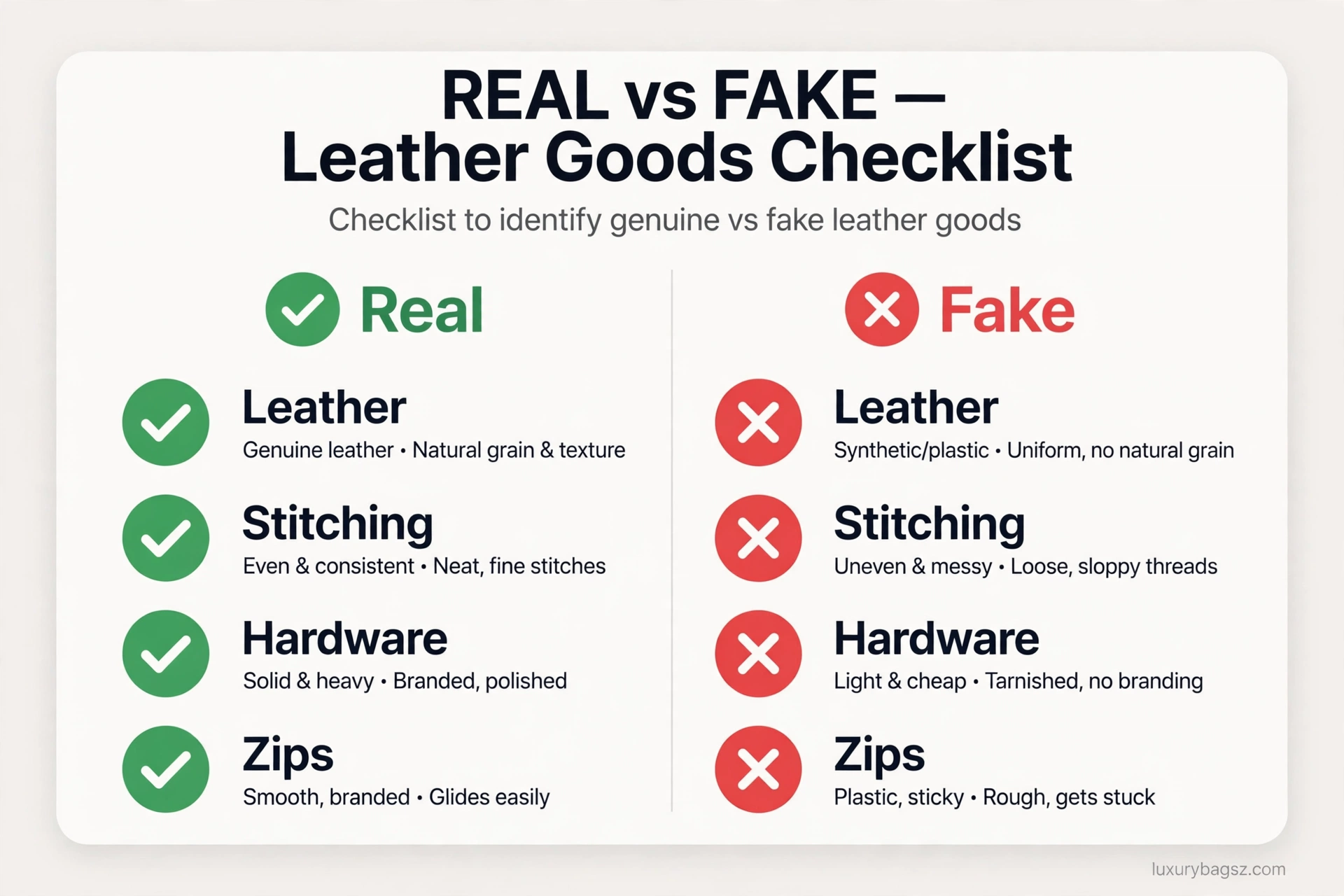
Stitching is where cheaper copies tire first. On a genuine bag the stitches are even in length and spacing, the thread colour suits the leather, and the lines stay straight around curves, straps and pockets. Loose ends and wandering rows are warnings.
If you want a measure rather than an impression, count the stitches on a straight seam. Most Coach leather bags run at about four to six stitches per centimetre, evenly spaced. A count that jumps about, or drops well below that, is a warning.
Look in the places sellers rarely photograph. Check inside pockets, strap undersides and the base corners. Coach finishing should stay tidy there too. Raw, fraying edges, glue marks and skipped stitches suggest rushed making rather than honest wear.
Leather should feel like leather. Pebble leather has a natural, slightly varied grain and yields gently when pressed. Glovetanned leather feels substantial and smooth. A stiff, plasticky surface with a perfectly stamped, repeating grain deserves real suspicion.
Colour should run through the material honestly. At a cut edge or a worn corner, genuine dyed leather keeps a consistent tone rather than showing a pale core under a thin surface coat. Smell helps a little, but never let smell decide alone.
Inside, the lining should be neatly fitted, cleanly sewn and correct for the style and era. On Signature canvas bags, check the C pattern at every seam and pocket. It should continue in an orderly way, not break, drift or change direction carelessly.
Check the colour pairing too, not just the alignment. Signature canvas came in set colour combinations for each period, so a pairing Coach never produced is a strong warning. Compare the exact style in verified listings before you accept an unusual one.
My factory visits taught me to trust material first. Having visited leather factories in Spain and France, I know how a good hide looks before it is cut. That early read, grain, weight and edge, still catches more copies than any logo check.
Outlet Bags Are Not Fake Bags
This point causes more panic than any other. Coach Outlet is Coach’s own channel, and bags made for outlet are genuine Coach products. They were simply designed and priced for outlet stores rather than for the full-price boutiques.
The clue sits in the number. On many outlet bags from the mid-2000s onwards, the style number after the hyphen begins with F. Read that F as a channel marker, not a verdict. Later ranges changed their numbering, so a missing F proves nothing either.
That F marker belongs mainly to bags made from the mid-2000s to about 2021. From around 2020, outlet and boutique styles have both used style numbers beginning with C, such as C0772. On a recent bag, no F therefore tells you nothing about its channel.
Expect honest differences, though. Made-for-outlet designs often use simpler construction, lighter linings or different materials from a similar boutique style. A plainer interior on an outlet bag can be entirely correct for that product line.
The real problem is misdescription, not the outlet itself. An outlet bag sold as a rare boutique piece at a boutique price is a bad buy even though it is genuine. Always ask which channel the bag came from, and price it as what it is.
Tabby-Specific Checks
The Tabby is now the most copied modern Coach style, so it earns its own pass. Start with the Signature C clasp. It should feel weighty and solid, sit centred on the flap, and close with a positive, confident click rather than a loose scrape.
Check the flap alignment with the bag empty and then lightly filled. The front should sit straight, the sides should keep their structure, and the clasp should not strain or pull to one side. Bulging or twisting under a normal load is a poor sign.
Work through both straps and every clip. The short shoulder strap and the longer detachable strap should have clean edges, even stitching and firm clips that match the clasp finish. Mismatched metal tones across one bag need a convincing explanation.
Inside, find the creed or tag and match the style number to the exact Tabby size and finish in front of you. Our Coach Tabby bag guide gives the sizes and materials to compare against, which makes a wrong-model number far easier to spot.
Common Fake Red Flags
- A style number that searches to a different model, or to nothing at all.
- Creed wording with spelling errors, uneven stamping or flat printed text.
- Light, hollow hardware, flaking plating or a zip that sticks and bites.
- Wavy stitching, loose threads, glue marks or raw and fraying edges.
- Signature C pattern that breaks or drifts at seams and pockets.
- Stiff, plasticky leather with a uniform stamped grain and pale cut edges.
- A seller refusing clear photos of the creed, base, clips and lining.
- A price far below every comparable listing, with pressure to pay at once.
One flag can sometimes be explained by wear, age or a bad photograph. Several flags together cannot. When the number, leather and hardware all disagree with the story, believe the bag in front of you and not the listing that describes it.
Packaging proves very little either way. Dust bags, boxes, care cards and receipts are the easiest items to copy or borrow from another bag. Note them, but give them almost no weight beside the creed, materials and construction checks above.
What to Do Before Buying Pre-Owned
Ask for a full photo set before you discuss price. You need the front, back, base and corners, both straps, every clip, the lining, the creed or white tag in sharp focus, and the zip fully open and closed. Blurry creed photos must be retaken.
Watch for listing tricks as well as bag flaws. Stock photographs, heavily filtered images, or photos that quietly mix two different bags tell you nothing about the item you would receive. Insist on the seller’s own, unedited photos of that exact bag.
Then do the desk work. Read the number against the era, search the style number, and confirm the results match the size, shape and material being sold. Compare at least two other listings of the same style so the price and details have context.
Protect the payment itself. Use a payment route with buyer protection, insist on returns for authenticity, and keep the listing, messages and photos saved. If a seller blocks questions, refuses returns or pushes you off the platform, stop there.
For a higher-value or rare piece, get an independent opinion before the return window closes. My own authentication process shows how I weigh Entrupy, including its microchip checks, against the physical evidence rather than trusting any one reading.
With more than 10 years in the bag industry, my rule stays simple. A good seller welcomes checks, because a genuine bag survives them. Any bag that needs you to hurry, guess or ignore a failed check is a bag to leave for someone else.
Frequently Asked Questions
Does every real Coach bag have a creed patch?
No. Most full-size bags have one, but very small accessories may have no patch or number, and many bags from around late 2014 carry the number on a small white tag instead. Judge those pieces on their other checks.
Can I check a Coach serial number on an official website?
No. Coach offers no public serial or style number lookup and does not authenticate pre-owned bags on request. Search the style number after the hyphen instead, and confirm it matches a real model of the right era.
What does the F in a Coach style number mean?
On many bags it means the style was made for Coach Outlet. That is a genuine Coach product sold through Coach’s own outlet channel, not a fake. It may use simpler materials and should be priced as an outlet piece.
Do real Coach bags always use YKK zips?
YKK zips are common on genuine Coach bags, and Ideal zips also appear. A clear zip mark supports the bag, but a smooth action and solid finish matter more. A sticking, rough zip is a stronger warning than branding alone.
Is a Coach bag fake if it was made outside the USA?
No. Coach has produced bags in several countries for many years, and the creed wording names the country of manufacture. A foreign country of origin is normal for genuine bags and proves nothing on its own either way.
Can a fake Coach bag have a correct-looking number?
Yes. Copies often borrow real numbers from genuine bags, so a correct format or a searchable style number cannot prove a bag alone. The number must agree with the leather, hardware, stitching and lining checks as well.
What should I check first on a pre-owned Tabby?
Start with the C clasp for weight, finish and a clean click, then check flap alignment, both straps and their clips. Finish with the creed or tag, and match the style number to the exact Tabby size and finish being sold.
Final Verdict
A real Coach bag tells one consistent story. Its creed wording is clean, its number suits its era and style, its leather and hardware feel honest, and its stitching stays tidy where nobody was meant to look. Check for that agreement, every time.
Give outlet bags a fair reading, give Tabbys an extra pass, and give any seller who resists clear photos a polite goodbye. Do that, and pre-owned Coach becomes what it should be: good leather, fairly priced, with very few nasty surprises.