

Chanel Première Watch Guide: The Octagonal Original From 1987 to Today
The Première at a Glance: A Watch Designed as Jewellery First
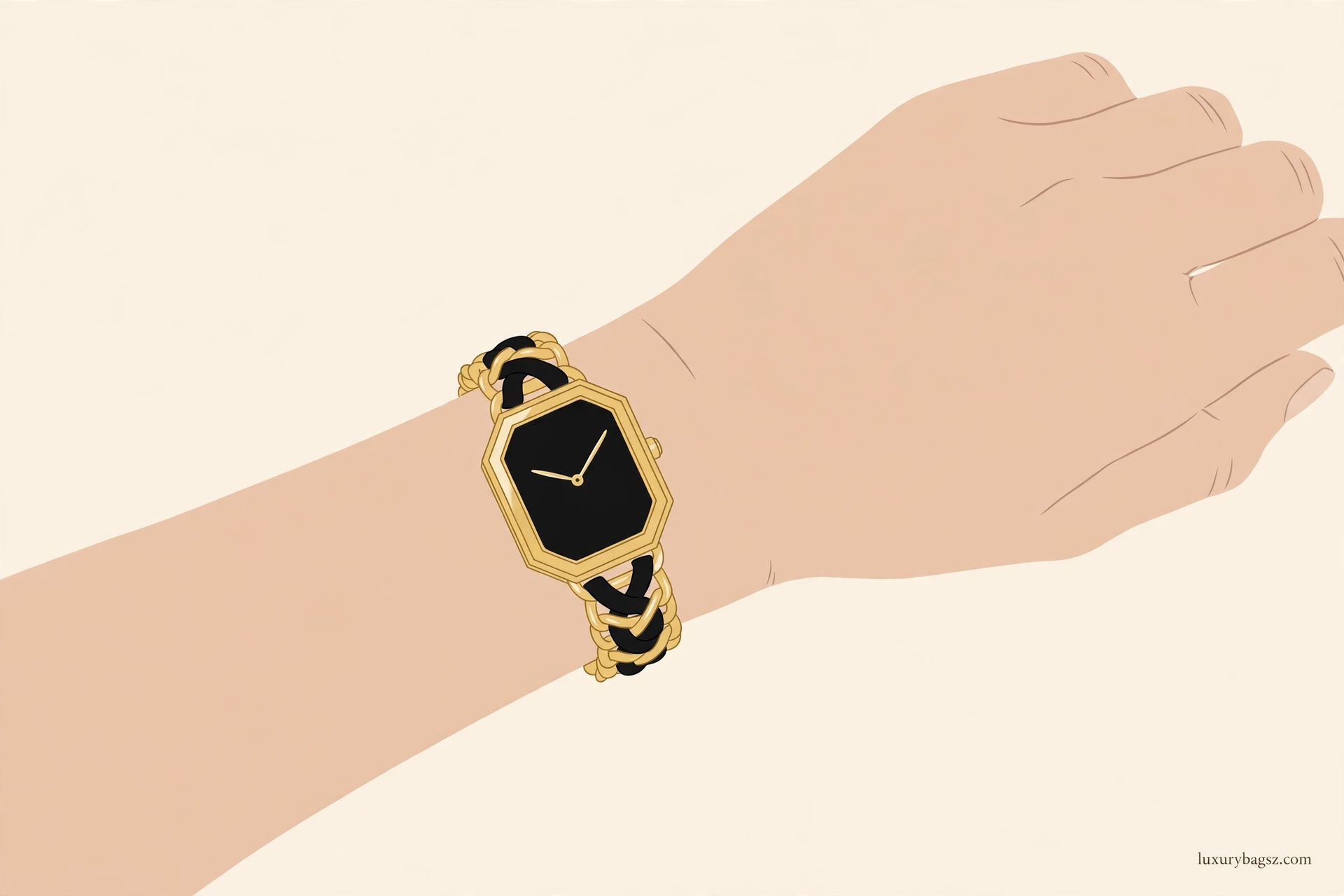
The Chanel Première is the watch that started Chanel watchmaking. Launched in 1987, it was the house's first watch, designed by artistic director Jacques Helleu as a piece for women rather than a smaller copy of a man's watch. Its octagonal case, plain black lacquer dial and leather-and-chain bracelet made it read as jewellery that also told the time.
That first idea still defines the watch today. The Première has been reworked many times since 1987, yet the core has barely changed: an eight-sided case, a dial with no numerals, and a bracelet borrowed from the house's quilted bags. If you want a Chanel watch that looks like Chanel before anything else, this is the one to study first.
Key Takeaways
- Launched in 1987 as Chanel's first watch, designed by Jacques Helleu.
- The octagonal case echoes the Place Vendôme and the N°5 bottle stopper.
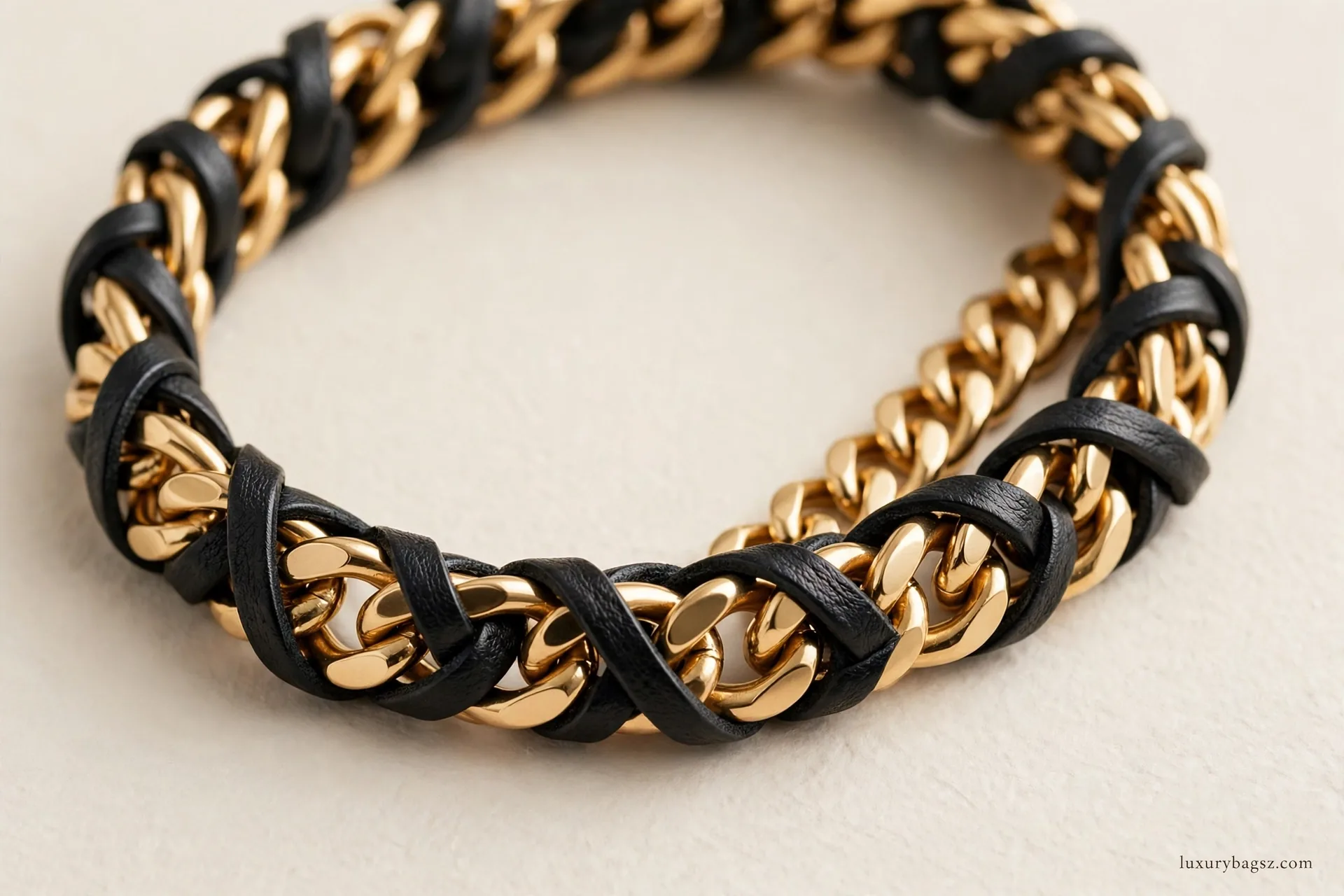
- The original bracelet weaves leather through a chain, like a quilted bag strap.
- The dial carries no numerals, indices or date window on the classic models.
- The Original Edition returned in 2022, close to the 1987 design.
- Core models are quartz; a small number of high-end editions use mechanical movements.
- Pre-owned buyers should check the crystal, bracelet wear and service history.
The Octagon: Place Vendôme on the Wrist
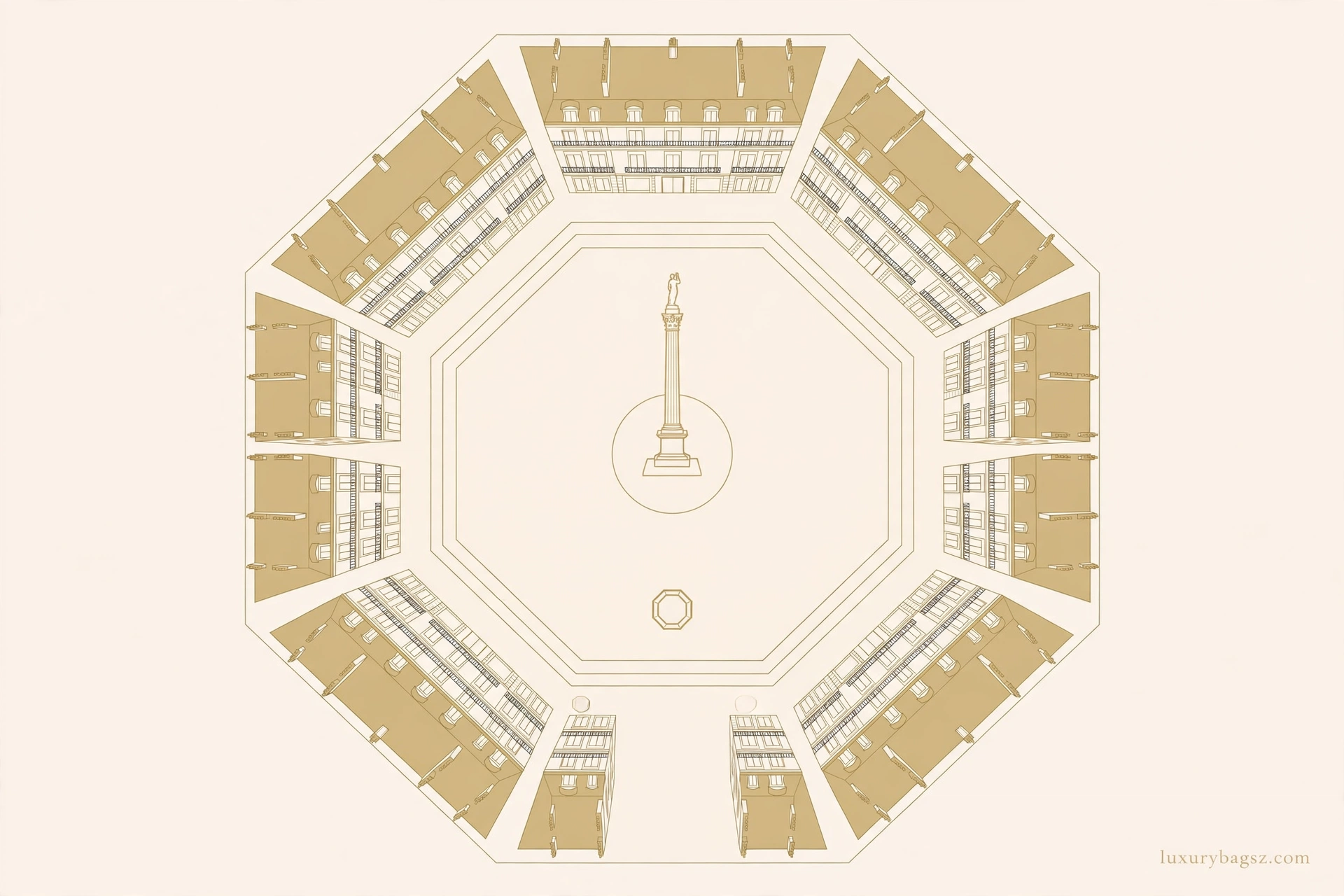
Every Première story starts with a shape. The case is octagonal, with eight sides and a bevelled crystal that catches light at each edge. Chanel links that geometry to two house landmarks: the octagonal outline of the Place Vendôme in Paris, and the stopper of the N°5 perfume bottle, which echoes the same shape.
The connection is personal as well as visual. Gabrielle Chanel's suite at the Ritz overlooked the Place Vendôme, so the square was part of her daily view. Helleu turned that view into a watch case, giving the Première a Paris address built into its silhouette rather than printed on its dial.
That is why the Première photographs so well from any angle. A round watch can look plain in a picture, but an octagon has corners and facets that hold the eye. It is also why the watch suits small wrists: the case is compact and jewellery-like, sitting more like a bangle than a sports watch.
1987: A First Watch That Broke the Rules
Chanel opened its watchmaking story with unusual confidence. For the 1987 launch, the house opened dedicated boutiques in Paris and Geneva, signalling that watches were a serious new chapter rather than a side line. The Première was presented as a watch created entirely for women, at a time when most women's watches were downsized men's designs.
Jacques Helleu was the right designer for that gamble. As artistic director, he understood Chanel's visual language deeply, and he built the Première from house codes instead of watch-industry habits. The chain bracelet came from the 2.55 bag, the octagon from the Place Vendôme, and the black lacquer dial from the house's love of stark black and white.
The launch look was deliberately spare. No numerals, no date, no second hand clutter on the classic dial: just two gold hands on black lacquer. Chanel has described the result as a microcosm of eternity, and whether or not you like that phrasing, the design intent is clear. This watch was meant to be looked at, not merely read.
The Design Codes, Piece by Piece
Start with the dial. On classic Première models it is black lacquer, flat and unmarked apart from the house name and two hands. That emptiness is the point: it makes the watch feel calm and formal, and it lets the gold case and bracelet do the talking. Some later versions add sunray finishes, colour or diamonds, but the plain black dial remains the reference.
Next comes the bracelet, the part owners notice most in daily wear. The original weaves black leather through a gold-tone chain, exactly the language of the quilted bag strap. Later versions reinterpret it in gourmette chain, ceramic or velvet-finish ribbon, so the bracelet is now a choice in itself rather than a fixed feature.
Then there is the crown, set with an onyx cabochon on the classic models. It is a small detail, but it matters: it ties the watch to jewellery tradition and gives the case a finished feel from the side. When you inspect a pre-owned piece, the crown and its stone are worth a close look, since replacements and wear show there first.
The Versions Worth Knowing
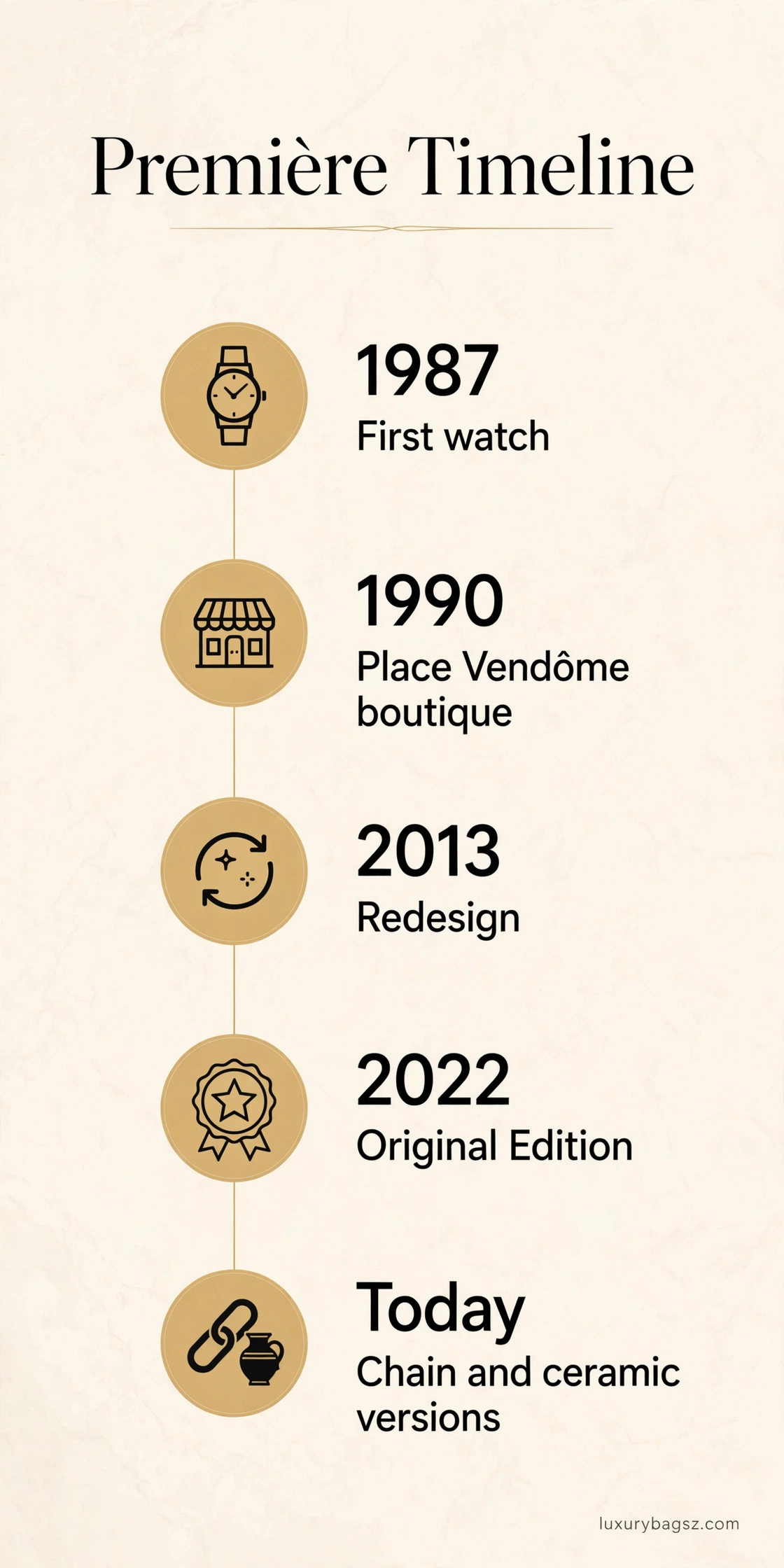
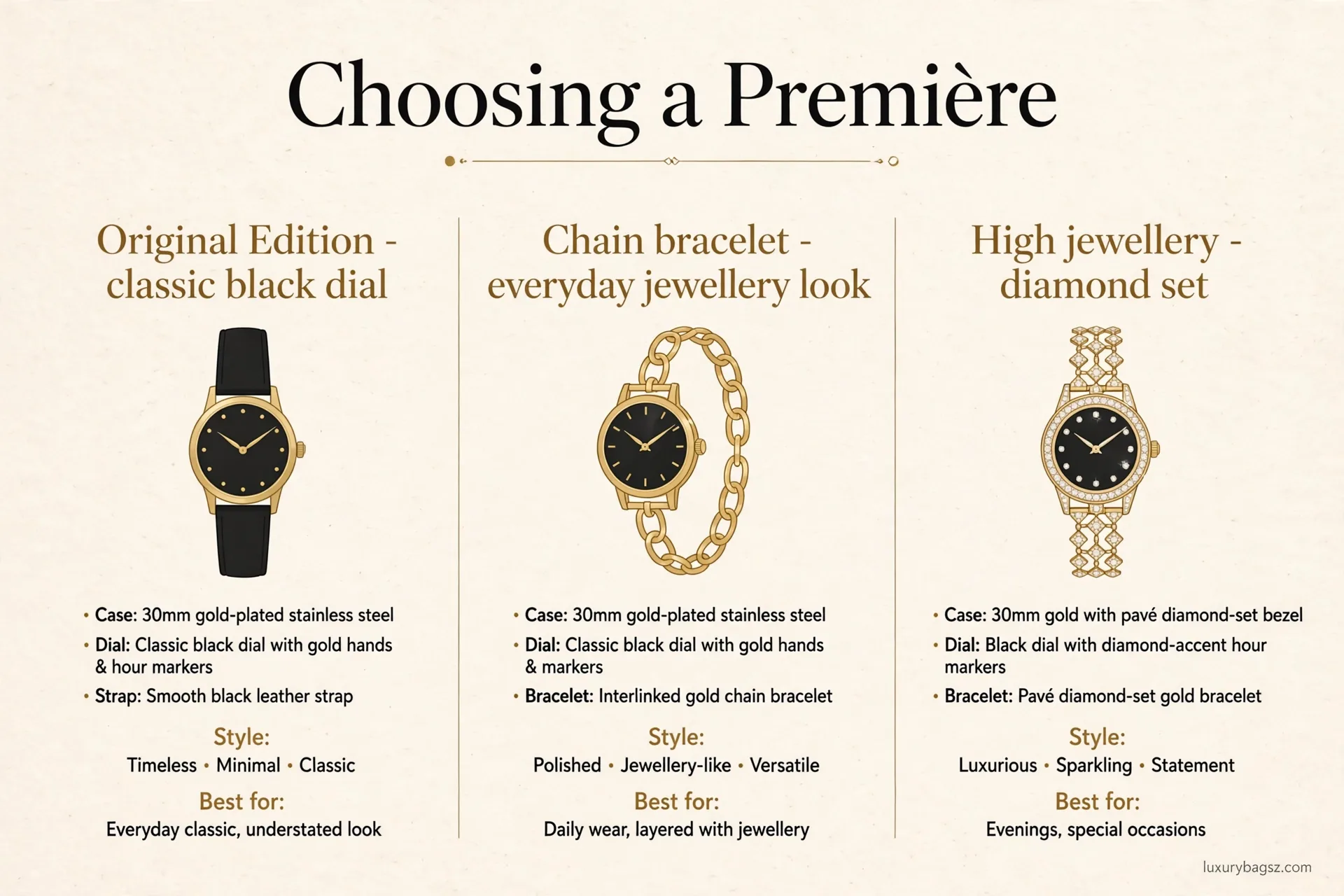
The Original Edition is the natural starting point. Reintroduced in 2022, when Chanel's watch and jewellery home at 18 Place Vendôme reopened, it returns to the 1987 formula: gold-tone octagonal case, black lacquer dial and leather-and-chain bracelet. If you want the historic design rather than a reinterpretation, this is the version to ask for by name.
Around it sits a wide family of variations. Chain-bracelet versions lean harder into the jewellery look, with double-row chains and bangle-like fits. Ceramic and ribbon versions soften the watch for everyday wear, while diamond-set and high jewellery editions push it firmly into evening territory. The case shape stays recognisable throughout, which is the point of a design-led collection.
Two cautions apply when comparing versions. First, model names and bracelet types vary by year and market, so always confirm the exact reference before comparing prices. Second, illustrations in this guide are generic drawings, not product photographs, and the body text here is the authoritative description where an illustration differs in a detail.
Movements: Quartz at the Core, Mechanical at the Top
Most Première models are quartz watches, and that is a strength rather than a weakness for this kind of piece. Quartz keeps the watch slim, accurate and easy to live with: no winding, no daily rate worries, and a simple battery change at service. For a jewellery watch worn in rotation with other pieces, that practicality matters more than mechanical prestige.
Above the core range sit exceptional editions, including tourbillon and skeletonised pieces made with high-end movement partners. One example from the collection's history is a skeleton camellia-shaped calibre housed in the Première case. These editions are rare, costly and aimed at collectors, not first-time buyers, and they should not be used as a price guide for standard models.
When buying pre-owned, confirm which movement your reference carries rather than assuming it. A seller's listing may say "automatic" for a quartz model or vice versa, and the difference affects both value and servicing. Papers, or a check with a watchmaker, settle the question quickly.
How to Style the Première
The Première works best when it is allowed to be the jewellery in the outfit. Wear it alone on a bare wrist with a simple sleeve, and it reads as a deliberate statement rather than an accessory. It pairs naturally with a black dress, a cream blouse or a dark blazer, where the gold and black palette has room to breathe.
Layering is possible, but restraint pays. A slim gold bangle or a single ring complements the watch, while a stack of chunky bracelets fights with the chain bracelet and hides the octagonal case. If your bracelet version is a double-row chain, treat it as a cuff in its own right and keep the other wrist bare.
For daytime, the leather-and-chain or ceramic versions are the easiest to live with. They sit comfortably under a shirt cuff and do not demand an occasion. For evening, the diamond-set or full-chain versions step up without changing the outfit, which is exactly what a jewellery watch should do.

Buying Pre-Owned: What to Check
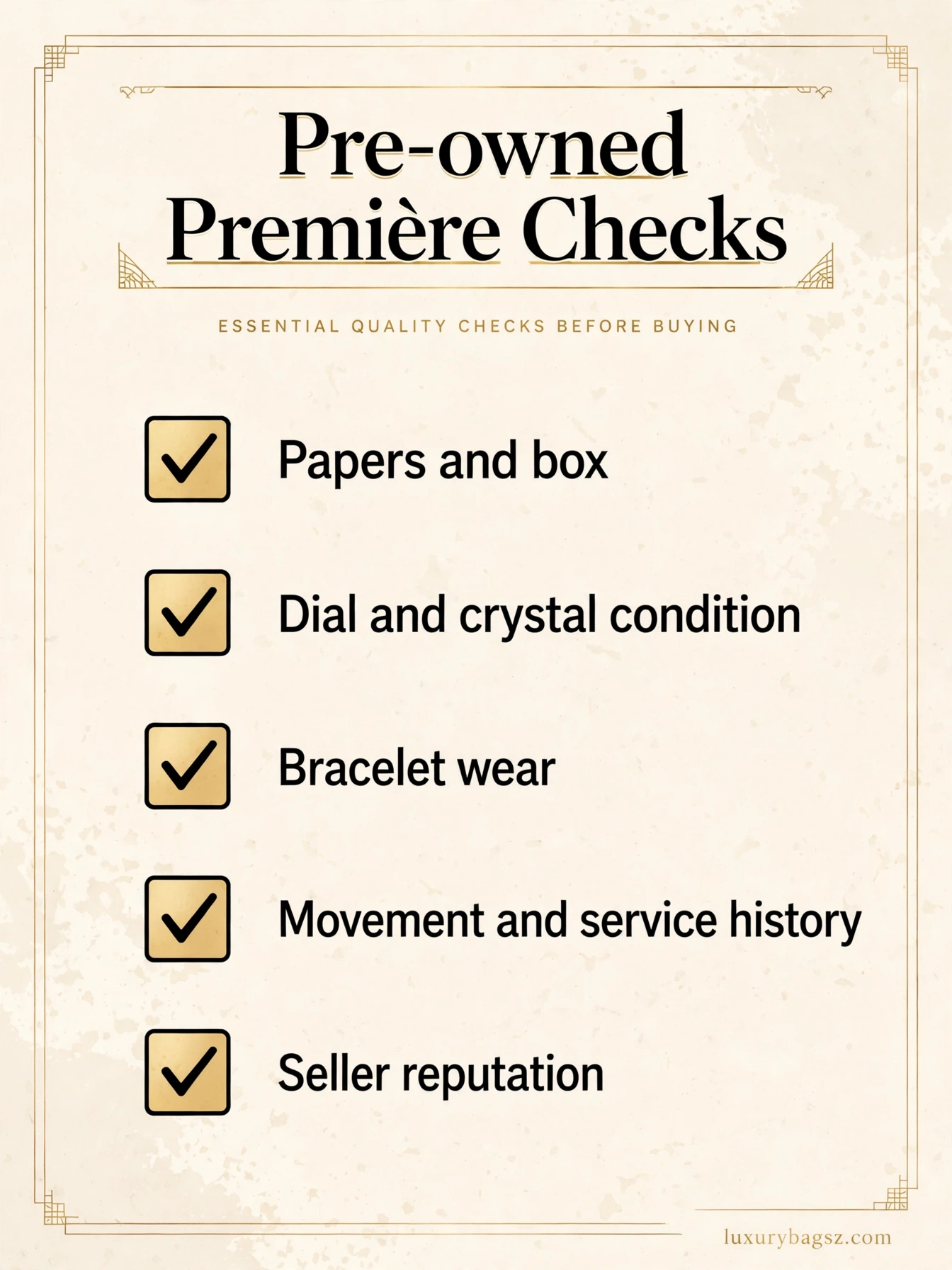
Start with condition of the crystal and dial. The bevelled octagonal crystal is a signature feature, and chips at its edges are both visible and costly to put right. The black lacquer dial should be even and unmarked; scratches or fading stand out sharply against the plain surface and are hard to disguise.
Next, examine the bracelet closely. Leather woven through chain wears with use, and stretched links or frayed leather change both comfort and value. Check the clasp action and the crown, including the onyx stone, and ask whether any links or leather parts have been replaced. Honest wear is fine; undisclosed replacement is a price question.
Finally, cover the paperwork. Ask for box, papers and service history, and buy from a seller with a clear returns policy. Our watch cleaning guide covers safe day-to-day care once the watch is yours, and our designer jewellery resale pricing guide explains how condition and completeness move resale value.
Première or J12: Which Chanel Watch Fits You
The choice between Chanel's two icons comes down to character. The Première is a jewellery watch: small, octagonal, gold and black, designed to be worn like a bracelet. The J12 is a sports watch: round, ceramic, larger and bolder, built for daily wear in black or white. Neither is objectively better; they answer different wardrobes.
Consider the Première if you want a watch for evenings, formal days and jewellery-led outfits, or if you prefer a smaller case and a chain bracelet. Consider the J12 if you want one watch for everything, including travel and active days, and you like the look of ceramic. Many collectors eventually own both, for exactly that reason.
For context on how other houses handle the dress-watch question, our Cartier Tank guide and Cartier Ballon Bleu guide are useful comparisons.
Our Rolex guide covers the sportier end of the market. Start with the Première if Chanel's codes matter most to you; start elsewhere if pure sports-watch toughness is the priority.
Frequently Asked Questions
When was the Chanel Première launched?
The Première was launched in 1987 as Chanel's first watch. It was designed by Jacques Helleu, then the house's artistic director, and it marked Chanel's entry into watchmaking.
Why is the Première case octagonal?
The octagon echoes the shape of the Place Vendôme in Paris and the stopper of the N°5 perfume bottle. Gabrielle Chanel's Ritz suite overlooked the square, which made the geometry a personal house code as well as a visual one.
What is the Première Original Edition?
The Original Edition is the 2022 reissue close to the 1987 design: a gold-tone octagonal case, black lacquer dial and leather-and-chain bracelet. It was launched as Chanel's watch and jewellery home at 18 Place Vendôme reopened.
Are Première watches quartz or automatic?
Core Première models are quartz, which keeps them slim and easy to wear in rotation. A small number of high-end editions use mechanical movements, including tourbillon pieces, but these are rare collector editions.
What bracelet options exist for the Première?
The original bracelet weaves black leather through a gold-tone chain, echoing the quilted bag strap. Later versions reinterpret it in gourmette chain, ceramic or velvet-finish ribbon, so buyers can choose between jewellery, everyday and softer looks.
Is the Première a good everyday watch?
It can be, in a leather-and-chain or ceramic version, but it is a jewellery watch rather than a sports watch. Owners who want one watch for swimming, sport and rough daily wear will find a ceramic sports watch more forgiving.
What should I check when buying a pre-owned Première?
Check the bevelled crystal for edge chips, the lacquer dial for marks, the bracelet for stretch or frayed leather, and the crown and its onyx stone. Ask for box, papers and service history, and confirm the movement type for the exact reference.
How does the Première differ from the J12?
The Première is small, octagonal and jewellery-led, with a chain bracelet and a plain black dial. The J12 is round, larger and made from high-tech ceramic, designed as a unisex sports watch. They suit different wardrobes and often complement each other in a collection.
Does the Première hold its value?
Value depends on reference, condition, completeness and market demand, and this guide does not promise any resale outcome. Full sets in good condition with honest wear tend to fare better than incomplete or heavily restored pieces.
Can the Première be worn by men?
Chanel designed the Première for women, and its small jewellery scale reflects that. Anyone who likes the design can wear it, but buyers wanting a larger or sportier Chanel watch usually look at the J12 instead.
Final Verdict: A Small Watch With a Large Identity
The Première earns its place because it is unmistakably Chanel in a single glance. The octagon, the black lacquer dial and the chain bracelet add up to a watch that needs no logo to be recognised, and that clarity has survived nearly four decades of reinterpretation.
Buy it if you want jewellery that tells the time, in a size that suits a smaller wrist and a style that suits formal and evening wear. Choose the Original Edition for the historic design, or a chain or ceramic version for everyday ease. Check the crystal, bracelet and papers carefully pre-owned, and you will own the watch that started Chanel watchmaking.






