Chanel Diana Flap Bag Guide: History, Sizes, Materials and Vintage Buying
The Diana at a Glance: The Vintage Flap With a Royal Nickname
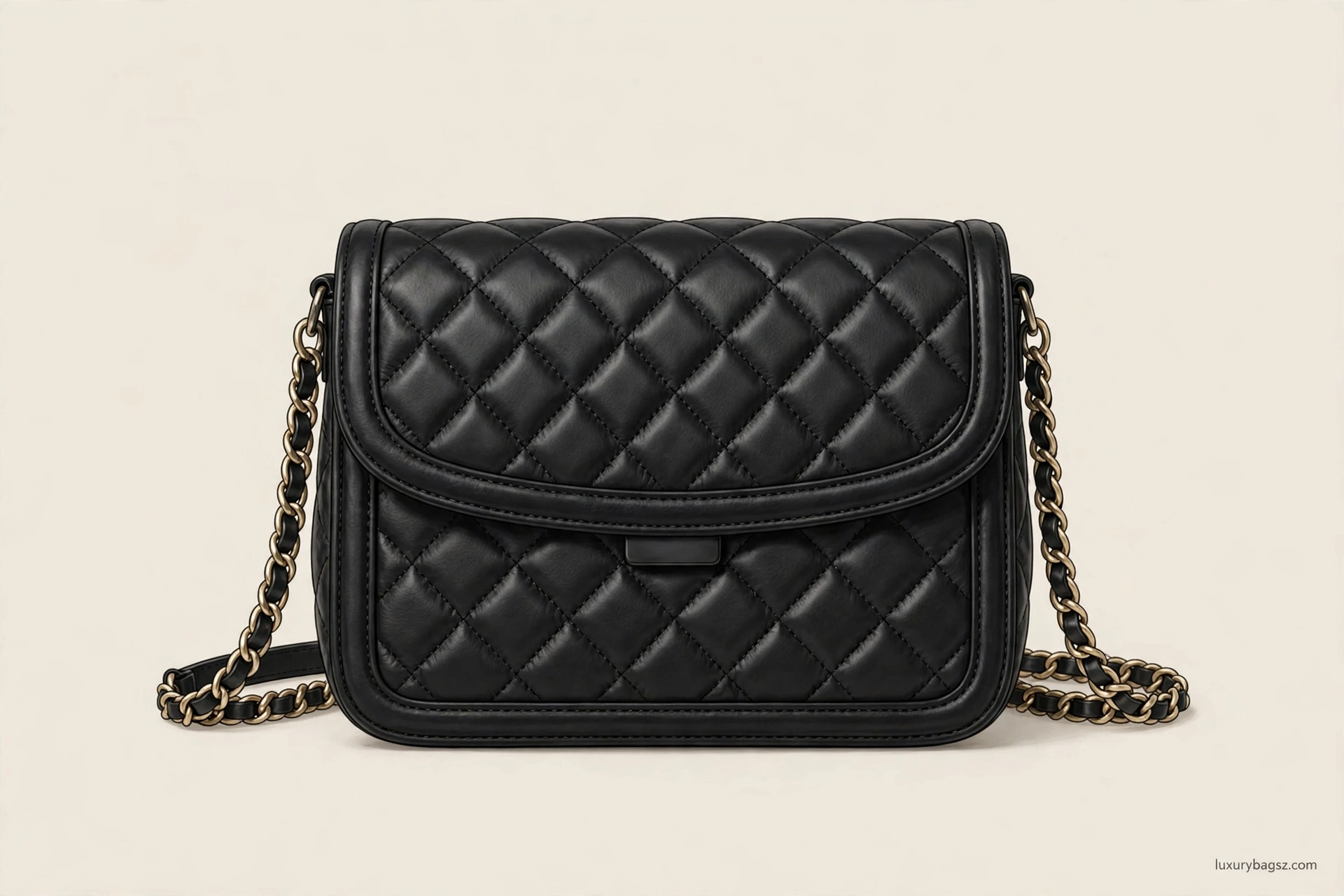
The Chanel Diana is the vintage flap bag that carries a princess's name. Produced from 1989 to about 1995, it was designed under Karl Lagerfeld and became linked with Diana, Princess of Wales, who was photographed carrying it through the 1990s. Lagerfeld is widely reported to have named the bag in her honour, and the name has stuck ever since.
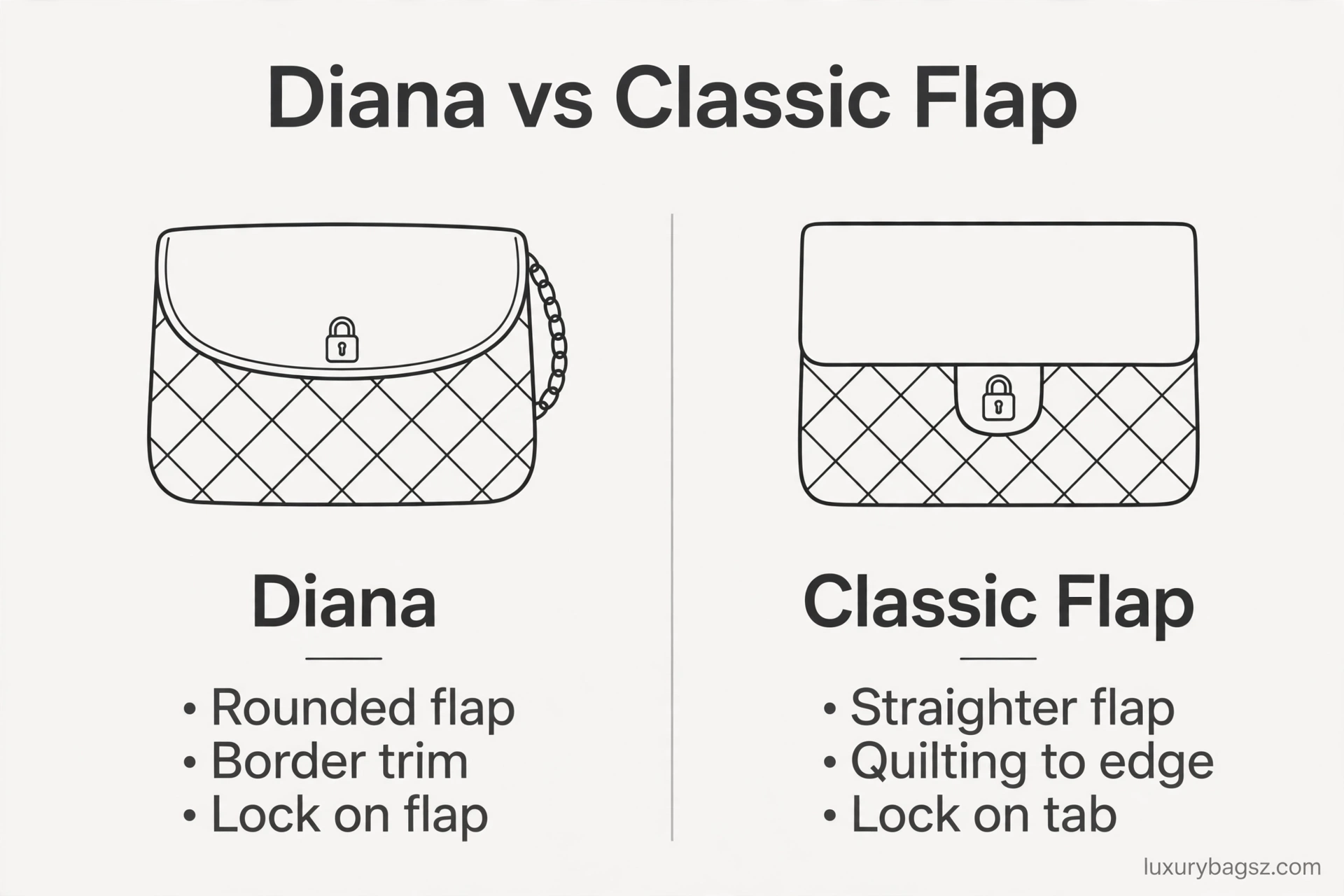
What makes the Diana special is not size or rarity alone, but shape. Its flap is softly rounded rather than straight-edged, its body is a single-flap design, and its quilting stops short of the edges, leaving a neat border trim. The result is a bag that looks gentler and more relaxed than the Classic Flap, while still reading unmistakably as Chanel.
Key Takeaways
- Produced from 1989 to about 1995 under Karl Lagerfeld, with a seasonal revival in 2015.
- Named in honour of Diana, Princess of Wales, who carried the bag in the 1990s.
- Two main sizes: small and medium, with a rounded single flap and border trim.
- Mostly made in lambskin; caviar versions exist and are rarer.
- The CC turn-lock sits on the front flap, unlike the Classic Flap's tab design.
- The 2015 revival differs from the vintage original and should not be confused with it.
- Vintage buyers should check serial stickers, quilting, hardware and chain wear.
The Royal Link: How a Bag Got a Princess's Name
Princess Diana was the defining style icon of the late 1980s and 1990s, and Lagerfeld watched her closely. She wore Chanel often, and the small quilted flap bag she carried became part of her off-duty image: polished, approachable and modern, without the stiffness of traditional royal dressing. Photographs of her with the bag did more for its fame than any advertising could.
The naming story is repeated across vintage guides and auction houses. Lagerfeld, who valued muses and the women who brought his designs to life, is said to have honoured Diana by giving the bag her name. Whether the name came first or the association grew, the effect is the same: the Diana is now inseparable from its royal namesake in the vintage market.
That link cuts both ways for buyers. It makes the Diana a conversation piece and a collector's item, but it also means sellers sometimes inflate prices on the strength of the name alone. Judge every bag on its own condition, size and material, and treat the royal story as heritage rather than a guarantee of value.
1989 to 1995: Lagerfeld's Vintage Classic
The Diana arrived during Lagerfeld's creative renaissance at Chanel, when he was refreshing house heritage for a new generation. It belongs to the same early-Lagerfeld family as the revived Classic Flap, the Camera bag and the Vanity Case, all of which reinterpreted Coco Chanel's codes for the 1980s and 1990s. The Diana's contribution was softness: a rounder, lighter flap bag for everyday elegance.
Production ran from 1989 to about 1995, according to Sotheby's and vintage guides, though some forum sources suggest examples into 1996. The exact end year varies by source, so treat 1995 as the widely cited end point and 1996 as a possible tail rather than a certainty. Either way, every genuine vintage Diana is now at least three decades old, which makes condition the deciding factor in any purchase.
Because production ended so long ago, the Diana is a vintage-only hunt in its original form. It does not appear in current Chanel boutiques as a permanent line, and availability depends entirely on the resale market. That scarcity is part of its appeal, but it also rewards patience: the right bag in the right condition is worth waiting for.
Design Anatomy: What Makes a Diana a Diana
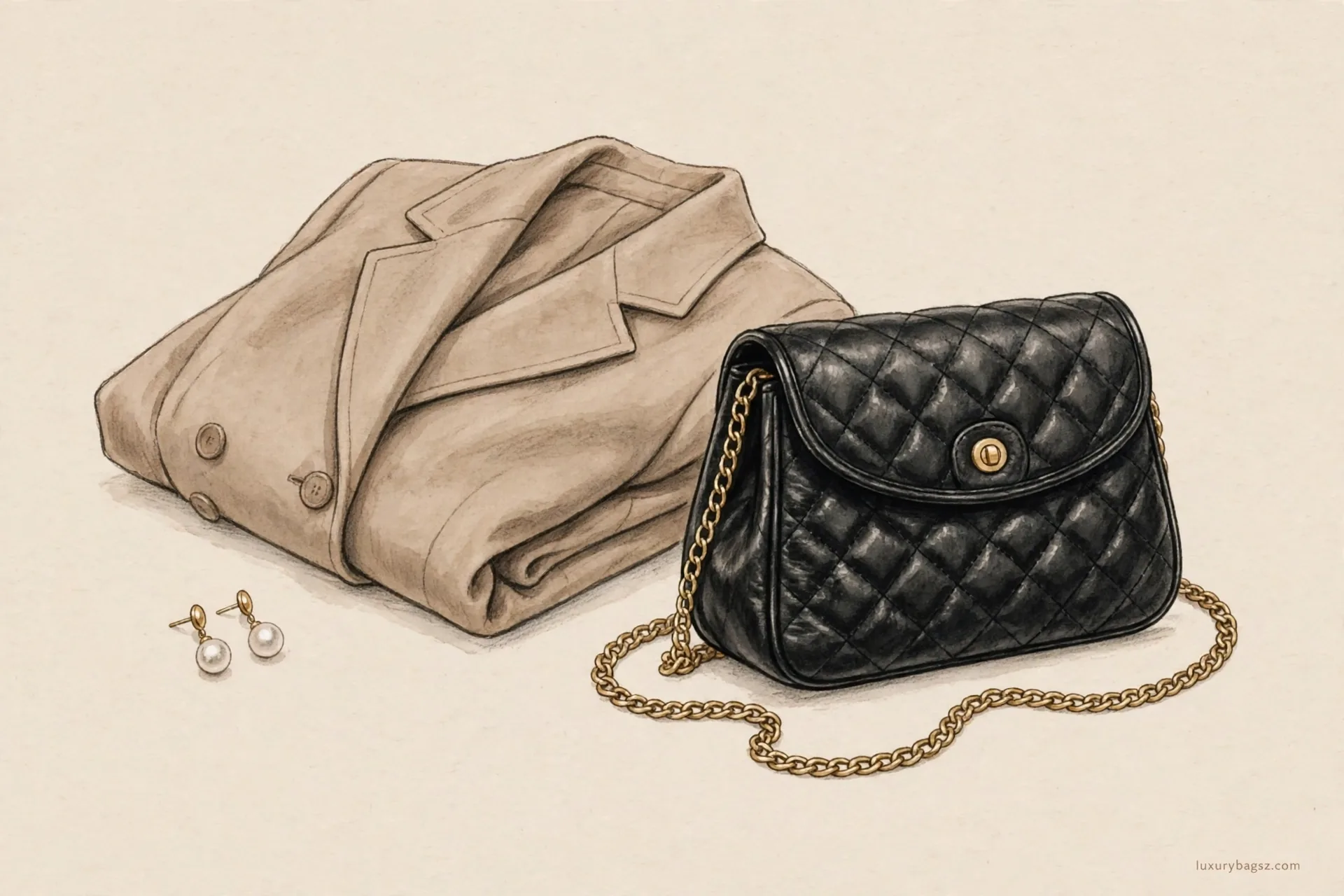
Start with the flap. The Diana's flap is rounded at the bottom, giving the bag a soft, almost smiling outline, where the Classic Flap's outer flap is much straighter. The quilting does not run to the flap's edge or around the whole body; instead it stops short, leaving a smooth border trim that frames the diamond pattern. That border is one of the quickest ways to recognise a Diana at a glance.
Next, look at the closure and construction. The Diana is a single-flap bag, meaning one outer flap covers the opening, unlike the double-flap Classic, which adds an inner flap for extra security. The interlocking CC turn-lock sits directly on the front flap, rather than on a leather tab protruding below it as on the Classic Flap. Inside, expect a leather lining with an internal zip pocket and a slip pocket.
Finally, note the strap. The Diana carries a chain strap woven or paired with leather, in the classic Chanel manner, and it is a single-strap design. The chain length suits shoulder wear, and on smaller examples it can work crossbody for shorter frames. Strap drop varies by example, so always check the listed measurement rather than assuming a size name guarantees a fit.
Sizes: Small and Medium, and How to Tell Them Apart
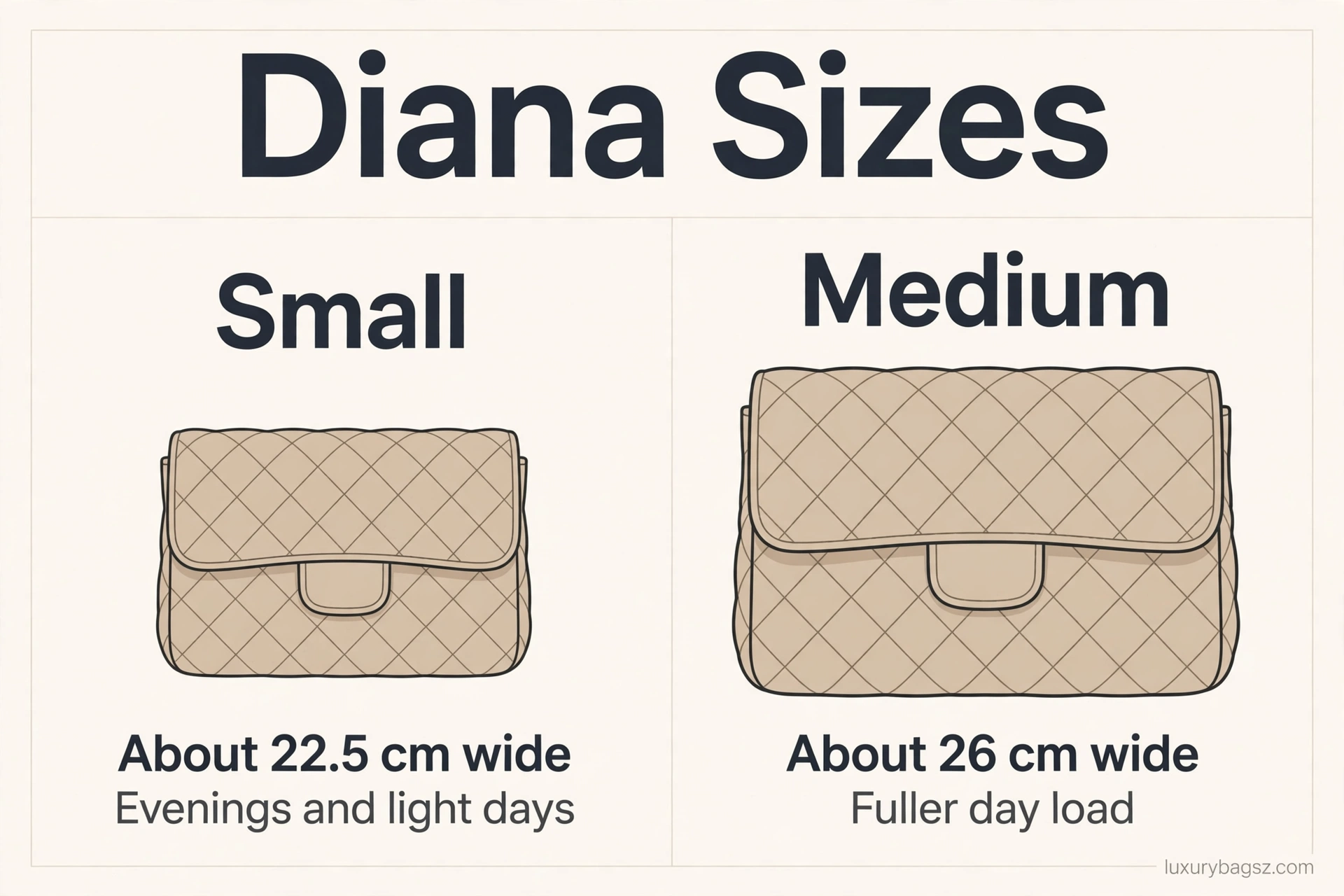
Guides list two main Diana sizes: small and medium. The small measures about 22.5 cm by 14 cm by 7 cm, while the medium measures about 26 cm by 16 cm by 9 cm, though individual listings vary slightly and some sources give marginally different figures. Treat these as guide dimensions, and always confirm the measurements of the exact bag you are considering.
There is a handy trick for telling the sizes apart in photographs. Count the diamond quilts above the CC turn-lock: the small is widely reported to show three full quilts and two half quilts, while the medium shows almost five full quilts, with the side quilts slightly cropped. This is a useful check, but it is not a substitute for a tape measure, since camera angles can mislead.
In practical terms, the small suits evenings and light days: phone, card holder, keys and lipstick, with little room to spare. The medium handles a fuller day bag load, including a small wallet, sunglasses and a compact pouch. Neither is a work tote, and buyers who need laptop or document space should look elsewhere in the Chanel range.
Materials and Colours: Lambskin First, Caviar Rare
Most vintage Dianas are made in lambskin, and that is the material to picture first. Lambskin is buttery, soft and lustrous, with a smooth hand that suits the bag's gentle silhouette. It also marks and scratches more easily than grained leather, so vintage lambskin Dianas often show corner wear, light scratches and softening of the quilting. Honest wear is normal; heavy damage should reduce the price.
Caviar leather Dianas exist but are considerably rarer, and vintage sellers report that they command a premium over lambskin examples. Caviar's pebbled grain resists scratches and holds its shape better, which makes it the practical choice for regular wear. If you plan to carry the bag often rather than occasionally, caviar is worth the search and the extra cost.
Colour follows the same pattern. Black is the most common and the most versatile, and it is the colour most associated with Princess Diana's own bag. Other colours and a colour-blocked option appear in smaller numbers, along with patent, canvas and satin versions. Unusual materials need extra care checks, since satin and patent age very differently from leather.

The 2015 Revival: Similar Name, Different Bag
Chanel revived the Diana name in its Spring 2015 collection, and this is where buyers must be careful. The 2015 Diana Flap is a seasonal piece that differs from the vintage original in construction and feel, and vintage guides stress that the two should not be treated as the same bag. A 2015 example is not a substitute for a vintage Diana, even though the name matches.
The revival has not been reissued since 2015, according to vintage guides, which leaves the market split in two: vintage originals from 1989 to about 1995, and the 2015 seasonal version. Sellers do not always make that distinction clearly, so ask for the serial series and production clues, and compare the flap shape and quilting against vintage references before paying a vintage premium.
For collectors, the vintage original remains the prize, particularly in caviar, which guides call the most elusive variation. For wearers who simply like the rounded flap shape, the 2015 version can be a sensible alternative, often at a different price point. Know which of the two you are buying, and pay accordingly.
How to Style a Diana Today
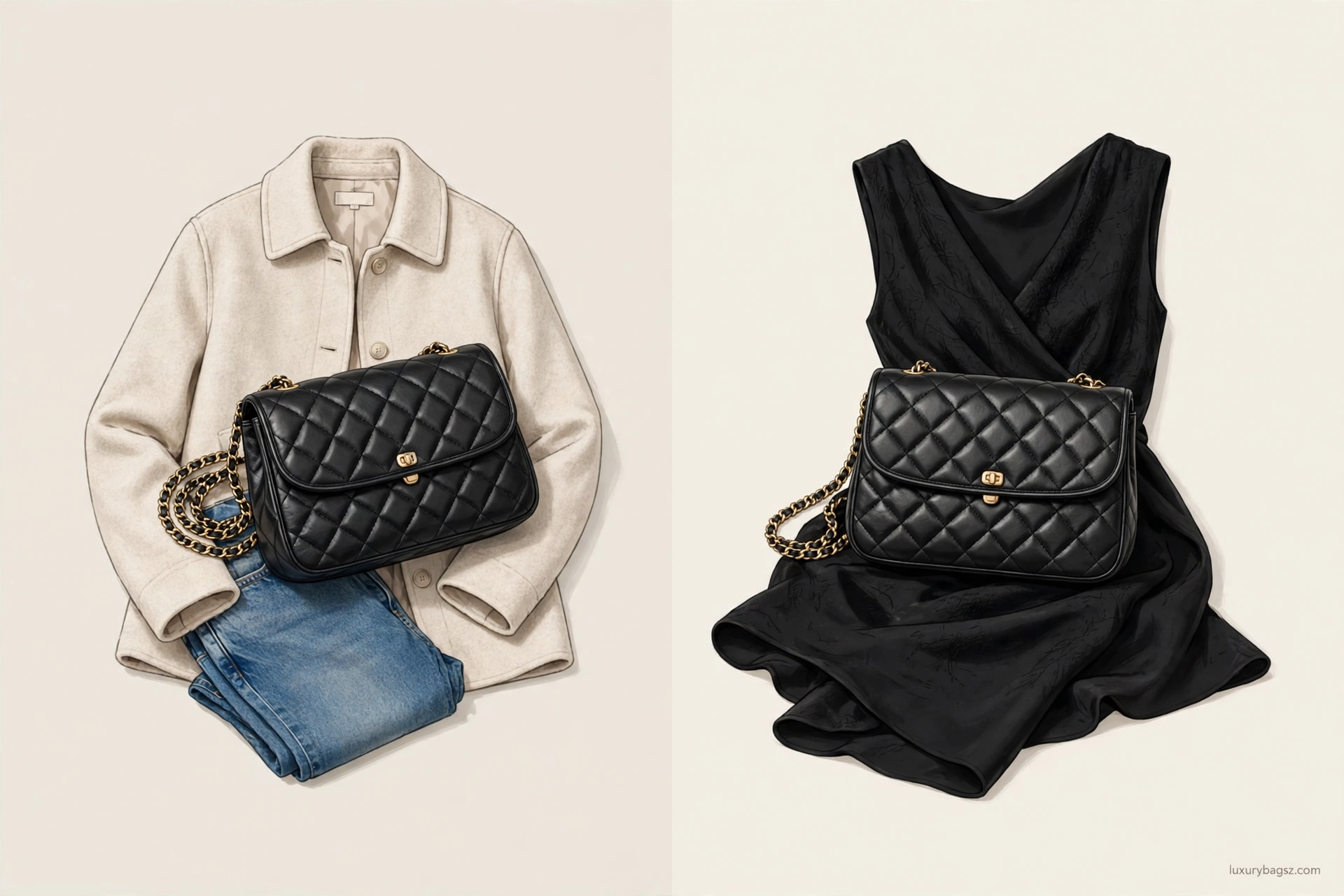
The Diana's softness makes it easy to style across decades. With jeans, a blazer and loafers, it adds polish without formality, echoing the off-duty royal look that made it famous. With a simple black dress, it becomes an evening bag that does not shout, and the gold chain adds just enough warmth to the outline.
Colour choice changes the role. Black works for almost everything and is the safest first Diana. Beige and neutral tones suit spring and summer wardrobes, while deeper colours carry autumn and winter outfits. Because the bag is compact, keep the rest of the outfit clean: the Diana looks best when it is the only vintage statement piece, not one of several competing ones.
One practical tip matters more than any styling rule. Lambskin Dianas need gentle handling: avoid overfilling, keep them away from rain and dark denim dye, and store them stuffed and in a dust bag. A well-kept vintage Diana looks decades younger than a neglected one, and careful storage is the cheapest way to protect its value.
Buying Vintage: Authenticity and Value Checks
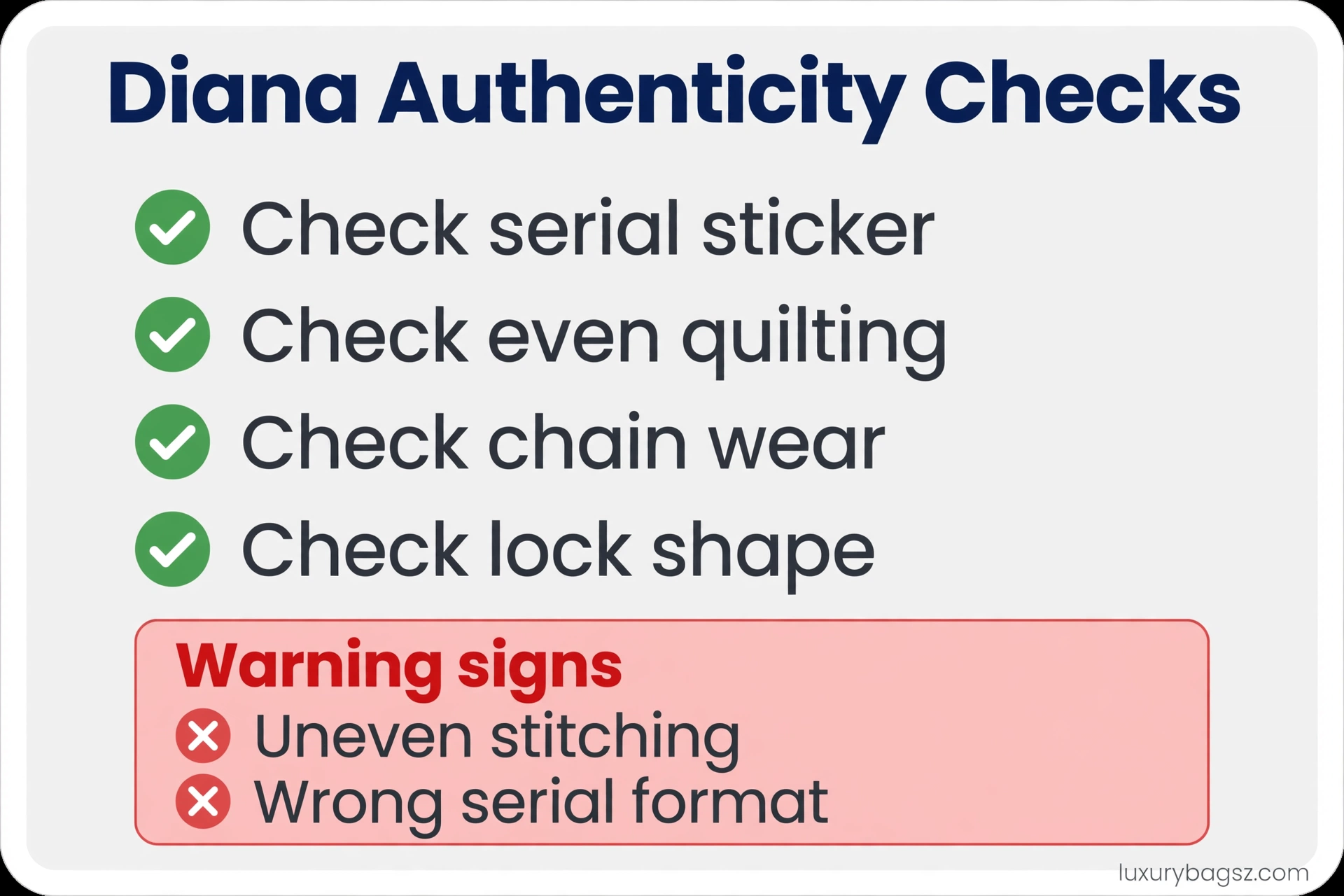
Authenticity starts with the serial sticker and its matching card, where present. Vintage Dianas carry a serial series that should fit the 1989 to 1995 window, and the sticker should sit cleanly inside the bag with matching numbers.
Our Chanel serial numbers and microchips guide explains how series and stickers work, and why a missing sticker is a price and confidence question rather than an automatic rejection.
Next, study the making. Quilting should be even and puffy, with the border trim intact; the CC lock should be crisp and well-weighted, not light or flimsy; and the chain should show even wear rather than replaced links.
Our how to spot a fake Chanel flap bag guide covers the wider flap checks that apply here too. If anything feels wrong, walk away or seek an independent authentication.
Finally, weigh value honestly. Our are Chanel bags worth the investment guide and our buying vintage designer bags vs new guide both stress the same point: buy the Diana because you love it and will carry it, not on a promised return.
Compare it with its relatives in our Chanel 2.55 history and sizes guide and our Chanel Classic Flap sizes guide before paying a premium for the royal name.
Frequently Asked Questions
What is a Chanel Diana flap bag?
The Diana is a vintage quilted flap bag produced from 1989 to about 1995 under Karl Lagerfeld. It has a rounded single flap, border trim, a CC turn-lock on the front flap and a leather-and-chain strap, and it is named in honour of Diana, Princess of Wales.
Was the Diana bag really named after Princess Diana?
Vintage guides and auction houses widely report that Lagerfeld named the bag in her honour after she was photographed carrying it through the 1990s. The association is well documented, even though the exact moment of naming is not recorded in a single official statement.
What sizes does the Diana come in?
The two main sizes are small, about 22.5 cm by 14 cm by 7 cm, and medium, about 26 cm by 16 cm by 9 cm. Listings vary slightly, so always confirm the measurements of the exact bag, and use the quilt-count trick from the sizes section as a secondary check.
How is the Diana different from the Classic Flap?
The Diana has a rounded flap with border trim, a single-flap construction and a CC lock mounted on the front flap. The Classic Flap has a straighter flap, all-over quilting, an optional double flap and a lock on a protruding leather tab.
What materials was the Diana made in?
Most Dianas are lambskin, prized for its buttery feel. Caviar versions exist and are rarer and usually pricier, while patent, canvas and satin examples appear in smaller numbers. Each material ages differently, so condition checks should match the material.
What is the difference between the vintage Diana and the 2015 version?
The 2015 Diana Flap is a seasonal revival that differs from the vintage original in construction and feel. It has not been reissued since 2015, and it should not be priced or described as a vintage original. Always confirm which version a listing offers.
How can I tell a real Diana from a fake?
Check the serial sticker and card, even quilting with intact border trim, a crisp and well-weighted CC lock, and even chain wear. Our flap authentication guide, linked in the buying vintage section, covers the wider checks, and independent authentication is wise for high-value examples.
Is the Diana a good investment?
This guide makes no promise about returns. The Diana is a sought-after vintage piece, and condition, material and completeness drive its market, but prices move with fashion and supply. Buy it because you love it, and treat any resale value as a bonus.
How do I care for a vintage lambskin Diana?
Store it stuffed in a dust bag, away from sunlight and moisture, and avoid overfilling or exposing it to rain and dye transfer from dark denim. Clean it gently with a soft dry cloth, and seek a leather specialist for anything beyond light surface care.
What fits inside a small Diana?
The small Diana holds a phone, card holder, keys and lipstick comfortably, with little room to spare. Buyers who need a wallet, sunglasses and a pouch should choose the medium, and buyers who need a laptop should look at a larger Chanel style instead.
Final Verdict: A Gentle Icon Worth the Hunt
The Diana endures because it is the softest expression of Chanel's flap-bag language. Its rounded flap, border trim and single-flap lightness give it a warmth the Classic Flap does not try for, and its royal association gives it a story no other vintage flap can match.
Buy it if you love vintage Chanel and want a compact, elegant shoulder bag with real heritage. Choose lambskin for the classic feel or caviar for durability, confirm whether you are buying a vintage original or the 2015 revival, and check serial, quilting and chain before paying. Done well, a Diana is a bag you will carry for decades.