How to Spot a Fake Chanel Flap Bag: 10 Checks Before You Buy
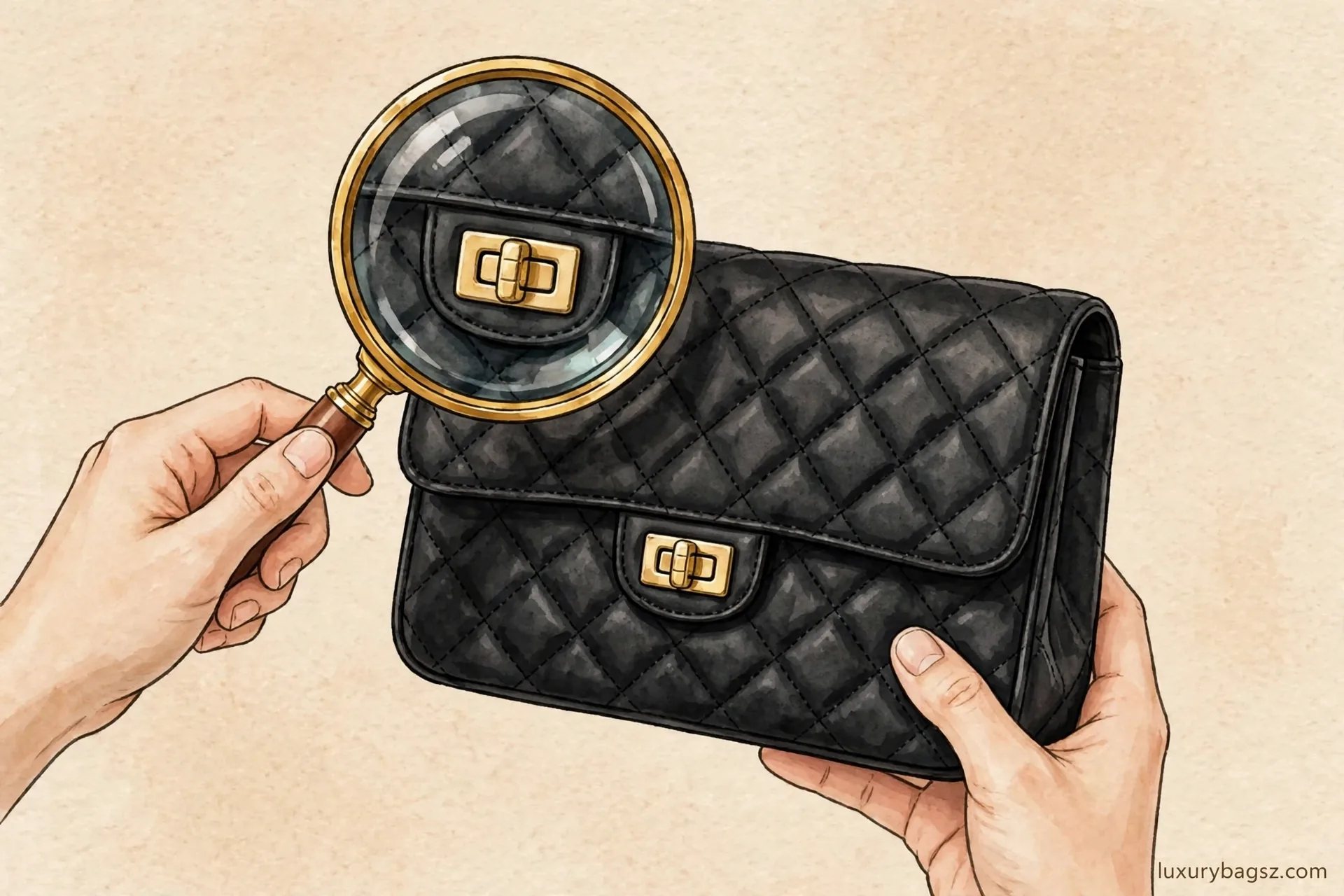
The 10 Checks in Brief
Chanel flap bags are among the most counterfeited bags in the world, and the best fakes now copy many details older guides rely on. What settles a flap bag is the whole set of ten checks agreeing — and a seller who accepts returns.
The ten checks are: quilting alignment and stitching, the CC lock, the right lock for the style, the chain, leather and corners by size, the interior stamp and lining, the serial sticker and card for pre-2021 bags, the microchip plate for post-2021 bags, the packaging, and the price and seller. The post-2021 plate is also what an Entrupy scan reads — the tool Jessica’s own checking uses when the visual evidence runs close.
One warning before the checks. Stitch counts are quoted three different ways in competitor guides, and per-diamond counts are not the same as per-inch counts; the stitching check below explains the difference. And the magnet-on-chain test is sourced only to a single video, so this guide does not repeat it as a check.
Key Takeaways
- No single check proves a Chanel flap bag real — run all ten checks and get a professional opinion on expensive purchases.
- Quilting must line up across flap, body and back pocket; stitch counts differ by measure (per-diamond vs per-inch), and superfakes now match counts.
- The CC lock overlaps right-over-left at the top and left-over-right at the bottom; flat-head or star screws are expected behind the lock, Phillips screws warn.
- A rectangular Mademoiselle lock belongs on a 2.55 or Reissue, a CC lock on a Classic Flap — the wrong lock for the style is a red flag.
- Pre-2021 bags carry a serial sticker and card; post-2021 bags carry a microchip plate. The code or card alone proves nothing.
- Boutiques generally do not authenticate bags, so do not rely on a boutique visit as proof.
- Demand the full photo set listed in the photo checklist section before paying, and buy only where you can return the bag if it fails.
With a Chanel flap, I count stitches before I admire anything. Along one edge of a diamond I expect the count the house uses for that era, repeated evenly across the flap; copies drift by a stitch here and there, and after 500-plus bags those drifts are what my eye lands on. On a post-2021 bag I skip the sticker hunt entirely and read the microchip plate through the Entrupy app, because the chip, the plate’s lettering and the bag’s construction have to tell one consistent story.
Why Flap Bags Are the Most Faked
Flap bags are faked more than almost any other bag because they combine high prices, high demand and a widely recognised design. Modern fakes, often called superfakes, copy quilting, hardware weight and even serial stickers, and pass casual inspection easily. That is why this guide insists on ten checks: a fake that passes quilting may fail the lock-screw check, and one that passes the chain check may fail the serial-era check. Price is a check too, and fakes appear on reputable-looking sites and in private sales, so check the bag, not the seller's story.
The Golden Rule: No Single Check Proves a Bag Real
Every check has an exception, and every flaw has an innocent explanation. A genuine bag can have a worn clasp, a replaced zip or a missing card; a fake can have perfect quilting. So look for a pattern, not a single verdict: one small flaw on an otherwise consistent bag may be honest wear, but three or four flaws pointing the same way — wrong lock, wrong screws, wrong serial era — are a reason to walk away. On purchases above a few thousand dollars, a written opinion from a reputable authenticator is worth paying for. Boutiques generally do not authenticate, and dated notes and photos of your checks are your strongest evidence in any dispute. These checks come straight from the authentication process behind every guide on this site.

Check 1: Quilting Alignment and Stitch Counts Explained
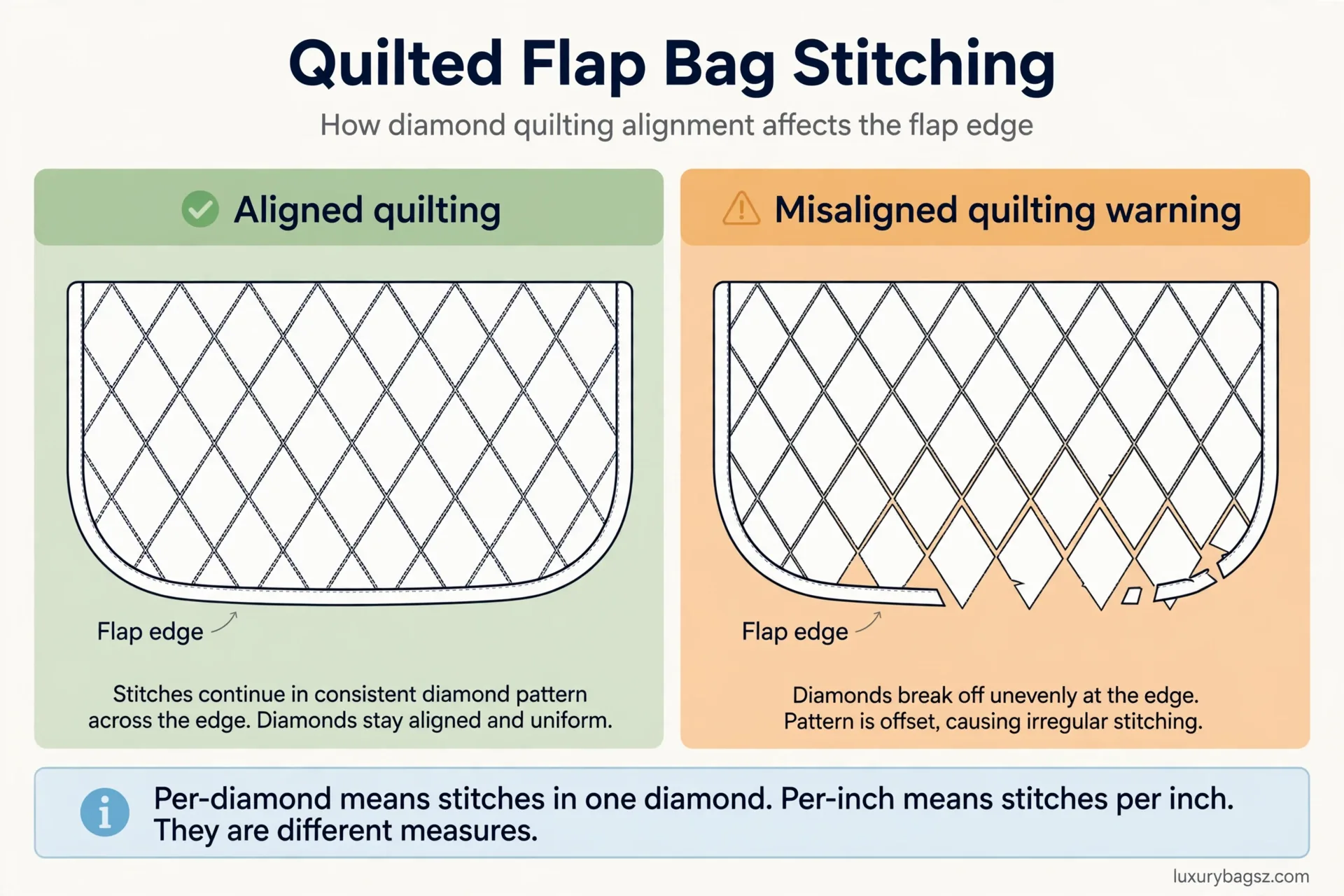
Quilting is the first check because it is visible in every photo and hard to fake perfectly across a whole bag. On a real flap bag, the diamond quilting lines up across the flap and the body, and the pattern continues cleanly onto the back pocket. Misaligned quilting, where diamonds break or shift at the flap edge, is a strong warning sign, as are uneven puffs between stitch lines.
Stitch counts confuse buyers, so here is the difference stated plainly. One guide gives approximately nine to eleven stitches per quilted diamond. Two other guides give nine to eleven stitches per inch, with fakes at seven or eight per inch. Per-diamond and per-inch are not the same measure, counts vary by size and leather, and superfakes now match counts — so never use stitch count alone.
Check 2: The CC Lock — Overlap, Screws and Feel
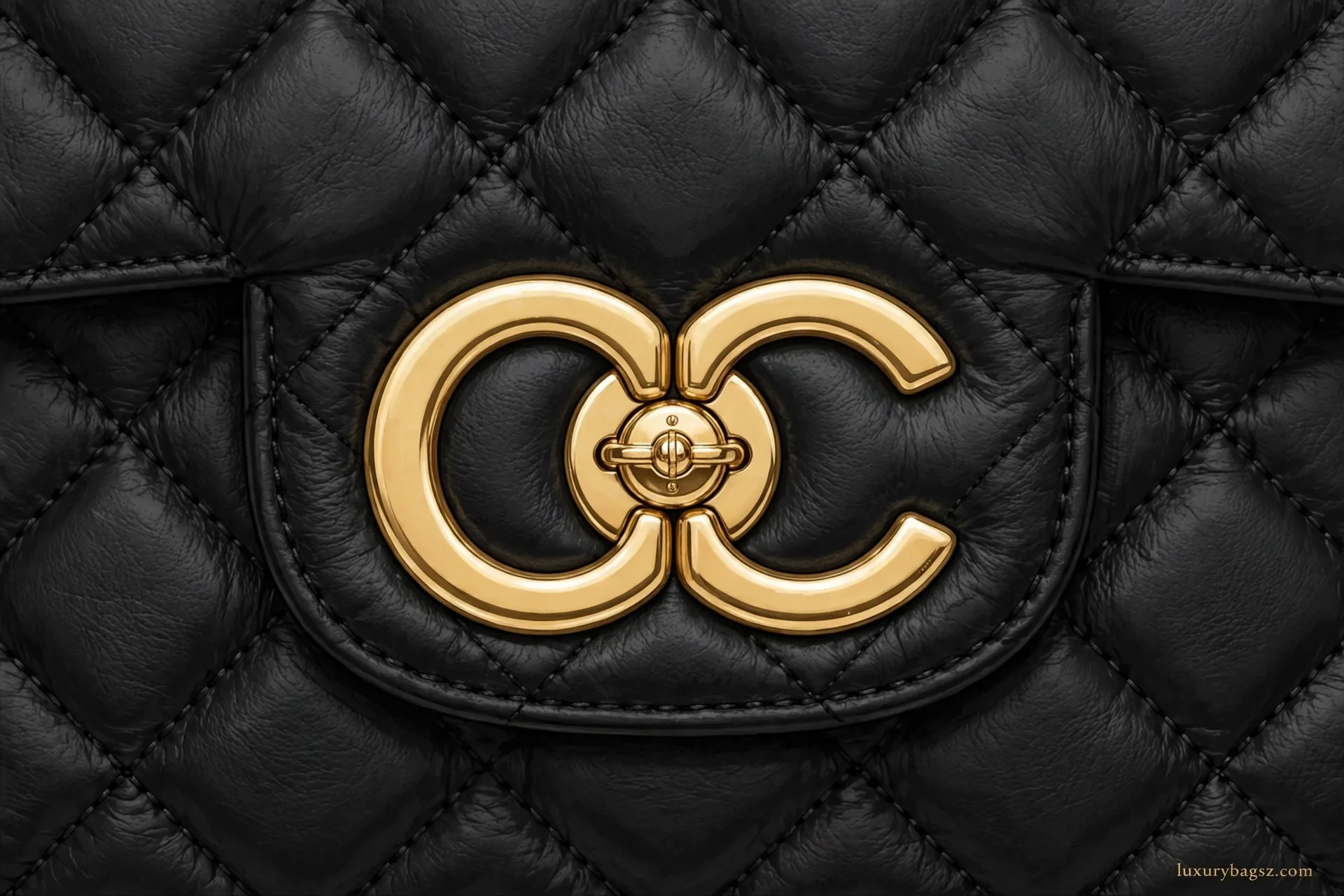
The CC turn-lock is the detail counterfeiters copy most, so it deserves a careful, unhurried check. Start with the overlap: on a genuine lock, the right C overlaps the left C at the top, and the left C overlaps the right C at the bottom. A lock that overlaps the same way at both ends deserves questions. Twist it and it should turn crisply, snap shut with no wobble, and sit perfectly centred on the flap. A lock that grinds, wobbles, sticks or sits crooked is a red flag.
Then check the screws behind the lock by asking the seller for a photo of the lock's back plate. Genuine examples use flat-head or star screws, while Phillips screws — the cross-shaped type — are a warning sign. Plating should be even, edges smooth, and the lock proportioned to the flap in a tone matching the chain.
Check 3: The Right Lock for the Style
A fake with the wrong lock for its claimed style is one of the most reliable tells. A bag sold as a 2.55 or a Reissue should carry the rectangular Mademoiselle lock, while a Classic Flap should carry the interlocking CC turn-lock; a mismatch means the listing is mislabelled or fake. Mini Classic Flaps are single-flap bags and main-size Classics double-flap, so a flap-type mismatch deserves a closer look too. Our full Classic Flap vs Boy bag comparison shows how the Classic's CC lock compares with the Boy's push clasp. Do not rely on the listing title — sellers use "2.55" loosely for all flap bags.
Check 4: Chain Weight, Finish and Links
The chain is a weight check as much as a visual one, and photographs alone cannot fully settle it. A real Classic chain has weight, and its leather weaving is tight and even; a light, hollow or rough chain is a reason to stop. The weaving should be tight, even and consistent along the full length, with no loose weaving, gaps or fraying. Links should feel smooth and solid, with an even finish and no rough edges, bubbling or patchy plating, and the chain's tone should match the lock's tone. Attachment points should be secure, with no stretching or pulling at the leather; if you cannot handle the bag, ask for a short video of the chain moving and the lock turning.
Check 5: Leather, Edges and Corners by Size
Leather checks must be made by size, because a flaw on a Mini means something different from the same flaw on a Jumbo. Lambskin is buttery and soft but scratches easily, while caviar is grained, firmer and far more forgiving of daily knocks. On lambskin, look for scratches, scuffs and colour loss on flap edges and the front face; on caviar, check the grain is even and intact, with no worn-smooth patches. Edges and corners wear first: check flap corners, base corners and piping, since heavy corner wear should lower the price. Ask directly whether the bag has been restored, since redye can hide the flaws you are checking for.
Check 6: Interior Stamp, Lining and Pockets
The interior stamp is a font check, and it rewards patience. On a genuine bag, the interior heat stamp is clean, evenly pressed and correctly spelled, with "Made in France" or "Made in Italy" as appropriate for the bag's era and production. Font details change by era, so do not judge a vintage stamp by a modern example: compare the stamp with verified examples from the same era. Era-matching is the check; a single universal font is a myth. The lining should be clean, correctly coloured for the style, and free of stains, tears and loose threads. Pockets complete the picture: on a main-size Classic, the double flap hides a pocket arrangement that should match the style, while minis are single-flap and simpler inside. The stamp alone proves nothing — stamps are faked.
Check 7: Serial Sticker and Card for Pre-2021 Bags
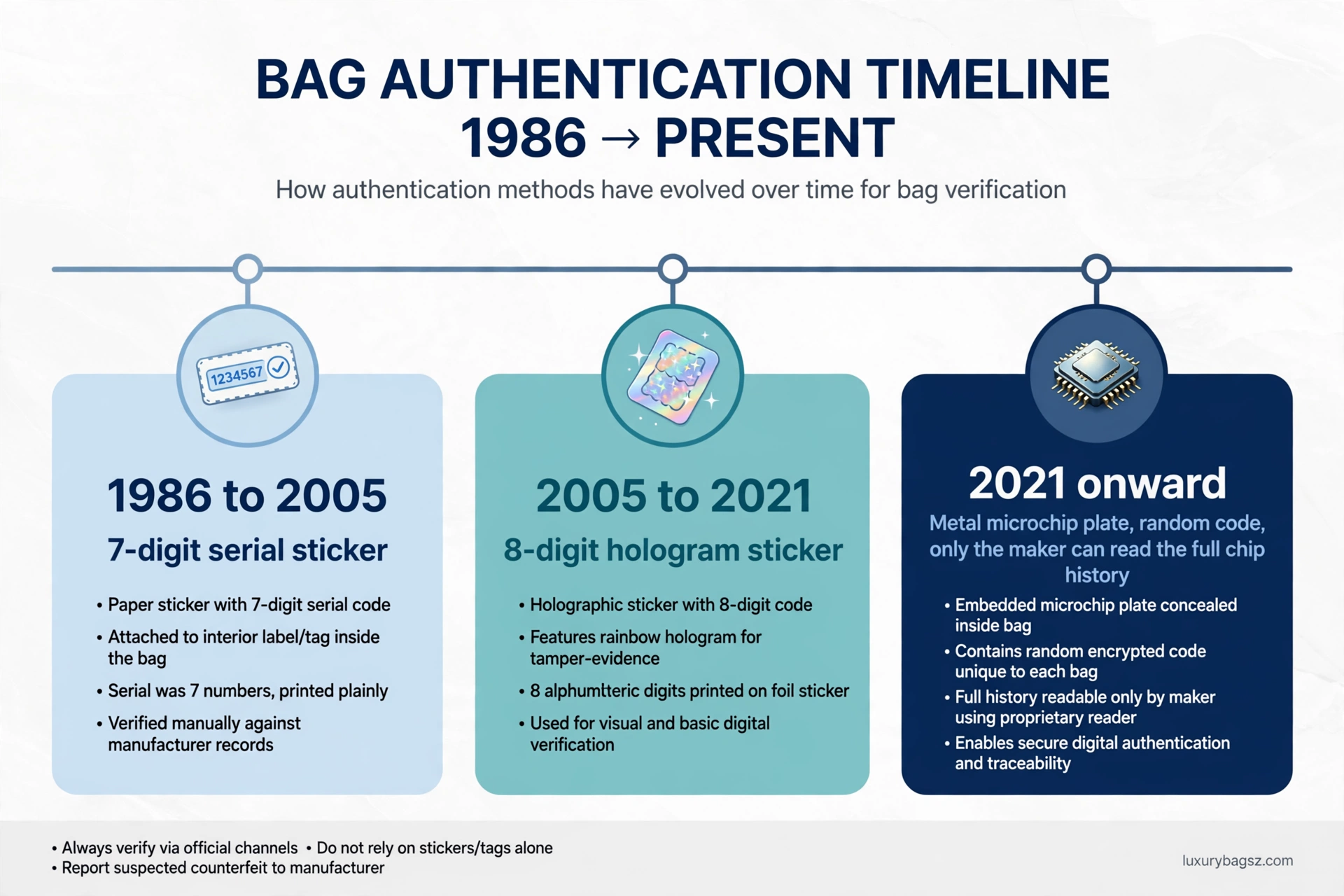
Older Chanel bags carry a serial sticker and a matching card, and the system changed over the years in ways that let you date a bag. Seven-digit stickers ran from 1986 to 2005, and eight-digit hologram stickers ran from 2005 to 2021, from the 10-series in 2005-2006 to the 31-series in 2021. Check the hologram: two CC logos, fine X cut-lines, gold speckles, strikethrough zeros and serif-style ones. A sticker lacking these features, or looking freshly printed on an old bag, deserves questions — but stickers peel, fade and fall off, so a missing sticker alone does not prove a bag fake. The card matters less than sellers claim: it should match the sticker's number, but cards are faked as often as bags. Era-matching is the real check — a bag claimed to be from 2010 should not carry a 28-series code. Note the small-leather-goods exception: small goods continued with 32-series codes into 2022, so a 32-series code on a wallet is plausible, while the same code on a flap bag deserves questions.
Check 8: Microchip Plate for Post-2021 Bags
Since 2021, Chanel has replaced the serial sticker with a small metal plate carrying an eight-character random alphanumeric code, with an NFC microchip embedded behind it. A post-2021 flap bag should carry a plate, not a sticker, and a pre-2021 bag fitted with a plate deserves equal suspicion. Guides agree that only Chanel can read the chip's full history; buyers cannot verify a bag by tapping a phone on it, so a seller who claims "tap to verify" is overselling the technology. Watch for the card-and-chip combination: one source flags a post-2021 bag carrying both an authenticity card and a microchip as suspicious, since the card system ended with the sticker system — treat that as a question, not a verdict. The plate alone proves nothing, since plates are faked too.
Check 9: Dust Bag, Box and Packaging
Packaging is the check most buyers overvalue, and that is exactly why it belongs in this guide. A dust bag, box and card add a little value to a genuine bag, but they prove nothing on their own, because extras are faked as often as bags and sold separately in large numbers. The dust bag should feel right for the era, with clean stitching and correct markings, and fit the bag; the box should be sound, correctly marked and appropriately sized — but a perfect box with a fake bag inside is still a fake bag. Our guide to telling a Chanel VIP gift bag real or fake shows how easily extras can mislead. Use packaging as a completeness bonus, not as authentication.
Check 10: Price, Seller and Listing Red Flags
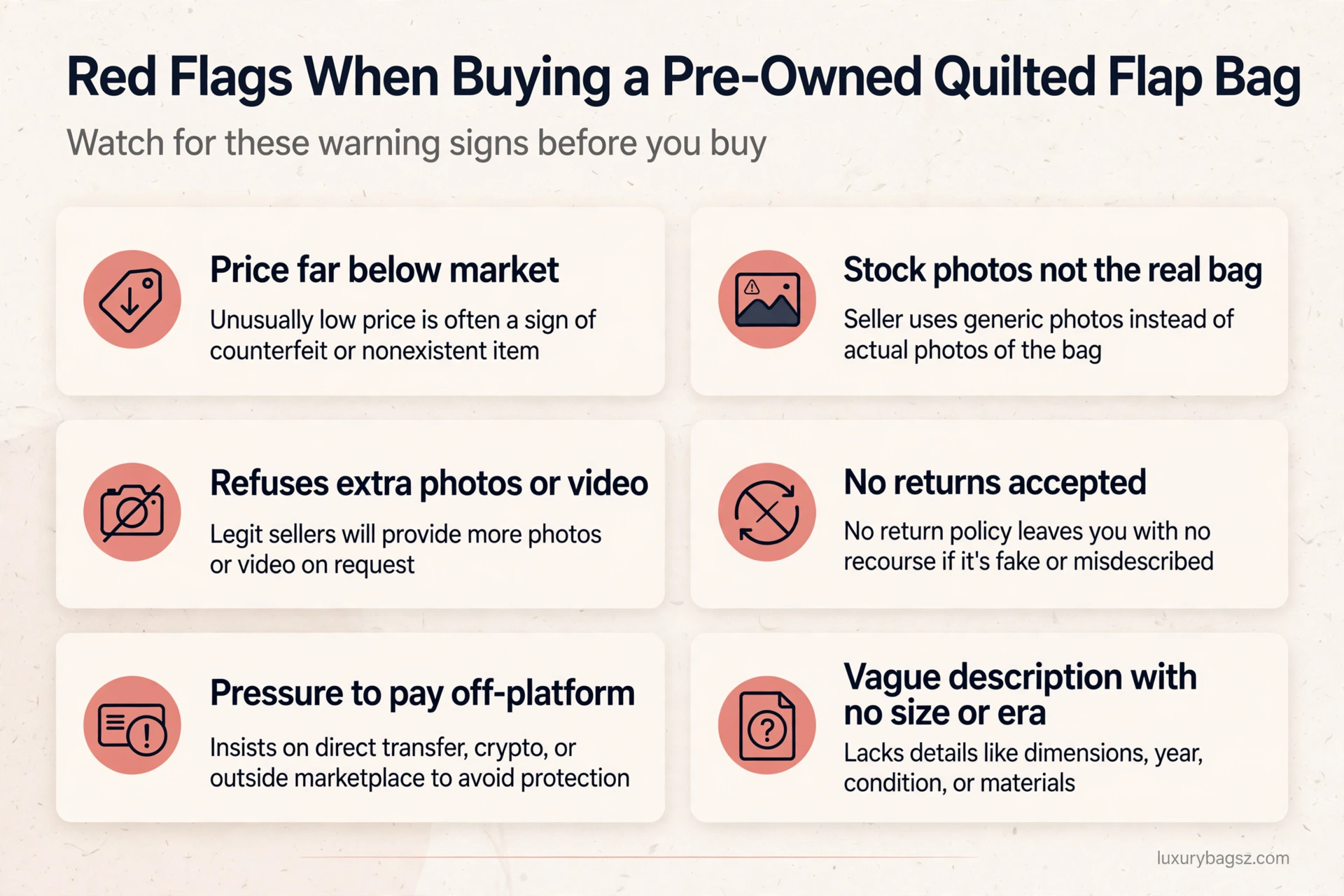
Price is a check, not just a budget, and it is the check that saves buyers who skip the other nine. A flap bag listed far below market price is not a bargain you discovered first; it is a listing every experienced buyer passed over. Green flags include clear photos of every detail, a returns policy, a verifiable selling history, and a willingness to provide videos and extra photos. Red flags include stock photos instead of the actual bag, refusal of photos or video, refusal of returns, and pressure to pay outside a protected platform. Listing language gives further clues: vague descriptions, missing size or era information, and unevidenced "guaranteed authentic" claims are warnings. A genuine seller gives specifics — size, material, era, condition, flaws, measurements — while a fake seller gives adjectives. Buyer protection gives you a remedy if the bag fails; bank transfer, gift payment or cryptocurrency gives you almost none.
The Photo Checklist: What to Demand Before Paying
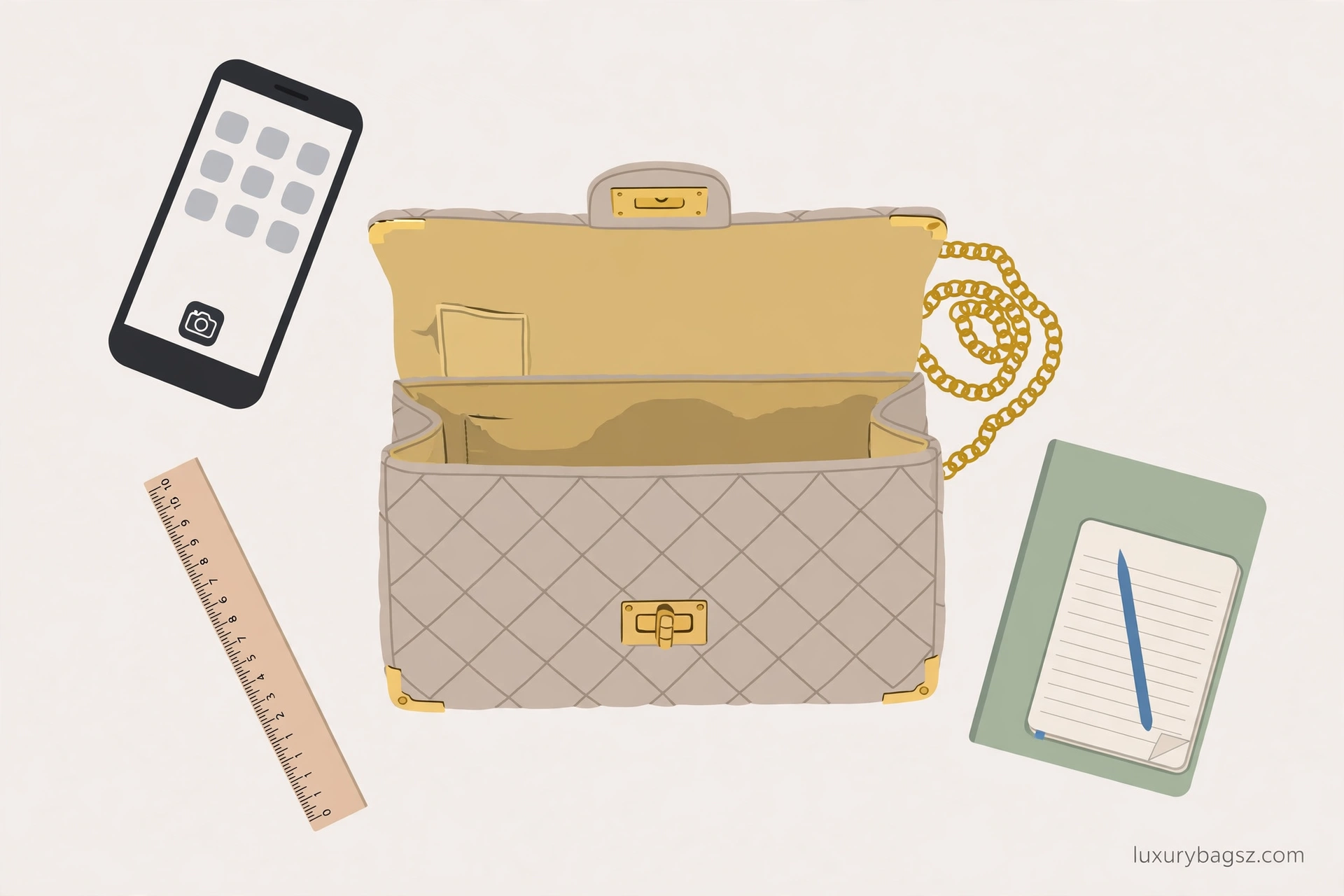
No competitor guide gives a copy-ready photo list for online buyers, so here is one. Send it to the seller before paying, and do not pay until you have every photo or a good reason for a missing one. Demand a straight-on photo of the lock, front and back, showing the overlap and the screws behind the lock plate; a clear photo of the interior stamp, showing the font and the "Made in" line; and a photo of the serial sticker or microchip plate, with the code legible. Demand close-ups of the quilting across the flap and body, showing alignment at the flap edge and the back pocket; photos of the chain, including the leather weaving and the attachment points; and photos of all four corners, the base and the edges, in bright light. Demand interior photos showing the lining, the pockets and the zip; photos of the dust bag and box, if claimed; and a scale photo plus width, height and depth in centimetres. If the seller refuses any of these, treat the refusal as information.
Bought a Suspected Fake? Returns, Disputes, Authentication
If a bag you already bought fails checks, act quickly and keep everything. Do not wear the bag, do not remove tags or stickers, and do not attempt repairs, since any of those can weaken a return or a dispute. Photograph the bag exactly as received, including packaging, and keep all messages with the seller. Contact the seller in writing, list the specific checks that failed, and request a return under the platform's policy, keeping your wording factual. If the seller refuses, use the platform's dispute process within its deadline, and submit your photo record and check notes. If you paid by card or through a payment service with buyer protection, open a claim there as well, and meet every deadline. Get a professional authentication opinion, in writing — the opened guides give no neutral comparison of services, so this guide recommends none over another.
Flap Sizes and Fakes: Mini, Medium and Jumbo Tells
Fakes are not identical across sizes, because each size has its own construction details that counterfeiters get wrong in different ways. On Mini flap bags, the tells are proportion and flap type: minis are single-flap bags, so a Mini claimed to have a double flap is wrong on its face, and a Mini with large, loose quilting or a long, heavy chain deserves questions about whether its parts match its size. On Medium flap bags, the most common size and the most faked, the tells are the double flap and the lock scale: the inner flap should be present and neatly finished, and the CC lock proportioned to the flap. On Jumbo and Maxi bags, the tells are structure and weight: a genuine large flap bag has substance, with leather thick enough to hold its shape and a chain heavy enough to balance it. Across all sizes, compare the bag with verified examples of the same size, not with flap bags in general.
Frequently Asked Questions
How can you tell a fake Chanel flap bag?
Run all ten checks together: quilting alignment, CC lock overlap and screws, right lock for the style, chain weight and finish, leather and corners by size, interior stamp and lining, serial or microchip against the era, packaging, and price and seller behaviour. No single check proves a bag real or fake.
What is the CC overlap rule, and what screws should be behind the lock?
On a genuine CC lock, the right C overlaps the left C at the top, and the left C overlaps the right C at the bottom. A lock that overlaps the same way at both ends deserves questions, as does a lock that grinds, wobbles or sits crooked.
Flat-head or star screws are expected behind the lock plate, while Phillips screws, the cross-shaped type, are a warning sign. Ask the seller for a photo of the lock's back plate, since this hidden detail is one fakes often get wrong.
How many stitches should a real Chanel bag have?
It depends on the measure. One guide gives nine to eleven stitches per quilted diamond, while others give nine to eleven stitches per inch, with fakes at seven or eight per inch. Per-diamond and per-inch are different measures, counts vary by size and leather, and superfakes now match counts, so never use stitch count alone.
How do you tell a fake from the serial number or microchip?
Match the code to the era: seven-digit stickers from 1986 to 2005, eight-digit hologram stickers from 2005 to 2021, and a random-code microchip plate from 2021 onward. A code that does not match the claimed era is a red flag, but a code or card alone never proves a bag real.
No, not in any useful way. Guides agree that only Chanel can read the chip's full history, and buyers cannot verify a bag by tapping a phone on it. A seller who claims tap-to-verify is overselling the technology.
No. Stickers peel, fade and fall off, so a missing sticker alone does not prove a bag fake, but it should lower the price and trigger harder checks. The same applies to a missing card: cards are faked often, and a card alone proves nothing.
Do Chanel boutiques authenticate bags?
Generally no, according to the guides that address this. Do not buy a bag on the promise that a boutique will check it for you afterwards, and do not treat a boutique visit as proof of authenticity.
What photos should I ask a seller for?
Lock front and back, interior stamp, serial sticker or microchip plate, quilting alignment, chain and attachments, all four corners and base, interior lining and pockets, dust bag and box if claimed, and a scale photo. The photo checklist section gives the full copy-ready list.
What should I do if I bought a fake?
Do not wear or repair it, photograph everything, contact the seller in writing with the specific failed checks, use the platform dispute process within its deadline, open a payment-protection claim if available, and get a written professional authentication opinion to support your case.
Final Verdict
A fake Chanel flap bag is rarely caught by one brilliant observation. It is caught by patience: ten checks, run in order, with photos demanded before payment and a seller who accepts returns. The buyers who lose money are rarely the ones who knew too little. They are the ones who skipped checks because the price was tempting or the seller sounded confident. So run the checks, demand the photos, and walk away from pressure, from refusals, and from prices that make no sense. A genuine flap bag is worth waiting for, and the bag you buy after ten careful checks is the bag you will enjoy without doubt.