

Chanel CC Espadrilles Guide: Sizing, Materials, Prices and Styling
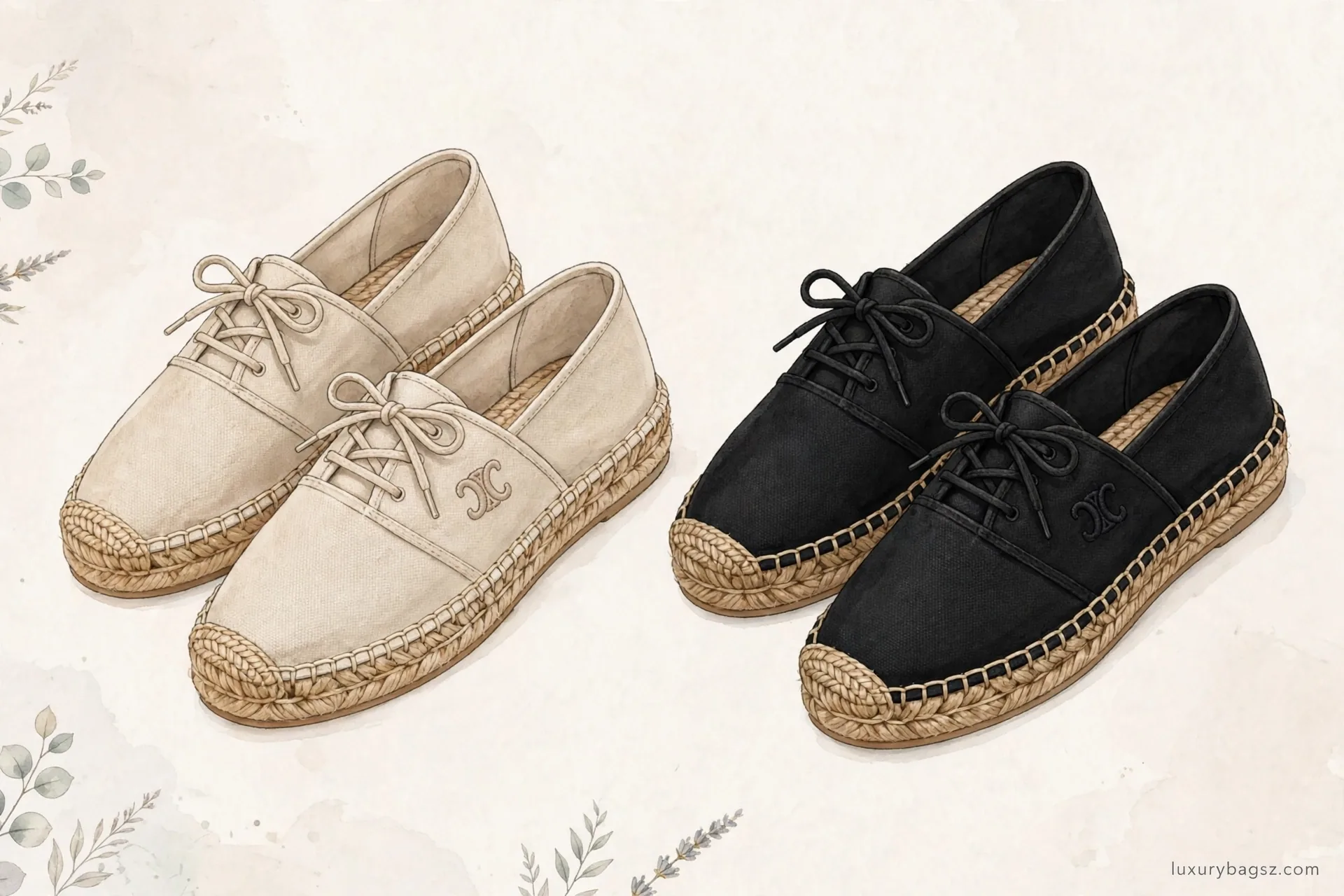
Chanel CC Espadrilles in Brief: True to Size, With a Snug Start
Chanel CC espadrilles are the house's easy summer shoe: a canvas or leather upper, a woven jute sole and a small interlocking CC-style motif. They look relaxed, yet they carry enough polish for lunches, holidays and smart casual days. That balance is why they sell out most summers.
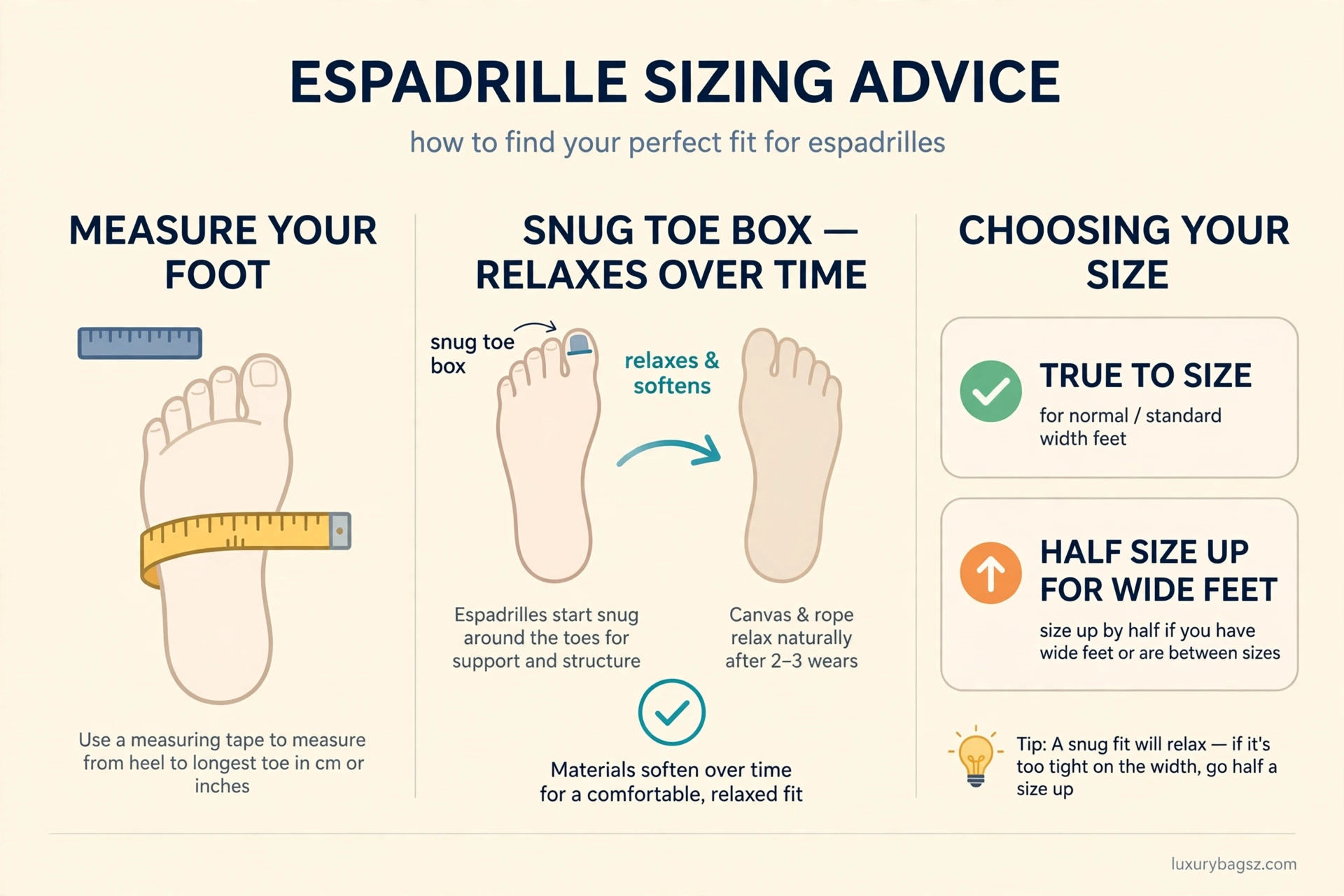
Fit is the key point. Espadrilles generally run true to size, but the toe box starts snug, especially in lambskin. The material relaxes with wear, so a snug first try-on is normal. If the shoe pinches across the width, though, go half a size up rather than hoping it will stretch.
Prices vary by material and season, so treat figures here as reported ranges. Canvas pairs have been reported around $700 to $1,200 in recent guides, with leather and special designs higher. Confirm the current boutique price before you buy, since seasonal editions change often.
Key Takeaways

- Chanel espadrilles generally run true to size, with a snug toe box at first.
- Lambskin relaxes with wear; canvas holds its shape more firmly.
- Reported prices run roughly from $700 to $1,200 for standard canvas pairs.
- Keep espadrilles dry: jute soles and water do not mix well.
- Classic beige and black pairs are the easiest to style and resell.
- Check stitching, jute quality and insole details on pre-owned pairs.
What Makes a CC Espadrille
The espadrille is an old Pyrenean design: a soft upper stitched to a rope sole. Chanel keeps that shape and refines it with better materials, a rubber layer under the jute for grip, and a restrained logo detail. The result feels handmade rather than sporty, which suits the house style.
Most pairs are slip-ons with no laces or buckles, though some seasonal versions add grosgrain trim, tweed panels or embroidered motifs. The sole stays flat, at roughly 2 cm, so there is no heel support to speak of. That flatness is part of the charm, and also the limit on all-day walking.
The CC motif appears in several forms: embroidered, tonal or in a contrasting colour. Tonal versions look quieter and suit more outfits, while bold motifs draw the eye. If you want one pair to wear often, choose the quieter version first and save the statement pair for later.
Seasonal colours rotate every year, but beige, black and navy return most often. Those neutrals pair with linen, denim and summer tailoring without effort. Bright prints can be joyful, yet they date faster and suit fewer outfits.
Materials: Canvas, Lambskin, Tweed and Jute
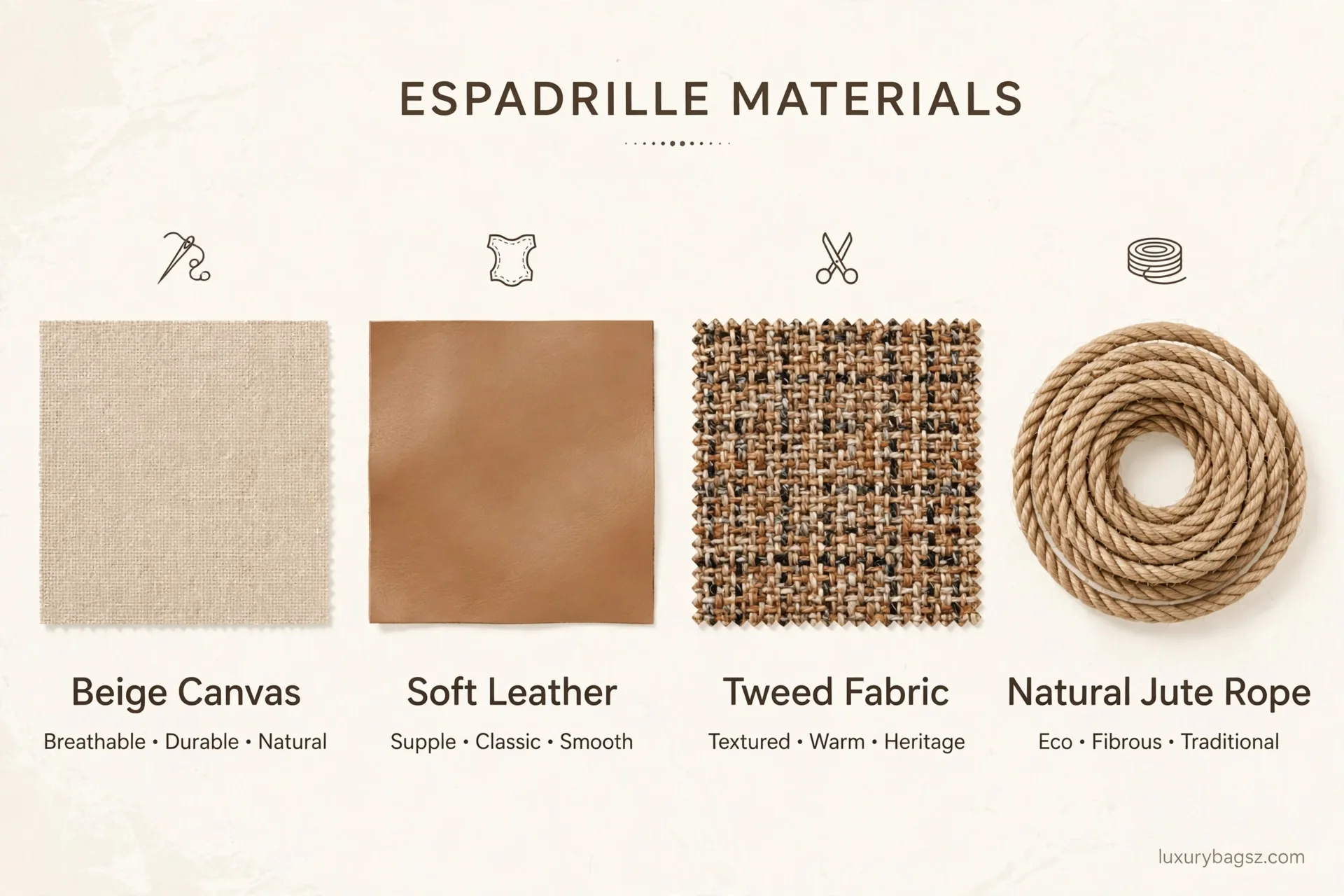
Canvas is the classic espadrille material. It breathes well in heat, holds its shape and suits casual styling. Canvas pairs feel firm at first, and they soften only a little, so buy your true size rather than sizing down for a tight fit.
Lambskin is the softest option and the one that changes most with wear. It moulds to the foot, which is why a snug lambskin pair often becomes comfortable after a few wears. The trade-off is delicacy: lambskin scuffs and stains more easily than canvas, so it needs gentler handling.
Tweed and suede versions add texture and warmth, but they suit dry days only. Tweed holds its shape firmly and stretches little, while suede marks quickly in rain. Both look lovely with autumn tailoring, yet neither is a good first pair for wet climates.
The jute sole deserves attention too. Natural jute gives the shoe its relaxed look, while the thin rubber layer beneath adds grip and slows wear. Our guide to caviar versus lambskin leather covers how soft leathers behave, and the same principle applies here: soft materials give, firm ones do not.
Sizing and Fit: Getting Your Size Right
Start with your usual French size, since espadrilles generally run true to size. A US women's 7 to 7.5 often takes a FR 38, but foot shape matters as much as length. Wide feet, high arches and long toes can all push you half a size up.
Expect a snug toe box on the first wear, especially in lambskin. Wearers commonly report that the shoe feels tight for the first few outings, then relaxes as the leather softens. Canvas pairs relax less, so a tight canvas pair should be exchanged rather than endured.
If your pair feels loose, a thin insole or a little tissue in the toe can help for a short while. Loose espadrilles slip at the heel, though, so this is a stopgap, not a fix. A pair that slips from the start is the wrong size, however tempting the price.
Try before you buy when you can, and walk on a hard floor, not just carpet. Boutique staff can also compare your size across materials, since a tweed pair and a lambskin pair in the same number can feel quite different. When buying online, confirm the return terms before paying.
Styling: Simple Outfits Work Best
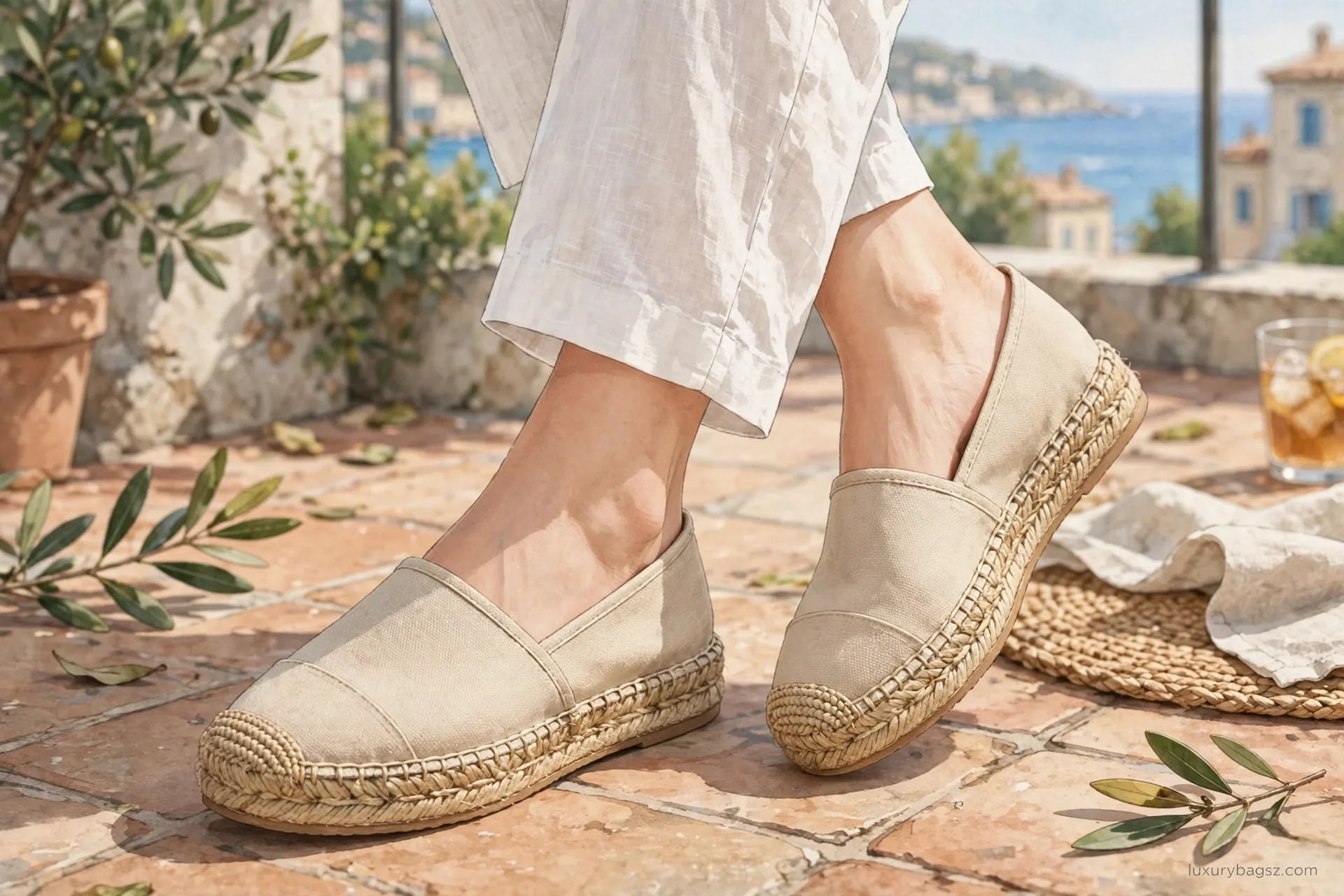
Espadrilles look best styled simply. White linen trousers, a Breton top and a straw tote make an easy holiday outfit, while rolled denim and a plain shirt suit a weekend lunch. The shoe adds polish without formality, so the rest of the outfit can stay relaxed.
For smarter days, pair beige espadrilles with a midi dress or tailored shorts in navy or stone. Black pairs suit darker outfits and evening terraces, though they still read as casual. Avoid pairing espadrilles with full business tailoring, where a loafer or slingback fits better.
Colour matching is straightforward. Beige pairs warm up navy, white and olive, while black pairs ground bright dresses and prints. If your espadrilles carry a bold motif, keep the rest of the outfit plain so the shoe stays the focus.
They are not all-day walking shoes. The flat sole offers little arch support, so long city days call for a cushioned trainer instead. Save espadrilles for days with short walks, seaside lunches and evenings out, and your feet will thank you.
Care: Keeping Canvas, Leather and Jute in Good Shape
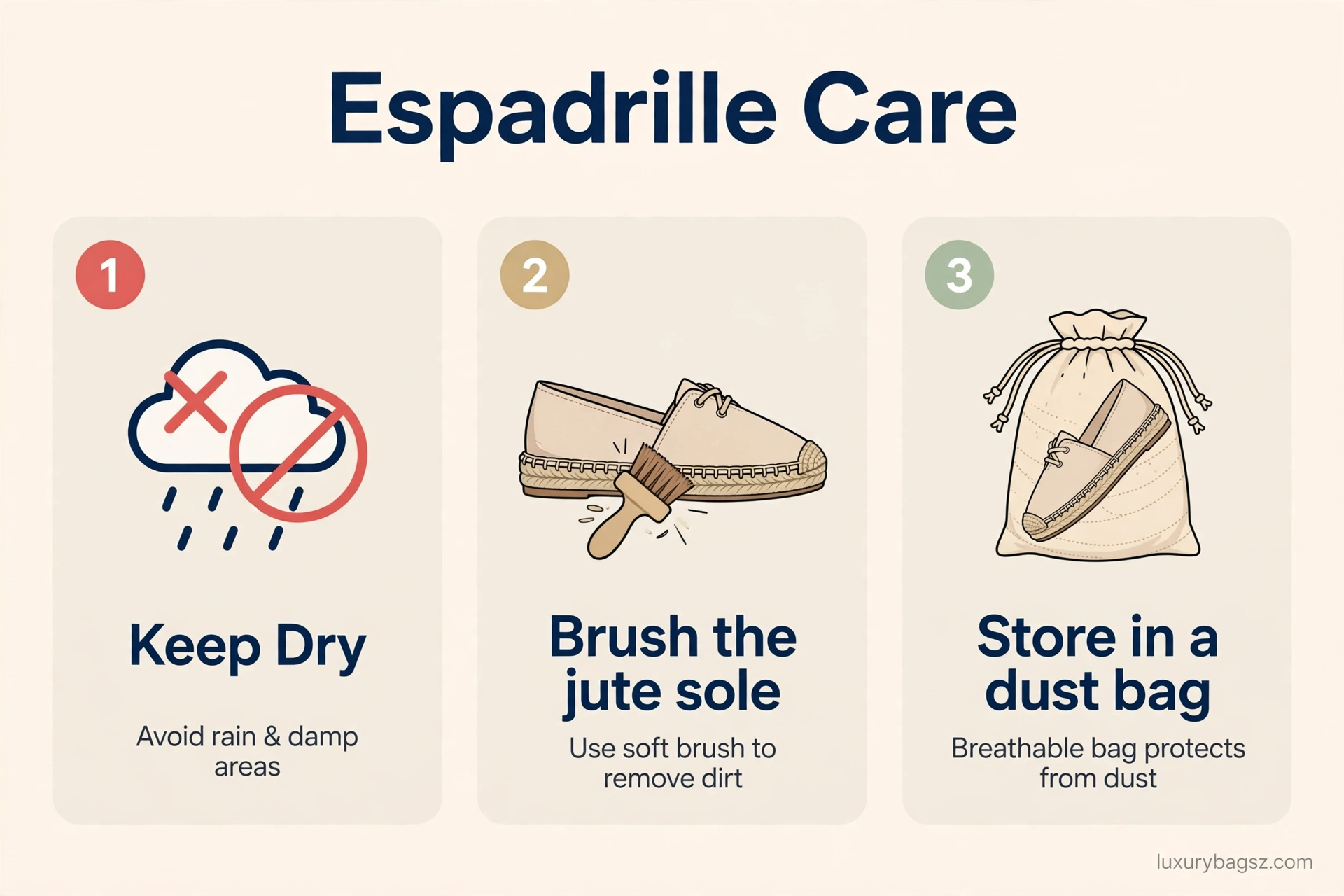
Dry care is the rule for espadrilles. Brush the jute sole gently after wear, wipe canvas with a barely damp cloth for surface marks, and let the pair air dry away from heat and sun. Never soak espadrilles, and never put them in a washing machine.
Rain is the main enemy. Water softens jute, stains canvas and can warp the shape, so check the forecast before wearing them out. If they do get wet, blot gently, stuff lightly with tissue and air dry slowly. Do not use a hairdryer or radiator, which can crack leather and stiffen jute.
Store espadrilles in a breathable dust bag, away from sunlight and damp. Keep them apart from dark denim and rough fabrics that could scuff the upper. A light stuffing helps the toe hold its shape, but do not overstuff, since that strains the stitching.
For deeper cleaning, a professional shoe cleaner is the safer choice, especially for lambskin and tweed. The same gentle approach applies across the house, as explained in our guide to cleaning Chanel bags, where soft cloths and patience beat harsh products every time.
Buying and Authenticity: Checks Before You Pay
New pairs from a boutique give you sizing help, packaging and a clear return route. They also sell out fast in popular sizes, so waiting lists are common in spring. If your size is gone, an authorised department store or a trusted reseller is the next best route.
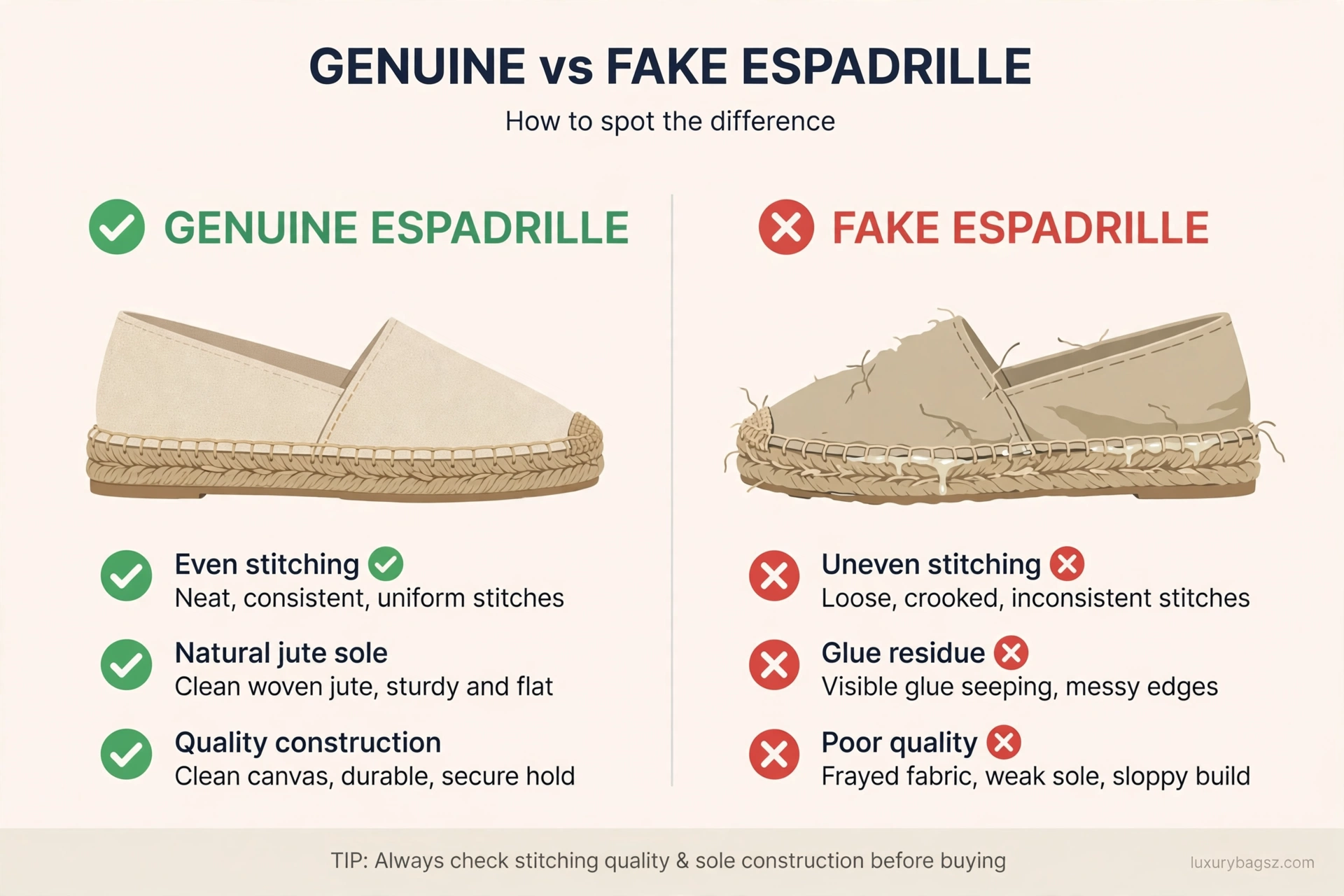
Pre-owned pairs need careful checks. Look for even, tight stitching with no loose threads, clean woven jute with no glue seeping at the edges, and a neat insole with a legible style marking. Frayed canvas, cracked soles and sloppy stitching are warning signs.
Price is a useful signal too. Pairs far below the going range, especially in rare sizes, deserve scepticism. Ask for photos of both shoes, the soles, the insole and the dust bag, and compare them with boutique images. A seller who refuses clear photos is not worth the risk.
Casual luxury footwear from other houses can help you judge value. The Tod's brand guide covers another maker known for soft, driving-style shoes, which gives a useful price and quality comparison when you weigh a pre-owned Chanel pair.
Seasons, Value and the Final Choice
Espadrilles earn their keep from late spring to early autumn. They suit holidays, garden lunches and warm city days, and they pack well for travel. Outside that window, they spend months in storage, so weigh how many warm-weather days you truly have.
Resale value holds best for classic colours in good condition, with dust bags and boxes included. Beige and black canvas pairs resell more easily than bright seasonal prints. Worn jute soles and stained canvas cut value sharply, so dry care protects your money as well as the shoe.
If you buy one pair, choose beige or black canvas in your true size, with a quiet motif. It will match the most outfits and survive the most summers. Add a lambskin or tweed pair later, once you know how the fit works for your feet.
For broader summer footwear ideas, the Aquazzura footwear story shows how another brand built its name on elegant warm-weather shoes. Comparing the two houses helps you decide whether Chanel espadrilles, or a softer rival, suit your summers best.
Frequently Asked Questions
1. Do Chanel espadrilles run true to size? Yes, generally. Most wearers take their usual French size, though the toe box starts snug. Wide feet and between-size buyers should consider half a size up.
2. Do lambskin espadrilles stretch? Yes. Lambskin softens and moulds to the foot over a few wears. Canvas stretches much less, so a tight canvas pair should be exchanged rather than endured.
3. How much do Chanel espadrilles cost? Reported ranges run roughly from $700 to $1,200 for standard canvas pairs, with leather and special designs higher. Confirm the current boutique price, since seasonal editions vary.
4. Are Chanel espadrilles comfortable? They are comfortable for short walks, lunches and evenings out. The flat sole offers little arch support, so they are not ideal for long days on your feet.
5. Can I wear espadrilles in the rain? It is best not to. Water damages jute soles, stains canvas and can warp the shape. If they get wet, blot gently and air dry slowly away from heat.
6. Can I wash Chanel espadrilles? No. Never machine wash or soak them. Brush the jute, wipe canvas with a barely damp cloth for surface marks, and use a professional cleaner for stains.
7. How do I spot fake Chanel espadrilles? Check even stitching, clean woven jute with no glue seepage, and a neat, legible insole marking. Sloppy stitching, frayed canvas and prices far below the going range are warning signs.
8. What colours are easiest to style? Beige and black are the easiest. Beige warms up navy, white and olive, while black grounds bright dresses and dark outfits. Tonal motifs suit more outfits than bold ones.
9. How long do Chanel espadrilles last? With dry care and rotation, several summers is realistic. Daily wear in wet weather shortens their life sharply, since jute and canvas wear fastest when damp.
10. Should I buy new or pre-owned? Buy new for sizing help and full packaging when your size is available. Pre-owned can save money, but only with clear sole, stitching and insole photos from a trusted seller.
Final Verdict: A Summer Staple Worth Buying in a Classic Colour
Chanel CC espadrilles work because they are simple: a true-to-size fit, a relaxed sole and a quiet motif that suits most summer outfits. Buy beige or black canvas first, keep them dry, and they will repay you across many warm seasons.






