Bottega Veneta Dream Weavers: The Intrecciato Craft Tale, Bags and Buying Guide
The Dream Weavers at a Glance: Hands Behind the Weave
"Bottega Veneta Dream Weavers" is not the name of a single bag on a boutique shelf. It is the tale of the artisans whose hand-weaving turned soft leather into the house's identity, a story The Luxury Closet told in its 2016 "Dream Weavers Tale" about Bottega Veneta's woven bags. Understanding that tale is the fastest way to understand why these bags cost what they do.
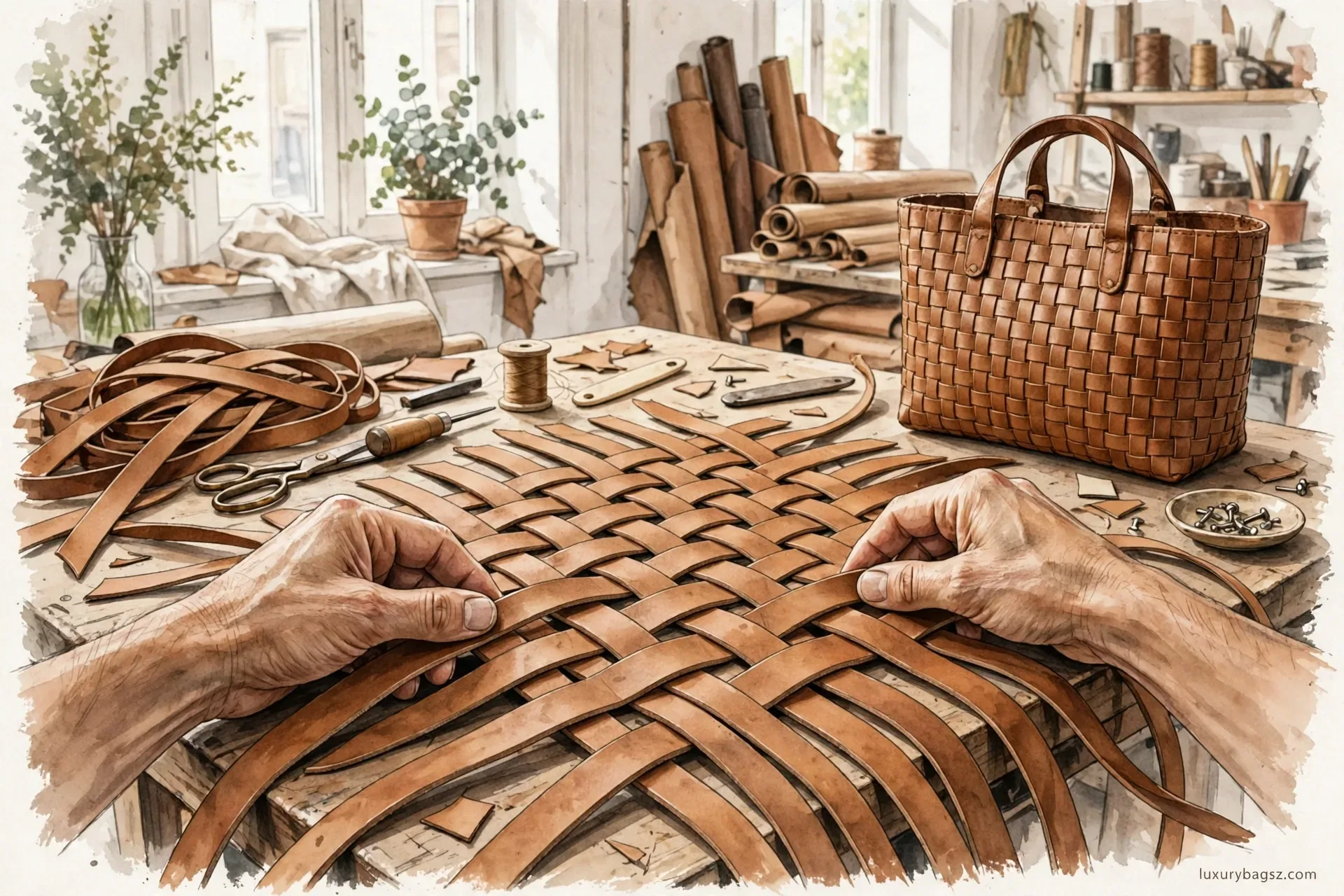
At the heart of it sits intrecciato, the diagonal hand-weave introduced in 1975. Thin strips of leather, called fettucce, are woven by hand into panels, a slow process that takes days for a fully woven bag. Every woven Bottega Veneta bag, from the Cabat tote to the Sardine, is a product of those hands.
Key Takeaways
- "Dream Weavers" refers to the artisans and the woven-craft tale, not one retail bag model.
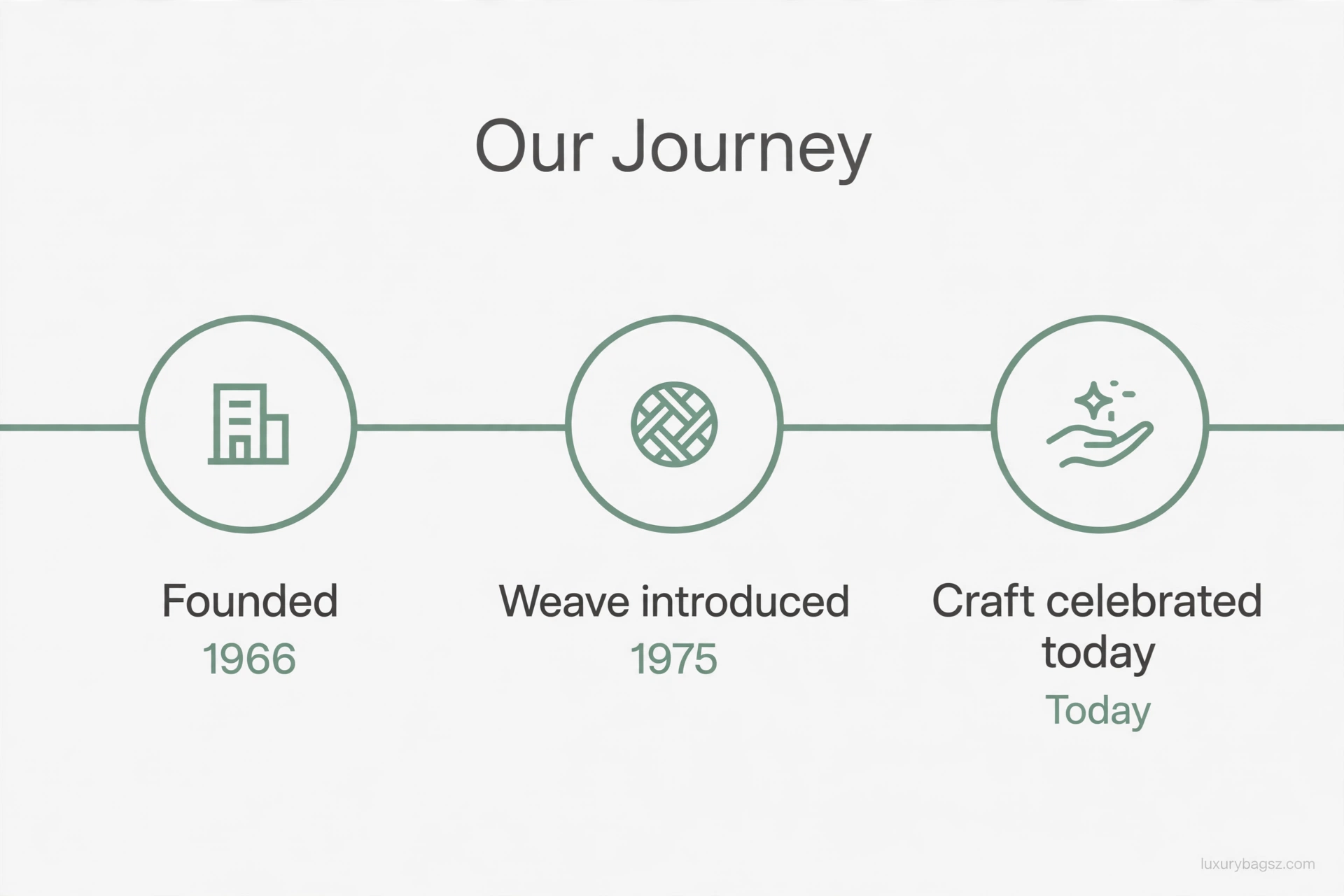
- Bottega Veneta was founded in Vicenza in 1966; the intrecciato weave followed in 1975.
- Intrecciato uses thin leather strips woven by hand on the diagonal, a process taking days per bag.
- The weave defines icons including the Cabat, Veneta, Knot, Jodie, Cassette, Pouch and Sardine.
- Limited woven editions, such as exotic-skin Lido totes, are among the house's rarest pieces.
- Pre-owned woven bags should be judged on weave tightness, lining, hardware and overall wear.
- Woven leather needs gentle, dry care and stuffed storage to hold its shape.
The Tale Behind the Name: A Dream Woven in Leather
The phrase comes from a 2016 Luxury Closet feature titled "The Dream Weavers Tale", which presented Bottega Veneta's signature intrecciato as something never seen quite that way before. The feature's star was a limited stingray-skin Lido tote, made in only 100 copies, first created to show VIP clients and never originally meant for sale. It was intrecciato reinvented in an exotic skin.
That example captures why the nickname stuck. Bottega Veneta's weavers do not decorate a bag with a weave; they build the bag from the weave itself. The pattern is the structure, the decoration and the brand mark all at once, which is why the house could famously avoid visible logos for decades and still be recognised instantly.
For shoppers, the tale is a useful warning against a common mistake. Searching for a single "Dream Weavers bag" model will lead nowhere, because no such retail model exists. Search instead for the woven bags the weavers made, and judge each one by its weave, its condition and its provenance.
Vicenza, 1966: A House Built on Craft, Not Logos
Bottega Veneta was founded in Vicenza, in Italy's Veneto region, in 1966 by Michele Taddei and Renzo Zengiaro. From the start, the house prized discreet luxury: fine materials, careful making and no shouting logo. That philosophy, summed up in the Italian phrase "when your own initials are enough", shaped everything that followed.
The early years were about leather goods made well rather than fashion noise. The house built its reputation on soft, supple leather and quiet shapes, and its bags found fans among people who valued craft over display. Lauren Hutton carrying a woven Bottega Veneta bag in the film American Gigolo became an emblem of that restrained appeal.
Our what to know about Bottega Veneta guide tells the full house story, from those Vicenza beginnings through Tomas Maier, Daniel Lee and Matthieu Blazy. What matters here is the through-line: every creative director since has returned to the weave as the house's truest language.
The Weave Itself: How Intrecciato Is Made
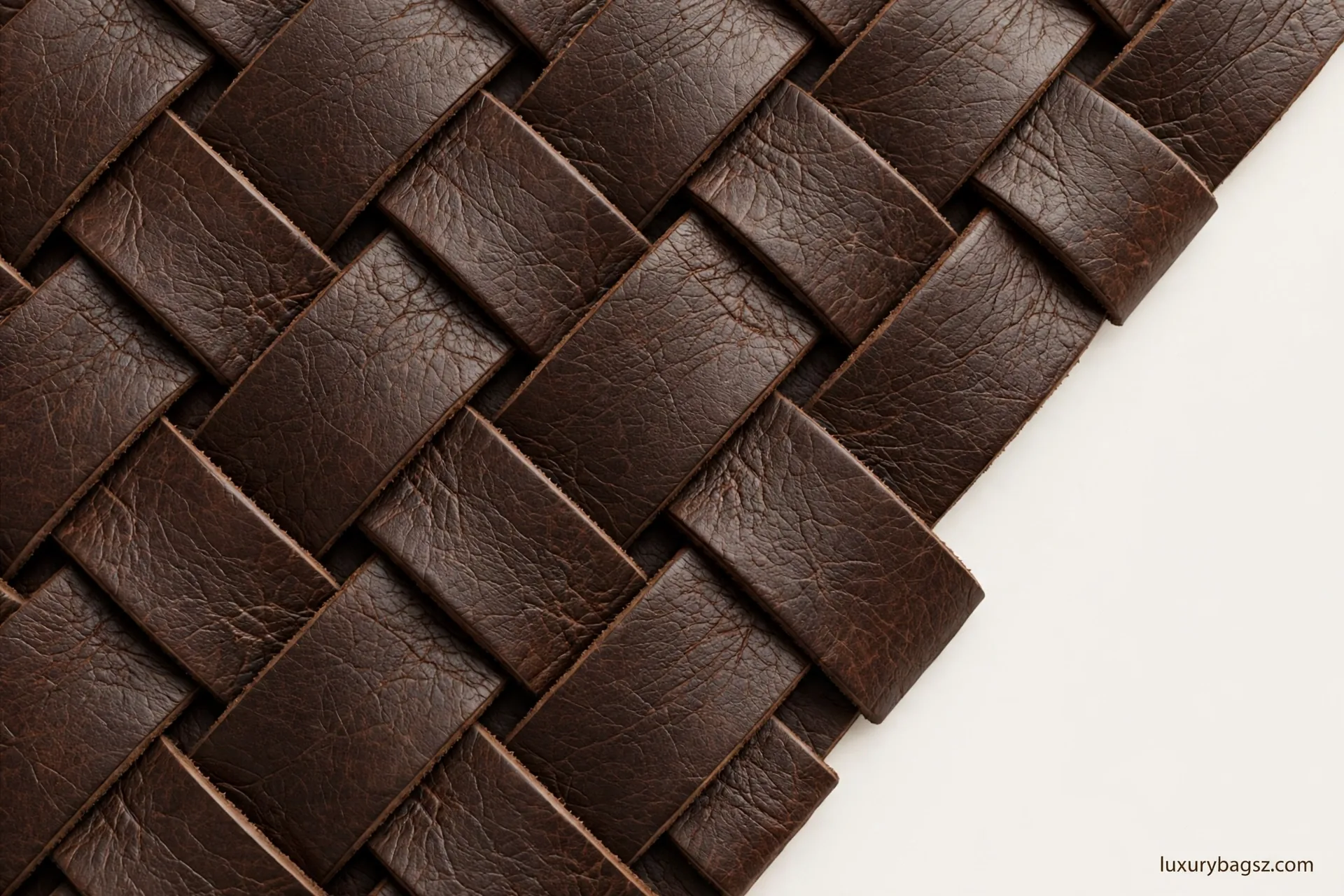
Intrecciato begins with leather cut into strips of a set width, the fettucce. Artisans weave those strips by hand on the diagonal, working them into panels or around a form, a technique rooted in the Veneto region's leatherworking tradition. The diagonal arrangement is what gives the weave its distinctive look and its strength.
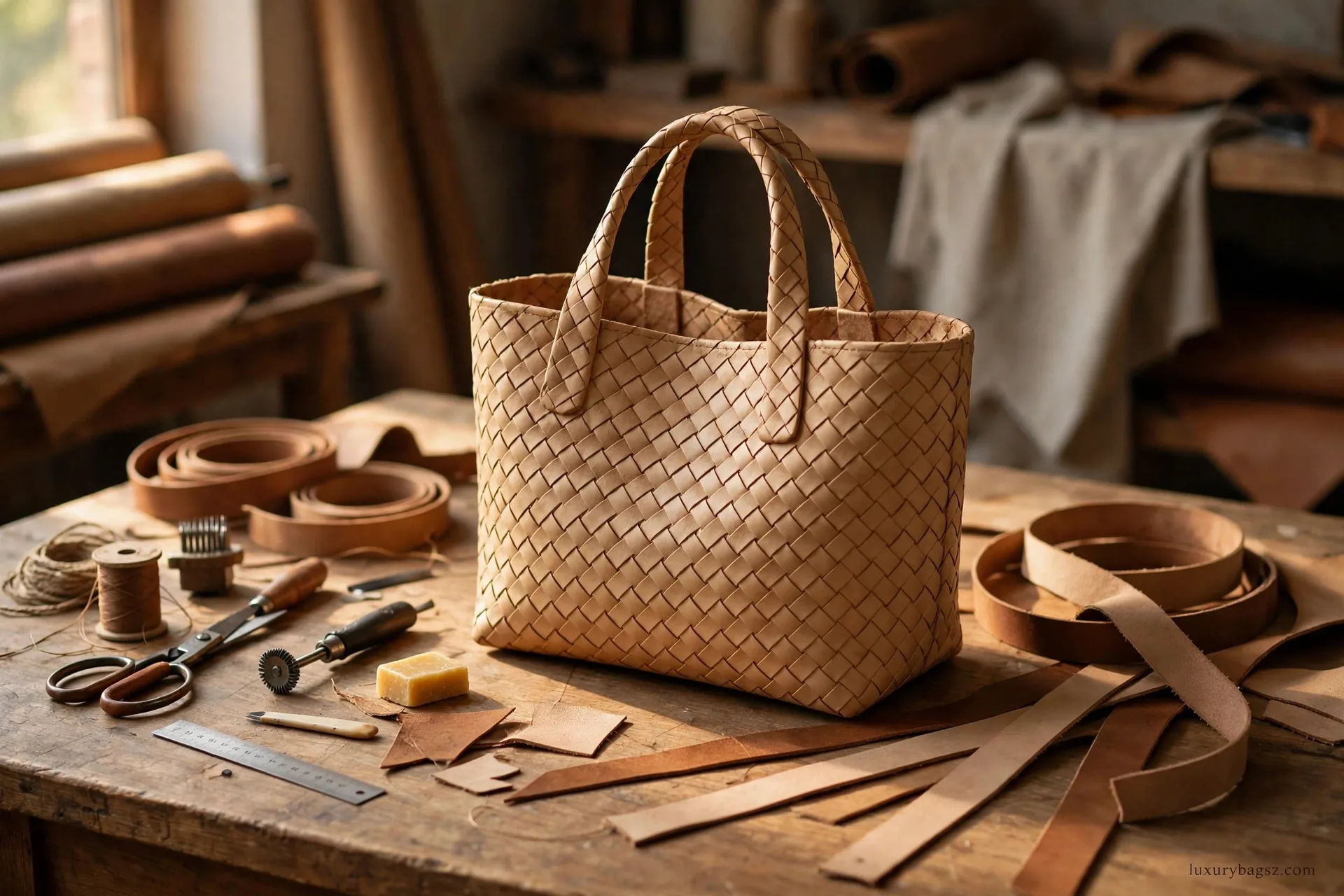
Time is the hidden ingredient. A fully woven bag can take an artisan days to complete, with each strip tensioned by hand so the surface sits evenly. That labour is why a Cabat, woven with no lining and no structure beyond the weave itself, is often described as the purest thing the house makes. The bag holds its shape because the weave holds itself.
Later campaigns have celebrated exactly this. Bottega Veneta's "Craft is our Language" films mark 50 years of intrecciato by showing artisans' hands at work, treating hand gestures as a shared language. Watching those films is the quickest way to grasp why a woven bag feels different from a printed or embossed imitation.


The Bags the Weavers Made Famous
The weave's greatest hits span six decades. The Veneta hobo and the Cabat tote are the archive cornerstones, soft and fully woven, while the Knot clutch turned the weave into evening jewellery. Each one proves the same point in a different shape: the weave adapts without losing its identity.
Modern icons carry the tale forward. Our Bottega Veneta Jodie bag guide covers the knotted hobo, our Bottega Veneta Cassette bag guide covers the padded oversized weave, and our Bottega Veneta Pouch guide covers Daniel Lee's soft clutch.
The Sardine, with its sculptural metal handle, is the newest chapter in the same story.
What unites them is touch. A woven Bottega Veneta bag feels soft yet structured, textured yet calm, and it softens with wear rather than collapsing. If a bag looks woven but feels stiff, printed or plasticky, it is not carrying the dream weavers' craft, whatever its label claims.
Limited Editions and Exotic Weaves
Because the weave is a technique, not a single material, it invites reinvention. The house has woven the pattern in calfskin, lambskin, suede and exotic skins, and in colours from classic neutrals to vivid seasonal shades. Limited editions push that idea furthest, and they are where collectors pay closest attention.
The stingray Lido tote from the Dream Weavers tale is a case in point. With only 100 copies made and a VIP-showcase origin, it combined rarity, exotic material and the signature weave in one piece. Such bags rarely appear on the open market, and when they do, provenance matters as much as condition.
Not every limited weave is a wise buy, however. Exotic skins need specialist care, can face trade and import rules, and may be harder to resell than a classic calfskin Cabat or Veneta. Buy a limited woven piece because you love the material and the craft, not because rarity alone promises a return.
Buying Woven Bags Pre-Owned: What to Check
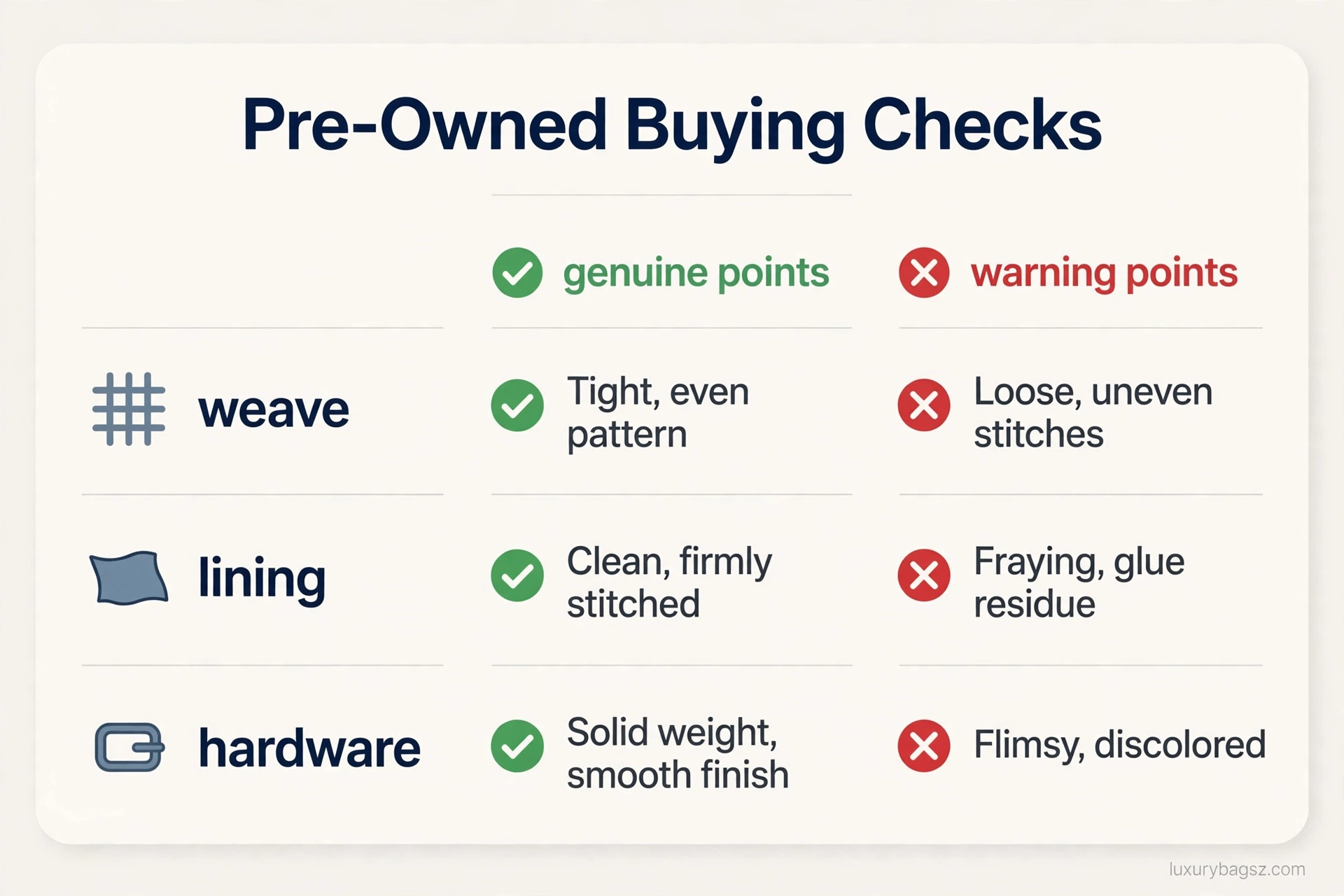
Weave first, everything else second. Run your eyes, and if possible your fingers, over the surface: genuine intrecciato is even, tight and consistent, with strips interlocking cleanly and no loose ends. A printed pattern, a loose weave or strips lifting at the edges are warning signs that should end the conversation.
Next, check the inside and the fittings. Lining should be clean and well-fitted, zips and clasps should run smoothly, and handles should feel firmly attached with even stitching. Corner wear, handle darkening and softening of the weave are normal on older bags, but heavy damage should be reflected in the price, not hidden in dim photographs.
Finally, verify the seller and the story. Ask for daylight photographs, the bag's measurements, and any dust bag, card or receipt.
Our how to buy a pre-owned designer bag safely guide and our how to authenticate a pre-owned designer bag guide cover the wider checks, and independent authentication is sensible for higher-value woven pieces.
Caring for a Woven Bag So It Lasts
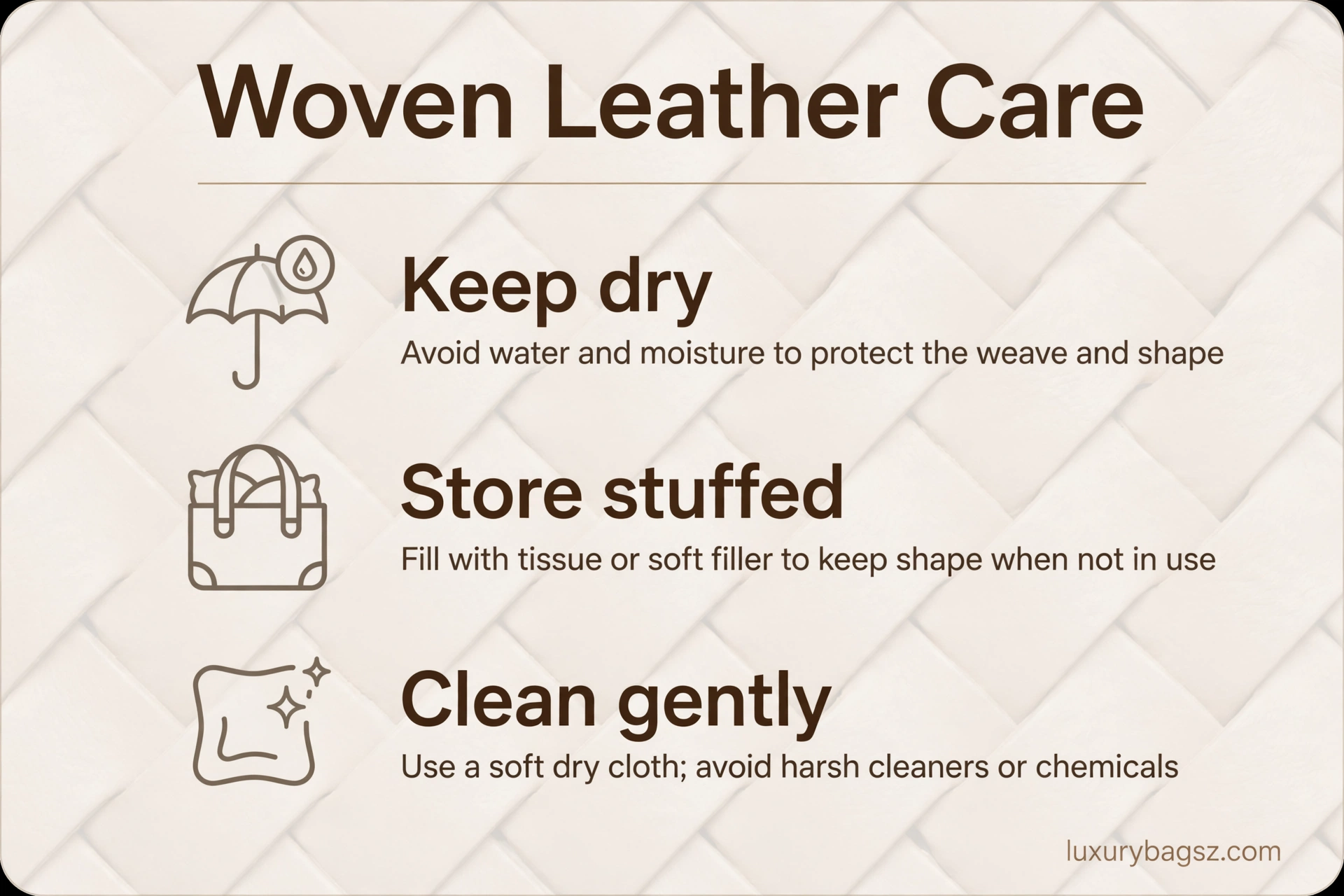
Woven leather is hard-wearing, but it is not invincible. Store the bag stuffed, upright and in its dust bag, away from sunlight, damp and sharp objects that could catch a strip. Never overfill it: a stretched weave rarely springs back, and a distorted shape is the most common avoidable damage on pre-owned woven bags.
Cleaning should stay gentle. A soft dry cloth removes surface dust, and anything beyond that belongs with a leather specialist, since household cleaners can darken or stiffen the weave. Our how to care for Bottega intrecciato leather guide gives the full routine, including how to protect suede weaves and metal fittings.
One habit matters above all: rotate the bag. Woven leather benefits from rest between wears, letting the strips settle back into shape. A Cabat or Veneta carried daily for years will still look good, but the same bag carried in rotation will look better for longer.
Why the Craft Matters for Value
Craft is not just romance; it shapes the market. Because a genuinely woven bag takes days of handwork, it cannot be cheaply or convincingly copied at scale, and buyers know it. That barrier supports pre-owned prices for classic woven styles in good condition, especially neutrals in the Cabat, Veneta and Jodie lines.
Yet value still follows the usual rules. Condition, completeness, colour and current fashion matter more than the weave alone, and a damaged or unusual piece can trade below a well-kept classic. Our investing in vintage designer bags guide makes the same point across brands: buy what you love, in the best condition you can afford.
The dream weavers' real gift is durability of appeal. Logos date, prints fade from fashion, but a well-made weave looks as calm and confident in ten years as it did on day one. That is why these bags keep finding new owners, and why the tale still gets retold.
From Atelier to Street: How the Weave Is Worn Today
The weave's journey from atelier bench to street style is part of its appeal. A woven Cabat looks at home with tailored clothes, a Jodie suits relaxed weekend outfits, and a Sardine turns an evening look into a talking point. The same craft language works across all three because the weave itself is quiet: it adds texture without adding noise.
That versatility is why woven bags photograph so well and age so gracefully. They do not depend on a season's colour or a logo's fame, so they move between wardrobes and decades without looking dated. A ten-year-old woven bag in a neutral colour can look entirely current beside a brand-new outfit, which is rare for fashion of any kind.
For new buyers, the lesson is to start neutral and classic. A woven bag in black, chocolate or tan will work harder than a bright seasonal colour, and it will be easier to resell if your taste changes. Let the weave be the statement, and let everything else in the outfit stay simple.
Frequently Asked Questions
What is the Bottega Veneta Dream Weavers bag?
There is no single retail bag called the Dream Weavers bag. The phrase comes from a 2016 Luxury Closet tale about the artisans behind Bottega Veneta's intrecciato weave, and this guide covers the woven bags their craft produced.
What is intrecciato?
Intrecciato is Bottega Veneta's signature hand-weave, introduced in 1975. Thin strips of leather are woven by hand on the diagonal into panels, giving a supple, textured surface that is both the bag's structure and its decoration.
When was Bottega Veneta founded?
Bottega Veneta was founded in Vicenza, Italy, in 1966. The house built its reputation on discreet luxury and fine leather craft, with the intrecciato weave becoming its most recognisable signature from 1975 onward.
Which bags best show the dream weavers' craft?
The Cabat tote and Veneta hobo are the archive cornerstones, the Knot is the evening classic, and the Jodie, Cassette, Pouch and Sardine carry the weave into modern collections. Each shows the same hand-weaving in a different shape.
What was the stingray Lido tote in the Dream Weavers tale?
The tale highlighted a limited stingray-skin Lido tote, made in only 100 copies, first created to show VIP clients and never originally meant for sale. It showed intrecciato reinvented in an exotic skin.
How long does it take to weave a Bottega Veneta bag?
A fully woven bag can take an artisan days to complete, since each leather strip is tensioned by hand. That slow, skilled labour is a major reason woven bags sit at the top of the house's price range.
How do I spot a fake woven Bottega Veneta bag?
Look for an even, tight weave with strips interlocking cleanly, firm handles, smooth fittings and even stitching. A printed pattern, loose strips or sloppy fittings are warning signs, and independent authentication is wise for valuable pieces.
How should I care for an intrecciato bag?
Store it stuffed in its dust bag, away from sunlight and damp, and wipe it with a soft dry cloth. Avoid overfilling, sharp objects and household cleaners, and leave deeper cleaning to a leather specialist.
Are woven Bottega Veneta bags a good investment?
Classic woven styles in good condition trade well pre-owned, but this guide makes no promise about returns. Condition, colour and fashion all affect value, so buy a woven bag you love and will carry.
Where can I watch the weavers at work?
Bottega Veneta's "Craft is our Language" campaign films show artisans weaving intrecciato, and the "Craft in Motion" film tours the atelier. The video linked in the weave section is a good starting point.
Conclusion: The Hands Are the Luxury
The Dream Weavers tale endures because it names the truth about Bottega Veneta: the luxury is not a logo, it is a pair of hands weaving leather strips into something soft, strong and calm. From the 1966 founding to the 1975 weave and today's campaigns, that craft has outlasted every trend cycle.
If you buy one woven bag, buy it for the weave first. Check that it is even and tight, keep it stuffed and dry, and carry it often. A bag made this slowly deserves to be used, not kept in a cupboard, and it will repay that use for decades.