

How to Spot a Fake Panerai Watch
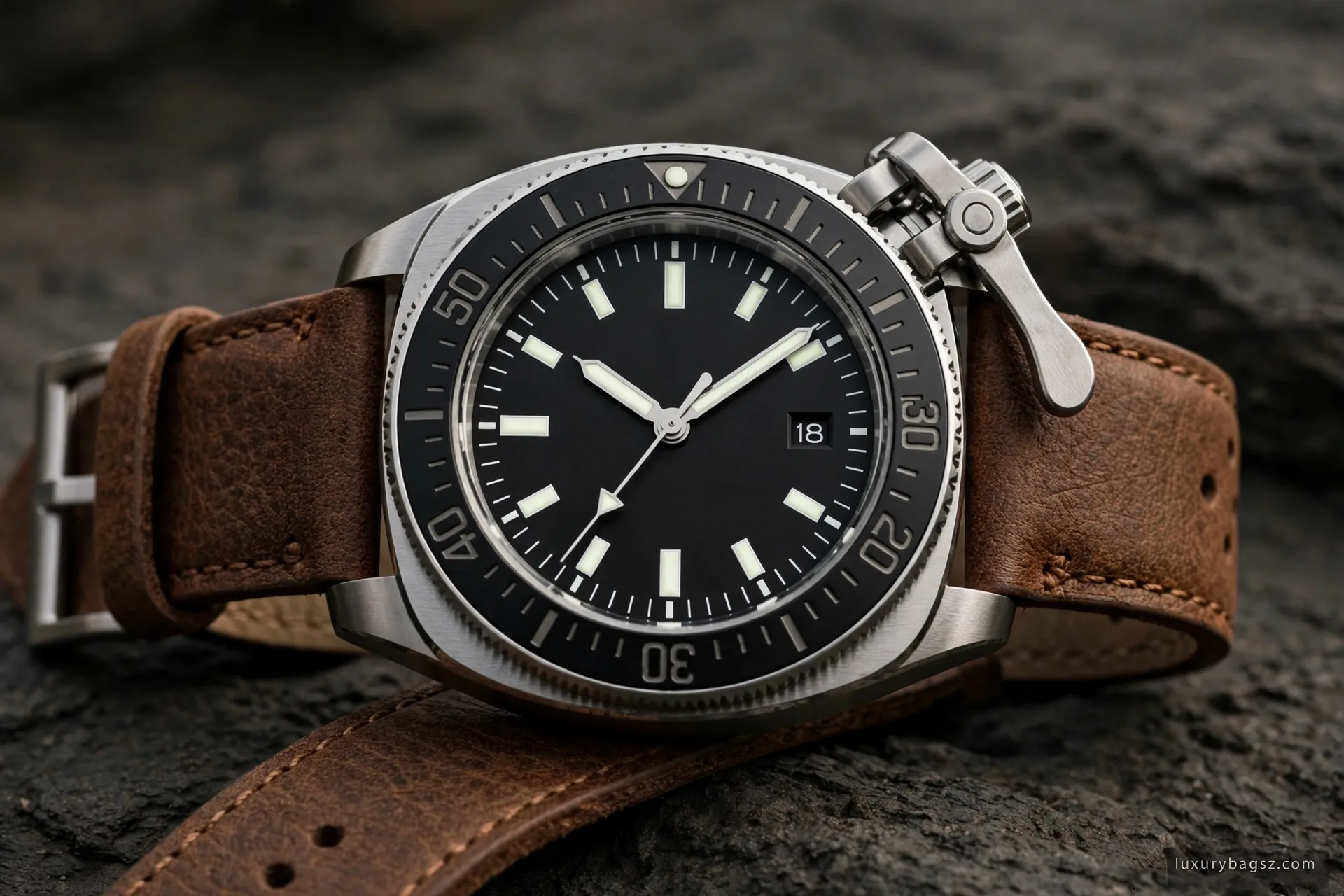
The Panerai Test at a Glance
Panerai watches are big, bold, and deliberately simple in appearance, which makes them a tempting target for counterfeiters and a rewarding subject for careful buyers. The Luminor's crown guard, the sandwich dial, and the cushion case are all distinctive, but distinctiveness is not the same as ease of authentication.
A fake Panerai can copy the silhouette convincingly while failing on the details that matter: the dial construction, the crown-guard action, the movement, and the engraving quality.
Panerai's history also complicates matters. The brand supplied watches to the Italian navy from the 1930s, became a civilian brand under Richemont in the late 1990s, and has since produced a vast range of Luminor, Radiomir, Submersible, and Due models, in sizes from 38 mm to 47 mm and beyond.
Vintage military Panerai watches are rare, heavily faked, and a specialist subject; this guide concentrates on modern civilian references, where most buyers will actually shop, and flags vintage claims as needing specialist verification.
As with every brand in this cluster, the rule is reference first. A Luminor Marina, a Luminor Base, a Radiomir, and a Submersible differ in case, crown protection, dial, and movement, and a watch that mixes their features is wrong even if it looks impressive. Judge the whole watch against its stated reference, and insist on an inspection before a high-value purchase.
Key Takeaways
- The reference decides everything: Luminor, Radiomir, Submersible, and Due models differ in case shape, crown guard, dial, and movement, and mixed features mean a problem.
- Genuine sandwich dials show crisp cut-out numerals filled with even lume, with no bleeding, bubbling, or uneven depth.
- The Luminor crown guard should operate with a firm, precise lever action and sit flush when closed; a loose, gritty, or misaligned guard is a major warning.
- Case size, thickness, and weight must match the reference; Panerai fakes frequently miss on thickness and on lug finishing.
- The movement must match the reference, whether Panerai manufacture calibre, modified ETA, or another specified calibre, and its finishing should be clean and correctly marked.
- Papers, box, and serial numbers must agree with the watch and suit its production era; a mismatch anywhere is a hard stop.
Know Your Reference: Luminor, Radiomir, Submersible, Due
Panerai's model families are visually distinct once you know what to look for. Luminor models have the famous crown guard: a lever-operated bridge that locks the crown in place. Radiomir models, the earlier design, have a wire-lug or solid-lug cushion case with a conventional crown and no guard. Submersible models are Panerai's dedicated divers, with a rotating bezel and higher water resistance.
Luminor Due models are thinner, dressier Luminor variants, generally in smaller sizes.
Within each family, references vary by size, material, dial, and complication. A Luminor Marina 44 mm is not interchangeable with a Luminor Marina 42 mm or a Luminor Base 44 mm, even though they look similar at a glance. The differences include the dial markings, the seconds subdial, the crown-guard proportions, and the movement.
Before you check anything else, obtain the reference number, usually in the PAM format such as PAM01312, and learn its exact specification from Panerai's materials and reputable dealer listings.
Special editions and limited runs deserve extra caution. Panerai produces many limited editions, and counterfeiters love them, because buyers expect unusual dials and are less sure what is correct. For any limited edition, compare against verified examples from auction houses and specialist dealers, and treat any edition claim without supporting paperwork as unverified.
If the seller cannot name the reference or the edition precisely, that vagueness is itself evidence.
The Sandwich Dial: Cut-Outs, Lume, and Printing
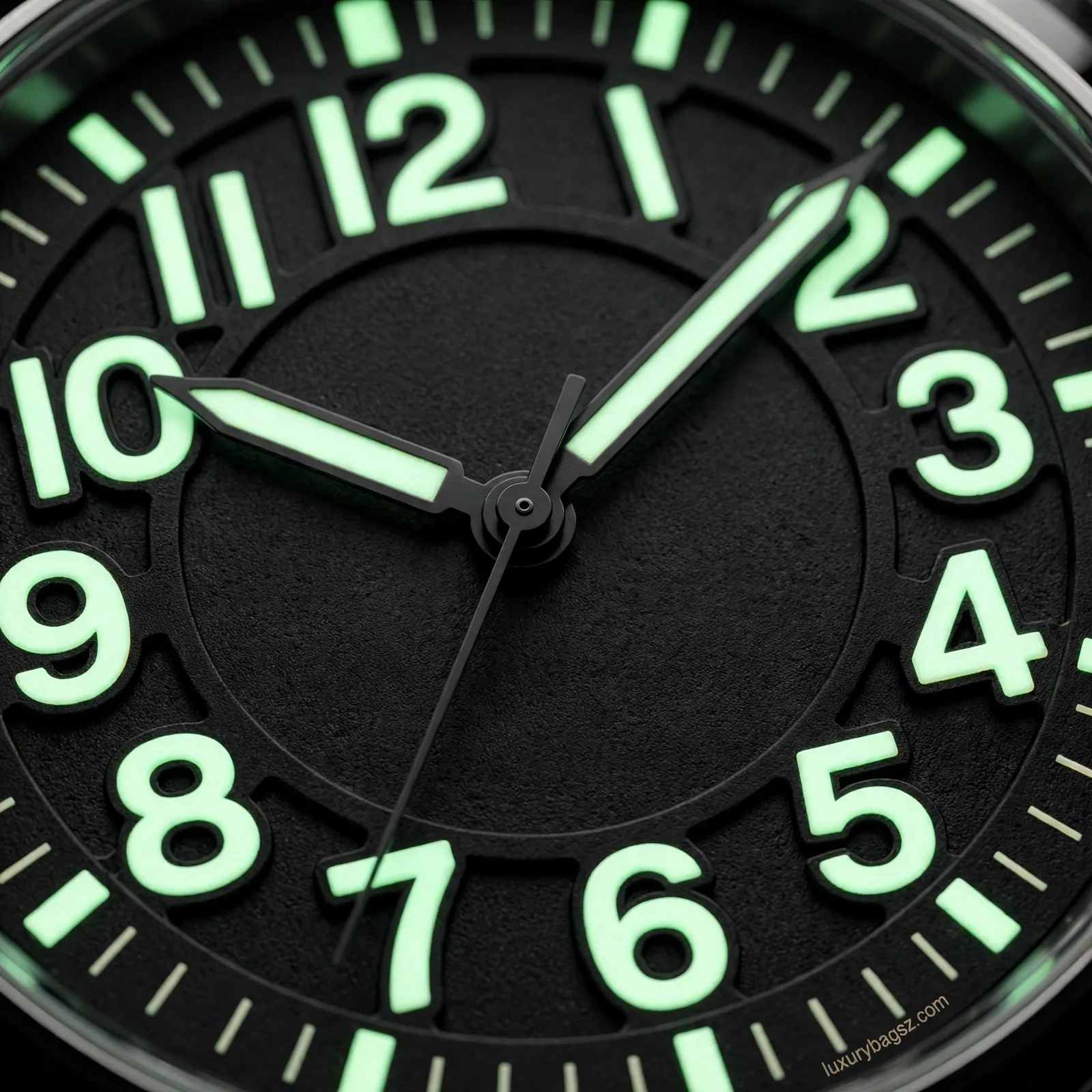
The sandwich dial is Panerai's signature construction and one of its best authentication tests. On a genuine sandwich dial, the upper dial plate has numerals and indices cut out of it, and a luminous layer beneath shows through the cut-outs. The result is lume that sits in crisp, sharply defined shapes with even depth and clean edges.
Under magnification, the cut-out edges should be clean, the lume beneath should be smooth and even, and the shapes should be correctly formed for the reference.
Fakes often imitate the sandwich look with printed lume or with poorly cut plates. Printed imitation lume looks flat, sits on the surface rather than in a cut-out, and lacks the depth of a true sandwich dial. Poorly cut fakes show ragged cut-out edges, lume that bubbles or pools unevenly, or numerals whose shapes are slightly wrong, most noticeably in the 6, 9, and 12.
Shine a light across the dial at an angle: a genuine sandwich dial shows real depth, while a printed imitation stays flat.
Also check the dial printing around the sandwich work. The Panerai signature, the Luminor or Marina markings, and any depth or water-resistance text should be crisp, correctly spelled, and correctly placed for the reference. Fakes often print this text slightly too bold, too thin, or in the wrong position. On dials with a small seconds subdial, check that the subdial is concentric, its track is even, and its hand is the correct style and length.
Hands, Markers, and Legibility
Panerai dials are built for legibility, and that legibility is itself a test. Genuine hands are bold, correctly shaped for the reference, and finished cleanly, with even lume that matches the dial markers in colour and intensity. Hands that are too thin, too short, or shaped differently from the reference, or lume that differs in colour between hands and markers, indicate a fake dial, replaced hands, or both.
Check the seconds hand or subdial hand with particular care. On Luminor Marina models, the small seconds subdial at 9 o'clock is a defining feature, and its hand should be the correct shape and length, sweeping or stepping as the movement requires. A subdial hand that is the wrong style, that overlaps its track, or that stutters or sticks suggests a wrong movement or a poor fake.
On vintage-style models with patinated lume, consistency matters. The hands and dial markers should age together; hands that look freshly lumed while the dial shows heavy patina, or vice versa, suggest replacement. Replacement hands on a watch sold as fully original must be disclosed, and they always justify a closer look at the rest of the watch.
Legibility is Panerai's promise; a dial that is hard to read, unevenly lit by its lume, or visually inconsistent is not keeping it.

The Crown Guard: Action, Fit, and Finish
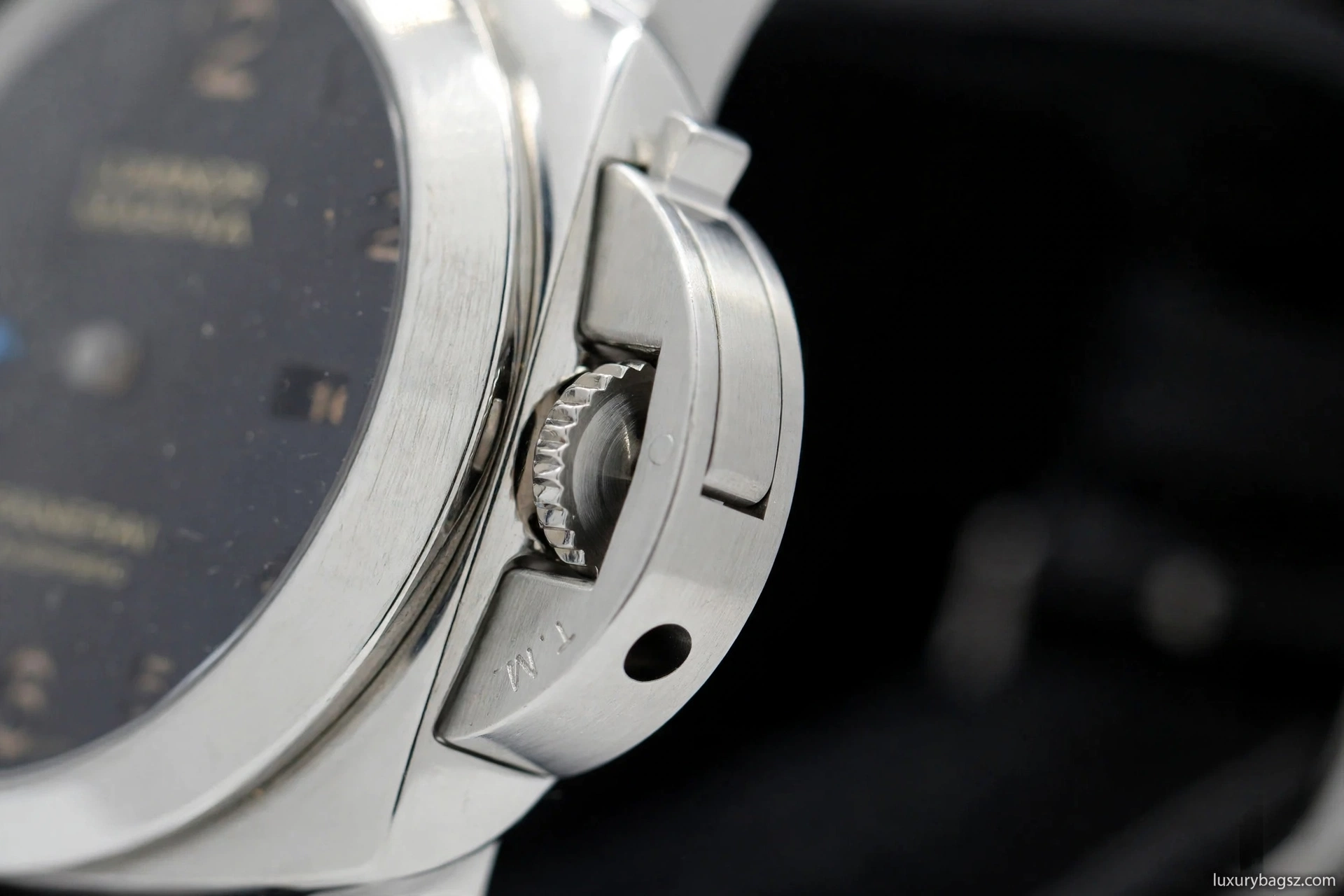
The Luminor crown guard is Panerai's most famous feature and one of its most revealing tests. On a genuine Luminor, the guard lever operates with a firm, precise action: it opens with deliberate resistance, locks the crown securely, and closes flush against the case with no gap, wobble, or misalignment. The lever itself is solidly made, evenly finished, and correctly proportioned for the reference, with clean edges and no casting roughness.
Fakes frequently fail here. Common faults include a lever that feels loose or flimsy, that closes with a gap, that sits crooked, or that operates with a gritty or mushy feel. The guard bridge may be slightly too thick or too thin, its screws may be poorly finished, or its shape may differ subtly from the genuine guard for that reference.
Because the guard is operated every time the watch is wound or set, its action is something a buyer can test immediately, and it is worth testing repeatedly rather than once.
On Radiomir models, which have no guard, apply the same scrutiny to the crown itself. The crown should be correctly sized and shaped for the reference, often carrying the Panerai logo or the OP emblem as specified, and it should wind and set smoothly. A generic crown, a loosely fitting crown, or a crown whose markings are shallow or incorrect is a warning on any Panerai, guarded or not.
Case, Bezel, and Crystal
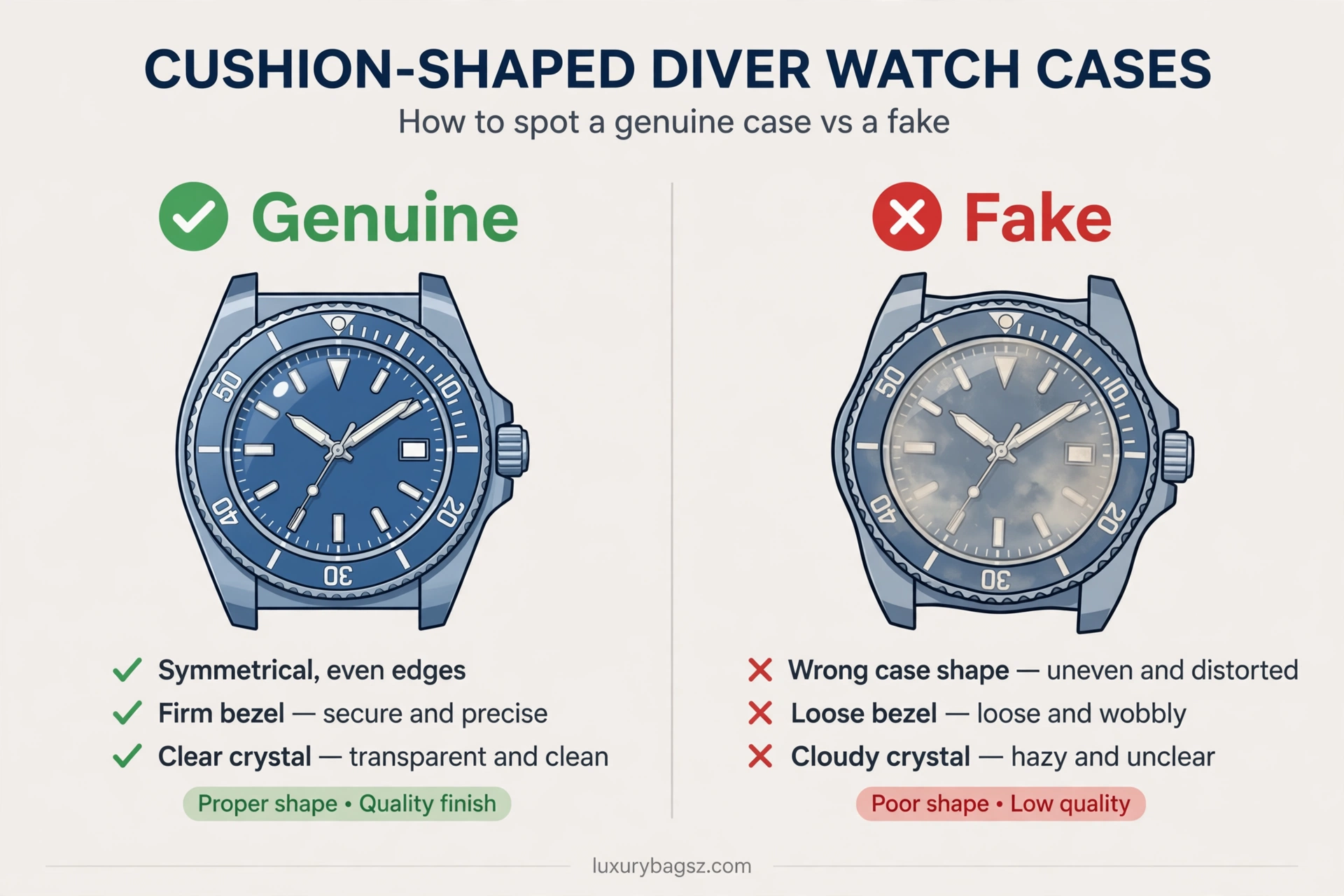
Panerai cases are large and cushion-shaped, and their finishing should be consistent across the whole case. Genuine cases show even brushing or polishing as the reference requires, crisp transitions between finishes, and clean lug edges. Fakes often show uneven brushing, polishing that bleeds into brushed areas, or lugs that are too thick, too thin, or asymmetrical.
Measure the case diameter, thickness, and lug-to-lug distance and compare them against the reference: fakes commonly miss on thickness, because a thinner genuine movement is hard to copy cheaply.
On Submersible models, test the rotating bezel. It should rotate with firm, even clicks, align precisely at each position, and show crisp, correctly formed numerals and markers. A bezel that rotates too loosely, that clicks unevenly, or whose markings are fuzzy or misaligned is a warning. On non-bezel models, check the fixed bezel or case rim for the same finishing standard: even, clean, and correctly proportioned.
The crystal should be sapphire on modern references, with a clear, hard surface and, where applicable, an anti-reflective coating that does not look blotchy or uneven. A crystal that scratches easily, that shows distortion at the edges, or that sits proud of or recessed into the bezel incorrectly suggests a fake or a poor replacement. As always, a single flaw proves little, but a cluster of case flaws proves a great deal.
Strap, Buckle, and Lug Fit
Panerai straps are a major part of the watch's character, and they are also a major fake tell. Genuine Panerai straps use high-quality leather, rubber, or other materials as specified, with clean stitching, even edges, and correct markings. The buckle, often a large tang buckle or deployant, should be solidly made, correctly marked with the Panerai name or OP emblem as specified, and finished to the same standard as the case.
A flimsy buckle, uneven stitching, or shallow or misspelled buckle markings undermine the whole watch.
Strap fit at the lugs is a precise test. Panerai lugs are wide, and the strap should fill them evenly with no side-to-side play and no uneven gaps. A strap that is too narrow for the lugs, that sits crooked, or that uses generic spring bars that do not fit properly suggests a mismatched or fake assembly.
Note that straps are consumable and frequently replaced, so a replaced strap alone is not fakery; but a replaced strap combined with a questionable buckle or poor lug fit should raise the overall level of scrutiny.
Also check the strap markings and the area between the lugs. Genuine Panerai cases carry reference and serial information in this area, engraved sharply and correctly. Shallow, uneven, or oddly formatted engraving between the lugs is a warning, because counterfeiters focus on visible surfaces and often neglect hidden ones.
The Movement: Calibre Must Match Reference
Panerai has used several movement families over the years, including modified ETA calibres, Panerai manufacture calibres such as the P.9000 series, and other specified calibres for particular references. The movement in the watch must be the calibre specified for its reference and production era.
A seller claiming a manufacture calibre in a reference that Panerai only made with a modified ETA movement, or vice versa, is either mistaken or dishonest, and the watch should not proceed without expert verification.
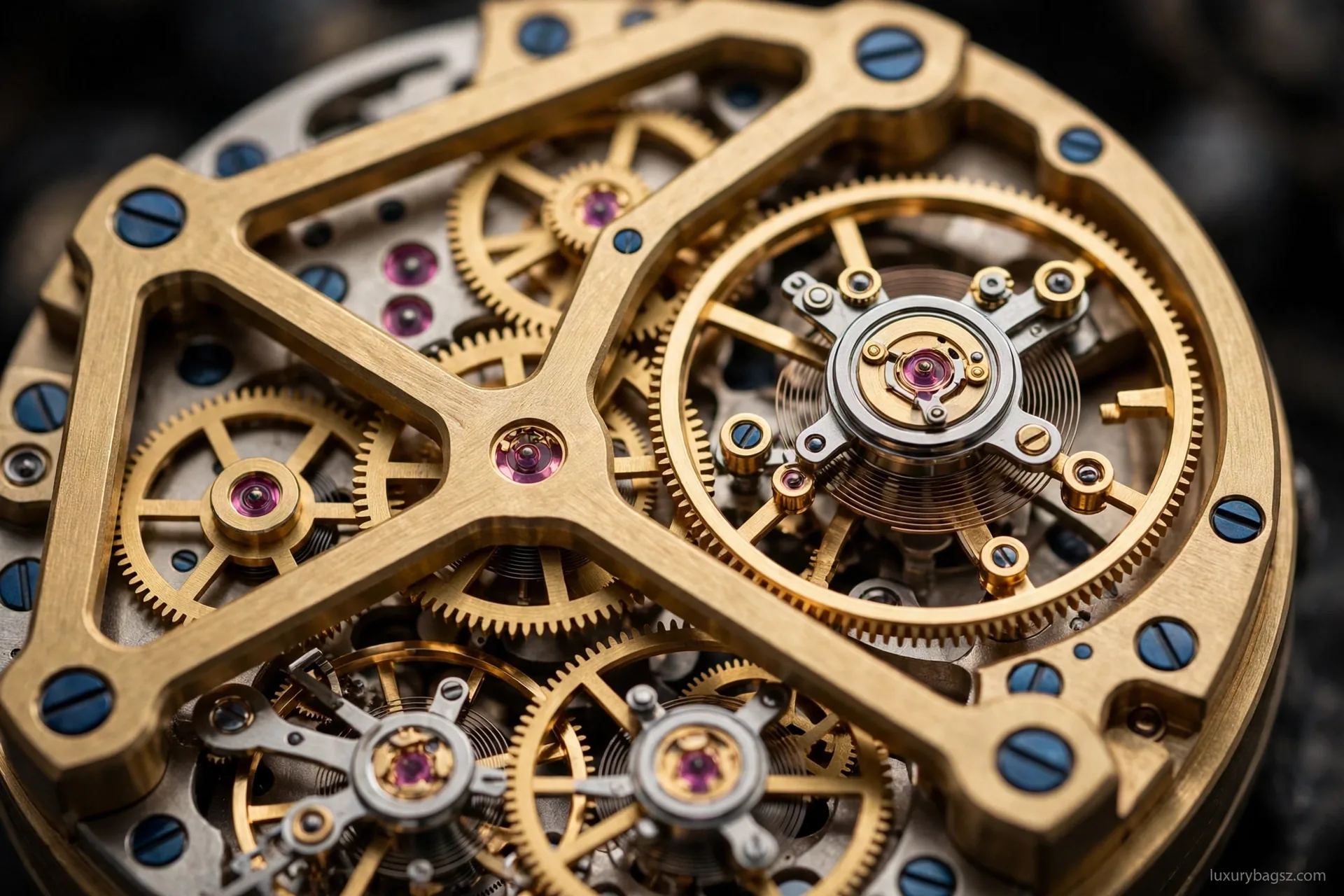
When the case is opened by a qualified watchmaker, a genuine Panerai movement shows clean finishing, correctly marked bridges, and the calibre designation and Panerai markings as specified. Rough bridges, unpolished screws, glue, generic unmarked parts, or a movement that is visibly a cheap generic calibre with a Panerai-branded rotor are hard evidence of fakery.
Panerai movements are large, reflecting the brand's large cases, and a small movement rattling inside a large case, held by a crude spacer, is a classic fake construction.
Movement behaviour matters too. The watch should run steadily, with correct power reserve behaviour for its calibre, a date change that is crisp at midnight where fitted, and chronograph or GMT functions that operate precisely where fitted. Erratic running, a date that changes gradually over hours, or a complication that sticks is not just a servicing matter on an unknown watch; it is a reason to question the movement itself.
Caseback Engravings and Serial Numbers
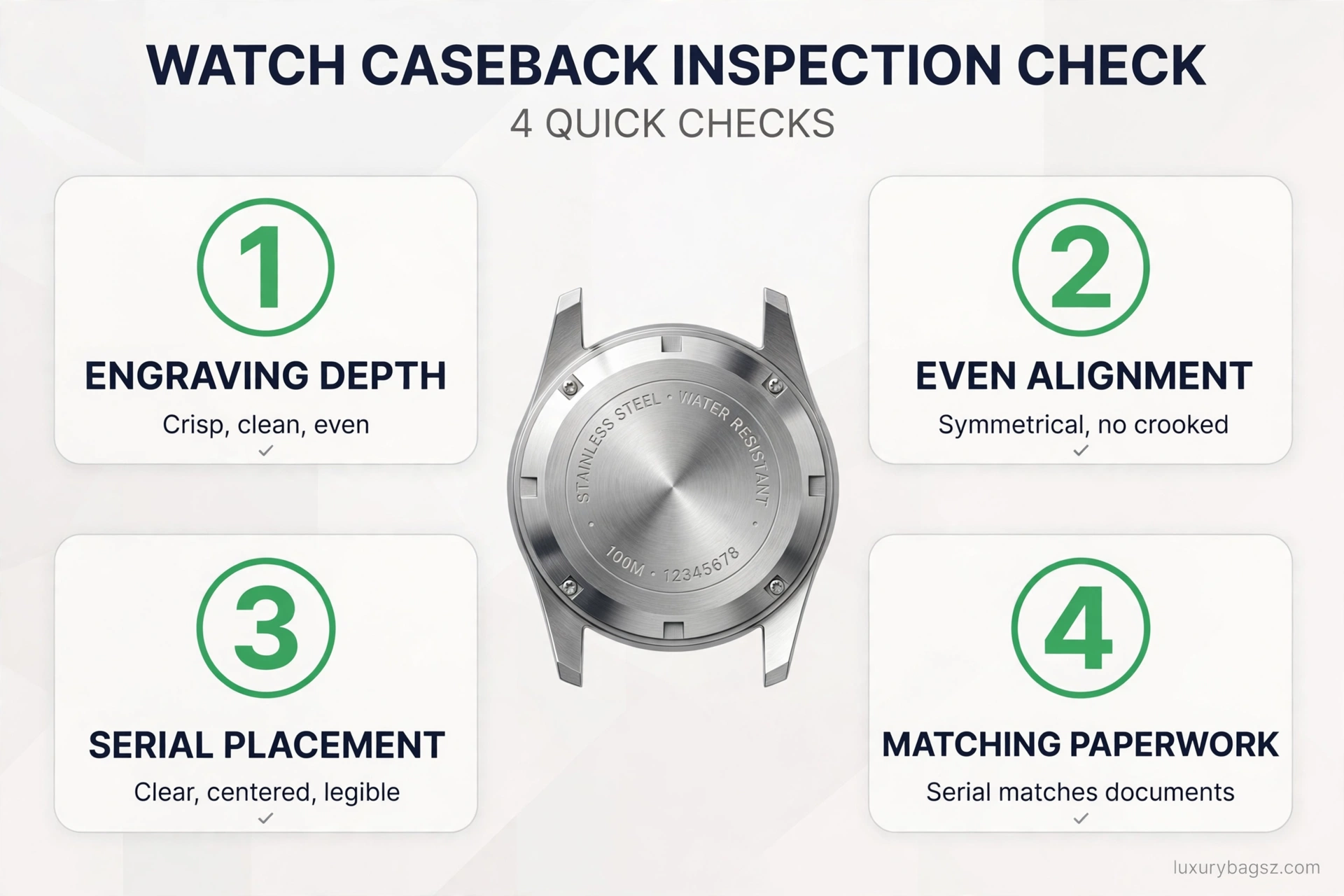
Panerai casebacks vary by reference: some are solid with engravings, some are exhibition backs showing the movement, and some carry special-edition markings. Whatever the configuration, it must match the reference. A solid back on a reference that should show its movement, or an exhibition back on a reference that should be solid, is a serious discrepancy that needs expert explanation.
Engraving quality is the test within the test. Genuine Panerai caseback engravings are sharp, evenly deep, and correctly spelled, including the Panerai name, the reference, and any edition markings. Fakes often show shallow, uneven, or slightly blurred engraving, with letter spacing that drifts. Photograph the caseback in raking light, which reveals uneven depth, and compare the font and layout against verified examples of the same reference.
Serial numbers must agree across the case, the papers, and any other documentation, and must suit the claimed production era. A serial that looks freshly engraved on a worn case, that uses a different font from the surrounding engraving, or that belongs to a different era than the watch's design is a warning.
Military and vintage Panerai serial claims are a specialist area: any watch claimed as a genuine vintage military Panerai needs specialist verification, because those watches are among the most faked and most valuable in the collecting world.
Weight, Feel, and Overall Finish
A genuine Panerai has a substantial, balanced feel. The large case, solid crown guard, and quality strap or bracelet combine into a watch that feels considered and evenly weighted on the wrist. Fakes often feel either too light, because of cheaper base metals and hollow construction, or oddly balanced, because the case, movement, and strap weights do not match.
Weight alone never authenticates a watch, but a watch that feels wrong should trigger the full checklist rather than a quick pass.
Overall finish is the companion test. Examine every surface under good light: case flanks, bezel, crown guard, lugs, buckle, and strap hardware. Genuine finishing is consistent, with no rough casting marks, no burrs, no pitting, and no areas where polishing or brushing looks rushed. Fakes often concentrate finishing effort on the dial and case front, leaving the case sides, lug undersides, and buckle interior rough.
Those neglected areas are where careful buyers look first.
Also check the watch's sound and action as a whole. The crown guard should snap, the crown should wind smoothly, the bezel should click evenly, and the strap should flex naturally. A watch that feels gritty, loose, or inconsistent in its actions is telling you about its manufacturing quality, and manufacturing quality is exactly what separates a genuine Panerai from a copy.
Box, Papers, and Provenance
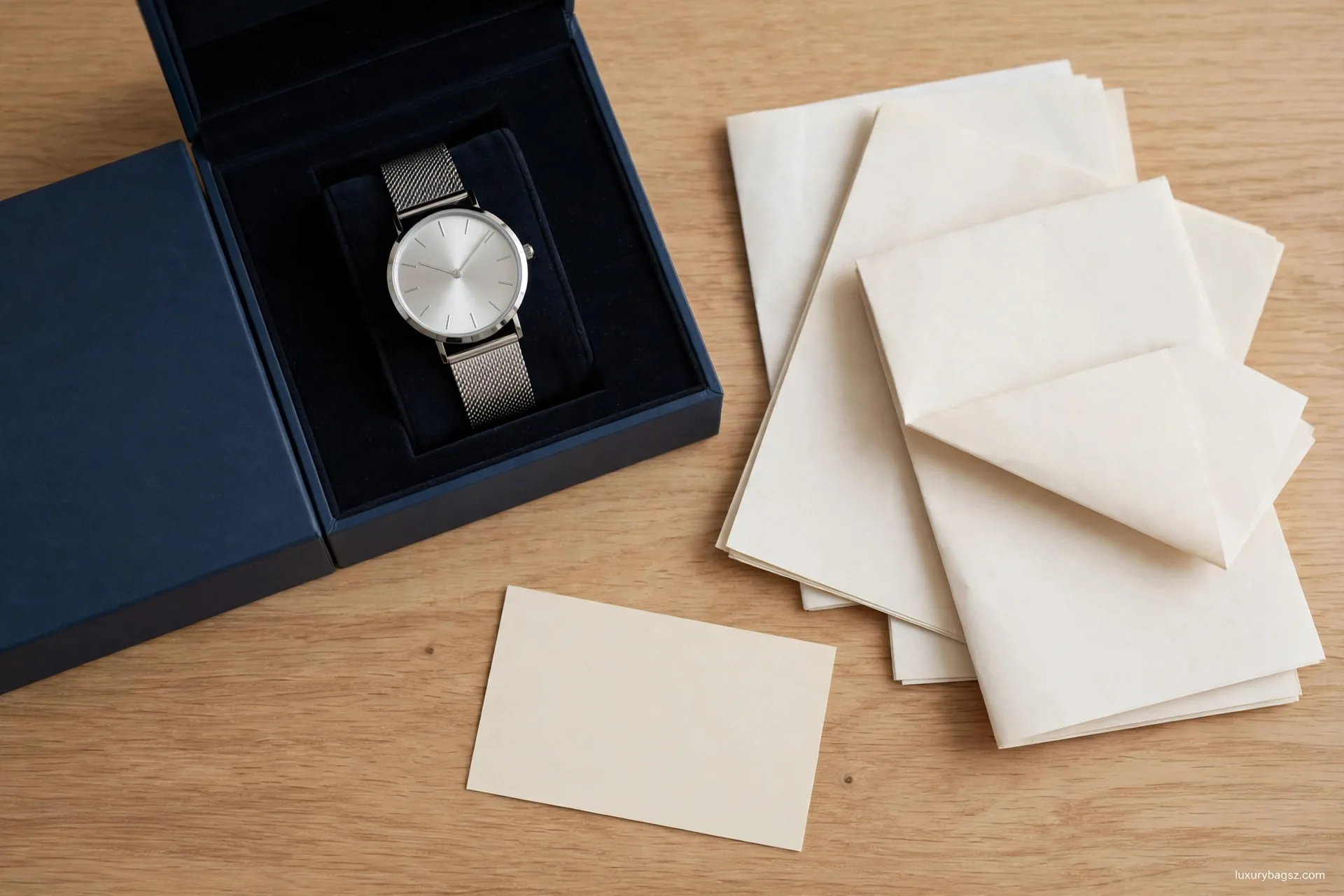
Panerai boxes and papers should suit the watch's era and reference. Modern Panerai presentation boxes are substantial, well made, and correctly branded, and the papers should show the reference, serial number, and purchase details that match the watch exactly. A box style that belongs to a different era, papers whose serial differs from the case, or printing that is fuzzy or inconsistent are all warnings.
As with every brand, though, box and papers are supporting evidence, not a verdict: convincing fake boxes and papers are common, and genuine watches frequently lose their boxes over time.
Provenance carries particular weight for Panerai because of the brand's military history, and particular risk for the same reason. Stories about naval service, estate discoveries, or military issue should be treated as claims to be verified, not as history to be believed. A genuine military Panerai has a documented trail through specialist channels; a vague military story with no paperwork is a classic fake-sale narrative.
For modern civilian watches, provenance means a verifiable dealer history, service records, or a reputable marketplace trail.
Where the watch's history includes servicing, ask for service records and check that any replaced parts are disclosed. A serviced Panerai with a replaced crystal or strap is normal; a Panerai with an undisclosed replacement dial, movement, or crown guard is a different matter. Disclosure, documentation, and price are what separate honest servicing from misrepresentation.
Superclone Traps and Common Buyer Errors
High-grade fake Panerai watches copy the silhouette, the sandwich-dial look, and even the crown-guard shape closely enough to fool a casual inspection. The buyer errors that let them through are consistent. The first is judging from photographs alone: a fake that looks perfect in a dealer's photographs may reveal a loose crown guard, a flat printed dial, or a wrong movement the moment it is handled.
The second is trusting a single tell, such as the crown guard or the logo, while ignoring the movement and engravings. The third is accepting papers without checking that their serial matches the case and their style suits the era. The fourth is letting price or story override evidence: a high price does not guarantee genuineness, and a romantic military story does not substitute for documentation.
The defence is the same procedure used across this cluster: reference first, then dial, case, crown guard, movement, engravings, and papers, in that order, with an independent inspection before payment on any high-value piece. A seller who welcomes that procedure, provides additional photographs, and agrees to an inspection window is behaving like a seller of a genuine watch.
A seller who resists, rushes, or limits inspection to photographs is providing behavioural evidence that should weigh as heavily as any physical tell.
Buying Safely: Inspection, Escrow, and Recourse
Before paying in full for a pre-owned Panerai, secure a written return period that allows an independent inspection, including opening the case where appropriate, and get the seller's agreement on what happens if the watch is judged fake or not as described.
Take the watch to a reputable watchmaker or Panerai specialist, ask them to check the movement, the crown guard, the caseback engravings, and the dial construction, and get their opinion in writing. If the seller refuses an inspection window, walk away.
Use payment methods with recourse and avoid irreversible transfers to unknown sellers. Escrow through a reputable marketplace can help, but check what it actually covers: some services verify only that the watch matches its listing photographs, not that it is genuine in the full sense of this guide.
Keep complete records of the listing, the seller's description, all correspondence, photographs of the watch and serial number, the papers, and the inspection report. A genuine Panerai is a bold, long-lived watch; the days spent verifying it are the cheapest insurance you will buy for it.
The same inspection-first approach applies to jewellery purchases too, as the Cartier Love bracelet fake guide shows: check the whole piece, demand an inspection window, and walk away when a seller resists one.
Servicing, Straps, and Water Resistance in Daily Use
A genuine Panerai is built as a working instrument, and its ownership routine should reflect that. Servicing at manufacturer-recommended intervals keeps the movement, gaskets, and crown guard in proper condition, and a pre-owned Panerai with a documented service history is easier to trust than one whose last service is unknown.
When buying, ask for service records, check whether the crown guard, crown, and gaskets were addressed, and budget for a service if the history is vague. A Panerai that has not been serviced for many years may run well, but its water resistance, in particular, cannot be assumed without a pressure test.
Water resistance is central to Panerai ownership, especially for Luminor and Submersible models, but it is also the area where assumptions cause the most damage. Gaskets age, crowns wear, and crystals can develop minute leaks, all of which a pressure test reveals and a visual inspection cannot. Have water resistance tested by a watchmaker before swimming with any pre-owned Panerai, and retest it at service intervals and after any case opening.
For daily wear, the practical rule is conservative: enjoy the watch's robustness, but do not expose it to water beyond its tested rating, and rinse it with fresh water after any saltwater exposure, drying it thoroughly afterward.
Straps are the consumable heart of Panerai ownership, and rotating them is both a pleasure and a maintenance habit. Leather straps wear with water, sweat, and sunlight, and should be replaced when they show cracking, softening, or stitching failure, rather than worn until they break. Rubber and textile straps last longer in wet conditions but still wear at their attachment points.
Check strap attachment, spring bars, and buckle screws regularly, keep a spare strap for swimming or heavy activity, and store unused straps flat, away from sunlight and humidity. A Panerai with a well-maintained strap rotation, documented services, and tested water resistance is not only a better daily watch; it is a watch whose genuine condition is easy to demonstrate to any future buyer.
Vintage and Military Claims: Specialist Territory
Vintage Panerai watches, particularly those claimed as military issue from the mid-twentieth century, occupy a specialist world that general buyers should enter only with expert help.
Genuine vintage military Panerai watches are extremely rare, extremely valuable, and extremely well documented by specialists, auction houses, and collector literature, which means that any claimed military Panerai without specialist documentation is, statistically, far more likely to be a fake, a homage, or a later civilian watch with a military story attached than to be a genuine military piece.
The burden of proof for a military claim is therefore very high, and it rests on documentation, expert opinion, and comparison against verified examples, not on a seller's narrative.
Several features distinguish genuine vintage military Panerai watches in specialist literature, including their large cushion cases, specific dial layouts with large luminous numerals, particular crown and lug constructions, and movements from the era, but those features are also widely copied, and copying them well enough to fool a non-specialist is routine for high-grade counterfeiters.
Era-appropriate materials matter too: luminous material, case metal, and movement components must all belong to the claimed period, and a single anachronistic component, such as a later movement or a modern luminous compound on a claimed 1940s watch, undermines the whole claim. Specialist examination, including movement inspection, material analysis where appropriate, and archival comparison, is the only reliable route.
For civilian vintage Panerai watches from the pre-Richemont and early Richemont eras, the same specialist caution applies in milder form. Early civilian models have their own reference quirks, dial variations, and production details that general guides cannot cover exhaustively, and a watch that does not match known production for its claimed reference should be examined by a Panerai specialist before purchase.
The practical advice for most buyers is to concentrate on modern civilian references, where documentation is plentiful and verification is straightforward, and to treat any vintage or military Panerai claim as a specialist purchase requiring specialist proof, specialist pricing, and a specialist inspection window. That discipline keeps the romance of Panerai's naval history intact without paying a naval price for a civilian copy.
Frequently Asked Questions
Can I authenticate a Panerai from photographs alone?
Sometimes for crude fakes, but not reliably for good ones. The crown-guard action, sandwich-dial depth, movement finishing, and engraving depth all need the watch in hand or a watchmaker's inspection. Photographs are a screening step, not a verdict.
What is the most common fake Panerai tell?
A printed imitation sandwich dial combined with a loose or poorly finished crown guard. Either flaw alone can have innocent explanations on a worn watch, but the pair together is a strong warning.
Do all genuine Panerai watches have a crown guard?
No. Luminor models have the crown guard, but Radiomir models do not, and Submersible and Due models differ again. Judge the crown protection against the specific reference, not against a general Panerai expectation.
Are vintage military Panerai watches safe to buy online?
Only through specialist dealers with documented provenance and specialist authentication. Vintage military Panerai watches are rare, valuable, and heavily faked, and general marketplace listings claiming military origin should be treated with extreme caution.
Does a PAM reference number guarantee genuineness?
No. Counterfeiters copy genuine PAM reference numbers. The reference helps you know what to check; it is the match between the watch and the reference, across dial, case, movement, and papers, that matters.
Can Panerai verify my watch's serial number?
Panerai service centres can inspect and service watches and will generally decline to work on a watch identified as counterfeit. Ask the service centre what inspection options apply to your reference before assuming a particular verification route.
Should a replaced strap worry me?
Not on its own. Straps are consumable parts and are often replaced. Worry when the strap is combined with a poor buckle, bad lug fit, or other fake tells, or when a replacement is sold as original without disclosure.
How much does professional Panerai authentication cost?
It varies by provider and by whether the case is opened, but it is normally a small fraction of the watch's value. Factor it into your budget before purchase rather than treating it as an optional extra.
Are Submersible bezels a reliable fake tell?
They are a useful one: genuine Submersible bezels rotate with firm, even clicks and precise alignment, while fake bezels often rotate loosely or unevenly with fuzzy markings. Test the bezel repeatedly, not just once.
Is a Panerai with a replaced movement ever worth buying?
Only if the replacement is a correct Panerai movement for the reference, fully disclosed, and reflected in the price. An undisclosed or incorrect movement is a different matter and should end the deal unless an expert advises otherwise.
Final Verdict
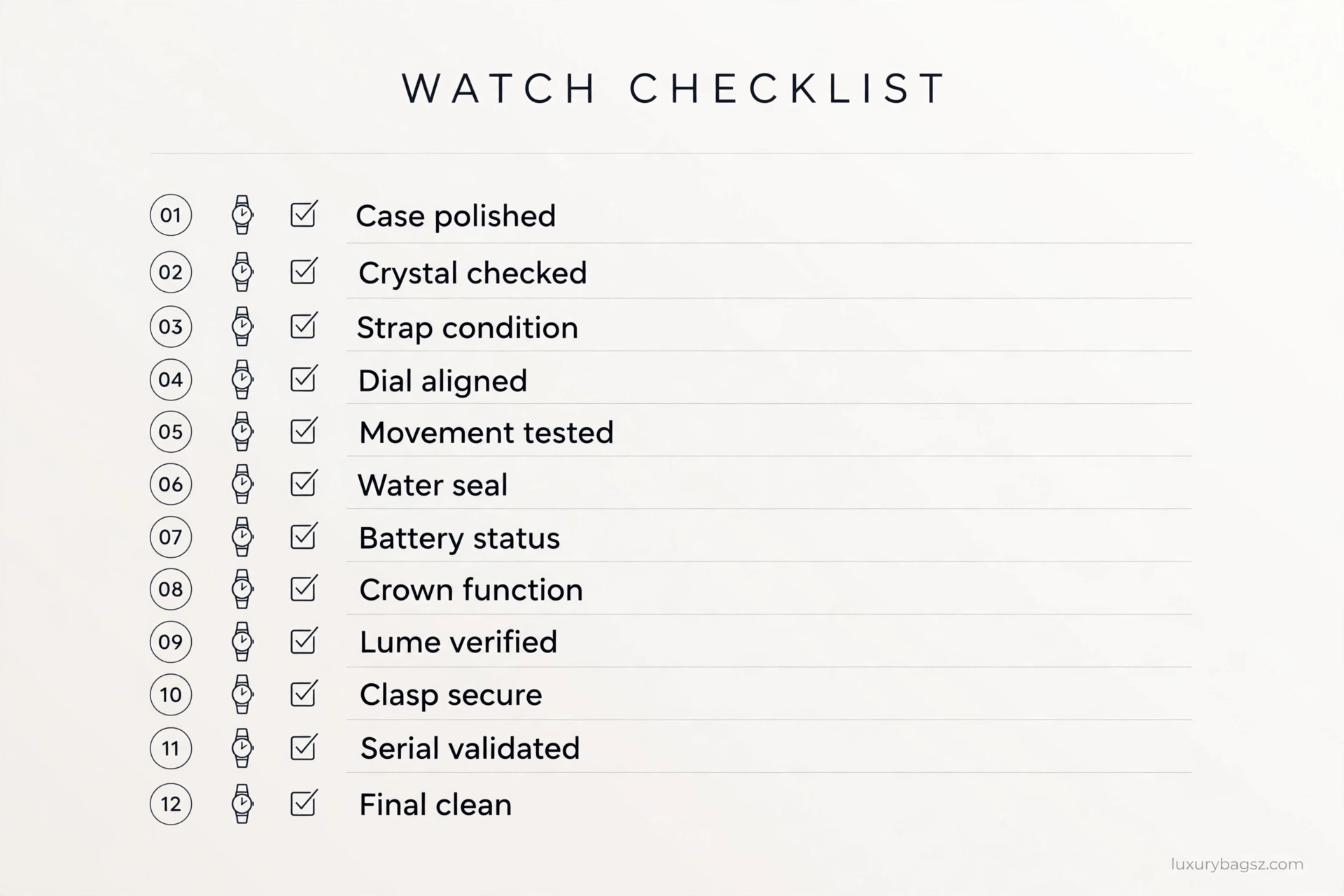
A genuine Panerai declares itself through its construction: a true sandwich dial with real depth, a crown guard that locks with authority, a case finished without a careless edge, a movement that matches its reference, and engravings and papers that agree with each other. Fakes copy the silhouette; they struggle to copy all of those things at once. Check the reference first, run the twelve checks, and buy only with an inspection window.
The Panerai you bring home will then be what it claims to be: bold, legible, and built like the naval instrument it descends from.






