

Ulysse Nardin Brand History: Marine Chronometers, the Freak and Modern Icons
Ulysse Nardin in Brief: The Sea, Precision and a Watch with No Hands
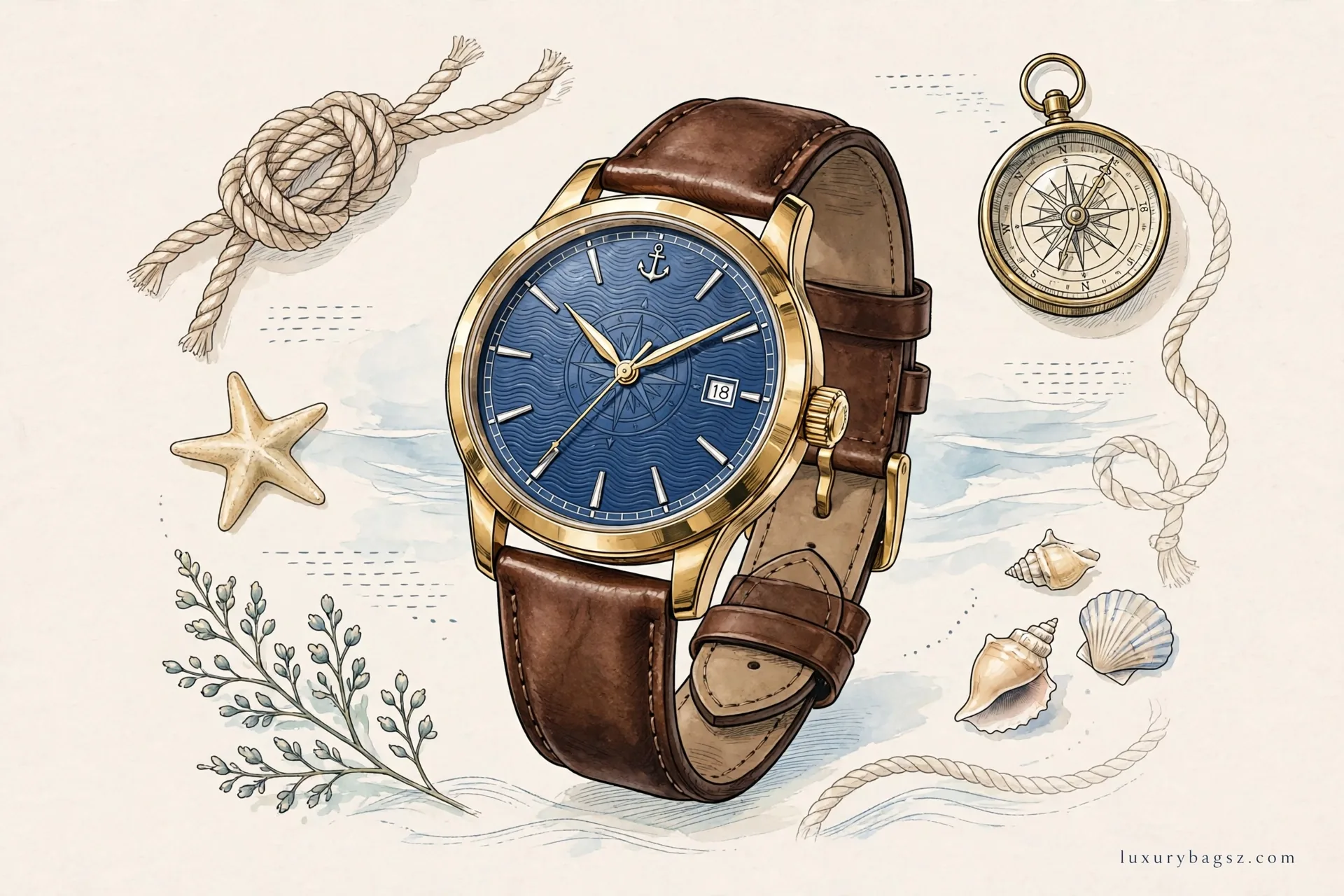
Ulysse Nardin is a Swiss luxury watchmaker founded in Le Locle in 1846, famous first for marine chronometers and later for some of the boldest mechanical watches ever made. At sea, accurate time meant accurate navigation, and Ulysse Nardin chronometers served more than 50 navies. On the wrist, the house later produced the Trilogy of Time astronomical watches and, in 2001, the Freak, a watch whose movement itself tells the time.
That arc, from practical instrument to creative complication, is the key to the brand. Ulysse Nardin is not a fashion watch house that later learned watchmaking. It is a watchmaking house that later learned to be daring. Buyers who understand that distinction will choose far more wisely, especially pre-owned.
Key Takeaways
- Ulysse Nardin was founded in Le Locle, Switzerland, in 1846 by Ulysse Nardin, aged 23.
- The house built its name on highly accurate marine chronometers.
- More than 50 navies used its chronometers, and it won thousands of observatory certificates.
- Rolf Schnyder bought the company in 1983 and revived it with Ludwig Oechslin.
- The Trilogy of Time ran from 1985 to 1992: Astrolabium, Planetarium and Tellurium.
- The Freak launched in 2001, with no conventional dial, hands or crown in the usual sense.
- Kering owned the house from 2014 until a management buyout in 2022 restored independence.
Le Locle, a Young Watchmaker and the Problem of Time at Sea
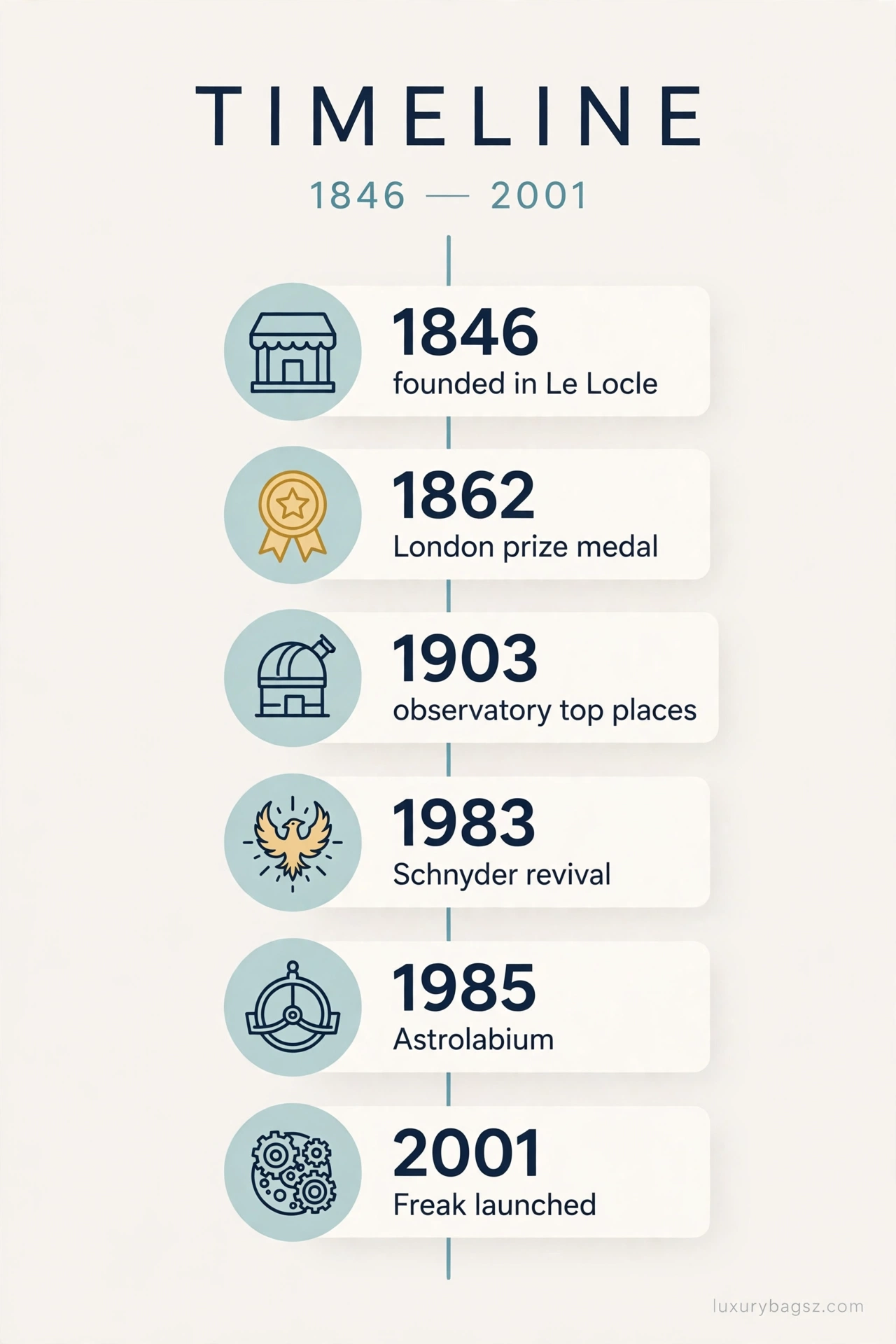
Ulysse Nardin was born in 1823 in Le Locle, in the Neuchâtel mountains of Switzerland, where long winters pushed families towards watchmaking. He trained under his father, Léonard-Frédéric Nardin, and then under master watchmakers Frédéric-William Dubois and Louis JeanRichard-dit-Bressel, both known for precision watches. In 1846, aged only 23, he opened his own workshop in Le Locle.
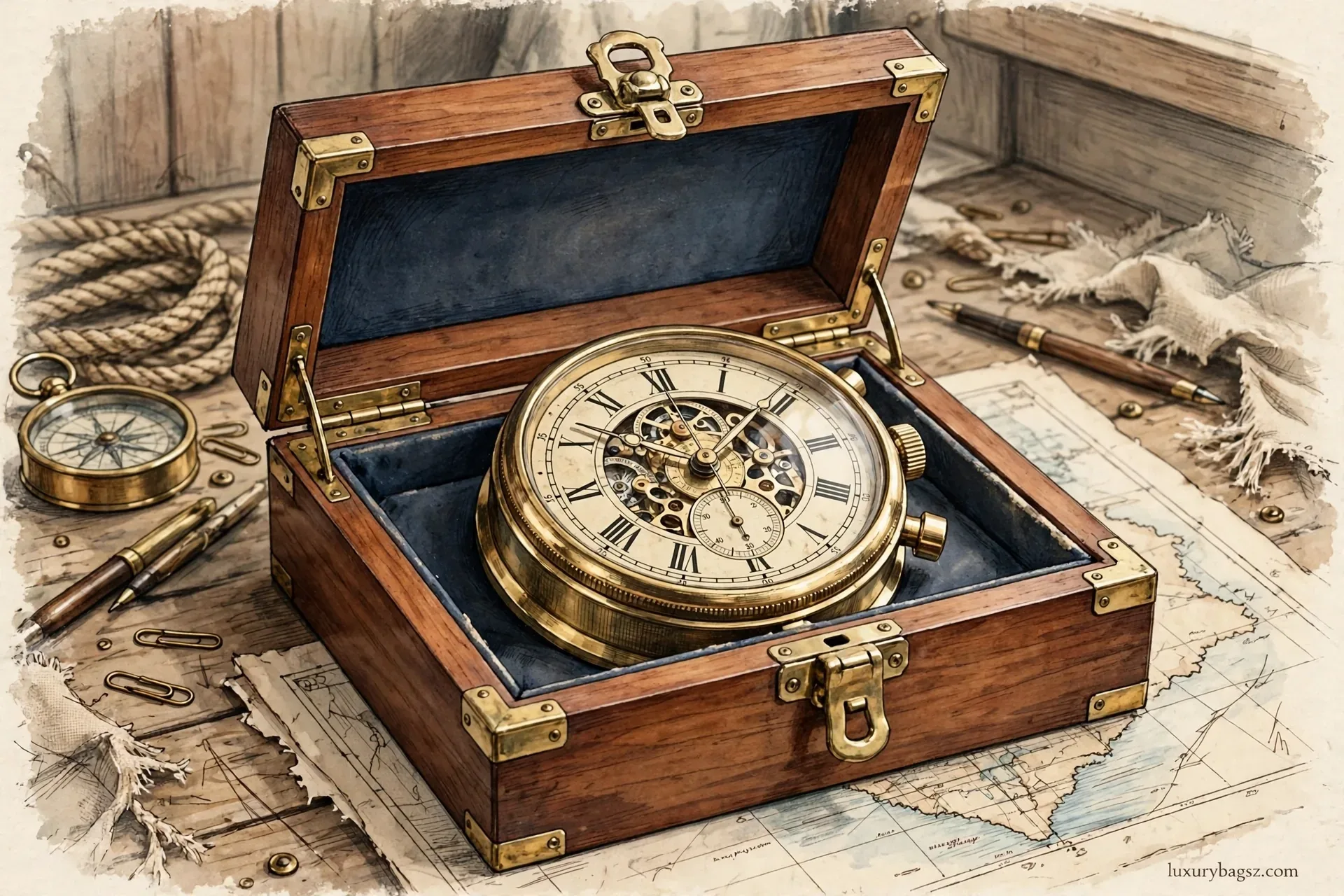
The problem he tackled was practical and unforgiving. At sea, a ship's position depended on knowing the exact time at a reference port, and a chronometer that gained or lost seconds could put a vessel miles off course. Marine chronometers therefore had to be tested, rated and trusted, not merely admired. Ulysse Nardin focused on that precision from the start, making pocket chronometers and complicated watches.
In 1860 he acquired a high-precision astronomical regulator to calibrate his pocket chronometers, and in 1862 his complicated watches and pocket chronometers won a prize medal at the London International Exhibition. In 1865, after a fire destroyed the original workshop, the company moved to Rue du Jardin 5 in Le Locle, a building that remains its headquarters today.
Fifty Navies, Observatory Trials and a Dominant Century
After Ulysse Nardin's death in 1876, his son Paul-David took over and introduced the company's first marine chronometer that same year. The decades that followed were the house's great age of dominance. In 1903 its chronometers took the top seven places in the Neuchâtel Observatory trials, and over the following decades it supplied marine chronometers to more than 50 navies.
The numbers from the Neuchâtel Observatory's last official report in 1975 are striking: 4,324 certificates for Ulysse Nardin marine chronometers, 2,411 special prizes and 18 gold medals at international exhibitions. Brand histories also report that 77% of marine chronometers tested by the observatory over a century were made by Ulysse Nardin. Different sources round these figures differently, so treat exact percentages as approximate, but the scale of dominance is not in doubt.
For collectors, this era explains why old Ulysse Nardin marine chronometers, deck watches and pocket chronometers still appear at auction. They are instruments first and collectibles second, and their value depends on originality, working condition and documentation far more than on decoration. A restored dial or replaced movement may look tidy, but it usually reduces collector interest.
The Quartz Crisis, Rolf Schnyder and the Trilogy of Time
The quartz crisis of the 1970s and 1980s threatened mechanical watchmaking everywhere, and Ulysse Nardin was not spared. Cheap, highly accurate quartz watches flooded the market, and demand for mechanical marine instruments collapsed. In 1983 entrepreneur Rolf W. Schnyder bought the company and set out to rebuild it around mechanical innovation rather than nostalgia alone.
Schnyder partnered with watchmaker and scholar Ludwig Oechslin, and together they produced the Trilogy of Time, three astronomical wristwatches that remain landmarks. The Astrolabium Galileo Galilei arrived in 1985, the Planetarium Copernicus in 1988, and the Tellurium Johannes Kepler in 1992. The Astrolabium entered the Guinness Book of Records as a highly functional watch, with sources giving its record year as 1988 or 1989, a small disagreement worth noting rather than smoothing over.
These watches showed the sun, moon, stars, eclipses and planetary positions on the wrist, in an era when most makers were simplifying. They re-established Ulysse Nardin as a house of complications, not merely a historic name. Later innovations in the same spirit included the San Marco minute repeater with automata in 1989, a quick-setting GMT in 1994, and a perpetual calendar that could be set in both directions via the crown in 1996.

The Freak, Silicon and a New Kind of Watchmaking
In 2001 Ulysse Nardin launched the Freak, and it changed how collectors talked about the house. The Freak has no conventional dial and no hands in the usual sense: the movement itself rotates to indicate the time, with the calibre acting as the minute hand. It also pioneered the use of silicon in watchmaking, a light, hard material that needs no lubrication and resists magnetism and temperature change.
Silicon became a lasting Ulysse Nardin strength. The house co-founded Sigatec in 2006, a specialist in silicon micromechanical components, and in 2007 launched the Freak DIAMonSIL, with a diamond-coated silicon escapement. In 2015 the Anchor Tourbillon, with a constant-force escapement made entirely of silicon components, won honours at the Grand Prix d'Horlogerie de Genève.
The Freak line has since grown into a family of its own, with later models including the Freak One, a 2023 Grand Prix winner. For new buyers, the Freak is best understood as a statement watch: bold, technical and unmistakable, rather than a quiet daily watch. It suits collectors who value mechanism as design, and it divides opinion, which is part of its appeal.

Collections Today: Marine, Diver, Blast and Freak
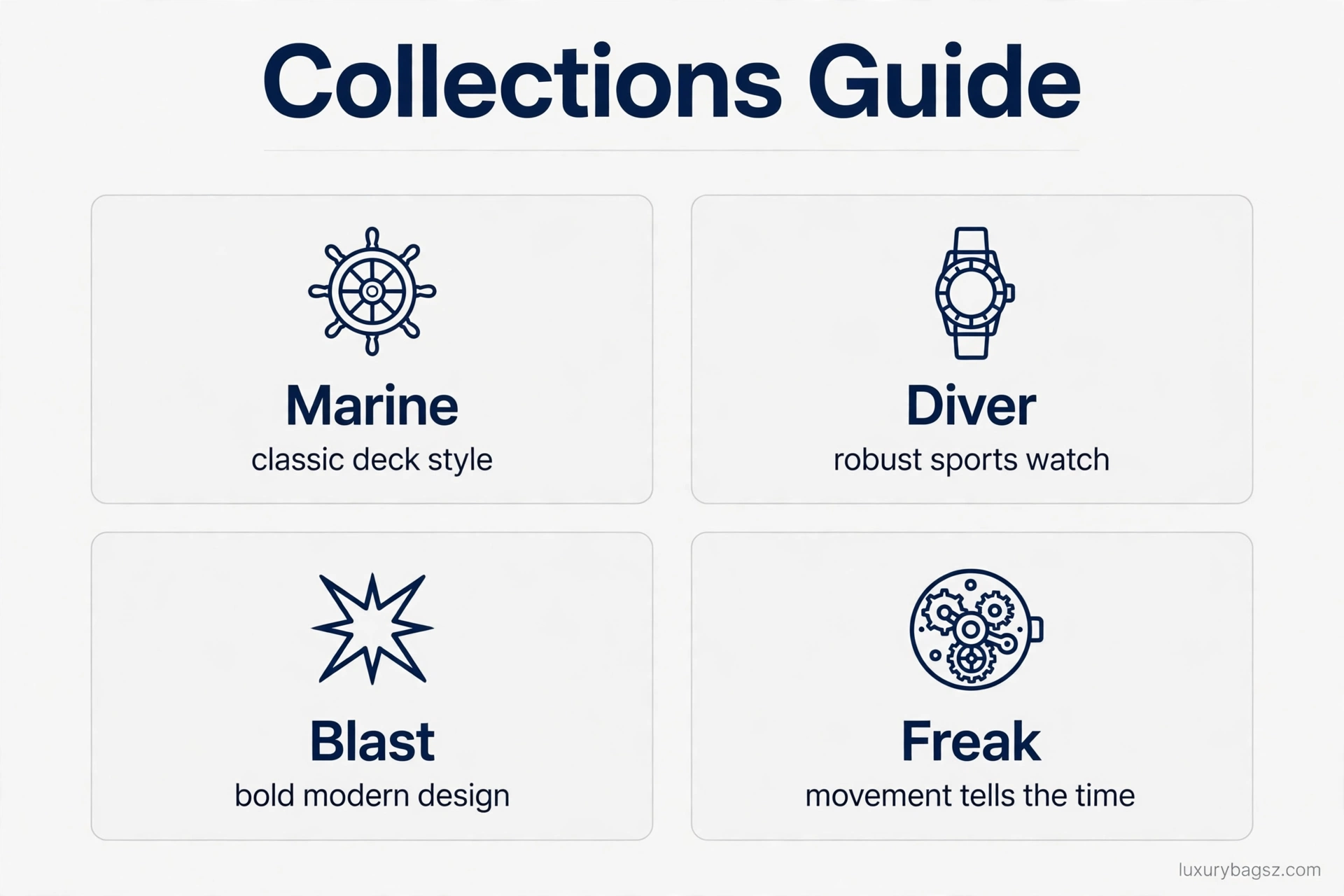
Today's Ulysse Nardin range keeps its maritime roots visible while pushing modern design. The Marine family refers back to historical deck chronometers, with clean dials, Roman numerals and anchor motifs. The Diver line translates that seafaring identity into robust sports watches, while the Blast line is bolder and more architectural, including the Blast Moonstruck, a descendant of the astronomical tradition.
The Moonstruck, first launched in 2009, displays moon phases and tidal patterns around the world, showing how the old navigation problem survives in modern form. Enamel dials remain a house craft too, strengthened by the 2011 acquisition of Donzé Cadrans, a Le Locle workshop known for grand feu enamel. If you compare Ulysse Nardin with larger houses, a guide to Rolex shows the contrast: Rolex built fame on robust sports watches such as the Submariner, while Ulysse Nardin built fame on precision instruments and complications.
Ownership changed again in recent years. Kering bought Ulysse Nardin in 2014, and in 2022 Kering sold it to its management team, led by chief executive Patrick Pruniaux, restoring independence under Sowind Group. For buyers, independence is neither good nor bad on its own; what matters is service, parts and warranty support, so check authorised service options before buying a complex model.
Wearing, Servicing and Caring for Ulysse Nardin
A mechanical Ulysse Nardin needs regular servicing, and complex models need it more, not less. Follow the maker's service interval, use authorised or well-regarded independent watchmakers with experience of the calibre, and keep service records, since they support resale value. Silicon parts reduce some wear, but they do not remove the need for cleaning, lubrication checks and seal checks on divers.
Daily care is simple and worth doing well. Rinse a diver after salt water, dry the case and bracelet, and avoid shocks, magnets and harsh chemicals. A guide to clean a watch covers cases, crystals, bracelets and straps by material, and the same gentle approach applies here. Never open a case yourself, and never force a crown or pusher that resists.
For the Freak and other avant-garde models, ask the seller or boutique to demonstrate setting and winding before you buy. A watch that looks simple but sets in an unusual way can frustrate a new owner, and a short demonstration prevents most early mistakes. If you buy pre-owned, ask when the watch was last serviced and whether the seller will guarantee the movement for a short period after sale.
Buying Pre-Owned: Checks, Fakes and Realistic Prices
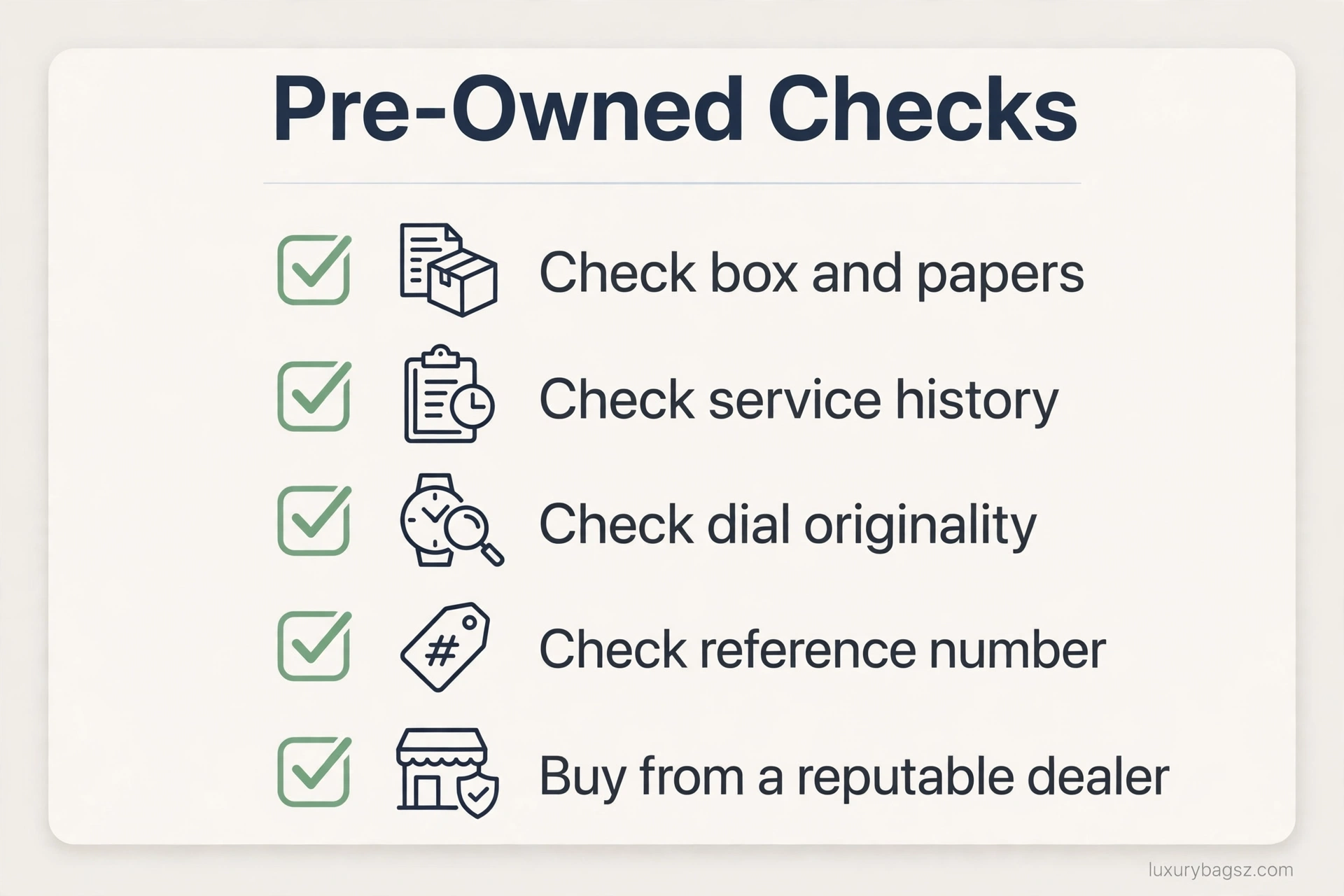
Pre-owned Ulysse Nardin can offer strong value, because the house is less widely known than Rolex or Patek Philippe, so prices are often lower than the engineering deserves. Start with the basics: box, papers, warranty card and service history. Then check the dial, hands, case and bracelet for refinishing, replacement parts and mismatched lume, and check that the reference number matches the papers.
Fakes exist for popular luxury watches generally, and the same caution that applies to a guide to spot a fake Rolex applies here: buy from reputable dealers, verify serial numbers where possible, and walk away from a price far below market without a convincing reason. For Freak models, check that the movement rotates smoothly and that the time-setting system works as demonstrated, since a faulty Freak is an expensive repair.
Avoid buying a highly complicated model as a first luxury watch unless you accept service costs and waiting times. A Marine chronometer-style watch or a Diver is a far easier first Ulysse Nardin, with clearer servicing and broader dealer support. Buy the complication because you love it and understand it, not because a listing calls it rare, since rarity alone does not guarantee resale demand.
Frequently Asked Questions
When was Ulysse Nardin founded?
Ulysse Nardin was founded in Le Locle, Switzerland, in 1846 by Ulysse Nardin, aged 23.
Why is Ulysse Nardin famous for marine chronometers?
Its chronometers were exceptionally accurate, won thousands of observatory certificates, and served more than 50 navies for navigation at sea.
What is the Trilogy of Time?
Three astronomical wristwatches by Schnyder and Oechslin: Astrolabium Galileo Galilei in 1985, Planetarium Copernicus in 1988, and Tellurium Johannes Kepler in 1992.
What is the Freak watch?
Launched in 2001, the Freak has no conventional dial or hands; its movement itself indicates the time, and it pioneered silicon watch components.
Who owns Ulysse Nardin now?
After Kering ownership from 2014, a management buyout in 2022 restored independence under Sowind Group, led by Patrick Pruniaux.
What is silicon used for in Ulysse Nardin watches?
Silicon is used for escapements and micromechanical parts, since it is light, hard, needs no lubrication and resists magnetism.
How often should an Ulysse Nardin watch be serviced?
Follow the maker's interval and keep records. Complex models and divers need regular seal, lubrication and movement checks.
Are old marine chronometers collectible?
Yes, but value depends on originality, working condition and documentation. Restored dials or replaced movements usually reduce collector interest.
Is Ulysse Nardin a good first luxury watch?
A Marine or Diver model is a good first choice. Highly complicated models suit experienced collectors who accept higher service costs.
How do I check a pre-owned Ulysse Nardin?
Check box, papers, service history, reference numbers, dial and case originality, and buy from a reputable dealer with a movement guarantee.
Final Verdict: Precision First, Theatre Second
Ulysse Nardin's history earns respect in two different registers: the quiet discipline of marine chronometry, and the bold theatre of the Trilogy of Time and the Freak. Few houses can claim both, and fewer still can claim them with the same workshop address since 1865.
Choose accordingly. Start with a Marine or Diver if you want a wearable daily watch, and move to a Freak or astronomical model only when you love the mechanism itself. Checked carefully, serviced properly and bought at a realistic price, an Ulysse Nardin is not a safe, obvious choice. It is a more interesting one.






