

Why Buy Bespoke Shoes? Fit, Cost, and the Real Value
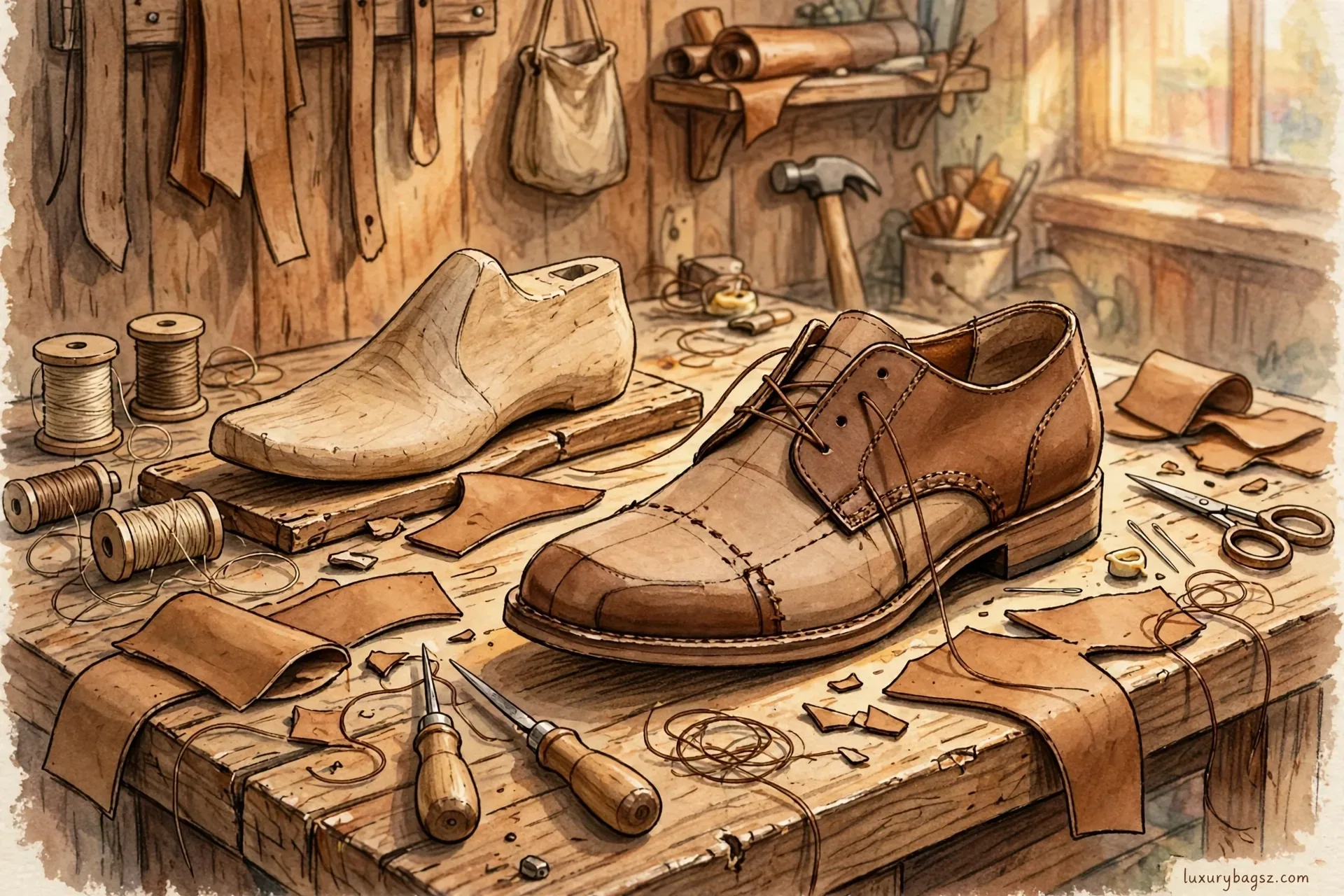
Bespoke Shoes, in Brief
Buy bespoke shoes when fit is the problem you are trying to solve, not when you simply want a nicer pair. A bespoke pair is built on a last carved for your feet alone, so every detail, from the shape of the toe to the height of the instep, is decided for you rather than taken from a stock size.
That personal last is the whole point, and the whole cost. Prices typically start around $1,500 to $2,500 from smaller workshops and rise beyond $10,000 at the most celebrated ateliers, with a wait of months and at least one fitting, often two or three.
Bespoke is worth it if you wear the shoes often, keep them for years, and resole them instead of replacing them. It is not worth it if you want a quick purchase, rarely wear dress shoes, or can already find a ready-to-wear pair that fits well.
Key Takeaways
- Bespoke means a last made for your feet, not a standard last adjusted to your size.
- The word comes from tailoring, where cloth chosen by a client was said to be "spoken for" in advance.
- Expect a consultation, measurements, last-making, a trial fitting, and a final pair, over several months.
- Typical 2026 prices run from about $1,500 to $2,500 at smaller workshops to $6,000-plus and beyond $10,000 at top houses.
- Construction choices, Blake, Blake-Rapid, Goodyear welt, or hand welting, affect resoleability and price.
- Cost per wear, not sticker price, is the honest comparison: one resoleable pair against a decade of replacements.
- Bespoke helps most with hard-to-fit feet, uneven feet, and people who wear dress shoes daily.
- If a ready-to-wear pair fits well, bespoke may be a luxury, not a necessity.
What Bespoke Actually Means, and What It Does Not
The term bespoke comes from the tailoring trade, where cloth chosen by a client was said to be "bespoken," or spoken for, before it was cut. In shoemaking it means the same thing: the pair does not exist until you order it, and it is built for you alone.
True bespoke has three tests. First, a personal last is made for your feet, accounting for differences between left and right. Second, you choose the style, leather, sole, and details, rather than picking from stock options. Third, the shoes are cut, lasted, and finished by hand for that last, not pulled from a warehouse.
Made-to-order is the middle tier, and it is often sold as bespoke when it is not. Made-to-order adjusts a standard last, perhaps in width or length, and lets you choose leather and sole, but the underlying shape is still a factory shape. It fits better than ready-to-wear, but it is not a personal last.
Ready-to-wear is the bottom tier in customisation, though not in quality. A ready-to-wear pair is made in fixed sizes and widths, and you buy the closest fit. Many excellent ready-to-wear shoes exist, and for a standard foot they can be all you ever need.
The distinction matters because price follows it. A made-to-order pair may cost $600 to $1,200, while a true bespoke pair starts higher, because last-making alone takes skilled hours before a single piece of leather is cut. If a seller claims bespoke at a made-to-order price, ask how the last is made.
The Process, Step by Step
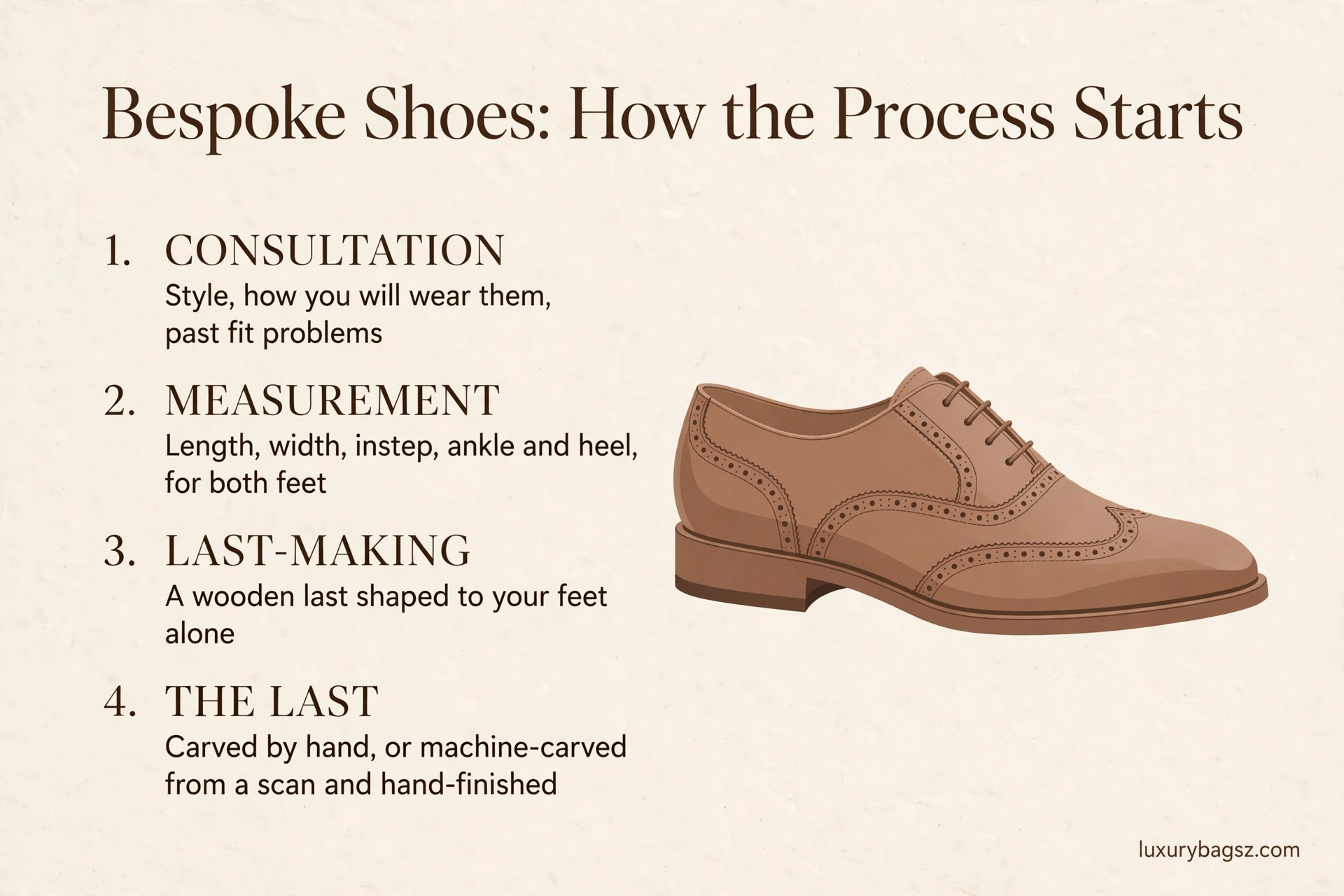
Bespoke begins with a consultation, in person at an atelier or a trunk show, or, for some modern makers, with an at-home fitting kit. You discuss how you will wear the shoes, what styles you like, and what has gone wrong with past pairs, from pinching toes to collapsing arches.
Next comes measurement and foot capture. The maker measures length, width, instep height, ankle, and heel for both feet, and may take tracings, photographs, or a foam impression. Some makers now carve lasts by machine from a digital scan, then finish them by hand, while traditional makers carve by hand throughout.
Last-making is the heart of the craft. A wooden or plastic last is shaped to your feet, with allowances for how leather stretches, how the foot spreads under weight, and how the shoe should feel after break-in. A good last is slightly different from a cast of your foot, because a shoe is not a foot, it is a foot in motion.
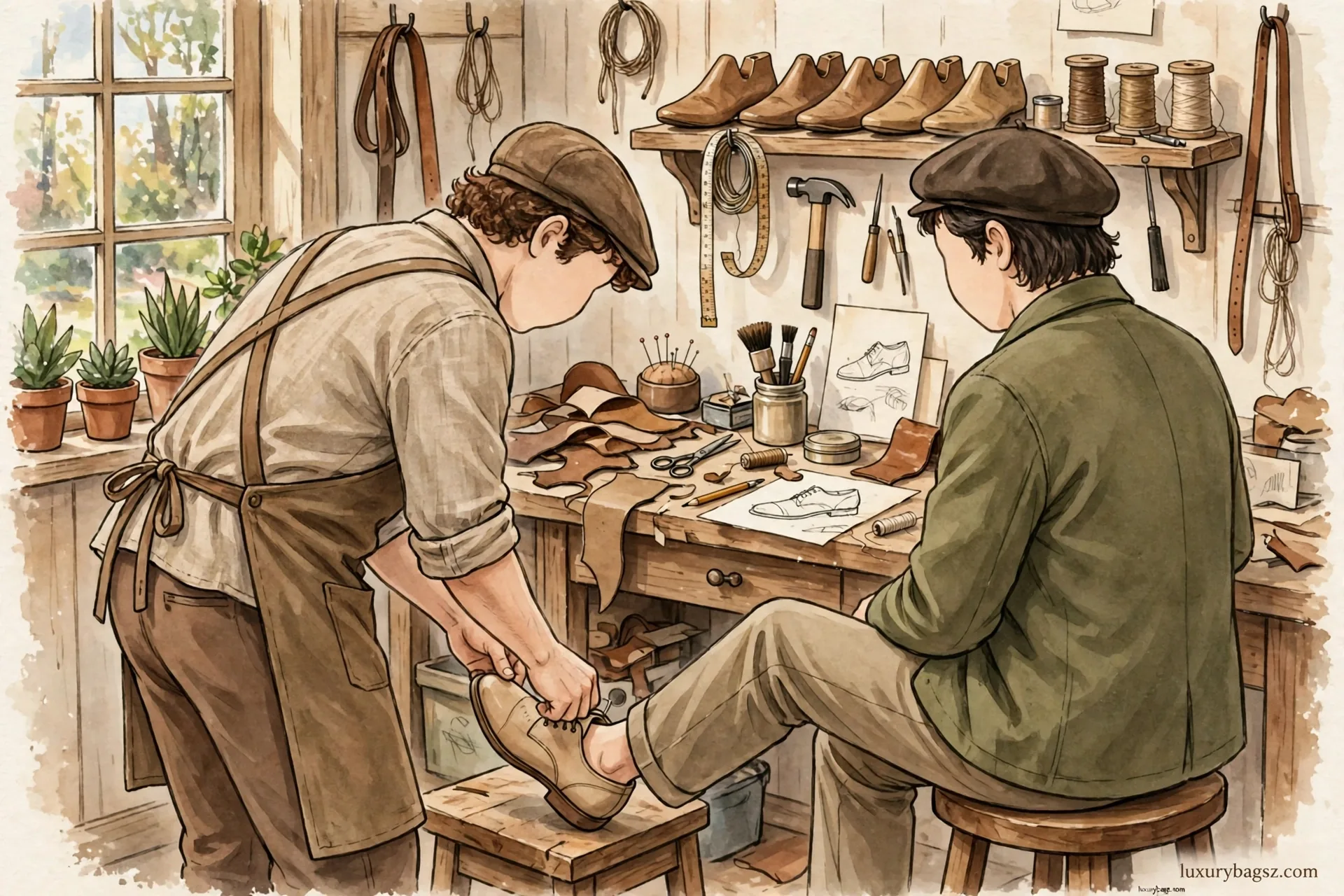
The upper is then cut from your chosen leather, stitched by a closer, lasted over your personal last, and joined to the sole. At this point most makers fit you in a trial shoe, a roughly finished pair on your last, so they can check fit before the final leather is committed.
Fittings are where bespoke earns its price. The maker watches you walk, checks pressure points, and marks adjustments on the trial shoe or the last. One fitting is the minimum for a careful maker; two or three are common, especially on a first order, and each round adds weeks to the timeline.
The final pair is then finished by hand: edge dyeing, burnishing built up in thin layers, polishing, and a last inspection. From first consultation to delivery, expect about five months for a modern atelier, and 12 to 18 months for some traditional English houses, with waitlists of two to five years before the process even starts at the most famous names.

Bespoke Against Made-to-Order and Ready-to-Wear
The honest way to compare the three tiers is by what you get for the money, not by prestige. Ready-to-wear gives you immediate availability, easy returns, and a wide choice of styles, at $200 to $600 for good quality, but you accept the closest standard fit.
Made-to-order gives you a better fit and your choice of leather and sole, usually in eight to twelve weeks, at a moderate premium over ready-to-wear. It suits buyers who know their size quirks, such as a wide forefoot or a narrow heel, but do not need a fully personal last.
Bespoke gives you a personal last, unlimited design choice within the maker's skill, and a fitting process that catches problems before the final pair. It costs the most and takes the longest, and it cannot be returned like a shop pair, because it was built for you.
For context on the styles themselves, the range of dress shoes available ready-to-wear, from Oxfords to loafers, shows how much choice already exists without going bespoke. If one of those styles fits you well off the shelf, bespoke is a refinement, not a rescue.
Fit problems decide the tier more than taste does. Bunions, a high instep, a very narrow heel with a wide forefoot, or feet that differ by a full size are all problems a personal last solves better than any standard width. If your feet are fairly standard, the gain from bespoke is smaller, however beautiful the shoes are.
Also weigh how often you will wear them. A bespoke pair worn three times a week for a decade is a different purchase from a bespoke pair worn twice a year at weddings. The first spreads its cost thinly; the second may be a beautiful object that rarely leaves the box.
What Bespoke Shoes Cost in 2026
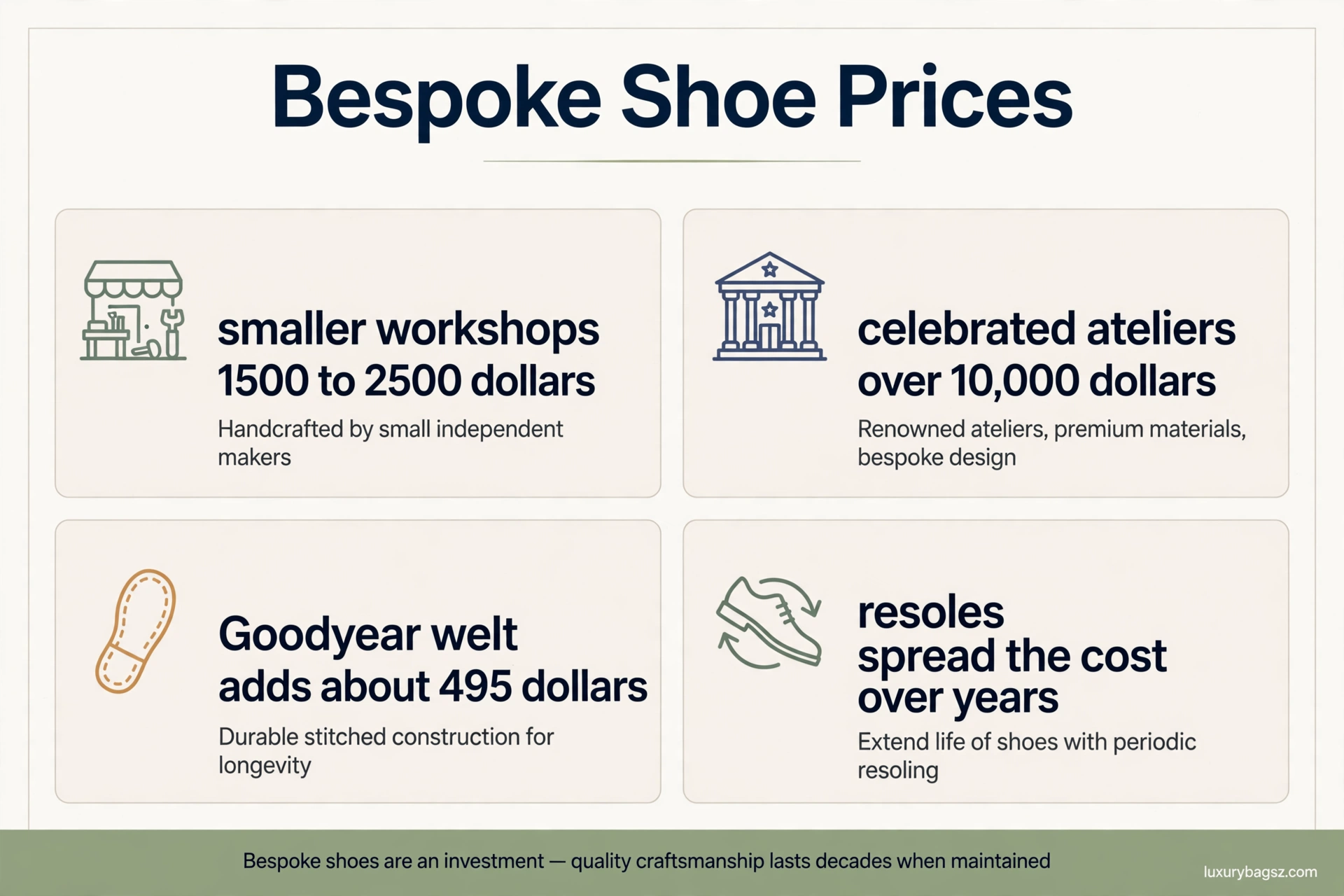
As a rule of thumb, bespoke shoes start at around $1,500 to $2,500 from smaller workshops and rise beyond $10,000 at the most celebrated ateliers. One modern maker, Bondeno, lists bespoke shoes from $1,990 and bespoke boots from $2,490, with Goodyear welting adding $495 over Blake construction, as a dated 2026 example.
Several factors drive the price. The maker's reputation and location matter most: London, Paris, and Florence ateliers charge more than smaller workshops, partly for rent and partly for decades of reputation. A famous name can double the price without doubling the leather or the hours.
Leather is the second driver. Full-grain calfskin is the usual starting point and is included in most base prices. Shell cordovan, alligator, ostrich, and other exotic skins raise the price considerably, because they are harder to source, harder to cut without waste, and harder to work.
Construction is the third driver. Blake stitching, where the sole is stitched directly to the insole, is slimmer and cheaper. Blake-Rapid adds a midsole for durability. Goodyear welting, machine-stitched through a welt, costs more but resoles most easily. Hand welting, where the welt is stitched by hand, costs most of all and appears mainly at traditional houses.
Extras add up quietly: a second pair on the same last is cheaper than the first, because the last already exists, while a new last for a second style, exotic leather, a rubber sole for wet weather, or shoe trees can each add hundreds. Ask for an all-in price, not just a starting price, before you commit.
Leather, Construction, and Finishing: Where the Money Goes
Most of a bespoke price sits in skilled hours and materials, not in branding markup, though branding does play a role at the top end. Understanding the three buckets helps you judge whether a quote is fair.
Leather choice sets the character of the pair. Calfskin is smooth, durable, and ages with a rich patina. Suede is softer and more casual, but marks more easily. Shell cordovan is dense, rolls rather than creases, and lasts for decades, but it is expensive and limited in colour and panel size.
Construction sets the repairability. Goodyear-welted and hand-welted shoes can be resoled repeatedly, which is why they suit a buy-once philosophy. Blake-stitched shoes can also be resoled, but fewer cobblers handle Blake work, so check your local cobbler before choosing Blake if resoles matter to you.
Finishing is the hand work that a production line cannot copy. Burnishing, where dye and polish are built up in thin layers to give depth to the toe and heel, hand-dyed sole edges, and a mirror shine on the toe cap all take time and a steady hand. A well-finished pair looks alive in a way a factory shine does not.
One maker's choice illustrates the trade-offs honestly: Bondeno offers Blake, Blake-Rapid, and optional Goodyear welting for dress shoes and boots, uses cemented construction for flats and pumps, and does not offer hand welting. That is not a flaw; it is a clear statement of what that maker does well, and you should expect the same clarity from any maker you consider.
Cost per Wear: The Only Fair Comparison
The most common mistake in judging bespoke is comparing one bespoke pair with one ready-to-wear pair. Compare a decade of footwear instead, and the numbers look very different.
A $250 ready-to-wear pair replaced every 18 to 24 months costs $1,250 to $1,650 over ten years, plus the break-in time and the fitting gamble each cycle. Add resoling, if the pair allows it, or discard costs, and the total climbs further.
A $1,990 bespoke pair, worn regularly, cared for, and resoled when needed, spreads its cost across the same decade, often with only resole costs added. If the pair fits perfectly, you also wear it more, which lowers the cost per wear further, because an unworn pair costs infinitely per wear.
That maths only works if three conditions hold. You must actually wear the shoes often, you must care for them, with trees, rotation, and conditioning, and you must resole rather than replace when the soles wear. A bespoke pair left in a box, or worn to destruction without care, is an expensive mistake, not an investment.
Sources disagree on exact cost-per-wear figures, because wear frequency, resole prices, and replacement cycles vary so much. Treat any single figure as an illustration for one wearer, not a promise, and run your own numbers with your real wearing habits before you commit.
Who Bespoke Helps Most, and Who Should Skip It
Bespoke helps most with feet that standard sizes fail. If you have bunions, hammer toes, a high arch, a low instep, feet that differ markedly, or a medical condition that makes standard shoes painful, a personal last can change daily comfort in a way no insole fully fixes.
It also helps professionals who live in dress shoes. A lawyer, banker, or executive who wears Oxfords five days a week will feel the difference of a perfect fit by mid-afternoon, and will wear the pair enough to justify the price. For that buyer, bespoke is a work tool, not a luxury.
Bespoke helps least if you rarely wear dress shoes, if your feet fit standard sizes well, or if your style changes quickly. Fashion moves faster than a bespoke timeline, and a pair ordered for today's taste may feel dated by the time it arrives, especially if the wait stretches past a year.
It also helps least if you are impatient or uncertain about style. Bespoke rewards a buyer who knows what they want, can describe it clearly, and can wait. If you are still exploring styles, buy ready-to-wear first, learn what you like, and commission bespoke later with that knowledge.
Finally, consider geography. The best makers travel to trunk shows in major cities, meeting clients in hotel suites, showing samples, and taking measurements. If no trunk show reaches your city, an at-home fitting kit or a trip to the atelier may be needed, and that travel cost belongs in your budget.
Choosing a Maker and Asking the Right Questions
Choosing a maker is the most important decision in bespoke, more important than leather or style, because you are buying a relationship that lasts through fittings and future orders. Start with makers whose existing work you admire in person, not just in photos.
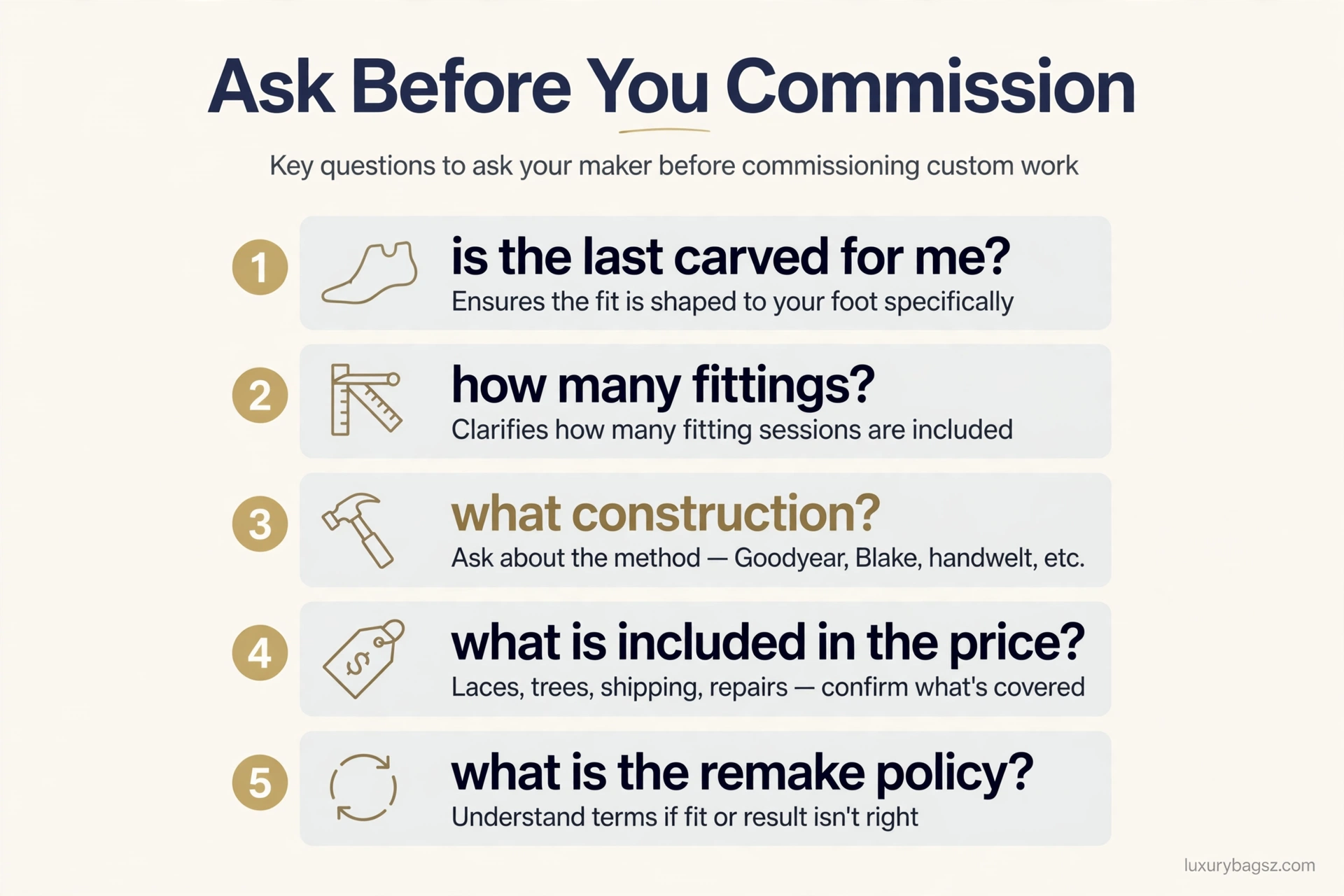
Ask whether the last is truly carved for you, and whether it is kept for future orders. A maker that keeps your last makes the second pair cheaper and faster, and that stored last is part of what you paid for. Ask who owns the last if you stop ordering.
Ask how many fittings are included, and what happens if the fit is wrong after delivery. A clear remake or adjustment policy, in writing, is worth more than a low starting price with vague promises. Also ask what construction is used, and whether your local cobbler can resole it.
Ask what is included in the price: shoe trees, a second fitting, delivery, and any taxes or duties if the maker is overseas. A price that excludes trees, delivery, and duties can climb by hundreds before the pair reaches you.
Check the maker's current workload honestly. A two-year waitlist may be a sign of quality, but it is also two years of your money tied up and your style possibly changing. A smaller workshop with a five-month lead and a clear process may serve you better than a famous name you cannot reach.
Caring for Bespoke Shoes So They Last
A bespoke pair deserves a care routine, because neglect wastes the fit advantage you paid for. Use cedar shoe trees after every wear; they hold the shape, absorb moisture, and keep the leather from collapsing into creases overnight.
Rotate the pair with at least one other pair, so the leather fully dries between wears. Shoes worn daily without rest break down faster, however well made they are, because moisture never fully leaves the insole and lining.
Polish sparingly, with a cream polish that matches the leather colour, and brush after every wear to remove dust before it grinds into the surface. A mirror shine on the toe cap is a finishing touch, not a daily requirement, and over-polishing can build a waxy layer that dulls the leather.
Resole before the sole wears through to the welt. Once the welt itself is damaged, a resole becomes a rebuild, costing more and risking the fit. A good cobbler will tell you when the time is right, usually after the sole thins noticeably at the ball of the foot or the heel wears unevenly.
Store bespoke shoes in their bags or boxes, away from heat and direct sun, with trees inserted. Keep the last note and the maker's specification with the pair, so any future cobbler or the maker themselves can match the original construction on the next resole or reorder.
Frequently Asked Questions
Why buy bespoke shoes instead of ready-to-wear?
Because a personal last fits feet that standard sizes do not, and a resoleable, hand-finished pair can last decades. If ready-to-wear already fits you well, bespoke is a luxury rather than a necessity.
How much do bespoke shoes cost?
Typically $1,500 to $2,500 from smaller workshops, $1,990 and up from some modern makers, and $6,000 to over $10,000 at celebrated ateliers. Leather, construction, and the maker's reputation drive the final price.
How long does bespoke take?
About five months for many modern ateliers, and 12 to 18 months for some traditional houses, with waitlists of two to five years at the most famous names before work even begins.
What is the difference between bespoke and made-to-order?
Bespoke builds a last for your feet alone. Made-to-order adjusts a standard last and lets you choose leather and sole. Made-to-order fits better than ready-to-wear but is not a personal last.
Are bespoke shoes more comfortable?
Usually yes, once fitted, because the last matches your feet, including left-right differences. Comfort depends on good fittings, though, not just on the bespoke label.
Can bespoke shoes be resoled?
Yes, if they use Goodyear, hand-welted, or Blake construction, which most bespoke makers do. Check that your local cobbler handles your pair's construction before you commission.
What leather should I choose for my first bespoke pair?
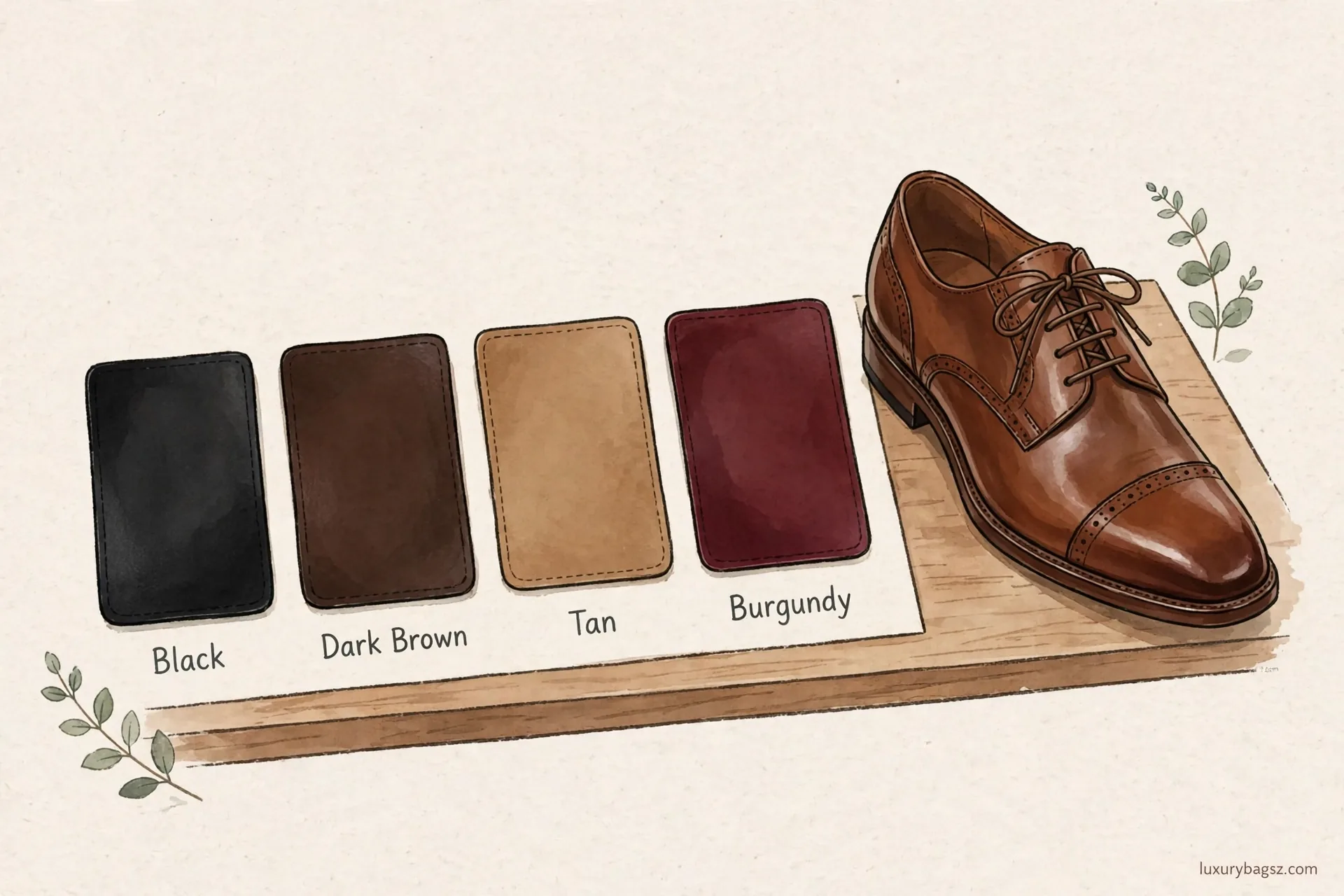
Full-grain calfskin in dark brown or black is the safest first choice. It is durable, versatile, and shows the maker's finishing well. Save shell cordovan and exotics for a later pair.
Do I need to travel to order bespoke shoes?
Not always. Many makers run trunk shows in major cities, and some offer at-home fitting kits. Traditional houses may still require a visit to the atelier for the first order.
Are bespoke shoes worth it if I rarely wear dress shoes?
Probably not. The value comes from frequent wear spreading the cost and from fit solving a real problem. For occasional wear, a good ready-to-wear pair is the smarter buy.
What happens if my bespoke shoes do not fit?
A reputable maker adjusts the last and remakes or alters the pair under a stated policy. Confirm that policy, and how many fittings are included, in writing before you pay a deposit.
Conclusion
Buy bespoke shoes for fit, for longevity, and for the pleasure of a pair made for you alone, not for a label or a status claim. Choose a maker you trust, ask the hard questions about lasts, fittings, and remake policy, and run your own cost-per-wear numbers with honest wear frequency. Do that, and bespoke is one of the few luxury purchases that genuinely earns its price, one comfortable step at a time.






