Shell Cordovan Myths: Does It Crease, Is It Even Leather, and Is It Worth It?
Shell Cordovan Myths in Brief
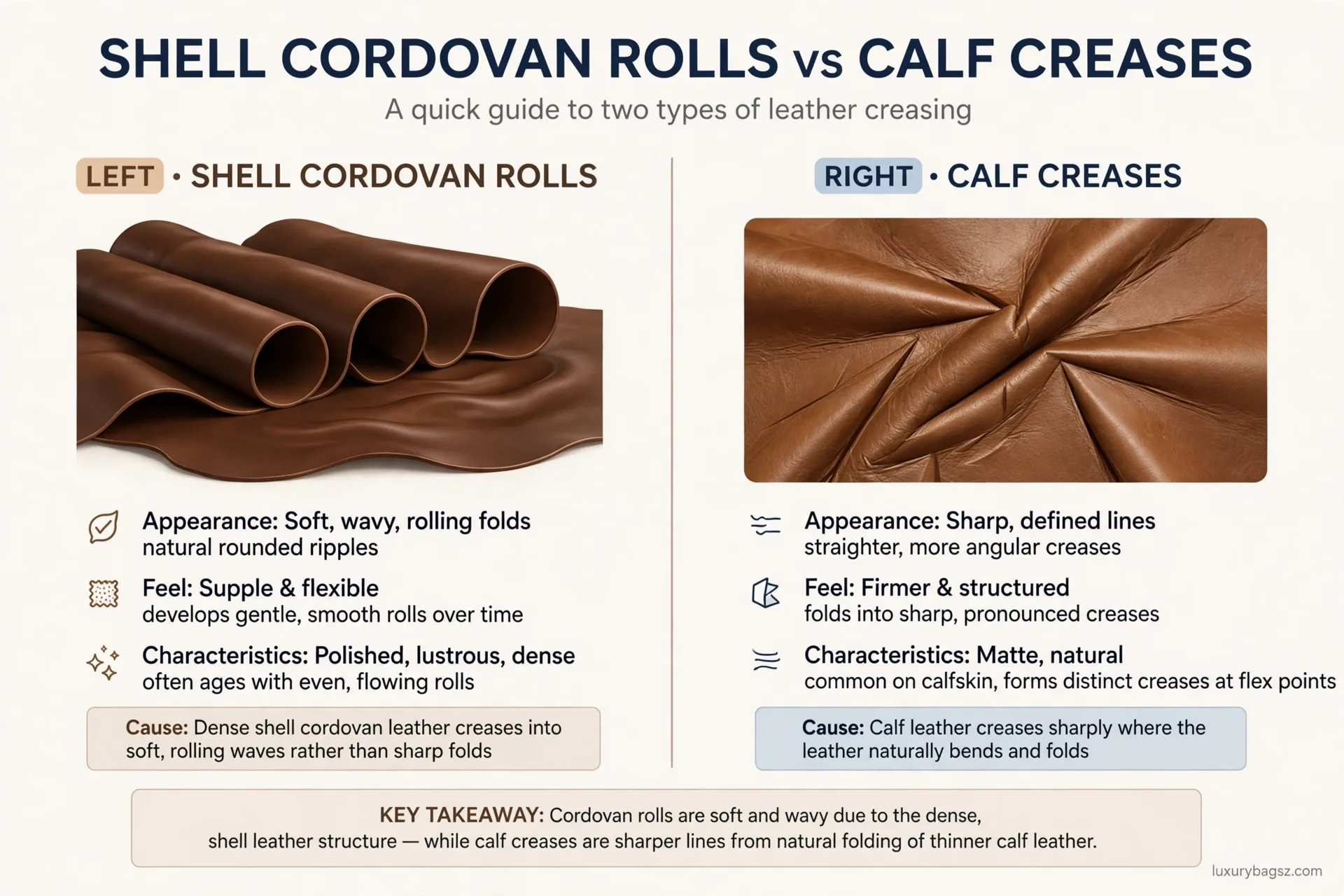
Shell cordovan does not crease the way calfskin does. It forms soft rolls and ripples instead of sharp lines, because it has no grain structure to break. If you see sharp creases on cordovan, you are usually seeing a surface finish crack, not the shell itself.
Is it even leather? By the usual trade definition, yes, it is tanned animal material used for shoes and goods. Purists argue it is a membrane, not skin, since it comes from the fibrous layer under the hide on a horse's rump. Both descriptions are true, and the argument changes nothing about how it wears.
The bigger myths are about magic: that cordovan is waterproof, that it shines itself, and that it never scuffs. It is tough, long-lived, and beautiful, but it still needs care, still marks, and still costs far more than calf for reasons of scarcity as much as performance.
Key Takeaways
- Cordovan rolls instead of creasing, because it has no grain layer to fold and break.
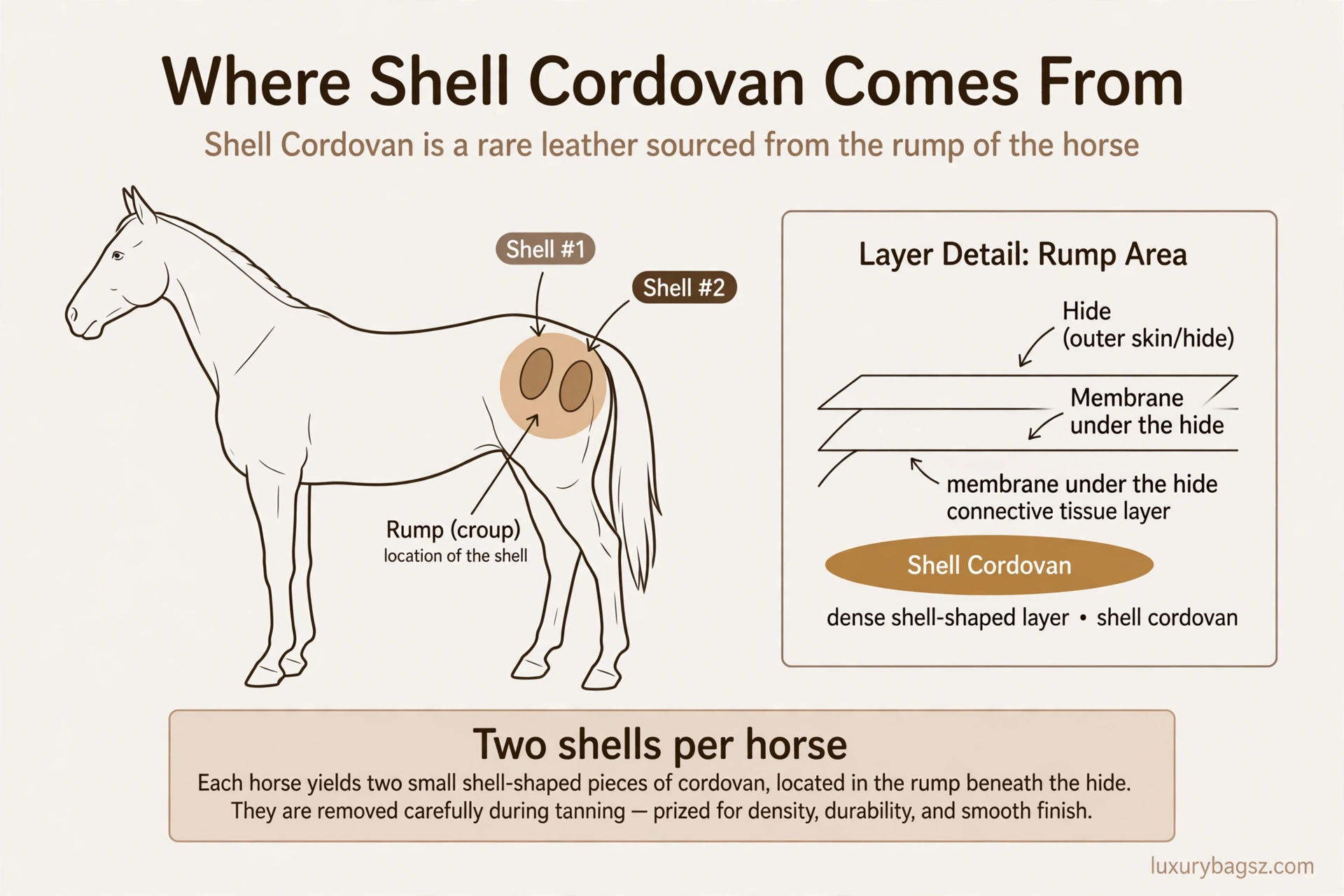
- It comes from two small shells per horse, from the membrane under the hide on the rump.
- Tanning takes around six months, which, plus scarcity, explains the high price.
- It is not waterproof, not scuff-proof, and not self-shining, despite the legends.
- Brushing restores shine because heat and friction move its oils and waxes to the surface.
- It is less formal than calfskin for strict dress occasions, and it stretches less, so fit matters more.
What Shell Cordovan Actually Is
Shell cordovan is made from the superficial fascia, the dense fibrous membrane, under the hide on a horse's rump. Each horse yields only two shells, each roughly one to two square feet, so supply is tiny by nature.
That membrane is not skin in the usual sense. Ordinary leather comes from the grain layer of a hide, with pores and a grain pattern. Cordovan has no grain pattern, which is why its surface looks so smooth and pore-free.
The name comes from Cordoba in Spain, a historic leather centre, where a material called cordoban was made centuries ago. Modern shell cordovan is a different, far more refined product, but the name stuck.
Myth: Cordovan Does Not Crease
This myth is mostly true, with an important correction. Cordovan does not form the sharp, deep creases that calfskin develops across the vamp. Instead, it develops gentle waves, called rolls, as it flexes.
The reason is structural. Creases form when the grain layer travels a different distance from the flesh layer during flexing, forcing the grain outward into a break. With no grain layer, cordovan has nothing to break in that way.
If your cordovan shows lines that look like creases, check the finish. Some tanneries apply a top layer that can crease or crack, even though the shell beneath is only rolling. The shell is fine; the coating is the problem.

Myth: Cordovan Is Not Really Leather
This argument has no official referee, and that is worth saying plainly. Cordovan is tanned animal material, sold as leather, used as leather, and cared for as leather. By any practical definition, it is leather.
The purist case is that leather should come from skin, and cordovan comes from a membrane beneath the skin. That is anatomically accurate, and it explains cordovan's unusual behaviour, but it does not make your shoes fake.
For buyers, the debate is a distraction. What matters is how the material behaves: it rolls, it holds shine, it resists scuffs better than calf, and it costs much more. Call it leather, and move on to the fit.
Why It Costs So Much
Scarcity is the first driver. Two small shells per horse, with much of each shell unusable for shoe uppers, means a single pair of shoes consumes a large share of one animal's yield.
Time is the second driver. Vegetable tanning and finishing at a tannery like Horween in Chicago takes around six months, with repeated oiling, dyeing, and glazing steps. Labour and floor space over that period cost real money.
The third driver is demand from a small, passionate market. Cordovan buyers will pay for the patina and longevity, so makers price accordingly. None of this means cordovan is always the best value; it means the price is explainable.
Myth: Cordovan Shines Itself
Cordovan is often called self-polishing, which gets shortened in conversation to self-shining. The two are not the same, and the difference matters for care.
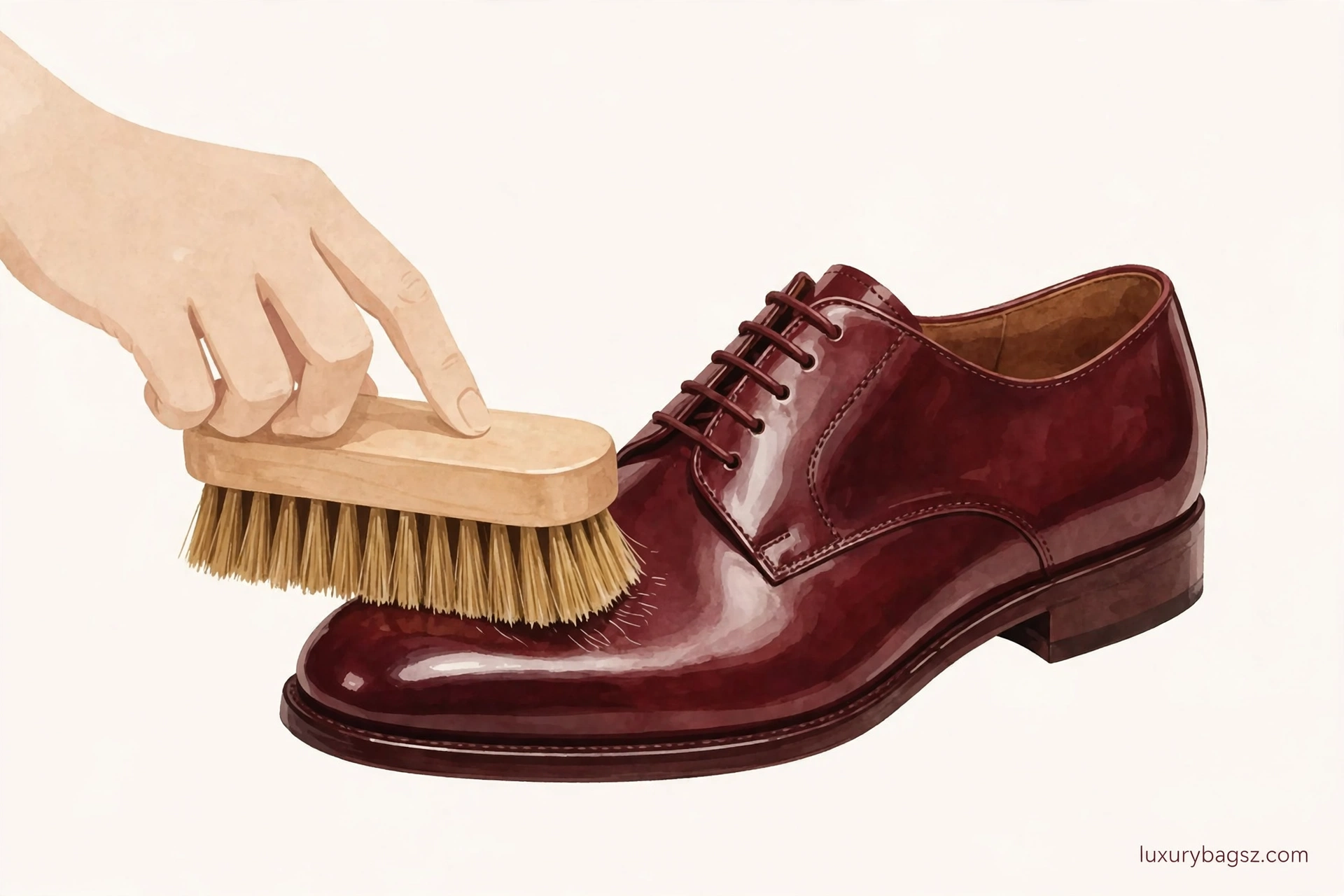
Brushing vigorously warms the oils and waxes already in the shell and brings them to the surface. That is why a dull pair can glow after a few minutes with a horsehair brush, with no polish at all.
Left alone in a closet, cordovan does not polish itself. It needs that brushing, and it still benefits from occasional light conditioning. The magic is in the material's oil content, not in any automatic process.
Myth: Cordovan Is Waterproof
Cordovan handles rain better than many leathers, because its dense fibres resist water entry, but it is not waterproof. Soaking it repeatedly will still darken it, stiffen it, and risk water marks.
Chrome-tanned leathers are generally more water-resistant than vegetable-tanned cordovan, since their tanning chemistry repels water better. Cordovan's strength is recovery: it often cleans up well after getting wet, if dried slowly at room temperature.
Never dry wet cordovan by a radiator or with a hair dryer. Stuff the shoes with paper, let them dry slowly, then brush. Fast heat is far more damaging than the rain itself.
How to Care for Cordovan Without Ruining It
The most common mistake is over-polishing. Cordovan is already rich in oils, so heavy wax polish builds up, dulls the surface, and hides the depth that makes cordovan attractive in the first place.
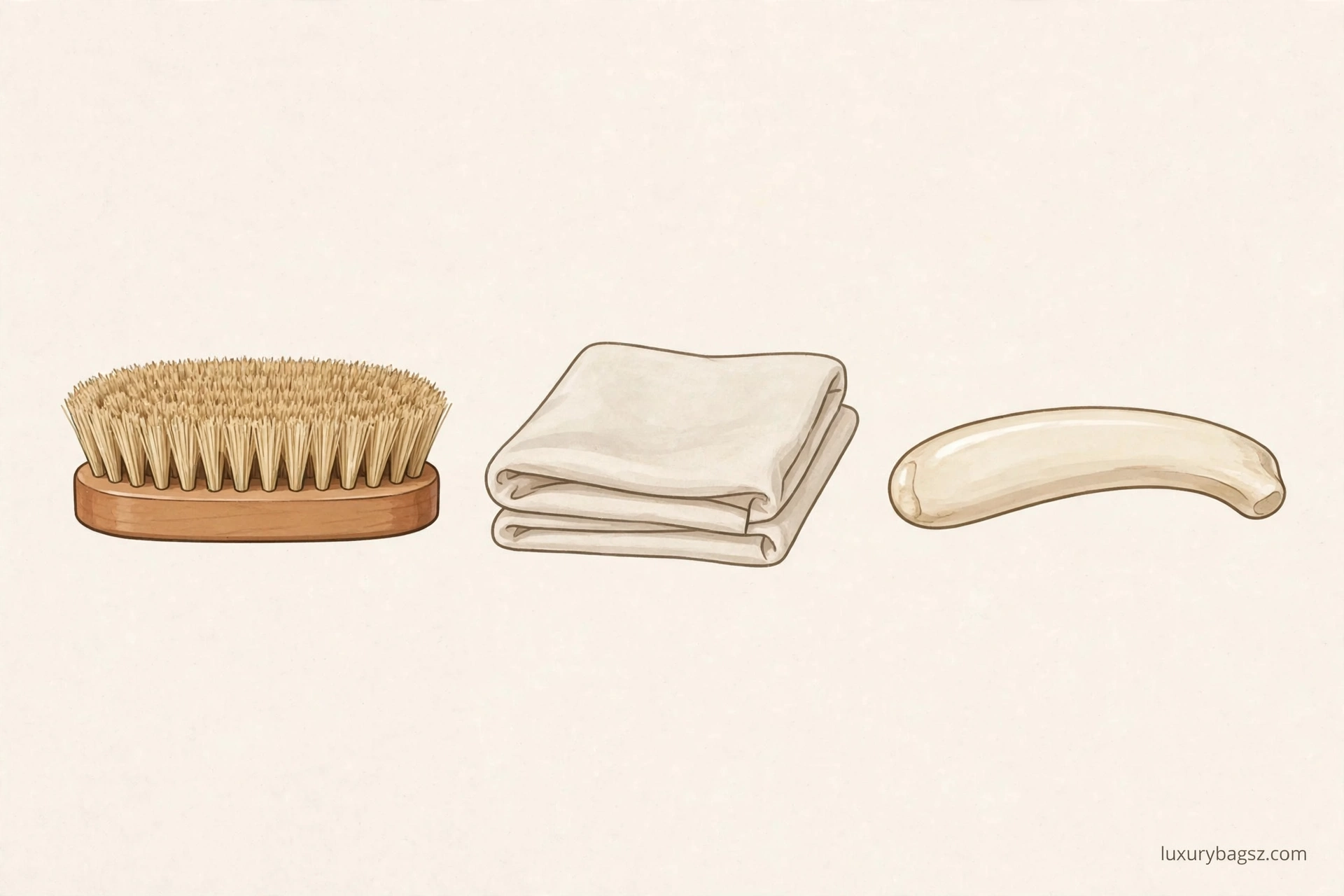
Brush after every few wears, wipe with a barely damp cloth when dusty, and use a deer bone or spoon handle to smooth rolls if they bother you. Press gently along the roll, never across it with force.
Condition sparingly, only when the leather feels dry, and use products made for cordovan or a very light neutral conditioner. Our Hermes leather boots care guide covers the slow-drying rule that applies to all good leather, cordovan included.
Cordovan vs Calfskin: Which Should You Buy?
Calfskin is more formal. Its fine grain and sharp shine suit strict business dress and black-tie occasions better than cordovan's glowing, rolling surface. If you need one formal shoe, buy calf first.
Cordovan is tougher against scuffs and lasts longer between resoles, and its patina deepens beautifully over years. If you already own calf dress shoes and want a long-lived casual or business-casual pair, cordovan earns its place.
Fit is the deciding detail. Cordovan stretches less than calf, so a tight pair will not break in to fit the way calf often does. Try the exact pair, walk in it, and do not buy on the promise that it will stretch.
Strength needs a correction too. Cordovan is dense and scuff-resistant, but its tensile strength is actually lower than calfskin's, because it is more brittle and has less give. Makers also warn it can tear like paper during lasting if pulled carelessly, so toughness does not mean it can take any abuse.
Is Shell Cordovan Worth It?
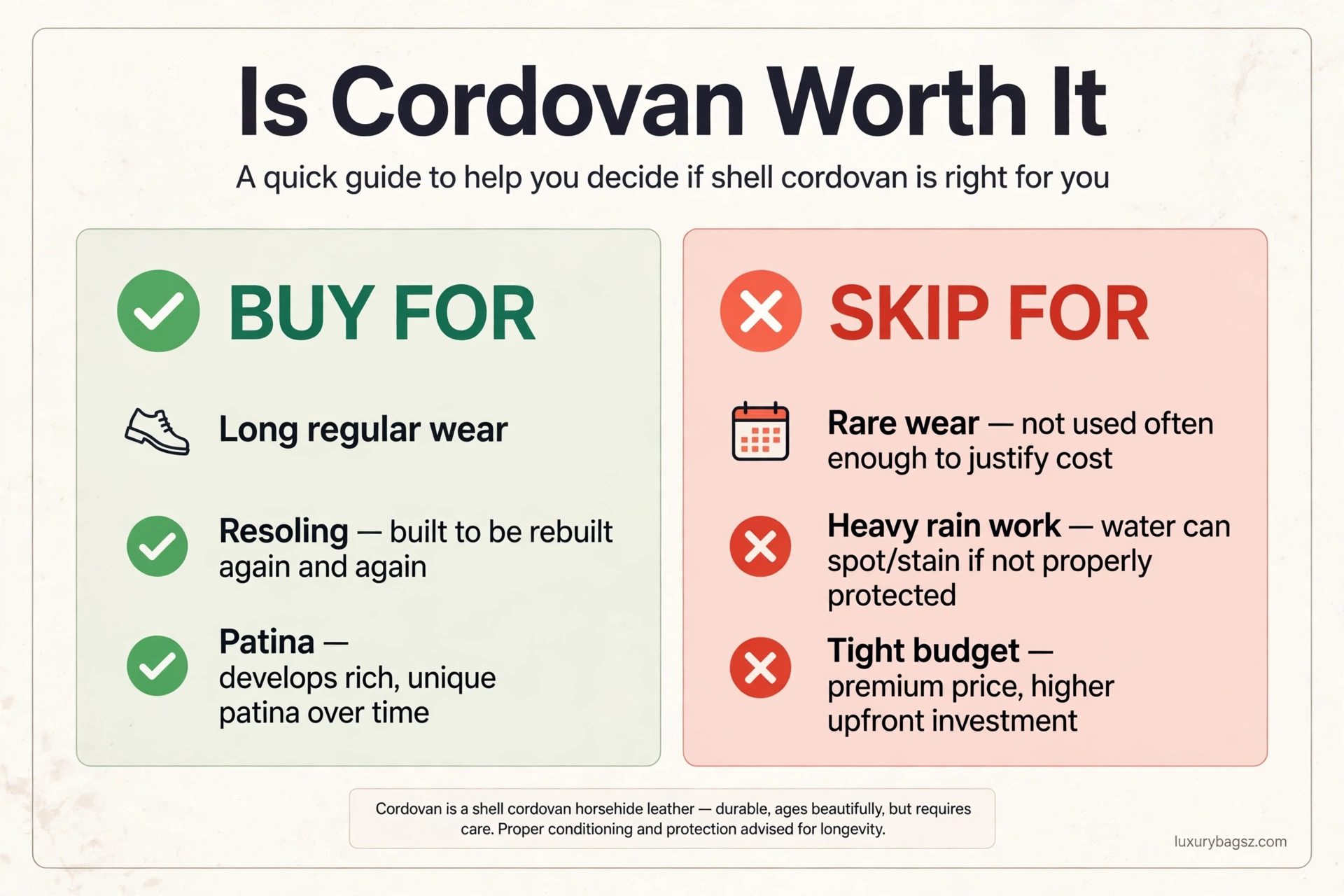
Worth it depends on your wearing pattern. If you wear dress shoes weekly, resole them, and keep them for a decade, cordovan's longevity and patina can justify the premium over calf.
If you wear dress shoes rarely, walk in heavy rain, or need a strict formal shoe, calfskin is the smarter buy. Cordovan's advantages only pay off with regular wear and proper care.
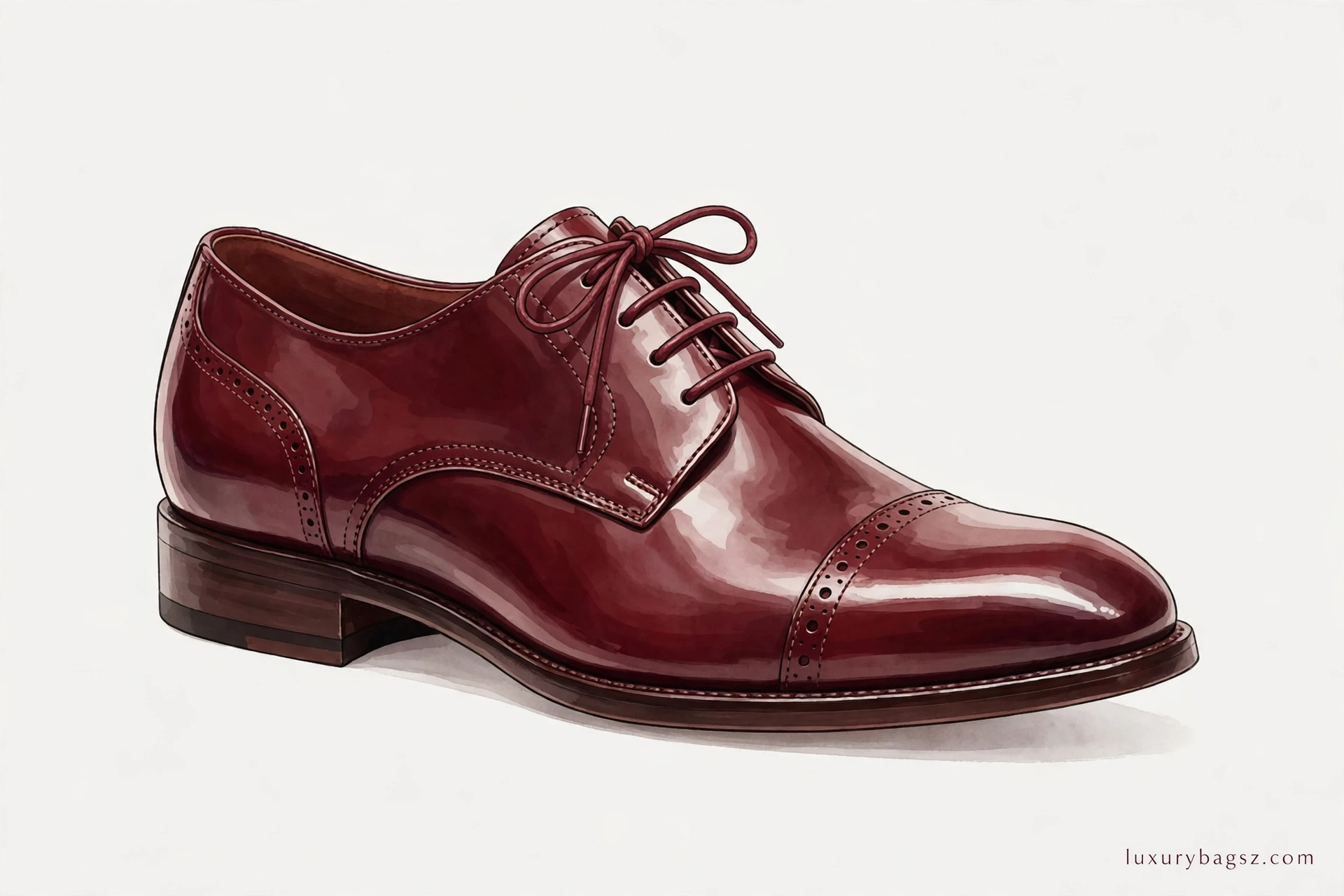
Also consider colour. Classic shades like burgundy, known as Color 8, and black hide wear best and develop the deepest patina. Pale or unusual cordovan colours show marks more and can be harder to match.
What to Check Before Buying Cordovan
Check the maker and tannery. Horween is the best-known cordovan tannery, but Japanese and European tanneries also make excellent shells. A maker that names its tannery is usually more trustworthy than one that just says genuine cordovan.
Check the price against calf from the same maker. A cordovan premium of roughly double the calf price is normal; a small premium should make you suspicious about whether the whole upper is really shell.
Check for rolls on display pairs, not creases. A shop pair with soft rolls is showing normal cordovan behaviour. A pair with cracked, flaking finish may have a heavy coating, so ask about the finish before you buy.
Frequently Asked Questions
Does shell cordovan crease?
No, not like calfskin. It forms soft rolls and ripples instead of sharp creases, because it has no grain layer to break. Lines that look like creases are usually a surface finish cracking.
Is shell cordovan really leather?
Practically, yes. It is tanned animal material used for shoes and goods. Purists note it comes from a membrane under the hide rather than skin, but that does not change how it wears.
Why is shell cordovan so expensive?
Each horse yields only two small shells, tanning takes around six months, and demand from enthusiasts is strong. Scarcity plus time plus labour explains the price.
Is shell cordovan waterproof?
No. It resists water better than many leathers and recovers well if dried slowly, but repeated soaking will mark and stiffen it. Treat it as water-resistant, not waterproof.
Does shell cordovan shine itself?
Not on its own. Brushing warms its natural oils and waxes to the surface, which restores shine without polish. That brushing step is essential; the shine does not appear without it.
How do you clean shell cordovan?
Brush with a horsehair brush, wipe with a barely damp cloth, and condition only sparingly. Avoid heavy wax polish, which builds up and dulls the surface.
Is cordovan better than calfskin?
It is tougher and longer-lived, but less formal and less stretchy. Calfskin suits strict formal wear better, while cordovan suits regular wear where patina and durability matter most.
Does cordovan stretch?
Much less than calfskin. Buy the fit you feel in the shop, and do not rely on cordovan stretching to fix a tight pair.
What colours age best in cordovan?
Burgundy, known as Color 8, and black develop the deepest patina and hide wear best. Lighter colours show marks more readily.
How long do shell cordovan shoes last?
With resoling and care, decades is realistic. The uppers often outlast several soles, which is why cordovan owners tend to resole rather than replace.
Conclusion
Shell cordovan earns most of its reputation, but not its magic. It rolls instead of creasing, it shines with brushing rather than by itself, and it lasts because it is dense, oily, and scarce, not because it is indestructible. Buy it for longevity and patina, buy calf for formality, and never pay a cordovan price for a pair whose fit you have not tested.