What to Know About St John: History, Knitwear, Sizing and Buying Guide
St John at a Glance
St John is an American luxury house built on one idea: knitwear that looks tailored, travels well, and flatters real bodies. Founded in California in 1962, it became famous for knit suits that offered the polish of a designer jacket without the stiffness of woven tailoring.
The house is best known for its Santana knit, a rayon and wool blend developed to hold its shape, resist wrinkling, and drape smoothly. That fabric, plus a loyal clientele of professional women, carried St John from a small family workshop to boutiques across the United States and beyond.
Today St John sells jackets, dresses, trousers, skirts, evening wear, and accessories, with a focus on timeless shapes rather than fast fashion trends. Prices sit in the luxury bracket, and the pre-owned market is large, which makes it one of the most accessible entry points into designer clothing.
Key Takeaways
- St John was founded in Irvine, California, in 1962 by Robert and Marie Gray.
- Its signature is Santana knit, a rayon and wool blend prized for shape retention and easy care.
- The knit suit, especially the classic jacket, is the house's defining piece.
- St John designs for professional and polished dressing, with timeless shapes over seasonal gimmicks.
- Sizing is American and tends to run true to generous, so measuring beats guessing.
- New pieces sit in the luxury price bracket, while pre-owned pieces are widely available at lower prices.
- Labels, knit quality, buttons, and lining are the key pre-owned checks.
- Knitwear needs gentle care: hand wash or dry clean as labelled, and never hang heavy knits.
A Family Workshop in 1960s California
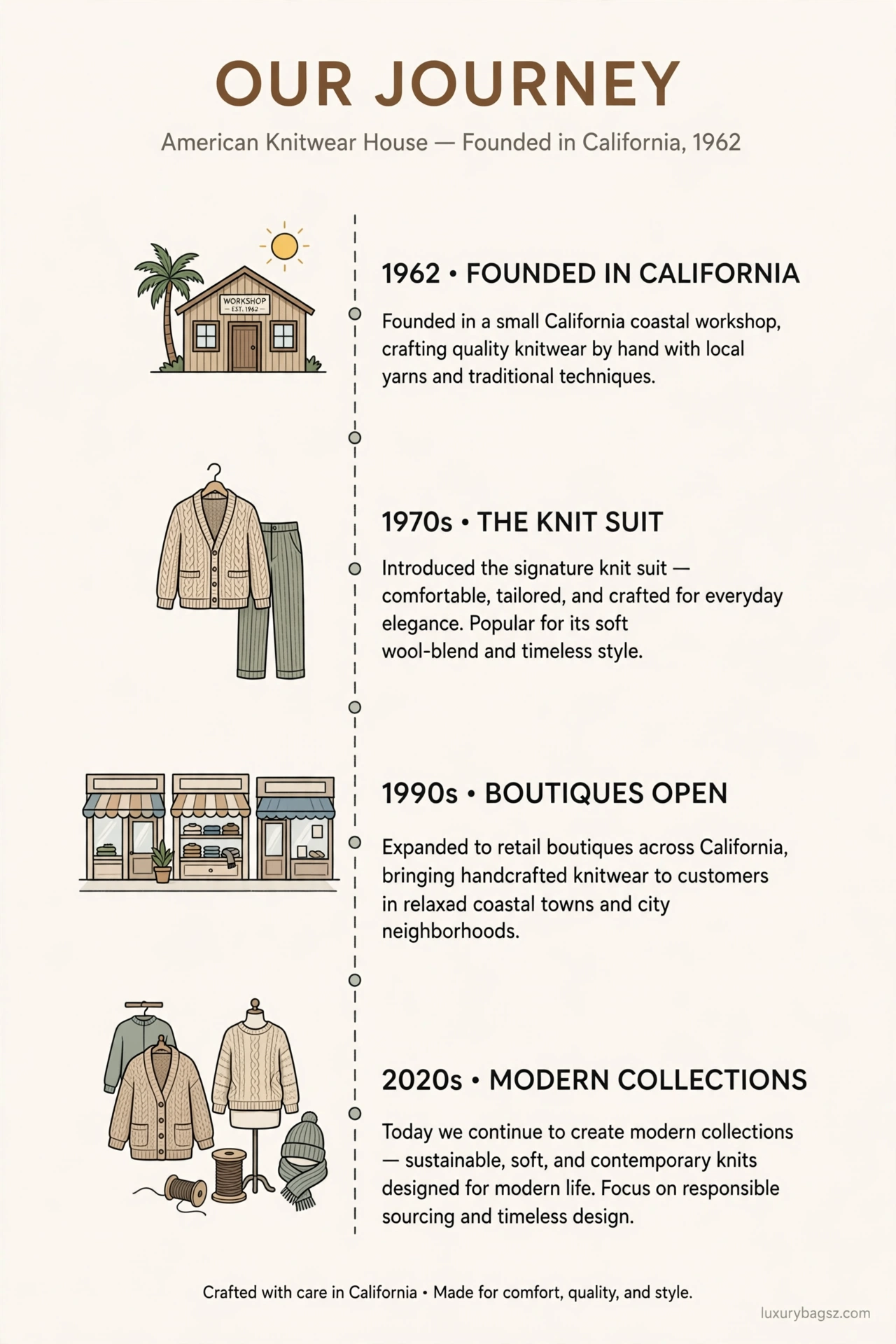
St John began in 1962, when Robert and Marie Gray founded the company in Irvine, California. Marie Gray had been knitting garments, and the couple saw an opportunity in well-made knitwear that combined comfort with a polished look. The early operation was small and hands-on, with a focus on quality that the founders refused to compromise.
California in the 1960s was not an obvious home for a luxury house, and that outsider position shaped the brand. St John did not follow Paris fashion cycles or New York trends. It built its reputation garment by garment, through women who wore the clothes to work, to events, and on television, and who came back for more.
Growth came through trunk shows and department stores before dedicated boutiques followed. Women liked that a St John suit could be worn all day without wrinkling, packed for travel, and still look sharp in the evening. Word of mouth among professional women did more for the brand than any advertising campaign.
The family character of the house lasted for decades. Marie Gray remained closely involved in design, and her daughter Kelly Gray later played a central role in the company. That continuity helped St John keep a consistent identity while many rivals chased every new trend.
How Santana Knit Made the Brand
Santana knit is the technical heart of St John, and it deserves explanation before any buying advice. It is a knitted fabric blending rayon and wool, developed to behave more like tailoring than like a sweater. It stretches gently, recovers its shape, and resists the wrinkling that plagues many woven suits.
The practical result is a jacket that feels like knitwear but reads as tailoring. It moves with the wearer, does not bind at the shoulders, and keeps a smooth line over the body. For women who spent long days in meetings, on planes, or on stage, that combination was genuinely new.
Santana knit also travels well, which became a selling point in its own right. A suit could be folded into a case, unpacked hours later, and worn with minimal pressing. In an era when business travel grew rapidly, that ease mattered, and it still matters to buyers who travel for work today.
Later St John fabrics expanded the idea. The house developed lighter knits for warmer climates, richer textures for evening, and blends with added stretch or sheen. The principle stayed the same: fabric should serve the wearer, not demand constant attention.
The Classic St John Suit, Piece by Piece
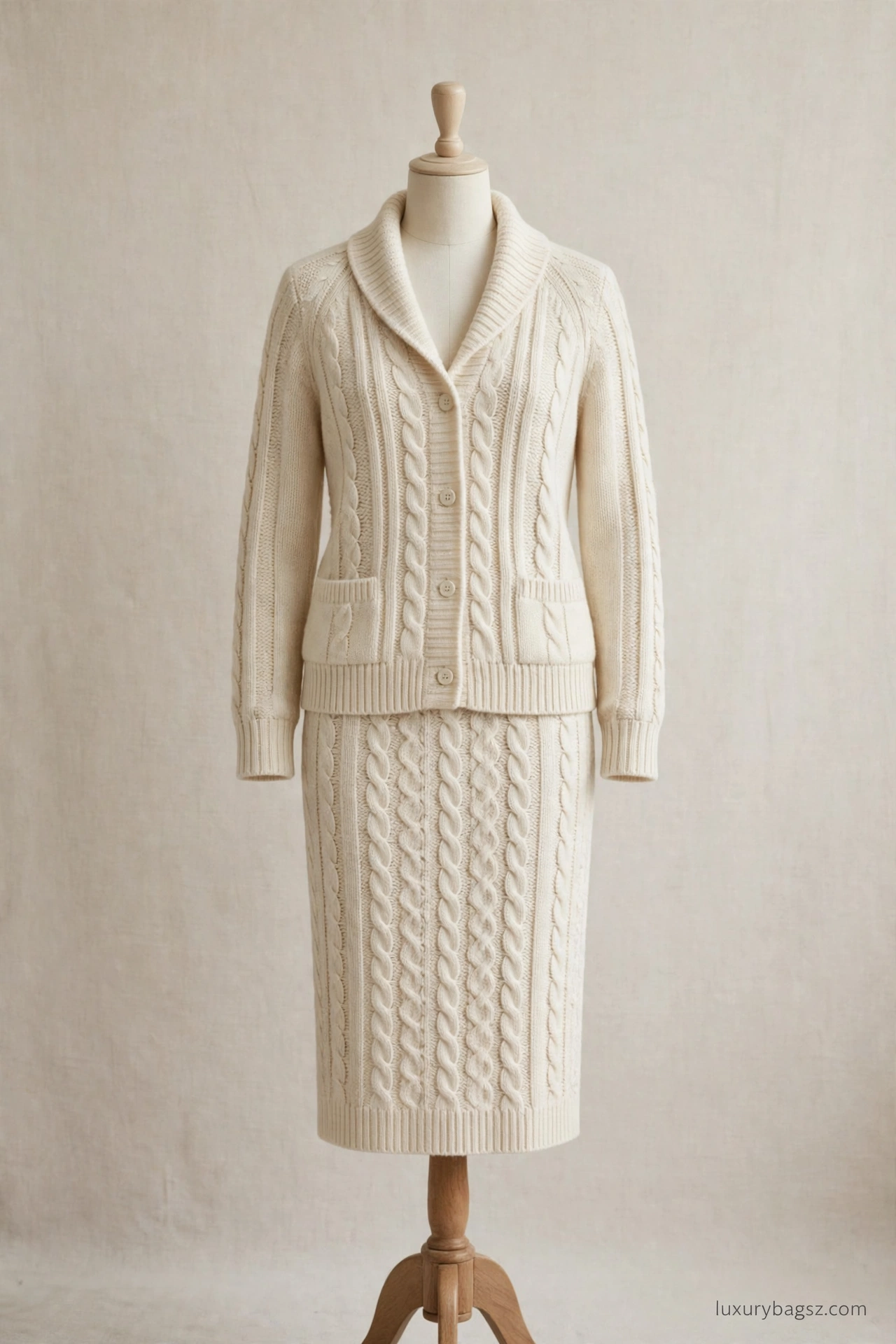
The classic St John suit usually means a collarless or jewel-neck jacket paired with a matching skirt or trousers. The jacket is the star: structured enough to look formal, soft enough to wear all day, and finished with the house's trademark details such as gold-tone buttons and neat edge trims.
Skirts are typically straight or gently flared, cut to sit at or just below the knee. Trousers offer a straighter, more modern line, and they suit buyers who prefer the ease of a trouser suit. Both pair with the same jacket, which makes the suit versatile across occasions.
Colour is part of the design language. St John is famous for ivory, cream, black, navy, and red, with seasonal colours layered on top. Ivory and cream suits are iconic, but they demand care and show wear faster, so many first-time buyers start with black or navy.
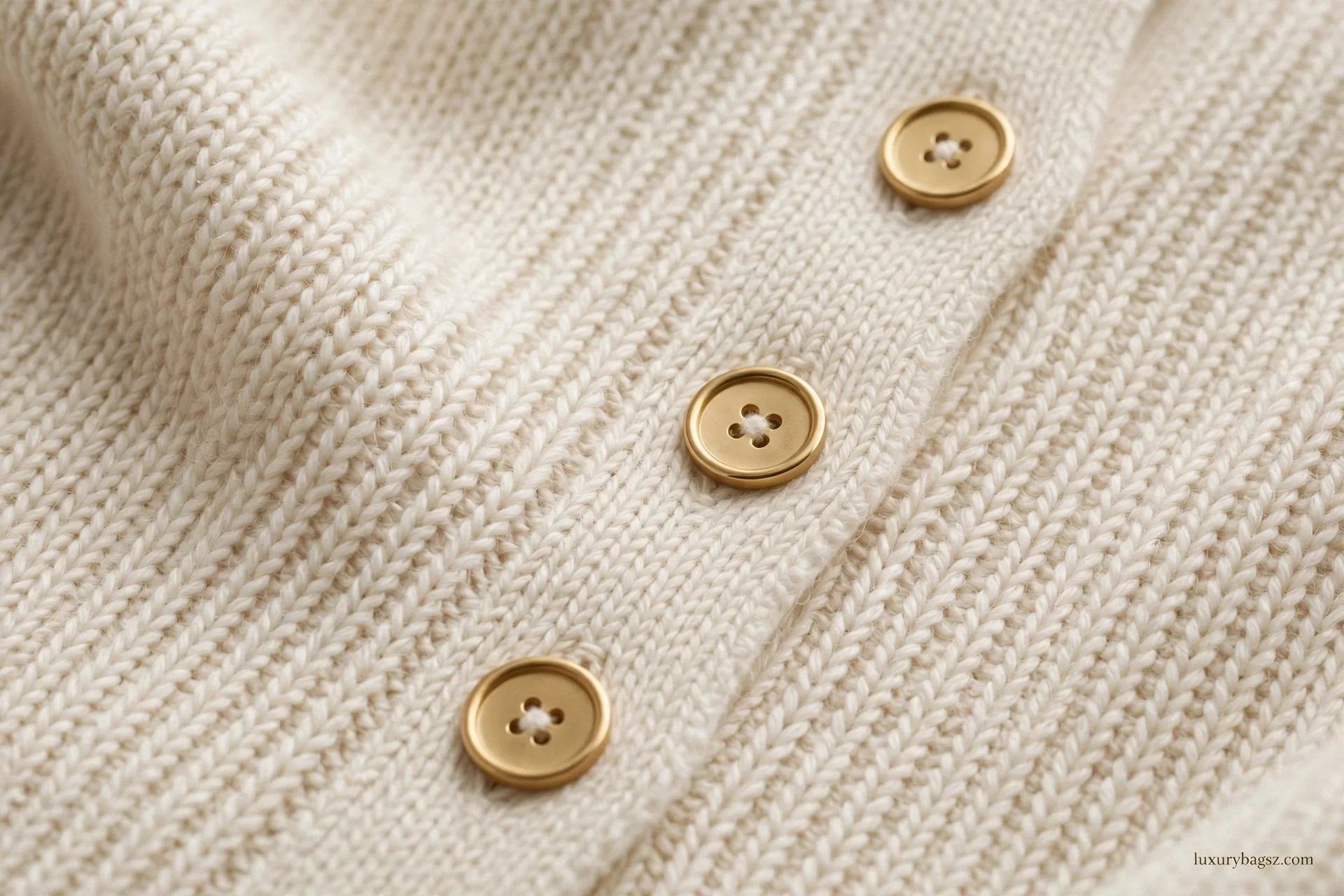
Trims and buttons deserve a close look when you shop. Genuine St John buttons feel solid, sit evenly, and match across the garment. Edge trims should lie flat, stitching should be even, and linings should be smooth rather than puckered. These details separate a well-made suit from a tired copy.

Fabrics Beyond Santana: What Else St John Makes
While Santana knit defines the house, St John works with a wider fabric library. Wool crepes, silk blends, sequinned knits, and evening fabrics all appear in the collections, especially for occasion and evening wear. Each fabric is chosen for drape and durability rather than novelty alone.
Evening pieces are a strong part of the range. Sequin and beaded knits, long gowns, and cocktail dresses use the same knit expertise in a more glamorous register. They suit buyers who want sparkle without stiffness, and they photograph well, which helped the brand's visibility at events.
Lighter knits serve warmer climates and summer dressing. These use finer yarns and more open knits, keeping the tailored look without the warmth of a heavier suit. If you live in a hot climate, ask specifically for lighter-weight pieces rather than assuming every St John suit will suit summer.
Fabric labels matter for care. Always read the label before washing, because blends vary and a method that suits one knit can damage another. When in doubt, dry clean, especially for suits, beaded pieces, and light colours.
Collections and Lines: Making Sense of the Names
St John's main line carries the house name and covers the full range of suits, dresses, and evening wear. It is the most widely stocked line and the one most pre-owned listings refer to. If a listing simply says St John, it usually means this main line.
Over the years the house has also offered more casual and sport-influenced lines, aimed at weekend and relaxed dressing. Names and availability have changed over time, so treat older line names as history rather than current shopping categories. The main line is the safest starting point for a new buyer.
Boutiques and department stores stock overlapping but not identical ranges. A boutique may carry exclusive colours or fuller size runs, while a department store may offer a narrower selection. Checking both, where possible, gives a fuller picture of what is available in your size.
Seasonal collections still follow a fashion calendar, but the shapes change slowly. A jacket bought five years ago rarely looks dated, because the house avoids extreme silhouettes. That conservatism is a strength for buyers who want longevity, and a weakness only if you want cutting-edge fashion.
The Full Range: From Work to Evening
Daywear is the core. Jackets, skirts, trousers, blouses, and dresses form the working wardrobe, designed to mix across outfits. A single jacket can pair with a skirt for a formal day, trousers for travel, and a dress for dinner, which makes cost per wear attractive despite the luxury price.
Evening wear adds glamour without abandoning knit comfort. Gowns, cocktail dresses, and embellished jackets suit galas, weddings, and formal dinners. These pieces often use sequins, beading, or metallic yarns, and they need gentler care and storage than daywear.
Accessories complete the range, including scarves, belts, and jewellery that complement the clothing. They are not the main reason to shop St John, but a scarf or belt in a signature colour can refresh an older suit without replacing it.
Outerwear, including knit coats and capes, rounds out the range for colder climates. These pieces use heavier knits and longer lengths, and they suit buyers who want the St John look outdoors as well as indoors.
Who Wears St John, and Why It Endures
St John's clientele has always skewed towards professional, polished women who value fit and ease over fashion risk. Politicians, television presenters, business leaders, and society figures have all worn the house, often because a St John suit photographs well and feels comfortable through a long day.
That visibility helped the brand without celebrity campaigns. When a presenter wears the same style of suit day after day, viewers notice the consistency, and the brand becomes shorthand for reliable polish. St John leaned into that reputation rather than chasing youth trends.
The house also endures because its clothes solve a real problem. Many women need to look formal without feeling restricted, and knit tailoring does that better than stiff woven suits. Comfort is not a luxury extra here; it is the product.
Younger buyers sometimes discover St John through pre-owned shops or family wardrobes, and they often keep the classic shapes while styling them more casually. A vintage St John jacket with jeans is a common second life for the brand, and it shows how adaptable the designs are.
Prices, Value, and Cost per Wear
New St John prices sit firmly in luxury territory. Jackets and suits typically run into four figures in major currencies, dresses vary widely by fabric and embellishment, and evening pieces climb higher still. Exact prices change by season and market, so check current boutique or department store listings before budgeting.
Cost per wear changes the picture. A suit worn twice a week for several years costs far less per outing than a cheaper suit that loses shape after a season. St John's shape retention and timeless design support that maths, provided the fit is right and care is followed.
Pre-owned prices are far lower, often a fraction of retail, because supply is plentiful. That makes St John one of the best-value designer labels on the resale market. A careful buyer can build a wardrobe of classic pieces for the price of one new suit.
Value retention is modest compared with leather handbags. St John clothes hold value best in classic colours, popular sizes, and excellent condition, but they are not financial investments. Buy them to wear, and treat any resale return as a bonus.
Sizing: How St John Fits, and How to Measure
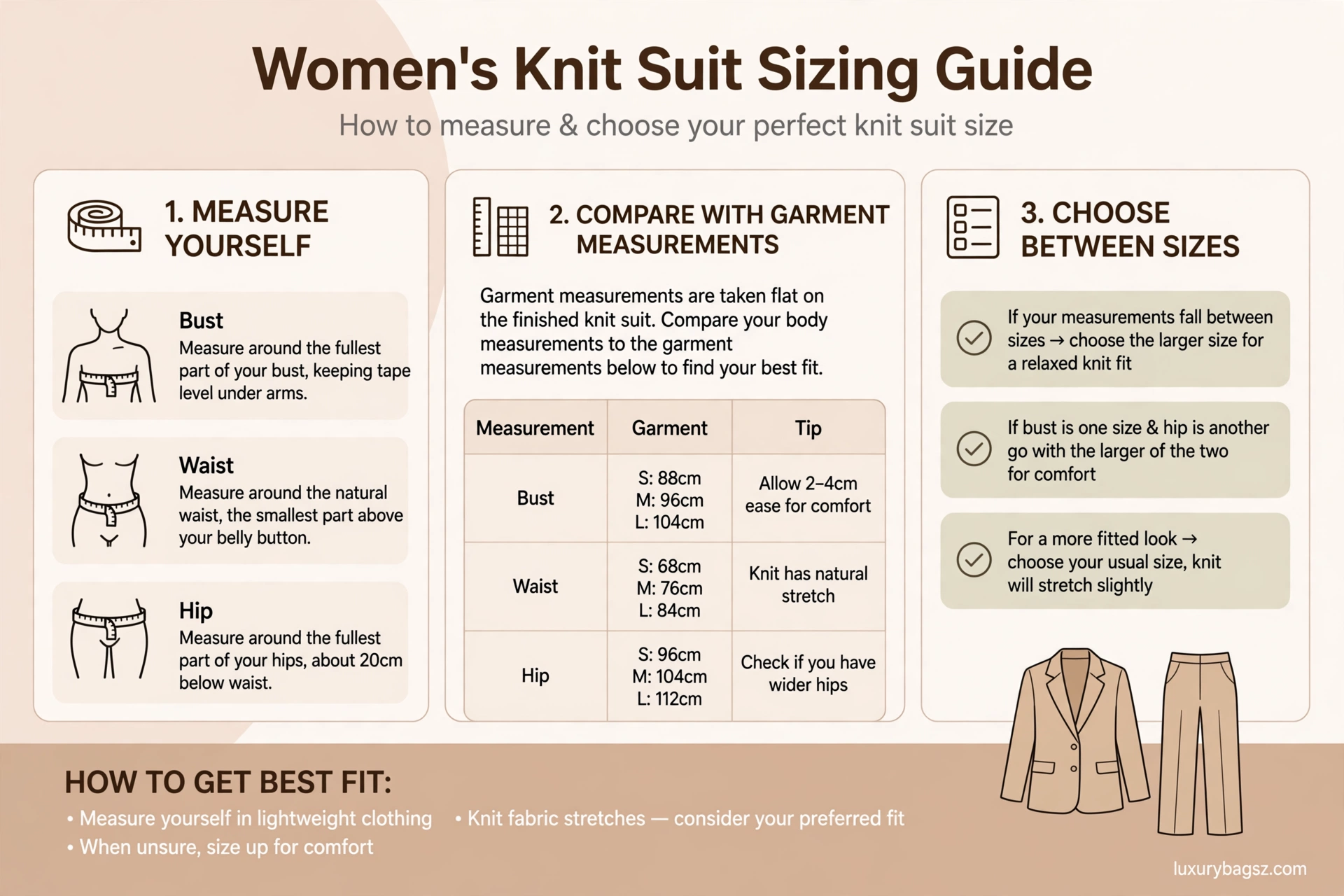
St John uses American sizing, and the fit tends to run true to slightly generous, especially in knit jackets that stretch gently. Many buyers wear their usual American size, while some size down in jackets if they prefer a closer fit. Body shape matters more than the number alone.
Measure before you buy, especially pre-owned. Take bust, waist, and hip measurements over light clothing, and compare them with the seller's garment measurements, not just the label size. Knit stretches, so a garment measurement taken flat can mislead if you do not account for stretch and ease.
Jacket fit deserves special attention. Check shoulder seams, which should sit at your natural shoulder, and button closure, which should close without pulling. A jacket that pulls at the button is too small, even if the shoulders fit, because knit will stretch further with wear.
Skirt and trouser fit follows similar rules. Waistbands should sit comfortably without digging, and hems should fall where you want them, since shortening a lined knit skirt is possible but adds cost. If you are between sizes, choose based on the hardest area to alter, usually shoulders for jackets and waist for skirts.
Petite and plus options have varied over the years, so availability depends on the era and line. Pre-owned listings sometimes note petite cuts, which have shorter sleeves and bodies. Always confirm length measurements rather than assuming a petite label means a perfect fit.
Styling St John for Work, Travel, and Evenings
For work, pair a classic jacket with its matching skirt or trousers and a simple blouse. Keep jewellery understated and shoes polished but comfortable. The suit does the talking, and over-accessorising fights its clean lines.
For travel, choose a darker colour, pack the suit folded rather than rolled tightly, and hang it on arrival to let knit recover. A St John suit is one of the few tailored options that genuinely survives a flight, but it still benefits from a garment bag and a little care.
For evenings, swap the day blouse for a silk top or a sequinned piece, change shoes, and add bolder jewellery. The same jacket that looked boardroom-ready at noon can look gala-ready at night, which is why many buyers pack one jacket for a whole trip.
For casual days, try a St John jacket with dark jeans and simple flats or loafers. The contrast between knit tailoring and denim works well, and it gives older jackets a second life. Keep the rest of the outfit simple so the jacket stays the focus.
Buying Pre-Owned: Checks That Matter
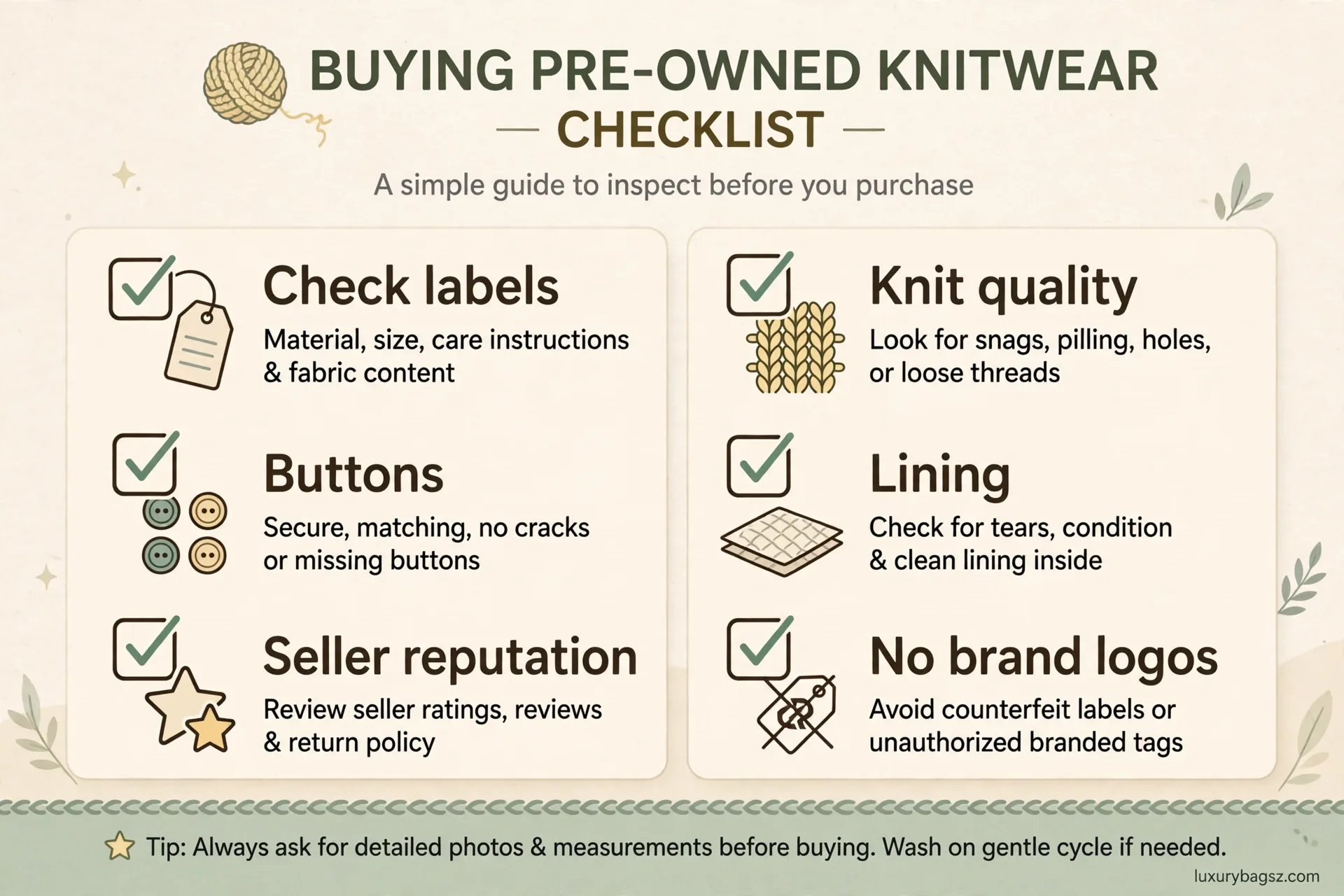
Pre-owned is where most new St John buyers start, and the checks are straightforward. Begin with labels: genuine St John labels are neatly sewn, clearly printed or woven, and consistent with the era of the garment. Faded or crooked labels, or labels that do not match known styles, deserve a closer look.
Knit quality is the next check. The fabric should feel dense and smooth, with even stitches and no thinning at elbows or seat. Pilling happens with wear, but heavy pilling, holes, or stretched-out areas suggest a garment near the end of its life.
Buttons and trims tell a story too. Buttons should match, sit securely, and show the expected finish. Missing or mismatched buttons are replaceable, but they should be reflected in the price. Check linings for stains, tears, and odours, which are harder to fix than a loose button.
Seller reputation matters as much as the garment. Buy from dealers with clear photos, garment measurements, and return policies. Our general guides on buying pre-owned safely and on authenticating pre-owned designer pieces apply here too, even though they focus on bags, because the seller checks are the same.
Caring for Knitwear So It Lasts
Care starts with the label, and St John labels usually recommend dry cleaning for suits and embellished pieces. Follow that advice for anything you want to keep looking sharp, and do not assume a knit can go in the machine just because it feels like a sweater.
Storage is just as important. Fold knitwear rather than hanging heavy pieces, which stretch under their own weight. Use padded hangers for jackets only, keep garments in breathable covers, and avoid overcrowding, which creases knits and strains buttons.
Stain treatment should be prompt and gentle. Blot, do not rub, and take the garment to a cleaner sooner rather than later, especially for light colours. Home stain removers can damage dyes and trims, so test carefully or leave it to a professional.
Moths and sunlight are quiet enemies. Store clean garments, use cedar or lavender sachets rather than harsh chemicals, and keep suits out of prolonged direct sun, which fades colours unevenly. With these habits, a St John suit can last for many years.
St John Versus Its Closest Rivals
Buyers often compare St John with Escada, Akris, and Lafayette 148, all of which serve polished, professional women. Escada leans more colourful and fashion-forward, Akris leans more architectural and Swiss-minimal, and Lafayette 148 leans more understated and New York in feel. St John sits between them: more relaxed than Akris, more classic than Escada.
Against Paris houses such as Chanel, St John offers knit comfort at a lower price and with easier care. Chanel's tweed jackets are iconic, but they demand more careful handling and cost far more. St John is the practical cousin: less famous, more wearable day to day.
Against contemporary brands, St John offers longevity and fit consistency. A contemporary suit may be cheaper and trendier, but it rarely matches St John's shape retention over years. Buyers who prioritise cost per wear often come back to St John after trying cheaper options.
Choose St John if you want polished, comfortable, timeless tailoring. Choose a rival if you want sharper fashion edges, louder colours, or a lower price point for a single season.
Common Mistakes, and How to Avoid Them
The first mistake is buying the wrong size because knit stretches. A jacket that feels snug in the shop will not feel better after a day of wear; it will feel tighter at the button and looser at the shoulders. Fit for the button and the shoulder, not for hope.
The second mistake is buying ivory as a first suit without a care plan. Ivory looks beautiful and shows everything, from makeup to chair marks. Start with black or navy, learn the care routine, and add ivory once you know you can maintain it.
The third mistake is machine-washing a suit to save money. One wrong wash can shrink, pill, or distort a knit suit beyond repair, wiping out any saving. Dry cleaning costs less than replacement.
The fourth mistake is ignoring garment measurements pre-owned. Label sizes vary by era, and knit stretches with wear, so two jackets with the same label can fit differently. Always compare measurements, and ask for more photos when unsure.
The fifth mistake is over-collecting one colour. A wardrobe of black suits is safe but dull, and it hides the versatility of the range. Add one colour or one evening piece once the classics are covered, and your wardrobe will work harder.
Is St John Still Relevant Today?
St John faces a different world from the one it grew up in. Workplaces are more casual, remote work has reduced daily suit wearing, and younger buyers often prefer relaxed tailoring. The house has responded with softer shapes, more casual pieces, and a broader range, while keeping its knit expertise.
Relevance, for St John, does not mean chasing every trend. It means serving the occasions where polish still matters: important meetings, events, weddings, television, and formal travel. Those occasions have not disappeared, even if they are less daily than they once were.
The pre-owned market keeps the brand alive for new audiences. Young buyers who would not pay full retail discover St John second-hand, style it casually, and sometimes become full-price buyers later. That pipeline matters, and it rewards the house's timeless design.
For a buyer today, St John remains a sound choice if your life includes polished occasions and you value comfort and longevity. It is less compelling if you never dress formally, in which case a single versatile jacket may serve you better than a full suit wardrobe.
St John Through the Decades
The 1960s established the idea: knitwear could be polished. Early St John pieces were simple, well-made, and aimed at women who wanted to look smart without fuss. The house grew steadily, building a reputation in California before expanding nationally.
The 1970s and 1980s brought scale. As more women entered professional life, demand for work-appropriate tailoring grew, and St John's suits fitted that moment perfectly. The brand became a fixture in department stores and in the wardrobes of women who needed to look authoritative every day.
The 1990s were a peak period for the classic suit. Television presenters, politicians, and business leaders wore St John regularly, and the ivory suit became a visual shorthand for polished professionalism. Boutiques expanded, and the house's identity felt settled and confident.
The 2000s brought ownership changes and new competition, as workplaces relaxed and fashion fragmented. St John adapted by softening shapes, broadening its range, and investing in its boutiques, while keeping the knit expertise that set it apart. The house did not reinvent itself, but it did loosen up.
Today, St John sits as a heritage American luxury brand with a loyal core audience and a growing pre-owned following. Its history is an asset: buyers trust a house that has made the same kind of garment well for over sixty years.
Building a St John Capsule Wardrobe
A capsule starts with one suit: jacket plus skirt or trousers in black or navy. That suit covers work, formal events, and travel, and it pairs with blouses and tops you already own. Choose the skirt or trouser based on your daily life, not on a photo.
Add a second jacket in a contrasting colour, such as ivory or red, once the first suit is working hard. A second jacket multiplies outfits without multiplying cost, because it pairs with the first suit's bottoms and with jeans or simple trousers.
Add one dress next, ideally a knit dress that works for work and dinner. A simple, well-fitting St John dress is more versatile than an embellished one, and it layers under a jacket for formal days. Choose a colour that suits your existing wardrobe.
Finish with one evening piece only if your life includes formal occasions. A sequinned jacket or a long gown is a pleasure, but it earns its place only if you wear it. Otherwise, spend the money on better shoes or a second pair of trousers.
St John for Weddings, Events, and Special Occasions
St John suits are popular for weddings, especially for mothers of the bride and groom, because they photograph well, feel comfortable through a long day, and look formal without being stiff. Choose a colour that complements the wedding palette without matching the bridal party exactly.
For evening events, embellished knits offer sparkle with comfort. A sequinned jacket over a simple dress is easier to wear than a fully beaded gown, and it can be reused across events. Check embellishment security before buying, and handle beaded pieces gently.
For funerals and sombre occasions, a black St John suit is a respectful and reliable choice. Its clean lines and modest cut suit the occasion, and its comfort matters on a difficult day. Keep accessories simple and understated.
For television and public speaking, St John's solid colours and smooth knits work well on camera. Avoid busy patterns and very shiny fabrics, which can distract on screen, and test the outfit under similar lighting before the day.
A First-Time Buyer's Checklist
Start by defining the occasion: work, event, travel, or everyday polish. That single decision narrows the range from dozens of pieces to a handful, and it prevents impulse buys that never get worn.
Set a budget that includes care costs. Dry cleaning, alterations, and proper storage all cost money, and a suit bought cheaply pre-owned still needs care. Budget for the whole ownership, not just the purchase price.
Measure yourself and the garment, try on in person where possible, and check shoulders, button closure, and hem length. If buying pre-owned, ask for garment measurements, close photos of labels, buttons, and linings, and a clear return policy.
Finally, sleep on a full-price purchase. St John pieces are not limited editions that vanish overnight, and a day of reflection usually confirms or corrects an impulse. A suit you still want tomorrow is a suit you will wear for years.
Where to Shop St John Today
St John is sold through its own boutiques, department stores, and authorised online retailers, with availability varying by country. Boutiques offer the fullest range and the most knowledgeable staff, while department stores offer convenience and occasional promotions. Both are worth visiting before a first purchase.
Online, authorised retailers list current collections with size and colour details, which helps buyers who cannot reach a store. Check return policies carefully, because knit fit can surprise, and a free or easy return removes the risk from an online order.
Pre-owned channels include consignment stores, resale platforms, and auction sites, where classic pieces appear regularly. These channels suit buyers who know their size and want value, but they demand the checks covered earlier: labels, knit, buttons, linings, and seller reputation.
Whichever channel you choose, keep receipts and care for the garment well. Good records help with future resale, and good care keeps the piece looking new. A St John suit bought thoughtfully, from the right place, is a wardrobe asset for years.
Frequently Asked Questions
When was St John founded?
St John was founded in 1962 in Irvine, California, by Robert and Marie Gray. It began as a small knitwear business and grew through trunk shows and department stores.
What is Santana knit?
Santana knit is St John's signature rayon and wool blend. It holds its shape, resists wrinkling, drapes smoothly, and feels like knitwear while looking like tailoring.
Does St John sizing run true to size?
St John generally runs true to slightly generous in American sizing, with knit stretch giving some flexibility. Measure bust, waist, and hip, and compare with garment measurements pre-owned.
Is St John a luxury brand?
Yes, St John is a luxury house with luxury pricing for new pieces. Its pre-owned market is large, which makes it more accessible than many luxury labels.
Can you machine wash St John?
Most St John suits and embellished pieces should be dry cleaned as labelled. Some simpler knits may allow gentle hand washing, but always read the label first.
What is the most iconic St John piece?
The classic knit suit jacket, often in ivory, cream, black, or navy with gold-tone buttons, is the most iconic piece. It defines the house more than any single dress or accessory.
Is pre-owned St John worth buying?
Yes, pre-owned St John often offers excellent value, since classic pieces hold their shape and design well. Check labels, knit quality, buttons, and linings before buying.
How do you store St John knitwear?
Fold heavy knits rather than hanging them, use padded hangers for jackets, and store in breathable covers away from sun and moths. Keep garments clean before storing.
Does St John still make suits?
Yes, suits remain central to St John, alongside dresses, evening wear, and more casual pieces. Shapes have softened over time, but the knit suit is still the house signature.
Is St John good for travel?
Yes, Santana knit travels well, resists wrinkling, and recovers after packing. Use a garment bag, hang on arrival, and choose darker colours for frequent travel.
Final Verdict
St John is for buyers who want polish without stiffness: a California house that turned knitwear into real tailoring and kept that idea for over sixty years. Start with a classic jacket or suit in black or navy, measure carefully, and buy pre-owned from a vetted seller if you want value. Care for it gently, fold heavy knits, and dry clean suits, and it will repay you with years of comfortable, confident dressing.