

Gucci Bamboo Bag Guide: History, Bamboo 1947 and How to Buy
The Bamboo Bag in Brief
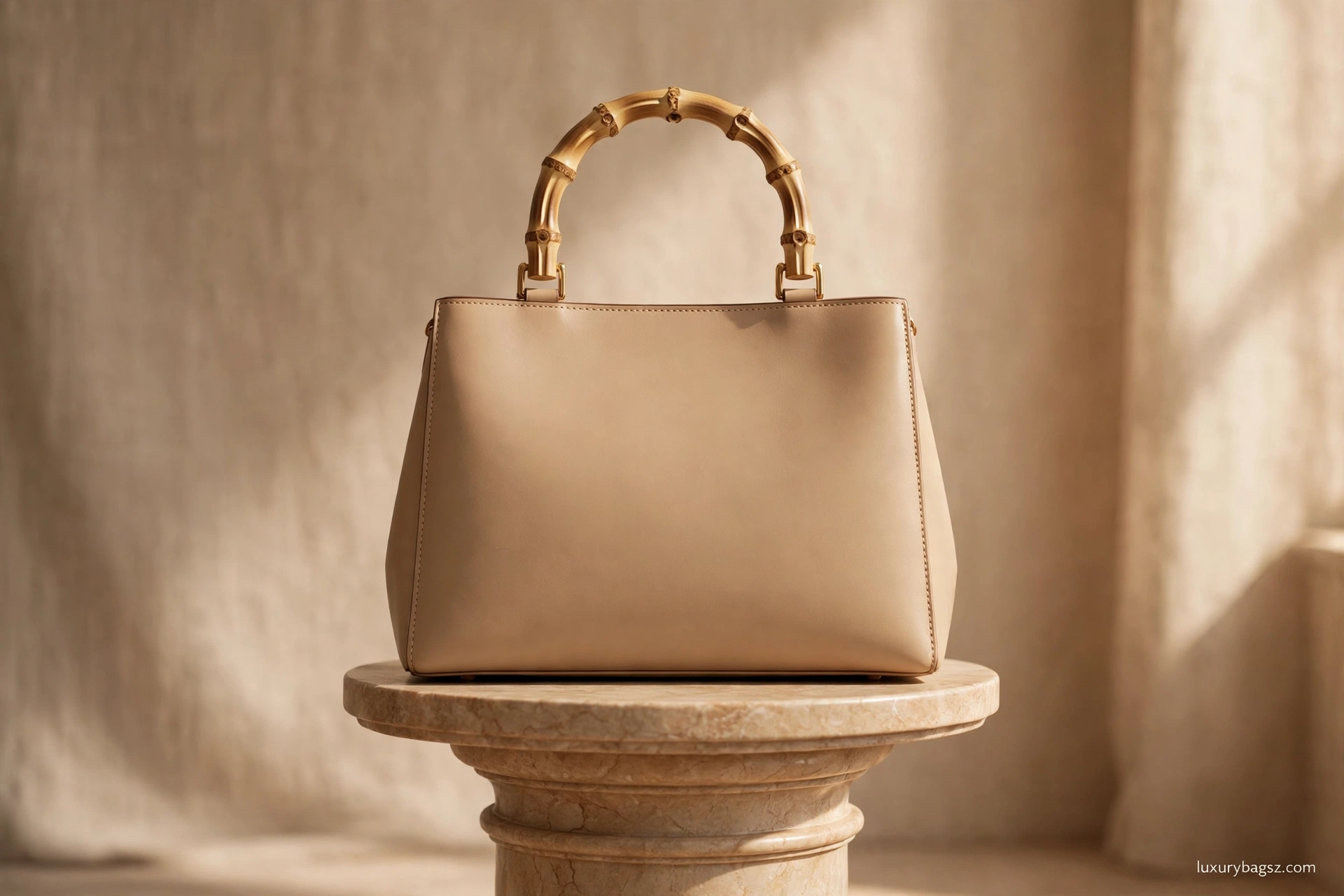
The Gucci Bamboo bag is the house's great wartime invention turned permanent icon: a structured leather handbag crowned with a curved handle made from a single piece of bamboo, first made in 1947. Born from post-war material shortages, it became a favourite of Hollywood stars and the international jet set, and it remains in production today as the Bamboo 1947.
What makes it special is the handle. Each one is chosen, softened over an open flame, bent by hand into its curve, lacquered and baked to a golden-brown shine, and no two are exactly alike. That craft, plus a saddle-inspired silhouette, gives the Bamboo a warmth and character that metal-handled bags cannot match.
Today's Bamboo 1947 keeps the archival shape with modern sizes, leathers and a detachable shoulder strap for versatility. This guide covers its history, its craft, its current range, its prices, how to style it, how to authenticate it, and how to buy it pre-owned with confidence.
Key Takeaways
- The Bamboo bag debuted in 1947, using bamboo because post-war materials were scarce.
- Each handle is bent by hand over a flame, lacquered and baked; no two match exactly.
- The original was a small structured tote in pigskin with a bamboo handle.
- Hollywood icons including Ingrid Bergman and Elizabeth Taylor made it famous.
- The modern Bamboo 1947 adds a detachable shoulder strap and new sizes.
- Small Bamboo 1947 bags cost around $4,900; larger sizes cost more.
- Check bamboo grain, stitching, hardware and serial tags when buying pre-owned.
Why Bamboo? A Wartime Invention
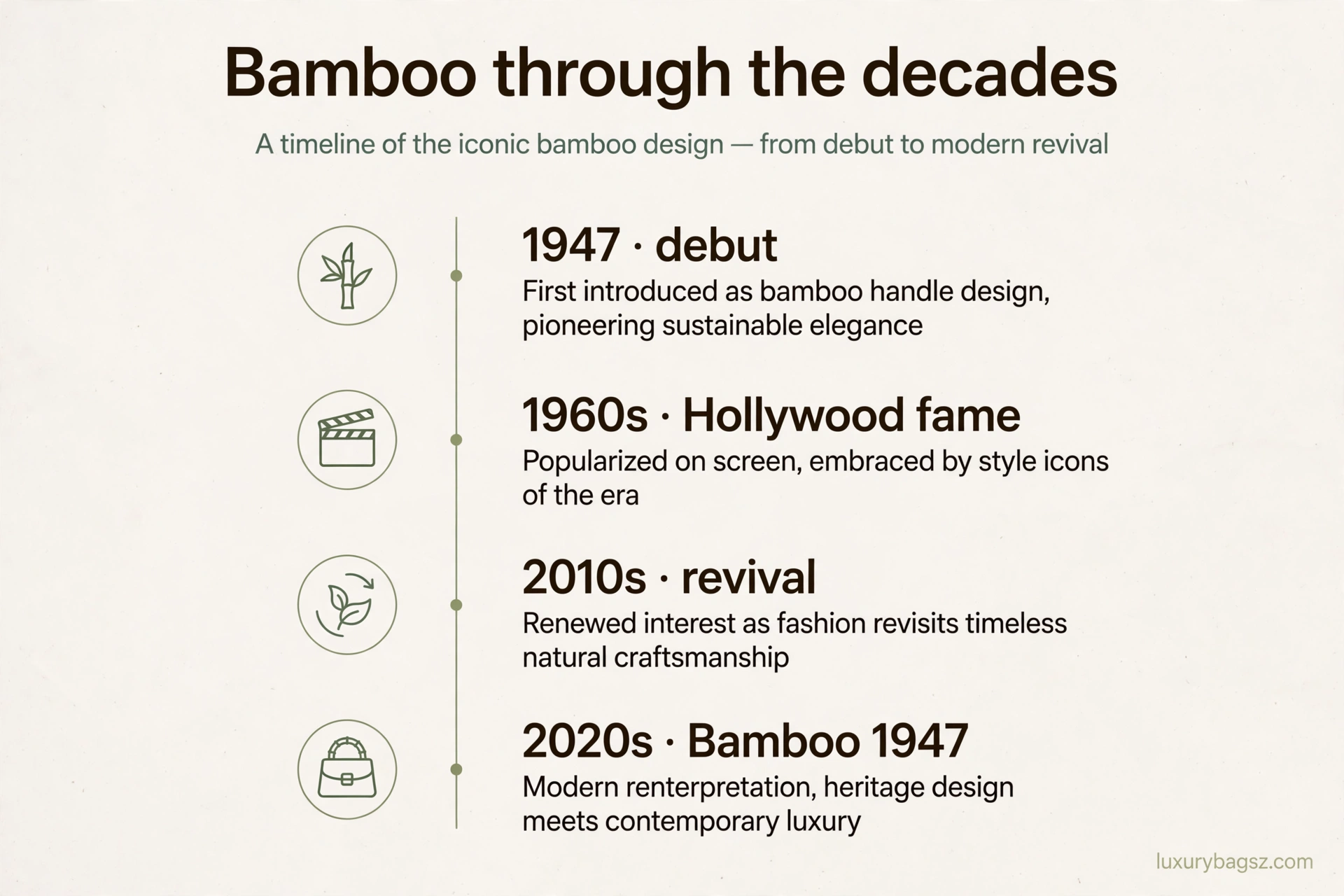
Gucci was founded in Florence in 1921 by Guccio Gucci, and by the end of the Second World War the house faced the same shortages as every Italian maker: leather, metal and traditional fittings were hard to obtain. The answer was characteristically inventive: use bamboo, a light, strong and plentiful natural material, for the handle of a new handbag.
The first Bamboo bag appeared in 1947, a small structured tote in pigskin leather with a single curved bamboo handle and a tasselled closure. Its shape recalled a horse saddle, nodding to Gucci's equestrian roots, while the handle gave it an unmistakable silhouette. What began as necessity quickly became identity, and the Bamboo became one of the house's defining designs.
For the wider house story, the guide to what to know about Gucci places the Bamboo among the brand's other icons, from the Horsebit to the Jackie. The Bamboo stands out because its signature element is not a logo or a metal fitting, but a piece of nature shaped by hand.
From Hollywood Fame to Modern Revival
The Bamboo bag's fame spread through the 1950s and 1960s, when it was carried by Hollywood leading ladies and the international jet set. Ingrid Bergman and Elizabeth Taylor were among its famous admirers, and the bag's blend of Italian craft and natural eccentricity suited an era that prized both glamour and individuality. It became a status symbol without shouting about it.
Later creative directors returned to the Bamboo repeatedly, keeping the handle while updating the body, leathers and proportions for each era. The bag never truly left the range, but its prominence rose and fell with fashion's appetite for heritage, and each revival brought it to a new generation of owners who valued its story as much as its look.
The modern chapter is the Bamboo 1947, a faithful reinterpretation of the archival top-handle style with contemporary sizing and finishes. Like the Gucci Jackie 1961 guide shows for another revived icon, Gucci's archive revivals work because the original design was strong enough to survive untouched at its core.

How the Bamboo Handle Is Made
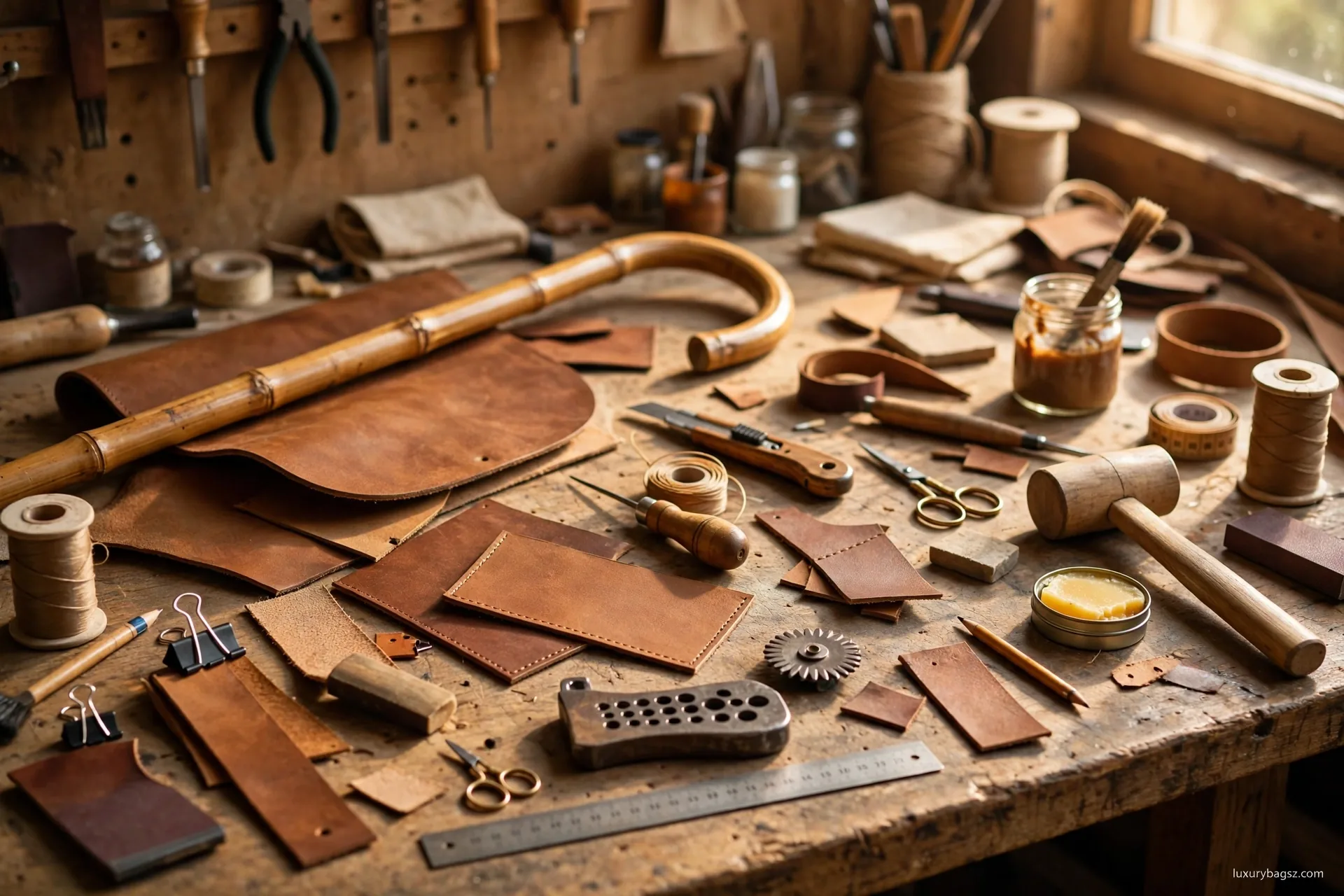
Making a Bamboo handle is slow, skilled work, and the house describes a process of hundreds of steps. It begins with choosing an unblemished piece of bamboo, which is softened and worked over an open flame until it can be bent into the signature curve without cracking. The shaped handle is then coated in multiple layers of lacquer and baked to achieve its shiny golden-brown finish.
That handmade process explains why no two handles are identical: grain, tone and tiny natural variations differ from cane to cane, and collectors prize that individuality. It also explains the handle's feel, which is warm and light in the hand compared with metal, and its strength, since bamboo is remarkably resilient for its weight when properly treated.
Care follows from the material. Keep the handle away from prolonged damp, avoid knocking it against hard surfaces, and wipe it with a soft dry cloth. The leather body needs the usual gentle care, but the handle is the part to protect most, since a cracked or badly refinished handle is hard to restore convincingly.
Bamboo 1947: Sizes, Prices and Versions
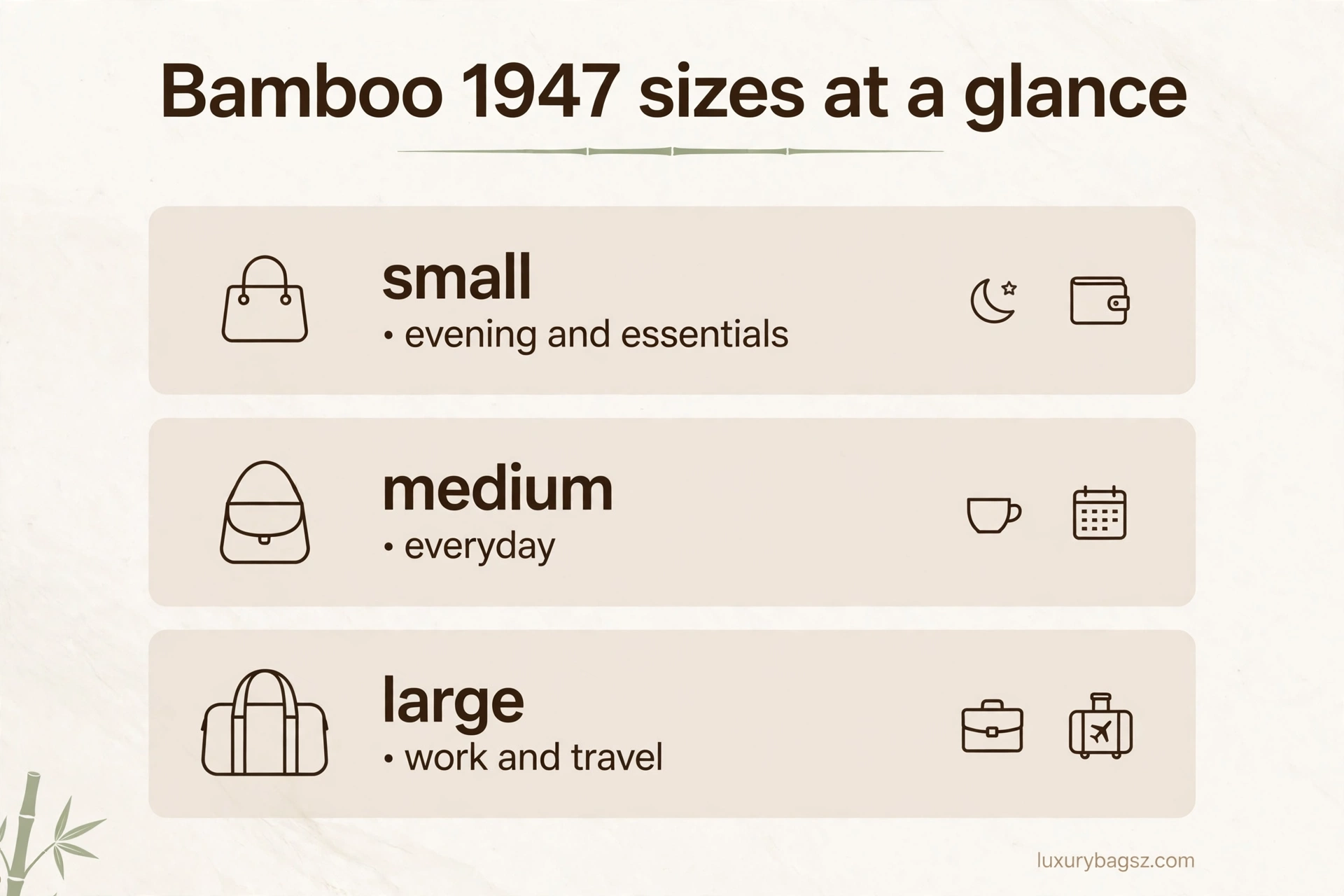
The current Bamboo 1947 range centres on a structured top-handle bag in calf leather with bamboo trim, a turn-lock fastening and a detachable, adjustable shoulder strap. The small size measures roughly 21 x 15 x 7 cm, weighs under a kilogram, and carries essentials for day or evening, while medium and larger versions add room for work and travel without losing the design's poise.
Prices reflect the craft and the leather: the small Bamboo 1947 top-handle bag costs around $4,900, with medium and larger sizes and special finishes above that level. Seasonal colours, including toasted and dark natural tones, rotate through the range, and some editions add Web stripe or GG canvas details for owners who want a louder Gucci statement.
Value-wise, the Bamboo sits in the upper tier of Gucci handbags, above entry icons but below exotic leather flagships. For resale context, the Gucci resale value guide explains which Gucci styles hold value best, and classic Bamboo shapes in neutral colours tend to perform steadily rather than spectacularly, which suits owners buying for love rather than speculation.
Styling the Bamboo Bag
The Bamboo bag's strength is its ability to dress both up and down. Carried by its top handle with a tailored coat, it reads as classic and composed, ideal for work, lunches and occasions. Worn crossbody on its detachable strap, it becomes a practical everyday bag that still carries a sense of occasion, especially in neutral leathers.
Colour choice shapes versatility. Toasted, dark brown and black versions pair with almost everything, while lighter creams and seasonal colours make a stronger statement and need more careful wardrobe matching. The bamboo handle itself adds warmth to monochrome outfits and echoes natural textures such as linen, suede and raffia in summer.
For a contrasting Gucci shoulder style, the guide to what is a Gucci Ophidia bag shows how the house's GG canvas line offers a more casual, logo-led alternative. The Bamboo suits owners who prefer quiet craft to visible branding, and it rewards a wardrobe built on tailoring and simple, well-chosen pieces.

Authenticity Checks for Pre-Owned Bamboo Bags
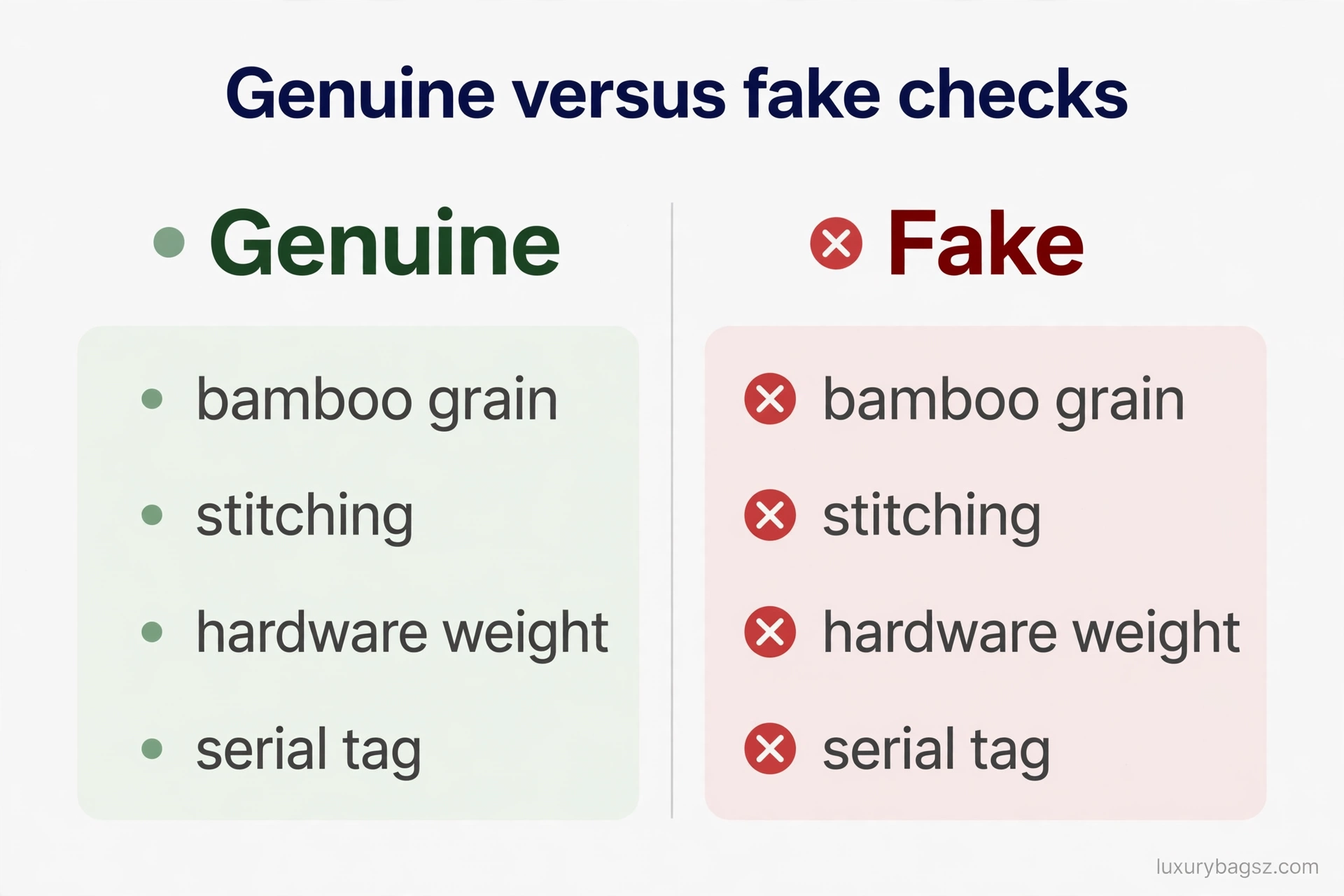
Bamboo bags are faked, so pre-owned buyers should check carefully. Start with the handle: genuine bamboo shows natural grain variation, a smooth lacquered finish and a curve that feels hand-shaped, while fakes often use moulded plastic or uniform printed imitation with a too-perfect, too-glossy surface. Weight and warmth also differ, since real bamboo feels light and organic.
Next, examine stitching, hardware and tags. Genuine stitching is even and tight, hardware feels solid with clean engraving, and serial tags should match the era and style of the bag. Inconsistencies in font, spacing or placement are warning signs, though no single detail proves or disproves a bag on its own. Compare against known genuine examples before committing.
For the full checklist, read how to spot a fake Gucci bag before paying, and use a reputable authentication service for higher-value purchases. A Bamboo bag with a damaged or replaced handle should be priced accordingly, since handle restoration is specialist work and rarely invisible.
Buying New or Pre-Owned
Buying new gives you the current Bamboo 1947 range, full packaging, a boutique receipt and the assurance of a pristine handle, which matters more for this bag than for most. Visit a boutique to try sizes in hand, since the difference between small and medium is more noticeable in a top-handle bag than in a tote, and the handle drop shapes how the bag sits.
Pre-owned Bamboo bags offer older colourways, vintage pigskin originals and lower prices, and a well-kept vintage Bamboo can be a beautiful find. Inspect the handle first, then corners, stitching and interior, and ask for photographs of the handle from several angles. Avoid bags with cracked handles, heavy lacquer peeling or replaced handles unless the price reflects a restoration.
Whichever route you choose, buy the Bamboo for its craft and character, not merely its name. Like the Gucci Horsebit 1953 guide shows for another heritage icon, Gucci's lasting designs earn their keep through daily use, and the Bamboo, carried by hand for nearly eighty years, has earned its place many times over.
Frequently Asked Questions
When was the Gucci Bamboo bag first made?
The Bamboo bag debuted in 1947, when Gucci used bamboo for the handle because post-war shortages made traditional materials scarce. It became one of the house's defining designs.
What is the Gucci Bamboo 1947?
The Bamboo 1947 is the modern reinterpretation of the archival 1947 top-handle bag, keeping the curved bamboo handle with updated sizes, leathers and a detachable shoulder strap.
How much does a Gucci Bamboo 1947 bag cost?
The small Bamboo 1947 top-handle bag costs around $4,900, with medium and larger sizes and special finishes priced above that. Confirm current boutique prices before buying.
Are Gucci Bamboo handles real bamboo?
Yes. Each handle is made from a real piece of bamboo, chosen, softened over a flame, bent by hand, lacquered and baked. No two handles are exactly alike.
What sizes does the Bamboo 1947 come in?
The range centres on small, medium and larger top-handle sizes. The small measures roughly 21 x 15 x 7 cm and suits essentials, while larger versions suit work and travel.
Who made the Bamboo bag famous?
Hollywood stars of the 1950s and 1960s, including Ingrid Bergman and Elizabeth Taylor, helped make the Bamboo famous, along with the international jet set of the era.
How do I care for a bamboo handle?
Keep it dry, avoid knocks against hard surfaces, and wipe it with a soft dry cloth. Avoid prolonged damp, since moisture and impact are the handle's main enemies.
How can I tell a fake Gucci Bamboo bag?
Check the handle's natural grain and lacquer, stitching evenness, hardware weight and engraving, and serial tag consistency. Use a reputable authentication service when in doubt.
Is the Bamboo bag a good investment?
Classic Bamboo shapes in neutral colours tend to hold value steadily pre-owned, but they are not speculative investments. Buy for craft and daily use, and treat resale value as a bonus.
Can I wear the Bamboo 1947 crossbody?
Yes. The modern Bamboo 1947 includes a detachable, adjustable shoulder strap, so it can be carried by its top handle or worn on the shoulder and crossbody.
Final Verdict: Buy the Bamboo for Its Handle, Keep It for Its History
The Gucci Bamboo bag endures because its signature is genuine craft, not decoration: a piece of bamboo, bent by hand over a flame, crowning a beautifully made leather bag. Choose the Bamboo 1947 in a neutral leather, try the sizes in hand, protect the handle, and authenticate carefully pre-owned. Nearly eighty years after its debut, it remains one of Gucci's most characterful icons.






