What Is Hand Lasting? Are Hand-Lasted Boots Overhyped or Underappreciated?
Hand Lasting in Brief
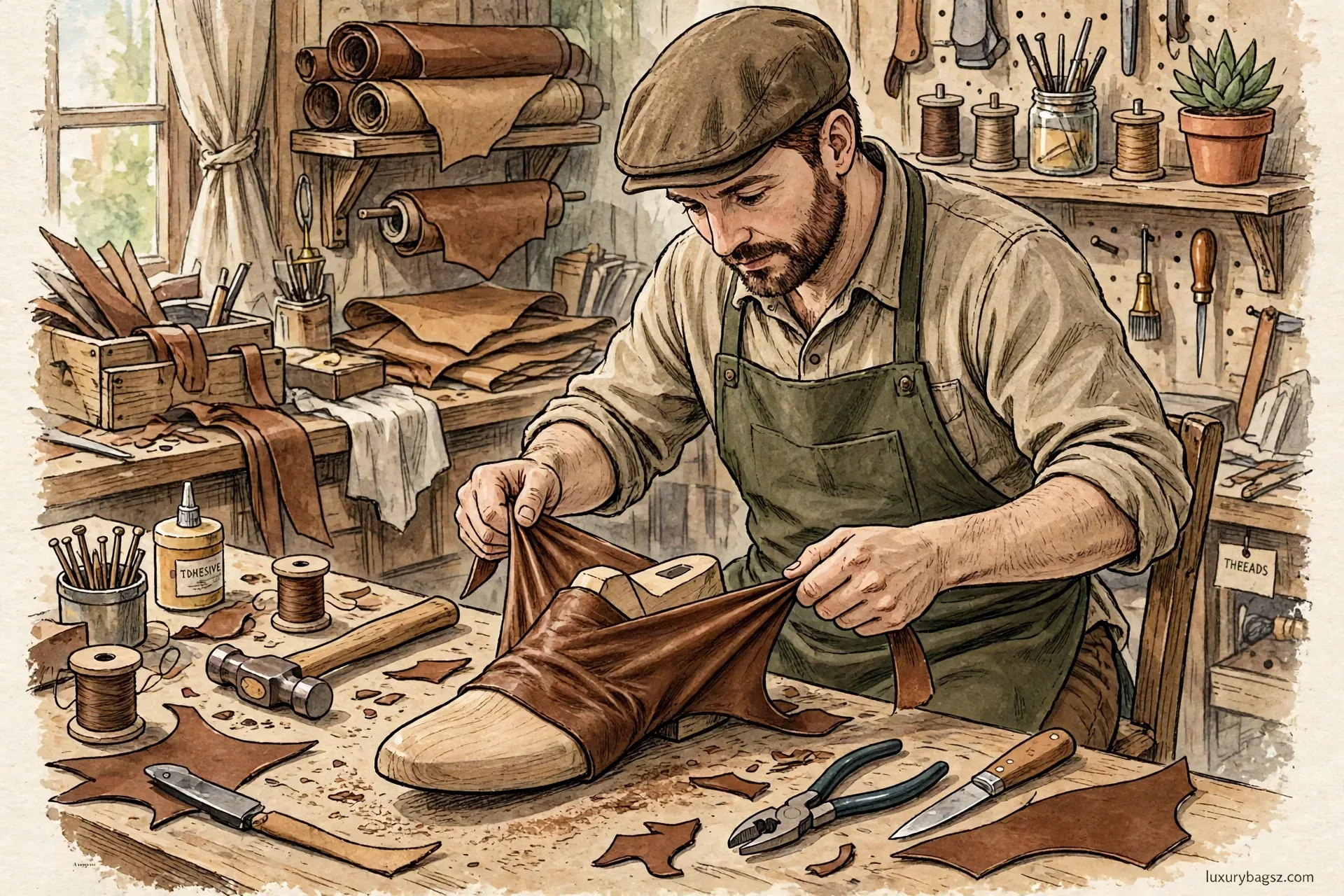
Hand lasting is the process of shaping a boot upper over a foot-shaped form, called a last, entirely by hand. The maker pulls the leather, adjusts the tension by feel, and tacks it in place, instead of letting a machine yank it over the form in one motion.
It is neither magic nor marketing fluff. Done well, it gives finer control over fit, lets thick leather be worked without tearing, and allows small corrections a machine would miss. Done badly, or claimed loosely, it adds cost without adding quality.
So hand-lasted boots are underappreciated for fit and durability, but overhyped when the label is used to imply the whole boot was handmade. Lasting is one step. Always ask what else was done by hand.
Key Takeaways
- Lasting shapes the upper over a last and fixes the boot's final fit and silhouette.
- Hand lasting pulls and tacks the leather slowly, by feel, with room for small adjustments.
- Machine lasting is faster and more uniform, but it stretches every area at the same tension.
- Hand lasting suits thick leathers and asymmetrical or anatomical lasts that machines cannot handle well.
- Hand-lasted does not mean fully handmade: welting, stitching, and finishing may still be machine work.
- Pay for hand lasting when fit, thick leather, or a difficult last is the point, not for the label alone.
What a Last Is
A last is a solid form shaped like a foot, usually wood for bespoke work or plastic for factory work. Every boot is built around one, and the last decides toe shape, instep height, heel curve, and overall volume.
Lasts are not symmetrical copies of a foot. A good last reflects how a foot moves, with a swing toward the big toe and room where the foot actually expands. Cheap lasts often simplify that shape, which is why two boots in the same size can fit very differently.
When a maker talks about their last, listen. The last is the fit, in physical form, and no amount of soft leather can rescue a last that fights your foot shape.
The Hand Lasting Process, Step by Step
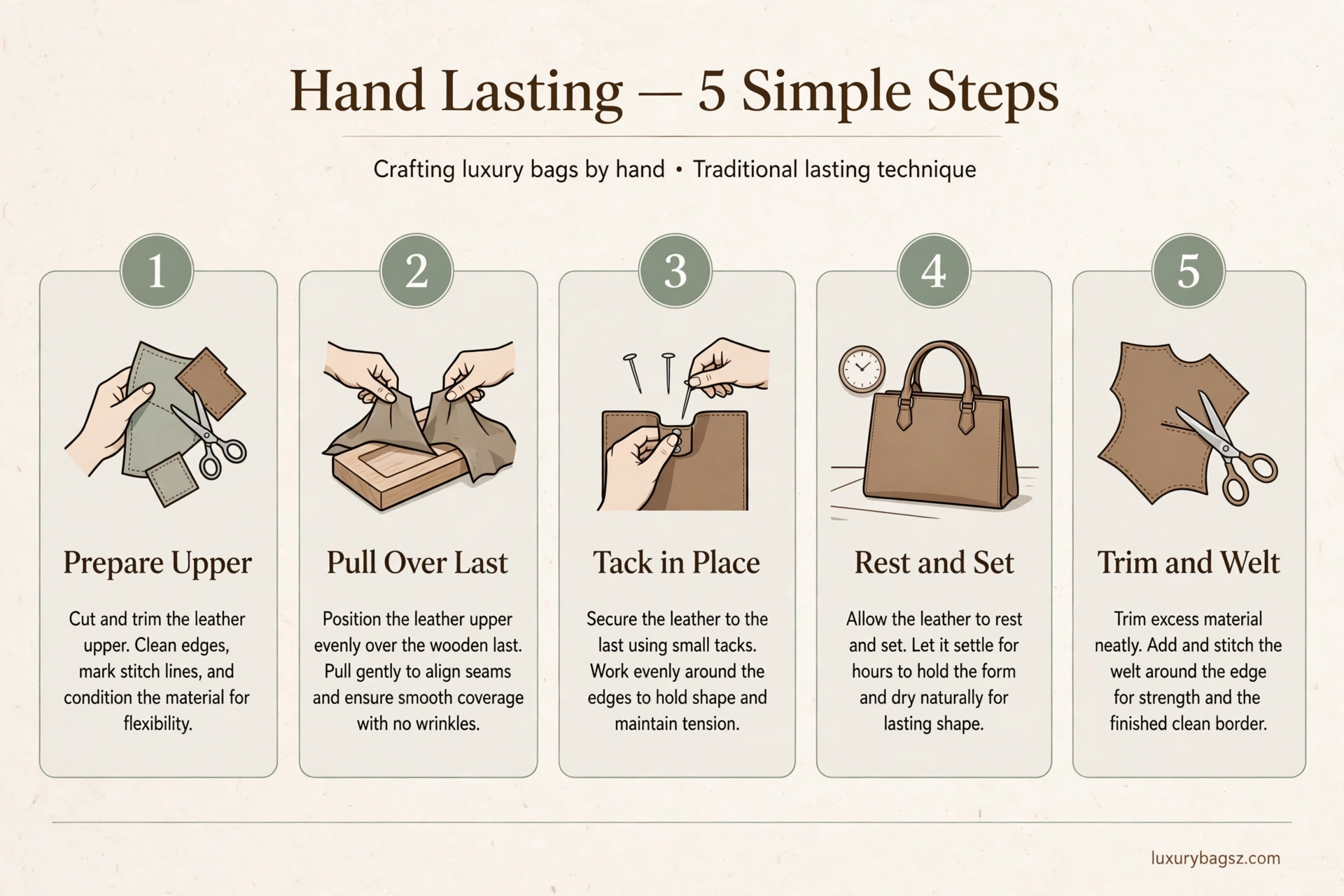
First the upper is stitched together, with lining, toe stiffeners, and heel counters in place. The maker then dampens or conditions the leather so it will stretch without cracking.
Next comes pre-lasting: the upper is pulled loosely over the last and tacked lightly, then left to rest, sometimes for days. This lets the leather learn the shape before the hard pulling starts.
Then the maker works around the boot with lasting pliers, pulling the edge of the upper toward the centre of the insole and nailing or tacking each pull in place. Toe and heel need the most care, since excess leather bunches there.
Finally the lasting edge is glued down, nails are removed, pleats are trimmed flat, and the boot is ready for welting or sole attachment. Rushing any of these steps shows up later as wrinkles, loose areas, or a boot that loses shape.

Why Makers Bother Doing It by Hand
A machine pulls at uniform tension. That is efficient, but leather is not uniform: one area may be tight and thick, another loose and thin. Uniform pulling can overstretch the tight area and under-stretch the loose one.
A human hand feels that difference. The maker pulls harder where the leather needs it and eases off where it might thin or tear. That judgement is the whole advantage, and it takes years to learn.
Hand lasting also allows rest time. Leather that is pulled, left, and pulled again settles more evenly than leather forced into shape in seconds. The result is a boot that holds its shape rather than fighting it.
Hand Lasting vs Machine Lasting
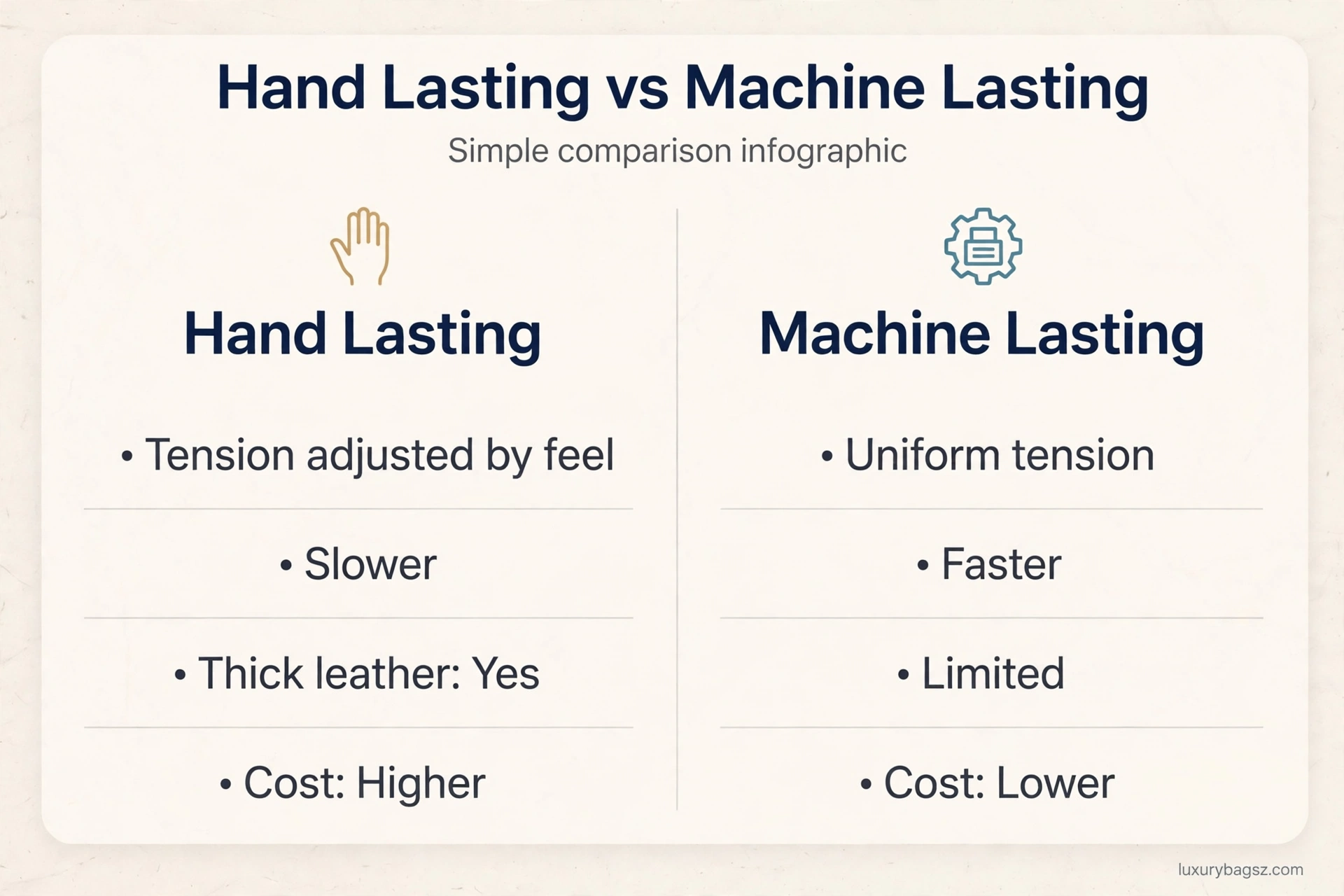
Machine lasting wins on speed, consistency, and price. A factory can last hundreds of pairs a day with near-identical results, which is why most boots you buy are machine-lasted.
Hand lasting wins on control, thick leather, and unusual lasts. Some anatomical lasts are swung so far to one side that a machine simply cannot pull the leather around them without damage.
For ordinary, well-fitting factory boots, machine lasting is not a flaw. It is the reason good boots can cost $200 instead of $800. The question is never hand versus machine in the abstract, but what the boot needs.
A machine-lasted boot in great leather on a great last will beat a hand-lasted boot in poor leather on a poor last every time. Construction labels never outrank materials and fit.
The Tools of the Trade
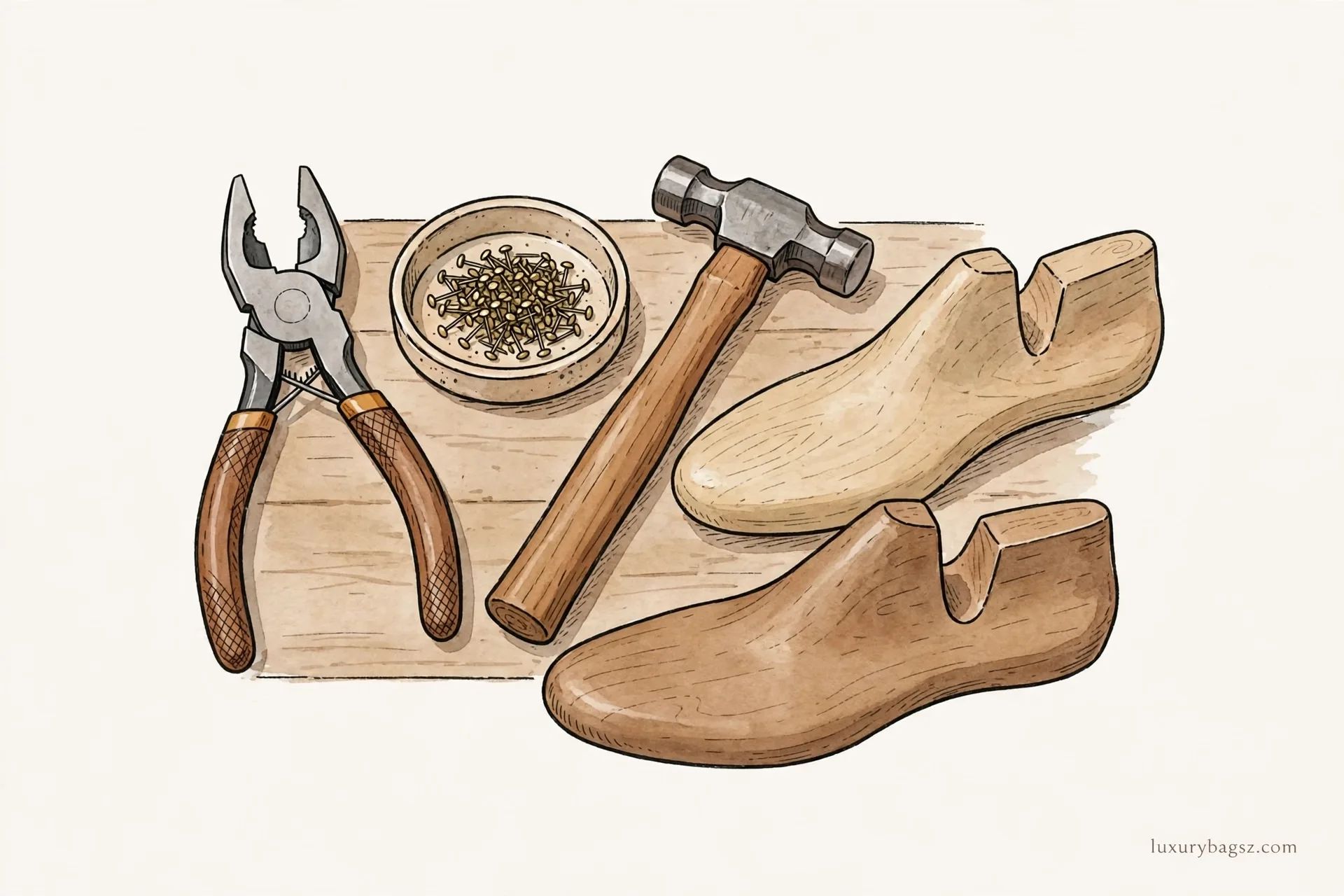
Lasting pliers are the signature tool: wide, flat jaws that grip the leather edge without tearing it. A maker also uses tacks or nails, a hammer, a knife for trimming, and a last that matches the boot's size and shape.
Baby powder or a similar dry lubricant sometimes helps the last slip out after the boot sets. Without it, a tight boot can grip the last so firmly that removal risks distorting the shape.
None of these tools is exotic, and that is the point. Hand lasting is skilled labour, not expensive equipment. You are paying for hours of attention and for a maker who has ruined enough leather to know how far it can go.
Hand Lasting, Hand Welting, and Handmade: Not the Same
Makers and marketers often blur three different claims. Hand lasting means only the lasting step was done by hand. Hand welting means the welt was stitched by hand. Fully handmade should mean most steps were done by hand, in small batches.
A boot can be hand-lasted and machine-welted, or machine-lasted and hand-finished. Both can be excellent boots, but only the first earns the hand-lasted label, and neither earns a fully handmade claim on its own.
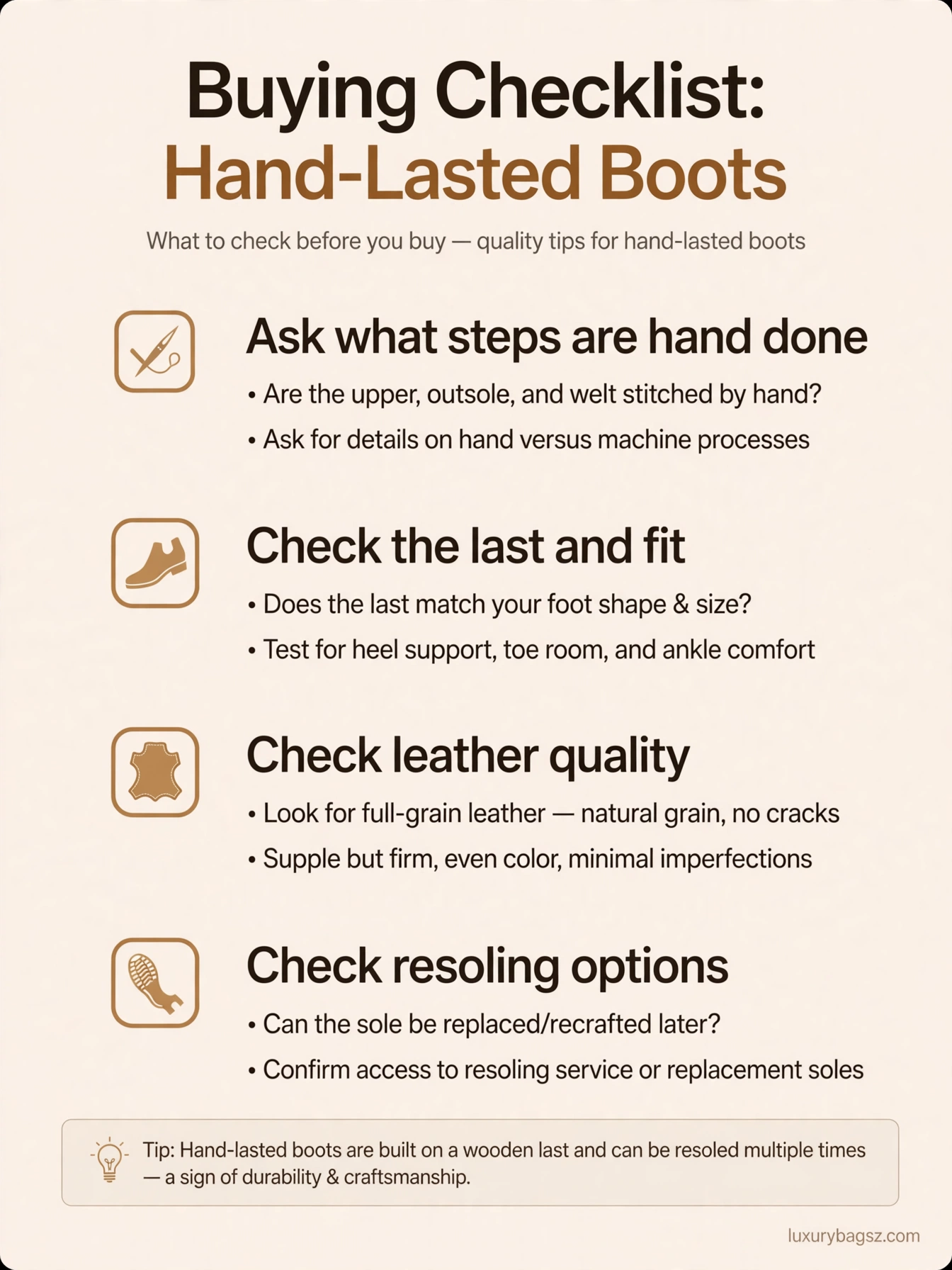
Ask the maker directly: which steps are hand done, and which are machine done? Honest makers answer plainly, often with a list. Vague answers are a warning sign, whatever the price.
What Hand Lasting Does for Fit and Break-In
A hand-lasted boot often feels more settled from the start, because the leather was worked gradually and allowed to rest. Break-in still happens, but it tends to be shaping rather than fighting.
Fit problems that hand lasting can help include a high instep, a wide forefoot with a narrow heel, and thick leather that a machine would overstretch. If your feet are hard to fit, this is where hand work earns its price.
Once the boots are yours, care matters as much as construction. Our Hermes leather boots care guide covers the after-wear routine that keeps any good leather boot, hand-lasted or not, in shape for years.
Is It Worth Paying Extra?
Pay extra when you need what hand lasting offers: a difficult fit, very thick leather, a bespoke or made-to-order last, or a maker whose whole approach is slow and careful. In those cases the premium buys something a machine cannot copy.
Do not pay extra when the boot is otherwise ordinary: thin leather, a generic last, glued soles, and a hand-lasted label doing all the marketing work. There, the label is decoration, not craft.
A useful test is the maker's transparency. If they name the last, show the workshop, and explain what is hand done, the premium is more likely real. If they hide behind the word handmade, walk away.
How to Spot Genuine Hand Lasting Claims
Look for small-batch production, named lasts, and workshop photos showing pliers and tacks rather than only finished boots. Real hand work leaves a trail of process, not just product shots.
Read reviews from owners who have worn the boots for a year or more. Hand lasting should show up as shape retention and even wear, not as a first-week impression.
Finally, remember that hand lasting is a means, not an end. The end is a boot that fits, lasts, and can be repaired. Judge the boot on that, and let the lasting method be one honest part of the story.
Where Hand Lasting Shows Up Most
Cowboy boots are the classic example. Hand lasting lets the maker shape tall shafts and pointed toes without tearing the leather, and it keeps the instep fit that makes a tall boot comfortable to pull on.
Dress boots and wholecut styles benefit too. With fewer seams to hide mistakes, the lasting must be even and clean, or every wrinkle shows. That is why wholecut boots are often the showcase for a maker's hand skill.
Work boots sit in the middle. Some makers hand-last their premium work line and machine-last the rest. That split is honest, and it lets buyers choose how much hand work their budget actually needs.
Frequently Asked Questions
What is hand lasting in simple terms?
Hand lasting is shaping a boot upper over a foot-shaped last by pulling the leather by hand and tacking it in place, instead of using a machine to pull it over the last in one motion.
Are hand-lasted boots better than machine-lasted boots?
They can be better for fit and thick leather, because the maker adjusts tension by feel. For ordinary boots on a good last, machine lasting is perfectly good and much cheaper.
Does hand-lasted mean the whole boot is handmade?
No. Hand lasting covers one step only. Welting, stitching, cutting, and finishing may still be machine work, so ask the maker which steps are done by hand.
How long does hand lasting take?
The pulling itself may take under an hour per pair, but with pre-lasting rest time the process can stretch over days. That rest time is part of why the shape sets well.
Why do some lasts need hand lasting?
Some anatomical lasts are swung or shaped so extremely that a machine cannot pull leather around them without tearing or overstretching it. Hand work is the only practical option there.
Do hand-lasted boots break in faster?
They often feel more settled early, because the leather was worked gradually. Full break-in still takes weeks, as the sole, insole, and cork bed also need time to mould.
Can you tell by looking if a boot was hand-lasted?
Not reliably from the outside. Even wear, good shape retention, and a clean lasting edge are hints, but the honest proof is the maker's own description of their process.
Are hand-lasted boots always expensive?
Usually yes, because skilled labour costs more than machine time. Small-batch and bespoke makers charge the most, while some mid-priced makers hand-last selected models.
Is hand lasting worth it for work boots?
It can be, if you wear boots all day and need a precise fit or thick leather. Many excellent work boots are machine-lasted, though, so fit and leather should decide first.
What should I ask before buying hand-lasted boots?
Ask which steps are hand done, what last is used, what leather is used, and how the boot can be resoled. Clear answers matter more than the hand-lasted label itself.
Summary
Hand lasting is underappreciated as a craft and overhyped as a label. The craft itself is real: slow, skilled pulling that respects what each piece of leather can do. The hype comes when one hand step is sold as if it made the whole boot by hand. Buy the fit, the leather, and the maker's honesty, and hand lasting will be a genuine bonus rather than an expensive word.