How to Clean Birkenstocks: Cork Footbeds, Suede, Oiled Leather and EVA Soles
Clean Birkenstocks Without Soaking the Cork
Water, not dirt, is what ruins a classic Birkenstock — the footbed is cork, latex and jute under a suede lining — so clean with restraint: a thorough dry brush first, then a light scrub of the footbed with a toothbrush and as little water as you can manage.
The straps decide the rest. Suede and nubuck need mainly brushing and a suede eraser; oiled leather responds to a dry cloth and the warmth of your hand; smooth leather takes a small amount of cleaner; and synthetic Birko-Flor or Birki-Buc simply wipes clean.
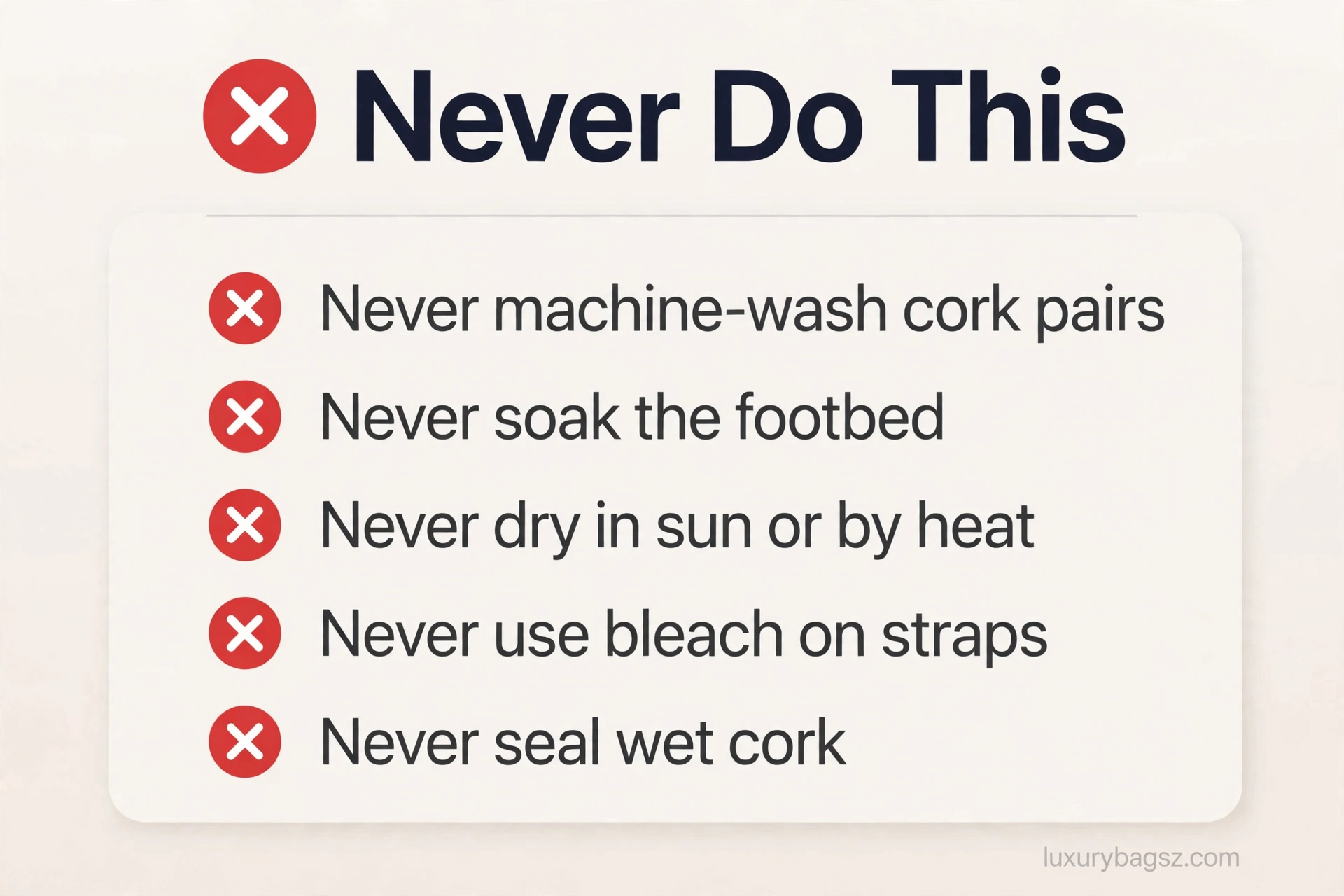
Keep a classic cork pair out of the washing machine entirely, and never leave it soaking — immersion is the mistake the footbed cannot forgive.
Clean Birks Without Ruining the Cork
Birkenstocks look simple, and that simplicity hides a cleaning trap. The footbed is cork, latex, and jute under a suede lining, the straps may be suede, oiled leather, smooth leather, or fabric, and the sole may be cork-edged or all foam. One cleaning method cannot suit all of those at once.
Key Takeaways
- Identify the strap material before cleaning. Suede, oiled leather, smooth leather, and EVA each need a different routine.
- Brush dry first, always. Scrubbing over grit grinds it into suede and cork instead of lifting it out.
- Scrub the footbed with leather shampoo or a baking soda paste, using very little water, then wipe off every trace of lather.
- Air-dry for at least 24 hours at room temperature, away from sun and heat, before wearing the pair again.
- Reseal exposed cork when it looks dull, dry, or flaky. A thin coat protects the cork; a thick coat traps problems underneath.
- Sources disagree on footbed cleaners, cork sealer timing, and the freezer trick for odour. Each disagreement is flagged where it matters.
- Only all-EVA pairs can be washed with soap and water. Classic cork pairs cannot, even when they look very dirty.
Know Your Pair Before You Clean It
A Birkenstock is a layered system, not a single material: a suede lining over jute and a cork-latex core, and that core is why soaking it is so damaging. Straps vary by material, classic pairs show a cork edge, and all-EVA pairs are foam throughout.
The Kit and the First Dry Brush
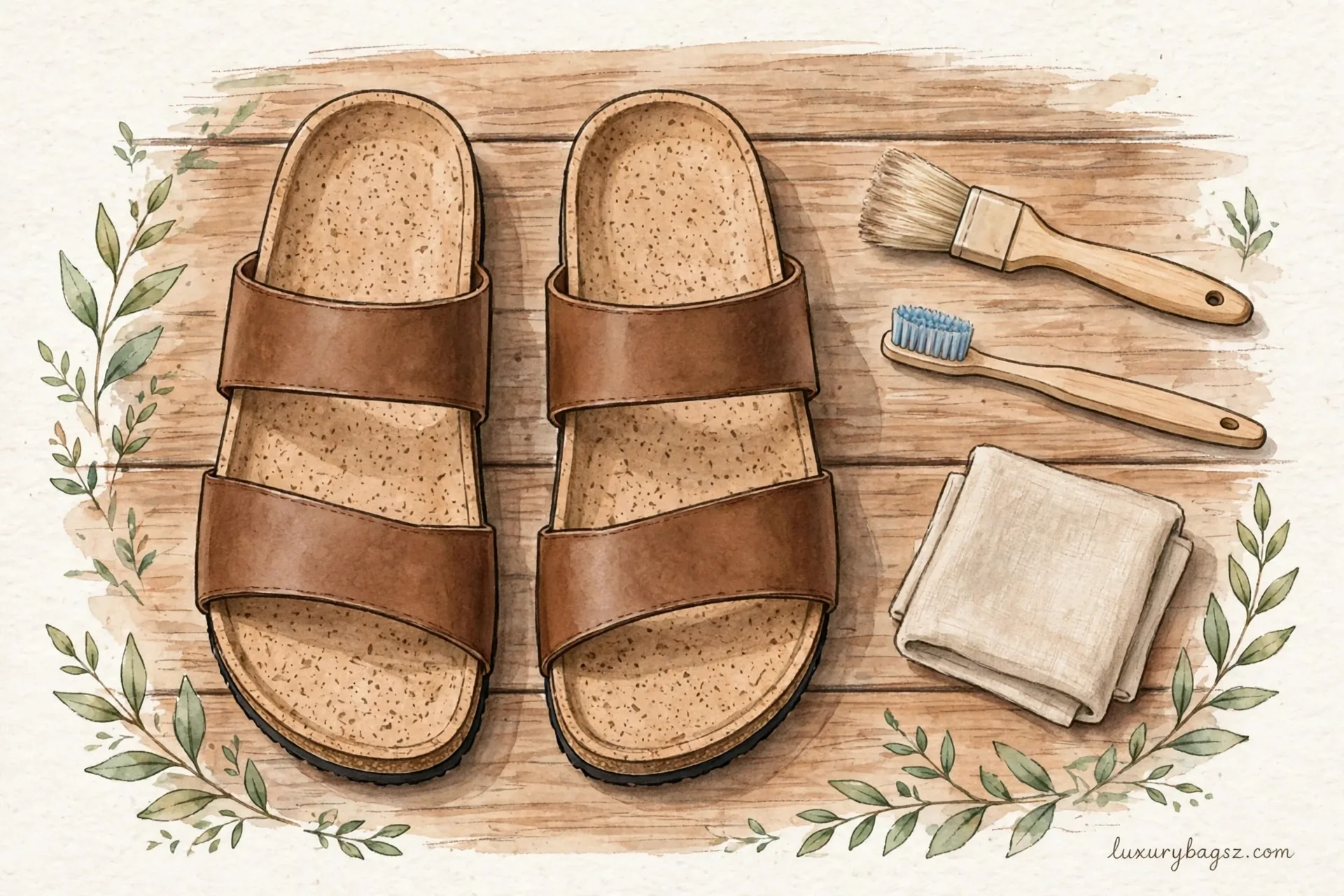
You need a soft brush, an old toothbrush, two lint-free cloths, leather shampoo or mild soap, baking soda, a suede brush and eraser, and cork sealer.
Start every clean with a dry brush. Brush sand and grit off the footbed, straps, and cork edge, and brush suede in one direction to lift the nap. For suede technique, the guide to a suede brush explains how lightly to work.
The Cork Footbed, Step by Step
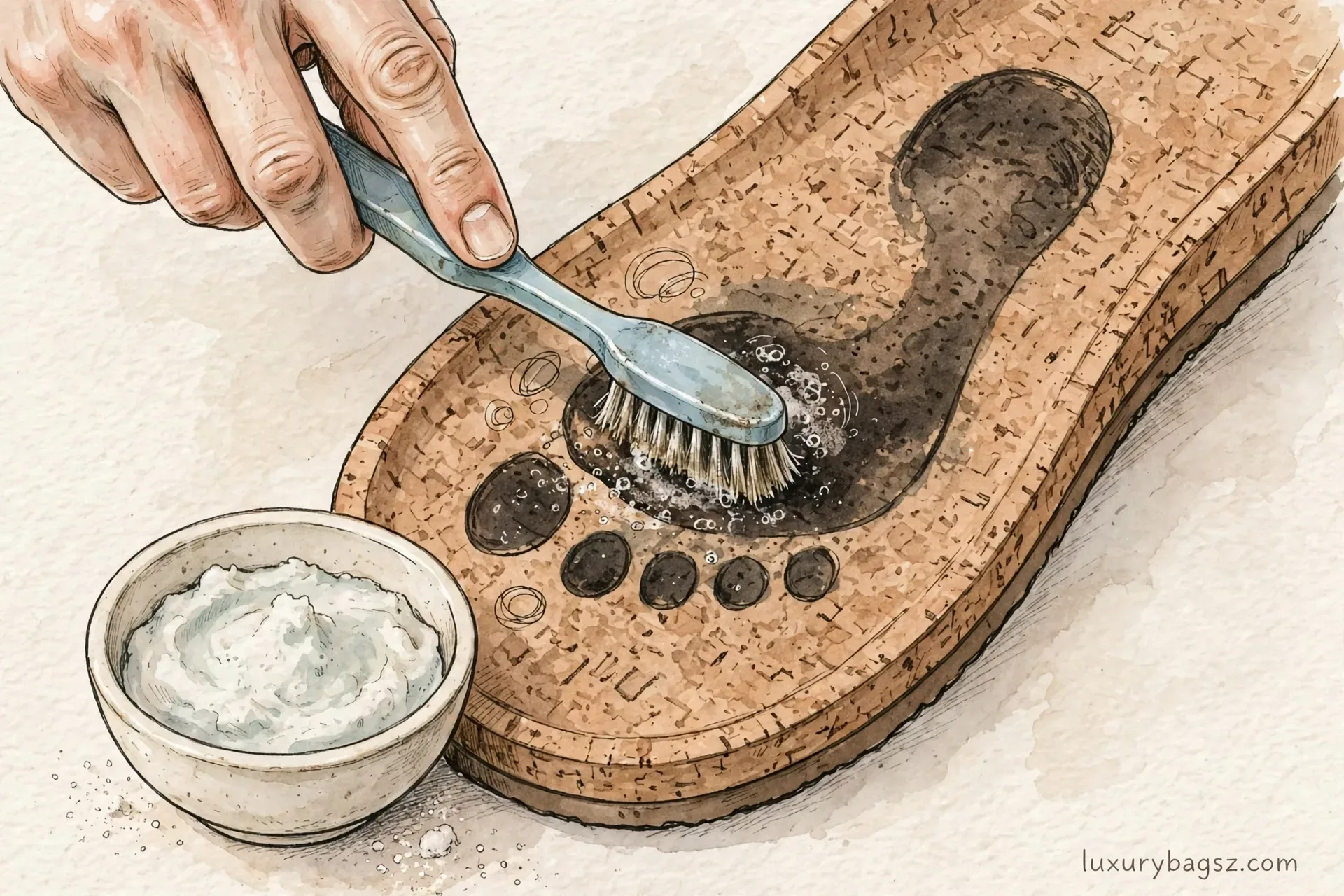
Brush the footbed dry first, paying attention to the heel cup and toe imprint. Wet an old toothbrush, add a small drop of leather shampoo, and work it into the footbed in small circles, keeping the lather thin and local. Never hold the sandal under running water.
Wipe off every trace of lather with a clean cloth dampened and wrung out hard.
For stubborn marks, spread a thin baking soda and water paste, leave it for about an hour, then wipe it all off. Never leave a wet paste on overnight on cork. Air-dry for at least 24 hours away from sun and heat, then brush the nap back up.

Suede and Nubuck Straps
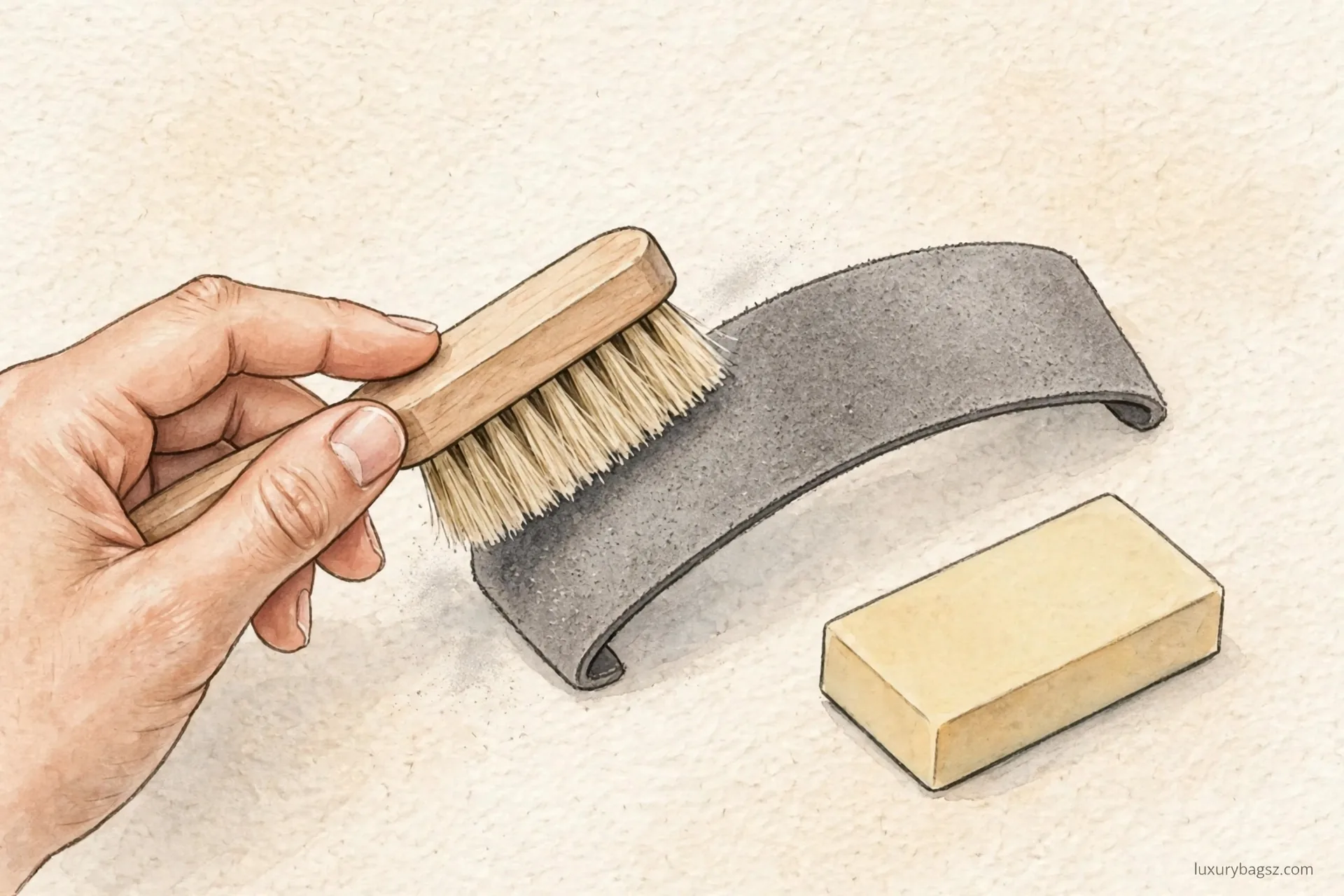
Suede and nubuck straps should stay as dry as possible. Brush them with a rubber suede brush or a lint-free cloth, in one direction, to lift dust and surface dirt. Let any wet mark dry fully before touching it.
For scuffs, rub a suede eraser gently over the mark, then brush again to restore the nap. Heavy rubbing flattens it into a shiny patch. For a fresh grease spot, cover it with cornstarch, leave it for at least four hours, then brush it away.
If a mark survives brushing, erasing, and cornstarch, use only a barely damp cloth with equal parts water and white vinegar. Dry fully, brush the nap back up, and finish with a colourless suede spray. The same dry discipline applies to suede sandals generally.
Leather Straps and Buckles
Oiled leather looks like ordinary leather but behaves differently. Start with a dry, lint-free cloth only, then rub small marks with the ball of your hand. Warmth works the leather's own oils back to the surface.
Feed oiled leather only now and then, with wax or grease used very sparingly. Overfeeding darkens it and attracts dust. Do not use smooth-leather products on oiled leather unless they say they suit it.
For smooth leather, wipe dust off with a slightly damp cloth, work a dime-sized dab of leather cleaner into the strap in small circles, and wipe off leftover foam. Condition only when straps look or feel dry.
A conditioner such as Saphir Renovateur suits smooth leather used thinly, but keep it off the footbed and off oiled leather. Wipe metal buckles with a dry or barely damp cloth, then dry them at once.
EVA Soles and All-Foam Pairs
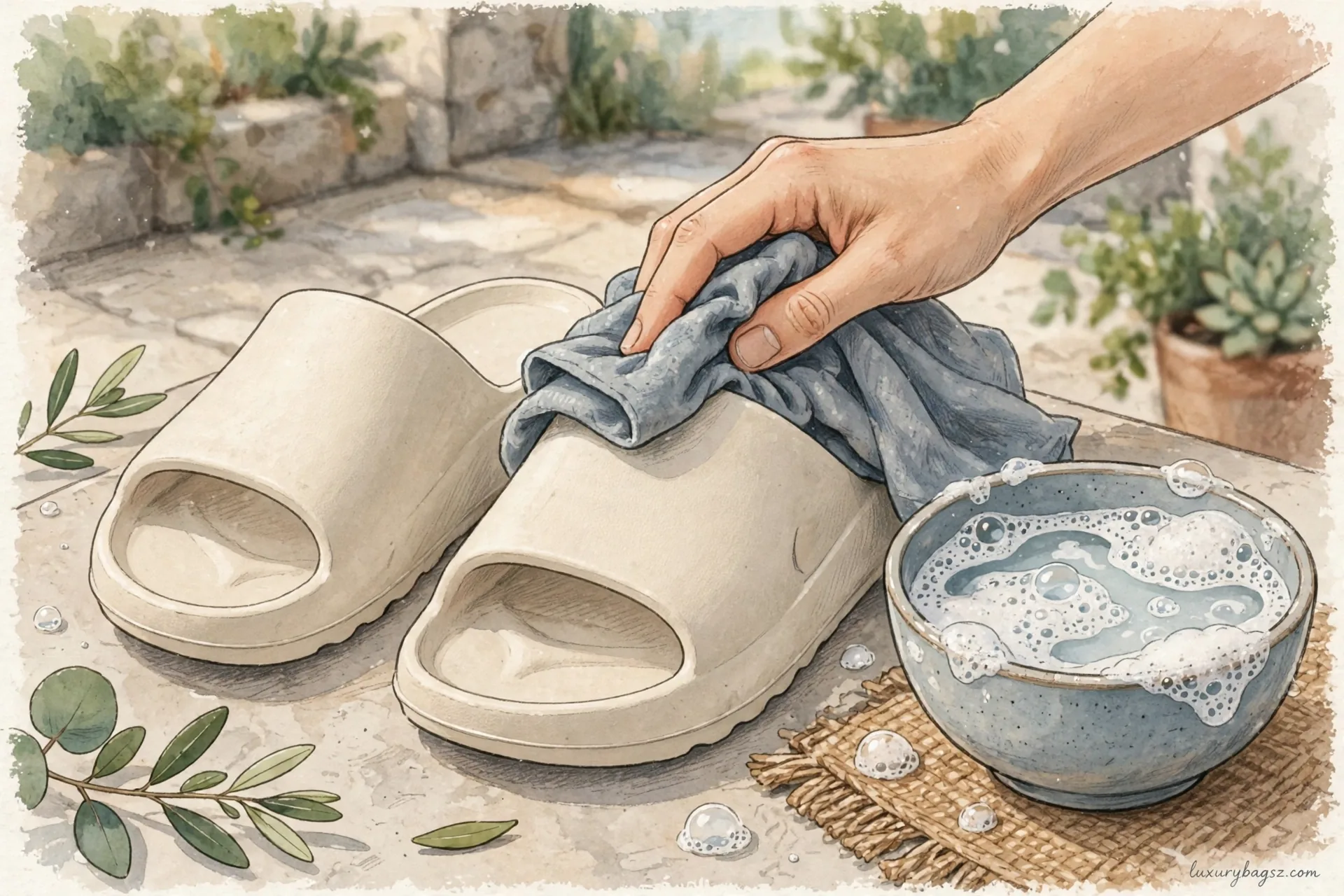
EVA pairs are the exception to almost every warning here. All-EVA sandals can be washed with mild dish soap and lukewarm water, rinsed, and air-dried.
Wash EVA pairs with a damp cloth and a little soap, scrubbing the tread with a soft brush, then rinse lightly and air-dry. Even for EVA, skip the dishwasher and direct heat, which shrink and warp the foam.
Classic pairs need the opposite treatment: scrub the tread with a damp brush, wipe it with a damp cloth, and keep water off the cork edge.
Cork Edges and Sealant
The exposed cork around a classic footbed ships with a thin factory coat of sealer, which wears away with use. Reseal when the cork looks dull instead of slightly shiny, or starts chipping and flaking.
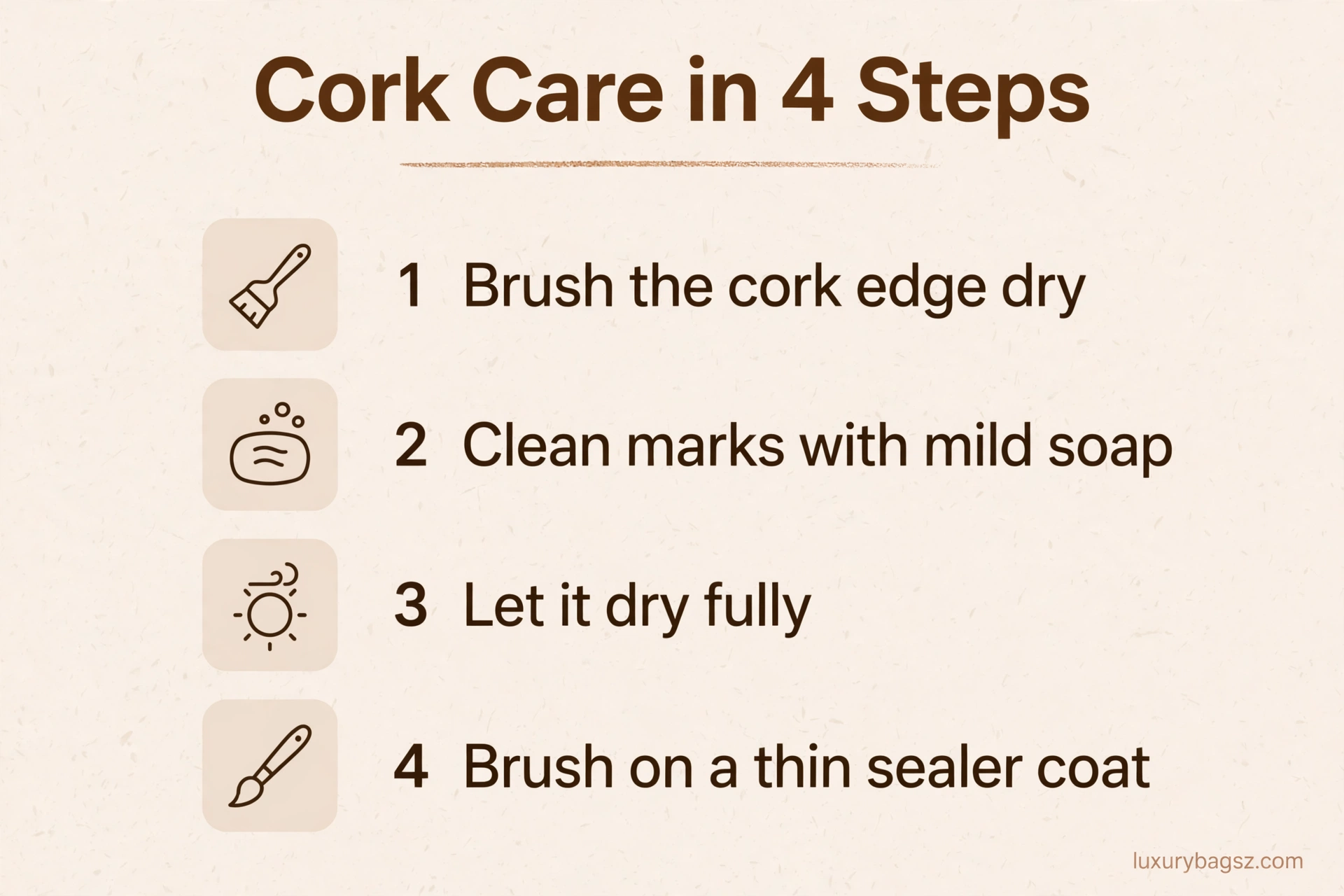
Clean the cork edge first with a dry toothbrush, then a toothbrush dipped in soapy warm water, tapped off so it is not dripping.
Let the cork dry completely before sealing. Brush sealer on in a thin coat over the exposed cork only, keeping it off the suede lining and straps. Let it dry fully before wearing the pair.
Reseal whenever the edge looks dry or starts flaking, rather than on a fixed calendar.
Odour, Stains, and When to Stop
Odour comes from the footbed, because sweat trapped in the suede lining feeds bacteria. Clean the footbed first, as in the footbed steps. Once fully dry, sprinkle dry baking soda over it, leave it overnight, then brush it all out.
Use baking soda as a paste or a dry overnight powder, not as a dry scrubbing abrasive. If the footbed stays black after two gentle cleans, that darkening is wear, not dirt, and further scrubbing thins the lining.
Birko-Flor and Birki-Buc: The Synthetic Straps
Many pairs are not leather at all. Birko-Flor is the house’s smooth synthetic, a leather-look surface over a soft felt backing; Birki-Buc is its nubuck-look sibling. If you are unsure which strap you own, look at the underside: synthetics show that bonded, felt-like lining, while leather looks and feels like skin on both sides.
Cleaning them is the easiest job in this guide. Wipe with a dry or slightly damp lint-free cloth; for stubborn marks use a little mild soap solution on the cloth, then wipe again with a clean damp cloth so no residue stays. No polish, conditioner or suede spray belongs on either material.
Two cautions keep synthetics looking right. Keep abrasives off them, because hard scrubbing can lift colour and printed patterns from the surface. And keep solvents and strong household sprays away unless the product is made for synthetics; what leather shrugs off can mark a printed finish permanently.
Synthetic straps forgive water far better than leather ones, but the mercy stops at the footbed: the cork rules in this guide apply in full whatever the straps are made of.
Clogs and Covered Shoes: The Boston Problem
Closed styles such as the Boston clog follow the same materials logic with one added difficulty: the covered upper traps moisture and odour against the footbed, and you cannot reach inside as freely as on a sandal.
Work from the outside first. Suede clog uppers take the suede routine from the suede and nubuck section; oiled leather versions take the hand-warmth routine from the leather-strap section. Then clean the footbed exactly as in the footbed steps, working the toothbrush through the clog’s opening with patience, and give clogs extra drying time beyond the standard 24 hours, because enclosed uppers dry slowly.
Odour control matters more here, so the baking soda treatment from the odour section earns its keep: powder the footbed once fully dry, leave it overnight, and brush or shake it all out. Rest clogs between wears and keep them out of closed, damp cupboards; a clog worn daily in winter is the pair most likely to defeat every cleaner in this guide.
If the lining stays sour after two honest cycles, that is the when-to-stop rule arriving: a cobbler can advise on deeper refurbishment before the footbed itself gives up.
A Maintenance Rhythm: Little and Often
Cleaning works best as a rhythm rather than a rescue. Brush the footbed and straps dry once a week in heavy summer use; grit removed early never becomes the ground-in kind that needs scrubbing. Wipe synthetic and smooth leather straps at the same pass.
Once a season, or whenever the cork edge turns dull, run the deeper routine: footbed clean, strap care by material, full drying, then the thin sealer coat from the cork-edges section while the cork is completely dry. Sealer applied on schedule prevents the cracking that sealer applied in panic can only slow.
Storage is part of the rhythm. Keep pairs at room temperature, away from radiators, sunny windows and hot cars; Birkenstock’s own care warnings name heat alongside soaking as a primary enemy of cork and soles. A pair cooked slowly in a car boot all summer ages faster than a pair worn daily and stored kindly.
Rest days complete the system. Rotating two pairs lets each footbed dry fully between wears, which prevents more odour and darkening than any product in the kit.
White Pairs, Start to Finish
White pairs collect every mark this guide covers, so they deserve their own routine. Identify the material first, because white Birkenstocks come in all three families and each is cleaned differently.
White EVA pairs are the simple case: wash with mild soap and lukewarm water, scrub the tread, rinse and air-dry away from heat, exactly as the EVA section described. White Birko-Flor follows the Birko-Flor routine: a damp cloth, mild soap for stubborn marks, and a clean-water wipe so dried residue never yellows in patches.
White leather straps take the smooth-leather routine from the leather-strap section, with white shoe polish or a white touch-up product for scuffs once the strap is clean and dry. Keep polish off the footbed and buckles, and expect the cork edge and footbed to darken honestly with wear; that contrast is the normal look of a lived-in white pair, not a cleaning failure.
One white-pair rule overrides the rest: clean marks early. On white surfaces, sunscreen, denim dye and street grit set into stains that the same materials in brown would have hidden, and gentle cleaning done promptly beats strong cleaning done late.
Repair or Replace: The Cobbler Question
Birkenstocks are unusually repairable footwear, which changes the end-of-life maths. Worn soles can be replaced, cork edges rebuilt, and even a tired footbed can be renewed by specialists, because the straps, the part cleaning cannot restore once torn, usually outlast everything beneath them.
Ask a cobbler for three verdicts separately: the straps, the footbed and the sole. If the straps are sound, resole and footbed work can return a pair to years of service for less than a replacement pair. If straps have torn at the buckle holes or the uppers have split, repairs buy little, and replacement money is better spent on a new pair.
That is also the honest answer to the deepest cleaning failures. A footbed blackened by a decade of summers is not dirty, it is worn, and no routine in this guide reverses wear; refurbishment or replacement does. Clean what is cleanable, repair what is repairable, and let the pair’s remaining life, not its appearance in week one, judge your care.
Soft Footbeds and Shearling-Lined Pairs
Two variants adjust the rules rather than breaking them. The soft footbed adds a cushioning layer beneath the suede lining; clean it exactly as the footbed steps describe, but allow longer drying, because the extra padding holds moisture the standard footbed sheds sooner. Wearing a soft footbed while its depths are still damp undoes the clean and feeds the odour cycle set out in the odour section.
Shearling-lined pairs, sold for winter, need the driest handling of all: brush the wool lining to lift dirt and restore its loft, spot-clean marks with a barely damp cloth, and never scrub the lining with the footbed routine. Wet wool felts, mats and smells, and dries slower than any other part of the shoe.
Give lined pairs the longest rest in your rotation and store them where air moves. The reward for that patience is considerable: a shearling pair kept dry and brushed stays fresh for seasons, while one cleaned like a summer sandal is ruined in a single afternoon.
Frequently Asked Questions
Can I put Birkenstocks in the washing machine?
No, never machine-wash classic cork pairs. A wash cycle soaks the cork and warps the footbed. Only all-EVA pairs can be hand-washed.
How do I clean a Birkenstock footbed?
Brush it dry, scrub with an old toothbrush, a little leather shampoo or baking soda paste, and very little water. Wipe off all lather and air-dry for at least 24 hours.
How often should I reseal the cork?
Reseal whenever the cork looks dull, dry, or starts flaking, not on a fixed calendar. Daily summer wear needs resealing sooner than occasional wear.
Why do my Birkenstock footbeds turn black?
The suede lining absorbs sweat, oils, and dead skin with every wear. Cleaning lightens it, but a well-worn pair keeps some dark outline.
Can I use baking soda on Birkenstocks?
Yes, as a paste with water or a dry powder left overnight for odour, brushed off gently. Never use dry baking soda as a scrubbing abrasive.
How do I clean oiled leather Birkenstock straps?
Wipe with a dry cloth, raise flattened fibres with a nubuck brush, and rub light marks with the ball of your hand. Feed sparingly with wax or grease.
Do Birkenstocks get ruined if they get wet?
A soaking can ruin classic cork pairs: water swells and cracks cork and dries leather straps hard. If caught in rain, blot and air-dry slowly.
How do I stop Birkenstocks from smelling?
Clean the footbed first, then sprinkle dry baking soda over it overnight once fully dry, and brush it all out.
Can I clean white Birkenstocks the same way?
White EVA pairs wash with soap and water. White leather straps need a damp cloth and white shoe polish for scuffs.
When should I take Birkenstocks to a cobbler?
When cork crumbles or cracks deeply despite sealing, straps tear at the buckle holes, or the sole separates. A cobbler can reseal and resole a pair safely.
Summary
Cleaning Birkenstocks is mostly about respecting the cork. Brush dry first, use very little water, clean each strap to suit its own material, and give the pair a full day to dry away from sun and heat.
The mistakes that ruin Birkenstocks are almost all the same mistake: too much water, too much heat, or the wrong product on the wrong material. Avoid those three.