Vintage vs Retro Clothing: The Real Difference, and How to Tell Them Apart
Vintage vs Retro: Age Is the Dividing Line
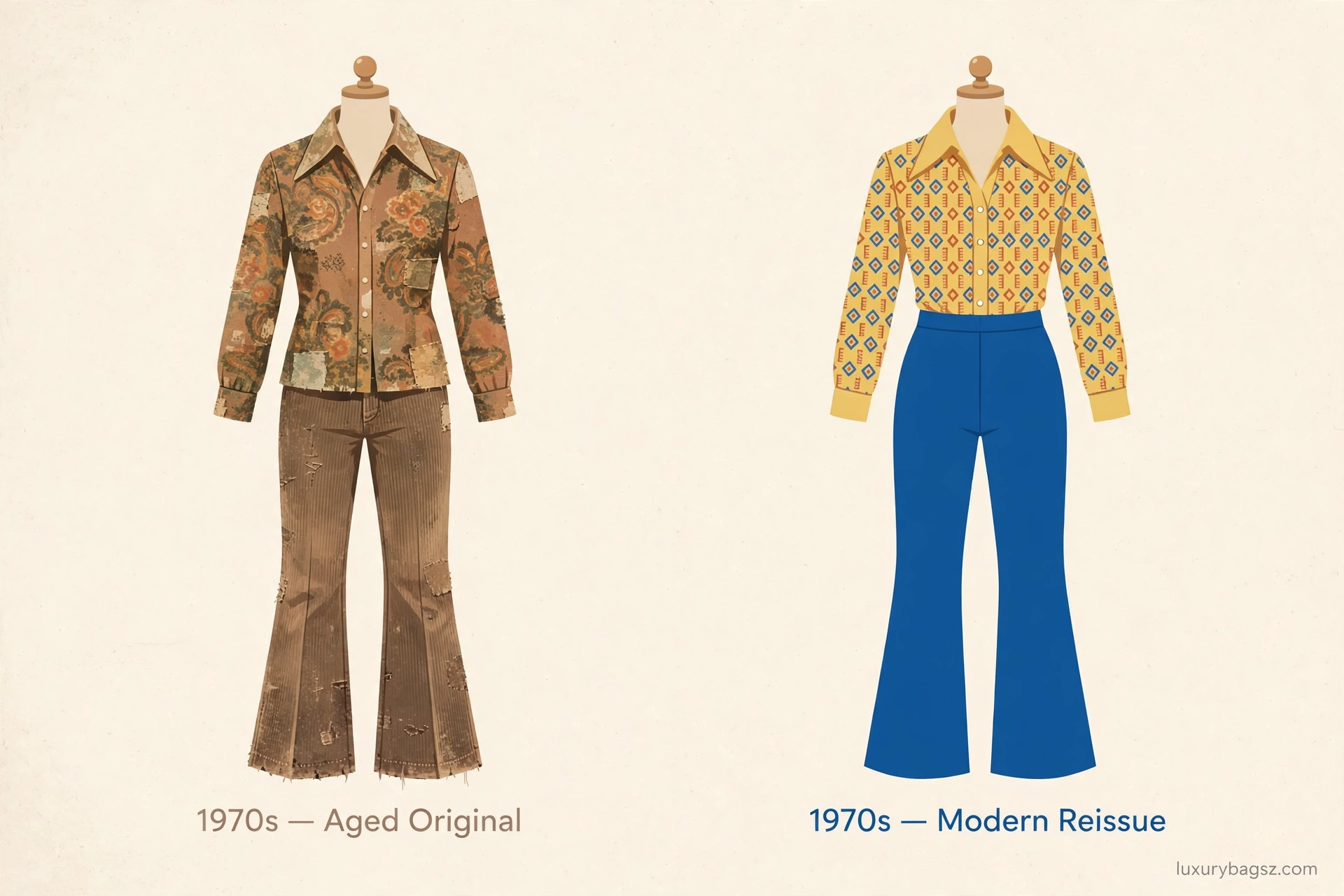
Vintage clothing is genuinely old. Retro clothing is newly made in an old style. That single distinction answers most of the confusion, but shoppers still mix the words up daily, because shops, sellers, and influencers use them loosely. A brand-new dress with a 1970s print is retro. A dress actually made in the 1970s is vintage.
The difference matters for price, rarity, fit, and care. Vintage pieces are finite, often fragile, and sized by older standards. Retro pieces are reproducible, usually sturdier, and sized for today's bodies. Buying one while expecting the other leads to disappointment, so this guide teaches you to tell them apart quickly and choose the right one for your needs.
Key Takeaways

- Vintage means genuinely old, usually at least 20 years old; retro means newly made to look like an older style.
- Antique clothing is older still, generally over 100 years old, and belongs more in collections than daily wear.
- Sources disagree on the exact vintage threshold: some say 20 years, others 30, and some 40 to 100 years.
- Labels, fabrics, zips, and construction tell real vintage from modern retro faster than style alone.
- Vintage suits collectors and unique finds; retro suits everyday wear, exact sizing, and lower prices.
The Short Answer: Age vs Style
Think of it this way: vintage is about when a garment was made, and retro is about what it looks like. A jacket sewn in 1985 is vintage, even if its style looks ordinary. A jacket sewn last year with 1980s shoulders and colours is retro, even if it looks convincingly old. Age and style are separate facts, and only age decides vintage status.
This distinction also explains why two similar-looking pieces can cost very different amounts. The vintage one is a surviving original from a limited past supply. The retro one can be remade whenever demand rises. Scarcity, not just looks, drives the vintage premium.
Some sellers blur the line on purpose, calling everything old-looking vintage to justify higher prices. Others blur it innocently, repeating what they were told. Either way, the fix is the same: check the age evidence, not the sales wording. Labels, materials, and construction reveal the truth that style alone hides.
A useful test is the remake question. If the maker could produce the same garment again tomorrow from the same pattern and new fabric, it is retro. If the garment exists only because it survived from its original era, it is vintage. That test cuts through marketing language in seconds.
Vintage, Retro, and Antique: The Timeline
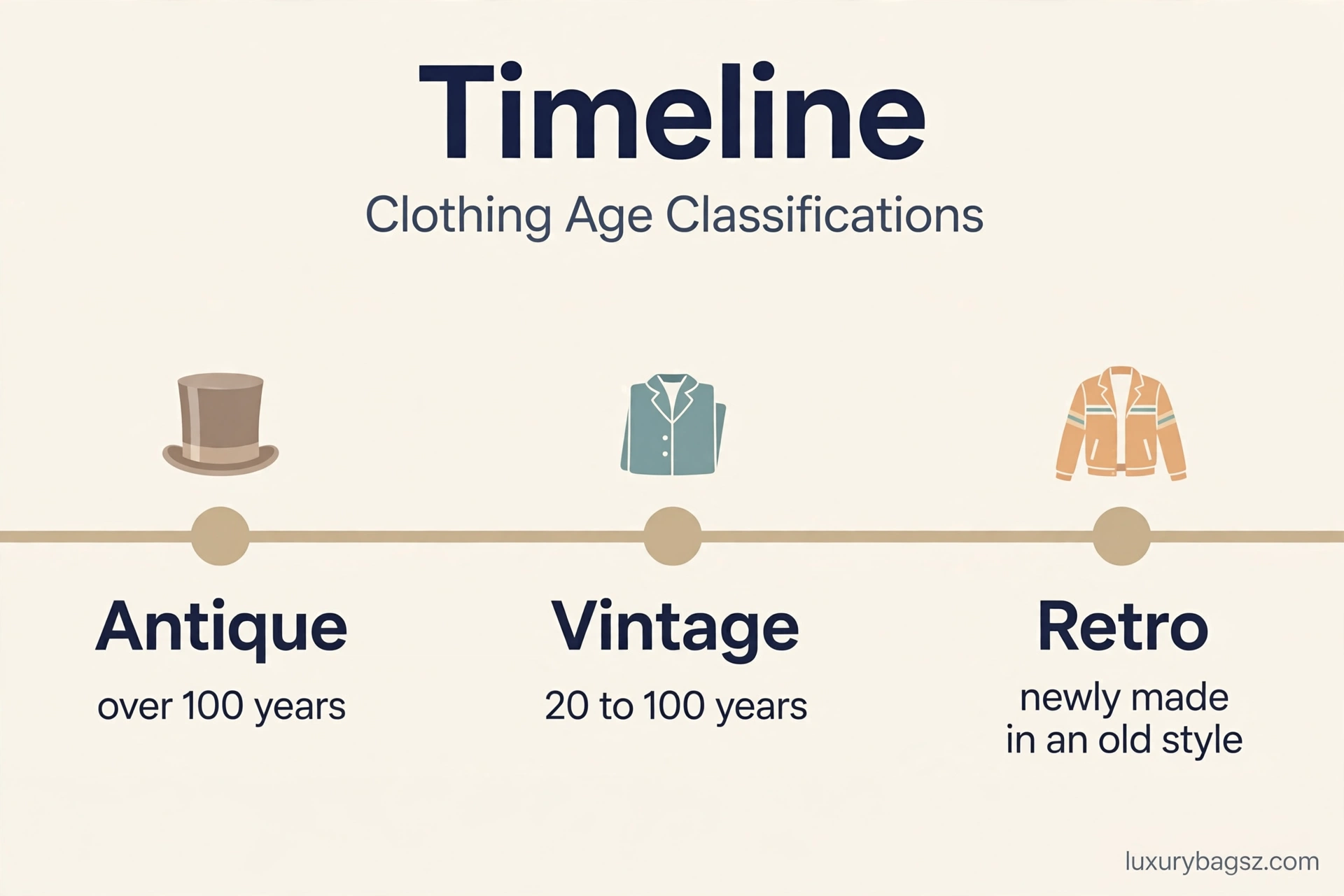
The usual timeline runs antique, vintage, then retro, but the boundaries are conventions, not laws. Antique clothing is generally over 100 years old: Victorian dresses, Edwardian coats, and early twentieth-century pieces that survive mostly in museums and collections. These garments are rarely worn daily, because their fabrics are fragile and their value is historical.
Vintage covers genuinely old clothing from roughly the past century, excluding antiques. Most sellers and guides set the vintage threshold at 20 years, so a garment from the early 2000s now qualifies as vintage under that rule. That surprises many shoppers, but time moves on, and yesterday's everyday clothes become today's vintage finds.
Here is where sources disagree, and honesty requires saying so plainly. Some guides set vintage at 20 years or older. Others insist on 30 years or more. A few define vintage as 40 to 100 years old, reserving a separate category for newer secondhand clothes. No single authority settles the question, so a piece from 2005 may be vintage by one shop's rule and merely secondhand by another's.
Retro sits outside the age ladder entirely. A retro garment is new, but deliberately styled after an earlier decade: 1950s polka dots, 1970s flares, 1980s shoulders, or 1990s minimalism. Retro-inspired is a close cousin, meaning modern clothes that borrow old details without fully copying a period look. Both are new clothes with old styling, not old clothes.
How to Tell a Real Vintage Piece
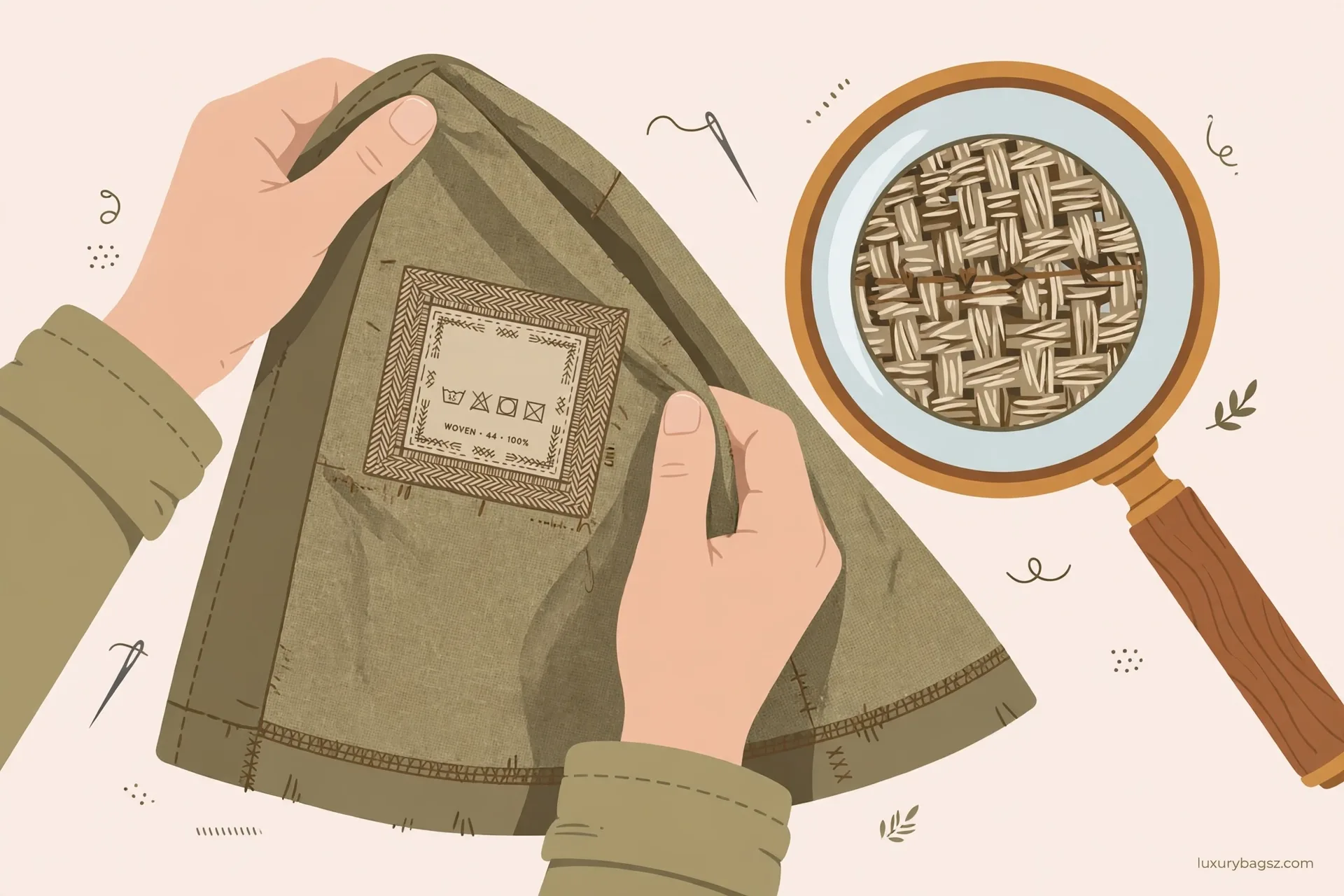
Labels are the fastest age clue. Older garments often carry woven labels with older fonts, brand names, and country-of-origin marks, while modern clothes usually have printed labels on white polyester with care symbols and barcodes. Researching how a brand's labels changed over time turns a vague guess into a confident check.
Fabric comes next. Vintage pieces frequently use natural fibres like wool, silk, and cotton, with a weight and drape that cheap modern synthetics rarely copy well. Feel the cloth and look at the lining. A supposedly 1960s dress in thin, shiny polyester should prompt questions, not excitement.
Construction seals the judgement. Hand-finished seams, metal zips, bound buttonholes, and pattern-matched prints suggest older, careful production. Modern mass production usually shows overlocked edges, plastic zips, and shortcuts at stress points. The guide to spot quality craftsmanship in designer clothing explains these details for every price level.
Condition and wear patterns also speak. Real vintage shows honest wear: softened fabric, gentle fading, and repairs from decades of use. Pristine condition is possible for stored pieces, but a flawless garment with modern labels and hardware is almost certainly retro. Combine all four clues, labels, fabric, construction, and wear, before you decide.
How to Spot Retro (and Retro-Inspired) Clothing
Retro pieces often announce themselves through modern details hiding under old styling. Check the care label first: modern washing symbols, barcode stickers, and current sizing standards all point to recent manufacture. A 1970s-style dress with a modern care label is retro, however convincing its print.
Hardware and fastenings give further clues. Modern plastic zips, snap buttons, and elastic waistbands differ from period hardware, even when designers imitate old looks. Stitching also tends to be more uniform on modern machines, while older pieces show slight variations from earlier production methods.
Fabric blends are another tell. Retro pieces often mix old looks with modern comfort: stretch denim that looks like rigid vintage denim, or wrinkle-free cotton that mimics older weaves. Those blends are practical, and often desirable, but they mark the garment as new. Nothing is wrong with retro, as long as it is priced and sold as retro.
Seller language helps too. Phrases like vintage-inspired, retro-style, or throwback design usually mean new clothes with old styling, and honest sellers use them correctly. Only the bare word vintage, without qualification, claims genuine age. When a listing says vintage but shows modern labels, trust the labels.
When the Labels Get Blurry
Real life rarely matches textbook definitions. A vintage garment altered in later decades carries both old and new parts. A retro piece made from genuinely old fabric blurs the line from the other side. And revivals during a garment's own era, such as 1980s clothes styled after the 1950s, create pieces that are vintage by age and retro by design at once.
The history of fast fashion adds another blur. Cheap modern copies of old styles flood the market, sometimes with fake vintage labels attached. Those copies are neither vintage nor honest retro; they are imitations. Learning label history and construction clues protects you from paying vintage prices for them.
Secondhand clothing adds a further wrinkle. A ten-year-old modern dress is secondhand, not vintage under most definitions, yet many sellers call it vintage anyway. That loose usage is so common that some buyers now treat vintage as a synonym for secondhand. For buying and pricing, though, the age distinction still matters, so ask sellers what they mean when they use the word.
When in doubt, describe the piece rather than labelling it. Say the garment was made in the 1980s, or made last year in a 1980s style, and let the facts speak. Precise description beats a disputed label every time, and it helps other buyers judge fairly too.
Which Should You Buy? A Practical Decision Guide
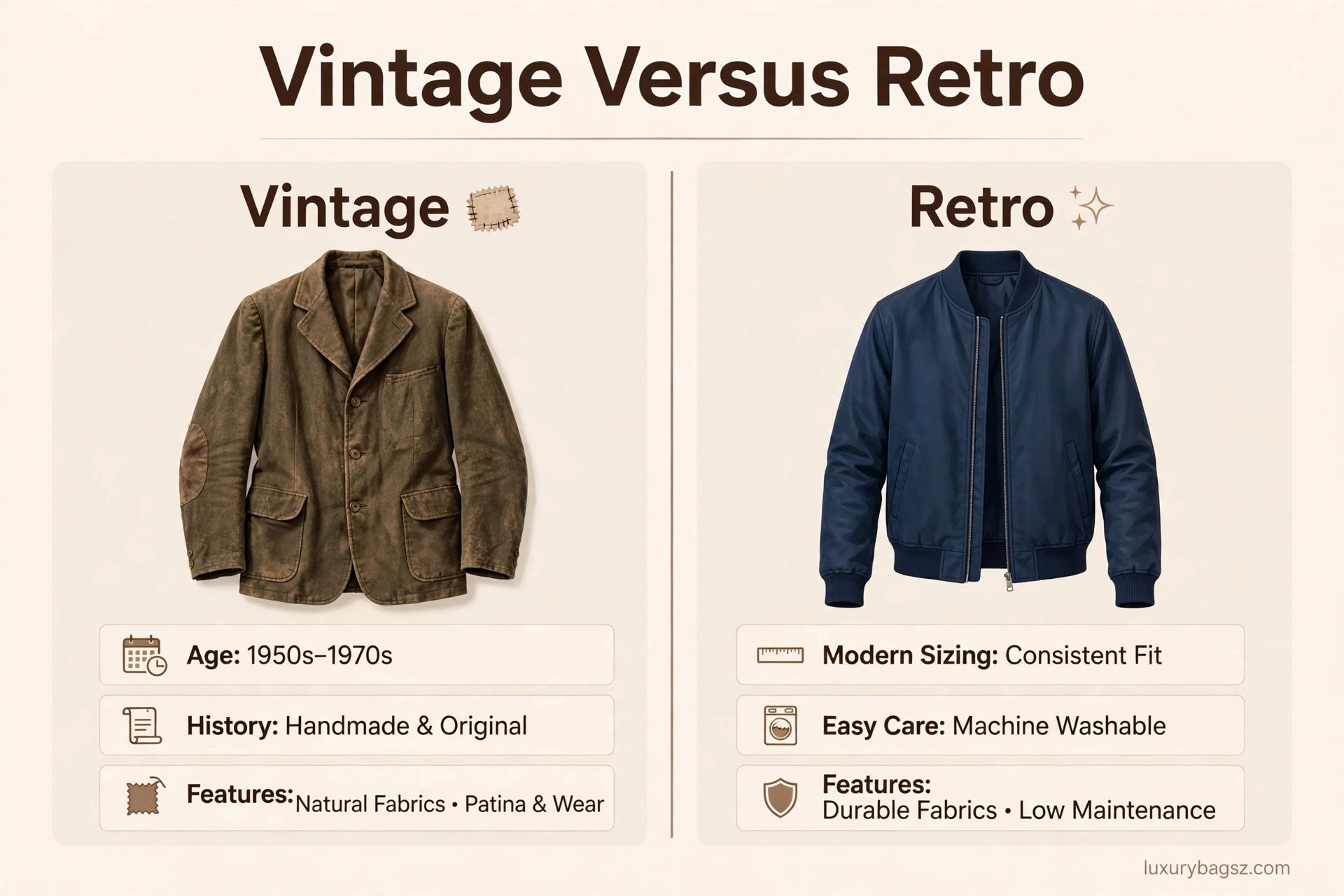
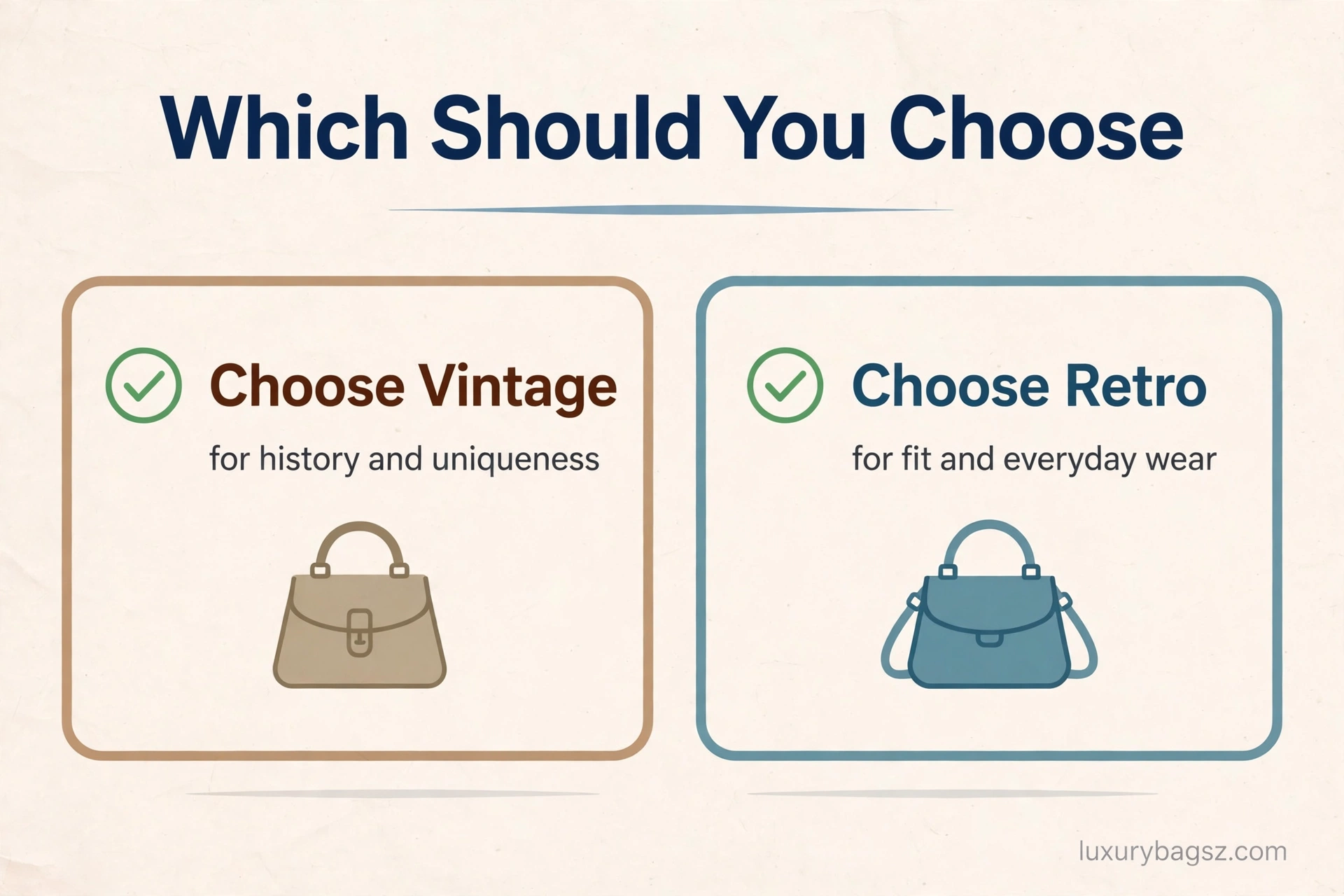
Choose vintage when you want uniqueness, history, or a specific period piece that no modern remake captures. Vintage suits collectors, special occasions, and shoppers who enjoy the hunt and accept its quirks: odd sizing, fragile fabrics, and limited availability. A genuine 1970s coat carries a story no new coat can copy.
Choose retro when you want old style with modern comfort. Retro offers exact sizing, sturdier fabrics, washable care, and repeat availability, usually at lower prices. It suits daily wear, work, and anyone who wants a 1950s look without 1950s fragility. Retro also suits beginners, since mistakes cost less.
Consider your lifestyle honestly. If you need clothes for commuting, parenting, or travel, retro usually wins on durability and care. If you dress for occasions, collect fashion, or love one-of-a-kind pieces, vintage rewards the extra effort. Many wardrobes mix both: retro for everyday, vintage for statement pieces.
Budget matters too. Vintage prices vary from thrift-shop bargains to collector premiums, while retro prices track normal retail. A quiet luxury approach can help here: invest in fewer, better pieces in either category, chosen for fabric and cut rather than label noise. Quality ages well, whether it started in 1975 or last year.
Pricing: What Vintage and Retro Are Worth
Vintage pricing follows scarcity and condition. Rare, well-kept, designer, or culturally significant pieces command premiums, while common, worn, or damaged pieces sell cheaply. Check sold listings for genuinely comparable items, matching era, brand, and condition, before you judge any vintage price.
Retro pricing follows retail logic. New production costs, brand, and quality set the price, and old styling adds little premium by itself. A retro dress should cost roughly what a similar new dress costs, not what a genuine vintage original costs. If a retro piece carries a vintage-level price, question the claim behind it.
Beware of three pricing traps. First, paying vintage prices for retro pieces mislabelled as vintage. Second, paying collector prices for common vintage that is merely old. Third, assuming that because something is rare, it must be valuable: rarity without demand does not raise prices. Sold listings, not asking prices, reveal what buyers actually pay.
Negotiation differs by category too. Vintage sellers often accept offers, especially for pieces listed a long time, because each piece is unique and holding costs mount. Retro retailers follow normal sale cycles, so patience and seasonal sales save more than haggling. In both cases, a polite, informed offer beats a lowball guess.
Caring for Each Type
Vintage clothes need gentle care, because age weakens fibres even when a piece looks strong. Wash cool and mild, avoid tumble drying, and store clean, dry, and away from sunlight. Check stored pieces for moths, especially wool, and repair small damage promptly before it spreads. For delicate or valuable pieces, a professional cleaner with vintage experience is worth the cost.
Retro clothes follow normal care labels, since their fabrics are new and tested for modern washing. That ease is a genuine advantage, especially for everyday pieces. Still, follow the label rather than assuming, because retro styling sometimes uses trims, prints, or embellishments that need gentler handling than the main fabric.
Storage differs too. Vintage pieces suit acid-free tissue, padded hangers for structured items, and folded storage for knits and heavy pieces. Retro pieces tolerate ordinary hangers and shelves, though good storage extends any garment's life. The guide to how to care for designer clothing covers the storage and washing habits that protect both categories.
Finally, wear both kinds with confidence. Vintage carries history, retro carries style, and neither needs apology or explanation. The best-dressed people mix them freely, letting fit, fabric, and personal taste lead, and letting the age label stay where it belongs: as useful information, not as the whole story.
Frequently Asked Questions
What is the difference between vintage and retro clothing?
Vintage clothing is genuinely old, usually at least 20 years old, while retro clothing is newly made in an older style. Age decides vintage status; appearance decides retro status. A new dress with a 1970s print is retro, and a dress made in the 1970s is vintage.
How old does clothing need to be to count as vintage?
Most guides say at least 20 years old, but sources disagree: some say 30 years, and others say 40 to 100 years. No single authority settles it, so a piece from the early 2000s may be vintage by one rule and merely secondhand by another. Check age evidence rather than relying on the label alone.
What is antique clothing?
Antique clothing is generally over 100 years old, such as Victorian or Edwardian pieces. These garments are fragile and historically valuable, so they usually belong in collections or museums rather than daily wear. Handle them with care and expert advice.
Is retro clothing worth less than vintage?
Usually, yes, because retro pieces can be remade, while vintage originals are finite. Retro prices follow normal retail logic, while vintage prices follow scarcity, condition, and demand. A retro piece priced like a vintage original deserves scrutiny.
Can a garment be both vintage and retro?
Yes, in a sense. A garment made decades ago in a style borrowed from an even earlier decade is vintage by age and retro by design. Describing both facts, such as a 1980s dress in 1950s style, avoids confusion better than either label alone.
How can I tell vintage from retro when shopping?
Check labels, fabric, hardware, and construction together. Woven labels, natural fibres, metal zips, and hand finishing suggest vintage, while printed labels, modern care symbols, plastic hardware, and stretch blends suggest retro. Style alone never proves age.
Is secondhand clothing the same as vintage?
No. Secondhand means previously owned, whatever its age, while vintage means genuinely old. A five-year-old modern dress is secondhand but not vintage under most definitions, even though many sellers use the words interchangeably.
Should I buy vintage or retro for everyday wear?
Retro usually suits everyday wear better, because it offers modern sizing, sturdier fabrics, and easier washing. Vintage suits special pieces, collectors, and shoppers who enjoy unique finds and accept fragile fabrics and odd sizing.
Why do shops call new clothes vintage?
Some sellers misuse the word to justify higher prices, while others repeat it innocently or use it as a synonym for secondhand. Always check age evidence, and treat a listing that says vintage but shows modern labels as retro, whatever the wording claims.
How do I care for vintage clothing?
Wash gently in cool water with mild detergent, avoid tumble drying, and store clean, dry, and out of sunlight. Check for moths, repair small damage promptly, and use a professional cleaner with vintage experience for delicate or valuable pieces.
Summary: Age Tells You Vintage, Style Tells You Retro
Vintage is old, retro looks old, and that single line clears up most confusion. When you shop, check labels, fabrics, and construction for age evidence, and do not let style or sales wording decide for you. Sources disagree on the exact vintage threshold, so describe pieces by their facts when labels get blurry.
Buy vintage for history and uniqueness, buy retro for style and everyday ease, and mix both with confidence. A wardrobe that understands the difference shops smarter, spends fairer, and wears its stories well, whether those stories began fifty years ago or last season.