

How to Buy Vintage Clothing Online: A Safe, Smart Guide to Bagging the Best Pieces
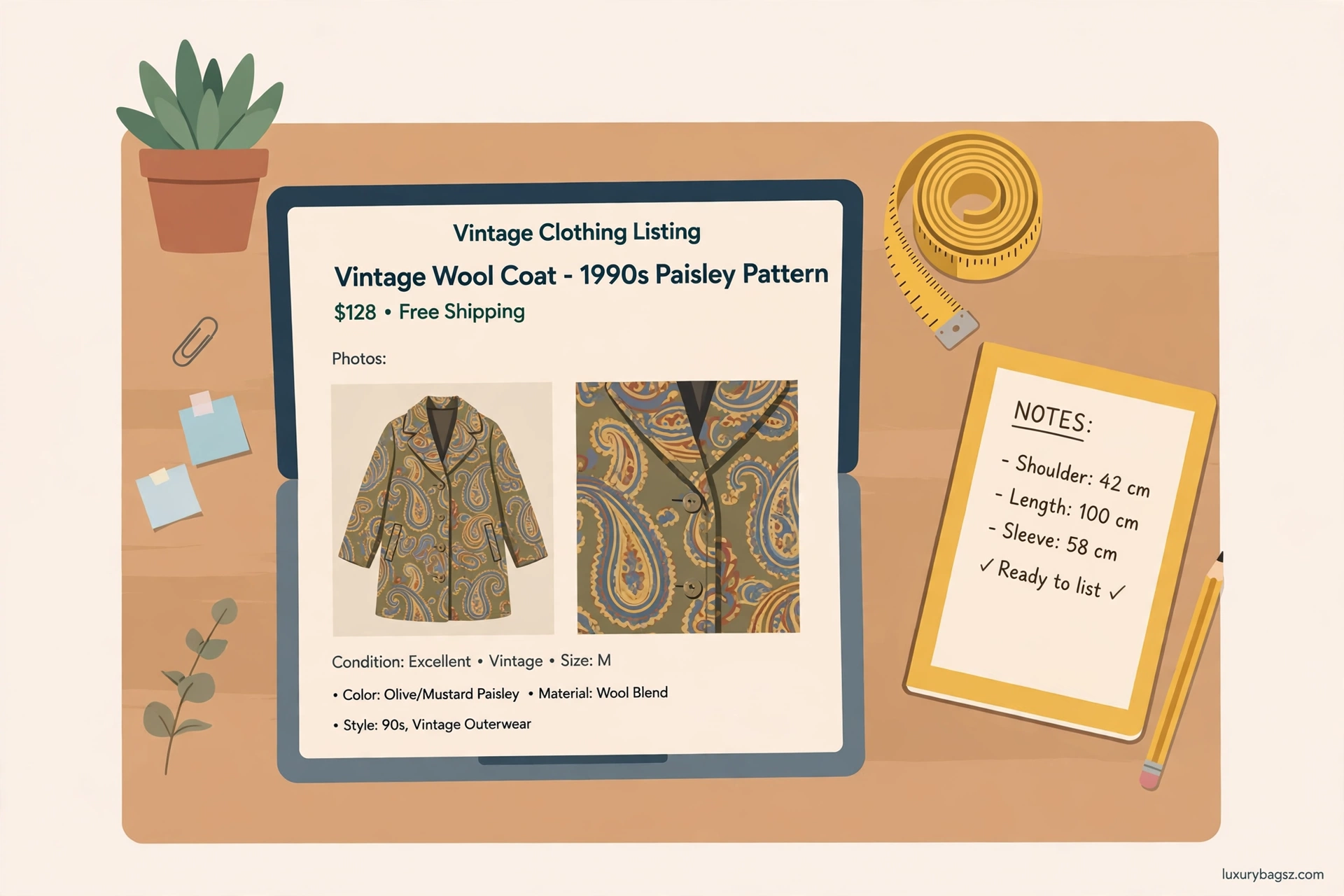
Buy Vintage Online by Measurements, Not Labels
Shop safely by starting with a written brief covering garment, era, fabric and budget, then judge every listing on photos, flat measurements, condition notes and return terms. Ignore the size on the tag and compare chest, waist, shoulder and length with a garment you already own that fits well.
Check recent seller reviews, test replies with a specific question, and keep payment on the platform’s protected route only. Judge price against sold listings for similar pieces, add shipping and any duties, and inspect the garment in good light on the day it arrives.
Bagging the Best Vintage Online: The Smart Way In
Buying vintage clothing online opens a wardrobe the size of the world. A 1970s coat from one country, a 1990s dress from another, and a rare designer piece from a third can all reach your door without leaving home. That reach is the joy of online vintage, and also its risk, because you buy from photos and promises rather than touch and try-on.
The good news is that most online vintage disappointments are preventable. They come from vague listings, wrong sizes, rushed purchases, and sellers who were never properly checked. This guide walks through each danger in order, from planning your search to inspecting the parcel, so your best find fits, lasts, and feels worth every penny.
Key Takeaways
- Plan your search with era, garment, fabric, and measurements before you scroll, or browsing will buy for you.
- Read every listing twice: photos, measurements, condition notes, and return terms all matter more than the headline.
- Vintage sizes mislead, so shop by flat measurements compared with clothes you already own.
- Check the seller's reviews, photos, and replies, and never pay outside a platform's protected payment route.
- Compare sold listings for a fair price, count shipping and duties, and inspect the parcel before you celebrate.
Start With a Plan, Not a Scroll
Endless scrolling is the enemy of good vintage buying. Without a plan, you will buy pieces that are merely old, or merely cheap, and wonder later why they never get worn. Start with a short brief: one garment type, one era or style, your measurements, and a maximum price. Write it down before you open any app.
Mood boards help more than wish lists. Save twenty images of outfits you love, then look for the pattern: colours, shapes, fabrics, eras. That pattern becomes your search language. Searching for a 1980s wool blazer in your measurements beats searching for vintage clothes, which returns a flood of everything.
Set alerts for your brief on the marketplaces you use. Saved searches with notifications catch fresh listings before other buyers, which matters for rare sizes and popular eras. Review alerts once a day rather than living inside the apps, so the hunt stays fun instead of compulsive.
Finally, decide what you will not buy. Fragile fabrics you cannot care for, sizes that need major tailoring, and pieces with no return option all belong on the no-list. A clear no-list protects your budget for the pieces that truly fit your plan.
Choose the Right Marketplace for Your Piece
Different marketplaces suit different hunts. Large auction and resale sites offer huge choice and sold-price history, which helps research. Curated vintage shops offer expertise, better descriptions, and often cleaned and repaired stock, at higher prices. Social-media sellers and small shops can hide gems, but need extra vetting.
For designer and higher-value pieces, favour platforms with authentication and buyer protection. Read the protection terms carefully: some cover fakes but not fit, and some require you to report problems within days. Knowing the exact cover before you pay prevents nasty surprises later.
For everyday vintage, thrift-style marketplaces and auction sites offer the best prices, though listings vary wildly in quality. Sort by newly listed for rare pieces, and by price or condition when you know exactly what you want. Filters for era, size, and material save hours of scrolling.
International sellers widen choice but add shipping time, duties, and return difficulty. A piece from abroad can still be a bargain, but only after you count the full landed cost. If returns across borders look impractical, treat the purchase as final, and inspect the listing with extra care.
Read the Listing Like a Detective
A good listing answers questions before you ask them. It shows the garment from several angles, close-ups of labels, seams, and flaws, flat measurements, fabric content, and an honest condition description. If any of those are missing, ask for them before you pay, and judge the seller by how fully they answer.
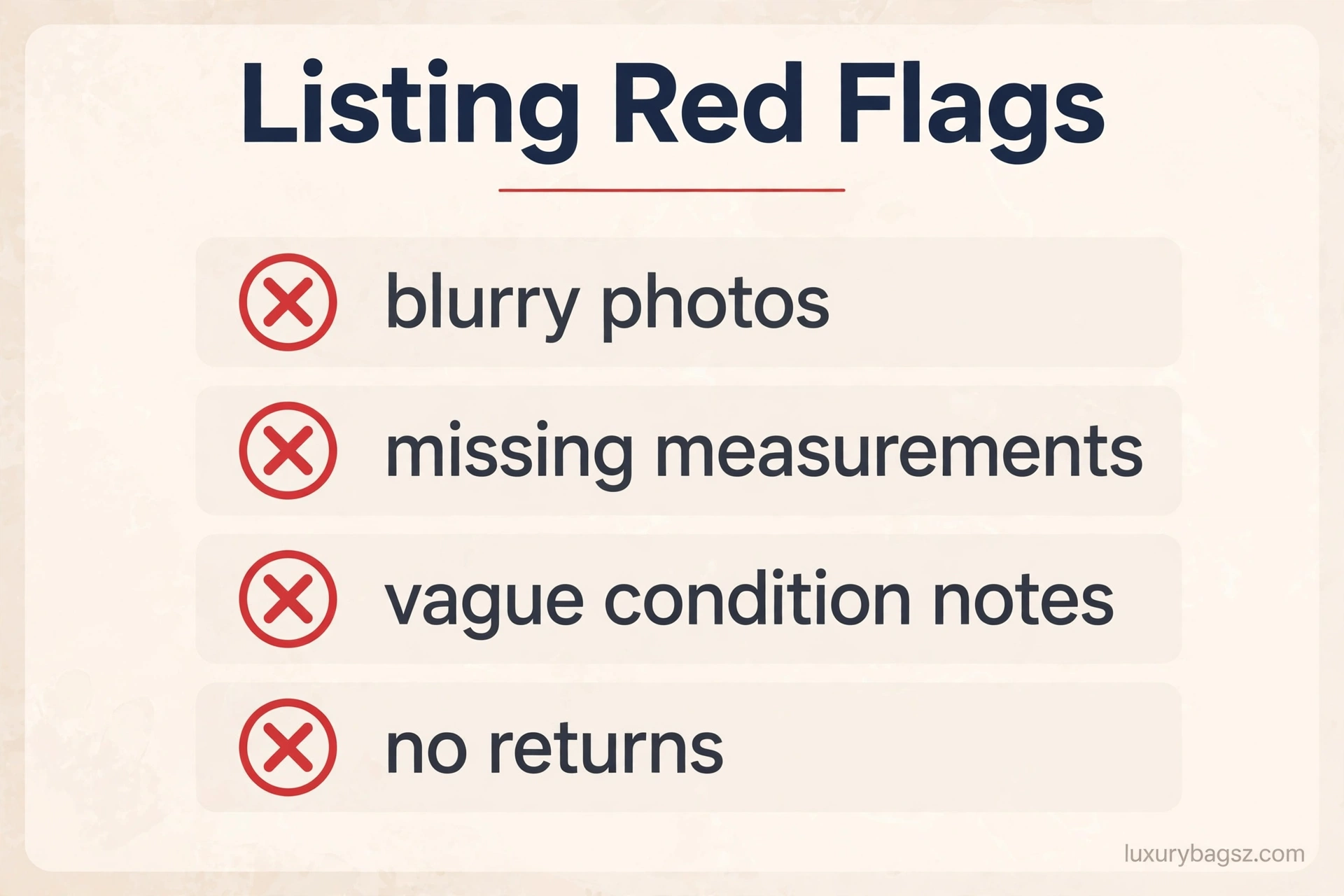
Study the photos in order. First, the overall shape and colour in natural light. Then the details: collar, cuffs, buttons, zips, lining, and hem. Then the flaws, which an honest seller photographs rather than hides. Blurry, filtered, or single-photo listings deserve suspicion, especially at higher prices.
Read condition words with care. Learn what condition grades mean on each platform, since excellent on one site may mean very good on another. Compare the words with the photos every time. A listing that says mint but shows worn cuffs is telling you to look closer, not to trust the label.
For designer pieces, authentication matters even more. Study how to authenticate a pre-owned designer bag for the same principles that apply to clothing labels, hardware, and stitching. Ask for label photos and provenance details, and use an independent opinion for any purchase that stretches your budget.

Measurements and Fit: The Online Essentials
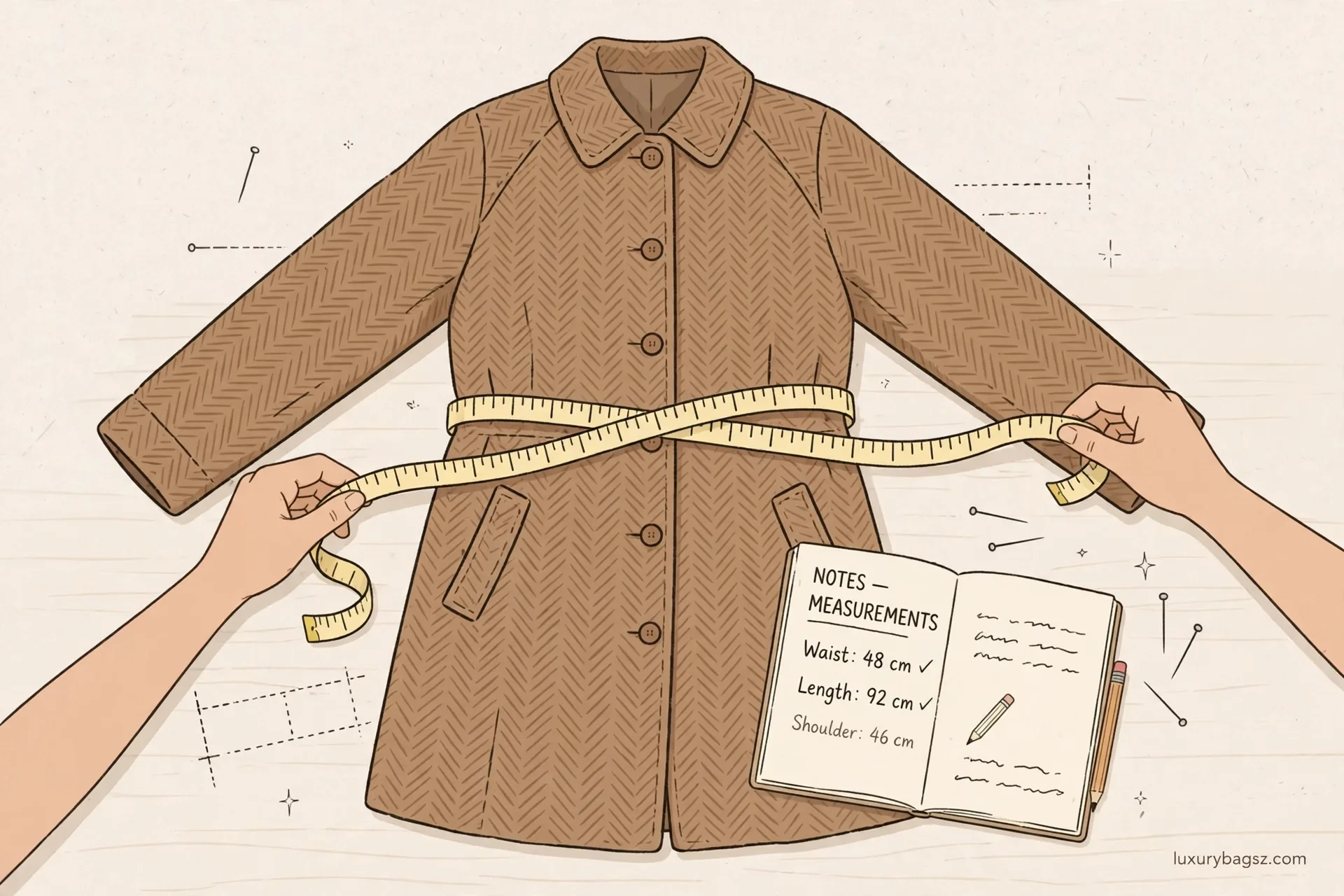
Vintage sizing is the biggest cause of online returns. A size 10 from the 1950s fits nothing like a modern size 10, and brands varied even within the same decade. Ignore the tag number completely, and shop only by measurements.
Keep your own measurements on your phone: shoulder, chest or bust, waist, hip, and preferred length, plus inseam and rise for trousers. Also keep measurements from a garment you own that fits well, since comparing garment to garment is more reliable than comparing body to garment.
Ask sellers for flat measurements when listings omit them: lay the garment flat, measure across the chest, waist, and hips, and double those numbers for circumference. Ask for shoulder width, sleeve length, and total length too. A seller who measures promptly and clearly is usually a seller who describes honestly.
Think about ease and fabric. Vintage denim and wool have little stretch, so you need a little room beyond your body measurements. Knits and jerseys forgive more. If you fall between sizes, favour the larger option, since taking in is easier than letting out, and a tailor can adjust a hem far more easily than a shoulder.
Check the Seller Before You Pay
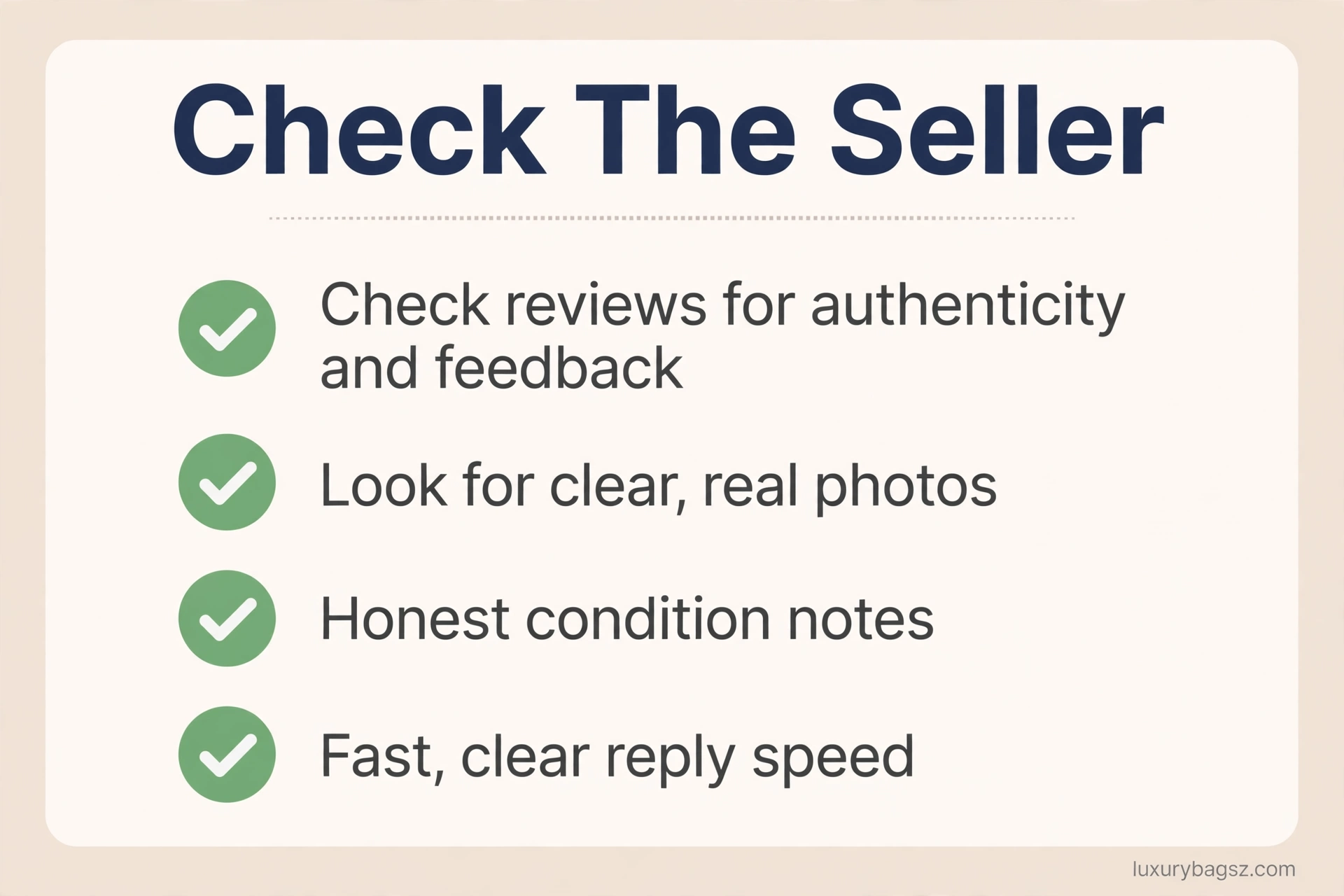
The seller matters as much as the garment. Read recent reviews, not just the overall rating, and look for comments about description accuracy, packaging, and problem handling. A seller with hundreds of sales and detailed reviews is usually safer than a new account with stock photos.
Test communication before you commit. Ask a specific question, such as the exact waist measurement or a photo of the lining. A fast, clear, helpful reply signals a careful seller. A vague, slow, or defensive reply signals trouble, however lovely the piece looks.
Check the shop's policies in full: returns, exchanges, refunds, and who pays return shipping. Some vintage sellers sell as-is with no returns, which is fair if stated clearly, but it means you carry all the risk. Weigh that risk against the price, and never assume a return option that is not written down.
Pay only through the platform's protected route. The safety rules for buying a pre-owned designer bag safely apply equally to vintage clothing: never wire money, never pay friends-and-family to a stranger, and never move a deal off-platform for a discount. That discount is usually the price of your protection.
Price Research: Pay Fair, Not First
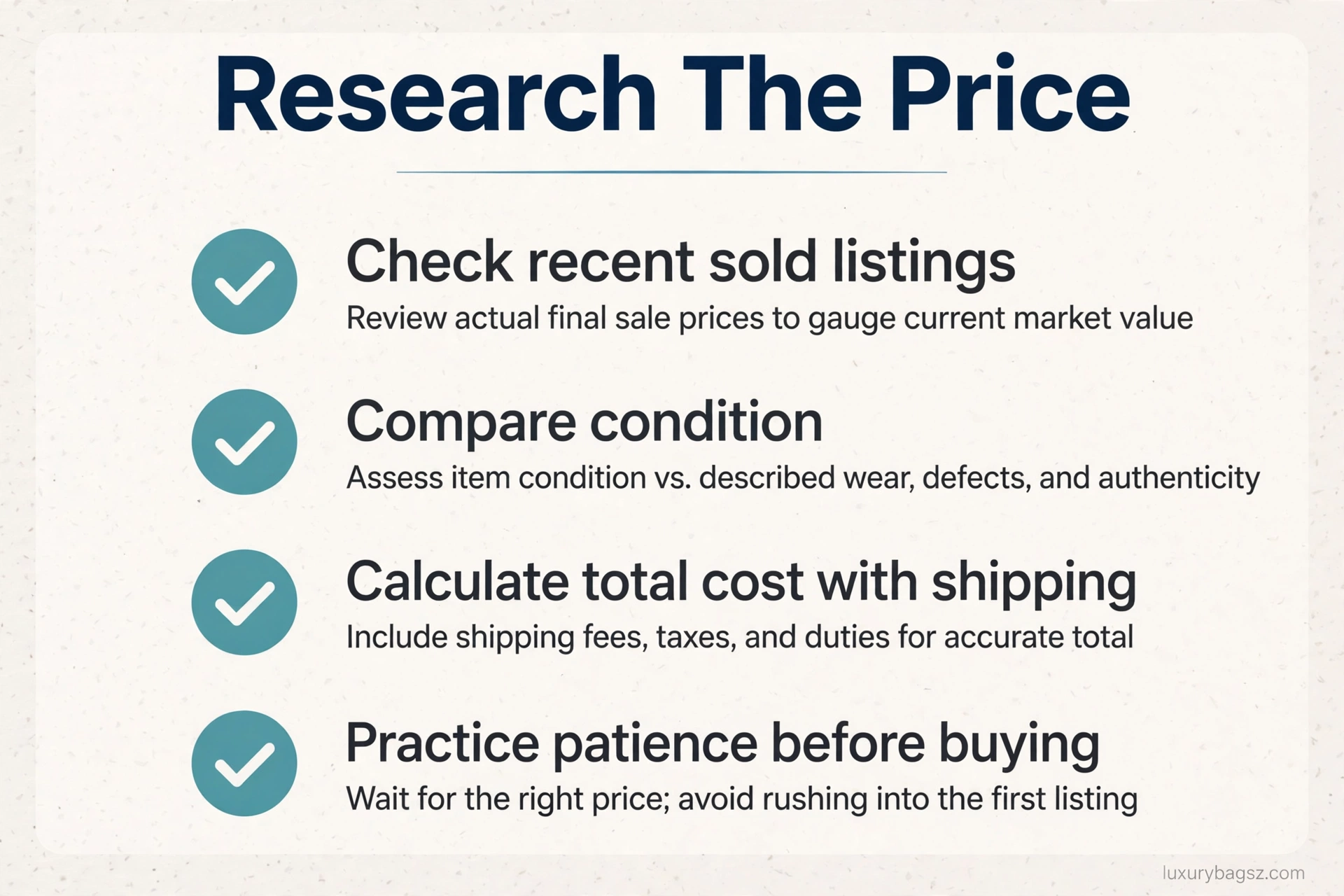
Vintage prices swing widely, and the first price you see is rarely the market price. Before you buy, check sold listings for the same or similar pieces, noting era, brand, condition, and size. Sold prices tell the truth that asking prices only guess at.
Compare like with like. A pristine designer coat and a worn high-street coat from the same decade are different markets, even when they look similar in a thumbnail. Condition, rarity, and label all move the price, so adjust your expectation for each factor rather than averaging everything together.
Watch how long listings have sat unsold. A piece listed for months at one price is probably overpriced, and a polite offer may succeed. Offer around ten to twenty percent below asking on older listings, and accept a refusal gracefully. On fresh, fairly priced listings, paying the asking price beats losing the piece to a faster buyer.
Count the total cost before you commit: item price, shipping, taxes, duties, and any platform fees. A cross-border bargain can lose its shine once duties land. Also budget for cleaning or tailoring, since many vintage pieces need a little care before they are ready to wear.
Shipping, Duties, and Returns
Shipping can make or break a vintage purchase. Ask how the seller packs fragile or beaded pieces, and whether tracking and insurance are included. A well-packed parcel with tissue, a sturdy box, and a clear label shows a seller who respects old clothes.
Cross-border buyers should check duties before ordering. Many countries charge import tax above a threshold, and some couriers add handling fees on top. Ask the seller to declare the true value, since under-declaring can cause customs trouble and voids insurance if the parcel is lost.
Returns need a plan, not a hope. Read the return window, who pays shipping, and whether refunds cover original shipping. Photograph the parcel as it arrives, unopened and then opened, so you have proof if the contents differ from the listing. Report problems promptly, in writing, through the platform.
If a piece arrives damaged or misdescribed, do not wash or alter it before raising the issue. Washing can weaken a return claim, and alterations usually void it entirely. Keep all packaging until you are sure you will keep the piece, and contact the seller calmly with photos and a clear request.

When It Arrives: Inspect Before You Celebrate
Inspect your parcel the day it arrives, in good light. Compare the garment with the listing photos and description, checking colour, size, fabric, and every flaw the seller disclosed. Then check for flaws they did not disclose, especially underarms, linings, hems, and fastenings.
Try it on with the clothes you plan to wear it with, and move around in it. Vintage garments sometimes look right on a hanger and wrong on a body, because old cuts sit differently. Check shoulders, waist, and length carefully, and decide quickly whether tailoring can fix any issue or the piece should go back.
Clean gently before the first full wear. Air the garment, spot-clean if needed, and follow fabric-safe guidance, such as the notes on how to clean cotton, linen and silk for the natural fibres you will meet most. For delicate, beaded, or heavily soiled pieces, a professional cleaner with vintage experience is worth the cost.
Finally, leave honest feedback. Good sellers deserve praise that helps other buyers, and poor descriptions deserve calm, factual notes. Your feedback keeps the vintage community trustworthy, and it helps the next buyer find their own best piece with a little less risk.
Frequently Asked Questions
Is it safe to buy vintage clothing online?
Yes, when you use reputable platforms, protected payments, and careful seller checks. Read listings fully, ask for measurements and extra photos, and never move a deal off-platform. Risk rises with vague listings, new sellers, and unprotected payments.
How do I know my size in vintage clothing?
Ignore the tag size and shop by flat measurements. Compare the garment's chest, waist, hip, shoulder, and length with your own body or a well-fitting garment you own. Ask the seller for measurements when the listing omits them.
What should a good vintage listing include?
Several clear photos, close-ups of labels and flaws, fabric content, flat measurements, an honest condition description, and clear shipping and return terms. Missing photos, measurements, or condition notes are reasons to ask questions before paying.
How can I avoid fakes when buying vintage online?
Buy from sellers with strong reviews, ask for label and hardware photos, and research how the brand's labels changed over time. For high-value designer pieces, use platform authentication or an independent service before you commit.
Should I haggle on vintage clothing prices?
Yes, politely, especially on listings that have sat unsold for weeks. Offer around ten to twenty percent below asking, explain your reasoning briefly, and accept refusals gracefully. Fresh, fairly priced pieces may sell fast, so do not haggle too long there.
What if my vintage piece does not fit?
Check the return policy before you buy, since some vintage sellers sell as-is. If returns are allowed, report the issue promptly with photos and keep the garment unwashed and unaltered. A tailor can fix small fit issues when returns are not possible.
How do duties and taxes work on international vintage orders?
Many countries charge import tax above a value threshold, plus courier handling fees. Check your country's rules before ordering, and count duties in the total cost. Ask the seller to declare the true value so insurance stays valid.
Can I return a vintage item if I change my mind?
Only when the seller's policy allows it, and usually within a short window at your shipping cost. Change-of-mind returns are less common for vintage than for new retail, so read the policy carefully and treat no-return purchases as final decisions.
How should I clean vintage clothes when they arrive?
Air them first, then clean gently by fabric type, using cool water and mild detergent for most natural fibres. Avoid machine washing delicate, beaded, or fragile pieces, and use a professional cleaner with vintage experience for anything valuable or heavily soiled.
What are the biggest red flags in a vintage listing?
Blurry or single photos, missing measurements, vague condition notes, no return option, pressure to pay off-platform, and prices far below market rate. Any one of these deserves questions, and several together mean walking away.
Final Verdict: The Best Vintage Buys Reward Slow, Careful Hunters
Buying vintage clothing online rewards the buyer who plans, reads, measures, and checks. The best pieces rarely go to the fastest clicker; they go to the shopper who saved the right search, asked the right question, and waited for the right price. That patience turns a risky hobby into a reliable one.
Start with one planned purchase and run every check in this guide. If it fits, feels right, and survives its first wash, you have a method you can repeat. Soon the parcels arriving at your door will feel less like gambles and more like finds, and your wardrobe will carry stories no new rail can offer.






