History of Fast Fashion: From Industrial Looms to Ultra-Fast Hauls
Fast Fashion at a Glance
Fast fashion is the business of making catwalk and celebrity styles quickly, cheaply, and in huge quantities, so that new clothes arrive in shops every week rather than every season. It changed what clothes cost, how often we buy them, and how long we keep them, and it reshaped factories, high streets, and the planet in the process.
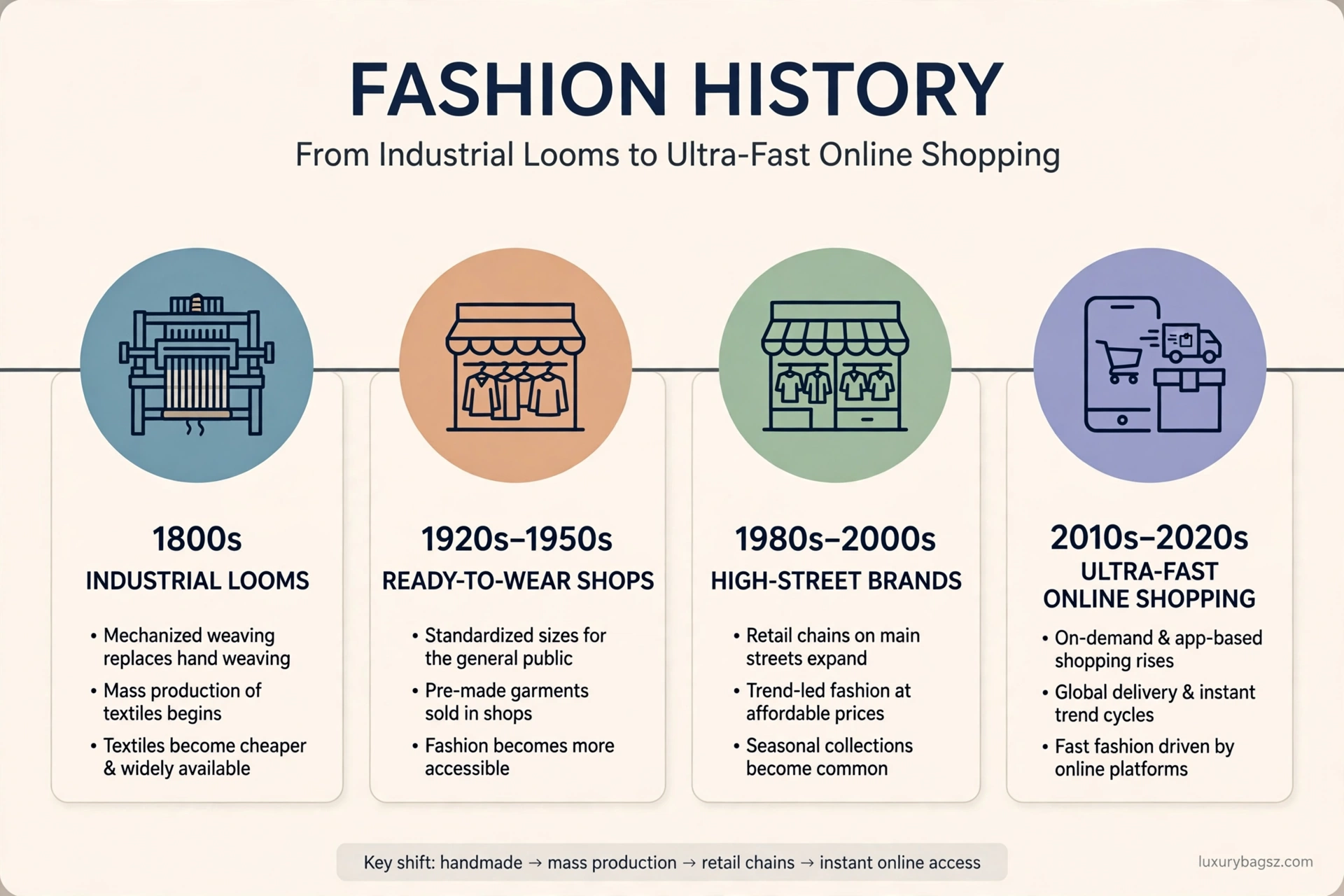
The story runs from industrial looms and ready-to-wear in the nineteenth century, through youth fashion and outsourcing in the twentieth, to Zara and H&M in the 1990s, and on to ultra-fast online brands in the 2010s and 2020s. Each step made fashion faster, cheaper, and more disposable.
Understanding that history helps you shop better today. It explains why a T-shirt can cost less than a coffee, why quality varies so much, and why second-hand, repair, and slower buying have become serious alternatives rather than niche hobbies.
Key Takeaways
- Fast fashion means rapid design, production, and distribution of trend-led clothing at low prices.
- Its roots lie in industrial textile production and ready-to-wear clothing of the nineteenth century.
- Zara (founded 1975) and H&M (origins 1947) pioneered the modern fast-fashion model.
- Outsourcing to low-wage factories in Asia from the 1980s onwards cut costs and sped production.
- The term fast fashion gained currency in the 1990s as weekly drops replaced seasonal collections.
- Ultra-fast brands in the 2010s used social media and data to launch thousands of styles weekly.
- Environmental and labour costs include water use, waste, carbon, and poor factory conditions.
- Rana Plaza in 2013, where over 1,100 people died, became a turning point for scrutiny.
- Alternatives include slow fashion, second-hand, rental, repair, and stronger regulation.
Before Fast Fashion: Clothes Made Slowly
For most of history, clothes were made slowly and kept for years. Fabric was woven by hand or on early looms, garments were cut and sewn by tailors or at home, and a wardrobe was a significant investment. People owned fewer clothes, repaired them, and passed them down.
The Industrial Revolution changed production first. Power looms, spinning machines, and later sewing machines made fabric and garments faster and cheaper, and factories replaced workshops for basic clothing. By the mid-nineteenth century, ready-to-wear, clothes made in standard sizes rather than to measure, was growing in Europe and America.
Ready-to-wear did not yet mean fast fashion. Collections still followed seasons, shops stocked limited ranges, and quality varied but was generally intended to last. The idea of buying a new outfit every week would have seemed wasteful and extravagant to most shoppers.
What industrial production did create was the infrastructure for speed: factories, supply chains, standard sizes, and distribution networks. Fast fashion later exploited that infrastructure, pushing it to an extreme that its inventors never imagined.
Youth, Boutiques, and the 1960s Turning Point
The 1960s brought youth fashion, which broke the seasonal, adult-led model. Young people in London, Paris, and New York wanted clothes that reflected music, rebellion, and identity, and boutiques such as Mary Quant's Bazaar in London offered affordable, trend-led styles in small batches.
Boutiques proved that fashion could be quick, cheap, and disposable in a new way. Styles changed rapidly, prices were low, and young shoppers bought often. The boutique model did not yet involve global supply chains, but it established the appetite for constant novelty that fast fashion would later feed.
Department stores and high-street chains noticed. They began copying boutique and catwalk styles faster, using cheaper fabrics and simpler construction to hit lower prices. The gap between a catwalk show and a high-street copy narrowed from months to weeks.
By the 1970s, youth fashion, music, and cheap production were converging. The cultural idea that clothes should express the moment, not last a lifetime, was taking hold, and the industry was learning how to serve it at scale.
Zara and H&M: The Modern Model Takes Shape
Zara, founded in Spain in 1975 by Amancio Ortega, built a model based on speed and proximity. Unlike rivals that outsourced everything to Asia with long lead times, Zara kept much production near Spain, used real-time sales data, and delivered new styles to stores twice a week. A design could go from sketch to shop in weeks.
H&M, whose origins lie in a Swedish women's clothing shop called Hennes founded in 1947, expanded through the 1970s and 1980s into a global high-street chain. It combined low prices, wide ranges, and designer collaborations, making fashion accessible to mass audiences across Europe and then worldwide.
Together, Zara and H&M defined fast fashion's core logic: copy trends quickly, produce in large volumes, price low, and refresh constantly. Shoppers learned to visit often, because stock changed weekly, and to buy immediately, because a style might vanish within days.
The model also changed design. Instead of two seasonal collections, fast-fashion brands produced dozens of mini-collections a year, with buyers and designers tracking catwalks, street style, and sales data to decide what to make next. Fashion became a data business as much as a creative one.
Outsourcing, Asia, and the Price Squeeze
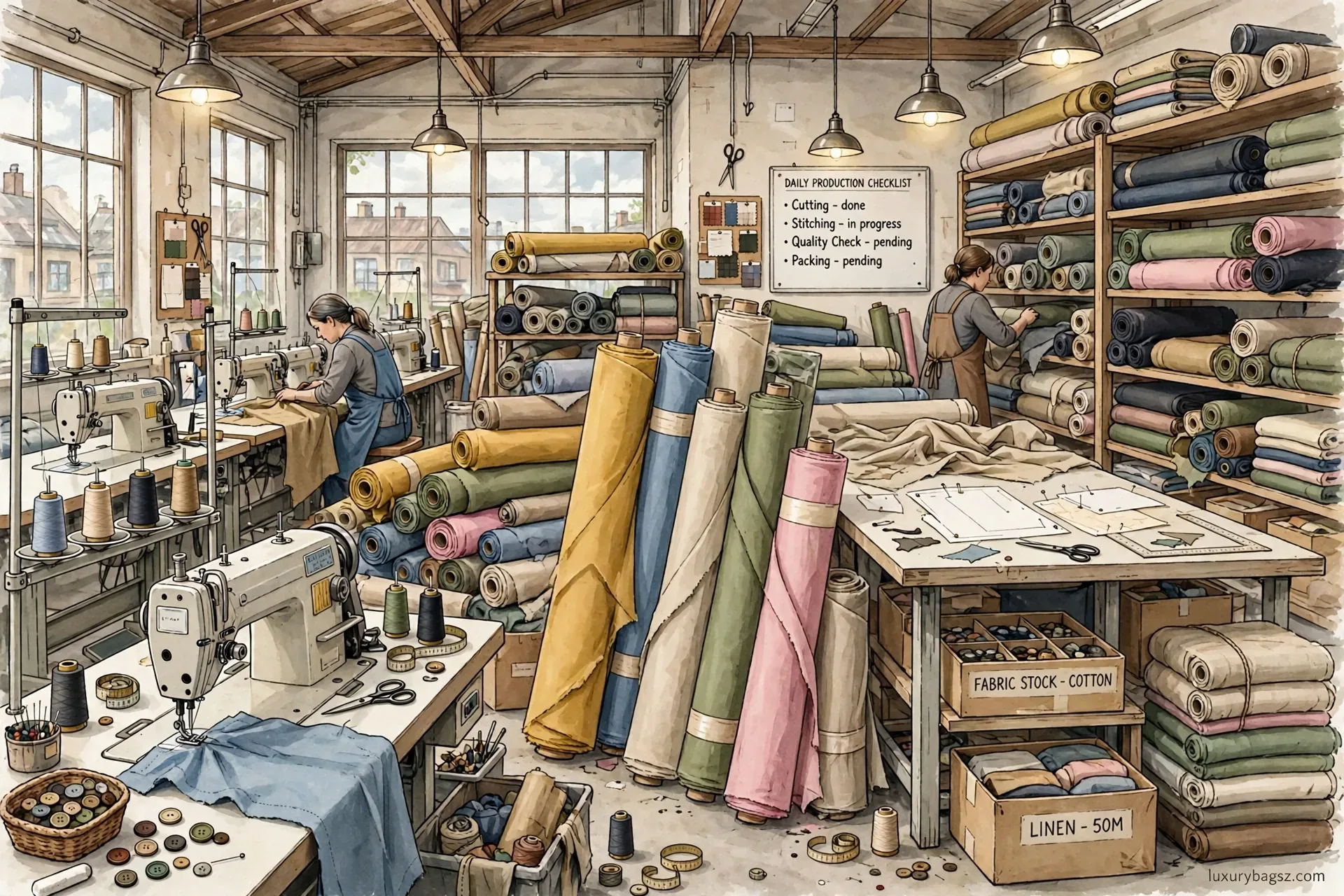
From the 1980s onwards, most Western brands moved production to Asia, where labour costs were lower, factories were large, and governments welcomed export manufacturing. Countries including China, Bangladesh, Vietnam, Cambodia, and India became the world's clothing factories.
Outsourcing cut prices dramatically, but it also distanced brands from the people who made their clothes. A brand in London or New York might never visit the factory that sewed its T-shirts, relying on agents, audits, and codes of conduct that varied in rigour and honesty.
The price squeeze affected quality too. To hit a low retail price while covering shipping, marketing, and profit, brands simplified construction, used thinner fabrics, and reduced finishing. A fast-fashion garment was designed to look good for a season, not to last for years.
Workers bore much of the cost. Low wages, long hours, unsafe buildings, and weak unions were common in parts of the industry, and while many factories were well-run, the system rewarded speed and cheapness over safety and pay. That tension would explode into public view in 2013.
The 1990s: Fast Fashion Gets Its Name
The term fast fashion gained currency in the 1990s, reportedly used by American media to describe Zara's model of taking a design from sketch to store in as little as two weeks. The phrase stuck because it captured exactly what was new: fashion at the speed of news, not seasons.
The 1990s also brought global brands to new markets, with H&M, Zara, Gap, and others opening stores across Europe, America, and Asia. Shopping centres filled with high-street fashion, and the weekly shop became a leisure activity for millions of young people.
Designer collaborations accelerated the trend. H&M's partnerships with luxury designers, starting in the 2000s, let shoppers buy a famous name at a high-street price, with queues and sell-outs that generated huge publicity. Fast fashion was no longer just cheap; it was exciting.
By the end of the 1990s, the industry had a clear shape: a few giant brands, global supply chains, weekly drops, and shoppers who expected constant novelty at low prices. The next decade would push that shape further, with new rivals and new technology.
Primark, Forever 21, and the Race to the Bottom
Primark, founded in Ireland in 1969 as Penneys, expanded aggressively in the 2000s with an ultra-low-price model that undercut even Zara and H&M. Its stores offered T-shirts for a few pounds, encouraging bulk buying and disposable attitudes that critics called the race to the bottom.
Forever 21, founded in Los Angeles in 1984 by Korean-American entrepreneurs, brought a similar model to America, with huge stores, rapid turnover, and prices aimed at teenagers and young women. It grew spectacularly, then collapsed into bankruptcy in 2019, a warning about the risks of endless expansion.
Boohoo, founded in Manchester in 2006, took fast fashion online, using social media influencers, rapid drops, and low prices to reach young shoppers without stores. Its model, and that of rivals such as PrettyLittleThing and Missguided, foreshadowed the ultra-fast era.
These brands proved that price could go lower still, but they also exposed the model's fragility. Thin margins, huge stock, and fickle trends made even giants vulnerable, while labour and environmental scrutiny grew with every exposé of factory conditions.
The Internet Changes Everything
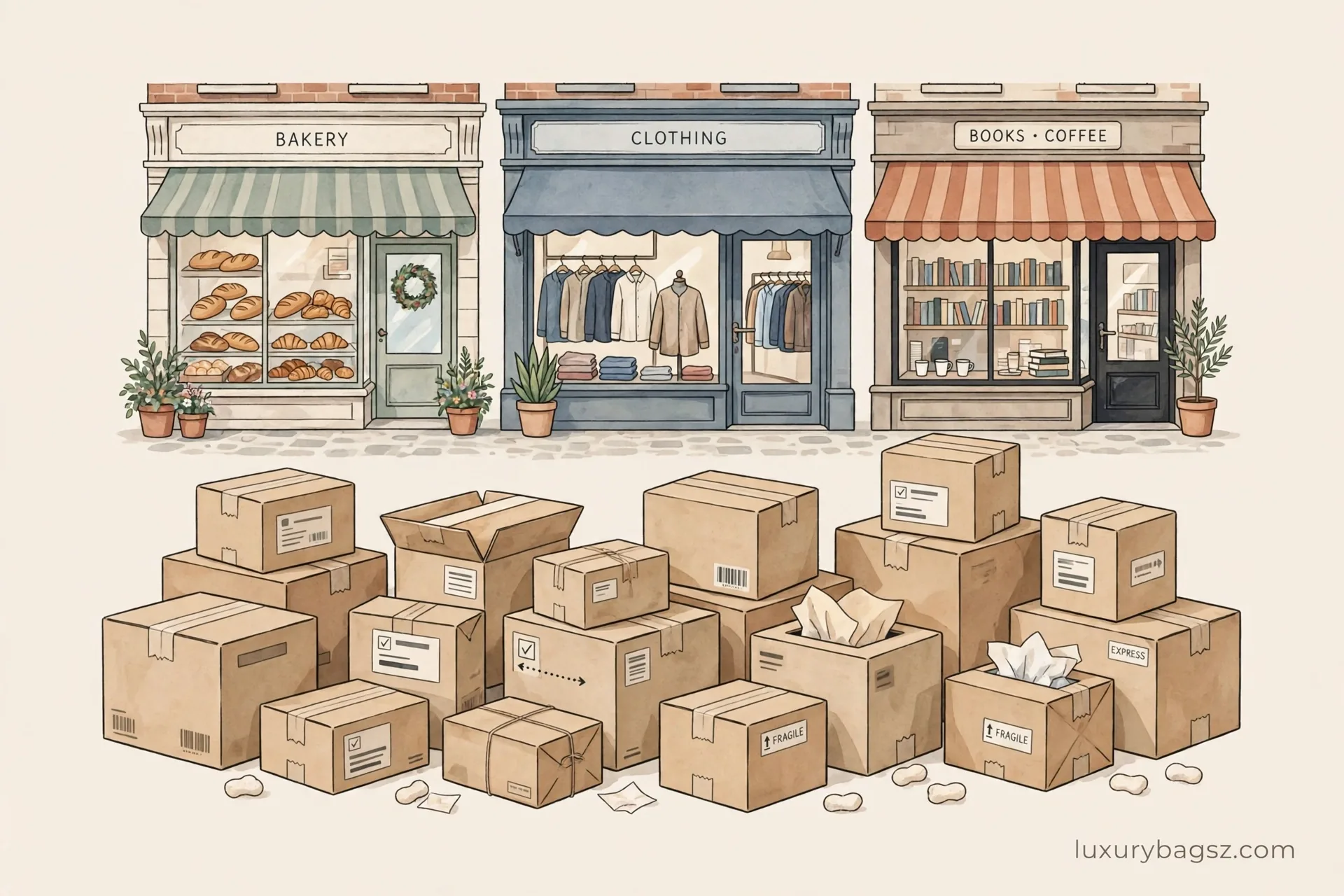
Online shopping, which grew rapidly in the 2000s, removed the need for stores and changed how fast fashion worked. Brands could launch styles online in days, test them with small batches, and reorder winners instantly, using data from clicks, searches, and social media.
Social media, especially Instagram from 2010 onwards, made fashion visual and immediate. Influencers wore new outfits daily, followers wanted the same look instantly, and brands learned to design for photographs rather than for longevity. An outfit that looked good in a photo, even if it fell apart after a wash, could sell well.
Haul culture, where creators filmed themselves opening large orders of cheap clothes, normalised buying in bulk and returning or discarding much of it. The environmental cost of returns, packaging, and transport grew, while the social cost, in overconsumption and debt, drew criticism.
The internet also gave critics a voice. Factory exposés, environmental campaigns, and labour activism spread online, reaching shoppers directly and pressuring brands in ways that traditional media alone never had. Fast fashion's speed now applied to its critics too.
Ultra-Fast Fashion: Shein and the Data Model
Shein, founded in China in 2008, took fast fashion to a new extreme. Using a network of small factories, real-time data, and a test-and-reorder system, it launched thousands of new styles every week, priced lower than high-street rivals, and sold them globally through an app-driven, social-media-fuelled model.
Ultra-fast fashion differs from Zara's model in degree and method. Where Zara made hundreds of styles with weekly drops, Shein made thousands with daily drops, using algorithms to spot trends on social media and turn them into products in days. Small initial batches reduced waste from unsold stock, but total volume grew enormously.
Other ultra-fast brands, including Temu in fashion and established rivals copying Shein's methods, followed the same logic: data-led design, tiny batches, rapid reordering, and influencer marketing. The result was more choice, lower prices, and faster trend cycles than ever before.
Critics raised new concerns: intellectual-property copying, product safety, labour conditions in small workshops, and the environmental impact of shipping millions of small parcels worldwide. Regulators in Europe and America began scrutinising ultra-fast models more closely, though rules remain uneven.
Rana Plaza: The Disaster That Changed the Debate
On 24 April 2013, the Rana Plaza building in Dhaka, Bangladesh, collapsed, killing over 1,100 people, mostly garment workers, and injuring thousands more. The building housed factories making clothes for Western brands, and cracks had been reported the day before, yet workers were ordered inside.
Rana Plaza became a turning point because it made abstract supply chains concrete. Shoppers learned the names of factories, brands, and victims, and the disaster exposed the gap between corporate codes of conduct and factory reality. It was not an isolated accident but a symptom of a system that prioritised speed and price over safety.
The aftermath brought the Bangladesh Accord on Fire and Building Safety, signed by brands, unions, and others, which introduced independent inspections and remediation. It also brought greater transparency, with more brands publishing factory lists, and greater consumer awareness of where clothes come from.
Rana Plaza did not end fast fashion, but it changed the debate. Labour conditions, building safety, and brand responsibility became mainstream concerns, and shoppers, journalists, and campaigners began asking harder questions about who makes their clothes and under what conditions.

The Environmental Cost: Water, Carbon, and Waste
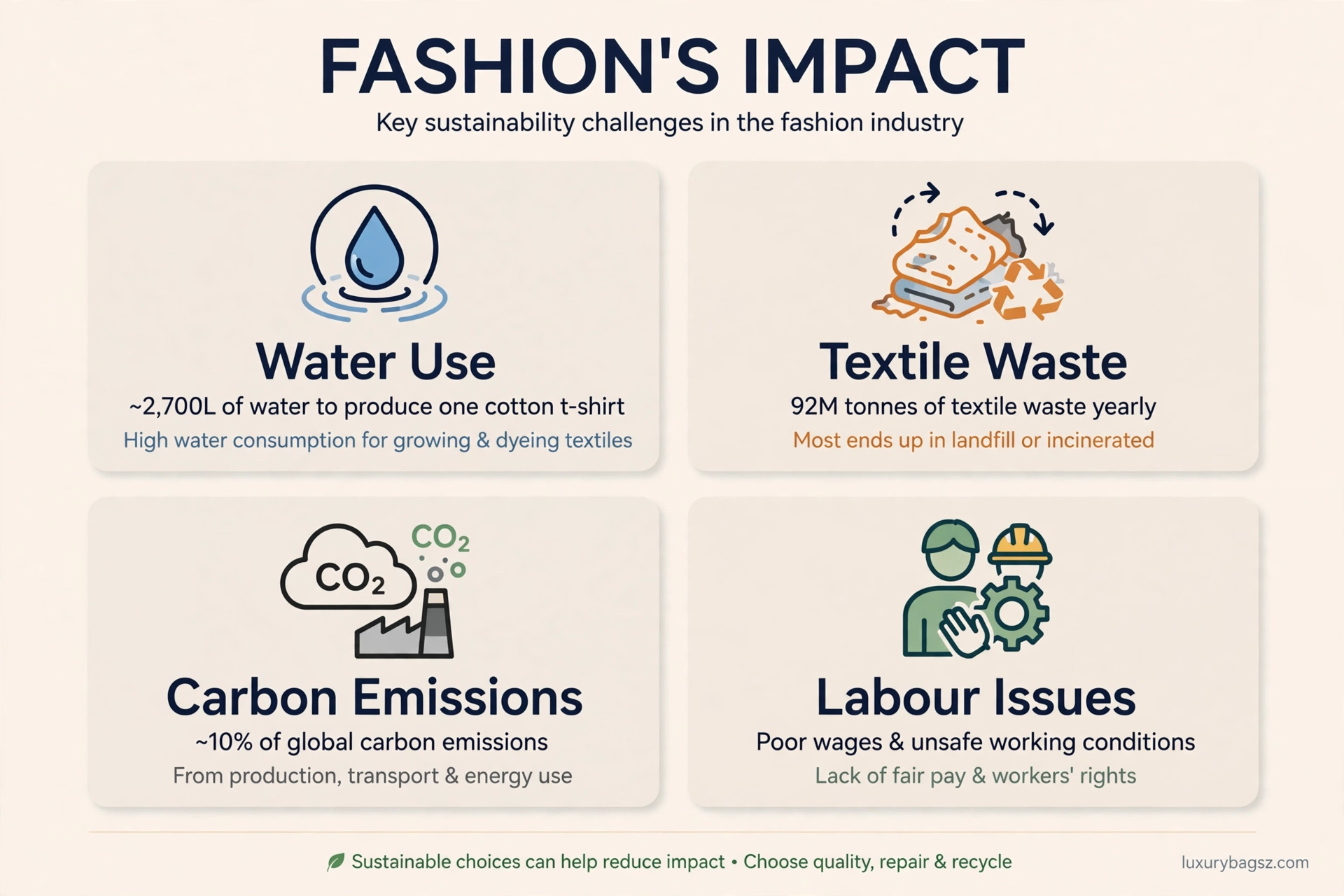
Fast fashion's environmental cost is large and widely documented, though exact figures vary by study. Fashion is often cited as responsible for around a tenth of global carbon emissions, a figure that reflects production, transport, and consumer use, though estimates differ and should be treated as indicative rather than precise.
Water use is another major impact. Cotton farming needs large amounts of water, dyeing and finishing use more, and a single pair of jeans is commonly cited as requiring thousands of litres of water across its life, from cotton field to final wash. Those figures vary by method and region, but the scale is consistently large.
Waste is the most visible impact. Millions of tonnes of clothing are discarded annually, much of it synthetic fibre that does not biodegrade, and much of it sent to landfill or exported to countries that cannot process it. Fast fashion's short life cycle, with garments worn few times before disposal, drives that waste.
Microplastics add a further problem. Synthetic clothes shed tiny fibres in washing, which enter waterways and oceans, and which are hard to filter or remove. The cumulative effect of billions of synthetic garments is a growing environmental concern that regulators are only beginning to address.
Labour, Wages, and Who Pays for Cheap Clothes
Cheap clothes are cheap because someone, somewhere, is paid little to make them, or because materials, safety, and environmental protections are cut. Garment workers, mostly women in Asia, often earn wages below a living wage, work long hours, and face insecure contracts, especially in subcontracted workshops.
Unions and collective bargaining are weak in many garment-producing countries, and workers who organise face dismissal or worse. Brands' purchasing practices, including last-minute orders, price pressure, and short lead times, make it harder for factories to pay well and invest in safety, even when factory owners want to.
Child labour, forced labour, and modern slavery have been documented in parts of the fashion supply chain, including cotton picking and subcontracted workshops. These abuses are not universal, but they persist where transparency is weak and enforcement is poor, and they demand vigilance from brands and shoppers alike.
Progress exists, including better factory inspections, living-wage pilots, and transparency initiatives, but it is uneven. Shoppers who want to support better labour practices should look for credible certifications, brand transparency reports, and independent campaign assessments, rather than vague claims on a label.
Quality, and Why Fast Fashion Falls Apart
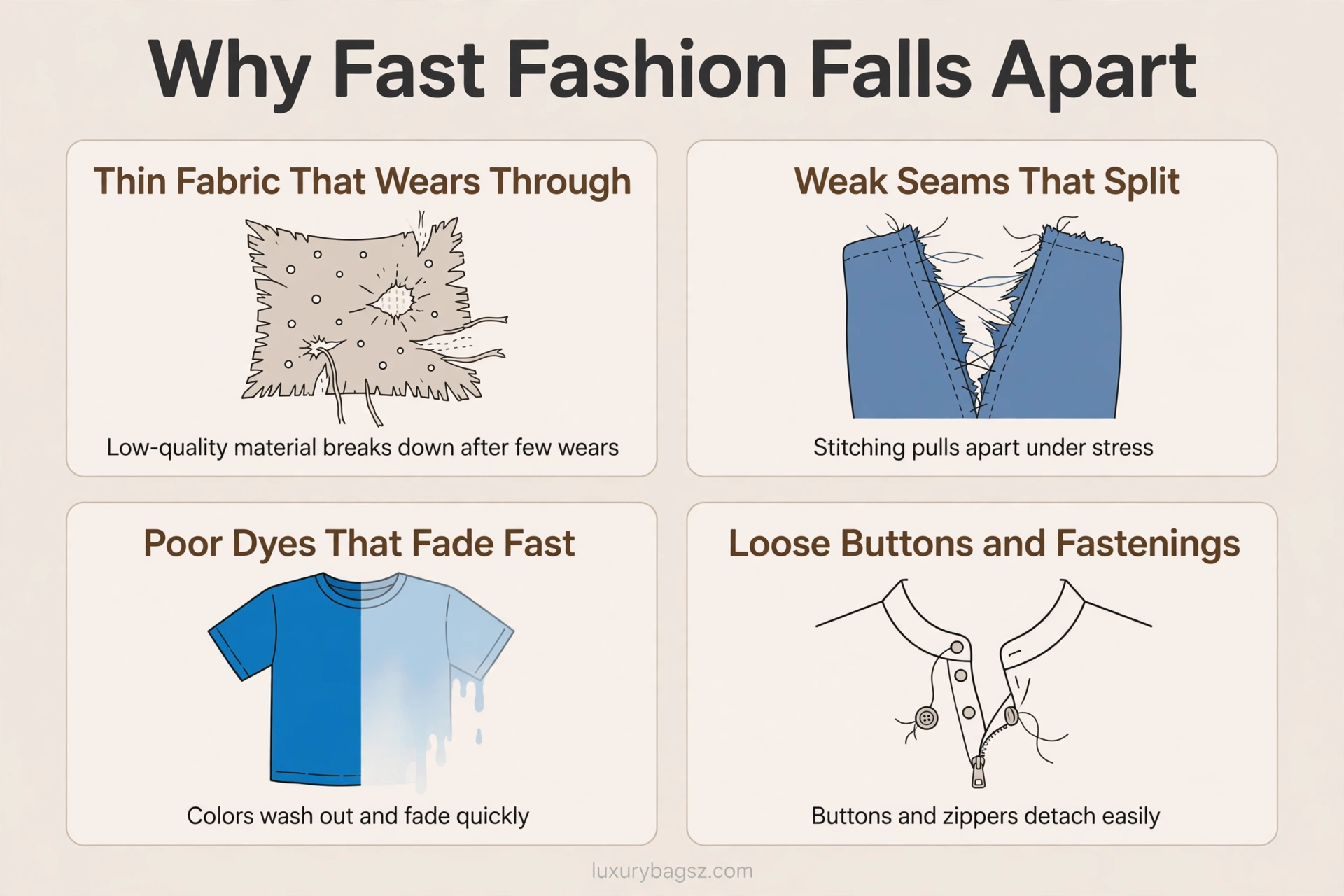
Fast-fashion quality is designed for a short life. Seams are simpler, fabrics are thinner, buttons and zips are cheaper, and finishing is minimal, all to hit a low price and a fast turnaround. A garment may look good on first wear and deteriorate quickly after a few washes.
That short life is not always an accident. Planned obsolescence, where products are designed to fail or go out of fashion quickly, encourages repeat buying, and fast fashion's trend cycle does the same culturally. A style that is fashionable for a month need not last for a year.
Quality varies within fast fashion, however. Some fast-fashion basics, especially simple cotton T-shirts and knitwear, can last well with care, while complex items such as tailored jackets and embellished dresses fail faster. Price alone does not predict quality, and inspecting seams, fabric, and finishing in store helps.
For shoppers, quality checks matter more than brand. Pull a seam gently, check button security, look at fabric density, and read the care label. A slightly more expensive fast-fashion item that lasts twice as long is cheaper per wear than a bargain that falls apart after three washes.
Slow Fashion, and the Counter-Movement
Slow fashion, a term popularised in the 2000s, advocates the opposite of fast fashion: fewer, better clothes, made transparently, worn longer, and repaired when needed. It draws on craft, sustainability, and timeless design, and it includes independent makers, ethical brands, and heritage houses.
Slow fashion brands typically produce smaller collections, use better materials, pay fairer wages, and publish supply-chain information. Their prices are higher, but their cost per wear is often lower, because garments last longer and suit more occasions.
The movement also includes cultural shifts: capsule wardrobes, where a small number of versatile pieces cover many outfits; mending and visible repair, where a patched garment becomes a statement; and clothing swaps, where friends exchange pieces rather than buying new.
Slow fashion is not a complete solution on its own, because it serves a smaller, wealthier audience and cannot clothe the world alone. Its value lies in changing expectations: showing that clothes can be made well, worn long, and valued, rather than treated as disposable.
Second-Hand, Rental, and Resale
Second-hand shopping is fast fashion's most effective counterweight. Charity shops, vintage stores, consignment platforms, and resale apps let clothes live second and third lives, reducing demand for new production and offering unique styles at lower prices.
Resale has grown rapidly, with platforms for designer, high-street, and vintage clothing attracting millions of users. Buying second-hand, including designer pieces through vetted sellers, combines sustainability with style, and our general guide on buying pre-owned safely covers seller checks that apply to clothing as well as bags.
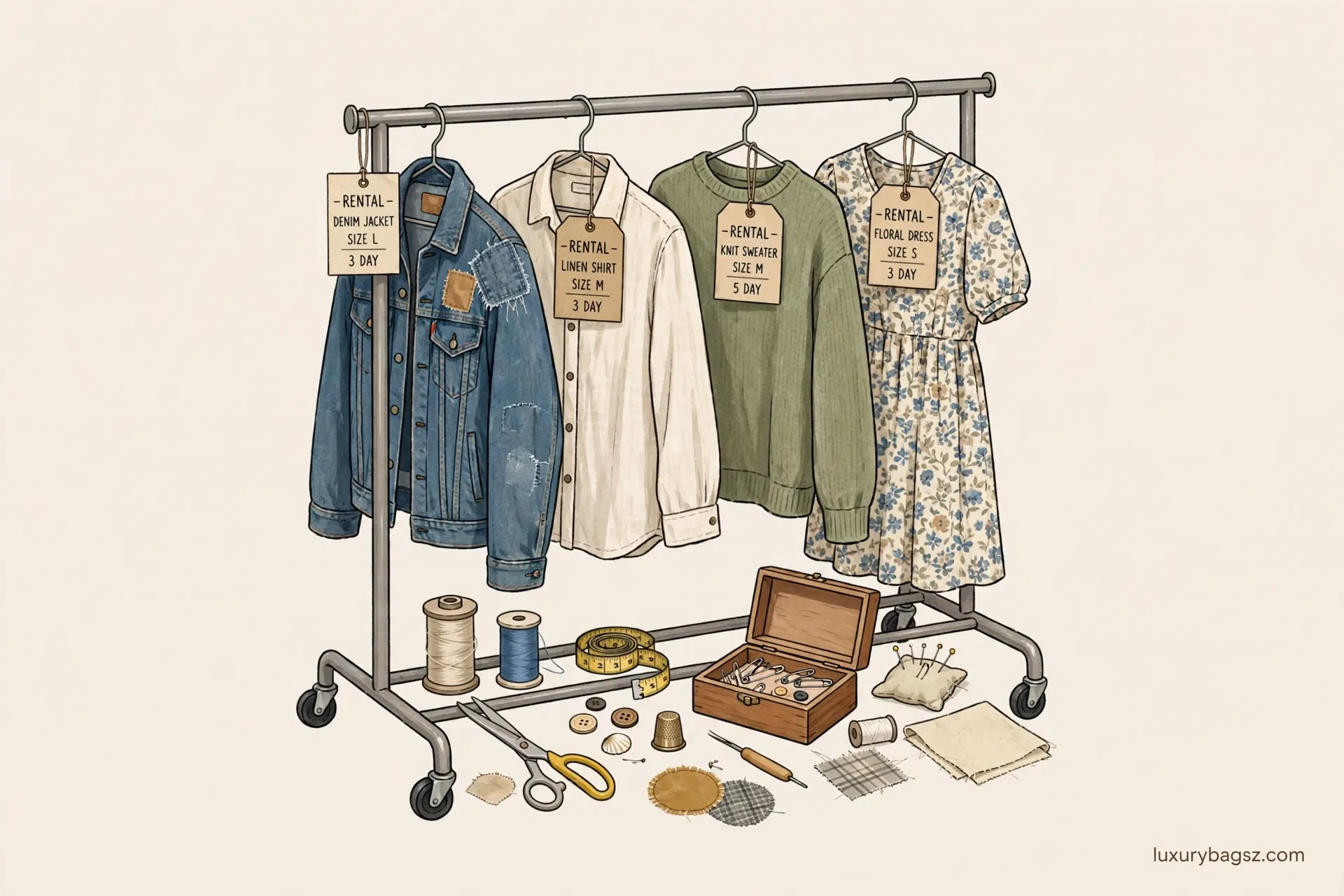
Rental offers another model, especially for occasion wear. Renting a dress or suit for a single event avoids buying a garment that will rarely be worn, and rental companies handle cleaning and repair. Rental suits formal occasions better than daily wear, where ownership remains more practical.
Swaps, borrowing, and upcycling complete the picture. A clothing swap with friends refreshes a wardrobe without spending, borrowing covers one-off needs, and upcycling turns old garments into new pieces. Together, these models reduce waste and spending without sacrificing style.
Denim: A Case Study in Fast Fashion's Impact
Denim illustrates fast fashion's history in miniature. Jeans began as workwear, became youth fashion in the 1950s and 1960s, and then became a fast-fashion staple, with distressed, faded, and stretch styles produced cheaply and in huge volumes.
Our guides on buying first raw denim and on how distressed denim is made show the contrast between slow and fast denim.
Raw denim, made slowly and worn in over months, develops personal fade patterns, while fast-fashion distressed denim is artificially faded in factories using water, chemicals, and labour-intensive processes.
Water and chemical use in denim finishing is significant, especially for stonewashing and distressing, though newer laser and ozone techniques reduce water use. Choosing raw or lightly washed denim, washing less often, and repairing jeans extends their life and reduces impact.
Denim also shows how consumer choices matter. A pair of jeans worn for years, repaired when torn, and eventually recycled has a far lower footprint than several cheap pairs worn briefly and discarded, even if the cheap pairs cost less upfront.
Regulation, and the Rules Catching Up
Regulation is beginning to catch up with fast fashion, especially in Europe. The European Union's strategy for sustainable textiles proposes durability, repairability, and recyclability standards, digital product passports, and restrictions on destroying unsold clothes, though implementation timelines vary.
France has introduced laws against destroying unsold goods and for repairability scoring, while other countries are considering extended producer responsibility, where brands pay for the collection and recycling of their products. These rules shift costs from taxpayers and charities to producers.
Labour regulation is harder, because supply chains cross borders, but import bans on forced-labour goods, due-diligence laws, and transparency requirements are growing. Brands that cannot show where their clothes come from face legal and reputational risks that did not exist a decade ago.
Regulation alone will not solve fast fashion, because enforcement is uneven and global supply chains are complex. Its value lies in setting minimum standards and making transparency normal, so that shoppers, journalists, and campaigners can hold brands to account.
What Brands Are Doing, and Greenwashing
Many fast-fashion brands now publish sustainability reports, launch conscious collections, and promise recycled materials, carbon reduction, and living wages. Some of these efforts are genuine, including recycled polyester, organic cotton, and factory improvement programmes, and they deserve recognition.
Greenwashing, where brands exaggerate or mislead about sustainability, is also common. A conscious collection that represents a tiny fraction of total production, vague claims about eco materials, or a recycling scheme that collects far more than it recycles, can mislead shoppers into thinking a brand is greener than it is.
Shoppers can spot greenwashing by asking for specifics: what percentage of a product is recycled, which certification applies, how much of total production is covered, and what independent verification exists. Vague words such as eco, green, and conscious, without numbers or certifications, deserve scepticism.
The best brand responses combine transparency, measurable targets, and independent verification. Look for published factory lists, audited wage data, and third-party certifications, and be wary of brands that publish glossy reports without hard numbers or timelines.
How to Shop Better Without Giving Up Style
Shopping better starts with buying less and choosing well. Before buying, ask whether you need the item, whether you already own something similar, and whether you will wear it at least thirty times, a rule of thumb popularised by slow-fashion campaigners.
Choose versatile pieces in colours and shapes that suit your existing wardrobe, rather than single-outfit trends. A simple, well-fitting pair of jeans, a classic coat, and neutral knitwear will serve more outfits than a loud, trend-led piece worn twice.
Care extends life dramatically. Wash less often, at lower temperatures, and air-dry where possible, which preserves fabric, colour, and shape. Repair promptly: a loose button, a small tear, or a worn hem is cheap to fix and prevents a garment from being discarded.
Buy second-hand first for trends and occasion wear, and buy new only for basics and classics that you will wear often. That balance lets you enjoy fashion without feeding the fastest, most wasteful parts of the system.
The Future: What Happens Next
The future of fast fashion is uncertain, with pressures pulling in opposite directions. Ultra-fast models continue growing, driven by data, social media, and low prices, while regulation, environmental concern, and labour scrutiny push towards slower, more transparent production.
Technology may help, including digital design that reduces samples, on-demand production that cuts unsold stock, and recycling technologies that turn old clothes into new fibres. These innovations are promising but not yet at the scale needed to transform the industry.
Consumer behaviour is the other variable. If shoppers continue buying more, wearing less, and discarding quickly, fast fashion will persist regardless of regulation. If shoppers buy less, wear longer, and choose second-hand, brands will adapt, because they follow demand.
The most likely future is a split market: ultra-fast for the cheapest trends, slower and more transparent for classics and premium pieces, and a growing second-hand and rental sector in between. Shoppers who understand that split can navigate it wisely.
A Shopper's Checklist for Fashion History in Practice
Start by knowing your wardrobe: what you own, what you wear, and what you never wear. That knowledge prevents duplicate buying and reveals your real style, which is more useful than any trend forecast.
Set a buying rule that suits you, such as one-in-one-out, a waiting period for non-essentials, or a cost-per-wear target. Rules sound restrictive, but they prevent impulse buys that become clutter and waste.
Learn basic quality checks: fabric density, seam finishing, button security, and care labels. Those checks take seconds in store and save money over time, because a well-made garment outlasts a flimsy one regardless of brand.
Finally, enjoy fashion without guilt, but with awareness. Clothes are a pleasure, a craft, and a form of self-expression, and they deserve to be made well and worn with care. A wardrobe built slowly, with pieces you love and maintain, is both more stylish and more sustainable than a wardrobe built fast.
Frequently Asked Questions
What is fast fashion?
Fast fashion is the rapid design, production, and sale of trend-led clothing at low prices, with new styles arriving weekly rather than seasonally. It prioritises speed and cheapness over durability.
When did fast fashion begin?
Its roots lie in industrial production and ready-to-wear clothing of the nineteenth century, but the modern model emerged with Zara in 1975 and H&M's global expansion, and the term gained currency in the 1990s.
Who invented fast fashion?
No single person invented it. Zara's Amancio Ortega pioneered the rapid, data-led model, H&M popularised global low-price fashion, and later ultra-fast brands such as Shein pushed speed further.
Why is fast fashion bad for the environment?
Fast fashion uses large amounts of water, energy, and chemicals, produces carbon emissions, and generates huge textile waste, because garments are worn briefly and discarded. Synthetic fibres also shed microplastics.
What was Rana Plaza?
Rana Plaza was a building in Dhaka, Bangladesh, that collapsed on 24 April 2013, killing over 1,100 garment workers. It exposed unsafe factory conditions and became a turning point for labour scrutiny.
Is Shein fast fashion?
Yes, Shein is ultra-fast fashion, launching thousands of styles weekly through data-led design, small batches, and social-media marketing, at prices lower than high-street rivals.
What is slow fashion?
Slow fashion advocates fewer, better clothes, made transparently, worn longer, and repaired when needed. It includes ethical brands, craft makers, capsule wardrobes, and mending culture.
Can fast fashion be sustainable?
Fast fashion can reduce its impact through better materials, on-demand production, recycling, and transparency, but its core model of rapid, high-volume, low-price production conflicts with sustainability. Buying less and second-hand helps more.
How can I shop more sustainably?
Buy less, choose versatile pieces, check quality, care for clothes well, repair promptly, buy second-hand first for trends, and look for credible certifications and brand transparency rather than vague claims.
Will fast fashion disappear?
Fast fashion is unlikely to disappear soon, because demand for cheap, trendy clothes remains strong. Regulation, second-hand growth, and changing consumer habits may slow it and split the market, but not end it quickly.
Summary
Fast fashion changed clothing forever: it made style accessible, affordable, and immediate, but it also made clothes disposable, strained factories and the planet, and taught a generation to expect novelty every week. Understanding its history, from industrial looms to Zara to Shein, helps you see the system clearly and shop within it wisely. Buy less, choose well, care for what you own, repair promptly, and buy second-hand where you can.
Fashion should be a pleasure, not a pile of waste, and a wardrobe built with intention will serve you better, and longer, than one built at speed. Start with one habit, whether that is a waiting period before buying, a repair you have been postponing, or a second-hand search before a new purchase, and let better shopping grow from there. Small, steady changes beat grand resolutions that last a week.
Review your wardrobe, repair what you love, and choose your next purchase with intention, because a wardrobe built slowly will serve you better than one built at speed, season after season. Fashion history shows that every rush to buy more eventually meets a reckoning, in cost, in waste, or in a wardrobe full of clothes you never wear.