

How to Wear a Visor: Fit, Hairstyles, and Outfits That Actually Work

The Visor, Worn Well
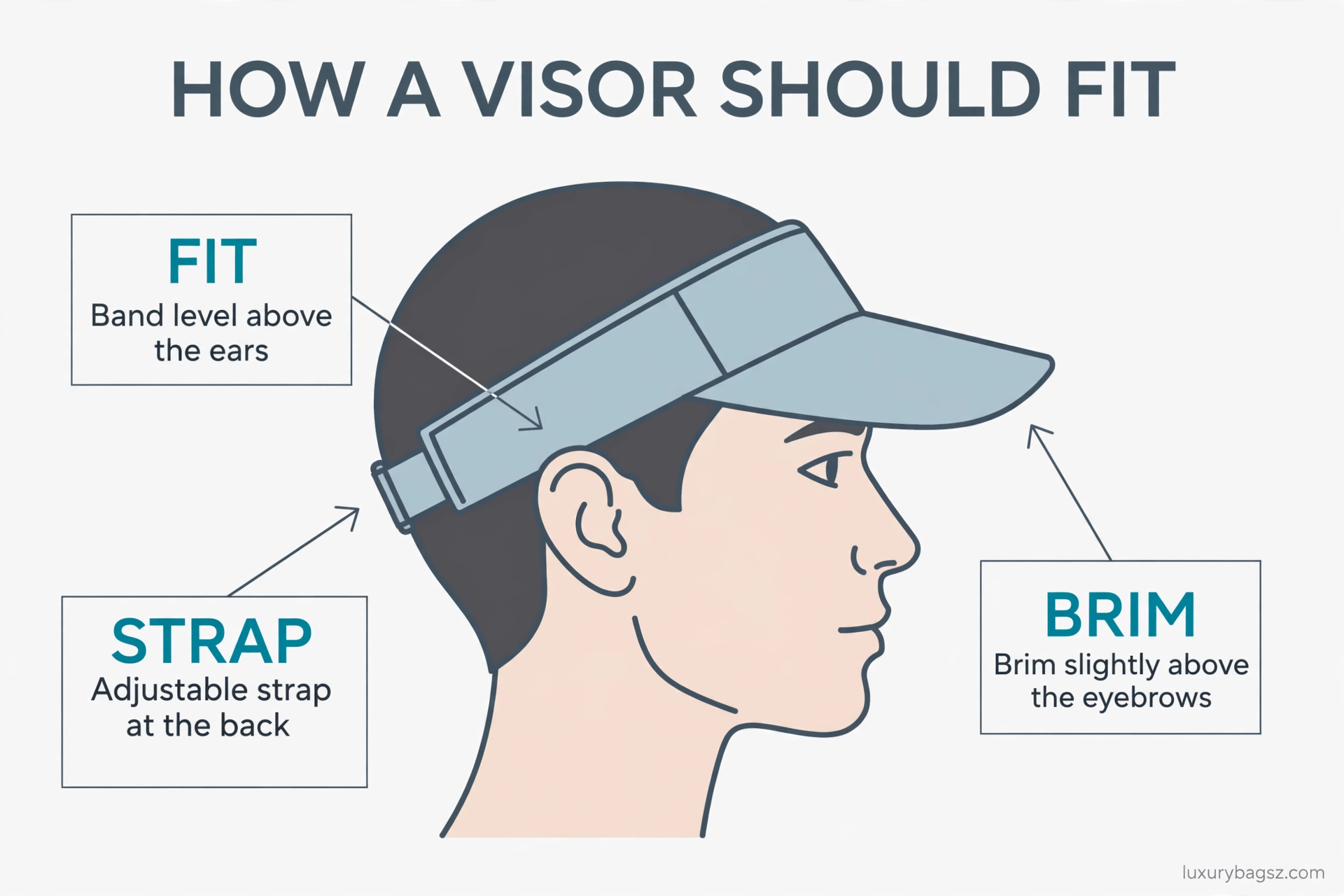
A visor works best when it sits level, just above your eyebrows, with the band snug enough to stay put when you look down. That one fit rule covers most of the styling: a visor that slides, pinches, or tips forward will look wrong no matter what you pair it with.
Wear the brim forward for sun protection, and let the open crown do its job by keeping your head cool. A visor shades your eyes and forehead, but it does not protect your scalp, so sunscreen on any exposed scalp or parting still matters on long days outdoors.
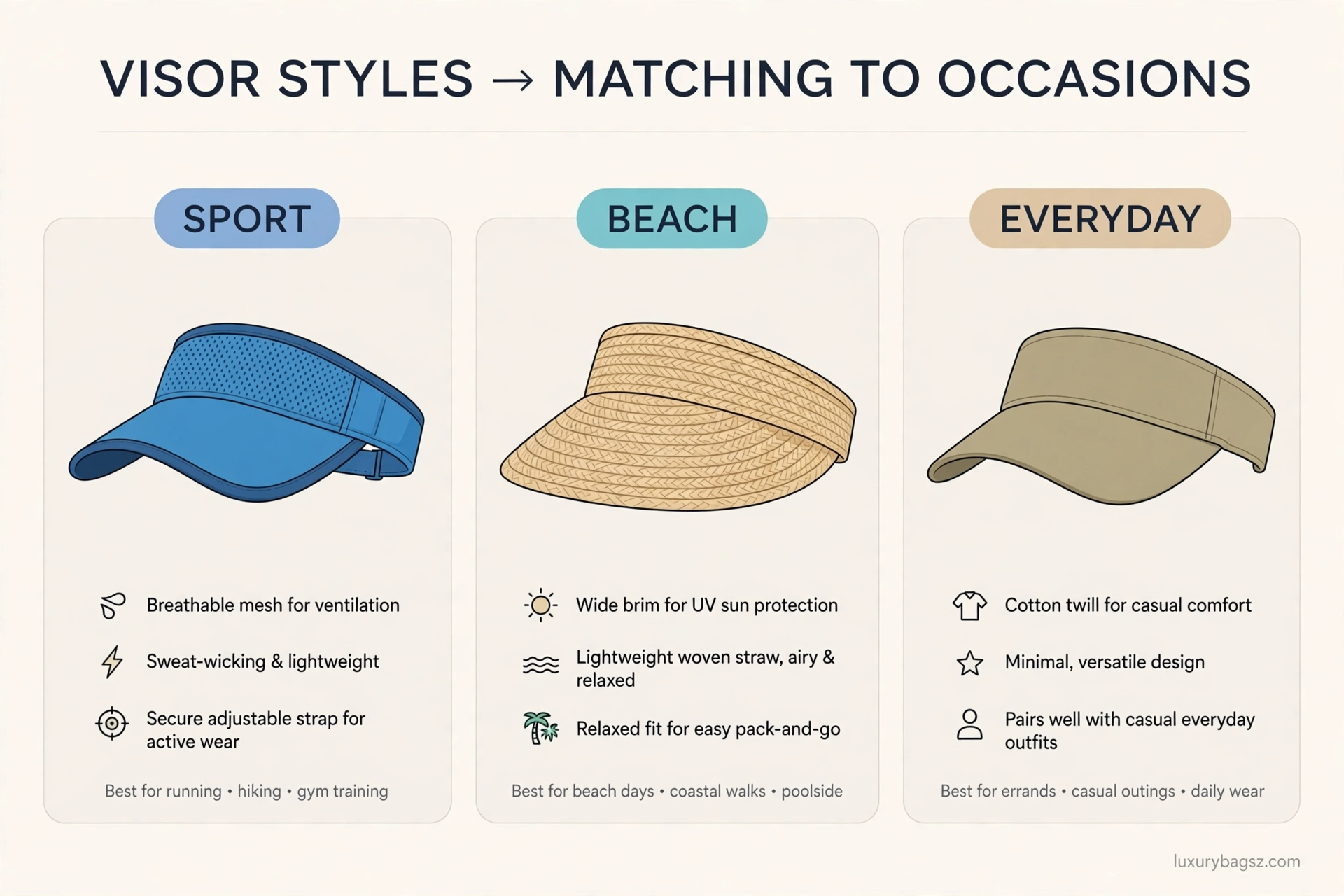
The easiest outfits start from the visor's roots in sport, then branch out. A plain fabric visor suits tennis, running, and errands, while a straw or wide-brim visor suits the beach, a garden lunch, and holidays. Match the material to the moment and the rest of the outfit usually falls into place.
Key Takeaways

- Fit first: band level above the ears, brim just above the eyebrows, strap adjusted so the visor stays put.
- Hair up works best through the back opening, but loose hair and a low bun both work with the right band position.
- Sporty visors belong with activewear, straw visors with summer dresses and swim cover-ups, and plain cotton visors with everyday casual outfits.
- A visor shades the eyes and forehead only, so add sunscreen for the scalp and use sunglasses for full eye protection.
- Skip visors with stiff, non-adjustable bands, and skip shiny or logo-heavy styles for dressier outings unless the outfit is deliberately sporty.
What a Visor Is, and What It Is Not
A visor is a brim attached to a band that goes around the head, with no crown covering the top. That open top is the whole point: heat escapes, ponytails pass through, and styled hair survives far better than it does under a full cap.
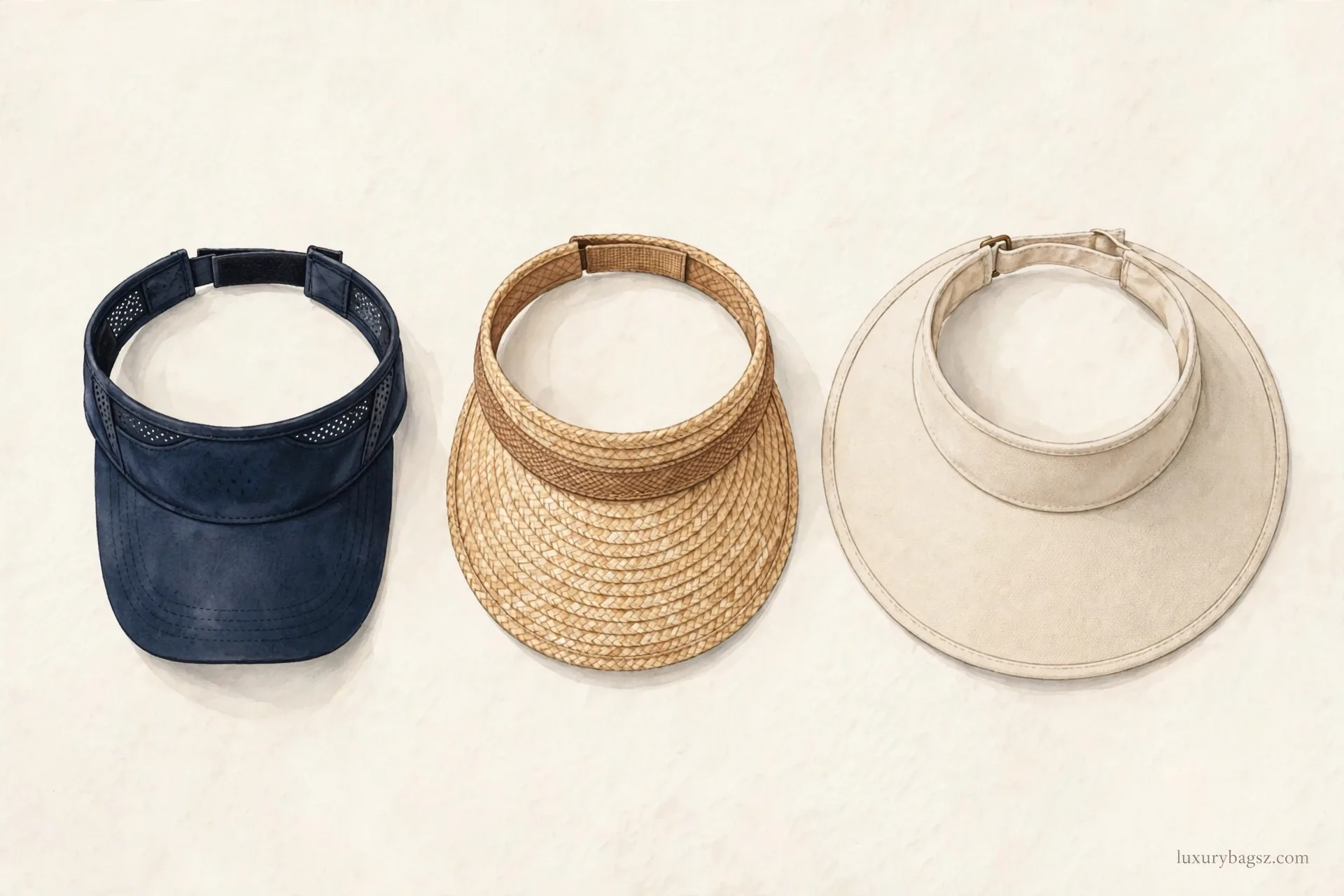
Visors come in three broad families. Sport visors use light, sweat-wicking fabric with an adjustable strap. Everyday visors use cotton twill in plain colours. Sun visors use straw or wide fabric brims for broader shade at the beach or in the garden.
A visor is not a sun hat, and it should not be judged as one. It will not shade your neck, ears, or scalp, and it will not keep rain off your head. If you need all-round cover, choose a wide-brim hat instead and save the visor for active or warm days.
Visors also have a dress code limit. They read casual and sporty by nature, so they suit outdoor lunches, holidays, and weekend plans far better than offices, formal dinners, or evening events. A sleek, plain visor can edge into smart-casual territory, but a neon training visor cannot.
Getting the Fit Right
Start by placing the band above your ears and level, not tilted back. A band that rides up at the back will tip the brim down over your eyes, while a band worn too low will press on your forehead and leave a mark.
Tighten the strap until the visor stays put when you look down at your phone, then stop. You should forget you are wearing it within ten minutes; if you can still feel pressure after that, it is too tight and will likely give you a headache by the second hour.
Fit the visor the way you will actually wear it. A high bun or thick ponytail lifts the back of the band and tips the brim forward, so try the visor on with your usual hairstyle before deciding it does not fit. The same applies to glasses: put your glasses on first, then the visor, and choose a slightly wider band if the arms compete for space.
Check the brim angle in a mirror. For sun protection, angle it slightly down so it covers your eyebrows fully without blocking your view. For a relaxed look, a level brim reads tidier than a brim tipped sharply up, which tends to look accidental rather than styled.
Hairstyles That Work With a Visor
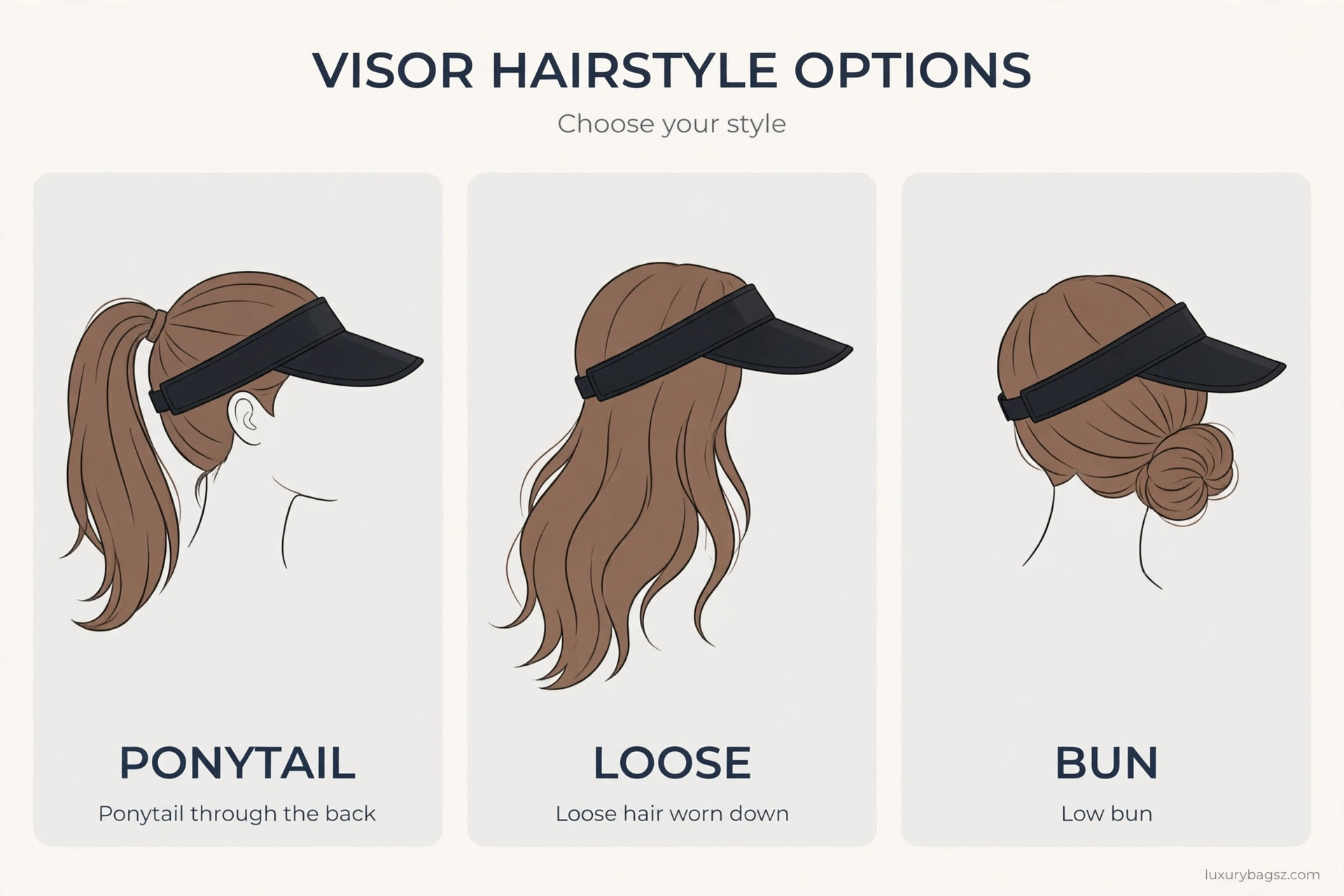
The classic pairing is a ponytail pulled through the back opening. It keeps hair off the neck, stops flyaways in wind, and is the reason visors became a tennis and running staple. A high ponytail works best with visors that have a generous back gap; a low ponytail suits narrower openings.
Loose hair works too, provided the band sits flat and does not slide. A centre part with hair worn down stays neat under a visor and avoids the flattened look a full cap creates. Smooth the front pieces back before putting the visor on, so they do not bunch under the band.
A low bun or chignon is the tidiest option for smarter outfits. Keep the bun low enough that the band passes above it, and use a little texture spray or hairspray if fine hair slips. A topknot, by contrast, usually fights the band and pushes the visor forward.
Short hair needs a slightly different approach. Brush it smooth, set the visor, then tidy the front with your fingers rather than trying to force volume under the band. If very short hair slips, a thin headband worn underneath adds grip without adding bulk.
Sporty Looks: Court, Run, and Training
On court, the formula is simple: a matching or plain sport visor, a polo or tank, a pleated skirt or shorts, and clean trainers. Keep colours to two or three, and let the visor match one of them rather than introducing a fourth loud colour.
For running and training, choose a light, moisture-wicking visor with a fully adjustable strap, not a fashion visor with a fixed elastic band. Sweat-soaked cotton gets heavy fast, and a slipping visor is a distraction you do not need mid-run. Dark colours hide sweat marks better than white.
Golf follows the same logic with a slightly smarter finish. A plain visor, a collared shirt, tailored shorts or trousers, and leather-look trainers read polished without trying too hard. Avoid novelty prints on the course unless the group dress code is clearly relaxed.
After sport, the same visor carries into coffee and errands. Swap the kit for leggings or shorts and a clean tee, and the visor stops looking like gym gear and starts looking like a deliberate accessory. That versatility is why a plain black, white, or navy visor earns its place first.
Beach and Holiday Outfits
At the beach, a straw or wide-brim visor is the better pick. The broader brim shades more of the face, the natural material suits swimwear and cover-ups, and the look reads holiday rather than training. Pair it with a swimsuit, high-waisted shorts, and flat sandals for a poolside outfit that needs nothing else.
For coastal walks and garden lunches, try a straw visor with a sundress or a linen shirt and shorts. The trick is texture: straw softens the outfit, so keep the rest simple and let the visor be the only rustic element. Too many natural textures at once can tip the look into costume.
Sun protection still needs honesty here. A wide-brim visor shades the face better than a short sport brim, but the scalp, ears, and neck stay exposed. Reapply sunscreen to those spots, and consider a full hat for the middle of the day if you burn easily or will be out for hours.
Packing matters on holiday. Straw visors crush in a suitcase, so look for a foldable or rollable style, or carry the visor in a hat bag. Fabric visors pack flat and bounce back, which makes them the practical choice for trips with little luggage space.

Everyday Outfits That Do Not Look Like Gym Kit
The easiest everyday formula is jeans, a plain tee or shirt, trainers, and a cotton twill visor in a neutral colour. The visor adds a relaxed, off-duty note without pushing the outfit into sportswear, as long as the rest of the outfit is clean and fitted rather than actual gym kit.
For a slightly smarter take, pair a plain visor with a sundress or a shirt dress and simple flat sandals. This works best with a minimal visor in black, tan, or navy, and with a dress that is itself simple. A busy print plus a bright visor competes for attention and usually loses.
Footwear can lift or sink the look. Clean trainers, loafers, or simple sandals all work, and a guide to wearing loafers helps if you want the smarter end of casual. Avoid pairing a visor with formal shoes, which sends two conflicting messages at once.
Denim is a natural partner, and keeping it in good shape matters more than the wash you choose. Our guide to denim care covers washing and fading, which keeps jeans looking intentional rather than worn out next to a crisp visor.
Buying, Care, and Mistakes to Avoid
When buying, check three things before the colour: an adjustable strap, a brim that holds its shape, and a band that does not dig in. A visor that fails any of those will sit unworn, however good it looks on the shelf. Try it with your usual hairstyle and glasses if you wear them.
Fabric decides the job. Performance fabric suits sport, cotton twill suits daily wear, and straw suits holidays. A clear plastic UV visor is a different product altogether: it covers the whole face and suits strong sun, but it reads as protective gear rather than fashion, so buy it for function, not style.
Care is simple. Most fabric visors can be spot-cleaned or hand-washed; check the label first, since heat can warp a brim. Straw visors should be brushed clean and kept dry, and any visor should be stored brim-up rather than crushed under other items.
The common mistakes are easy to dodge. Do not wear a visor backwards for sun protection, since the brim then shades nothing. Do not wear a training visor to a smart event and expect it to pass. And do not buy a size that relies on hope: if the band has no adjustment, it either fits you or it does not.
Frequently Asked Questions
Can you wear a visor with short hair?
Yes. Brush short hair smooth, set the visor level above the ears, and tidy the front with your fingers. If very short hair slips, a thin headband underneath adds grip without bulk.
Does a visor protect you from the sun?
It shades the eyes and forehead, which helps with glare and squinting. It does not protect the scalp, ears, or neck, so sunscreen on those areas is still needed, and sunglasses give fuller eye protection.
Can you wear a visor with glasses?
Yes, in most cases. Put your glasses on first, then the visor, and pick a slightly wider band if the glasses arms and the band compete for the same space. Try both together before buying.
Is a visor better than a cap in hot weather?
For staying cool, yes. The open crown lets heat escape and works better with ponytails and styled hair. A cap wins when you need scalp cover, rain protection, or warmth.
Can you wear a visor to a smart-casual event?
A plain, minimal visor in a neutral colour can work at an outdoor lunch or garden event. A bright training visor reads as sportswear and suits casual plans better than smarter ones.
How do you stop a visor giving you a headache?
A headache almost always means the band is too tight. Choose a fully adjustable strap, fit it with your usual hairstyle, and loosen it until you forget you are wearing it within ten minutes.
What colour visor should you buy first?
Black, white, or navy covers the most outfits. Black hides sweat and suits sport and everyday wear, white suits summer and beach outfits, and navy sits neatly between the two.
Can you wear a visor with your hair down?
Yes. A centre part with hair worn down stays neat under a visor, and the open crown avoids the flattened hair a full cap causes. Smooth the front pieces back before setting the band.
How do you clean a fabric visor?
Spot-clean or hand-wash most fabric visors, following the label, and air-dry them brim-up. Avoid high heat, which can warp the brim, and brush straw visors clean rather than washing them.
Are visors only for sport?
No, though sport is where they started. Straw and wide-brim visors suit beaches and holidays, and plain cotton visors suit everyday casual outfits, as long as the material matches the occasion.
Final Verdict
Buy the fit before the colour, match the material to the moment, and keep the rest of the outfit simple. A plain sport visor for active days, a straw visor for holidays, and a neutral cotton visor for everyday wear cover almost every situation where a visor earns its place. Worn level, with hair that works with the band rather than against it, a visor looks effortless rather than accidental, which is exactly the point.






