

Types of Diamond Cuts Explained: Round, Princess, Cushion, Emerald, Oval and More
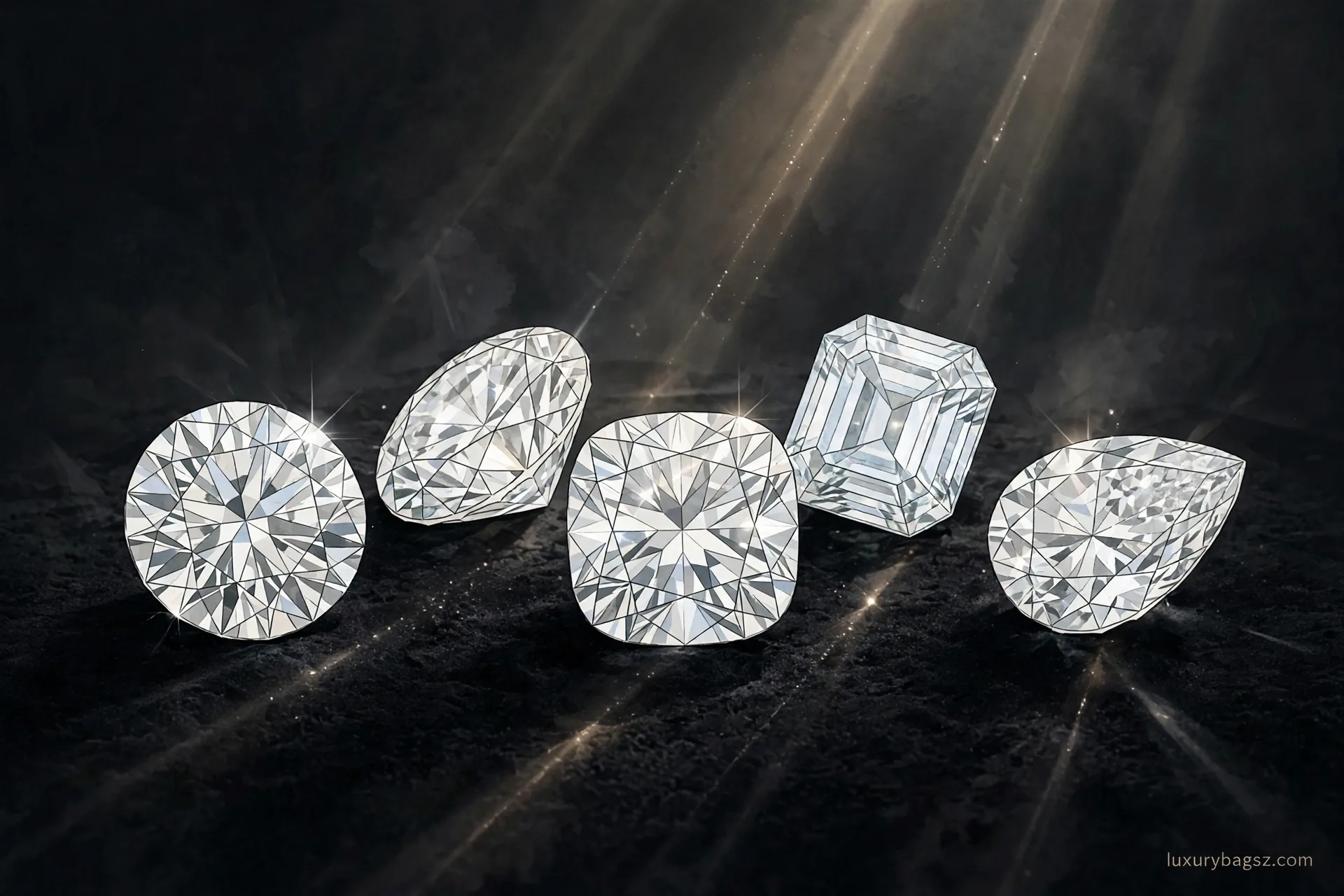
Diamond Cuts in Brief: Shape Is Style, Cut Is Sparkle
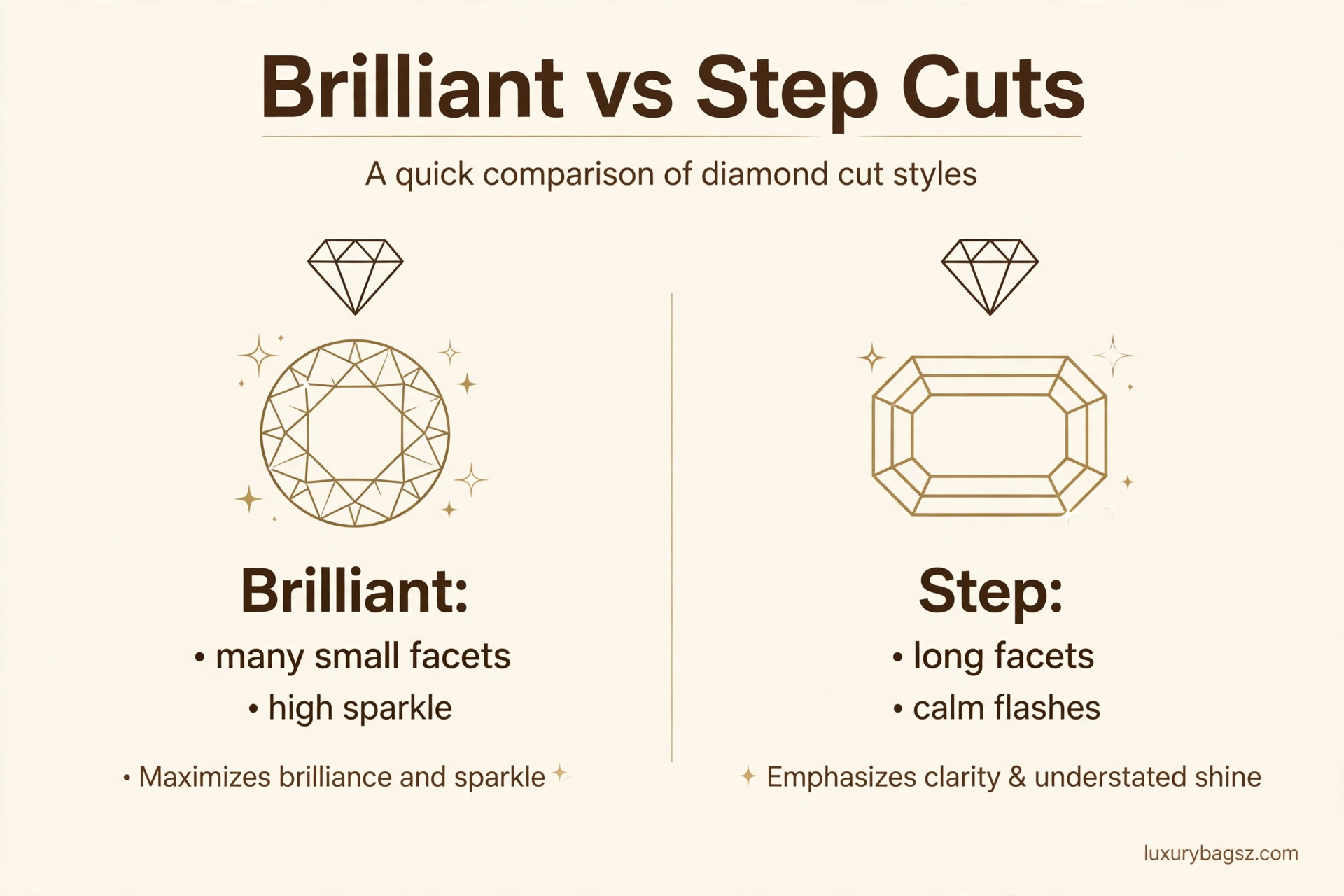
The types of diamond cuts fall into families: brilliant cuts, with many small facets for sparkle, and step cuts, with long facets for calm, clear flashes. Round brilliant is the most popular and the sparkliest. Princess, cushion and radiant add brilliance in squarer shapes, emerald and Asscher trade sparkle for elegance, and oval, pear and marquise stretch the look of size.
Key Takeaways
- Cut means both the shape and how well its facets handle light.
- Brilliant cuts sparkle most; step cuts flash calmly and show clarity.
- Round brilliant is the benchmark and usually the priciest per carat.
- Oval, marquise and pear shapes look larger than their weight.
- Emerald and Asscher cuts need higher clarity, because they hide less.
- Fancy shapes often cost less per carat than round at like quality.
First, Cut and Shape Are Not Quite the Same
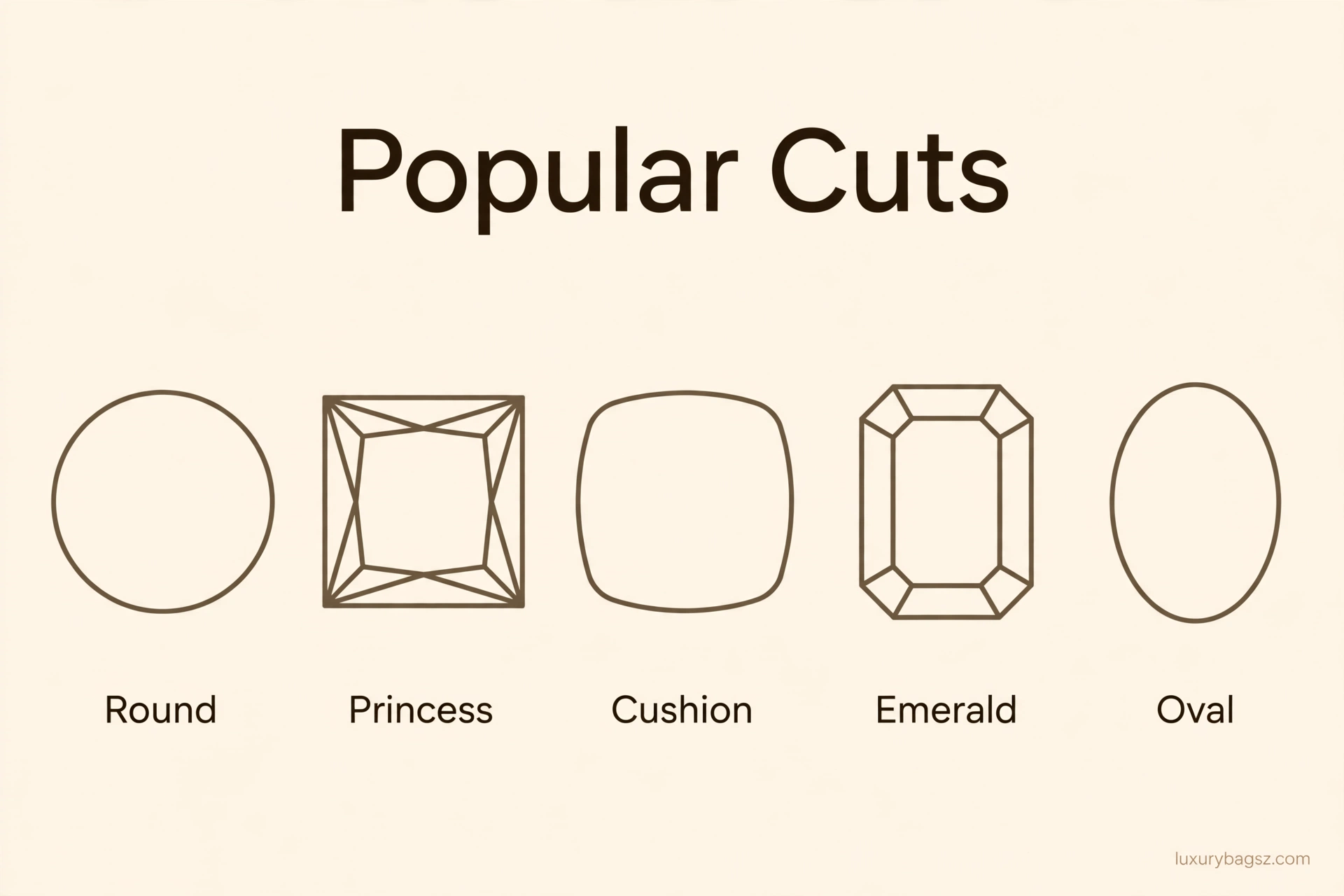
Everyday language uses cut for the outline you see: round, oval, cushion and the rest. Gemmologists also use cut for the quality of the faceting itself. Both matter, in different ways. Shape decides the style of a ring, while cutting quality decides whether that diamond looks alive or sleepy in real light. For coloured stones, our how to buy pink diamonds guide shows grading at work. Here, we tour the shapes and what each one does best. Only round brilliants receive a formal cut grade from the GIA. For other shapes, your eye, guided below, does more of the grading work.
Rough stone economics explain many price gaps. Cutters sacrifice more of an expensive rough crystal to make a round brilliant, while elongated and square shapes often keep more weight and cost less.
The Two Families: Brilliant and Step
Brilliant cuts use many triangular and kite-shaped facets. The round brilliant's 57 or 58 facets are arranged to throw light back at your eye as sparkle and fire. Step cuts use long, parallel facets like a staircase. Emerald and Asscher are the famous pair, giving broad, quiet flashes often called a hall of mirrors. Mixed cuts borrow from both. Radiant and cushion, in many of their forms, combine a step-cut outline with brilliant-style facets for a crushed-ice sparkle. Decide your family first and the shopping list shortens at once. Sparkle lovers go brilliant; clarity lovers go step.
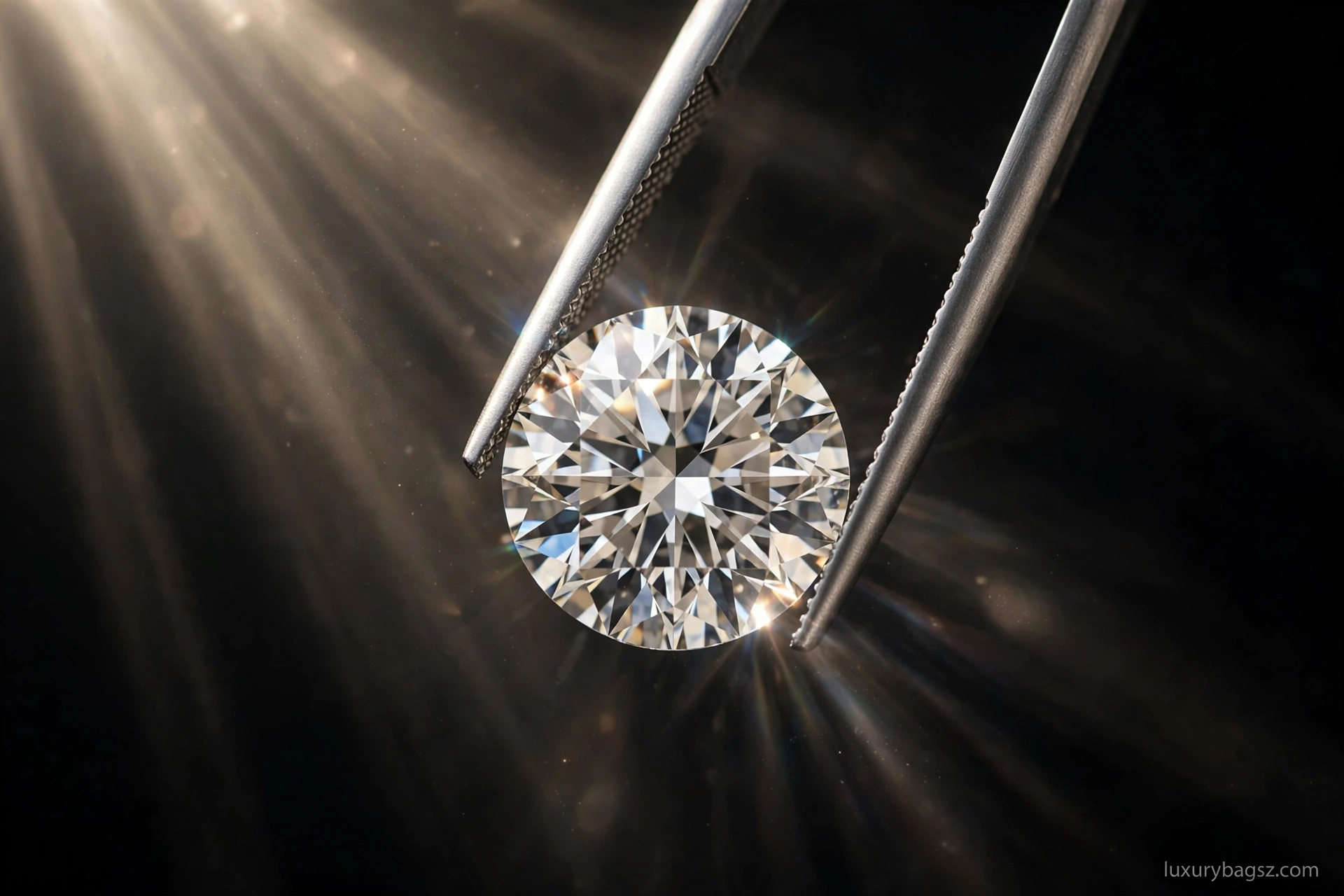
Light behaviour has three words worth knowing: brilliance for white light return, fire for coloured flashes and scintillation for the sparkle pattern as the stone moves. Good cuts balance all three together.
Round Brilliant and Princess
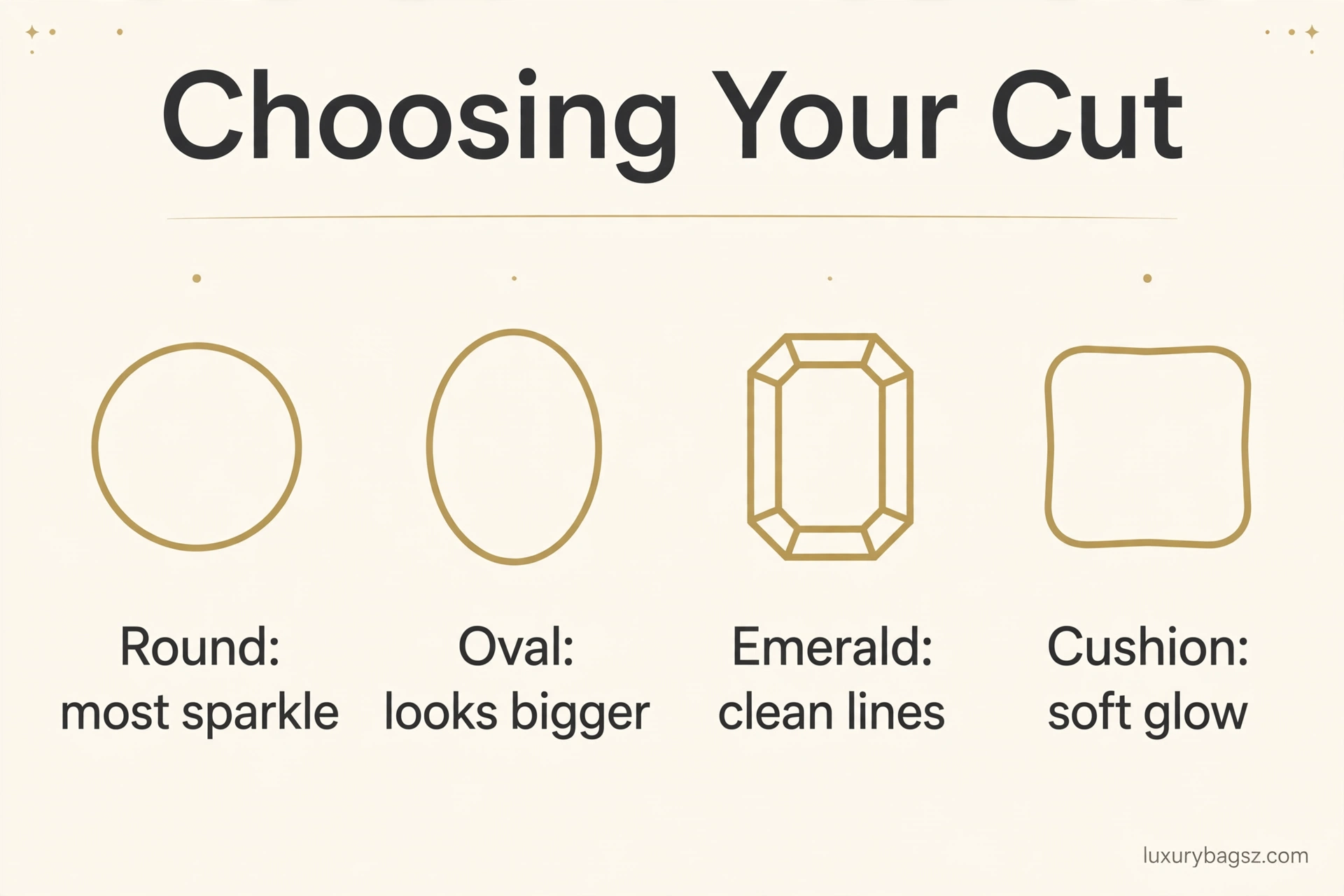
The round brilliant is the reference diamond: the most researched proportions, the most sparkle, and usually the highest price per carat of any shape. It suits nearly every setting and hand, forgives lower colour and clarity grades better than step cuts, and is the easiest shape to resell. Princess is the brilliant square: pointed corners, strong sparkle and a modern feel. Its corners are its weak point, so protective settings are wise. Princess cuts often cost less per carat than rounds of like quality, because more of the rough stone survives the cutting. Value hunters should look here.
Cushion and Radiant
Cushion cuts are squares or rectangles with softened corners and larger facets, giving a romantic, candlelit sparkle that suits vintage-style settings. Their facet styles vary, from chunky antique flashes to fine crushed ice, so compare cushions side by side. Two cushions can look like different species. Radiant cuts are the bright rectangles and squares with trimmed corners, cut brilliant-style for maximum light play in an angular outline. Radiants hide colour and inclusions well and look lively under most lighting. They are a practical choice for buyers wanting size, sparkle and a square silhouette.
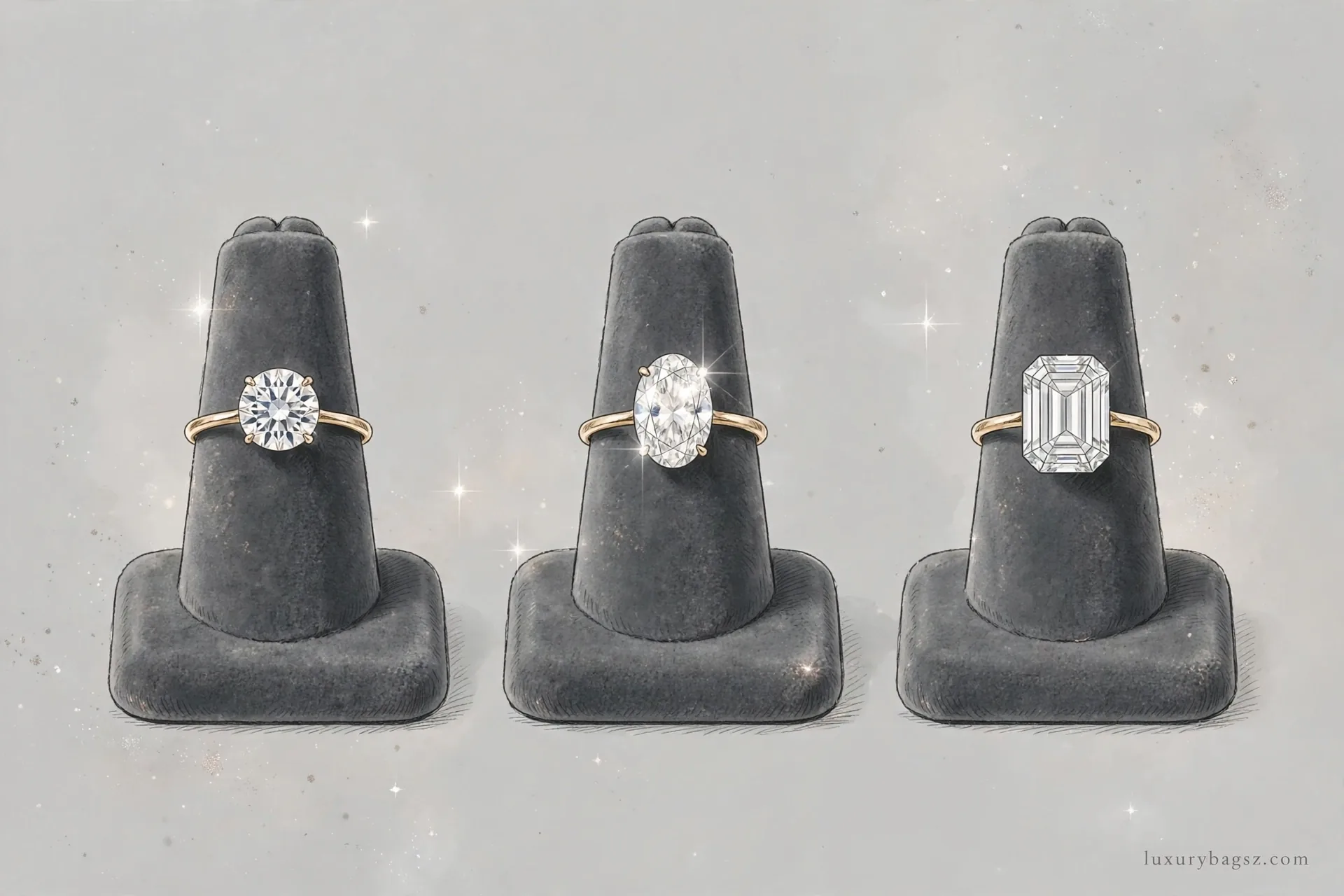
Compare stones loose where you can. A setting can flatter a weak stone and hide a strong one's character; serious sellers will show important diamonds unset with their reports beside them for honest comparison.

Emerald and Asscher: The Step-Cut Pair
Emerald cuts are rectangular step cuts with cropped corners. Their long facets reward high clarity, because inclusions have nowhere to hide in that calm surface. Choose an emerald for architecture, not fireworks. Worn long, in the east-west excitement of current styling or the classic north-south, it reads as confidence. Asscher cuts are the square cousins, often called square emeralds, with a smaller table and a windmill pattern when you look down into the stone. Both shapes feature in the classic pieces of our everyday diamond jewellery guide, where their quiet shine suits daily wear beautifully.
Oval, Pear and Marquise: The Elongated Three
Oval brilliants give round-style sparkle in a stretched outline. They look larger per carat than rounds and make fingers appear longer, which many buyers love. Watch for the bow-tie: a dark band across the middle of some ovals, pears and marquise stones where light leaks. A faint one is normal; a heavy one is a reason to pass. Pear cuts, the teardrops, combine round and marquise ideas. Their point needs a protective claw, and they can be worn point up or down for different moods. Marquise cuts maximise spread, looking biggest of all per carat, with a dramatic, vintage character. Their sharp points also demand careful setting and checking.
Ask to see elongated stones on your own hand in a mirror. Proportion is personal: the ideal length-to-width ratio on paper may not be the ratio that flatters your fingers in real life.
Heart, Trillion and Older Cuts
Heart shapes are the romantics' choice and the hardest to cut well. Symmetry is everything: a lopsided heart is visible at a glance and hard to forgive. Trillion cuts are triangular, usually side stones or bold solitaires. Their shallow look gives a large face for the weight and a sharply modern style. Older cuts deserve a mention: old European and old mine cuts, the ancestors of round and cushion, trade precision for broad, gentle flashes that collectors adore. Coloured diamonds follow the same shape rules, and our how to buy blue diamonds guide shows how cut is chosen to deepen colour instead.
Choosing and Caring for Your Cut
Choose in this order: family first, shape second, quality third. Watch real stones in daylight and shop light, not only under jewellery spotlights. Pointed shapes, princess, pear and marquise, want protective settings and yearly claw checks. Step cuts want gentle cleaning, because their broad facets show grease quickly. The simple routine in our how to clean gold and diamond rings guide keeps every cut at its best with warm water and a soft brush. Above all, pick the shape that makes you look twice. Cut quality decides sparkle, but shape decides love, and you will wear the ring, not the certificate.
Keep pointed stones in mind when planning a set. Wedding bands sitting flush against princess, pear or marquise solitaires may need shaped bands, which is worth deciding before the engagement ring is finished.
Frequently Asked Questions
What is the most popular diamond cut?
The round brilliant, by a wide margin. It offers the most sparkle, the widest setting choice and the strongest resale market of any shape.
Which cut sparkles the most?
Well-cut round brilliants lead, with princess, radiant and oval brilliants close behind. Step cuts sparkle least by design, flashing calmly instead.
What is the difference between brilliant and step cuts?
Brilliant cuts use many small facets for sparkle and fire. Step cuts, such as emerald and Asscher, use long parallel facets for clear, broad flashes.
Which cut looks biggest for its weight?
Marquise, oval and pear shapes spread their weight across a longer outline, so they look larger per carat than round or square shapes.
Which cuts are cheapest per carat?
Most fancy shapes cost less per carat than round brilliants of like quality, because cutting wastes less rough and demand is lower.
Do step cuts need better clarity?
Yes. Emerald and Asscher cuts have open, calm facets that reveal inclusions easily, so buyers usually choose higher clarity grades for them.
What is a bow-tie in a diamond?
A dark band across the middle of some oval, pear and marquise stones, caused by light leaking. Slight is common; strong is a reason to reject.
Are fancy shapes graded for cut quality?
The GIA gives formal cut grades only to round brilliants. For other shapes, judge proportions, symmetry and light behaviour with your eye and advice.
Which cut suits a vintage-style ring?
Cushion cuts, Asscher cuts and old mine or old European cuts suit vintage styling best, with their softer flashes and period character.
Does cut affect a diamond's value?
Strongly. A well-cut stone of any shape outsells a dull one of higher paper grades, which is why cut quality should never be the saving.
Summary: Family First, Then the Shape You Love
Brilliant cuts for sparkle, step cuts for calm, elongated shapes for size: the types of diamond cuts divide neatly once you know what each family does. Pick the family that matches your taste, then the shape that flatters the hand, then the best cutting quality your budget allows, in that order.






