

How to Buy Blue Diamonds: The Complete Guide to Fancy Blue Stones
The Short Answer on Buying Blue Diamonds
Buy a blue diamond on its GIA report first and its face-up color second. The report must confirm natural color origin, because treated stones can look vivid while costing a fraction of a natural stone. Color grade drives value more than any other factor, so a strongly saturated smaller stone often beats a larger pale one.
Natural blue diamonds are among the rarest diamonds on earth. Their blue comes from trace amounts of boron trapped in the crystal, and most belong to the rare Type IIb class, which has very low nitrogen. That scarcity is why prices climb so steeply with saturation and size, and why patience matters more here than in any other diamond purchase.
Set a firm budget before you shop, and decide whether you want a wearable jewel or a collector stone. The two goals lead to different grades, sizes and settings. A wearable ring suits a Fancy Light or Fancy Blue stone in a protective setting, while a collector usually chases Fancy Intense or Fancy Vivid with documented provenance.
Key Takeaways
- Color is king: hue, tone and saturation set the price, ahead of clarity and carat weight.
- Only a GIA report stating natural color origin proves the stone is not treated.
- Fancy Vivid Blue commands the highest premiums; Fancy Deep is darker and can cost less.
- Cushion, radiant, oval and pear cuts help concentrate blue color in the finished stone.
- Pure blue beats grayish or greenish blue at the same grade, all else being equal.
- Published per-carat ranges disagree widely, so treat every range as a guide, not a quote.
Why Blue Diamonds Are So Rare
Blue diamonds get their color from boron, an element present in only tiny amounts inside the crystal. Boron absorbs yellow light and reflects blue, which is why even a small concentration can tint a whole stone. Most blue diamonds are Type IIb, a rare class defined by boron presence and exceptionally low nitrogen.
History adds to the mystique. Early blue diamonds came from India's Golconda region, including the Kollur mine, and later from Brazil. In modern times, South Africa's Cullinan mine has produced the most important blue diamonds, with further stones from Botswana's Orapa mine. Australia's Argyle mine produced examples before closing in 2020.
Rarity shows up in the numbers. Blue diamonds make up a tiny fraction of world diamond production, and fine stones above a few carats are genuinely scarce. That is why auction houses treat each important blue diamond as an individual event rather than a commodity with a standard price.
Type IIb status adds a second layer of rarity. These stones conduct electricity, unlike most diamonds, because boron replaces carbon atoms in the crystal lattice. Dealers sometimes test for this property, but it never replaces the GIA report as proof of natural origin and grade.
Reading the GIA Blue Diamond Color Scale
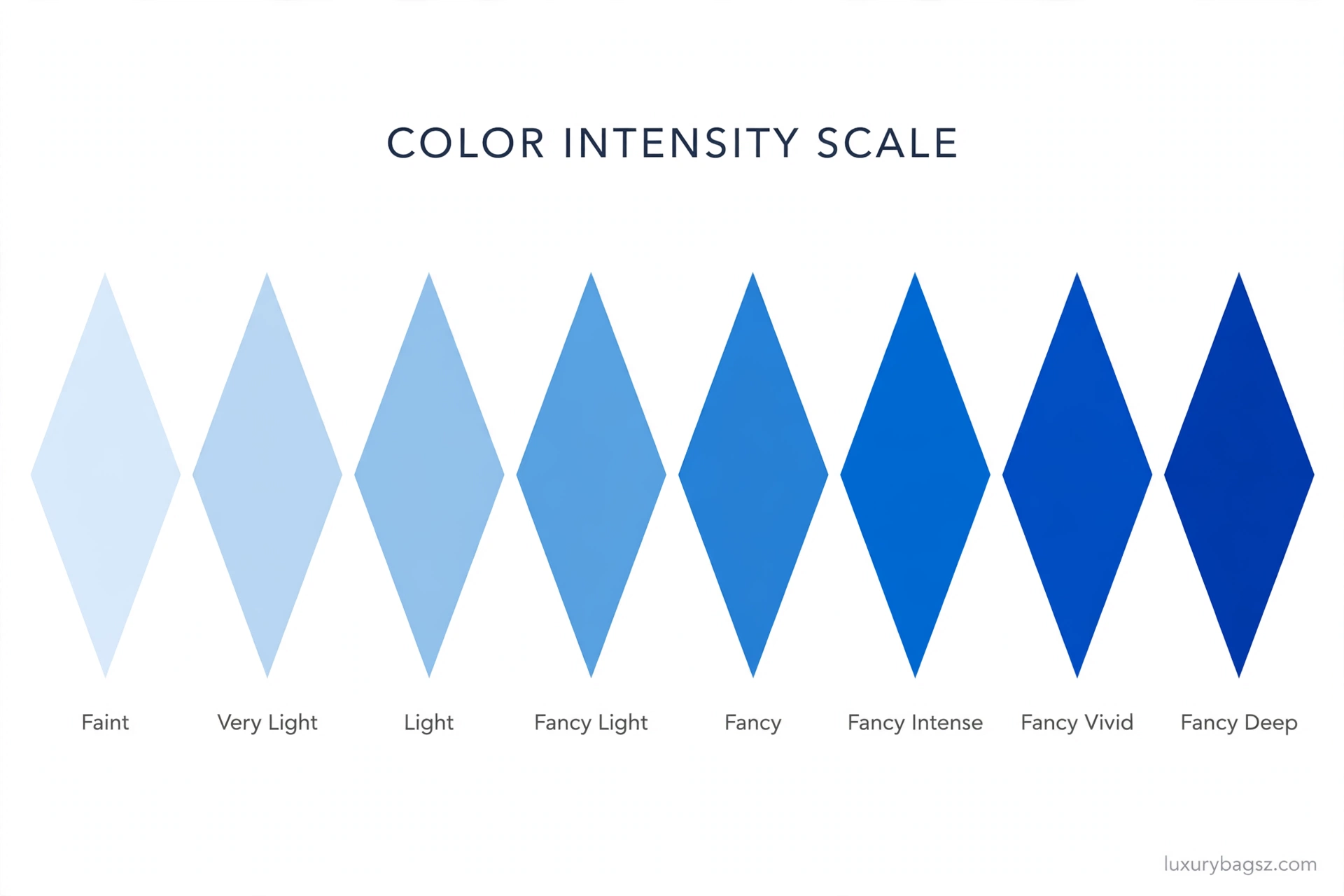
GIA grades blue diamonds from Faint through Fancy Deep, judging three things: hue, tone and saturation. Hue is the dominant color, tone is how light or dark it looks, and saturation is how strong the color is. All three matter, but saturation moves the price most.
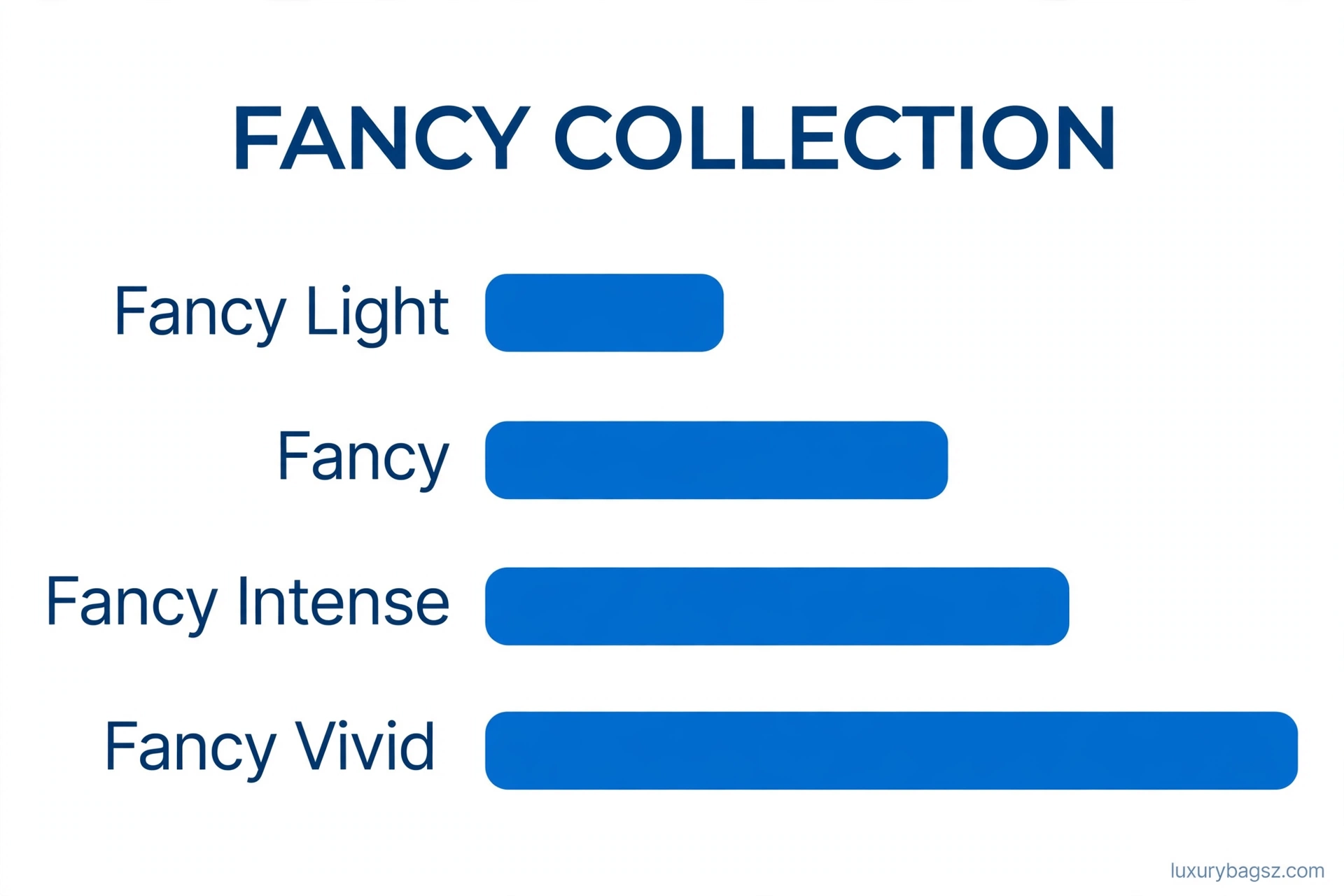
The scale runs Faint, Very Light, Light, Fancy Light, Fancy, Fancy Intense, Fancy Vivid and Fancy Deep. Fancy Vivid stones show exceptionally strong saturation and usually command the highest premiums. Fancy Deep stones are darker in tone, which gives a different, moodier look that some collectors love and others discount.
Secondary hues change the picture. A pure blue stone generally outranks a grayish blue or greenish blue stone at the same grade. Violet-blue modifiers sit somewhere in between, and the effect depends on how the stone looks face-up. Always judge the stone in daylight and indoor light, since blue can shift noticeably between the two.
When comparing stones, view them side by side under the same light, loose if possible. Photographs flatter blue diamonds, and video calls compress color, so never commit to a significant stone from images alone. If you cannot visit in person, ask for video in daylight, indoor light and against a white background.
Color, Clarity and Cut: What Actually Matters
Color comes first, clarity second, and cut serves color rather than brilliance alone. With white diamonds, cutters chase sparkle. With blue diamonds, they often cut to deepen face-up color and keep as much carat weight as possible, even if that means a less brilliant stone.
Clarity still counts, but it does not rule. A strongly saturated blue diamond with visible inclusions can cost more than a paler stone with flawless clarity. Sotheby's own auction history makes the point: a 3.03-carat pear-shaped Fancy Intense Blue diamond graded I1 still achieved a strong result, because its color carried the stone.
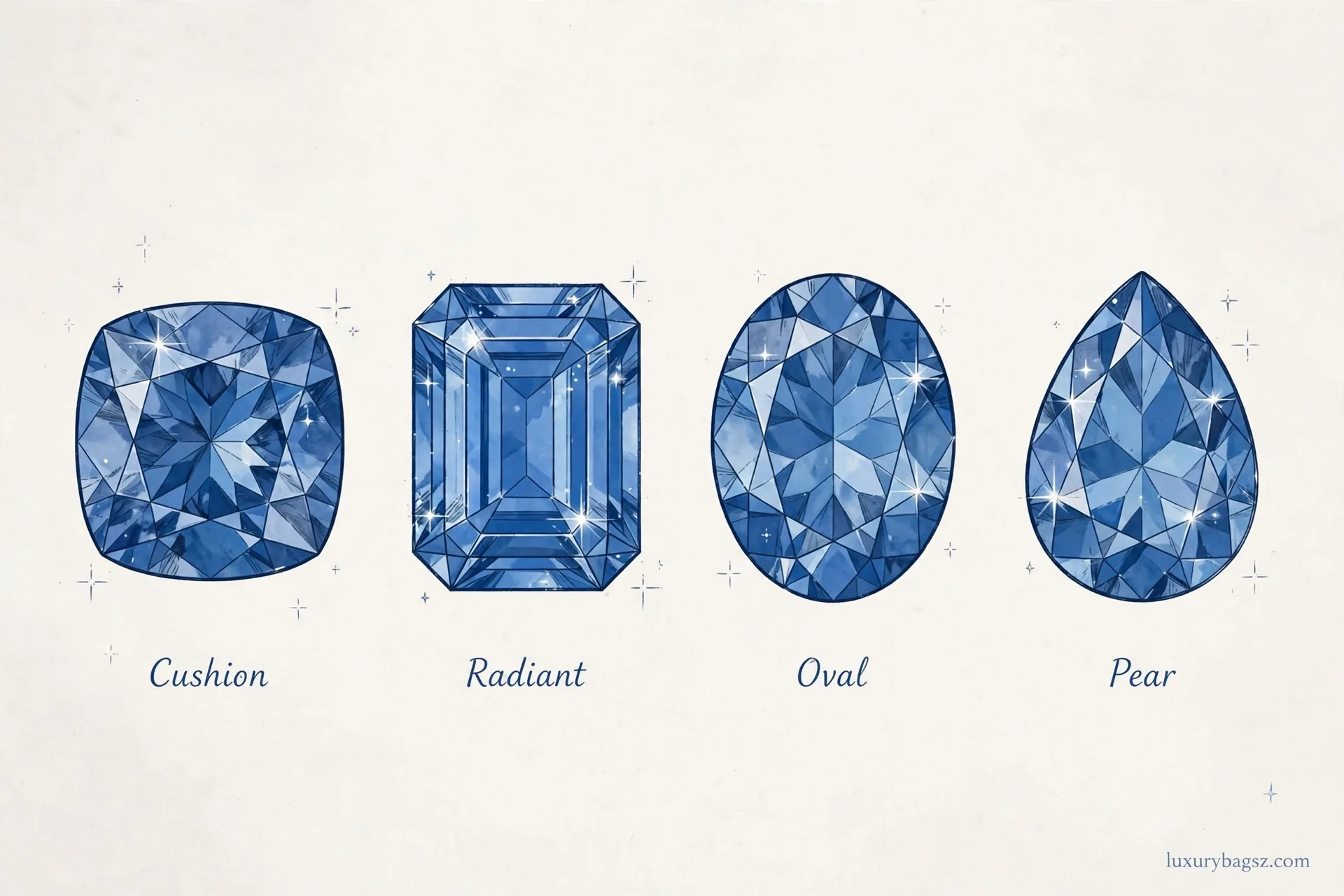
Cut shape is a practical choice. Cushion and radiant cuts are often used to strengthen face-up color, while oval and pear shapes also appear regularly. Pear and marquise points need protective settings, since a sharp tip chips more easily than a rounded corner. Ask how the cutter balanced color, weight and durability before you commit.
Polish and symmetry grades still deserve a glance on the report. They rarely decide a blue diamond purchase, but poor polish dulls the stone's surface and poor symmetry can make color pool unevenly. A well-cut stone shows even color across the face with no dead or washed-out corners.
Color distribution deserves its own check, especially in larger stones. Some blue diamonds show stronger color at the girdle or in one corner, which the cut can either hide or emphasize. Rotate the stone slowly under a single light source and watch whether the blue stays even or shifts patchily as it turns.
Setting choice changes how color reads. White gold and platinum keep blue looking cool and clean, while yellow gold warms the stone and can soften a light blue into something greener. Halo settings intensify color by surrounding the center stone, which helps lighter grades but can overwhelm a stone that is already vivid.
For rings, protect the stone with a setting that guards the girdle, since blue diamonds are worn hard and a chipped girdle damages both beauty and value. Six-prong settings suit round stones, while bezel settings suit fancy shapes and active lifestyles.
Ask your jeweler to show the finished setting under the same lights you used to judge the loose stone. Color can read differently once metal surrounds it, and a setting chosen in bright showroom light may disappoint in everyday wear. Take the finished piece outdoors before accepting it, since daylight is the truest test of blue. A stone that looks vivid indoors but dull outside deserves a second look before you commit your budget.
Natural, Treated or Lab-Grown: The Question That Changes Everything
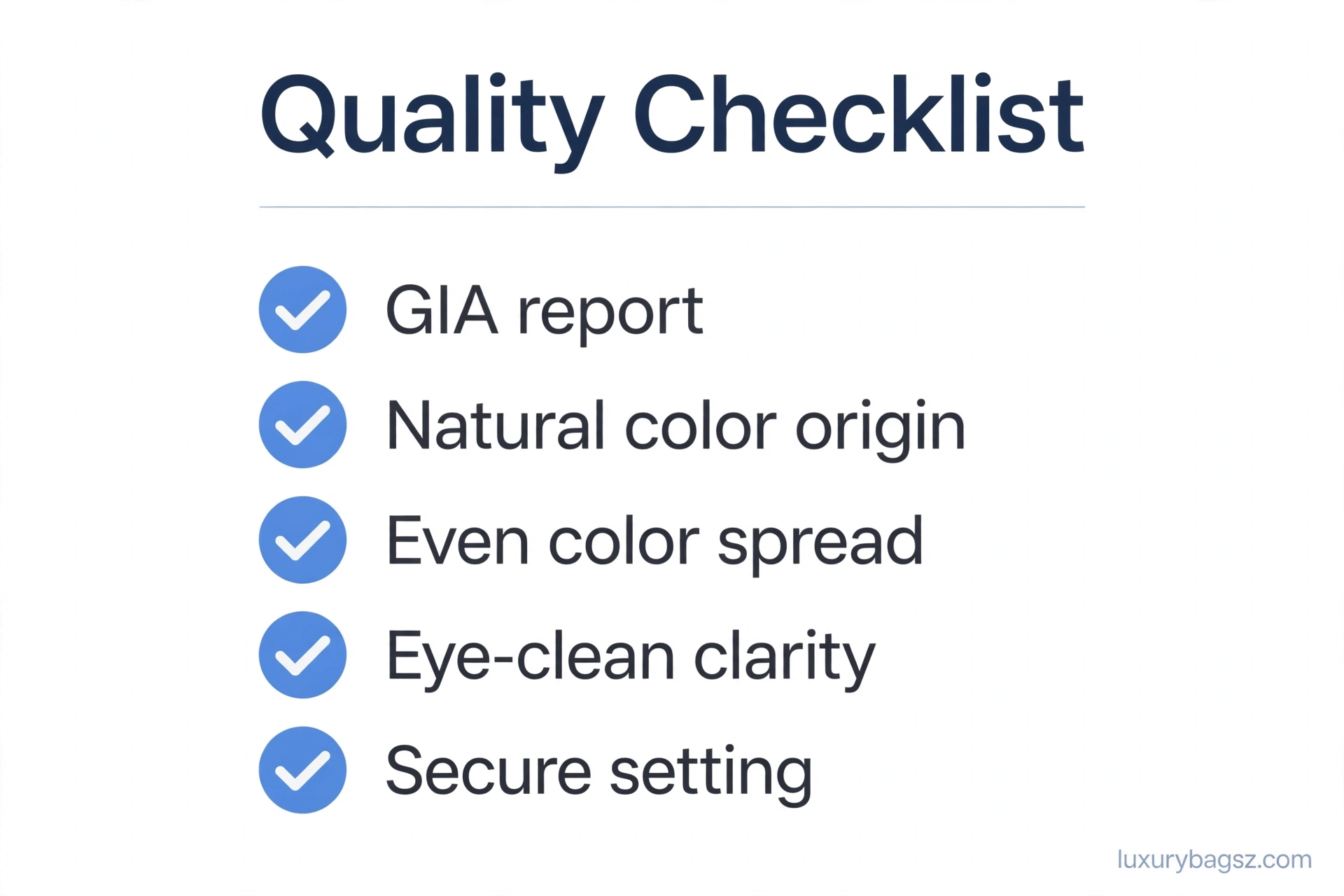
A GIA report is non-negotiable, and the key line is color origin. The report must say the color is natural. Treated blue diamonds, colored by irradiation or high-pressure, high-temperature treatment, can look impressively vivid yet trade at a small fraction of natural prices. The treatment must be disclosed, but only the report proves it.
Lab-grown blue diamonds are a separate category altogether. They are real diamonds, but they are not rare in the way natural blues are, and their prices have fallen sharply as production has grown. If your goal is the look of vivid blue on a modest budget, a lab-grown stone is honest value. If your goal is a collector asset, only a natural stone qualifies.
When a deal looks too good, slow down and verify twice. Ask the seller to show the report before you pay, confirm the report number through the lab, and have an independent gemologist inspect the stone if the price is significant. Genuine sellers welcome this scrutiny; reluctant sellers are telling you something.
Be wary of vague wording. Terms like "blue diamond" without a report, or a report from an unknown lab, are red flags. Match the report number to the stone, check the carat weight and measurements, and confirm the grade matches what the seller claims. A mismatch on any one detail is reason to walk away.
What Blue Diamonds Cost
Prices rise steeply with saturation and carat weight, and published ranges disagree because each stone is individual. Sotheby's notes that smaller natural blue diamonds with lighter grades may range from approximately $30,000 to $50,000 per carat, while Fancy Intense and Fancy Vivid examples can command several hundred thousand dollars to over $1 million per carat.
GIA's own guide gives a different frame, putting Fancy Vivid Blue diamonds from $50,000 to over $500,000 per carat, with exceptional stones exceeding $1 million per carat. The gap between these guides is normal: they cover different stones, sizes and market moments. Use ranges to set expectations, then price the exact stone in front of you.
Size tiers behave differently. Stones under one carat trade most often and price most transparently, while one-to-three-carat stones suit wearable jewelry with collector appeal. Three-to-five-carat stones are already scarce, and anything above five carats with strong saturation enters auction territory, where each sale sets its own benchmark.
Auction results set the ceiling. The 15.10-carat De Beers Blue, a step-cut Fancy Vivid Blue graded Internally Flawless and Type IIb, achieved approximately $57.5 million in April 2022.
The 10.03-carat Mediterranean Blue, a Fancy Vivid Blue cut from a 31.93-carat rough stone, sold for 17.9 million CHF in May 2025. At the other end, a 5.83-carat Fancy Light Blue ring achieved 1.3 million CHF the same month, showing that lighter colors with top clarity still command serious money.
Before you buy for investment, get honest about resale. A natural blue diamond with a top GIA grade holds its appeal, but selling takes time and the right channel, so read our guide on how to price designer jewellery for resale before assuming a quick exit.

Choosing a Setting and a Seller
Platinum and white gold flatter blue diamonds best, because yellow gold can warm the stone's appearance. A bezel setting protects the girdle and suits daily wear, while prong settings show more of the stone but leave edges exposed. For pear shapes, add a protective prong at the tip.
Buy from a seller who welcomes independent verification. Auction houses, established fancy-color dealers and specialist jewelers should all provide the GIA report before payment, not after. Ask for the stone's history: previous auction appearances, known provenance and any prior treatments or repairs.
Insure the moment you buy, and keep the valuation current. Fancy-color prices move with auction results, so a valuation from five years ago may understate replacement cost badly. Photograph the stone and its report together, and store copies separately from the jewel itself.
Inspect the stone loose if you can, then again once set. Setting can hide inclusions near the girdle and can change how color reads. Check that the finished piece matches the report's weight and measurements, and keep the report with the jewel. That paper trail is what the next buyer will pay for.
Caring for a Blue Diamond Once You Own It
Blue diamonds are as hard as any diamond, but their settings are not. Clean with warm water, mild soap and a soft brush, then rinse and dry with a lint-free cloth. Avoid harsh chemicals and ultrasonic cleaners if the setting has pavé stones or the stone has surface-reaching inclusions.
Store the piece alone in a soft pouch so harder stones cannot scratch the metal. Diamonds scratch other jewelry, and other diamonds scratch each other. A yearly jeweler inspection is cheap insurance: prongs loosen, bezels wear, and a loose stone is a lost stone.
For rings specifically, our guide to cleaning diamond rings covers the routine in detail, and our advice on gemstone jewelry care applies to any colored-stone pieces you keep alongside it. Insure the piece for its replacement value and update the valuation every few years, since fancy-color prices move.
Famous Blue Diamonds Worth Knowing
Famous stones teach buyers what the top of the market looks like. The Hope Diamond, at 45.52 carats, is the most famous blue diamond in the world, a Fancy Dark grayish-blue stone whose history runs through royal collections. It shows that even a grayish modifier does not stop a stone from becoming legendary when size and story combine.
The Wittelsbach-Graff Diamond is another historic name, a deep blue stone with centuries of royal provenance. More recent auction stars include the Blue Moon of Josephine, a 12.03-carat vivid blue diamond, and the Oppenheimer Blue, a 14.62-carat stone that set benchmarks for per-carat value. These stones rarely trade, but their results anchor every dealer's pricing conversation.
Study these stones before you buy, not to copy them, but to calibrate your eye. Notice how color reads in photographs versus auction descriptions, how size changes presence, and how provenance adds a premium no grade can capture. A buyer who knows the famous stones negotiates from knowledge, not hope.
Museum stones also teach a humbling lesson: the most famous blue diamonds were rarely bought as investments. They were commissioned, gifted or inherited, and their fame grew over decades. That long view suits blue diamonds better than any short-term trading mindset.
Frequently Asked Questions
What makes a blue diamond blue?
Trace amounts of boron inside the crystal cause the blue color. Boron absorbs yellow light and reflects blue, and most natural blue diamonds belong to the rare Type IIb class, which has very low nitrogen.
Is Fancy Vivid Blue always more valuable than Fancy Deep Blue?
Usually, yes, because Fancy Vivid stones show stronger saturation and a brighter appearance. Fancy Deep stones are darker in tone, and an exceptional Fancy Deep stone can still outprice an average Fancy Vivid one.
Does clarity matter much in a blue diamond?
Less than color does. A strongly saturated stone with visible inclusions can cost more than a paler stone with superior clarity, though eye-clean stones are easier to sell later.
How can I tell a natural blue diamond from a treated one?
Only a GIA report stating natural color origin proves it. Treated stones colored by irradiation or HPHT treatment must be disclosed, but the report is the proof, so never buy without one.
Are lab-grown blue diamonds worth buying?
For wearing, yes: they deliver vivid blue at a fraction of natural prices. For collecting or investment, no: they lack the natural rarity that drives the collector market.
What is the best cut for a blue diamond?
Cushion and radiant cuts are often chosen to concentrate face-up color, with oval and pear also common. The right cut depends on the rough stone's color distribution and shape. A cutter who knows blue diamonds will sacrifice some brilliance to deepen color, and that trade usually pays off in value.
How much does a small natural blue diamond cost?
Lighter grades at smaller sizes may range from approximately $30,000 to $50,000 per carat according to Sotheby's, while Fancy Intense and Fancy Vivid stones run far higher. Always price the exact stone, not the average.
Where do the finest blue diamonds come from?
Historically India's Golconda region, and in modern times South Africa's Cullinan mine above all. Botswana's Orapa mine has also produced blue diamonds, and Argyle in Australia produced examples before closing in 2020.
Should I buy a blue diamond at auction or from a dealer?
Auctions suit rare, high-value stones with documented provenance, while dealers suit wearable pieces you can inspect and compare. Either way, insist on the GIA report before payment. Auction buyers should also budget for buyer's premium and taxes, which can add a significant percentage to the hammer price.
Do blue diamonds hold their value?
Top natural stones with strong color and GIA documentation have a long record of holding appeal, but resale depends on grade, size and channel. Buy the stone you love first, and treat investment upside as a bonus. Stones with unusual secondary hues or weak documentation are the hardest to resell, whatever their original price.
Final Verdict: Color First, Paperwork Always
A great blue diamond purchase rests on two pillars: a color you love face-up, and a GIA report that proves it is natural. Get those right, and the rest, from cut to setting, is refinement. Skip either one, and no bargain price makes up for it. Shop slowly, compare stones side by side, and let the report, not the sales talk, have the last word.






