

How to Buy Pink Diamonds: A Complete Guide to Color, Certification, and Value
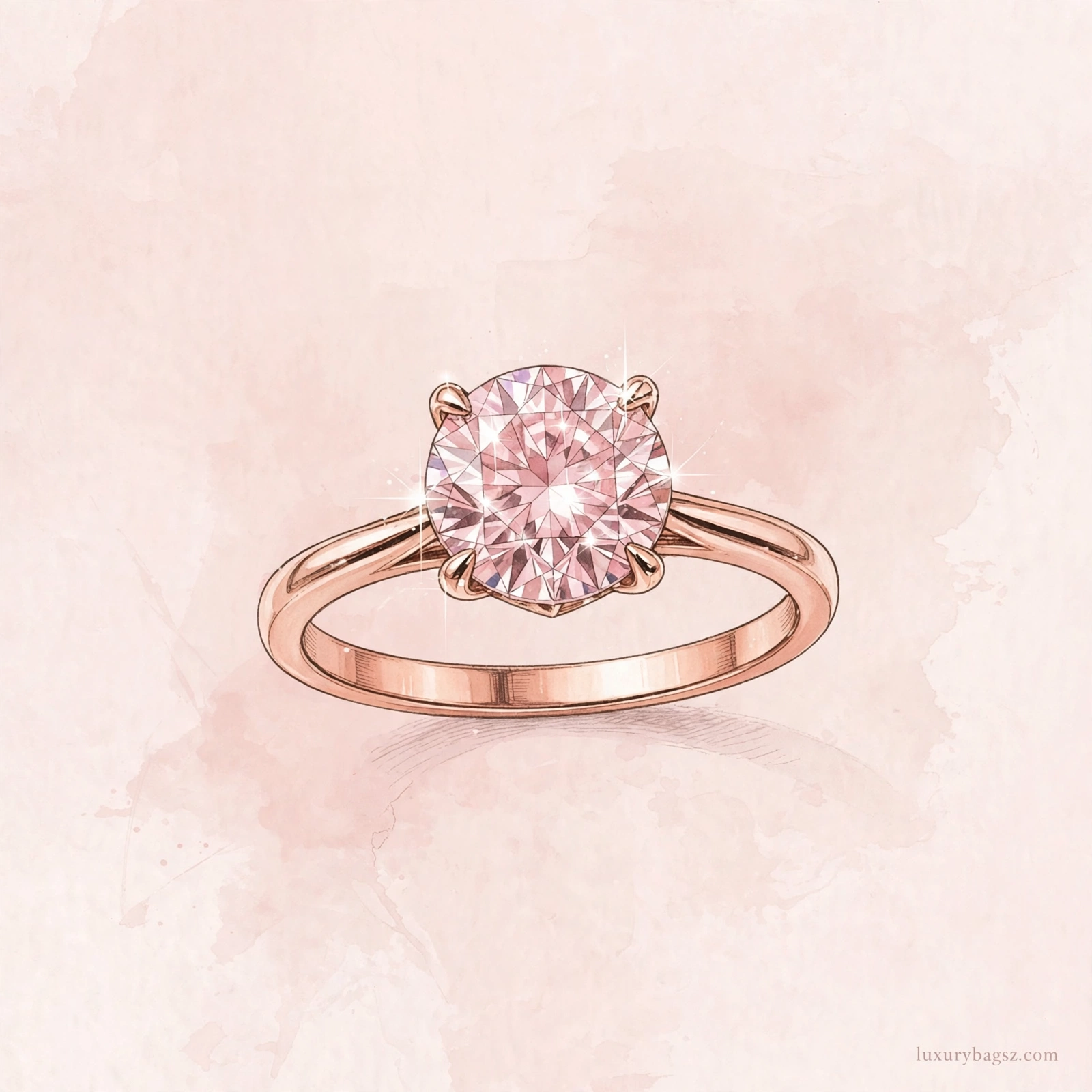
Pink Diamonds at a Glance
A pink diamond is worth buying only when its color is real, its grade is documented, and its price matches what you can actually see. Color drives nearly everything in this market, far more than clarity or size, and a smaller stone with strong, natural pink usually beats a larger stone with a washed-out blush.
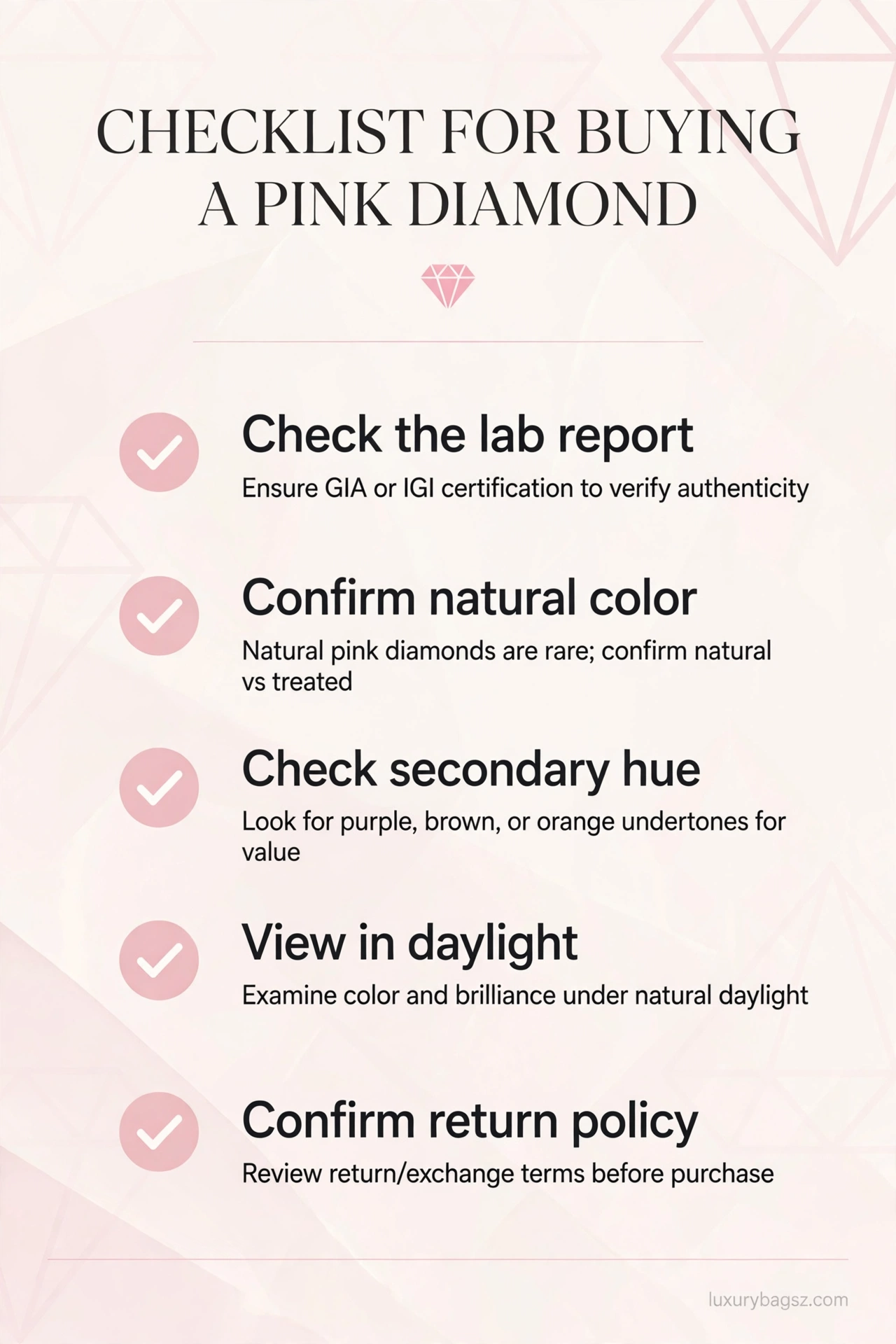
The single most important habit is simple: never pay a natural-pink price without an independent lab report that confirms natural color and no treatment. Photos flatter pink badly, and lighting can make a pale stone look vivid. View in daylight, compare stones side by side, and walk away from any seller who rushes you past the paperwork.
Key Takeaways
- Color intensity is the top value driver: Fancy, Fancy Intense, and Fancy Vivid pinks command the strongest prices.
- A GIA Colored Diamond Grading Report is non-negotiable for natural pink, since it confirms natural color, treatment, and lab-grown status.
- Pure pink beats modified pink in most cases, while purplish pink is prized and brownish pink can be a value entry.
- Rose gold settings deepen face-up pink, and white accent diamonds make the center color read richer by contrast.
- Smaller stones of finer color are usually the better buy than larger stones of weaker color.
What Makes a Diamond Pink
Unlike blue diamonds, which get their color from boron, or yellow diamonds, which get theirs from nitrogen, pink has no trace element to blame. Scientists attribute pink color to extreme pressure distorting the crystal lattice itself, which changes how the stone transmits light.
That structural origin matters for buyers because pink cannot be predicted or prospected for. It is found, not manufactured by geology on demand, and that unpredictability is a large part of why fine natural pink is so scarce.
Pink diamonds are also rare in absolute terms. Only a tiny fraction of mined diamonds show natural fancy color, and pink is rare even within that small group. Most of the world's supply for decades came from one source, the Argyle deposit in Western Australia.
Argyle supplied roughly 90 percent of the world's pink diamonds and closed in 2020. Its output was tiny even at peak, with pinks making up far less than one percent of what the mine produced, mostly in small sizes.
The closure did not create rarity from nothing, but it removed the main tap. Prices had already risen sharply over the two decades before closure, and fine natural pinks now trade as collector assets first and jewelry second.
How Pink Diamonds Are Graded
Pink diamonds sit outside the familiar D-to-Z colorless scale. They are graded as fancy color diamonds, and the grade describes the strength and character of the pink itself, not the absence of color.
The GIA fancy color scale runs from Faint, Very Light, and Light up through Fancy Light, Fancy, Fancy Intense, and Fancy Vivid. Fancy Deep and Fancy Dark describe strong color in a darker, moodier tone rather than higher saturation.
The price jump between grades is not gentle. Moving from Fancy Light to Fancy can change the per-carat price sharply, and each step toward Fancy Vivid multiplies rarity. One grade of intensity can matter more than a clarity grade or a small size difference.
Secondary hues move serious money on small words. On a GIA report, the last color named is the dominant one, and an adjective marks a slight modifier while a noun marks a stronger one. An orangy pink whispers orange, while an orange pink wears it openly.
Pure pink is generally the most valuable, and purplish pink is rarer and prized. Brown lowers value, which is exactly why a well-chosen brownish pink, set intelligently, can be an honest value entry rather than a compromise to hide.
Clarity works differently here than with colorless stones. A strongly colored pink can carry visible inclusions and still command a high price, while a pale pink should be eye-clean in the center. Judge clarity against color, not as a separate contest.
Natural, Treated, and Lab-Grown: Know the Difference
Three very different products can all look pink in a photograph, and only one carries a natural-pink price. Natural pink comes from the earth with its color intact. Treated pink starts as another diamond and gains or improves its color through irradiation, annealing, or high-pressure, high-temperature treatment.
Lab-grown pink is grown in a laboratory, often by chemical vapor deposition, and its color commonly comes from post-growth treatment. It can be beautiful and even in color, and it costs a fraction of a natural stone. The problem is never the product itself, but a seller who prices one category as if it were another.
Disclosure is the dividing line. A reputable seller states origin and treatment plainly, in writing, before money moves. If a listing says "pink diamond" without saying natural, treated, or lab-grown, treat that silence as a reason to ask, not as a detail to overlook.
The lab report settles the question. For fancy color, the market trusts the GIA Colored Diamond Grading Report for pricing, and the report confirms whether the color is natural, whether the stone was treated, and whether it is lab-grown. Insist on seeing the full report, not a summary.
Some sellers present reports from lesser-known labs with generous grades. Be cautious there: the same stone can read a full grade higher on a soft report than it would at GIA, and the "discount" is often just the grade difference in disguise.
Shapes and Settings That Show Pink Best
Cut serves color in this category, not the other way around. Cutters will thicken girdles and deepen proportions to hold pink, because in this market color overrules every other factor. A stone cut for maximum white-diamond sparkle can dilute the very pink you paid for.
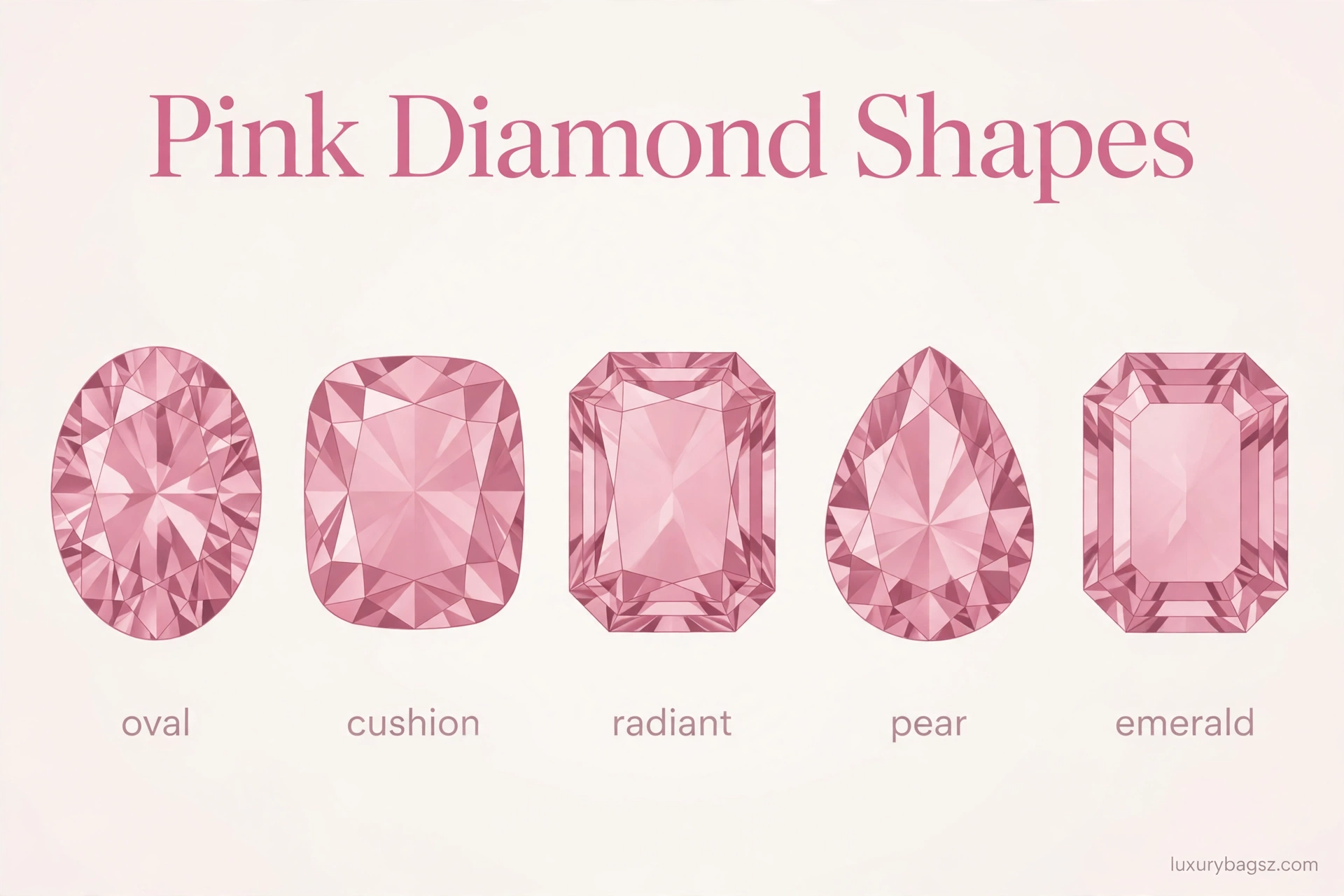
Pinks live mostly in ovals, cushions, radiants, pears, and emerald cuts. The round brilliant, so prized for colorless stones, tends to wash pink out, which is why it is uncommon for fine fancy pinks. Choose a shape that keeps color strong face-up, then judge sparkle within that choice.
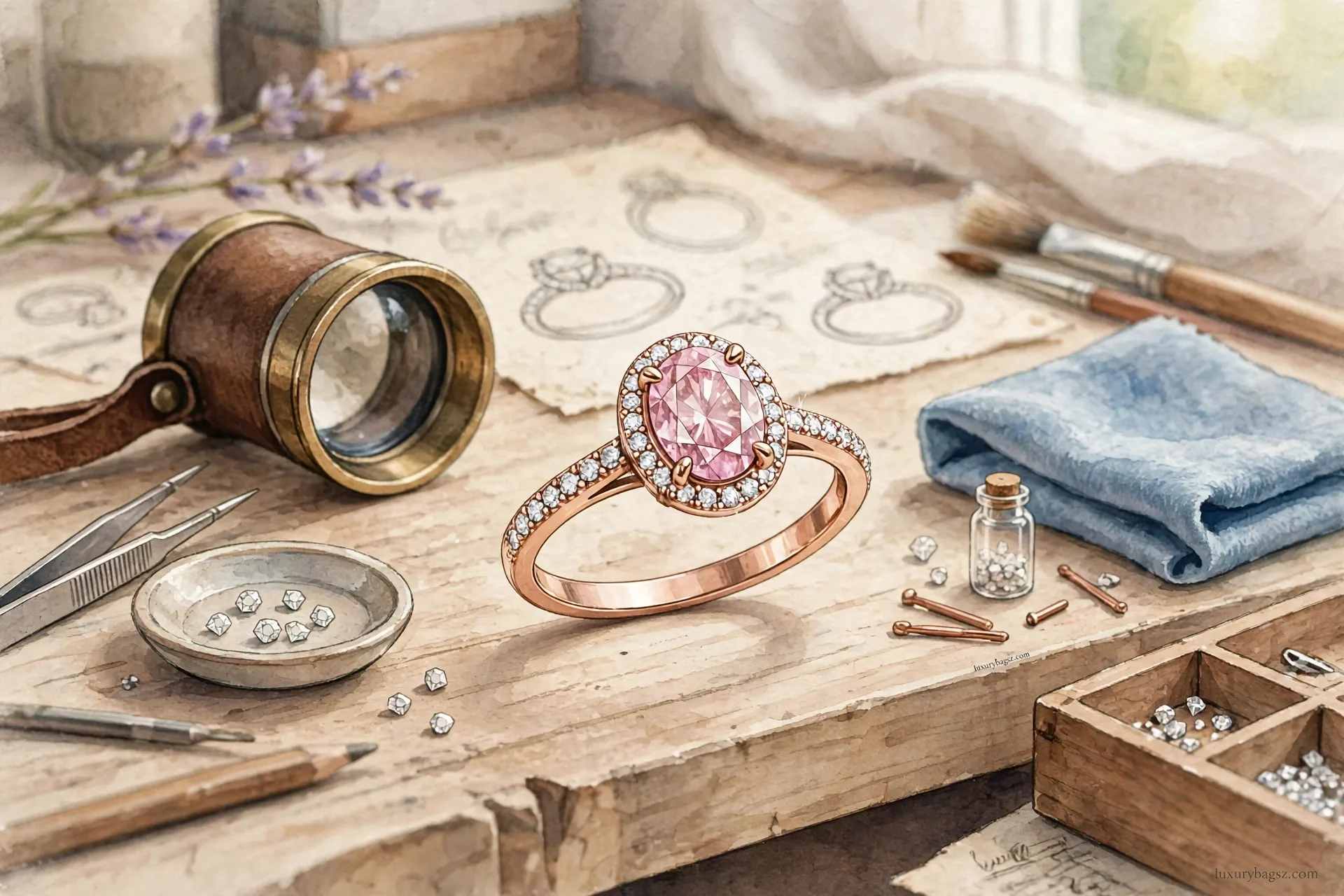
Settings are color engineering, and they can lift a stone a visible step. Rose gold is the single most effective intensifier for a pale pink: rose gold prongs, bezel, and basket reflect warmth back through the stone and deepen its face-up color.
Contrast works the other way. Bright white accent diamonds in platinum or white gold make the center pink read richer, and halos and three-stone designs are the classic expressions of that effect. A Fancy Light stone can look a step stronger with the right frame.
There is also a reversal worth knowing. When a pink center is beyond budget, invert the design: a pink diamond halo or pink accents around a colorless center puts real pink on the hand at a fraction of the center-stone price.
What Pink Diamonds Cost and What Moves the Price
Pink pricing is the most opaque corner of the diamond market, because so few comparable stones trade publicly. Per-carat prices climb steeply with intensity, and they climb again with size, since fine pinks over one carat are increasingly hard to find.
Auction records show the top end clearly. The Pink Star, a 59.60-carat Fancy Vivid stone found in South Africa in 1999, sold in April 2017 for $71.2 million, the highest auction price ever paid for any diamond or jewel. That is not a shopping guide, but it shows where the finest color lands.
Everyday reality sits far below that. Smaller natural pinks exist at accessible prices, especially in Fancy Light and lighter grades, and brownish or orangy modifiers bring prices down further. One older retail example, a 0.27-carat fancy orangy pink, was listed near $3,690, showing how small and modified stones open the door.
If you are buying partly as a store of value, remember that resale rewards documentation and desirability. Our guide to how to resell luxury jewellery explains why paperwork, condition, and realistic pricing matter more than hopeful asking prices.
The same discipline applies to valuing what you own. Learning how to price designer jewellery for resale helps you judge whether a pink stone is priced like a jewel you will wear or an asset you expect to exit.
Do not buy pink as a guaranteed investment. Treat any appreciation as a bonus, buy a stone you would proudly own for decades, and keep your budget honest: a smaller stone of finer color is almost always the better ring than a larger one of weaker color.
Pre-Purchase Checks Before You Pay
Start with the report number. Verify it with the lab, match the stone to the report, and check that the color grade, carat weight, and treatment disclosure match what the seller told you. Any mismatch ends the deal, no matter how pretty the stone looks.
View the stone in person whenever the price justifies it. Photos and videos flatter pink, and jewelry-store spotlights are designed to flatter everything. Daylight, office light, and evening light each tell you something different, and a stone should hold its pink across all three.
Compare candidates side by side. Two stones with similar paperwork can look very different together, and the comparison exposes weak saturation, gray or brown masks, and window effects that a single-stone viewing hides.
Check the setting as carefully as the stone. Prongs should be even and secure, the basket should not pinch or tilt the stone, and the band should sit comfortably. A loose stone in a beautiful ring is a repair bill waiting to happen, so ask for a prong check before delivery.
Confirm the practical terms in writing: return window, exchange policy, resizing terms, insurance appraisal, and what happens if an independent appraisal disagrees with the grade. A seller confident in their stone will put those terms on paper without hesitation.

Honest Alternatives When the Budget Says No
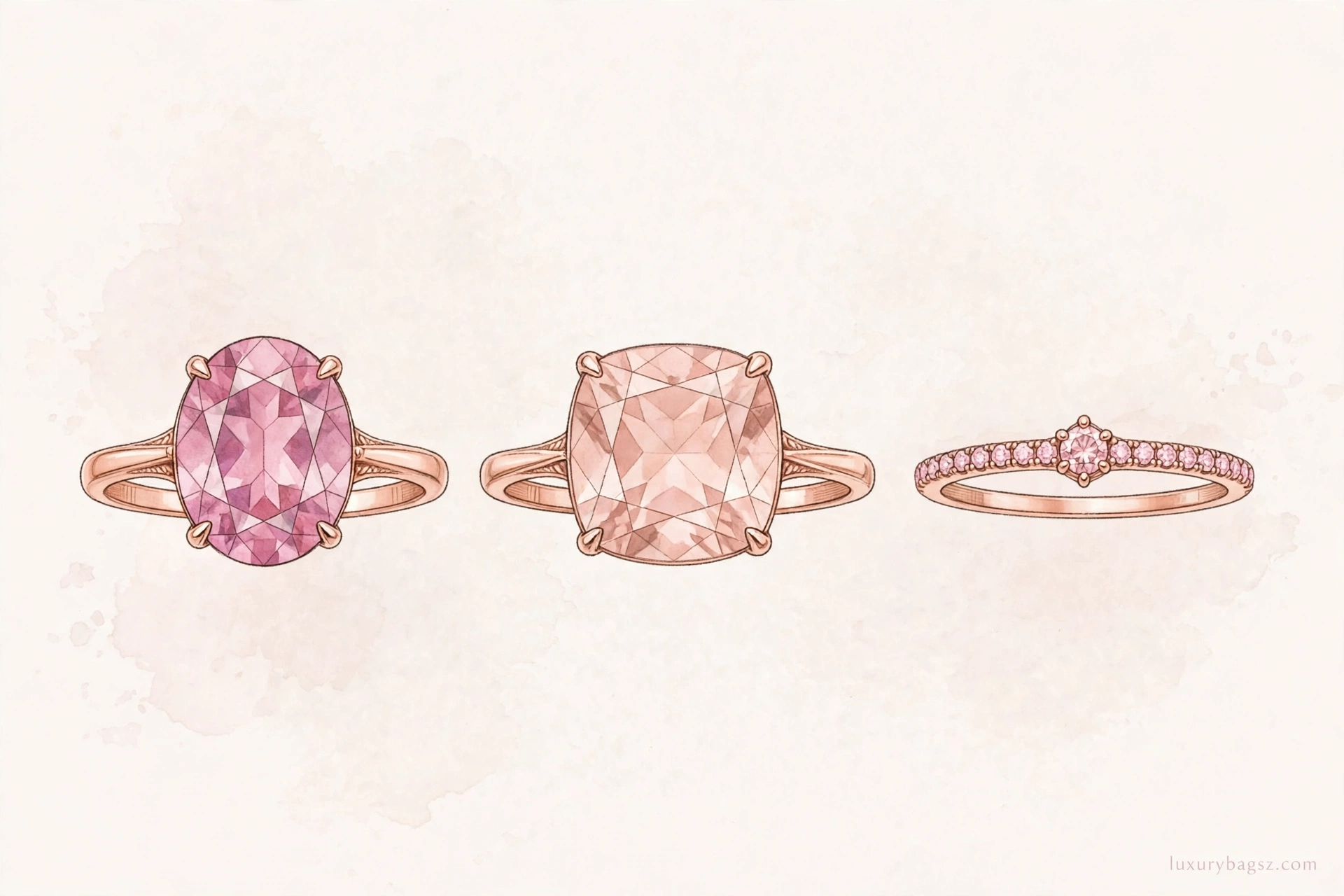
A pink sapphire is the strongest honest alternative. Sapphires are beautiful, genuinely rare, and durable enough for daily wear, at a small fraction of fancy diamond prices, and the palette runs wider: pastels that echo a fancy pink, plus intensities no attainable diamond can match.
Morganite is the second alternative, a pastel pink beryl with soft brilliance and a gentle blush that recalls pale pink diamonds, at a price gentler still than sapphire. It is softer than diamond or sapphire, so it suits careful wear and protective settings rather than hard daily use.
The third alternative is real pink diamond used as the accent rather than the center. A pink halo or pink side stones around a colorless center give you the rarest color in diamonds on the hand, without the center-stone price, and the piece remains a genuine pink diamond jewel.
There is no wrong answer among the three, only the pink you want and the truth about what each road costs. Choose the stone that fits your life and budget, and let the seller's honesty about origin and durability be part of the purchase.
Caring for a Pink Diamond Ring
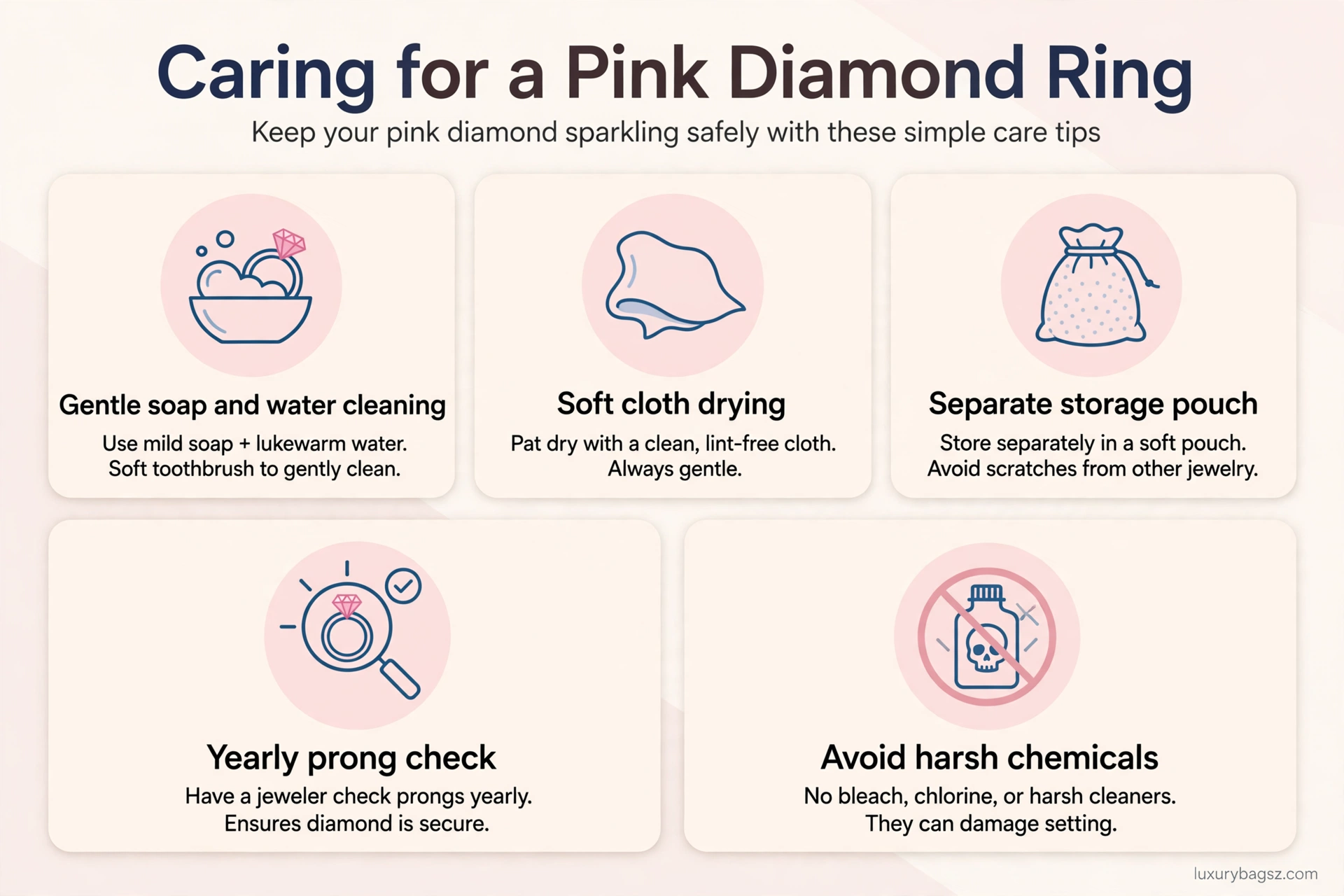
Diamond is hard, but settings are not invincible, and pink color deserves the same care as any fine jewel. Clean gently with mild soap and lukewarm water, use a soft brush for the basket, and pat dry with a lint-free cloth rather than rubbing hard.
Store the ring separately in a soft pouch so harder stones cannot scratch the metal or loosen prongs. Diamonds can scratch other jewelry, and other jewelry can damage a delicate setting, so a shared box without dividers is a slow accident.
Have a jeweler check prongs at least once a year, and sooner if the ring catches on fabric or takes a hard knock. A quick inspection costs little and catches the loose stone before it becomes a lost stone.
For broader care habits that apply across stones, our guide to gemstone care covers cleaning, storage, and the stones that should never be soaked. The same gentle routine keeps pink looking its best.
If your ring pairs pink with white diamonds or gold, the cleaning advice in our guide to gold and diamond rings also applies, since the metal and accents need the same gentle hand as the center stone.
Frequently Asked Questions
Why are pink diamonds so expensive?
Extreme rarity meets a closed tap. Only a tiny share of mined diamonds show fancy color, pink is rare even among those, and Argyle, which supplied roughly 90 percent of the world's pinks, closed in 2020. With new supply gone, fine natural pinks trade as collector assets first and jewelry second.
What makes a diamond pink?
No trace element is responsible. Scientists attribute pink color to extreme pressure distorting the crystal lattice, which changes how the stone transmits light. The color is structural rather than chemical, which is why it cannot be predicted, only found.
How are pink diamonds graded?
By saturation and hue. The GIA scale runs from Faint, Very Light, and Light into Fancy Light, Fancy, Fancy Intense, and Fancy Vivid, with Fancy Deep and Fancy Dark describing strong but darker tones. Secondary hues like purple, orange, and brown also move value significantly.
Do pink diamonds need a GIA report?
Without exception for natural stones at serious prices. Only a GIA Colored Diamond Grading Report is trusted by the market for pricing, and it confirms the color is natural, the stone untreated, and the diamond not lab-grown. Never pay a natural-pink price without one.
What setting makes a pink diamond look more pink?
Rose gold everywhere the metal touches the stone: prongs, bezel, and the full basket, so warmth reflects back through the diamond. Then contrast it with bright white accent diamonds in platinum or white gold, which makes the center pink read richer by comparison.
Are treated pink diamonds worth buying?
They can be, at a treated price, with full disclosure. Treated stones are beautiful and far more affordable than natural pinks, but they should never be priced or sold as natural. Buy them for wear and enjoyment, not as a natural-pink asset.
What is the best shape for a pink diamond?
Ovals, cushions, radiants, pears, and emerald cuts, because they hold color face-up. The round brilliant tends to dilute pink, so it is uncommon for fine fancy pinks. Choose the shape that keeps color strong, then judge sparkle within that shape.
Is a pink diamond a good investment?
It can hold value well when the color is strong, natural, documented, and desirable, but no jewel is a guaranteed investment. Buy a stone you would proudly own for decades, keep documentation complete, and treat any appreciation as a bonus rather than a promise.
What are the best alternatives to a pink diamond?
Pink sapphire for durable, rare color at a fraction of the price; morganite for a soft pastel blush at a gentler price still; or real pink diamonds as halo or accent stones around a colorless center. Each road is honest when origin and durability are disclosed.
How do I care for a pink diamond ring?
Clean gently with mild soap and lukewarm water, dry with a soft cloth, store separately in a soft pouch, and have prongs checked yearly. Avoid harsh chemicals and hard knocks, and take the ring to a jeweler promptly if it catches on fabric or feels loose.
Final Verdict: Buy the Color You Can See, on Paper You Can Verify
A good pink diamond purchase comes down to three things: saturation you can see in daylight, a report you can verify independently, and a setting that makes both work harder. Get those three right and the rest, shape, size, and budget, falls into place honestly.
Start with color, not carat. Choose the strongest natural pink your budget allows, favoring Fancy or better where you can, and let a smaller stone of finer color beat a larger stone of weaker color every time. Then verify everything before you pay, and buy from a seller who welcomes that scrutiny.
If the budget will not reach natural pink, choose an honest alternative without apology. A pink sapphire, a morganite, or pink accents around a colorless center can all be beautiful, wearable answers, and they beat an overpriced or misrepresented "pink diamond" every time.






