

How to Buy the Right Diamond: Budget, the 4Cs, Certificates and Checks That Matter
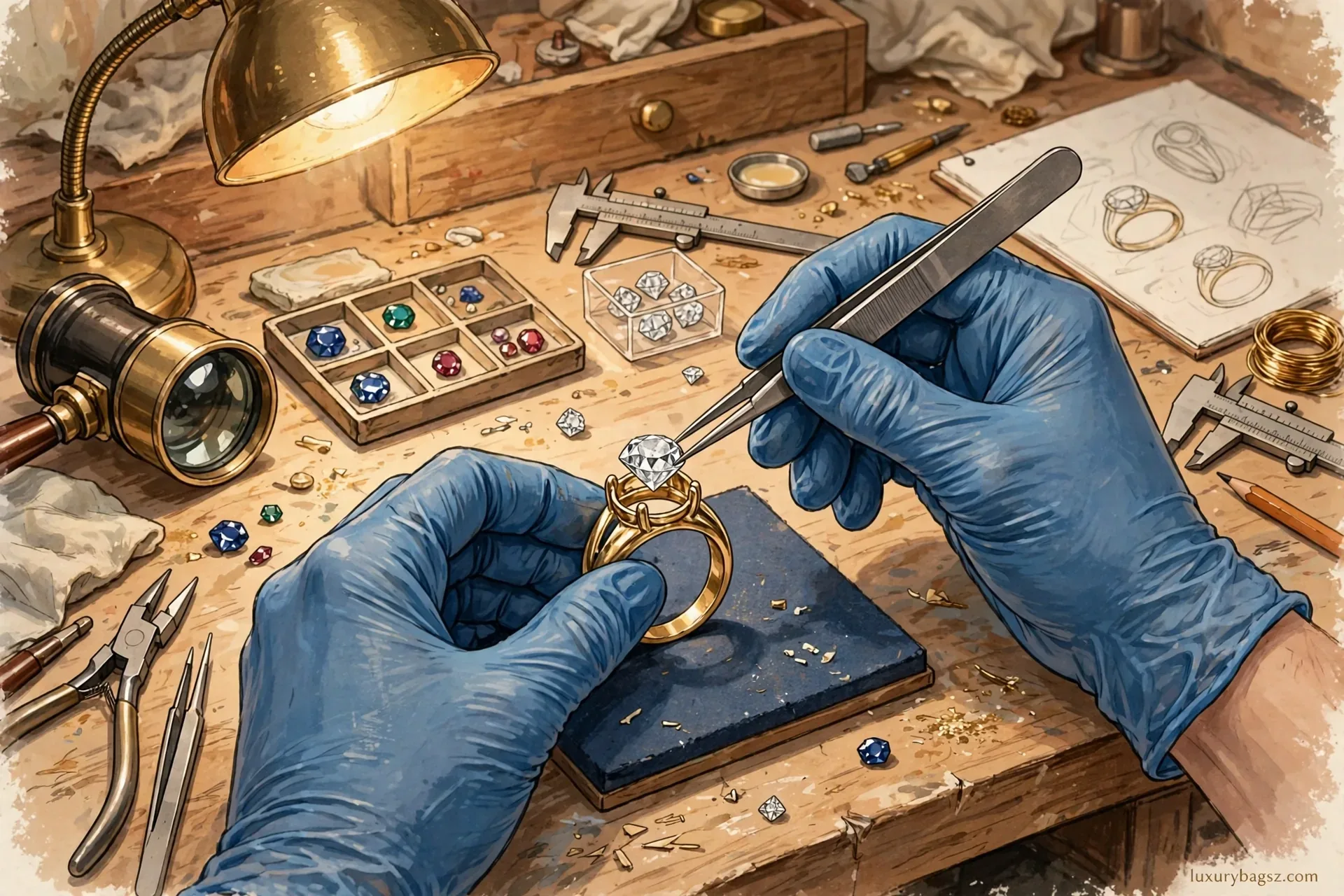
Buying a Diamond in Brief: Cut First, Paper Always
The right diamond is a well-cut stone within your budget, with a trusted grading report, bought from a seller whose returns you have read in writing. Put cut quality first, then balance colour and clarity until the stone looks clean to your eye, and only then stretch carat. That order is the whole method.
Key Takeaways
- Set a total budget for stone, setting and extras before you look.
- Cut quality decides sparkle, so it is the last place to save money.
- Colour and clarity can step down until flaws are invisible in real life.
- Carat is weight, not size alone; shape changes how large a stone looks.
- Insist on a report from a recognised laboratory, and match its number.
- Read return and warranty terms in writing before you pay anything.
Decide What the Diamond Is For
An engagement solitaire, a pair of studs and a pendant ask different things of a diamond. Start by naming the piece, the wearer and how hard it will be worn daily. Rings take knocks and want secure settings and sensible shapes. Studs and pendants can favour sparkle over toughness, because they live a gentler life. Know the wearer's style before the stone. A step-cut admirer will not be converted by the sparkliest round brilliant ever cut, however fine the deal. Settle this first and every later choice, from shape to metal, becomes a short answer rather than a fresh argument.
Purpose also sets the deadline honestly. A proposal date, a birthday or an anniversary rewards starting weeks early, because sizing, setting and any exchange all take longer than first-time buyers expect.
Set the Budget Before the Romance
Choose a total figure you can spend without strain, covering stone, setting, any resizing, insurance and tax where it applies. Write it down before visiting a seller. As a planning shape, the stone commonly takes the largest share, the setting the next, and a small share covers the extras. Treat that as a shape, not a rule. Ignore salary folklore about how many months to spend. Those slogans came from advertising, not from anyone's household budget or happiness. A firm budget protects the experience. Sellers can help brilliantly inside a number; without one, every stone shown will be slightly above it.
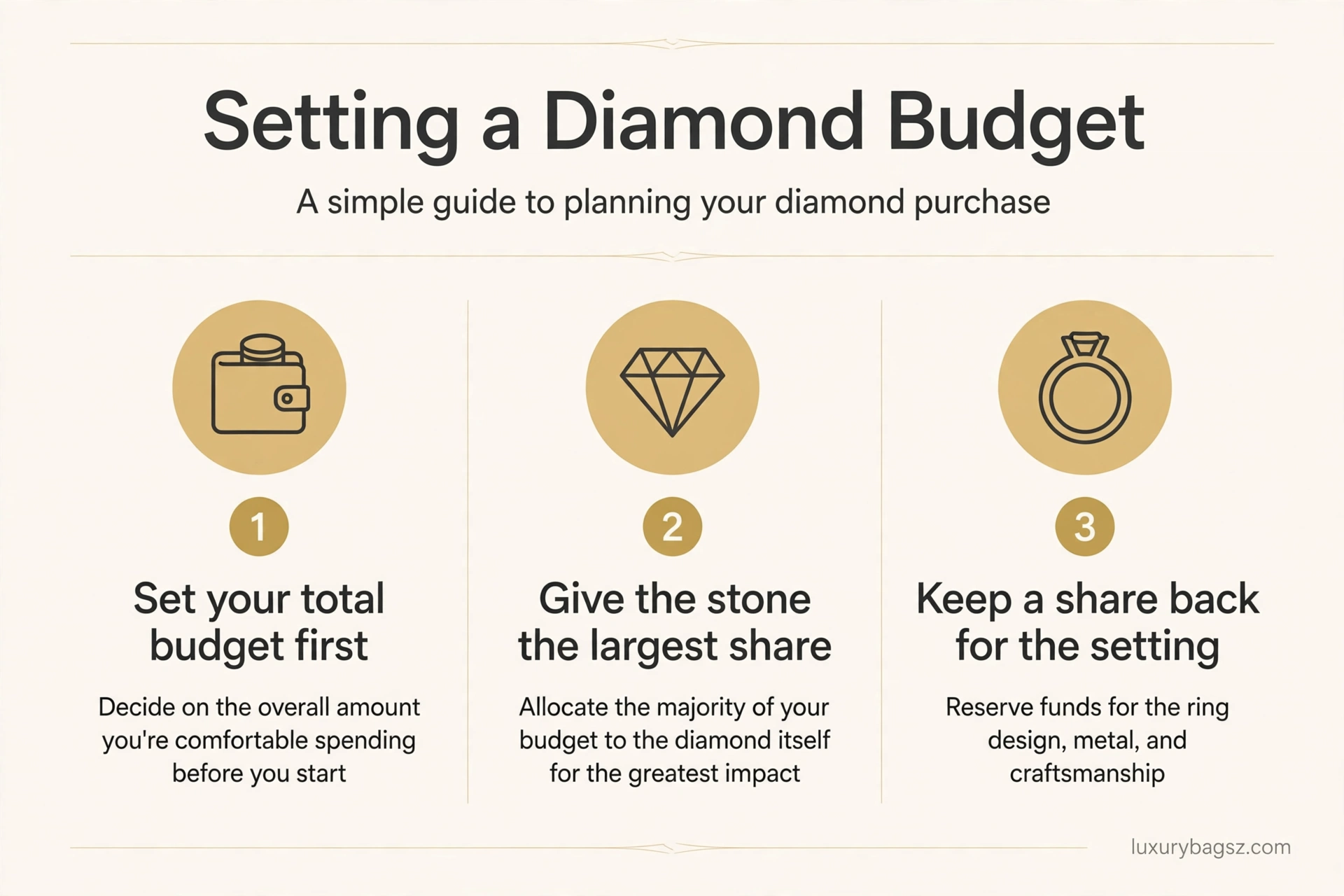
Keep a small contingency inside the budget rather than spending to the last pound. Resizing, an appraisal for insurance and a wedding band that must match will all arrive sooner than you think.
Choose the Shape With Your Eyes
Shape is taste, and it also changes value. Round brilliants cost most per carat; fancy shapes usually cost less and elongated shapes look larger for their weight. Work through the families in our types of diamond cuts article before shopping, so you can name what you love in one sentence. View shapes on a hand, not only in a tray. An oval that sings in tweezers may feel wrong on a finger, and a cushion may do the opposite. If the ring is a surprise, study the jewellery the wearer already owns. Their existing shapes and metals are the safest evidence you will ever get.
The 4Cs, in the Order That Saves Money
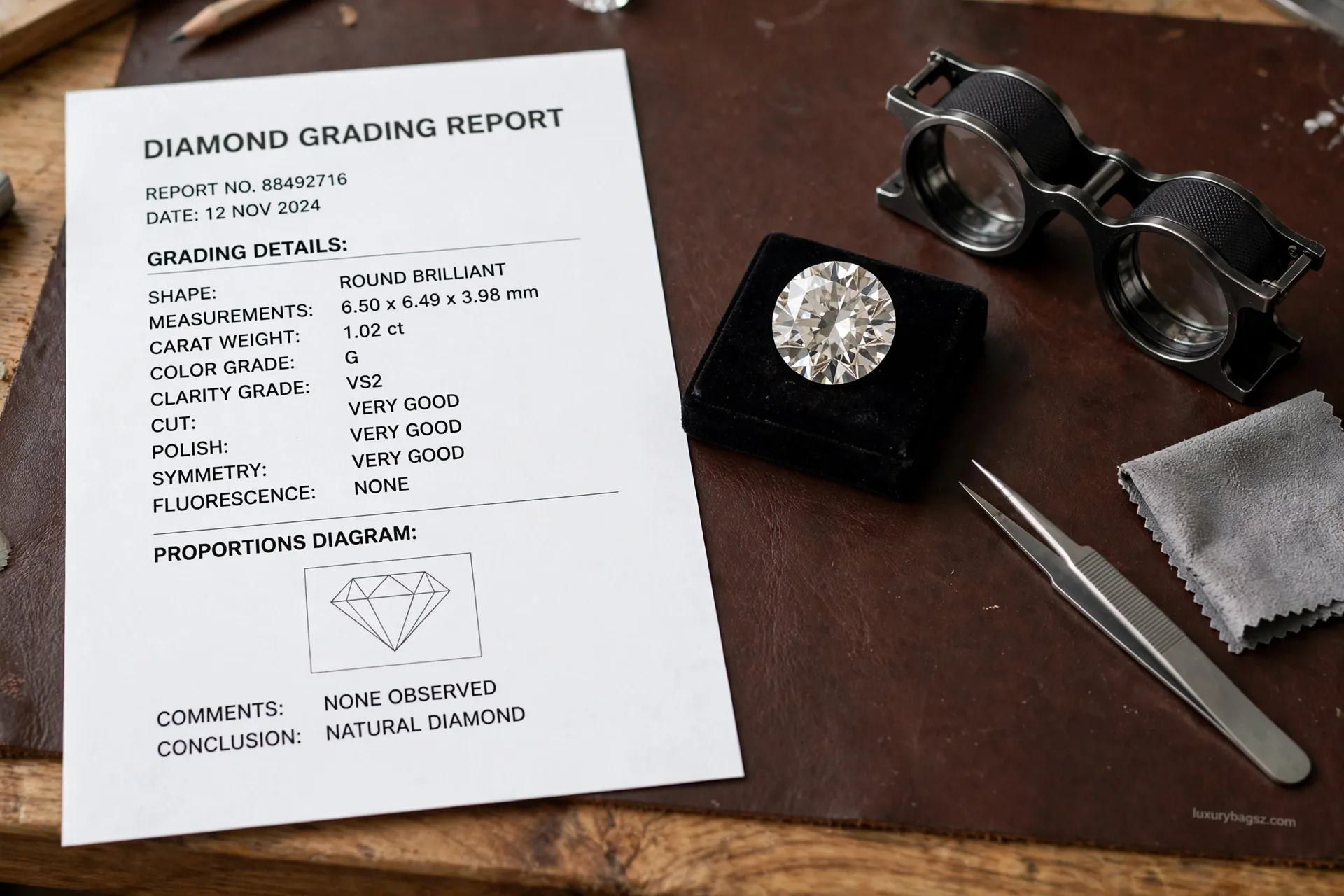
Cut first: it controls brilliance, fire and sparkle. For round stones, stay at the top cut grades your budget reaches; for fancy shapes, judge light behaviour in person. Colour second: grades run from D, colourless, down the alphabet. In a ring, near-colourless stones around G to I usually look white once set, especially in white metal. Clarity third: buy eye-clean, not flawless. Many stones graded around VS to SI look clean without magnification, and the saving versus top grades is large. Carat last: weight is priced in jumps at milestone sizes. A stone just under a famous weight can look the same and cost noticeably less. Special colours play by richer rules, as our how to buy pink diamonds guide shows, where colour itself is the prize being graded and priced.
Fluorescence deserves one calm sentence: it makes some stones look milky in strong grades and can make others look whiter. Judge it stone by stone in daylight rather than fearing the word itself.

Lab-Grown, Natural and the Setting
Decide early whether you are open to lab-grown diamonds. They are real diamonds with the same chemistry, usually far cheaper per carat, and they change every budget calculation. Natural stones cost more and carry mining's history and resale patterns. Neither choice is correct for everyone; an uninformed choice is the only wrong one. Then choose the setting as engineering, not decoration. Low profiles, secure claws or a bezel suit active hands; high solitaires maximise light and drama. Metal colour completes the stone: white metals sharpen colourless stones, as explained in our types of gold article, while yellow and rose add warmth.
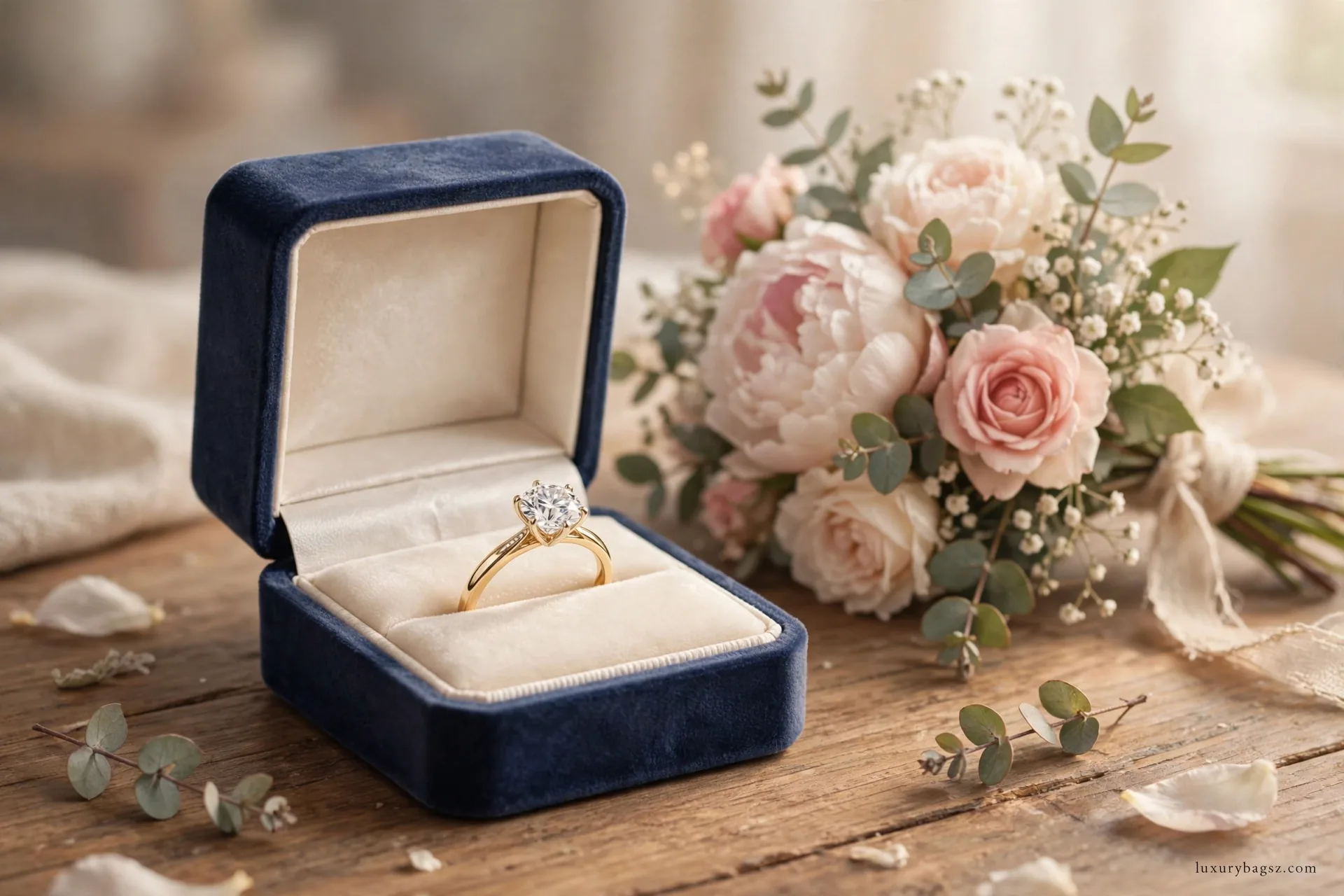
Certificates and the Checks Before Paying
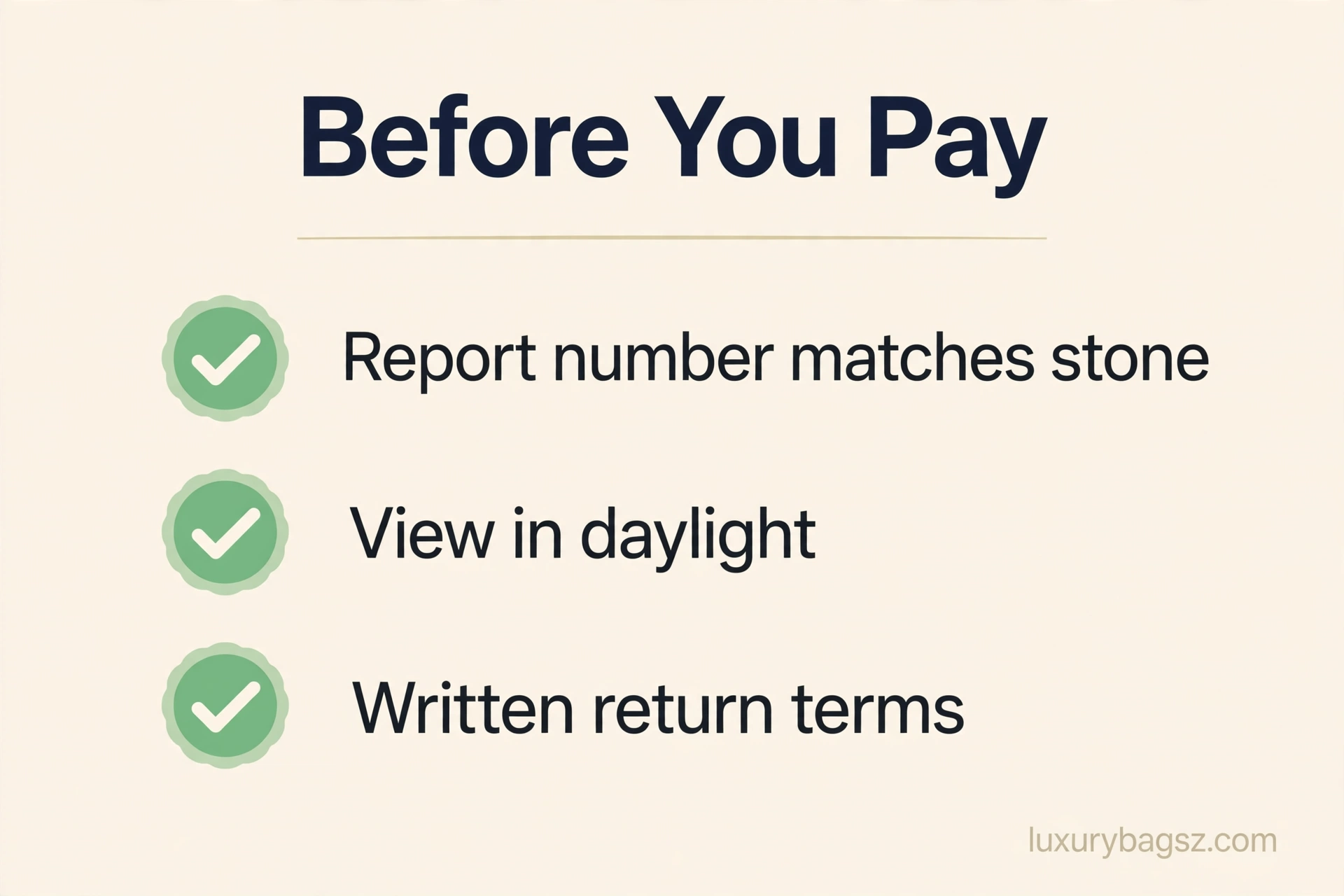
Insist on a grading report from a recognised laboratory such as the GIA or IGI. The report describes the stone; a shop's own card is marketing, not grading. Match the report number to the stone. Many diamonds carry a laser inscription on the girdle, and a jeweller can show it to you under magnification. The documentation habits in our how to authenticate Tiffany jewellery guide generalise well: papers should describe exactly the object in your hand. Finally, view the stone in daylight as well as shop light, and get return terms, warranty and resizing policy in writing before money moves.
Photograph the stone and its report together before it is set, and keep your jeweller's receipt with them. That simple habit settles almost every insurance or warranty question that can arise years later.
After the Purchase: Insurance and Care
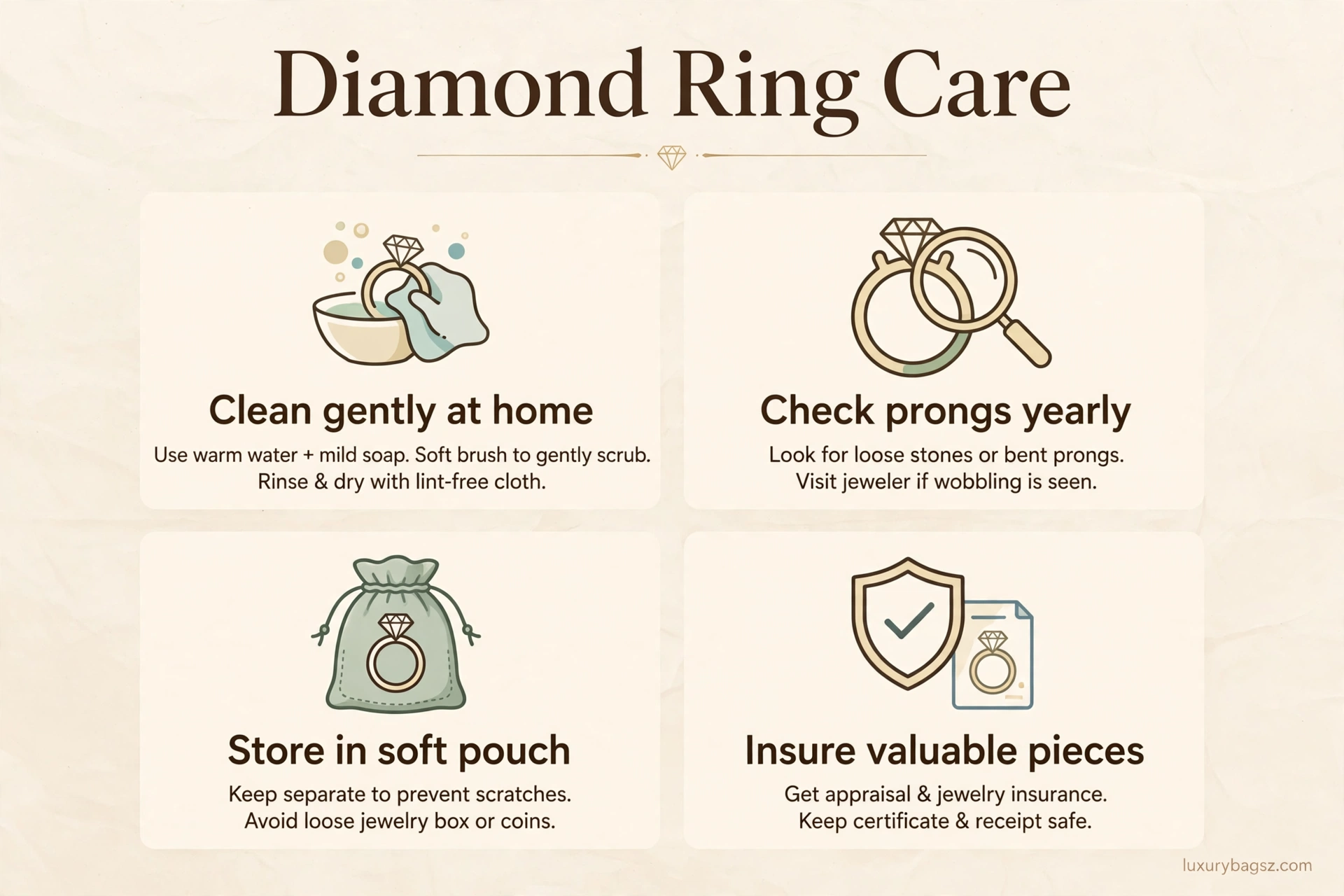
Insure a valuable diamond promptly, using the report and receipt. Photographs and an up-to-date valuation make any future claim far simpler. Have claws and settings checked about once a year. A loose stone found at a bench costs a tightening; the same stone lost on a street costs the ring. Clean gently at home between checks, and store diamond pieces separately, because diamonds scratch other gems and each other, as our everyday diamond jewellery guide notes for daily pieces. Keep the report somewhere safe and separate from the jewellery. It is the stone's identity document, and replacing it is possible but tedious.
Mistakes That Cost Buyers Most
The classic error is paying for paper perfection: top colour and clarity grades whose difference no unaided eye can see, while cutting quality quietly suffers. The second is stretching for a milestone carat weight on credit. A slightly smaller, finer stone, bought calmly, is the one owners praise years later. Third is skipping the returns question in the excitement. Written terms are part of the product, especially for surprise purchases that may need exchange. Buy slowly, compare two or three stones side by side, and let your eye overrule any single number. That is how the right diamond is actually found.
Sleep on a close decision. Diamonds reward a second viewing on a different day, in different light and mood; the stone that still wins after that is very rarely the wrong purchase.
Frequently Asked Questions
Which of the 4Cs matters most?
Cut. It decides how lively a diamond looks. After cut, balance colour and clarity until the stone looks clean and white in real life, then size.
What clarity should I buy?
Eye-clean is the smart target. Many VS to SI graded stones look clean without a loupe, and they cost far less than flawless grades.
What colour grade looks white in a ring?
Near-colourless grades around G to I usually look white once set, particularly in white gold or platinum settings. Skin, light and cut also play a part.
Is a certificate essential?
For any significant purchase, yes. Choose a report from a recognised laboratory such as the GIA or IGI, and match its number to the stone.
Should I buy lab-grown or natural?
Both are real diamonds. Lab-grown usually costs far less per carat; natural costs more and follows traditional resale patterns. Decide on values and budget.
How much should I spend?
What your household can spend without strain, on stone, setting and extras together. Ignore salary slogans; they were advertising, not advice.
Why do prices jump at certain sizes?
Milestone weights such as half and one carat carry demand premiums. Stones just below a milestone often look the same and cost less.
Can I trust online diamond sellers?
Established sellers with real reports, clear photographs or videos, and written returns can be excellent. Avoid any seller who resists documentation.
What should I check in the shop?
See the stone in daylight and shop light, compare it beside alternatives, check the report number, and confirm resizing and return terms in writing.
Does a diamond hold its value?
Retail diamonds usually resell below their purchase price. Buy for the wear and the occasion, and treat any retained value as a bonus.
Final Verdict: Method Beats Romance, Then Romance Wins
Set the budget, choose the shape, put cut first, balance the other Cs with your eyes, and insist on a trusted report and written terms. Follow that order and the romance can safely take over, because the diamond in the box will be the right one: beautiful, documented and honestly bought.






