

Tadashi Shoji Profile: The Designer Who Made Evening Wear for Every Woman
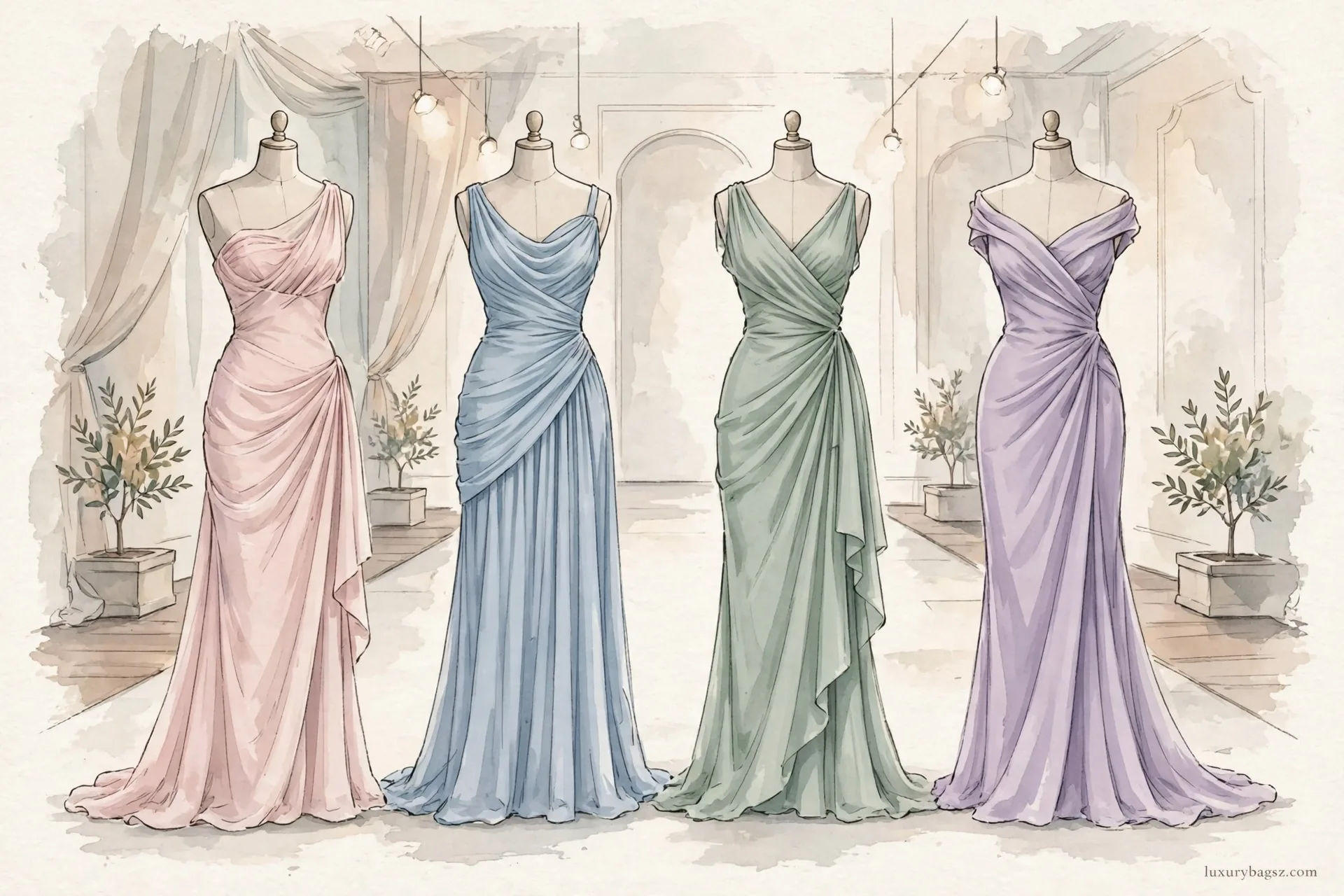
Tadashi Shoji in Brief: Occasion Dresses That Flatter Real Women
Tadashi Shoji is a Japanese-born, Los Angeles-based designer who built a career on a simple belief: every woman deserves a beautiful occasion dress, whatever her age, size or shape. Since launching his label in 1982, he has dressed first ladies, Oscar winners and countless bridesmaids, mothers and guests. His tools are not trends. They are draping, ruching, pintucks and shutter pleats, techniques that shape fabric around the body rather than forcing the body into a rigid shape. The result feels, in his own phrase, almost like wearing a favourite T-shirt, even when the dress looks red-carpet ready. If you are shopping for one special dress, this profile gives you the history, the techniques and the fit checks that matter, without the pressure to buy the most expensive gown in the shop.
Key Takeaways
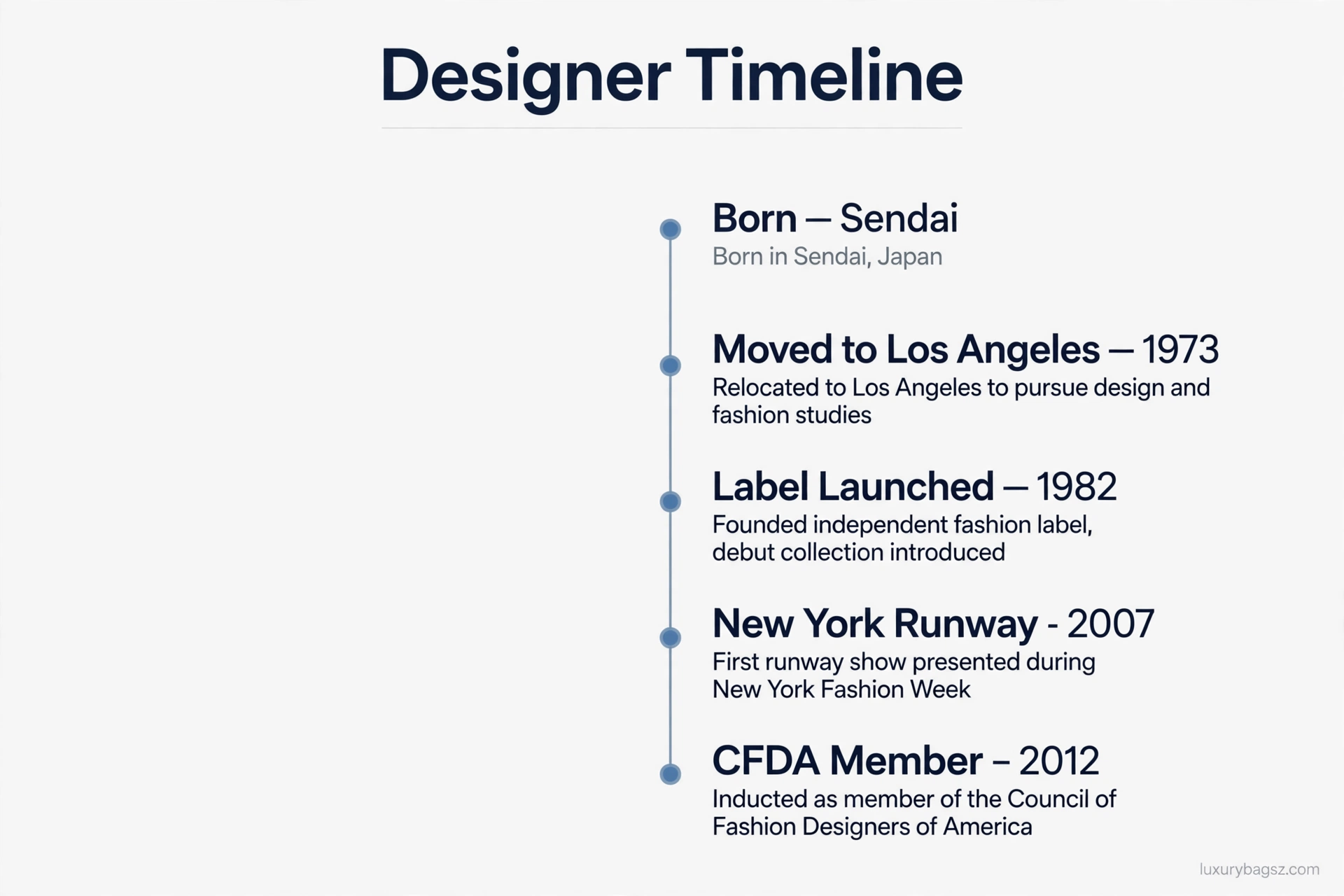
- Tadashi Shoji was born in Sendai, Japan, on 15 January 1948, and moved to Los Angeles in 1973.
- He studied fine art in Tokyo, assisted artist Jiro Takamatsu, then studied fashion in Los Angeles.
- He launched his label in 1982 after noticing how few good occasion dresses existed.
- Signature techniques include draping, ruching, pintucks and shutter pleats.
- His runway collection debuted at New York Fashion Week in September 2007.
- He joined the Council of Fashion Designers of America in June 2012.
- Wearers have included Michelle Obama, Octavia Spencer, Helen Mirren and Beyoncé.
- His brand is carried in more than 700 major department and specialty stores worldwide.
From Sendai to Los Angeles
Tadashi Shoji grew up in Sendai, Japan, drawing and painting from a young age. He moved to Tokyo to study fine art, where a meeting at a gallery led to three years assisting Jiro Takamatsu, a leading Japanese contemporary artist. That training in form, balance and composition still shows in his dresses. In 1973, sensing political unrest at home and opportunity abroad, he moved to the United States. He enrolled at Los Angeles Trade Technical College to study fashion design, and apprenticed with costume designer Bill Whitten, who dressed stars including Elton John, Stevie Wonder, Neil Diamond and Earth, Wind and Fire. He later worked with Richard Blackwell and for a clothing manufacturer. Those years taught him two lessons that shaped his label. First, stage clothes must move and flatter under bright lights. Second, beautiful clothes mean little if ordinary women cannot find them in their size. Both lessons became the foundation of his brand.
Launching a Label in 1982
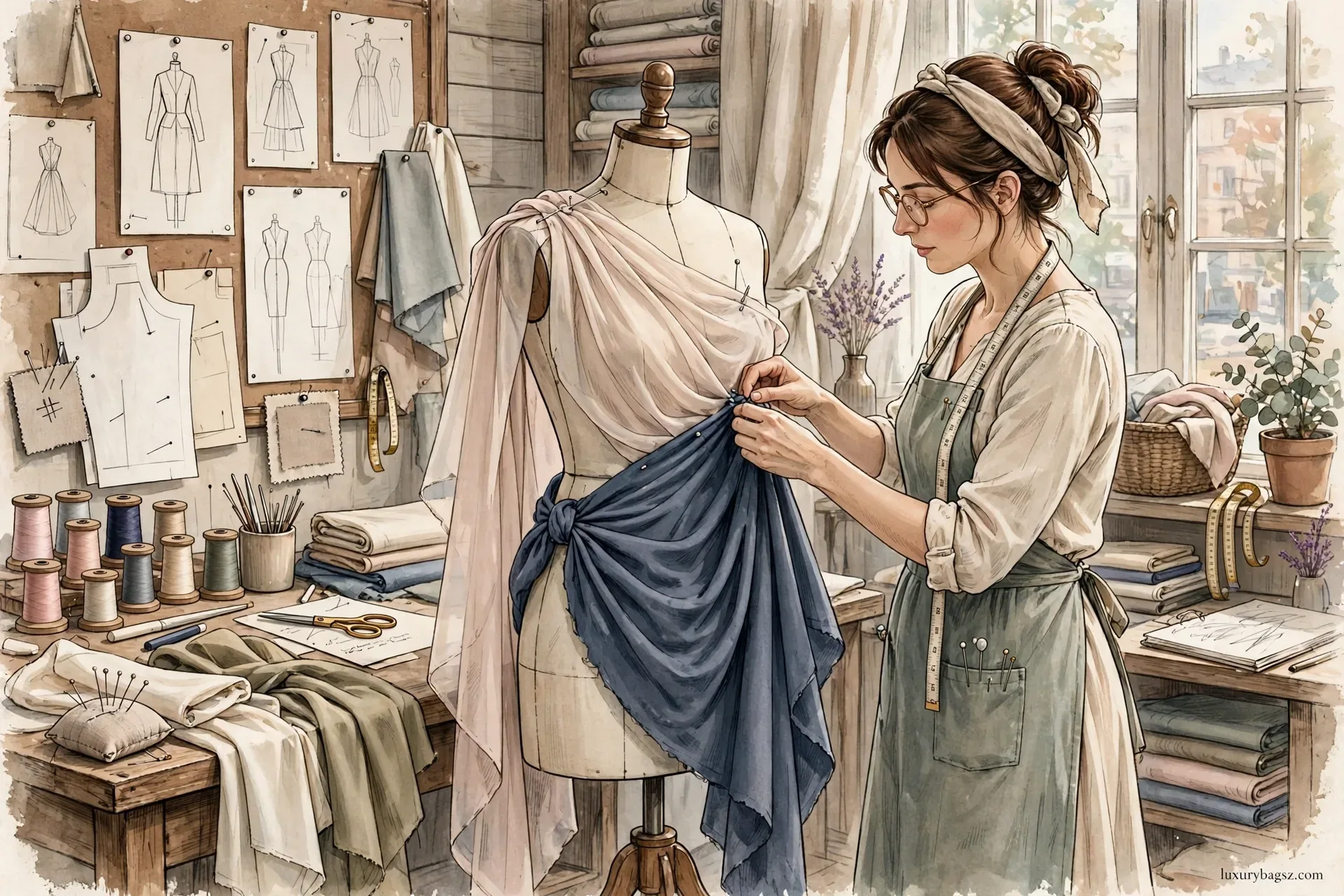
In 1982, Shoji launched his own label because occasion dressing had a gap. Women could find either very expensive couture or uninspiring mass-market dresses, with little in between that offered good fit, good fabric and a graceful look. His answer was a new category of eveningwear. He paired stretch fabrics with fluid silhouettes, and combined couture dressmaking techniques with skilled engineering, so pieces could be made at scale and still feel made for the wearer. Draped jersey gowns, pleated chiffon gowns and shutter-pleated cocktail dresses became his signatures. That approach also explains his range. His collections now cover eveningwear, bridal, plus-size, children's wear, shapewear, intimates and fragrance, with boutiques in the United States and China. The through-line is always the same: a dress should celebrate a woman's positives, not punish her shape. If you are hunting for a vintage or retro occasion look, the same fit-first thinking helps. Our guide to finding the perfect 70s dress shows how silhouette, fabric and length change a dress, and Shoji's draping lessons apply just as well to a modern gown.
The Red Carpet Years
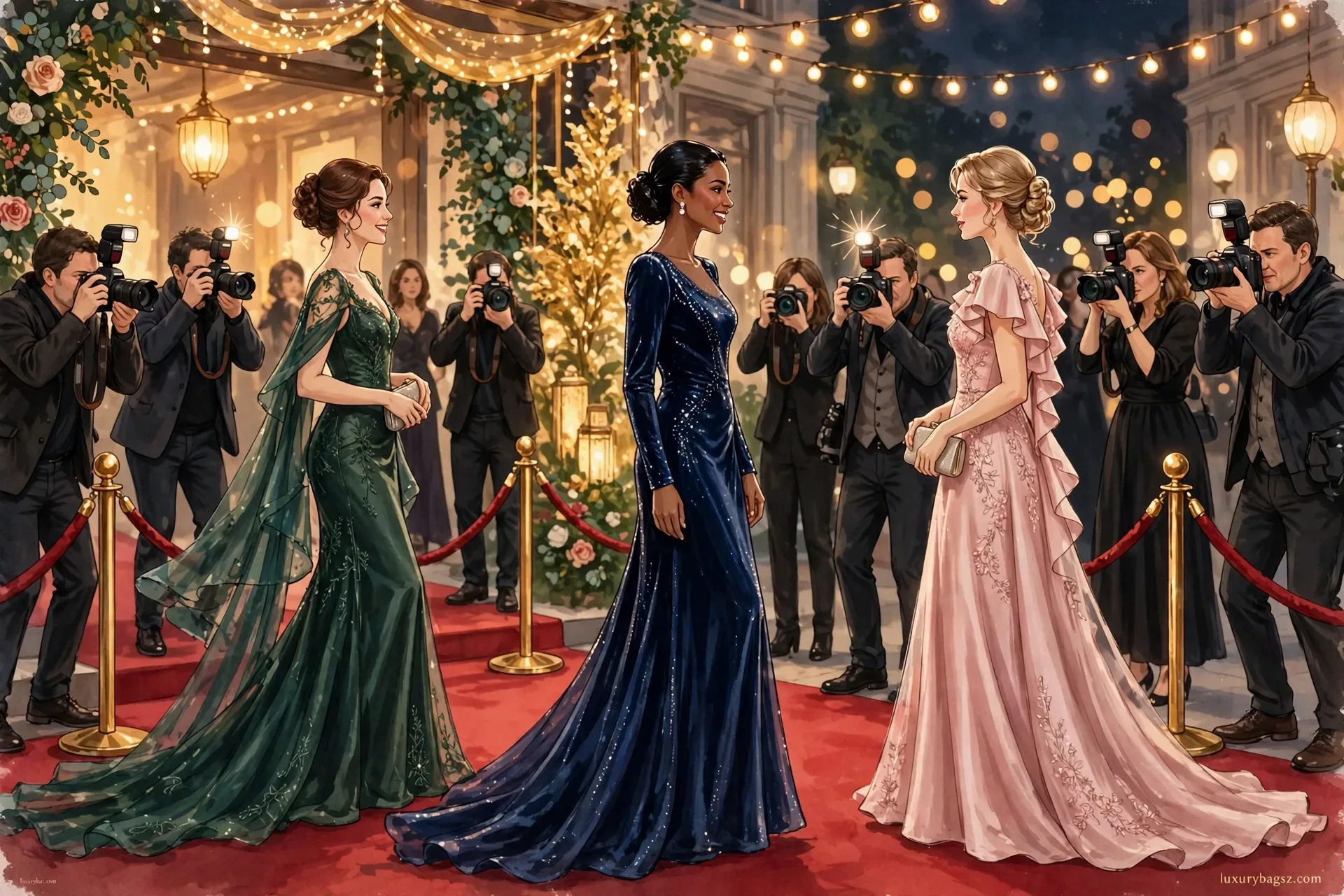
Shoji's red carpet reputation grew steadily, not overnight. He dressed Michelle Obama for a White House state dinner honouring the Prime Minister of Japan, Shinzo Abe, a fitting moment for a Japanese-born American designer. Octavia Spencer wore a hand-beaded custom gown when she won her Oscar, and thanked him on camera backstage. Other wearers have included Helen Mirren, Kate Beckinsale, Beyoncé, Mindy Kaling, Ciara, Britney Spears and Janelle Monáe, among many others. He also sponsored the Miss Universe pageant from 2002 to 2007, designing opening dresses and the winner's eveningwear for her year of events. What links those moments is not celebrity alone. It is fit under pressure. A dress that photographs well but pulls, gaps or restricts movement will fail on a red carpet, just as it will fail at a wedding. Shoji's draping and stretch fabrics are designed to avoid that failure. For a buyer, the takeaway is to judge a dress by movement, not by a still photograph. Walk, sit, raise your arms and climb stairs in it before you commit.
YouTube embed: Kd9_cguDmQ8

New York Runway and CFDA Recognition
In September 2007, Shoji debuted his higher-end runway collection at New York Fashion Week, to strong reviews. That step moved the brand from a respected occasion label to a fashion-week name, without abandoning its fit-first philosophy. In June 2012, he was accepted into the Council of Fashion Designers of America, one of 26 new members that year. CFDA membership is a peer honour, and it recognised not only his design, but his long contribution to American fashion. Later milestones included an affordable luxury bridal collection in 2018, known for versatility and range, and the diffusion line SHO in 2019. He also designed capsule wedding collections for David's Bridal and BHLDN, bringing his draping techniques to a wider bridal audience. Store counts in profiles differ, and it is worth saying so plainly. The brand's own profile gives more than 700 major department and specialty stores worldwide, while an older profile gives more than 1,000. The lower, more recent figure is the safer one to quote, and the exact number matters less than the breadth: Neiman Marcus, Nordstrom, Saks Fifth Avenue, Bloomingdale's and Macy's have all carried the label.
Fit First: Draping, Ruching and Shutter Pleats
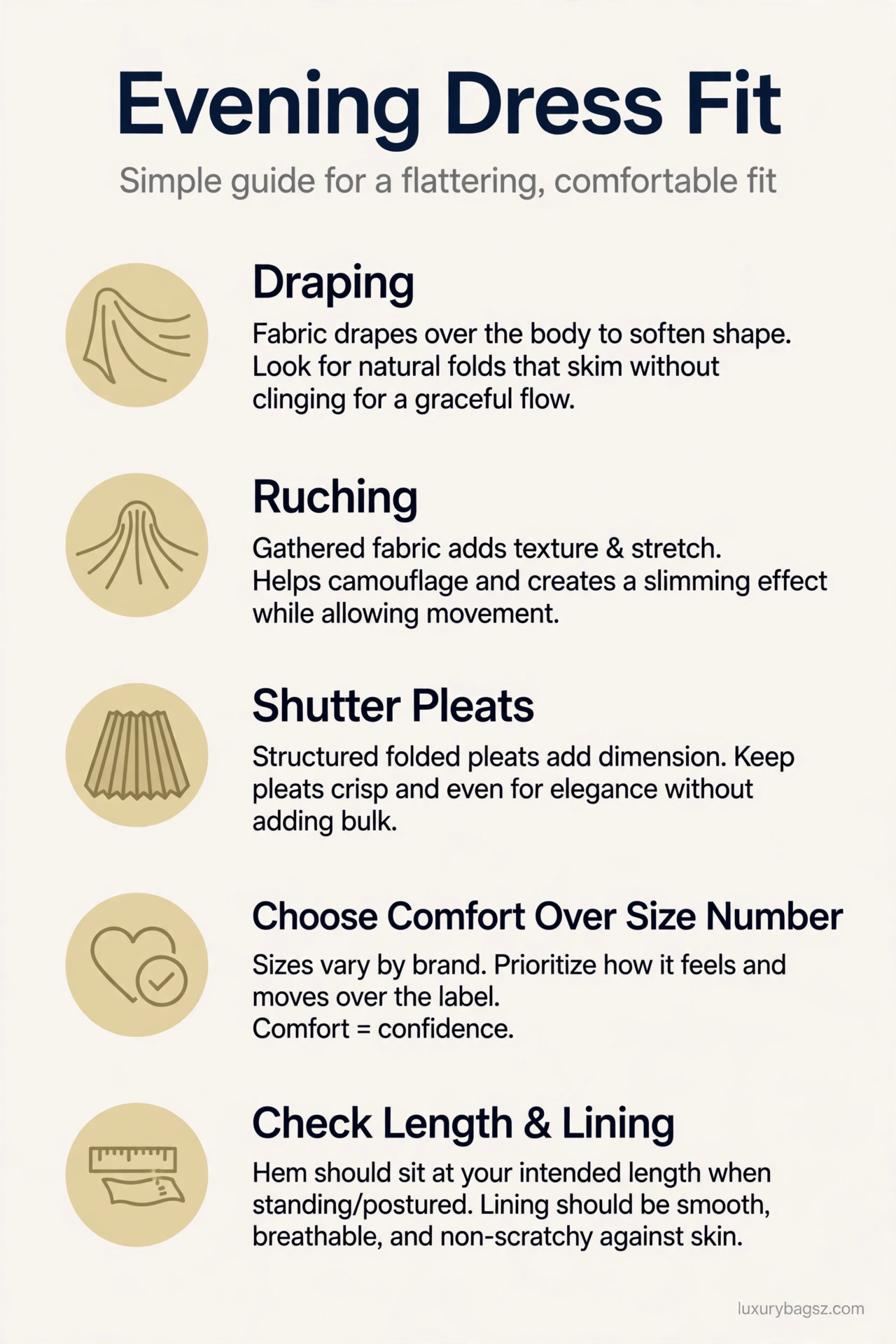
Shoji's famous line sums up his philosophy: he does not discriminate about size, and he designs to accentuate a woman's positives, whether she is a size 0 or a size 3X. That is not marketing alone. It is built into how his dresses are cut. Draping lets fabric fall in soft folds that skim the waist and hips, rather than cutting straight across them. Ruching gathers fabric to create shape and gentle camouflage, especially around the waist. Shutter pleats create vertical movement that lengthens the look, while pintucks add fine, controlled texture. When you try a dress, use those techniques as checks. Does the drape fall smoothly, or does it pull at the bust or hip? Does ruching sit where you want emphasis, or does it add bulk where you do not want it? Does the dress feel comfortable when you sit? Shoji's own advice is blunt: do not wear a dress that is too tight, and remember that a size number is just a number. Choose comfort over the label size. A dress that fits well in a larger size will always look more elegant than a smaller size that strains. Check length with the shoes you will wear, and check the lining: a good lining helps a dress glide, while a poor one catches and bunches.
Buying Tadashi Shoji, New and Pre-Owned
New Tadashi Shoji dresses sit in the accessible luxury range for occasionwear, well below couture prices but above fast-fashion prices. That position is deliberate: the brand aims for a dress you can afford for a real event, not only for a photograph. Pre-owned buying can be excellent value, especially for once-worn evening and bridal guest dresses. Our guide to buying a secondhand wedding dress covers many of the same habits: check the seller, ask for measurements, and confirm returns before paying. For Tadashi specifically, check beading and embroidery first, since loose beads are the most common flaw. Check seams, zips and hems, and look for stains under the arms and at the hem, where event wear shows damage first. Ask whether the dress has been altered, and if so, whether the original hem or seam allowance remains. Avoid dresses with missing beadwork across a whole motif, a broken zip, or heavy perfume or smoke odour that cleaning may not remove. A single loose bead is a small repair. A pattern of damage is a warning.

Caring for Eveningwear So It Lasts
Evening fabrics need gentler care than daywear. Chiffon, tulle, lace and beaded jersey should be cleaned according to the care label, and many beaded pieces need professional cleaning rather than a home wash. Always test a small, hidden area before any spot cleaning. Store gowns on padded hangers, with room to breathe, and keep beaded dresses away from sharp jewellery and bag hardware. Folded storage works for jersey, but hanging suits pleated chiffon better, since it preserves the pleat fall. After an event, air the dress before storing it, and check for loose beads, pulled threads or stains while they are still fresh. Small repairs done promptly cost far less than a later restoration. Our guide to designer clothing care covers storage, rotation and professional care in more detail. For occasionwear, the golden rule is simple: clean it, repair it, then store it, in that order, before the next event.
Why Tadashi Shoji Still Matters
Shoji matters because he refused a false choice: between beautiful and wearable, between red carpet and real life, between a size range and a design vision. He proved that a dress can be engineered for many bodies without losing elegance. His influence shows in the many occasion labels that now talk about fit, stretch and draping as selling points, not afterthoughts. It also shows in bridal and guest dressing, where comfort is now expected, not treated as a luxury. For a modern buyer, his lesson is freeing. You do not need to change your body for a dress. You need a dress that was designed for a body like yours, in a fabric that moves, with a cut that flatters. That is the standard Shoji set in 1982, and it still holds.
Frequently Asked Questions
1. Who is Tadashi Shoji? He is a Japanese-born American fashion designer, founder of the Tadashi Shoji label, known for eveningwear, bridal gowns and red carpet dresses.
2. When was Tadashi Shoji born? He was born on 15 January 1948 in Sendai, Japan.
3. When did Tadashi Shoji move to America? He moved to Los Angeles in 1973 to study fashion design, after studying fine art in Tokyo and assisting artist Jiro Takamatsu.
4. When did he launch his label? He launched his eponymous label in 1982, after noticing a lack of good occasion dresses for women of many shapes and sizes.
5. What are his signature techniques? Draping, ruching, pintucks and shutter pleats, used to flatter the figure and create comfortable, elegant silhouettes.
6. When did he show at New York Fashion Week? He debuted his runway collection at New York Fashion Week in September 2007.
7. Who has worn Tadashi Shoji? Wearers have included Michelle Obama, Octavia Spencer, Helen Mirren, Kate Beckinsale, Beyoncé and Mindy Kaling, among others.
8. Is Tadashi Shoji a CFDA member? Yes. He was accepted into the Council of Fashion Designers of America in June 2012.
9. How do Tadashi Shoji dresses fit? They are designed for many figures, with stretch fabrics and draping. Shoji advises choosing comfort over a size number, and not wearing a dress that is too tight.
10. Is pre-owned Tadashi Shoji worth buying? Often yes, especially for once-worn occasion dresses. Check beading, seams, zips, stains and alterations, and confirm measurements and returns first.
Summary: A Dress Designed for the Woman Wearing It
Tadashi Shoji's career is a reminder that great occasionwear starts with respect for the wearer. From Sendai to Los Angeles, from a small 1982 label to the red carpet, he kept one idea at the centre: a dress should make a woman feel confident and beautiful. Choose by fit, movement and fabric, not by size label or photograph alone. Do that, and you will understand why his gowns have lasted for more than four decades.






